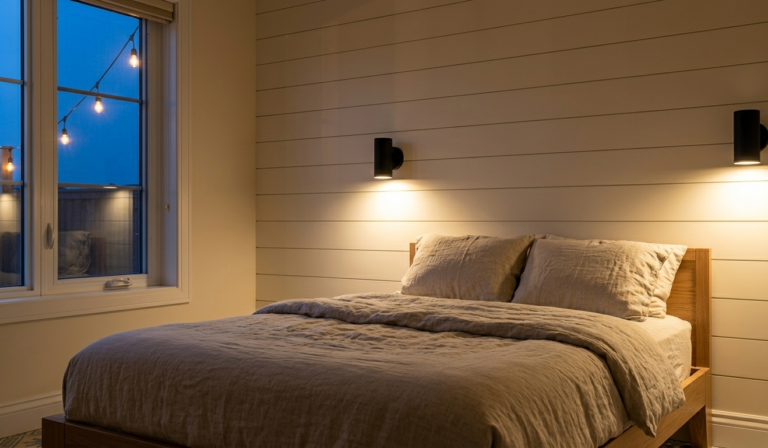
Vintage Home Decor Ideas for a Collected Look: 14 Finds to Hunt For
What makes one room feel collected, and another feel like a furniture showroom with the tags just removed?
Age, weight and wear. Old pieces bring patina, solid material and small signs of a past life, and those are the three things new decor struggles hardest to fake. The vintage home decor ideas for a collected look below name the 14 finds worth your patience: framed art and old prints, solid wood shelves, boxes and trunks, clocks, brass and ceramics that sit quietly and glow. Hunt them slowly, one good piece at a time. A collected room is built over seasons, not delivered in a van, and each find below comes with its check.
The short version, before we start:
Hunt by category, not by trip. Keep a list of the 14 finds and let each one turn up in its own time.
Check with your hands. Fingertips find rim chips, loose joints and cracks that eyes miss.
Leave the patina alone. A gentle wash is care; hard polishing erases the point of the piece.
One or two finds per surface. Collected means edited, not crowded.
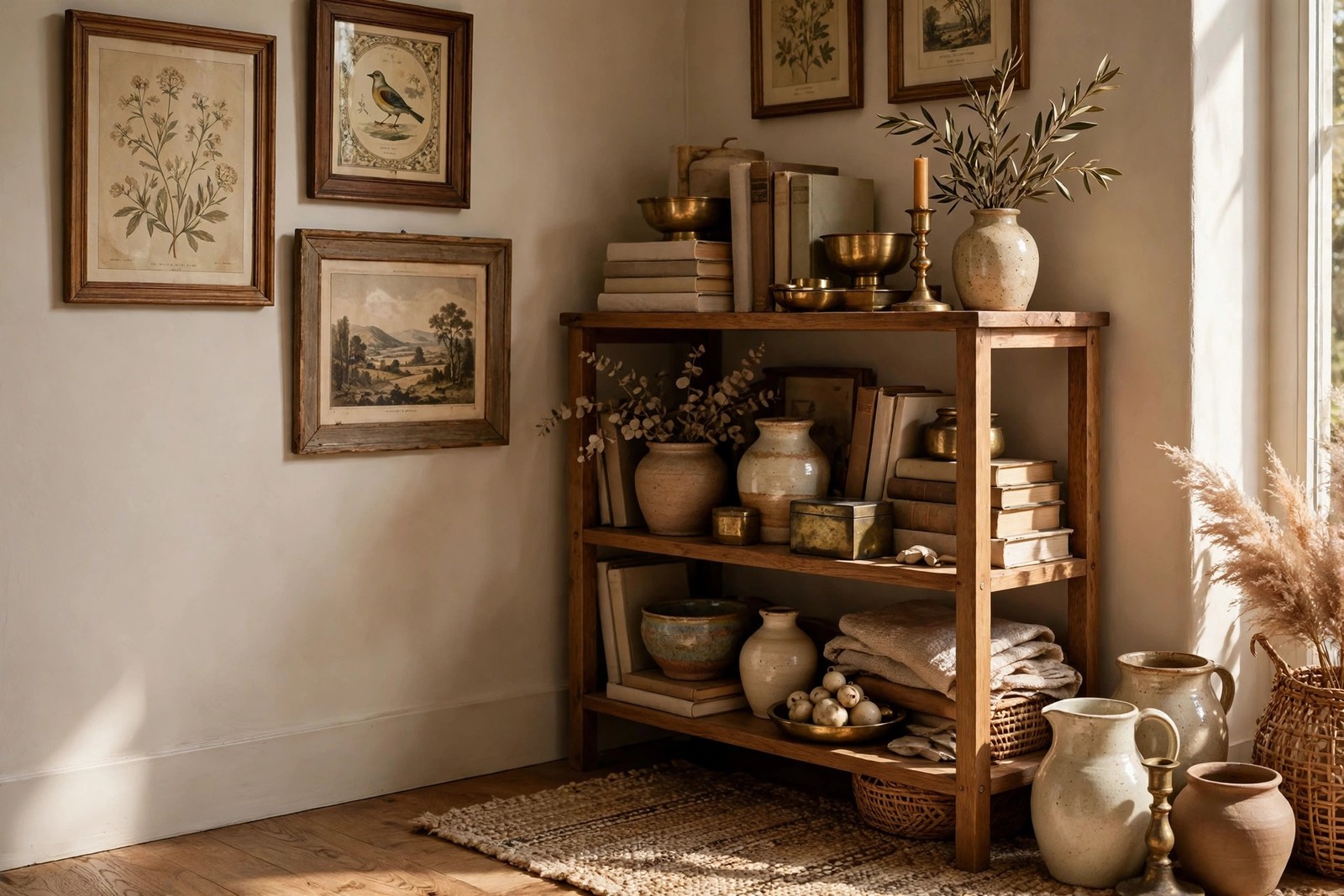
1. Start With Framed Vintage Art and Old Prints
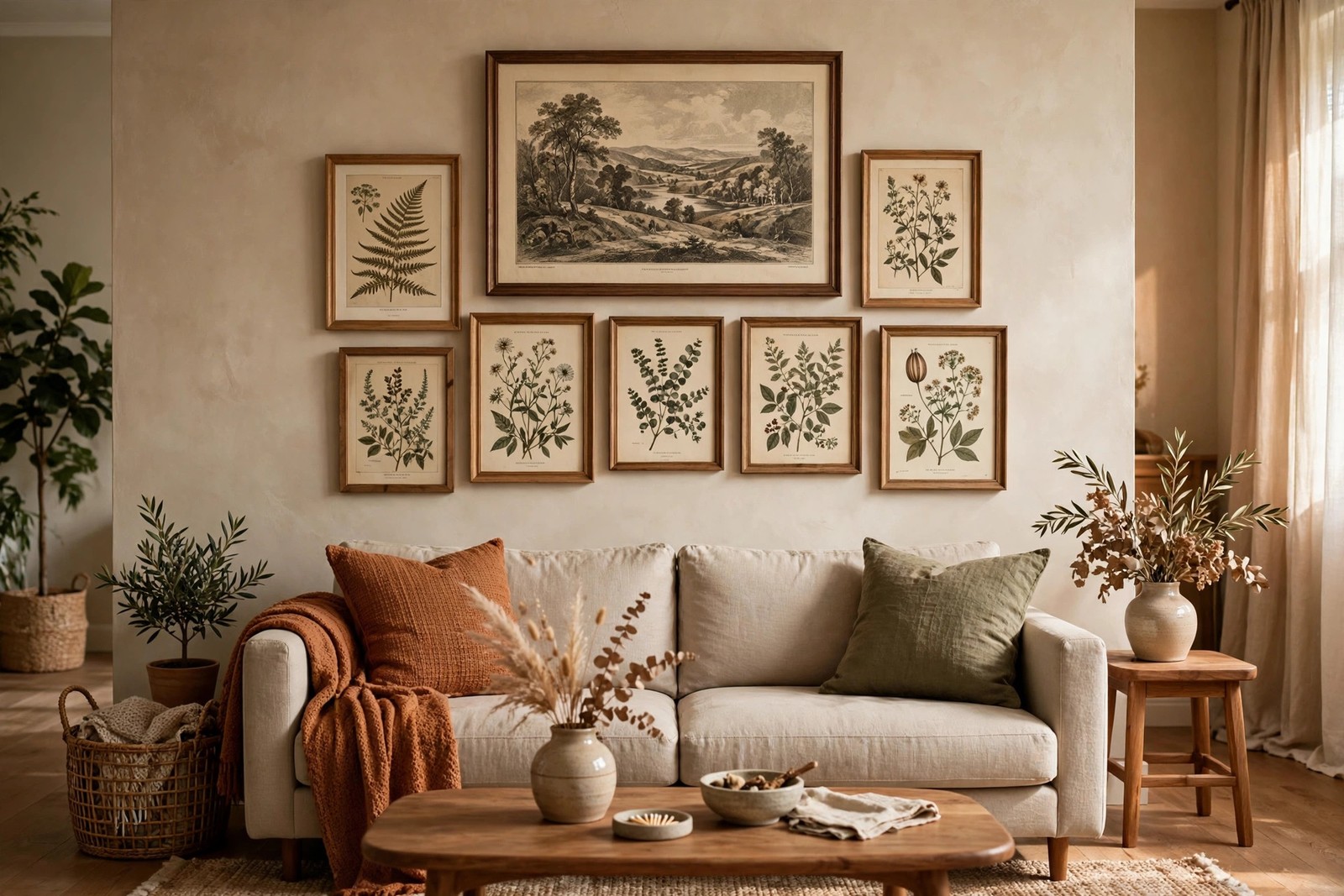
Art is the fastest route to a collected wall, because a genuinely old print carries soft colors and paper character that no copy quite matches.
Hunt for botanical plates, landscape etchings, old maps and architectural drawings. All of them sit happily beside modern furniture. Keep or restore the original frame where you can, because a worn gilt or dark wood frame is half the charm. Where the frame is truly beyond saving, a plain new frame in a traditional shape keeps the print honest.
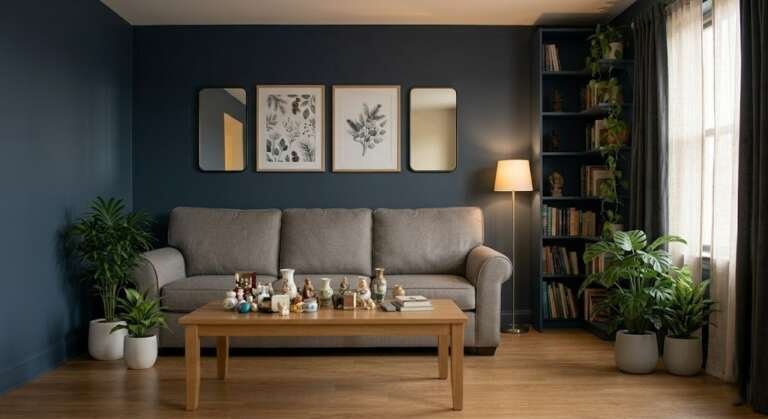
Group vintage art in pairs or small clusters, one large piece anchoring the wall and smaller ones gathering around it. Scattered singles look lost. A cluster looks like a decision, and my rule is a cluster of 3 to 5 over a sofa, never one lonely frame per wall.
2. Hunt a Solid Wood Bookshelf With Real Joints
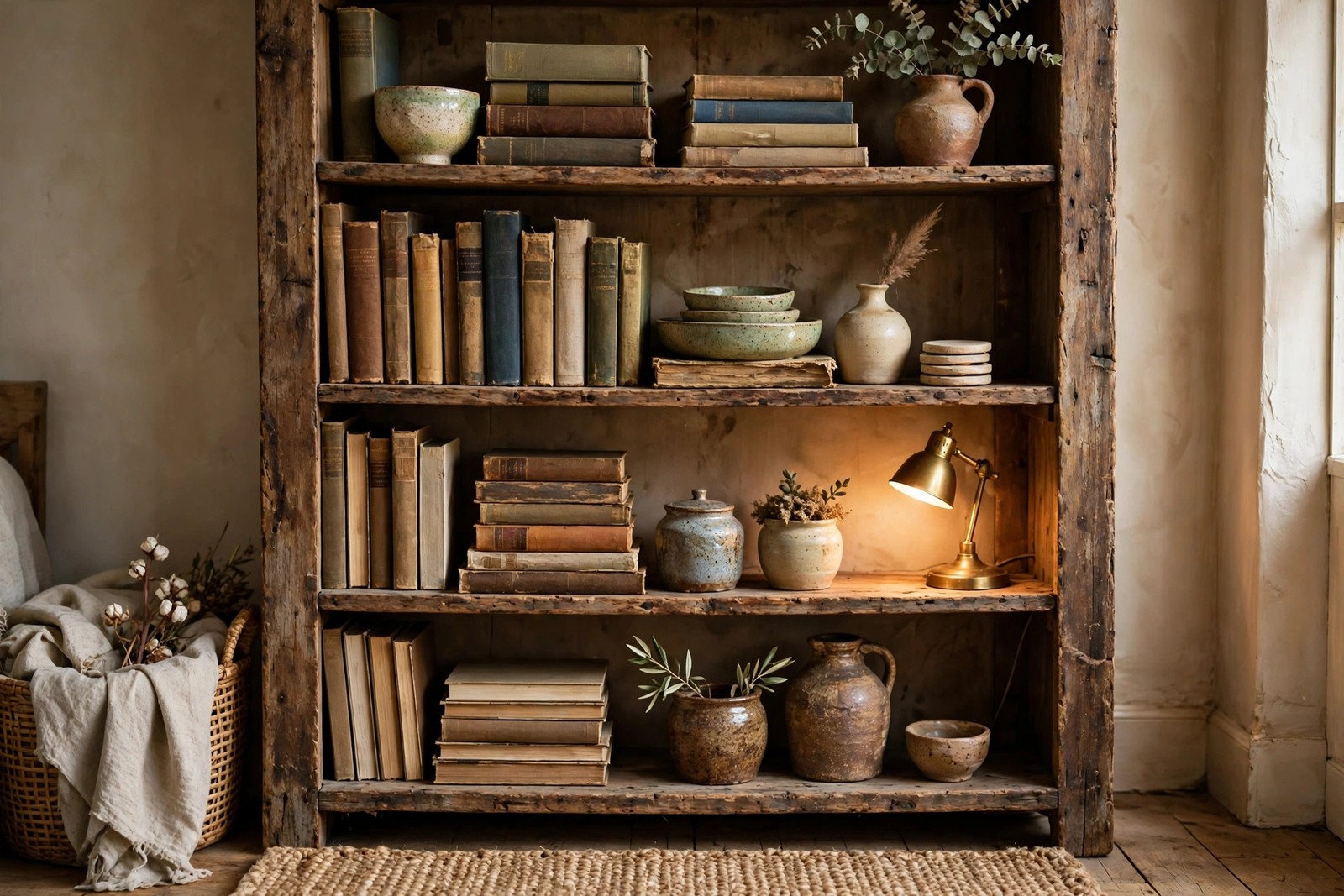
A solid wood bookshelf with some age on it changes a room out of all proportion to its size, because it brings real material weight that flat pack furniture cannot copy.
Look for honest building: dovetailed or pegged joints, thick shelves that have not bowed, and wood with grain you can feel. Slightly worn edges are a feature here, not a flaw. Style it the collected way, books mixed with objects and breathing room, using the same discipline behind good bookshelf styling ideas generally.
One check before you pay: press down in the middle of each shelf. A shelf that flexes or creaks under hand pressure will bow under a full row of books, and that one is a pass from me.
3. Learn on Brass, the Collector’s Training Ground
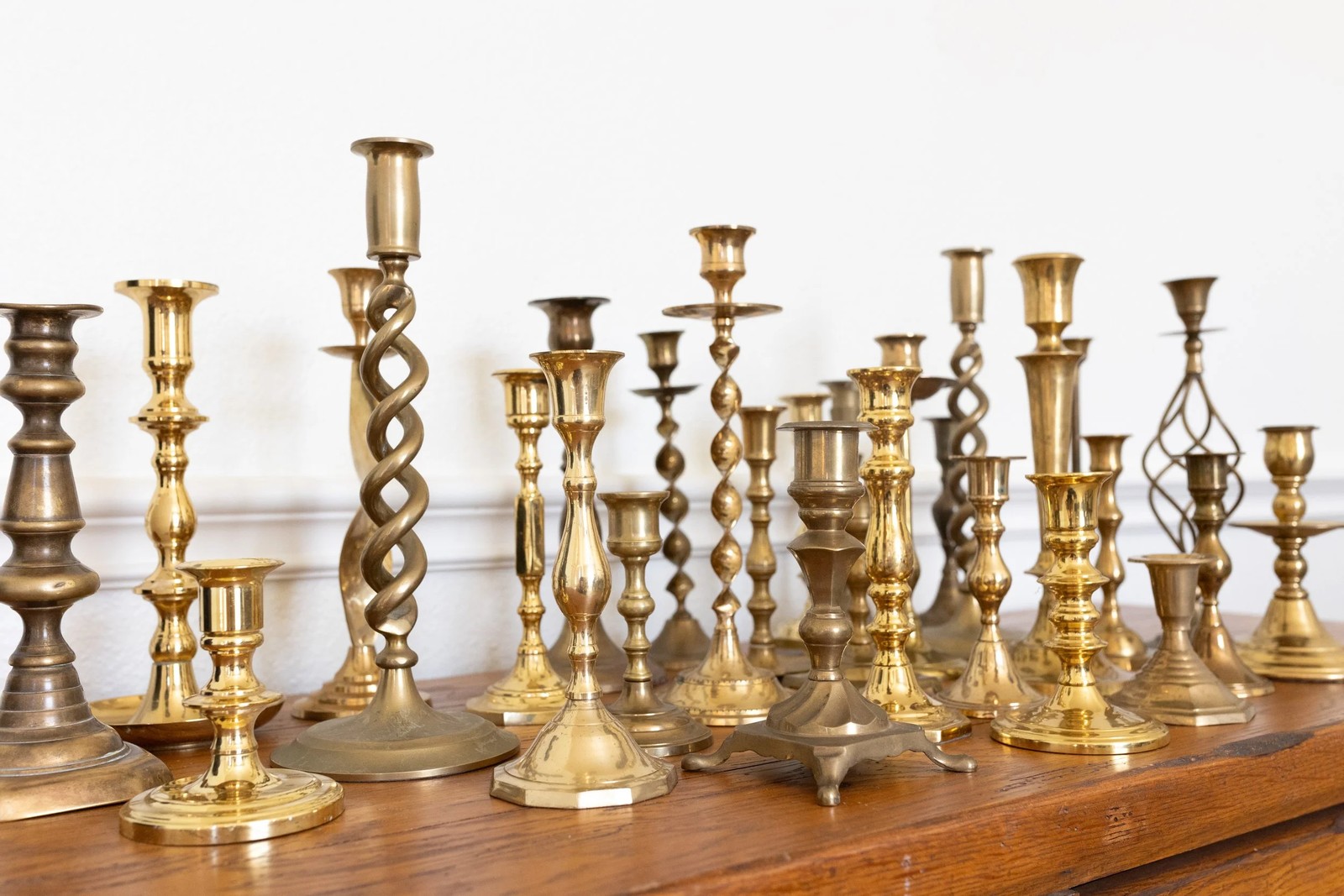
Brass is where collectors start, because it is everywhere in thrift and antique shops, it costs little, and a few pieces grouped together look intentional at once.
Candlesticks in mismatched heights, a handled tray under a plant, small brass boxes and bells all earn their place. The same eye for metal value makes brass a headline category in thrift store decor finds and how to style them, because unlacquered brass builds a deep, soft patina that bright modern copies never reach.
Leave the patina alone unless it is actual dirt. A gentle wash is care. Hard polishing back to a shine erases the very thing you bought the piece for.
4. Use Ceramic Pitchers, Crocks and Ginger Jars Hard
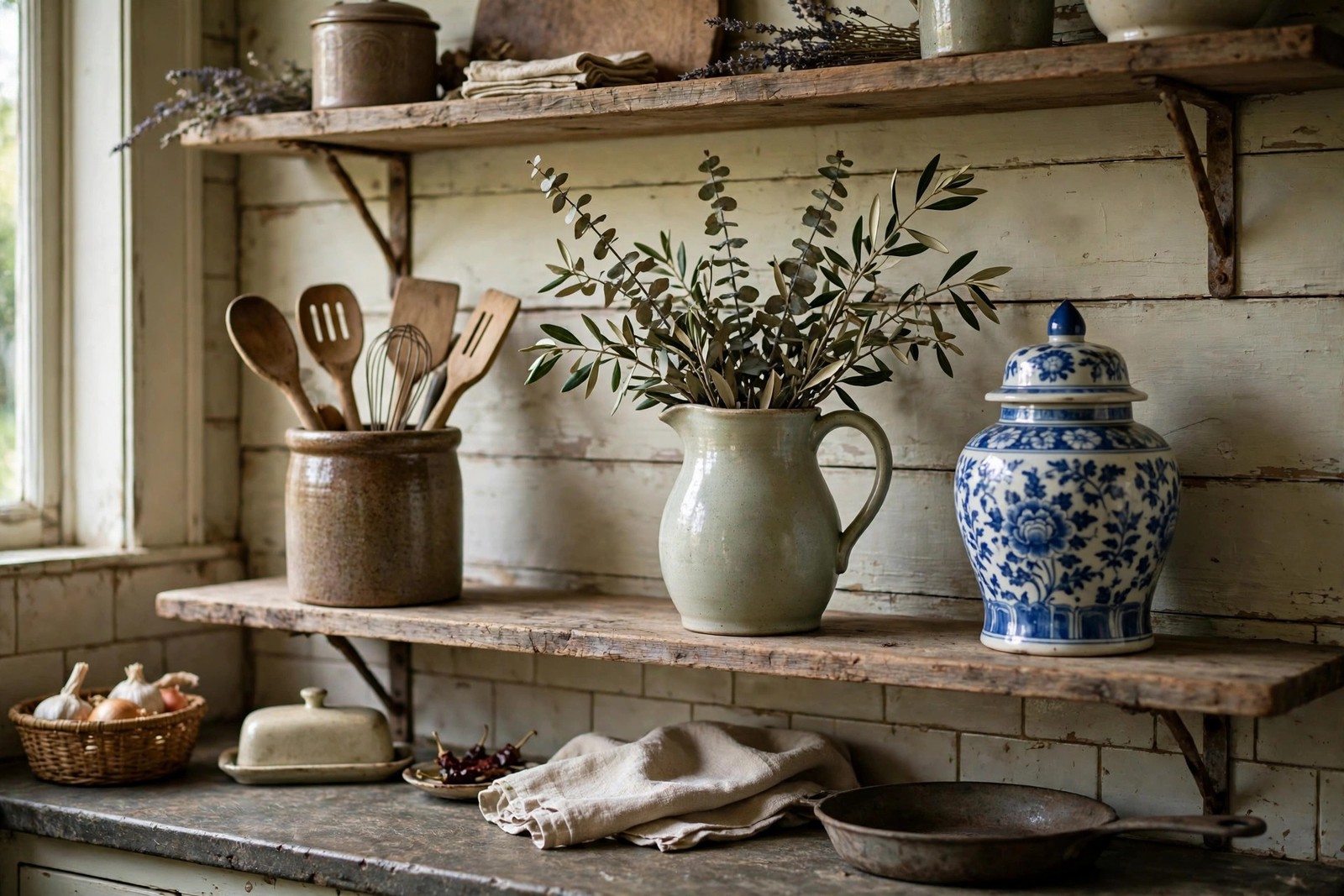
Old ceramics bring the handmade unevenness that collected rooms run on.
A stoneware crock holds kitchen tools better than any modern canister. A pitcher becomes a vase that improves every bunch of branches put in it. A ginger jar anchors a shelf or mantel with quiet confidence. Look for crazing in the glaze, those fine crackle lines, because they read as character.
Check rims with your fingertips rather than your eyes. Chips hide from eyes and announce themselves to fingers. Group ceramics in odd numbers, threes usually, and vary the heights. Blue and white mixes with nearly everything, while earthy stoneware suits warmer rooms better.
5. Hide Modern Life in Wooden Boxes, Crates and Trunks
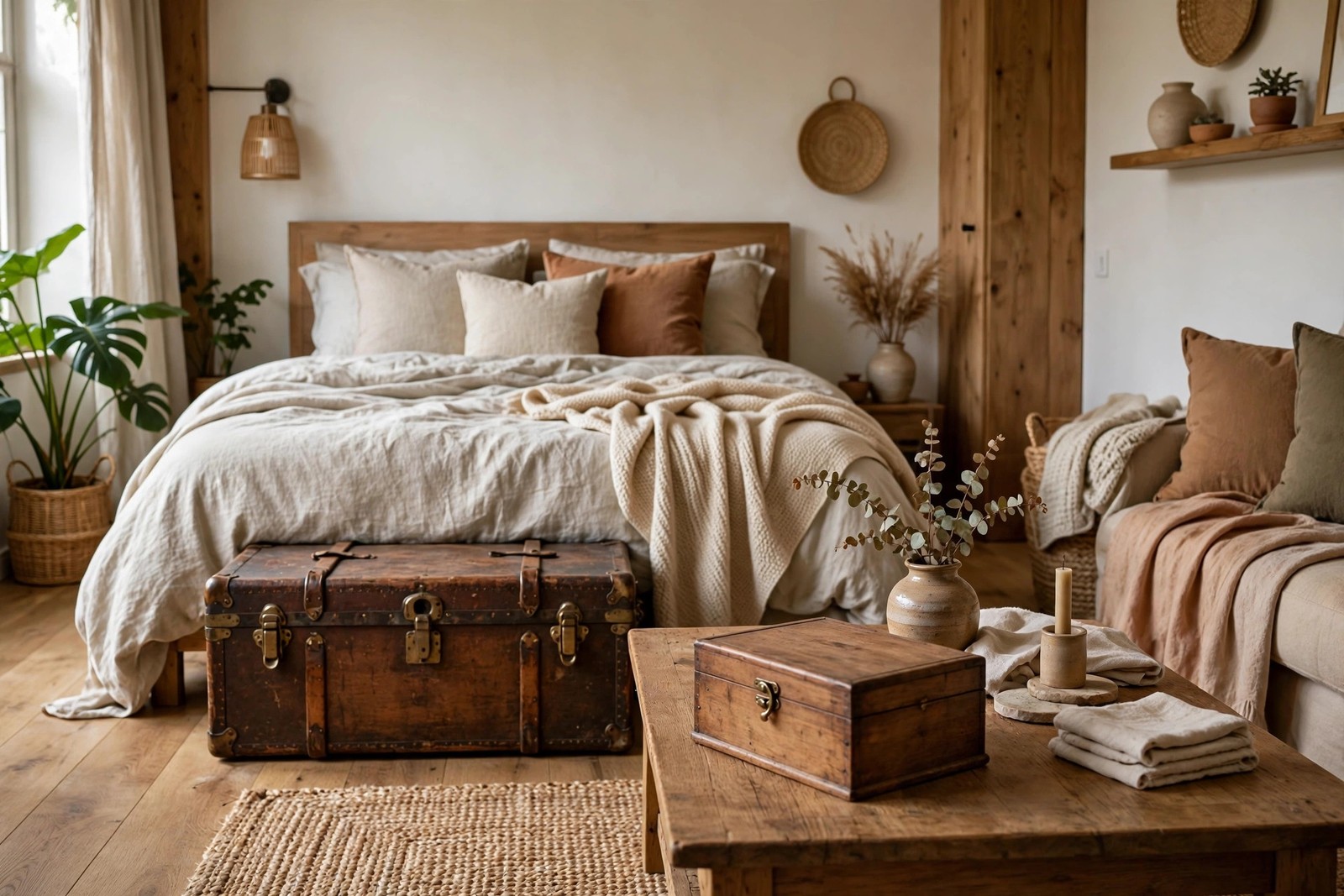
Wooden storage pieces solve the oldest collected home problem there is: where modern life goes so the room can look timeless.
A lidded box on the coffee table swallows the remotes. Crates stack into side tables or hold blankets and firewood. A trunk at the foot of a bed stores spare bedding and gives the room a sense of travel. The vintage farmhouse decor tips habit of letting worn wood show its grain and scars applies here in full.
Check hinges and bases before buying, because these pieces work hard. And smell inside before anything else: a trunk that smells musty will perfume every blanket you store in it, and some mustiness never airs out. That one stays at the shop.
6. Give the Room a Heartbeat With a Real Clock
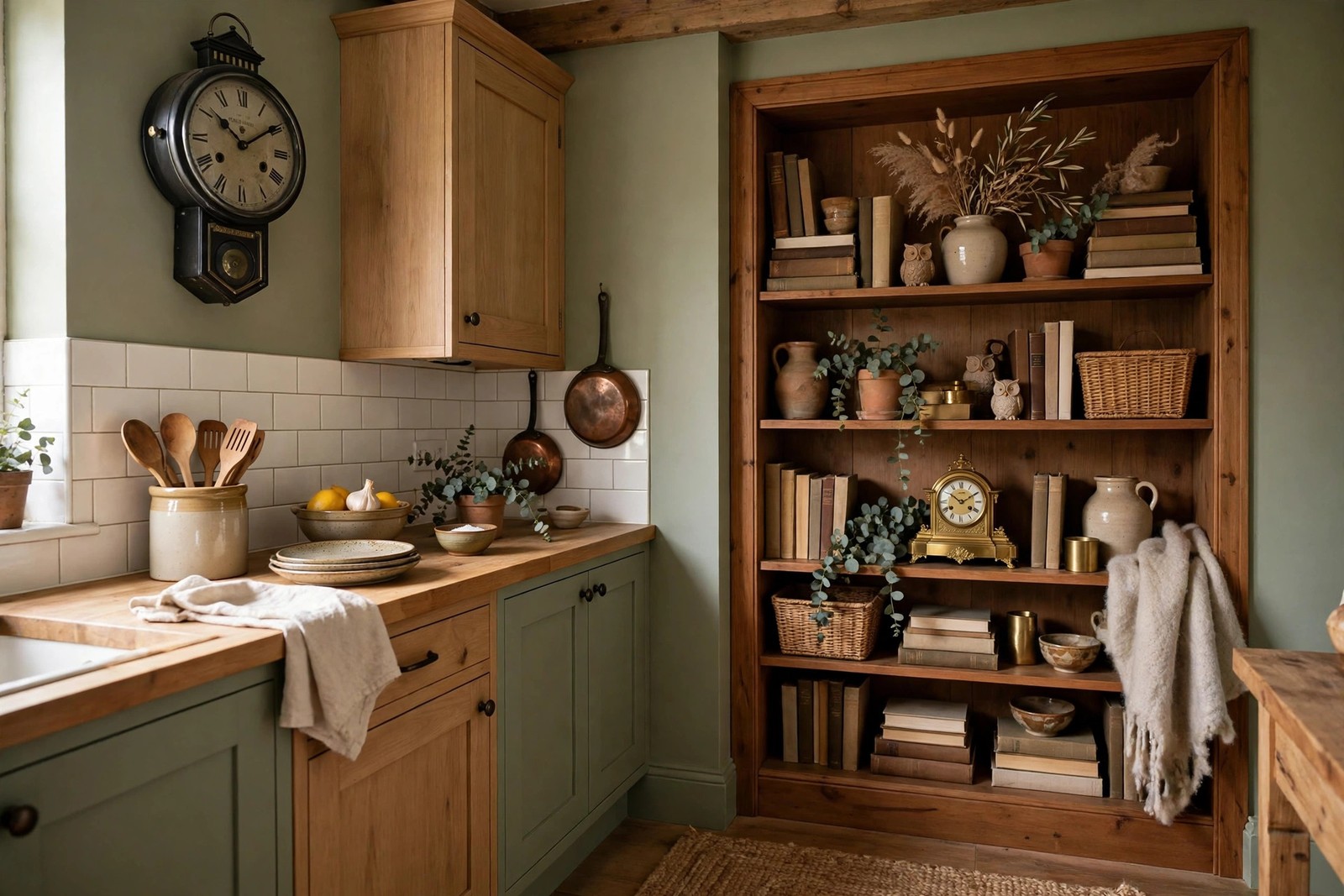
A real clock gives a room a heartbeat, and vintage clocks carry a presence that flat wall decor cannot.
Schoolhouse and station style wall clocks suit kitchens and hallways. Smaller mantel clocks sit beautifully inside a bookshelf arrangement or on a fireplace surround. Working order is a bonus rather than a must for decor, but a ticking clock in a quiet room changes the air in a way visitors notice without naming.
Buy the case and the dial you love. Movements can often be serviced or swapped by a clock repairer while the character stays original. My mantel clock has not run in years, and I would not trade it. Just know that a non working clock should cost non working money. Pay for the case, not for a promise.
7. Stack Cloth Bound Books as Building Blocks
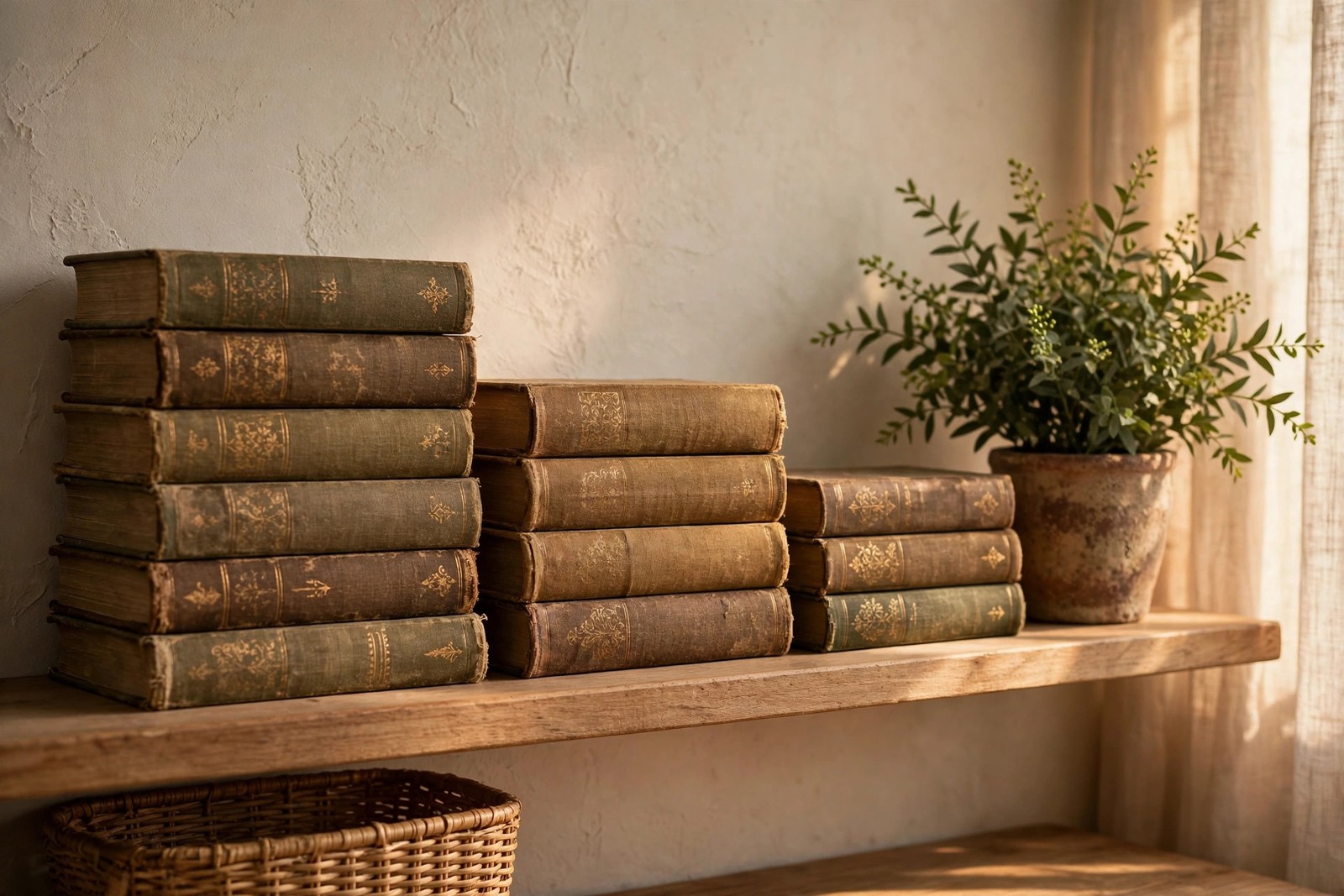
Cloth bound books are the collected look’s quiet workhorse. They add color, texture and height under objects, and they fill shelves with something that looks better the more of it there is.
Hunt for muted cloth tones, deep green, burgundy, ochre, faded navy, and gold titles softened with age. Stack them flat to lift a plant or a small sculpture, stand them in runs broken by objects, and do not be precious about reading them.
Skip books with damaged spines that shed their binding, since they drop flakes on everything below. Air musty volumes outdoors for a day before they join the shelf, or the whole case takes on the smell.
8. Soften Everything With Woven Baskets and Market Totes
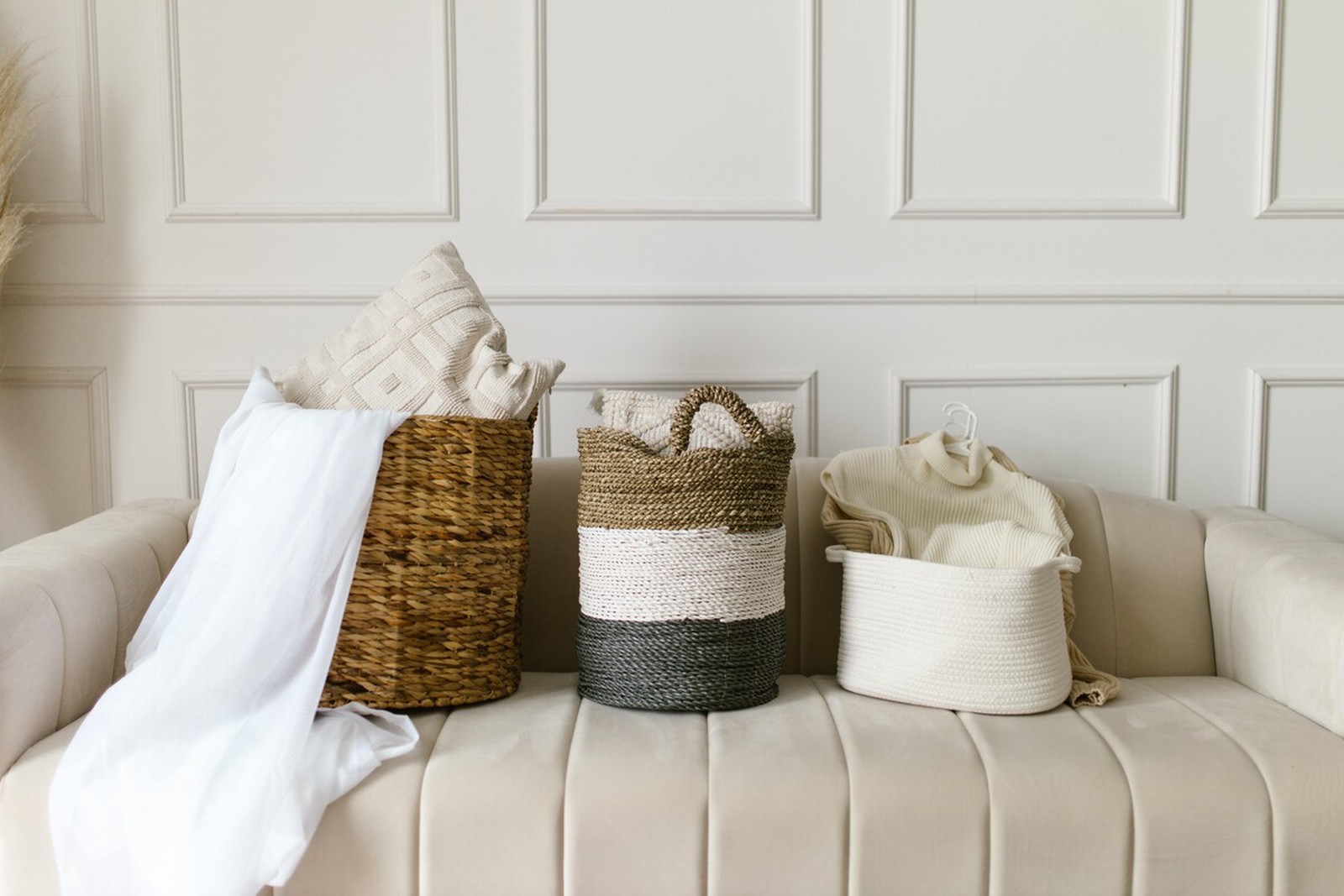
Handwoven baskets soften every scheme they join, and they store the modern clutter, throws, toys, kindling, spare cushions, that would otherwise break the collected mood.
Vintage baskets show their quality in tight, even weaving and sturdy handles. Check the base first, because the base wears first, and smell for mildew before you pay. Large market totes hang well on hooks by a door and hold everything from umbrellas to rolled throws.
Because baskets are light and usually cheap, they are the easiest category to try things with: buy the shape your room lacks, floor basket, wall basket, lidded basket, and let the texture do the decorating. I keep one lidded basket per room as the clutter trap, and it earns its spot daily.
9. Hang a Vintage Mirror for Glow, Not for Checking Your Hair
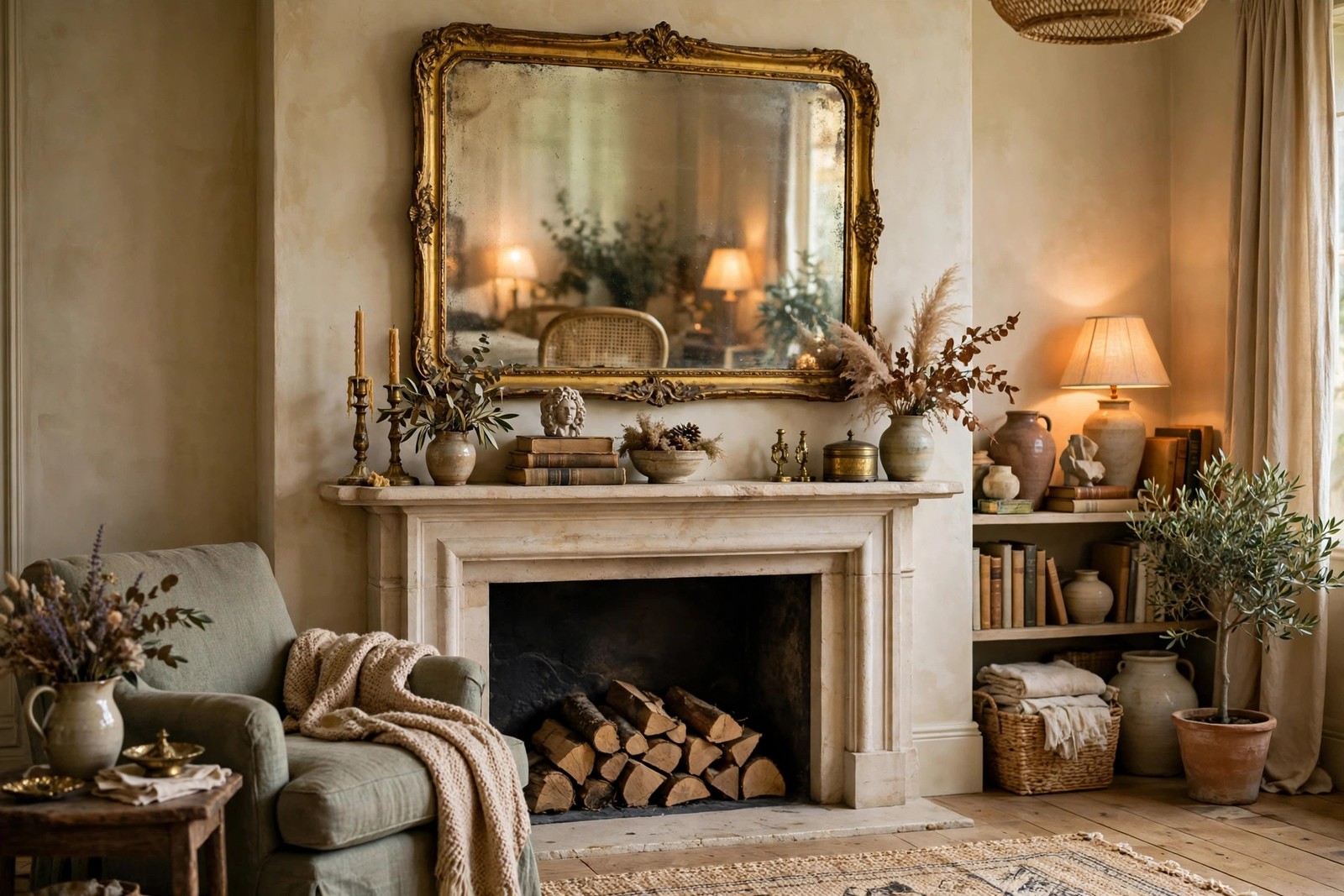
An old mirror does something no new mirror can: its slightly foxed, softened glass reflects a gentler version of the room, and that flatters everything in it.
Look for foxing at the edges rather than across the center, solid wood or gilt frames, and glass heavy enough to feel solid. Foxing across the middle is the failure to walk away from, because the reflection is gone and no styling brings it back.
Aged mirrors work hardest above mantels, in hallways where they borrow light, and opposite windows where the softened reflection reads almost like a painting. In a collected room the mirror is there for glow and depth first, and checking your hair a distant second.
10. Buy Vintage Lamps in Pairs When You Can
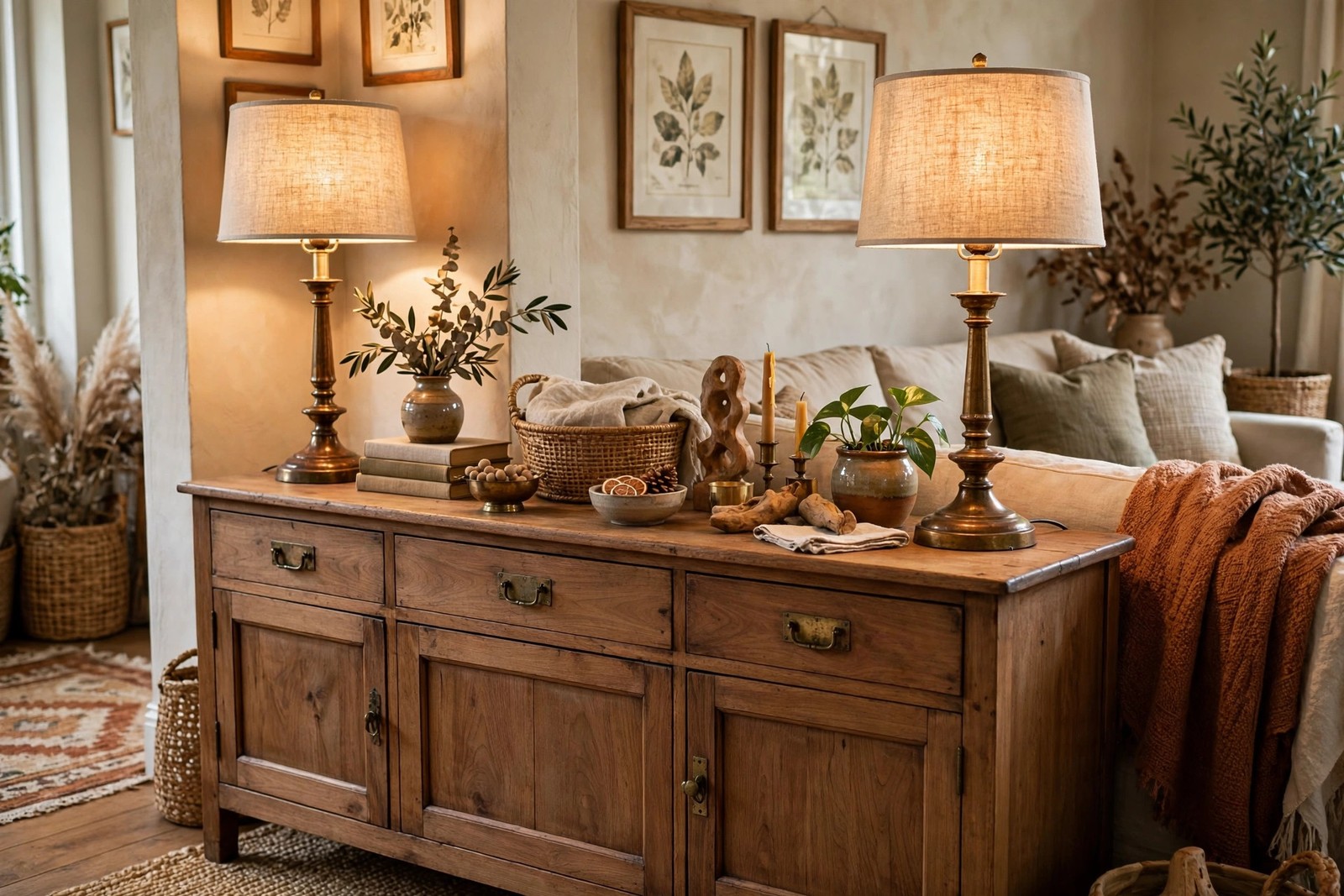
Lighting is where vintage finds pay you back every single evening.
A brass or ceramic lamp base with real weight looks expensive at any age, takes a modern shade without complaint, and fixes the thin, temporary feeling that new budget lamps give a room. Hunt in pairs where you can, because matched vintage lamps on side tables or a sideboard create instant symmetry and calm.
One non negotiable: old wiring gets checked. If a cord looks worn, have it replaced by an electrician before the lamp joins the room. The base is the treasure. The cord is a replaceable part, and a frayed one is a fire risk, not a bit of character.
11. Frame Textiles, Samplers and Tapestry Pieces
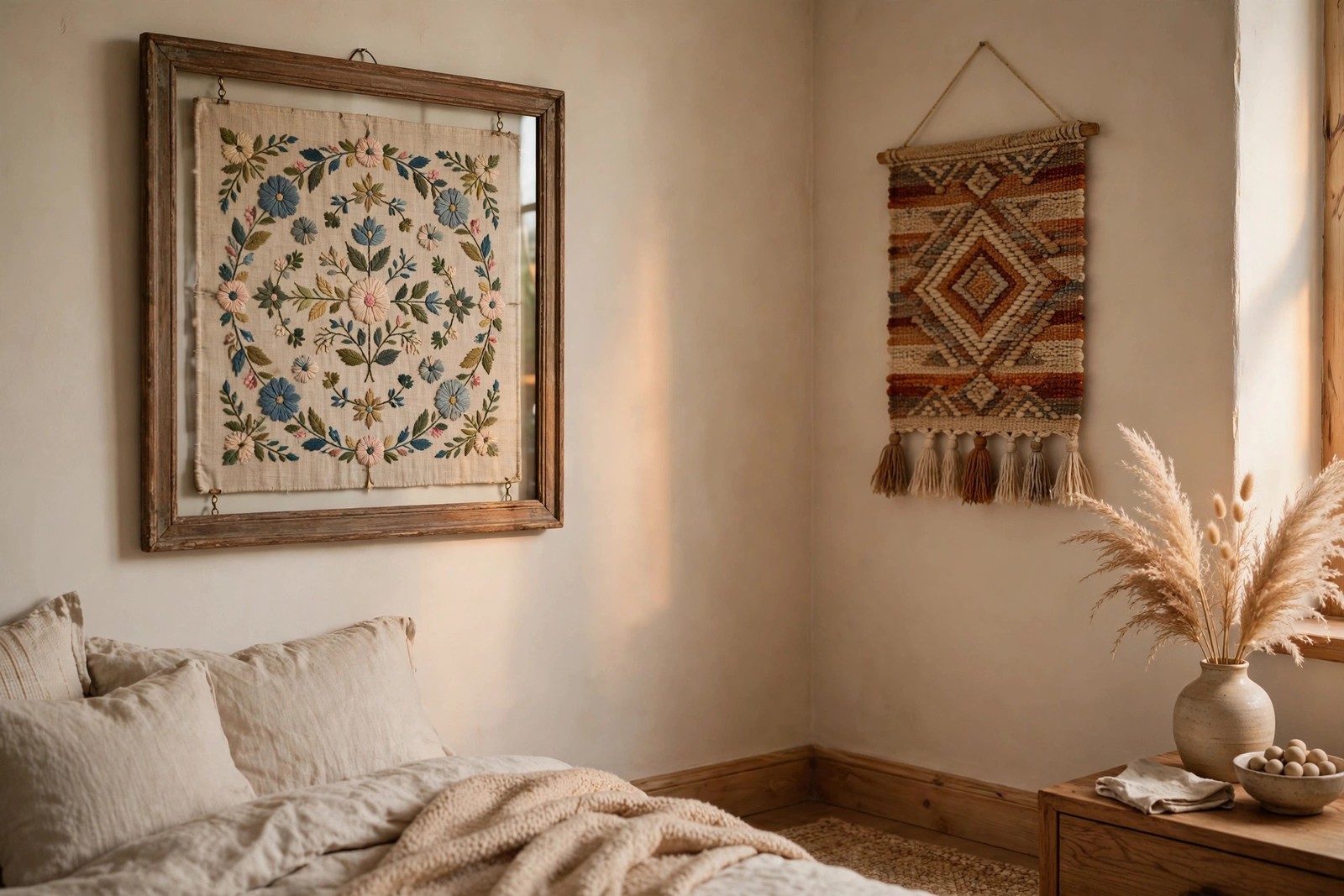
Textile art brings a softness to walls that prints cannot, and vintage pieces, embroidered samplers, woven tapestry fragments, framed needlepoint, carry hours of someone’s handiwork in every inch.
These pieces suit bedrooms and quiet corners best, where their softness matches the mood of the room. Frame textiles under glass with a little breathing room, or hang tapestry pieces from a plain rod. Keep them out of bright direct sun, because sun fades old dyes faster than anything else you can do to them.
A sampler with a name or a date stitched into it is the single most personal thing you can put on a wall. Collected rooms are built from exactly that kind of personal, and no shop sells it new.
12. Stack Ironstone and Stoneware on Open Shelves
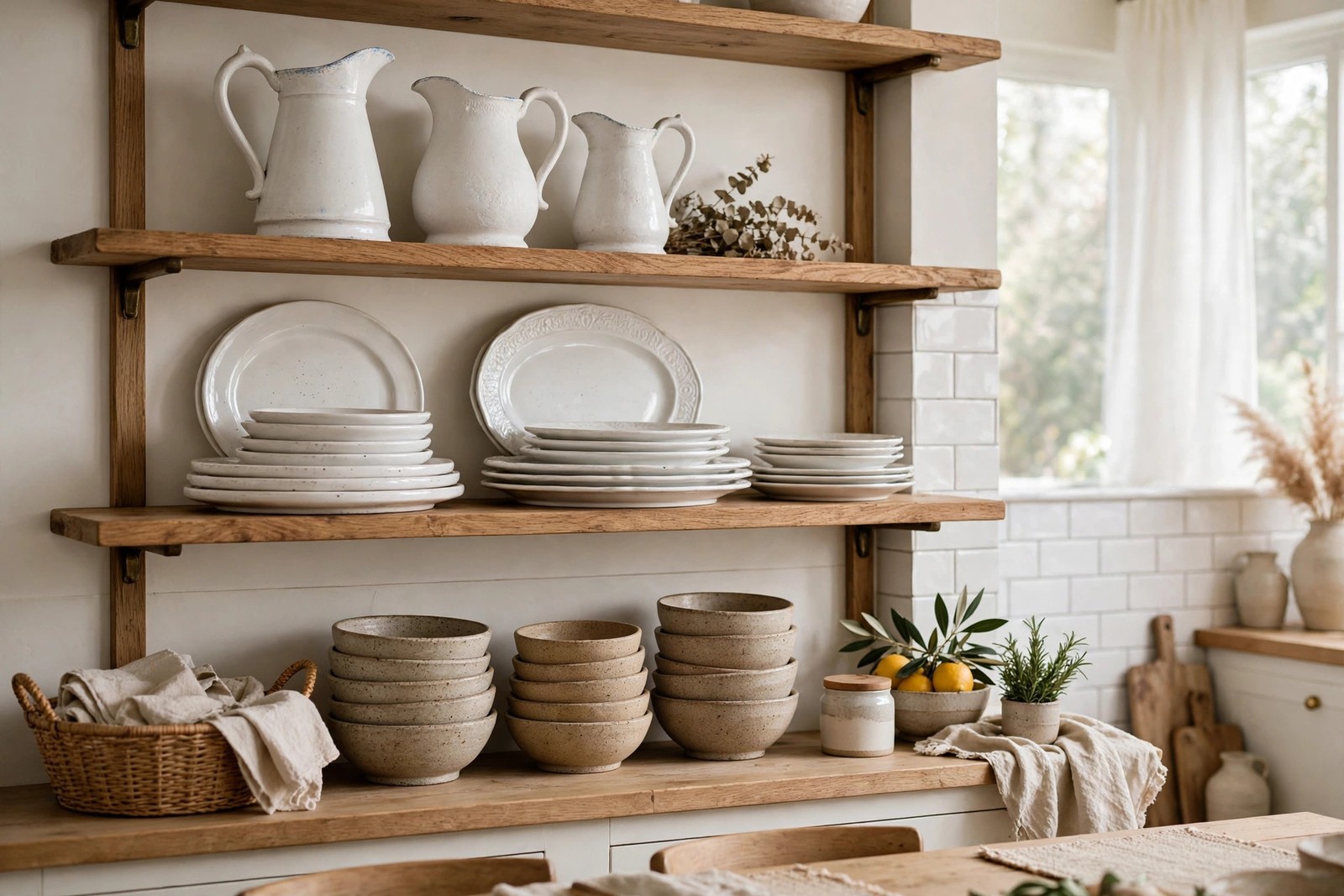
White ironstone and honest stoneware, pitchers, platters, tureens and stacks of plain bowls, give open kitchen and dining shelves the calm, collected look that matched modern sets rarely reach.
The appeal is in the small variations: no two old pieces share exactly the same tone, and that gentle mismatch reads as gathered over time. Display the best pieces in the open and use the sturdier ones daily, because ironstone was made to work.
Check for hairline cracks by tapping a piece and listening for a clear ring. A dull thud means a crack, and crazed or cracked pieces belong on display only, never under hot food and drink.
13. Lean Ladders, Shutters and Salvaged Wood Indoors
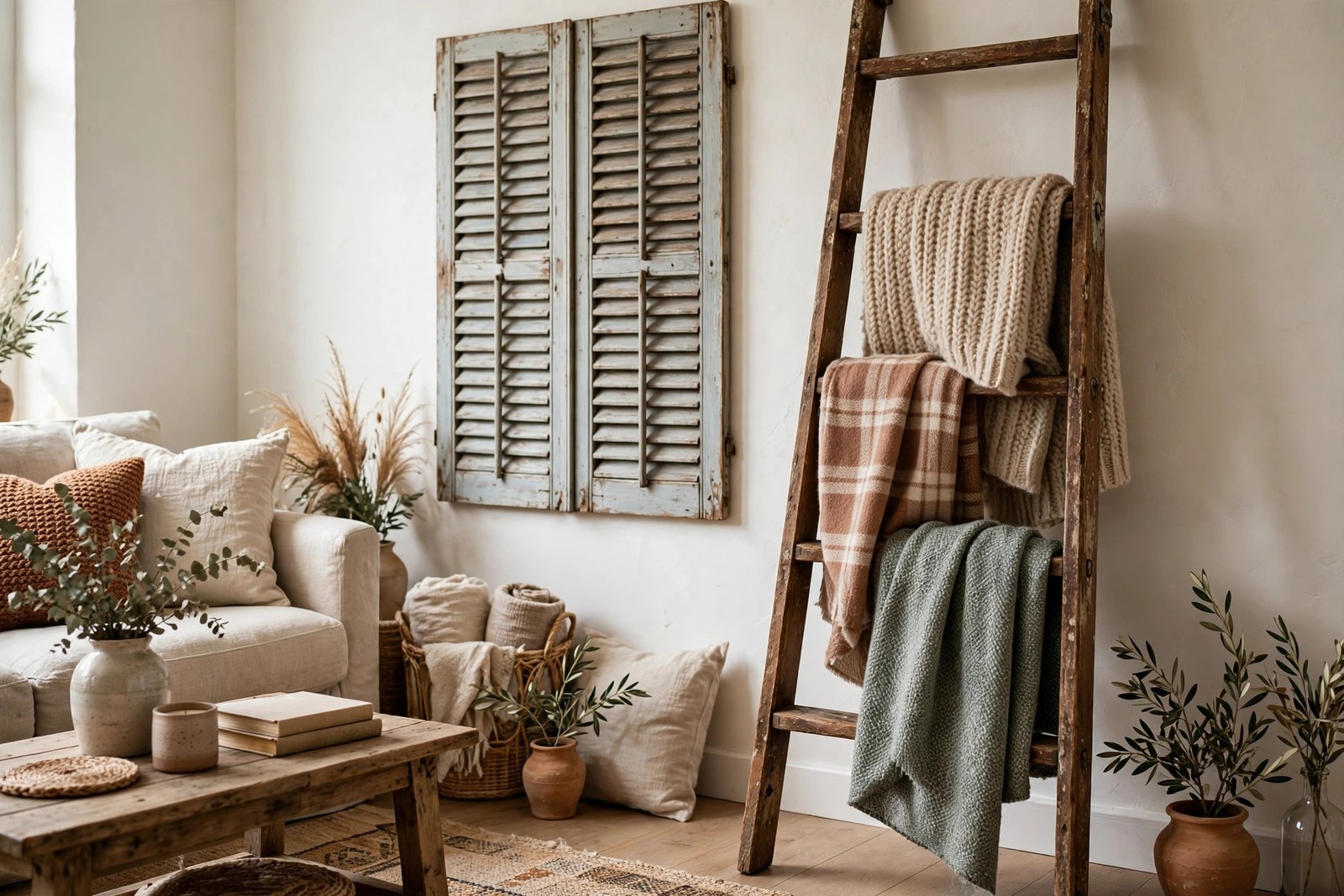
Salvaged building wood, a section of old shutter, a worn ladder, a stretch of rail or a carved corbel, brings a room the one thing no shop bought decor can: a past life in another building.
A ladder leans in a bathroom or bedroom holding throws and towels. Shutters flank a window or a piece of art indoors. Corbels become shelf brackets with more character than anything new on the shelf beside them.
Clean pieces well before they come inside, and check every inch for woodworm, because active worm travels into your other wood. Seal or paint only where the original finish is failing. The worn paint layers are usually the whole point of the piece, and stripping them is the one mistake you cannot undo.
14. Finish Shelves With Small Heavy Sculptural Pieces
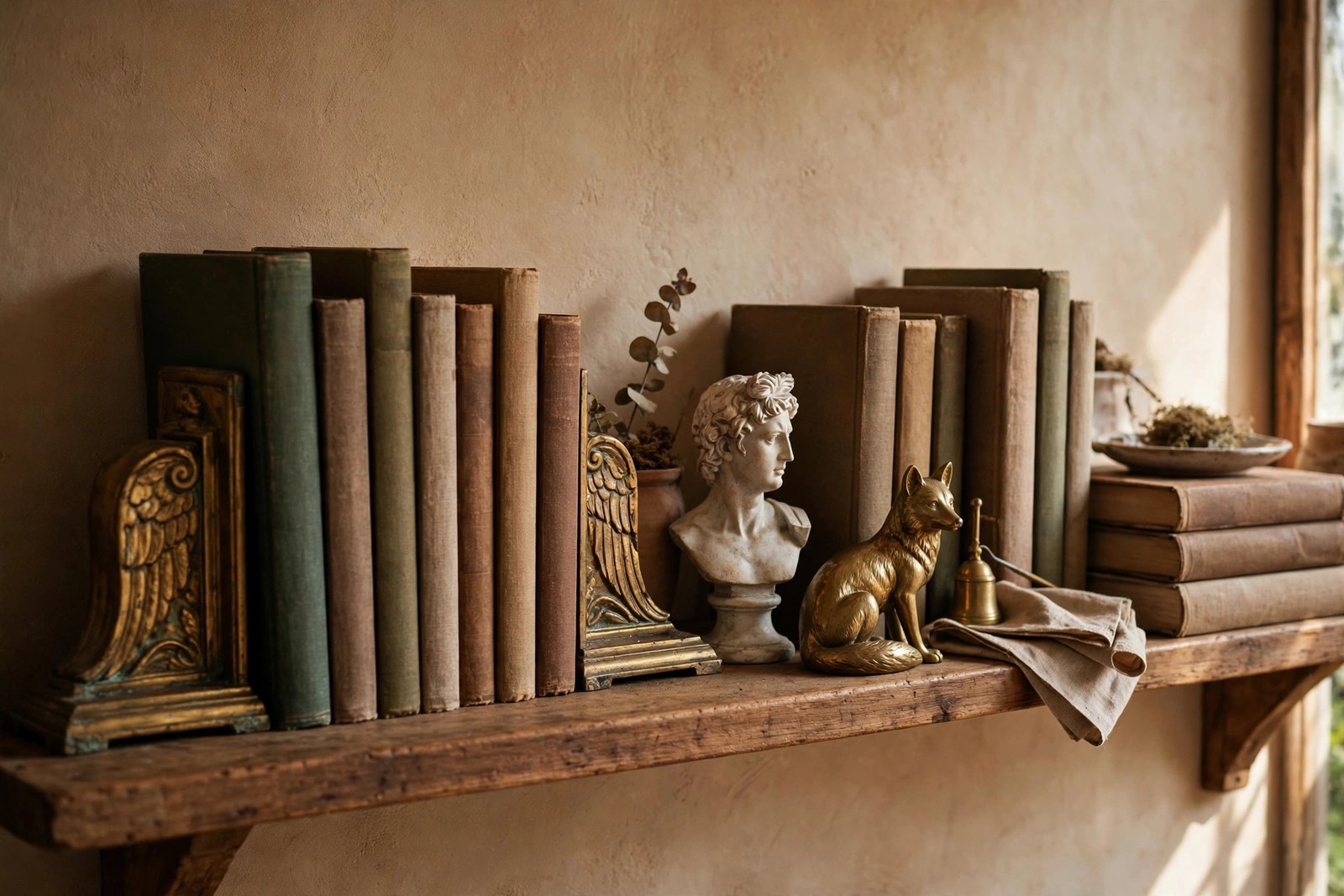
Every collected shelf needs a few small things with shape and weight: heavy bookends that actually hold books, a small bust or figure, brass animals, a magnifying glass with a turned handle.
These are the pieces visitors pick up, and a room feels collected in step with how many of its objects reward being picked up. This is also where the mixing rule matters most, because a vintage object beside a modern one makes both look chosen; how to mix decor styles well comes down to repeating a material or a tone so old and new agree with each other.
Buy slowly, one good piece at a time, and let each one earn its place. A bookend that cannot hold a row of paperbacks upright is not a bookend, it is a knick knack, and collected shelves have no room for those.
The Bottom Line
A collected look cannot be bought in one trip, and that is precisely its value. Hunt the categories in this list slowly, art, wood, brass, ceramics, clocks and books first, because they carry the most age per dollar, and let each find settle into the room before the next one arrives. Repeat one material or tone across pieces so the collection agrees with itself, keep modern life stored inside the boxes and baskets, and your home gathers the layered, personal feeling that new decor alone never fakes.
Start with one cluster of framed prints over the sofa, 3 to 5 pieces, one of them large. It is the fastest collected wall there is.
Frequently Asked Questions
What vintage items are most worth buying for decor?
Solid wood furniture and bookshelves, brass pieces, framed original art and prints, stoneware and ironstone, and cloth bound books. These categories hold their looks for decades, mix easily with modern furniture, and are still common enough at thrift stores, estate sales and antique shops to find at fair prices.
How do you mix vintage and modern decor without clashing?
Repeat something. Let a tone, a material or a finish show up in both the old and the new pieces in a room, brass echoing brass, warm wood echoing warm wood, and keep the modern pieces plain in shape so the vintage pieces carry the detail. One or two vintage finds per surface is usually enough.
Where is the best place to find vintage home decor?
Estate sales and thrift stores give the best prices on furniture and shelves, antique shops carry the widest choice of art, brass and ceramics, and flea markets reward early arrival and patience. Online marketplaces work well for specific hunt list items, as long as you check dimensions and condition photos carefully.
How do you keep vintage decor from looking like clutter?
Group by category or material instead of scattering single pieces, leave real breathing room on every shelf, and store daily life inside the vintage boxes, baskets and trunks you collect. A collected room is edited, not accumulated: if a new find has no clear place, something else should leave.