Vintage Farmhouse Decor Tips for Any Room
Vintage farmhouse style endures because it is built on real things. Worn wood, aged metal, soft old linen and pieces that carry a little history will always feel warmer than a room copied from a showroom.
The good news is that this look does not belong only to country houses. The same ideas work in a city apartment, a suburban kitchen or a small rental bedroom, because the style is about materials and layers, not square footage.
You also do not need to buy everything at once. Most farmhouse rooms are collected over time, one good find at a time. These seven tips give you the order to work in, starting with the foundation and ending with the soft finishing layers.
1. The Foundation of Rustic Room Ideas: Reclaimed Wood
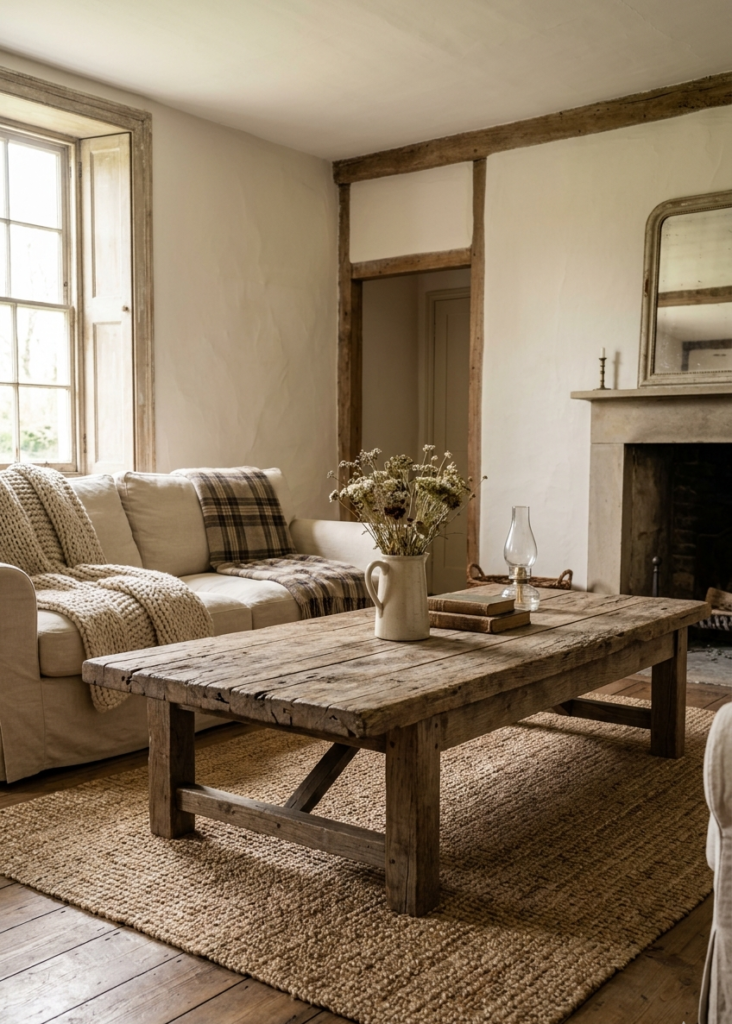
Every farmhouse room starts with wood that shows its past. Reclaimed timber brings grain, knots and small dents that new furniture spends a fortune trying to fake, and it anchors all the softer pieces around it. You only need one or two substantial wood elements per room. A chunky mantel shelf, a solid dining table, floating shelves with a rough edge or even a stack of old crates used as a side table will do it. If real reclaimed wood is hard to find, choose solid wood with a matte, waxed finish over glossy veneer. Keep the tones warm and mid range. Very dark stain can swallow the light, cheerful mood that makes this style work.
2. Incorporating Antique Metals and Patina
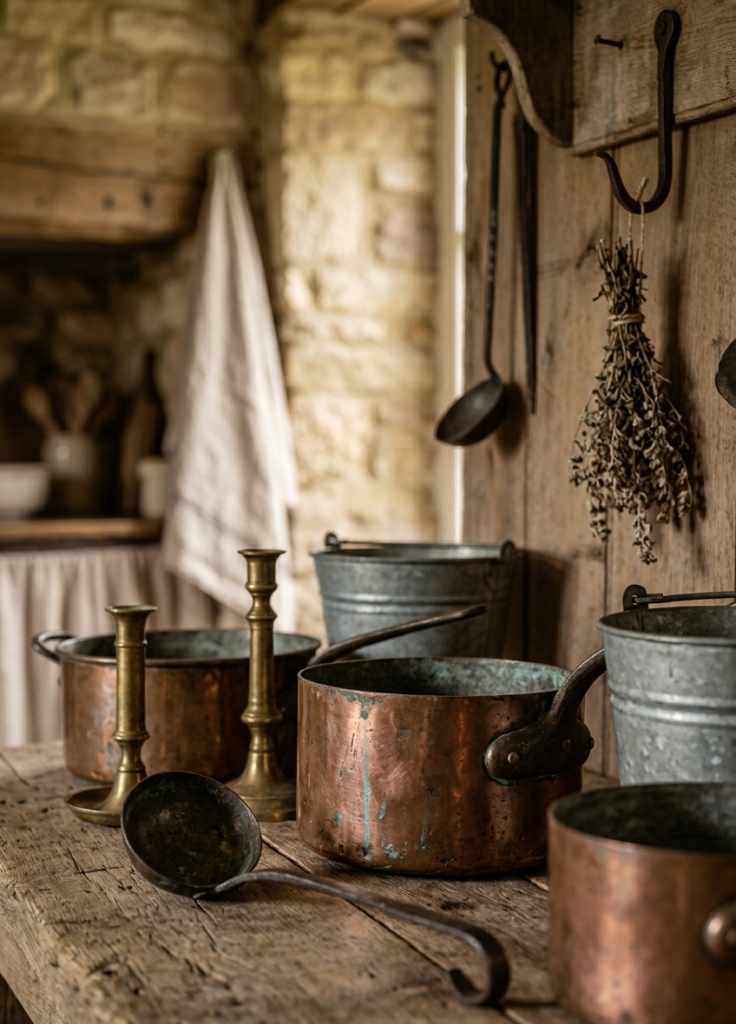
Shiny and new is the enemy of this look. Farmhouse metal should look found, not bought yesterday. Galvanized steel buckets, wrought iron hooks and brackets, weathered brass candlesticks and copper pots with a soft patina all bring that quiet age into a room. Hunt for them at flea markets, estate sales and thrift stores, where one shelf usually holds better pieces than a whole decor aisle. Use metal where it earns its place. Iron bed frames, copper canisters on the kitchen counter, a galvanized tray under a plant. Avoid matching sets. Two or three different aged finishes in one room look collected, while a full matching set looks like a costume.
3. Neutral Palettes with Textural Depth
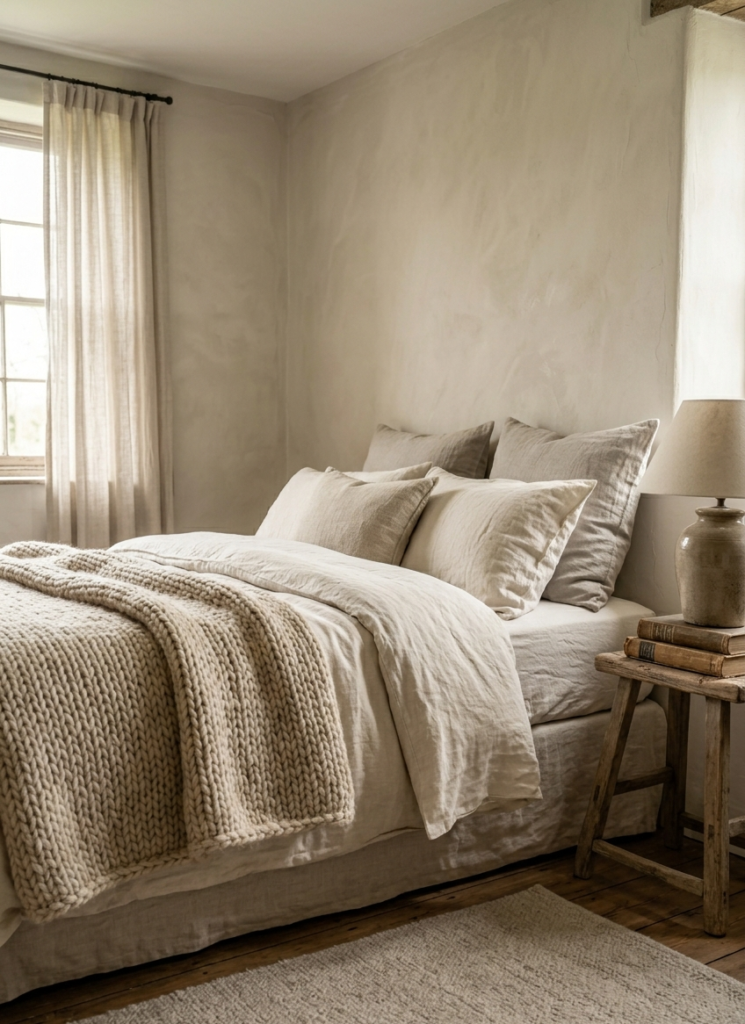
Farmhouse color is quiet on purpose. Whites, warm creams, stone greys and soft beiges let the materials do the talking, but a neutral room only feels cozy if the textures work hard. This is where most people go wrong. They paint everything white and stop. Instead, layer opposites. Smooth linen curtains against rough burlap cushions, a chunky wool throw over a worn leather chair, a woven rug under a painted wood table. Aim for at least three distinct textures in every view of the room. Light matters too. Warm bulbs keep creams looking creamy, while cold white light turns the same palette grey and flat, so check your bulbs before you repaint anything.
4. Open Shelving and Functional Displays
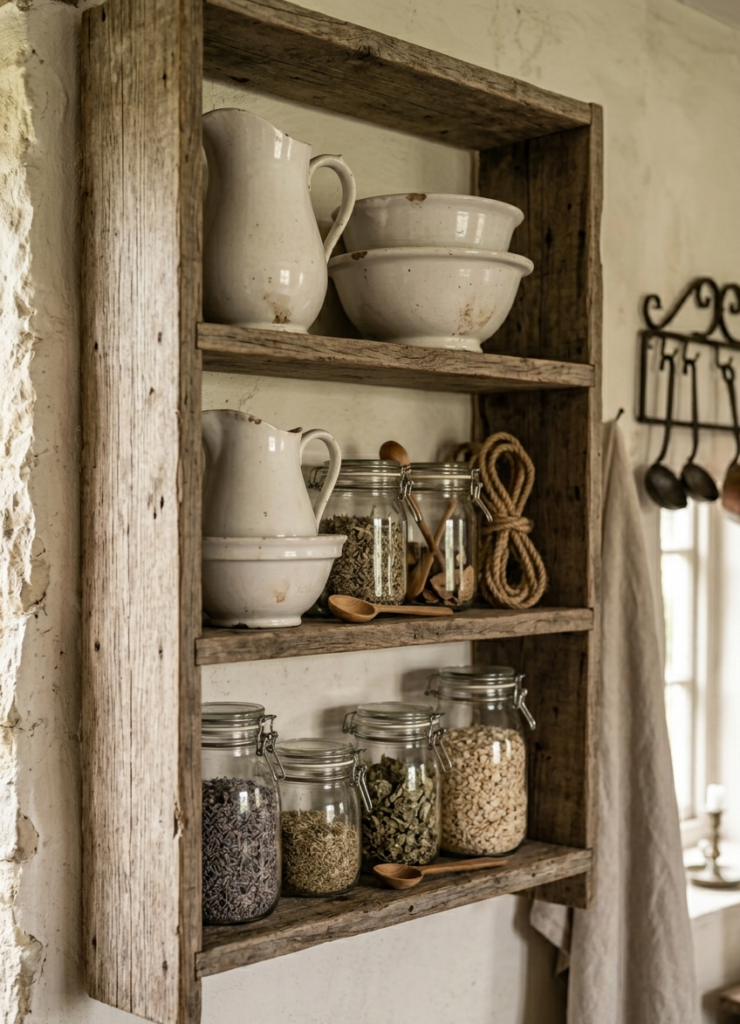
In a farmhouse home, everyday things are the decoration. Open shelves in the kitchen hold the ceramic pitchers, mixing bowls and glass jars you actually use, and a bathroom shelf of folded towels does the same job there. The secret is editing. Group items by material or color, leave breathing room between groups, and repeat a few shapes so the shelf reads as calm rather than crowded. Baskets earn a place on every shelf, because they hide the modern clutter, chargers, packets and plastic, that breaks the mood. Dust is the honest downside. If a shelf needs more than a weekly wipe, it is holding too much.
5. Architectural Salvage as Statement Pieces
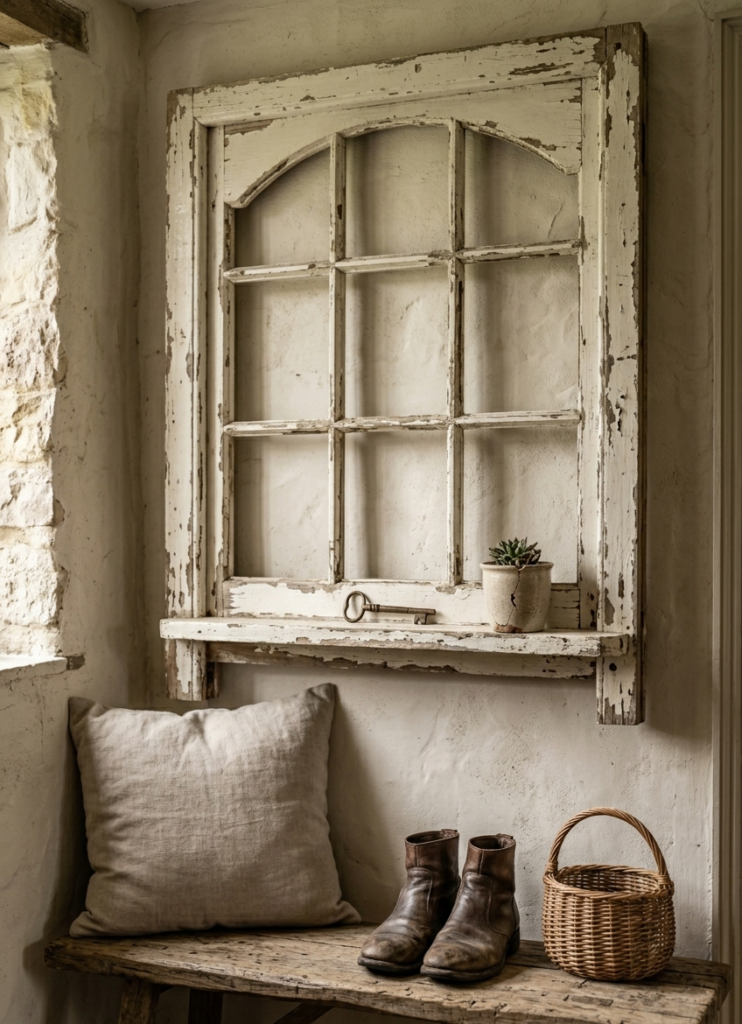
Salvage gives a room a story that nothing new can match. An old window frame becomes wall art above a sofa, a chippy door leans in a hallway corner, carved corbels hold up a shelf or act as bookends, and a worn ladder turns into a blanket rack. These pieces work because of their scale. One large salvage piece anchors a room better than ten small accessories. Clean finds well, check old paint for lead before sanding anything, and seal flaky finishes with a clear matte coat so the character stays and the dust does not. Buy the piece when you see it. Good salvage never waits for you to come back.
6. Botanical Elements and Natural Greenery
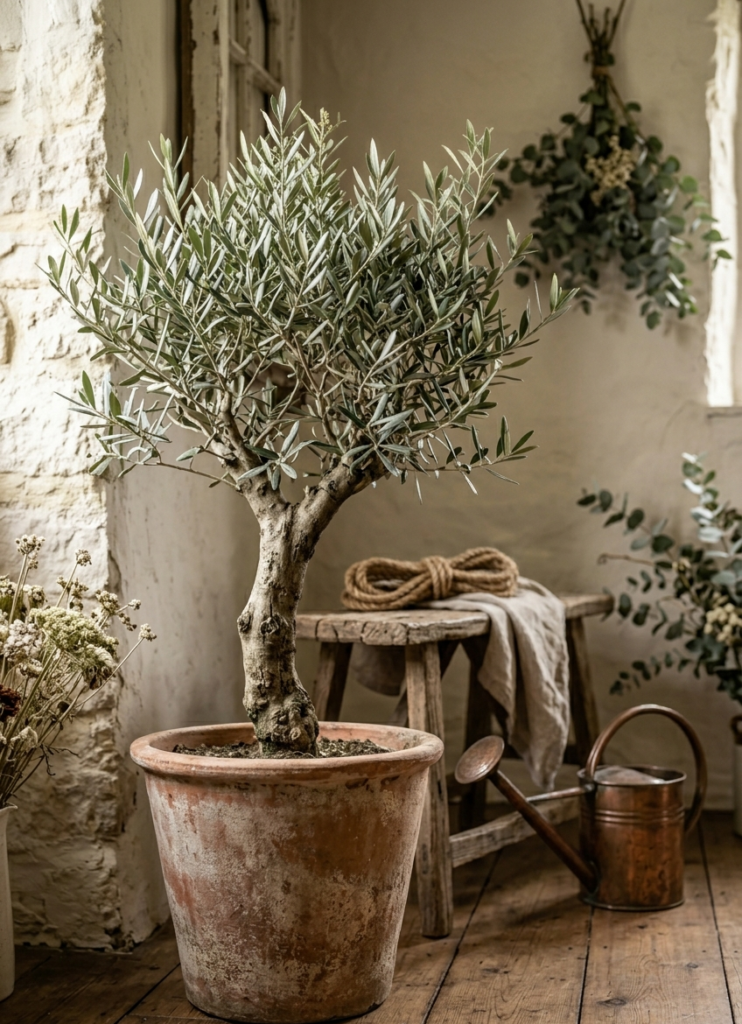
A farmhouse room without something green feels like a museum. Keep arrangements loose and a little wild. Eucalyptus branches in a tall stoneware jug, dried lavender tied with twine, herbs on the kitchen windowsill and an olive tree or rosemary in a terracotta pot all suit the style. Terracotta that has aged outdoors, with its faded, chalky surface, looks better here than a shiny new planter. For rooms with little light, dried stems and grasses are the honest solution and they last for months. Change the greenery with the seasons, spring branches, summer herbs, autumn seed heads, winter evergreen, and the room will never feel frozen in one month of the year.
7. Vintage Textiles and Pattern Mixing
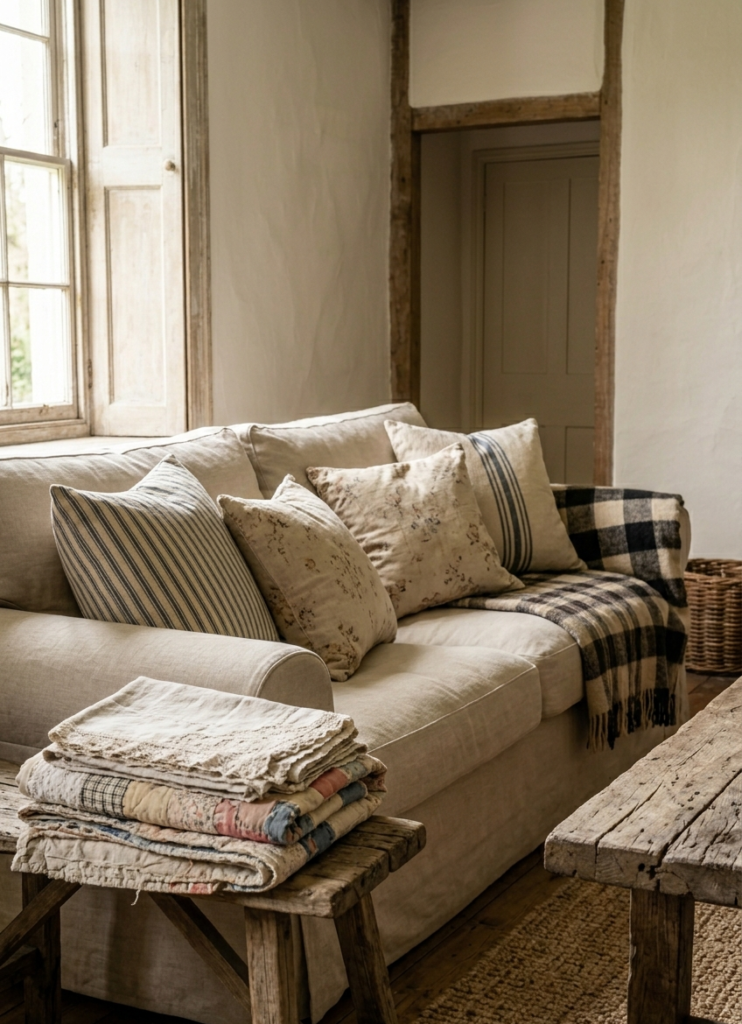
Textiles are where farmhouse rooms get their softness and their personality. The classic patterns have lasted for a reason. Ticking stripes, small faded florals, grain sack stripes and buffalo check can all share one sofa if you follow two rules. Keep the colors muted and related, mostly creams, dusty blues, sage and faded reds, and vary the scale, one large check, one medium stripe, one small floral. Real vintage textiles from markets are wonderful when you find them, and modern reproductions in washed cotton or linen blends are fine too. Drape quilts over chair backs and keep a folded throw within reach of every seat. A farmhouse room should invite you to sit down, not ask you to be careful.
Conclusion
Vintage farmhouse style is a slow style, and that is its strength. Start with honest wood and aged metal, lay a calm neutral base with plenty of texture, then add salvage, greenery and old patterned textiles as you find them. Nothing needs to match, and nothing needs to be perfect. In fact, the chips, dents and faded patches are the point. Collect piece by piece, edit often, and let every room hold at least one thing with a past life. That is how a house of any size or age ends up feeling like it has been loved for generations.
For the next step, see these thrift store decor finds.
Keep going with these vintage home decor ideas for a collected look, they pick up right where this leaves off.
Frequently Asked Questions
How do I start farmhouse style without replacing my furniture?
Begin with textiles and small finds. A linen throw, ticking stripe cushions, a galvanized tray and one piece of aged wood, like a crate or a mantel shelf, change the feel of a room for very little money. Modern furniture underneath these layers reads as part of the mix, especially in a neutral palette.
Where is the best place to buy real vintage farmhouse pieces?
Flea markets, estate sales, farm auctions and thrift stores beat decor shops for price and authenticity. Go early for the best pieces, bring measurements of your rooms and a tape, and check wood for woodworm and old paint for lead before you bring anything home or start sanding.
Can farmhouse decor work in a modern apartment?
Yes, because the style rests on materials, not architecture. Keep your modern sofa and layout, then layer in reclaimed wood, aged metals and vintage textiles. One salvage piece, like an old window frame or ladder, gives the room its farmhouse anchor without pretending the apartment is a barn.
How do I keep a neutral farmhouse room from looking bland?
Texture and contrast do the work. Mix at least three textures in every view, linen, wool, wood, metal, and include a few darker or aged pieces so the pale palette has depth. Greenery adds the final layer of life, and warm light bulbs keep creams from turning cold and grey.