Living Room Lighting Ideas That Shine: 11 Expert Tips
One ceiling light cannot do every job a living room asks of it. The same room hosts movie nights, reading, guests, work calls and quiet mornings, and each task wants a different kind of light.
Good living room lighting ideas are never about a single fixture. They are about layers that you can mix through the day. A soft general glow, focused light where you read or work, and small accents that bring art and shelves to life.
These eleven expert tips build that layered scheme step by step, in the order a designer would plan it.
1. The Art of Lighting in Layers

Every successful scheme has three layers. Ambient light is the general glow, usually from ceiling fixtures or cove lighting. Task light is focused and brighter, placed where you read, knit or work. Accent light is the smallest layer, aimed at art, plants or shelves to add depth. A room with all three feels rich at night, while a room with only a ceiling light feels flat no matter how nice the furniture is. Plan per layer, not per fixture. Walk your room at night, note where you squint and where it feels dull, and you have your shopping list in the right order.
2. Make a Statement: The Centerpiece Fixture

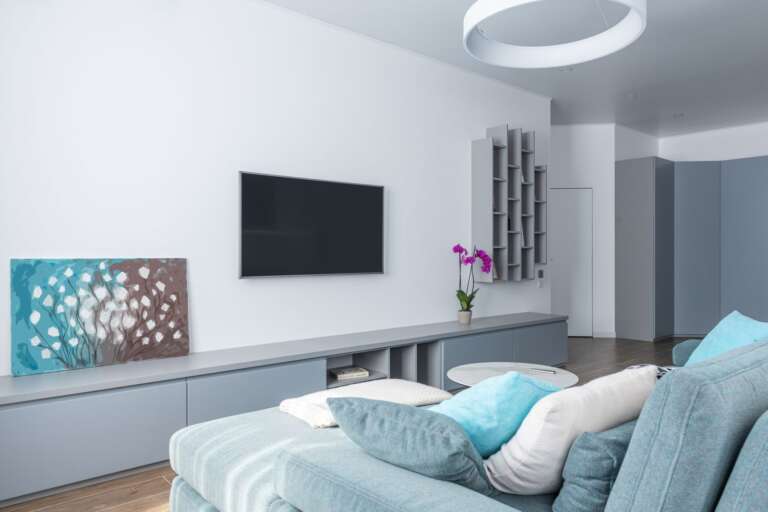
The main ceiling fixture is the jewelry of the room, the one piece everyone notices, so let it have personality. A sculptural pendant, a modern chandelier or a cluster of globes can set the style for everything else. Scale is where most people go wrong. A fixture that is too small disappears, and one that is too large bullies the room. As a guide, add the room’s length and width in feet, and look for a fixture close to that number in inches across. Hang it so the bottom sits around seven feet from the floor, and put it on a dimmer so the statement piece can also be the soft evening glow.
3. Illuminate the Details: Cabinet & Shelf Lighting

Shelves and cabinets are where a living room keeps its personality, and a little light makes them glow after dark. LED strip lights tucked under shelf edges or puck lights inside a cabinet wash objects in a soft wash that reads as expensive. Battery powered strips make this a renter friendly weekend project with no wiring at all. Keep the light source hidden and let only the glow show, and choose warm white so books and ceramics keep their true colors. Group objects in odd numbers on the lit shelves, and leave some breathing room, because light on clutter only looks messy.
4. Create Depth with a Modern Arc Floor Lamp

An arc floor lamp solves two problems at once. It brings overhead style light to the middle of the room without any ceiling work, and its curve adds the height and drama that a boxy room needs. Position the base behind or beside the sofa and let the shade land over the seat where people actually read. The pool of light underneath creates a room within the room, which is exactly the depth flat layouts lack. Check the proportions before you buy. The arc should clear seated heads comfortably, and the base needs to be heavy, since a long reach means real leverage on a light base.
5. Wall Sconces: The Artistic Alternative to Floor Lamps

Sconces give you lamp quality light while using zero floor space, which makes them gold in small living rooms. Flank a sofa, a fireplace or a piece of art with a pair, and the wall itself becomes part of the lighting design. Plug in and battery sconces have removed the old barrier of hardwiring, so renters can use them with adhesive or a single small screw where the lease allows. Mount them at about eye level when standing, a little above the top of the sofa back, and shade the bulbs so the light washes the wall instead of glaring into the room.
6. Sculptural Impact: The Modern Floor Lamp

Some lamps earn their place in daylight too. A sculptural floor lamp with an unusual silhouette, in paper, metal or oversized ceramic, works as a piece of art that happens to glow at night. Place it where a sculpture would go, in an empty corner or beside a plain chair, and let it be the interesting thing in that view. Because it draws the eye, keep its neighbors quiet. One bold lamp per room is a good rule, and its bulb should still be dimmable, since a showpiece you cannot soften will end up switched off.
7. Warm Symmetry: The Power of Matched Table Lamps

A matched pair of table lamps is the oldest trick in the book because it works. Symmetry calms a room, and two pools of warm light at sofa height flatter everyone sitting in them. Place the pair on side tables at either end of the sofa, or on a console behind it. The shade bottom should sit near eye level when you are seated, so the light lands on books and faces, not under the furniture. If buying two at once strains the budget, buy one good lamp now and its twin later, and avoid two different lamps pretending to be a pair, since the mismatch always shows.
8. Define the Zone: Strategic Pendant Lighting

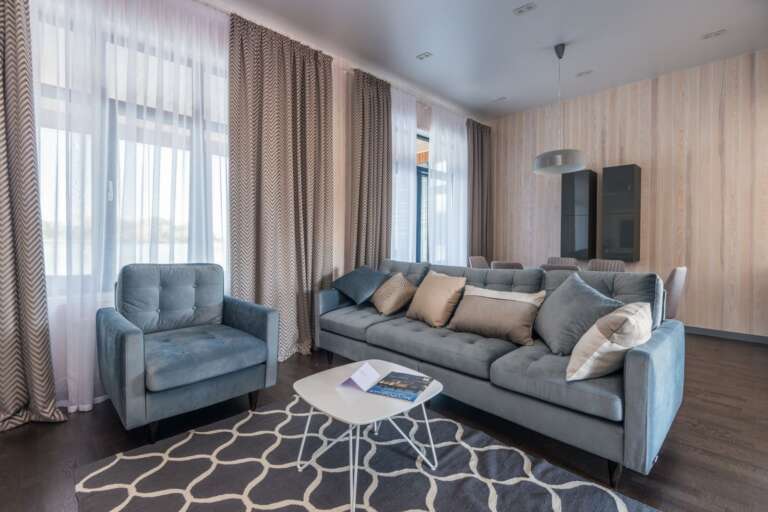
In open plan homes, light is how you draw the walls. A pendant or a pair of pendants hung low over a coffee table, reading chair or sideboard declares that patch of floor a separate zone, even with no divider in sight. This works best when the rest of the lighting is kept slightly dimmer, so the pendant zone reads as the destination. Renters can use plug in swag pendants hung from a ceiling hook where the lease allows small fixings. Keep the drop consistent with your other low lighting, and always check sightlines from the sofa so nobody stares into a bare bulb during a film.
9. Optimize the View: Picture & Display Lighting

Art lit properly looks twice as expensive. A picture light mounted above a frame, or a small spotlight aimed from across the room, pulls color and texture out of a print that flat ceiling light leaves dull. Battery picture lights with remote controls have made this a ten minute upgrade with no cables to hide. Angle the light to avoid reflections on glass, and choose a fixture a little narrower than the frame so the ends do not glare. Do not stop at paintings. The same trick over a mirror, a woven wall hanging or a shelf of pottery turns everyday objects into a gallery.
10. Maximize Depth with Perimeter cove Lighting

Cove lighting hides LED strips in a ledge or behind crown molding so light washes down the wall or across the ceiling with no visible source. It is the softest ambient light there is, and it makes ceilings feel higher because the brightest part of the room is at the top. This one does involve installation, so it suits homeowners planning other work. A simpler cousin exists. Strips run along the top of tall bookcases or behind a pelmet give a similar floating glow at a fraction of the effort. Keep the color temperature consistent with your lamps, since mixed warm and cold light is the fastest way to make a scheme look accidental.
11. Integrating the Scheme: The Complete Lighting Plan

The final step is making the layers behave like one system. Put lights on at least two or three separate controls, so movie night, cleaning day and a quiet evening each get their own combination. Dimmers on the main fixtures do more for atmosphere than any new lamp, and smart bulbs are the renter friendly way to get dimming and warm to cool control without rewiring. Before you buy anything else, live with your current lights for one evening and note exactly what is missing. Good lighting plans are finished by observation, not by shopping, and most rooms are only two well placed lights away from feeling designed.
Conclusion
A living room that shines at night is never an accident. It is three simple layers working together, a general glow, light aimed where life happens, and small accents that reward the eye. You do not need to buy it all at once. Start with the layer your room lacks most, which for most homes is warm task light at sitting height, then add the statement and the accents as budget allows. Switch everything on at dusk this week and squint honestly at the result. The room will tell you exactly what it needs next.
This pairs well with our guide to plug in sconces for renters.
Frequently Asked Questions
How many light sources does a living room need?
Most living rooms feel right with five to seven light sources spread across the three layers, but placement matters more than the count. Two well aimed lamps beat four lights all clustered at ceiling height.
What color temperature is best for living room bulbs?
Warm white, around 2700 to 3000 kelvin, suits living rooms best because it flatters skin, wood and fabrics. Keep every bulb in the room within the same range so the scheme looks intentional.
Can I improve my lighting in a rental without rewiring?
Yes. Plug in sconces, battery picture lights, arc lamps, smart bulbs and dimmer plugs rebuild a whole scheme without touching the wiring. Almost every idea in this guide has a plug in version.
Where should I spend first on a small budget?
On dimmers or smart bulbs for the lights you already own, then on one good reading lamp at sofa height. Control and task light change how a room feels more than any decorative fixture.