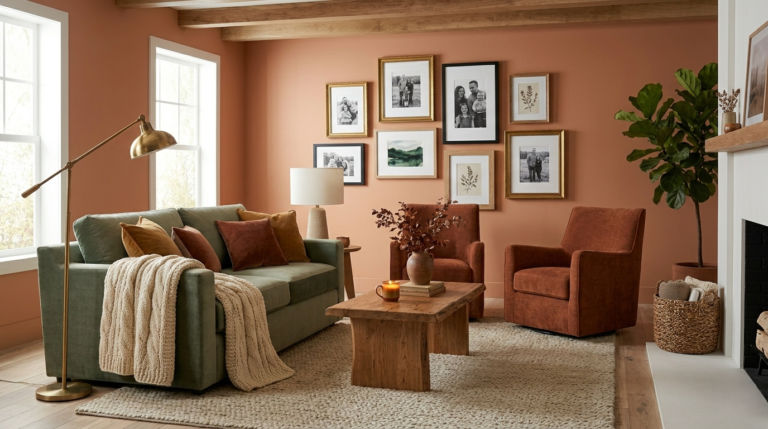
16 TV Wall Decor Ideas That Make the Screen Blend In
Your TV is on for maybe four hours a day. The other twenty, it is a big black rectangle hanging on your best wall, doing nothing, looking like equipment.
That is the actual problem. Not the TV. The wall. A screen left alone on a pale empty wall shouts, while the same screen inside a planned arrangement goes quiet, because the eye reads it as one rectangle among many. The 16 tv wall decor ideas around a TV below are all versions of that one move: give the screen company, color, or cover. Most take an afternoon. One takes a can of paint.
The short version, before we start:
Company beats camouflage. Frames, shelves or one big piece of art beside the screen make it one rectangle in a group, and groups do not shout.
Dark wall, matte paint. Charcoal, ink navy or deep green, in a flat finish. The screen merges with the wall instead of popping off it.
Repeat the black. Three or four black pieces elsewhere in the room, frames, a lamp base, table legs, and the screen stops being the only dark thing in sight.
Zero visible cables. One dangling cord gives the whole game away. Hide them before you style anything.
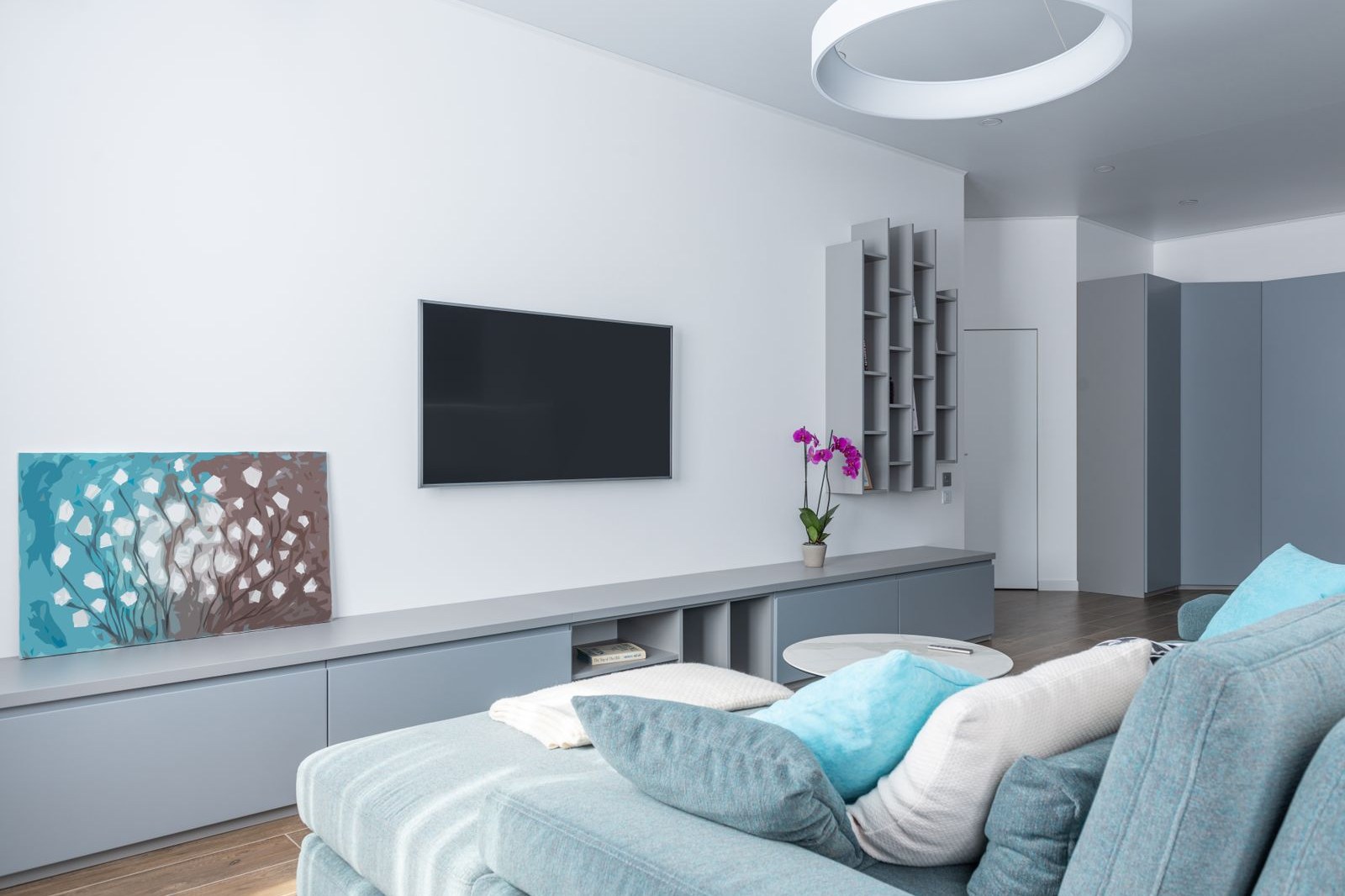
1. Build the TV Into a Gallery Wall
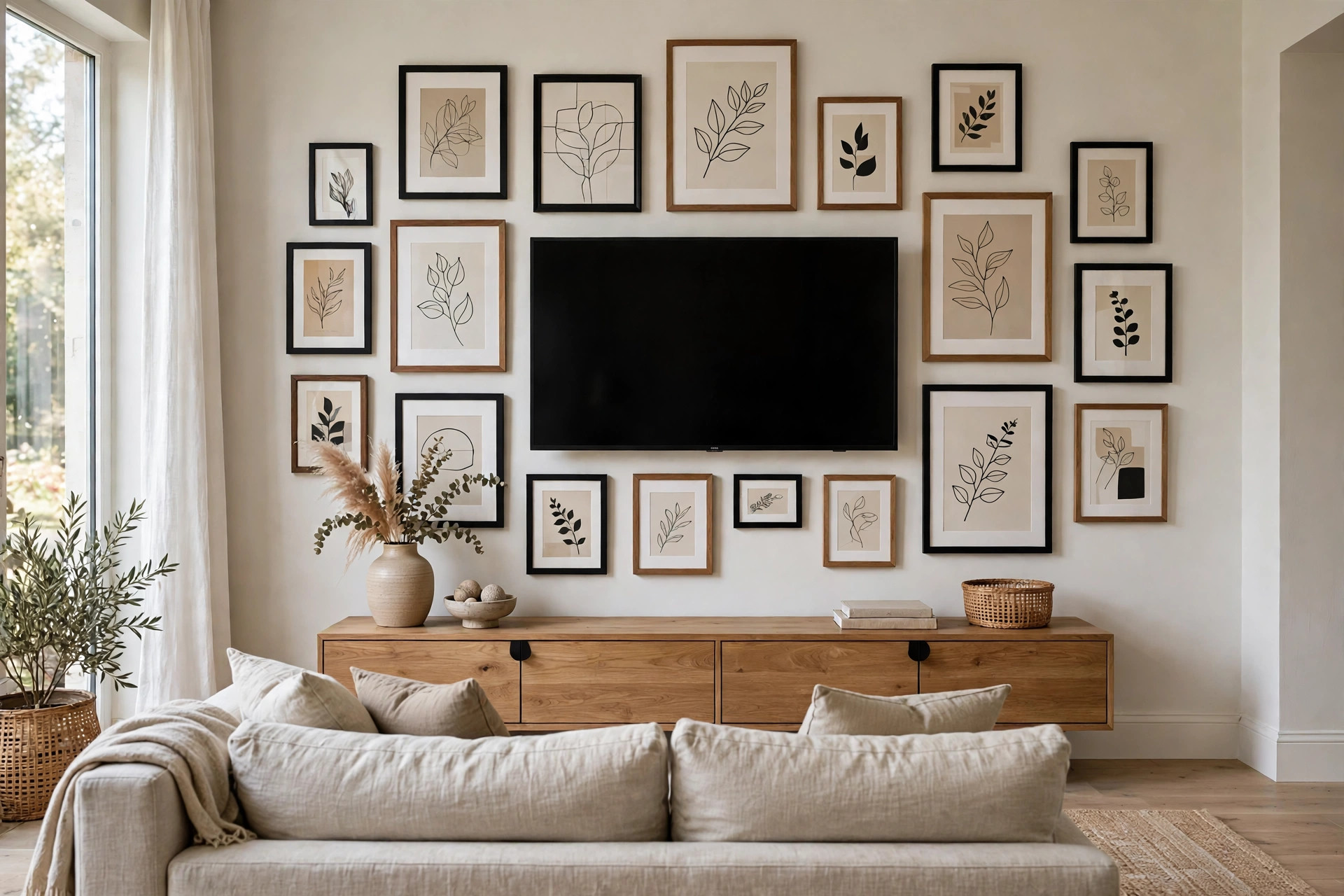
The best camouflage is company. Hang framed art around the screen in a planned group and the TV becomes the largest rectangle in a family of rectangles, which is all a gallery wall ever is.
Keep frame finishes consistent, hold the gaps even at two to three inches, and mix in one or two pieces with dark tones so the black screen has relatives. The planning method is the same one used for gallery wall ideas above the couch: lay it out on the floor first, paper templates on the wall second, holes last. Measure from the screen’s edges exactly as you would from a picture frame.
The failure mode is guessing on the wall. A gallery hung by eye around a TV looks drunk within a week of living with it.
2. Paint the Wall Deep and Flat
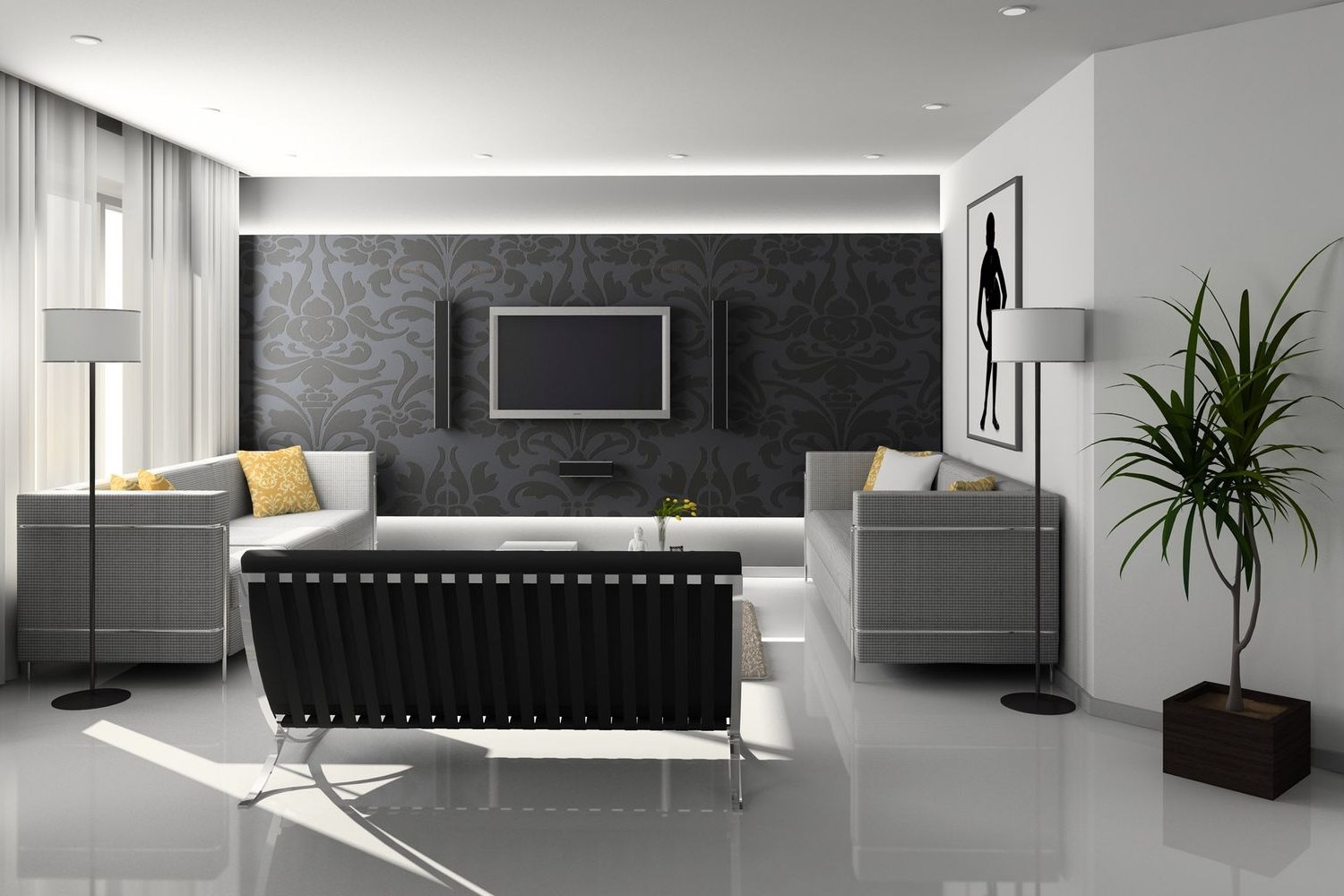
A black screen on a white wall is a billboard. The same screen on a charcoal, ink navy or deep green wall is a shadow.
Dark paint is the cheapest full wall change there is, usually one can for one wall, and it pays you back at night: the wall disappears behind the picture and films feel more cinematic. Use a flat or matte finish, because anything with shine reflects lamplight back at the sofa. Paint the TV wall only and keep the rest of the room lighter, unless the room is big enough to take all four walls dark.
Renters, borrow it instead. A large dark textile hung behind the screen, or removable panels, gets you most of the effect with none of the repaint at move out.
3. Frame the Screen With Panel Molding
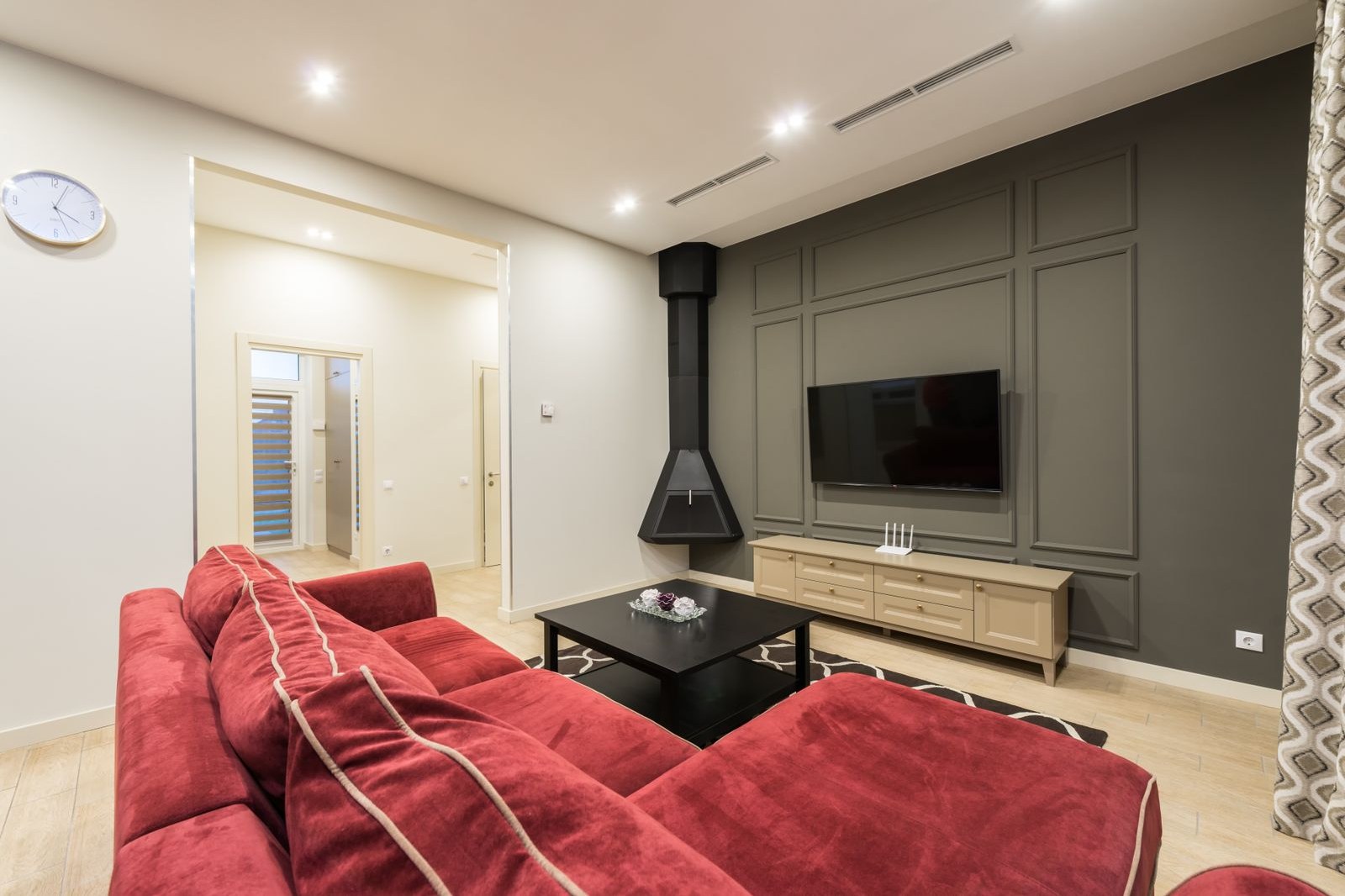
Trim gives a TV architecture. A rectangle of molding sized a little larger than the screen, or panel molding across the whole wall, puts the TV inside a deliberate frame of lines. Deliberate is the opposite of obvious.
This belongs with the bolder living room wall ideas that pop, because the molding becomes the wall’s pattern while the screen quietly joins it. Paint the molding the same color as the wall for a tailored, low contrast result. Two planning notes that save grief: measure around the soundbar before you cut anything, and leave the screen room to tilt or pull out. You will need cable access one day, and that day is always a Sunday evening.
4. Put a Picture Frame on the Screen
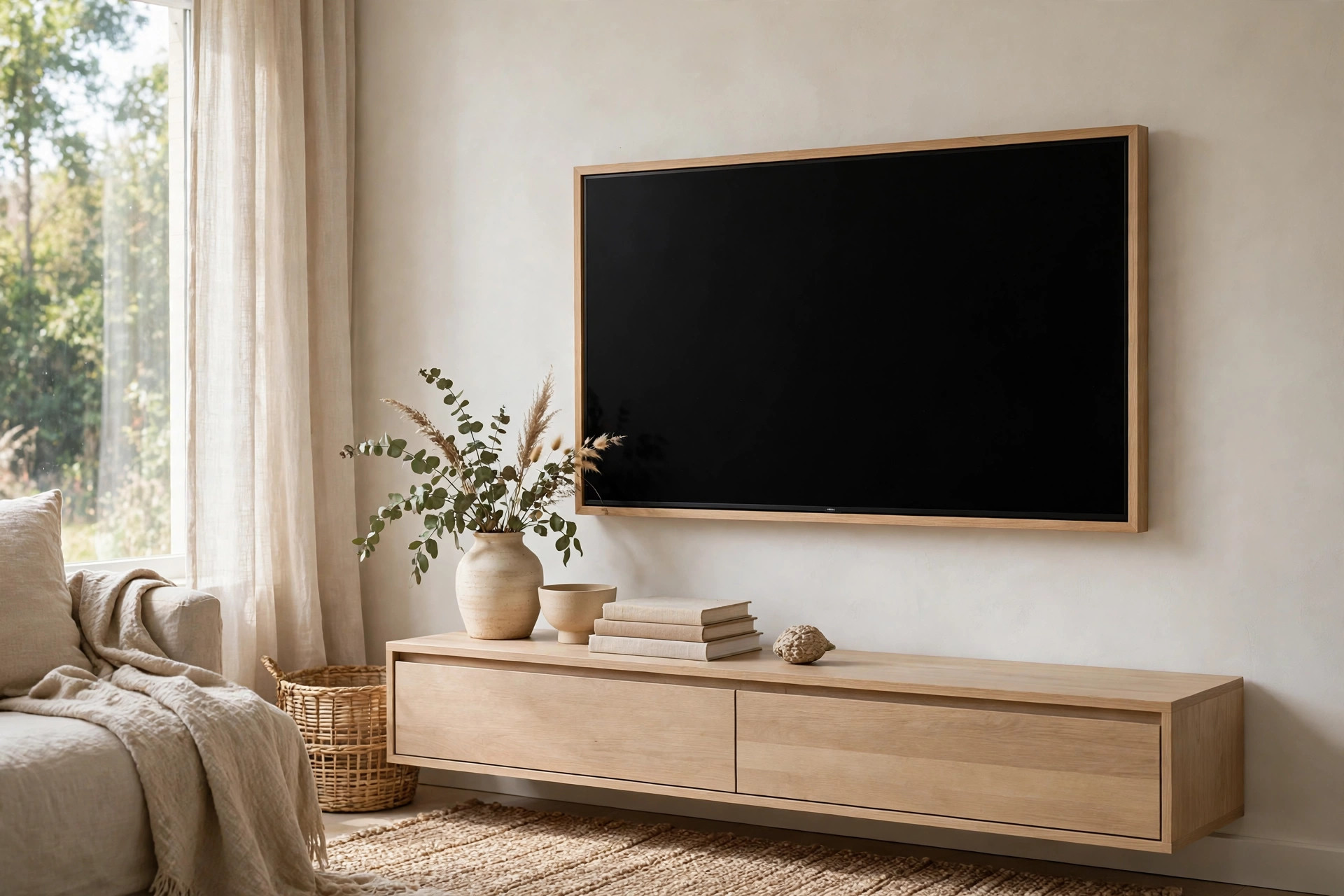
Frame style TVs exist for a reason, but you do not need to buy one. A slim frame or bezel around the edge of the screen you own does the same job.
Wood tone softens the tech look and ties the screen to the frames around it. Black deepens it into the wall. Keep the profile thin, an inch or so, so it reads as a picture and not a box. My preference is wood, because the room already has black: the screen itself.
Renting, or a frame will not fit your model? Hang one genuinely large framed piece beside the TV instead. The eye compares two rectangles and files the screen under art. Cheaper, and nearly as good.
5. Show Art on the Screen When It Is Off
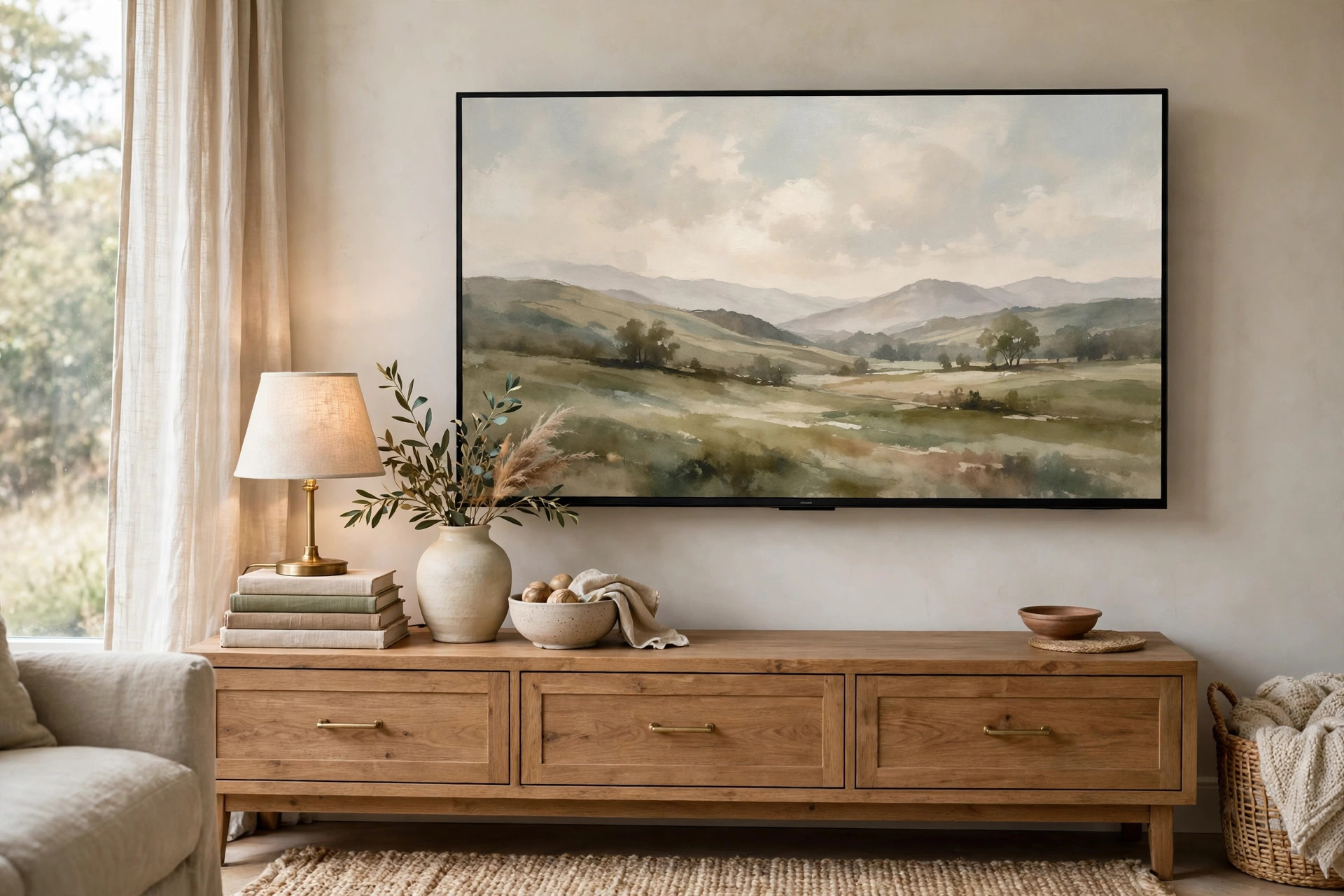
A screen showing a soft landscape is, visually, a framed picture. Most TVs have an ambient or art mode now, and a streaming stick slideshow covers the ones that do not.
Choose muted tones and no bright white backgrounds, because a glowing white rectangle reads as a monitor left on, which defeats the entire exercise. Match the art’s colors to the room and the screen stops being equipment.
One real caution. A single static image left up for very long hours is unkind to some screen types, so run a rotating slideshow that changes every few minutes rather than one permanent picture. Pretty and safe beats pretty and burned in.
6. Flank It With Tall Bookshelves
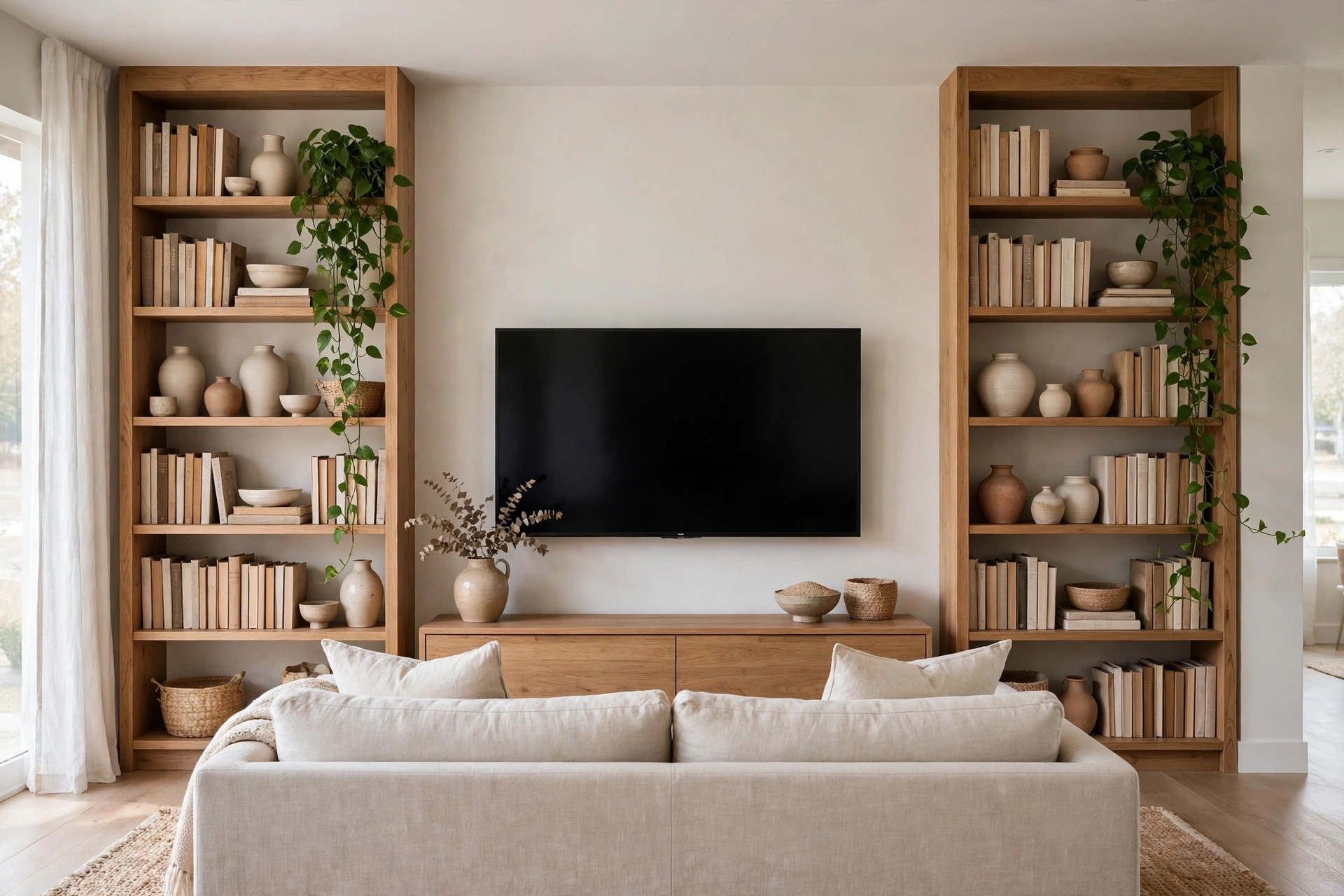
Tall, narrow shelves on both sides give the wall height, symmetry, and two strong focal points that are not the TV.
Style them the way stylists do: books in vertical runs and horizontal stacks, ceramics, one small plant, one personal object per shelf, and empty space left empty on purpose. The shelves also swallow the mess that makes TV walls look bad, streaming boxes, consoles, remotes in a lidded box. Choose shelves a little shallower than the screen’s viewing line so nothing blocks the picture from the side seats, and anchor tall pieces to the wall. A tall bookcase that can tip is not decor, it is a hazard with books in it.
7. Run Floating Shelves on Both Sides Instead
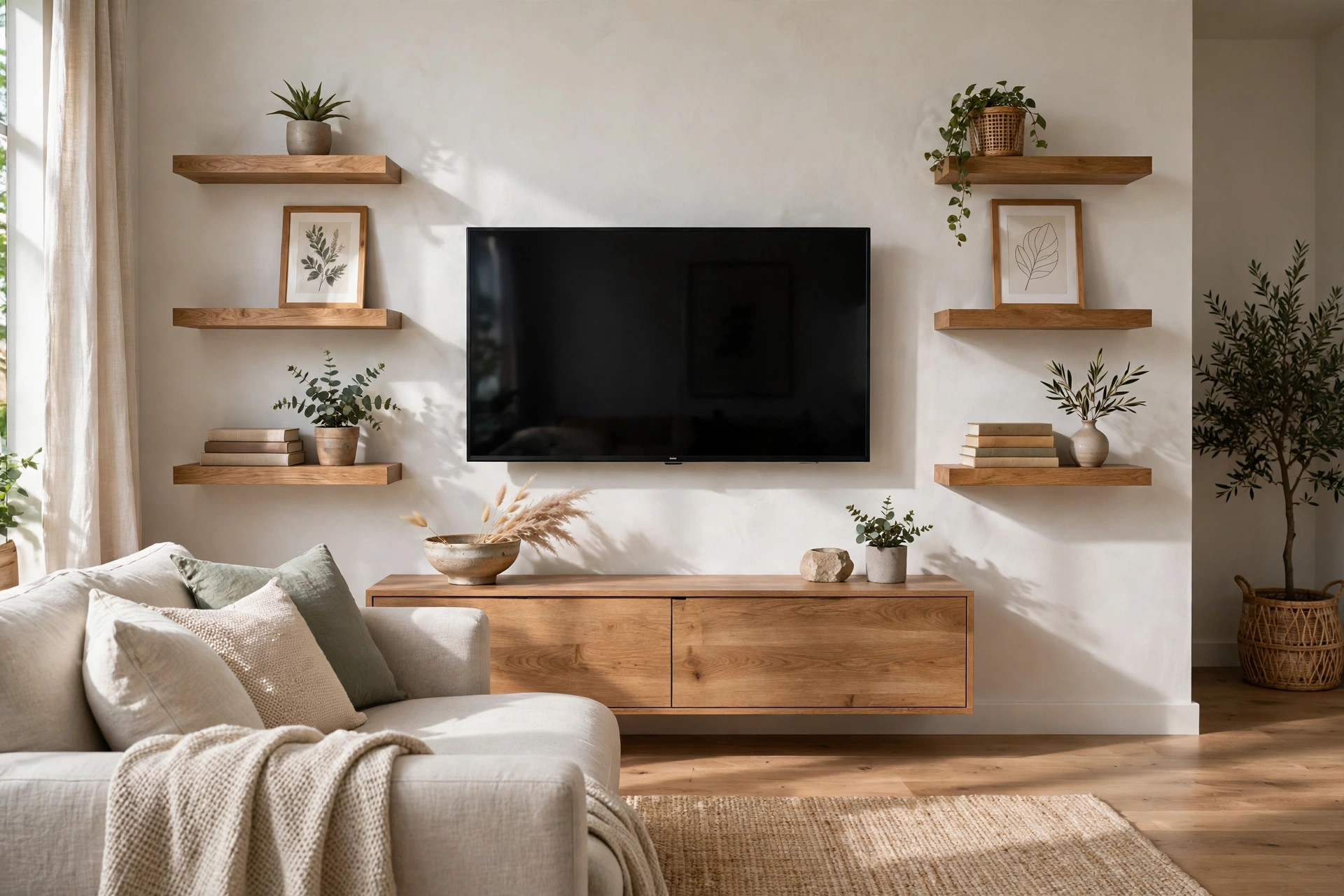
No floor space for tall shelves? Floating shelves stacked on each side of the screen do the balancing job on the wall alone.
Two or three per side, lined up with each other across the screen, set up a rhythm the eye follows instead of stopping dead at the TV. Style them unevenly on purpose, plants and frames one side, books and boxes the other. Mirrored identical shelves look like a shop display; slightly different ones look like a home.
Keep anything that vibrates off them. A subwoofer on a floating shelf will walk your ceramics to the edge over a month of film nights. Route the shelf light cables with the TV cables so the floating look stays clean.
8. Back It With Quiet Wallpaper
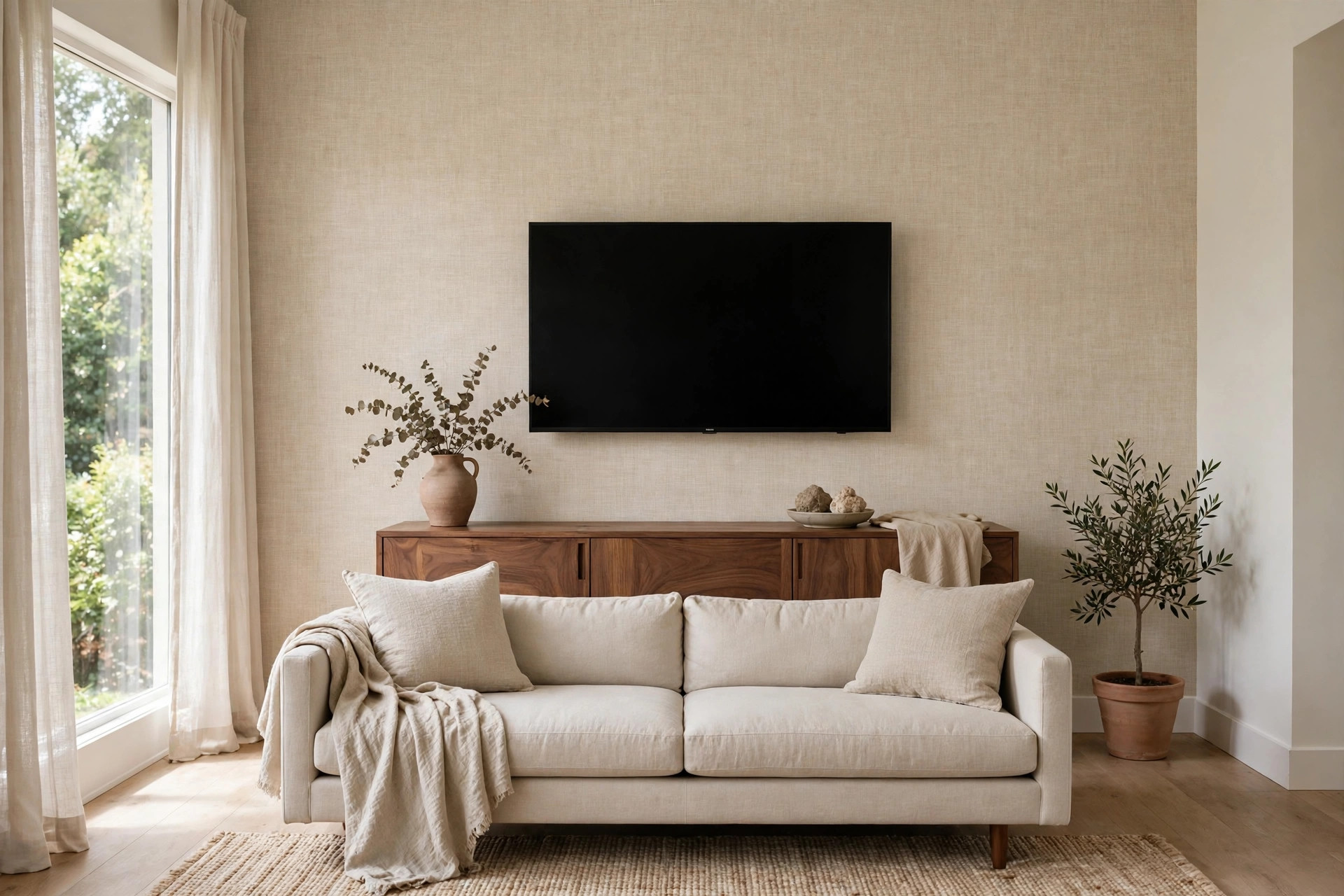
Pattern behind a TV sounds risky until the pattern is quiet: grasscloth texture, a faint stripe, a small print in tones close to the wall color.
The screen’s hard rectangle softens against that gentle movement, and the wall gains the finished quality plain paint lacks. Keep contrast low and scale small, because a bold print fights the picture every time the TV is on, and the TV wins by being louder. Peel and stick versions make this a renter friendly weekend job, and one wall is a small area, so the cost stays modest for the size of the effect. I would test a large sample behind the screen for a week first. Wallpaper reads far stronger at wall scale than on a roll.
9. Back It With Wood Slats or Panels
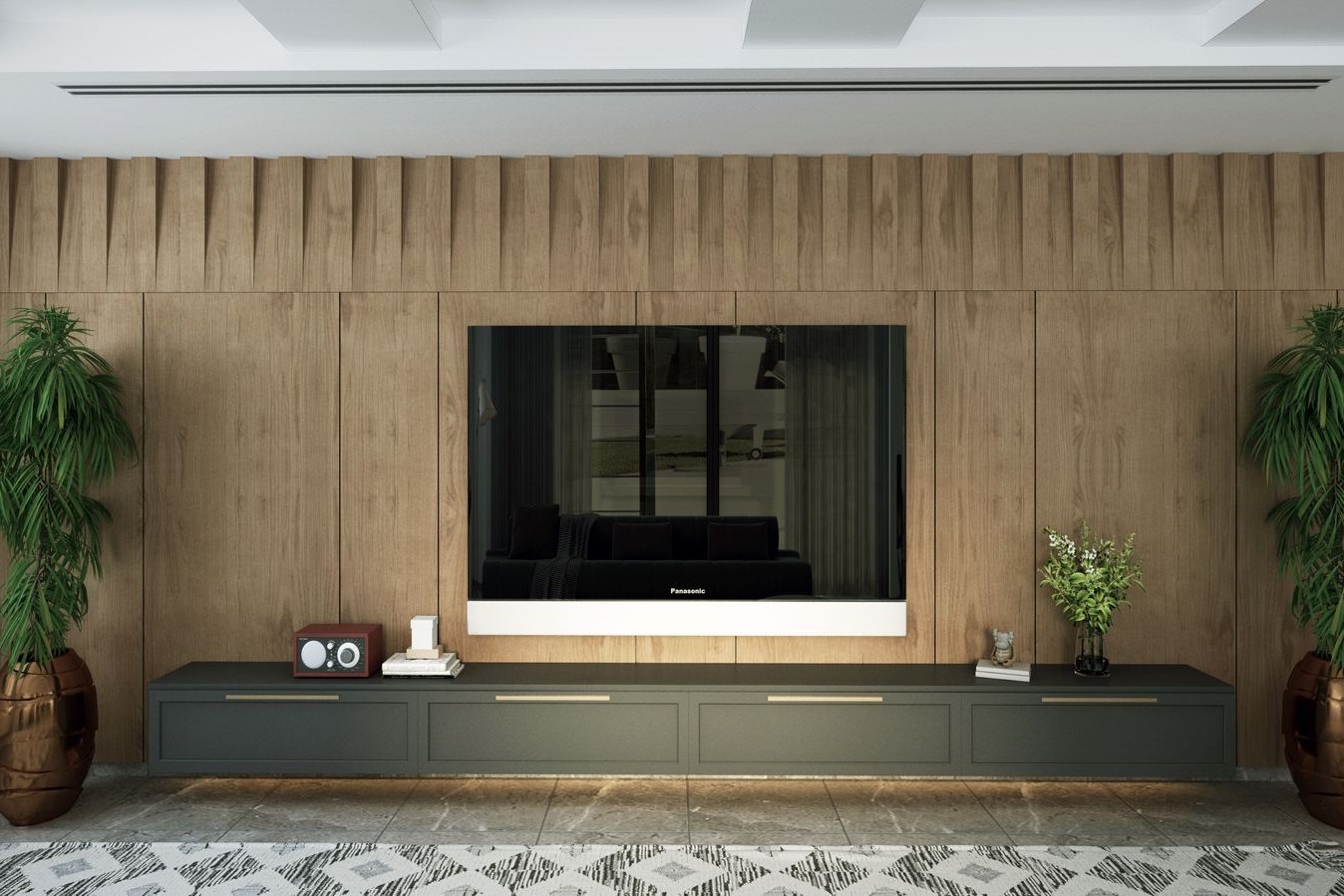
Vertical wood slats behind the screen bring warmth, texture, and a small acoustic bonus, since slatted surfaces scatter sound a little instead of bouncing it flat off plaster.
The TV sits flush against the slats and the black glass becomes one dark element in a wall of natural material. Panel kits have made this far more approachable than it used to be, though it stays an owners’ project in most homes. Keep the wood tone in line with other wood in the room, or the wall looks imported.
Plan cable access before anything gets fixed. One removable section behind the screen saves you dismantling the feature wall the day a cable dies.
10. Style the Console Like a Sideboard, Not a Dock
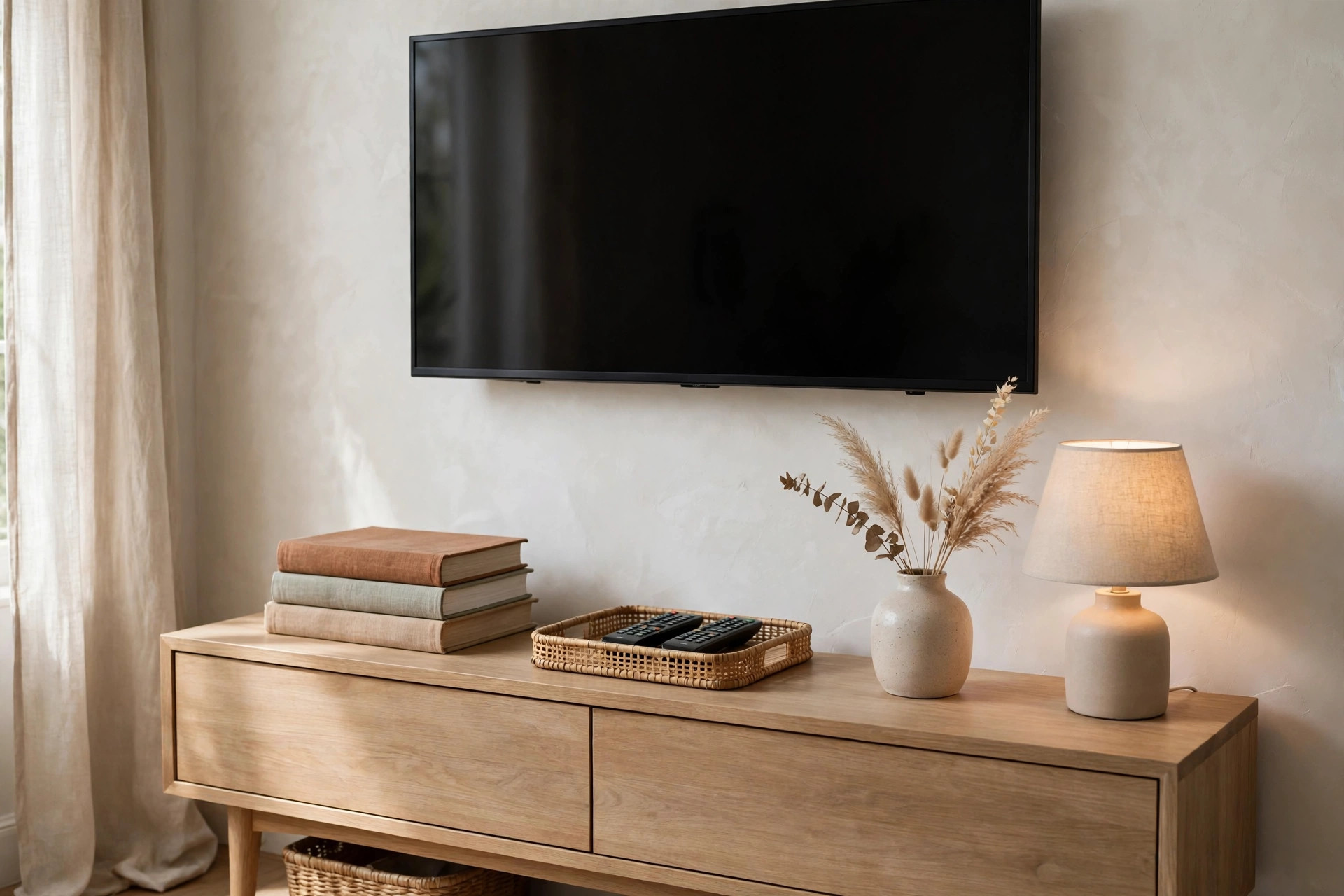
The console is where TV walls go to die: boxes, blinking lights and a cable nest under a floating screen.
Treat the surface like a sideboard. Devices group to one side, inside a cabinet section or a ventilated basket, and the rest gets styled in deliberate groups: a stack of books, a tray holding the remotes, a vase or a small lamp. The thinking is borrowed from strong living room wall art ideas styling, where objects in planned groups make any wall read as decor first. Leave the middle of the console clear. A surface with breathing room looks chosen; a full one looks like storage that lost its cupboard.
Heat note: closed cabinets and game consoles do not mix. If the box runs hot, the basket beats the cupboard door.
11. Hang Picture Ledges Where the Wall Goes Bare
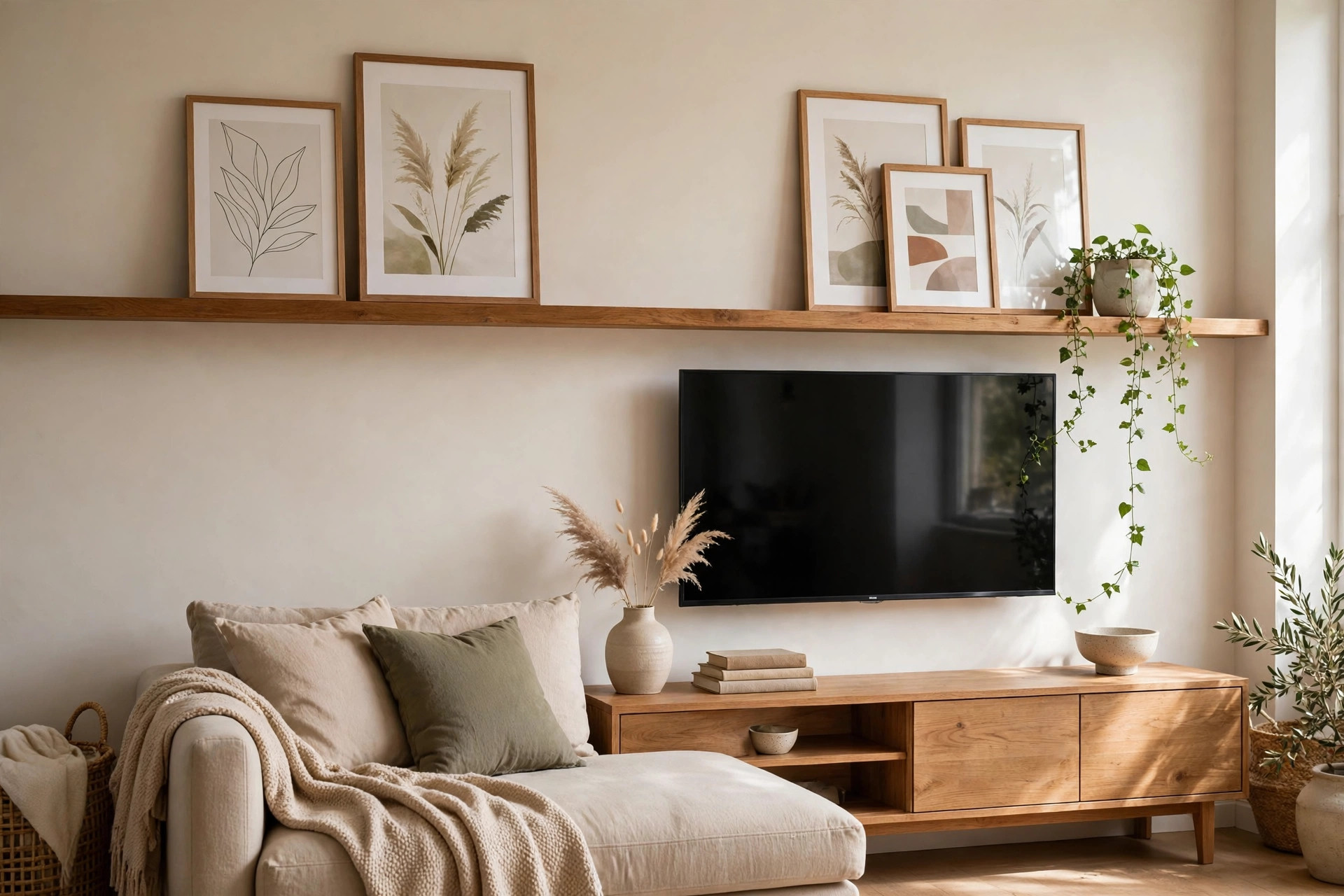
If the TV sits on a console instead of the wall, the strip of wall above the screen usually goes bare, and the whole setup reads unfinished.
A picture ledge above the TV, or a pair flanking a wall mounted screen at console height, gives that strip a job: leaning frames, a small plant, a low stack of books. Ledges keep everything changeable, which suits a wall that rearranges as devices come and go. Keep ledge pieces low contrast so they garnish the screen rather than compete with it.
And secure what leans. A slammed door’s vibration walks frames along a ledge a fraction at a time, and one day the fraction runs out. A strip of removable adhesive behind each frame stops the walk.
12. Balance It With One Large Piece Beside It
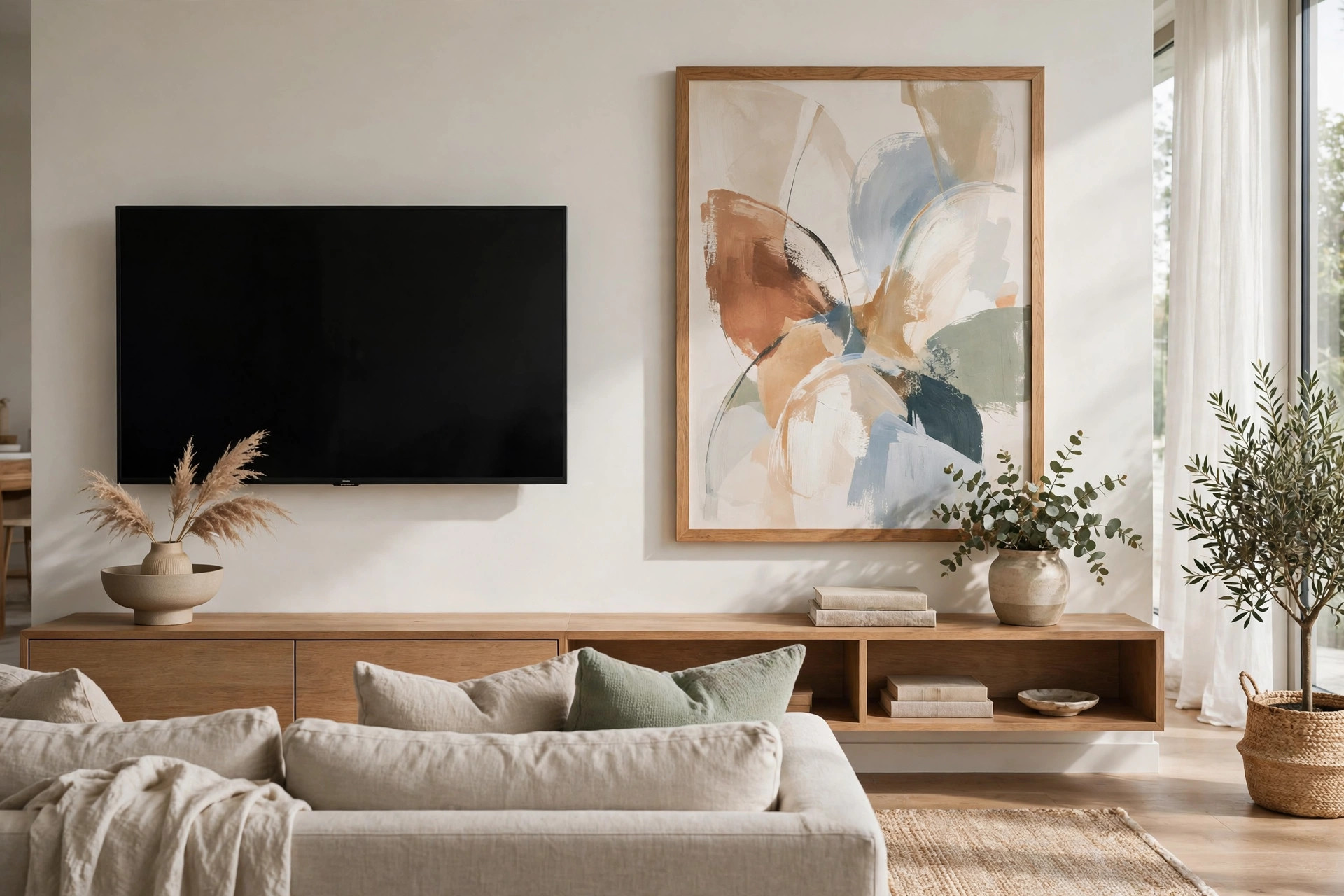
A gallery wall is not the only route. One large piece, art, a big mirror or an oversized clock, hung beside the screen gives the wall a second rectangle of similar weight, and balance does the camouflaging.
This works best when the TV sits off center on a long wall: the art takes the empty side and the pair reads as a plan. Match the top edges if you want calm, stagger them if you want loose. Either way, leave a clear gap of at least six inches between the two, so neither crowds the other.
Scale check: the piece should be at least two thirds the screen’s height. A small picture beside a big TV does not balance it. It apologizes for it.
13. Soften the Corners With Tall Plants
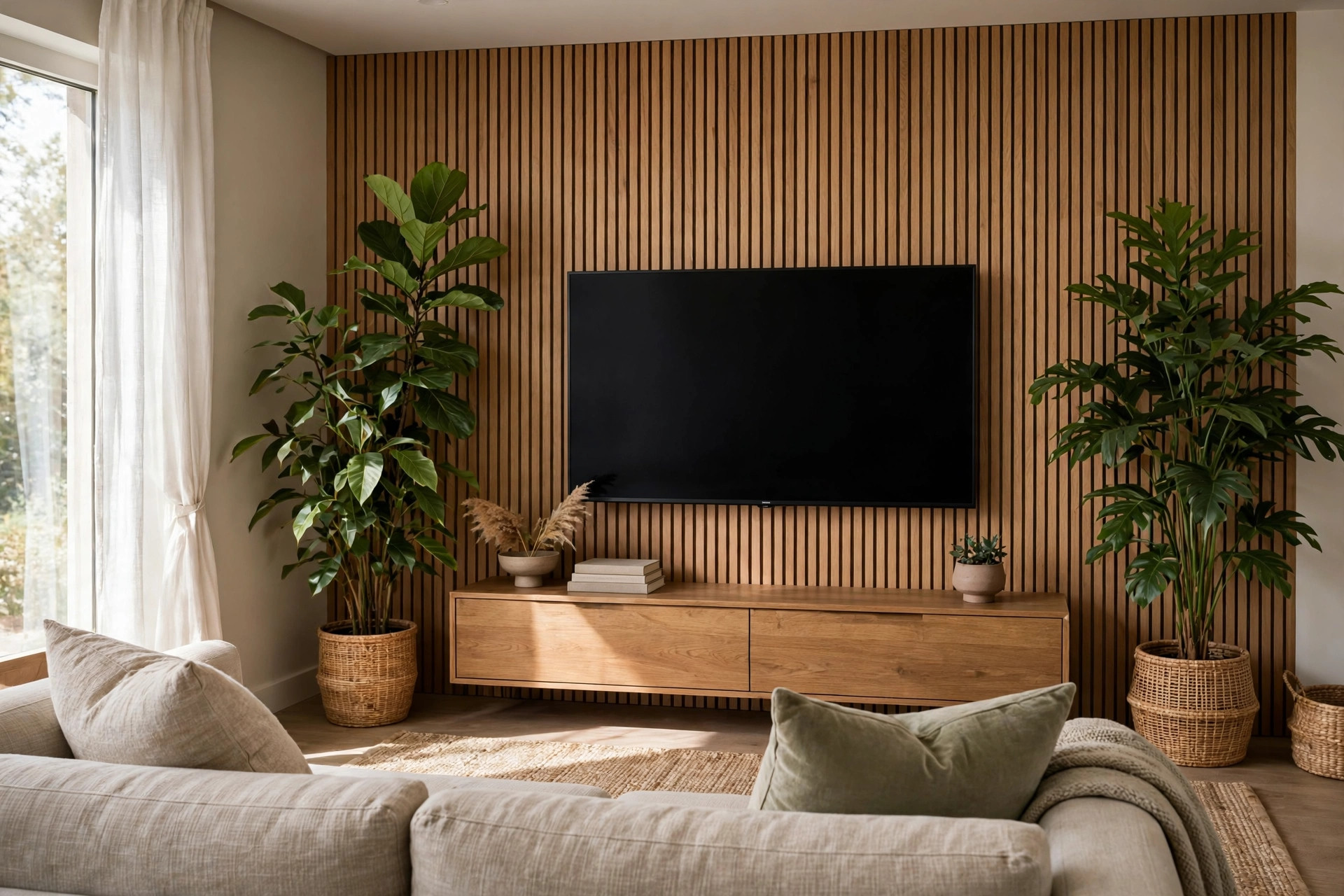
Screens are all hard edges. The fastest softening is something alive at each side.
A tall plant at one or both ends of the TV wall breaks the grid of rectangles, adds height to rival the shelving ideas, and brings the one color every screen wall lacks, green. Floor plants suit consoles and low stands; a trailing plant on a high shelf suits wall mounted setups.
Choose plants that tolerate the light your room honestly has, not the light you wish it had. That is where most indoor plants die, optimism. And keep leaves trimmed clear of the screen edges and vents. TVs give off gentle heat, and a leaf resting on a vent lives a short, crispy life.
14. Light the Wall, Not Just the Room
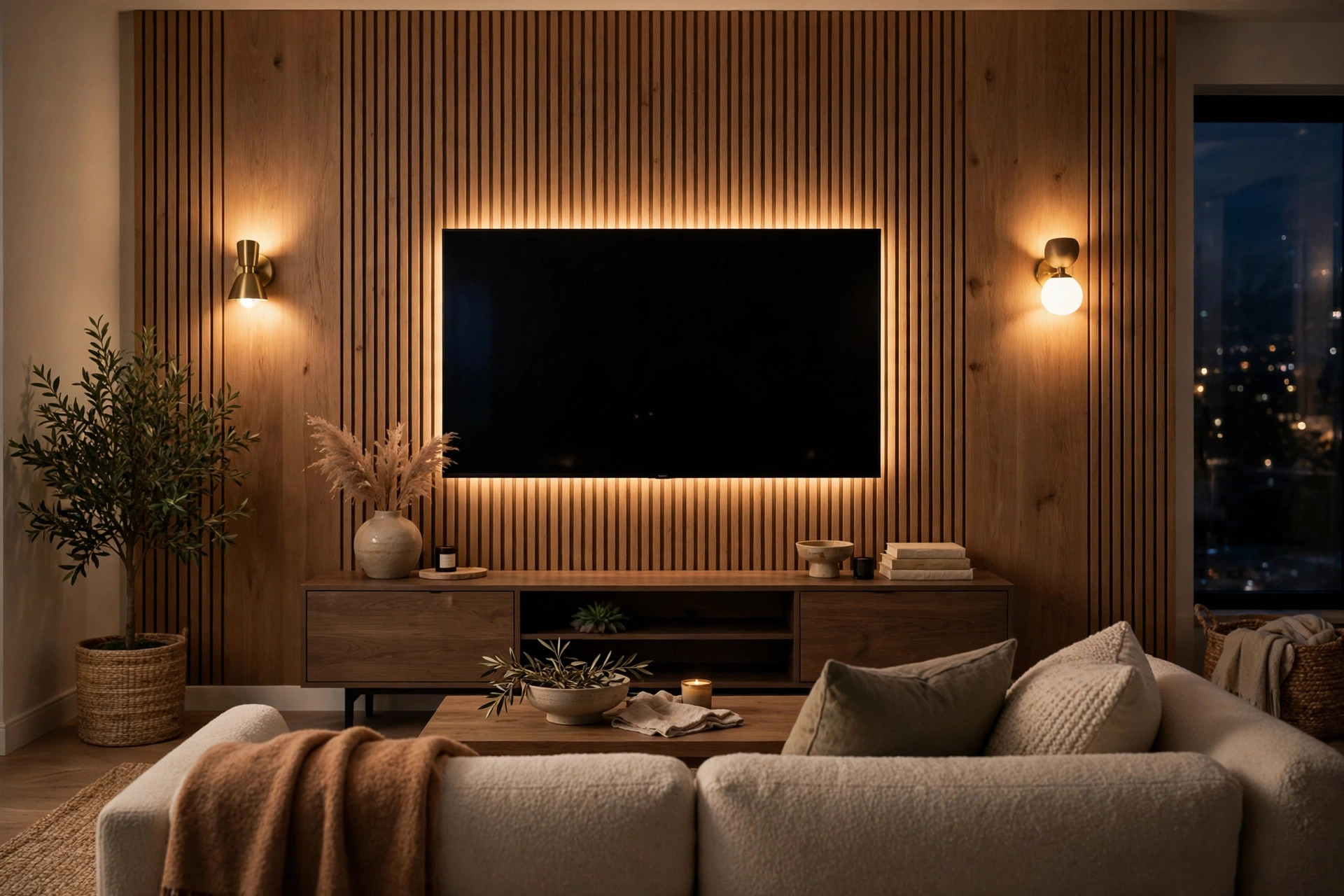
Light decides how obvious a screen feels. A dark screen against a bright wall pops; soften the contrast and the screen relaxes into the room.
Two small lamps on the console, plug in sconces flanking the screen, or a soft glow behind the TV itself all do it. Bias lighting behind the screen is also kinder to your eyes on night viewing, which is a real bonus and not a small one. Keep sources symmetrical where the wall is symmetrical, and warm in tone, around 2700K.
Test from the sofa before you fix anything. A lamp whose reflection lands in the screen from the main seats will annoy you every single evening, and it takes ten seconds sitting down to find that out.
15. Hide Every Cable and Box
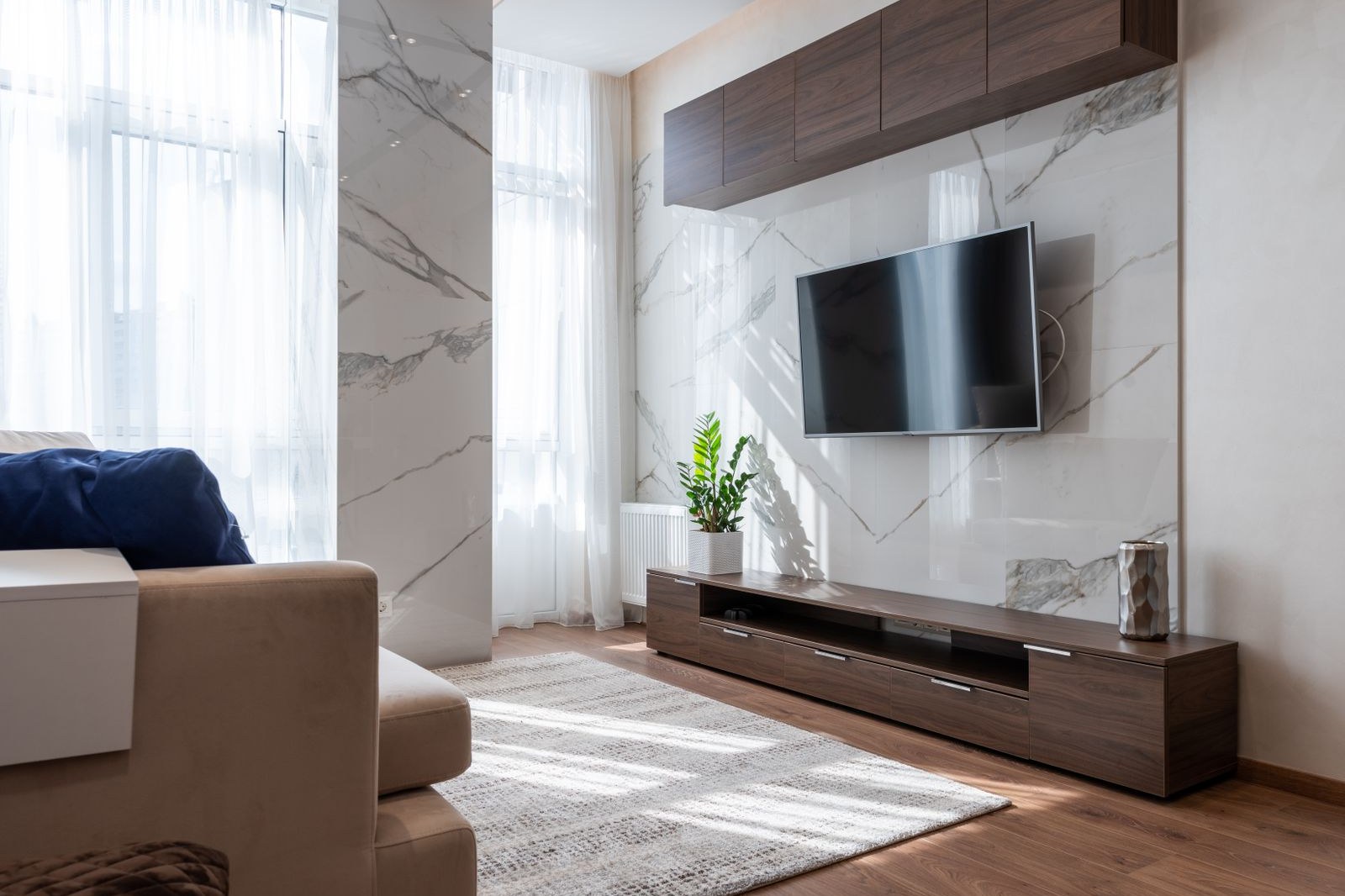
Nothing betrays a TV wall like one cable dropping from the screen to a glowing power strip. It is the visual equivalent of a price tag left on a coat.
Run cables inside the wall where rules and your lease allow. Where they do not, a paintable cable raceway matched to the wall does nearly as well. Gather the boxes into the console cabinet or a ventilated basket. The goal is zero wires found by a wandering eye.
While you tidy, label both ends of every cable. It takes minutes now and saves a full excavation the day you swap one device. I learned that one the hard way, on my knees, holding a torch in my teeth.
16. Repeat Black Around the Room
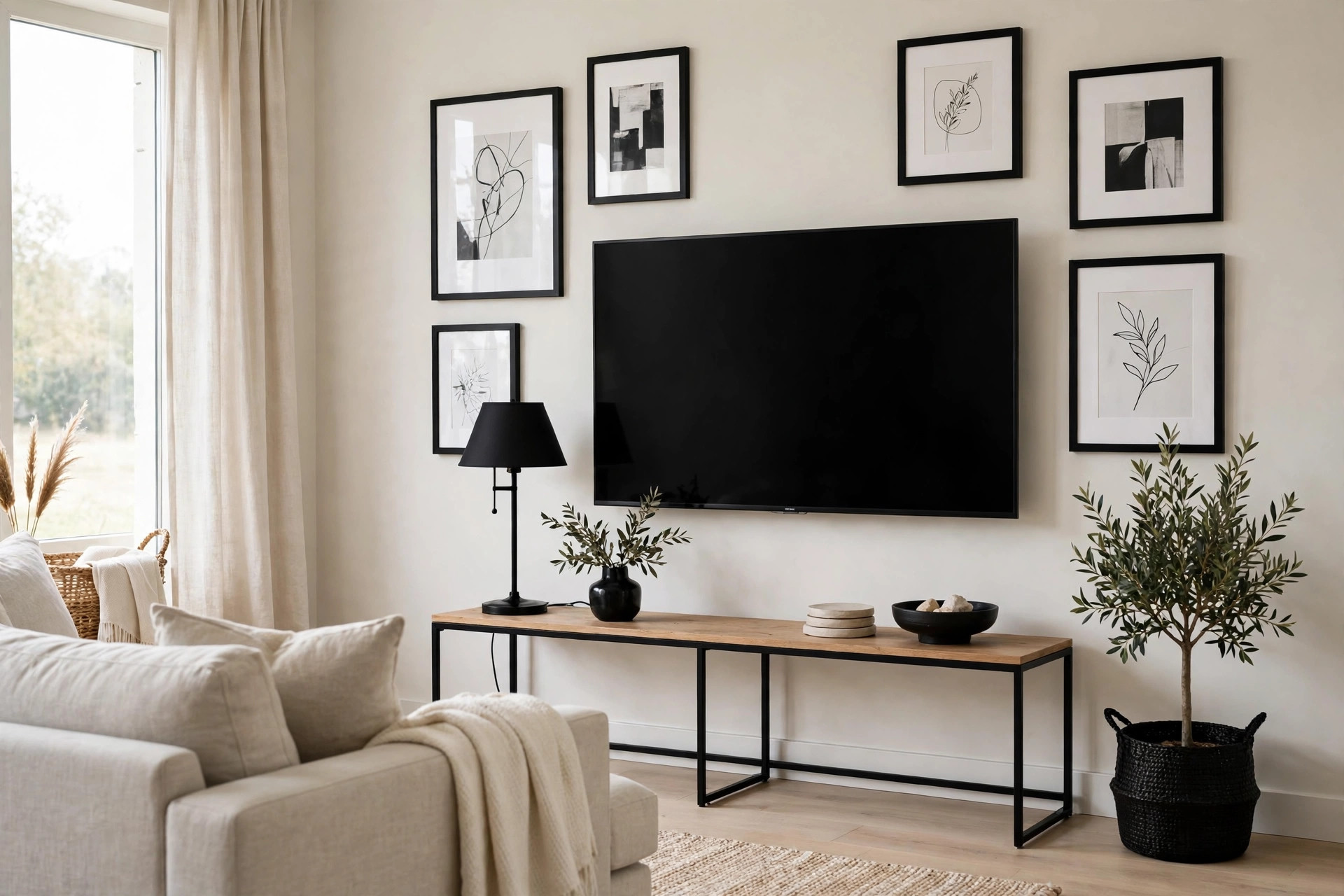
The final trick is color accounting. A lone black rectangle dominates. Three or four black elements compose.
Repeat the screen’s black in picture frames, a lamp base, cabinet hardware, a side table, the legs of the console, spread across the room rather than clustered at the wall. This is the unifying move in most modern living room designs: one dark note, repeated quietly, until it reads as the palette instead of the problem.
Once black becomes a color in the room’s scheme, the television is simply its largest example. Skip buying anything new for this one, by the way. Most rooms already own three black things. They are just all in the wrong places.
The Bottom Line
A TV wall stops looking like an appliance display the moment the screen gets context: frames around it, color behind it, shelves beside it, a styled console under it, and not a cable in sight. You do not need all 16 ideas. Pick the one that solves your wall’s loudest problem, darkness, emptiness or clutter, and add the rest as time allows. Guests should notice the room first and the television second, if they notice it at all.
Start with the cables. Twenty minutes of hiding wires does more for this wall than any purchase on the list.
Frequently Asked Questions
How can I make my TV look less obvious?
Surround it with context. Build it into a gallery wall or pair it with one large piece of art, paint the wall a deep matte color so the black screen merges with it, and repeat black in frames and accessories around the room. Hiding the cables and showing soft art on the screen when it is off completes the disguise.
Should you hang pictures around a TV?
Yes, it is one of the most reliable tricks there is. Treat the screen as the largest frame in the group, keep frame finishes consistent and gaps even at two to three inches, and plan the layout on the floor and with paper templates before any holes. Choose art with some dark tones so the screen has company.
What wall color makes a TV blend in best?
Deep, flat colors: charcoal, ink navy, deep green or a warm near black in a matte finish, because a powered off screen is itself dark gray black. Wall and screen merge tonally, and the room gains a more cinematic feel for evening viewing. Pale walls create the strongest contrast and make any screen look louder.
How do I style the console under a wall mounted TV?
Style it like a sideboard. Contain the devices in a cabinet section or a ventilated basket, then arrange the surface in groups: a stack of books, a tray for the remotes, a vase or a small lamp, with the middle left clear. Route every cable out of sight behind or inside it, and the console reads as furniture instead of a docking station.