Hallway Decor Ideas You’ll Copy
The hallway is the first room anyone sees and the one most of us ignore. It collects shoes, post and coats, and in many homes it is narrow, dark and windowless on top of it.
Yet the hallways people save on Pinterest are rarely bigger or brighter. They are simply treated like real rooms, with light, layers and a place for everything.
Good hallway decor follows a clear order. Fix the light first, add one piece of furniture that earns its space, then layer art, texture and storage in that order. These eleven ideas follow that sequence, and most of them work in a rental and in a single weekend.
1. The Power of Oversized Mirrors

A mirror is the hardest working piece you can put in a hallway. A large one bounces whatever light the space has from one end to the other, and it visually doubles the width of a narrow corridor. Hang it opposite a doorway or at the end of the hall so it reflects a room or a window, not a blank wall. Round and arched shapes soften the straight lines of doors and skirting. Size up more than feels safe. A small mirror reads as an accessory, while a generous one reads as architecture. Secure it properly, since hallways get brushed past daily, and clean it often, because mirrors show every fingerprint.
2. Slimline Console Tables for Small Entryways

A console table gives a hallway its landing strip, the place keys, post and bags land instead of the floor. In a narrow hall, depth is everything. Look for a slimline table around 10 to 12 inches deep, which holds a key bowl and a small lamp without blocking the walkway. Measure your narrowest point, including door swings, before buying. Style the top in zones. A tray or bowl for keys at one end, a plant or stack of books at the other, and empty space in the middle so it never looks cluttered. A lower shelf or two baskets underneath quietly doubles the storage.
3. High-Contrast “Color Drenching”

Hallways suit strong color better than any other room, because you pass through them in seconds and the drama never wears on you. Color drenching, taking one shade across walls, skirting, doors and even the ceiling, turns a plain corridor into a moment guests remember. Deep green, inky blue and warm aubergine are the most copied choices, and they make white ceilings and light floors in the rooms beyond feel brighter by contrast. Keep the floor and rug lighter if the hall has no natural light, and choose a durable, washable paint finish, since hallway walls take knocks from bags, bikes and furniture.
4. Curated “Poetcore” Gallery Walls

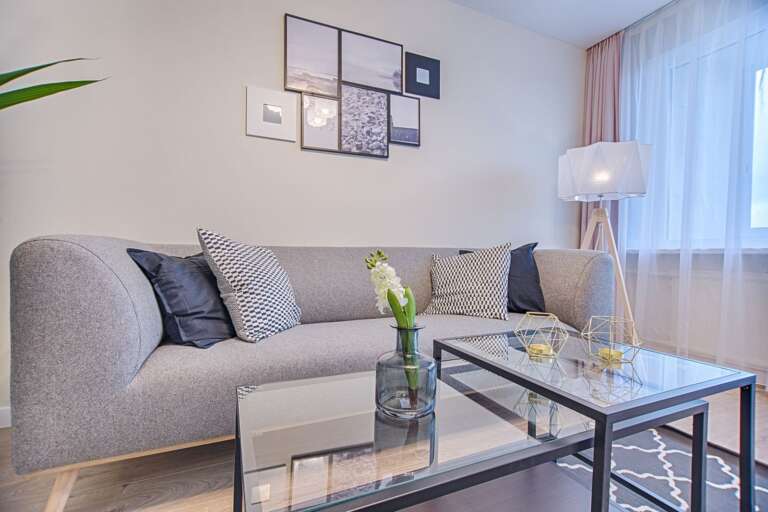
A gallery wall gives a hallway a story, and the poetcore version mixes old book pages, small landscapes, handwriting, pressed flowers and vintage style prints in mismatched frames. The charm is in the variety, but the arrangement still needs order. Choose one wall, keep frame finishes within two or three tones, and hang the collection with consistent gaps so it reads as one piece. Plan it on the floor first and take a photo before drilling. Because hallways are viewed while walking, place the center of the arrangement at standing eye level, slightly higher than you would above a sofa.
5. Statement Lighting That Draws the Eye Up

Most hallways have one sad ceiling bulb, and it is doing the space no favors. A statement light, or a row of two or three smaller fixtures in a long hall, pulls the eye upward and makes the ceiling feel higher. Flush and semi flush designs suit low ceilings, while renters can swap a shade or add plug in wall sconces without touching wiring, where local rules allow. Warm bulbs are essential in a space with no windows. If your hallway has picture lights over the gallery wall or a small lamp on the console, layer them. Several gentle sources always beat one harsh one.
6. Bold Runner Rugs for Texture

A runner is the fastest single upgrade a hallway can get. It softens footsteps, protects the floor in the highest traffic strip of the house, and its long lines pull you through the space. This is a good place for pattern, since a runner is seen from above and busy prints hide the dirt that hallways collect. Leave a border of floor showing on both sides, and keep the runner clear of door swings at both ends. A non slip underlay is not optional on hard floors. Choose washable or low pile styles in homes with pets, and let the runner’s colors echo one thing in the entry, like the door color or the art.
7. Wainscoting and Wall Paneling

Paneling gives a plain hallway the architecture it was missing, and it protects the lower wall from the scuffs that corridors collect. Classic wainscoting to chair rail height, simple board and batten strips, or slim picture frame molding all work, and all can be fitted with basic tools over a weekend. Paint the paneling in the same color as the wall for a quiet, expensive feel, or a shade deeper for gentle contrast. In a rental, removable molding strips and paint alone above the line can suggest the look. Paneling also solves a styling problem, since the rail gives you a natural top edge for paint changes and picture hanging.
8. Floating Shelves for Vertical Interest

When floor space is gone, the walls still have room. One or two floating shelves mounted high on a hallway wall add display space without narrowing the walkway at body level. Style them lightly. A trailing plant, a short stack of books laid flat, one framed print leaned against the wall. Keep anything breakable away from the corridor’s busy end near the door. Floating shelves also work as a slim alternative to a console in the very narrowest halls, holding a key dish and a small plant at entry height. Fix them into studs or with proper wall anchors, because a shelf above a walkway must never be a guessing game.
9. Functional Hooks as Decor

Hooks are the hallway’s hardest workers, and a good looking row of them counts as decor in its own right. Choose hooks with presence, turned wood, aged brass or simple black metal, and mount them on a painted batten so the row looks built in and the weight spreads across studs. Space them for real life, wide enough for bulky coats in winter. Give every person in the house a hook and put kids’ hooks at their height, and the floor pile problem shrinks fast. Keep one hook free for guests. It is a small courtesy that makes an entry feel thought through.
10. The “Third Surface” (Ceiling Accents)

Designers call the ceiling the third surface, and in a hallway it is often the largest unbroken plane you own. Painting it in a soft tint of the wall color, or a full shade deeper, makes a corridor feel designed rather than leftover. Wallpaper and simple applied molding work too, especially in short halls where the cost stays low. A painted ceiling pairs well with the statement lighting idea earlier in this list, since the eye is already traveling upward. Keep very dark ceilings for halls with decent height or good light, and test the color at midday, because ceiling shades always read darker once they are overhead.
11. Integrated Shoe Storage Benches

The last idea tackles the hallway’s biggest problem, the shoe pile. A bench with storage underneath gives everyone a seat for putting shoes on and a hidden home for them afterward. Cubbies suit families who like to see pairs at a glance, while a lift up seat or closed cupboard keeps things calmer. Add a cushion in a washable fabric and the bench also becomes the hallway’s soft layer. Place it where shoes actually come off, right by the door, or the pile will form two steps away instead. In a narrow hall, a wall mounted drop front shoe cabinet can do the same job at a fraction of the depth.
Conclusion
A hallway you are proud of is not about size or budget. It is about giving a pass through space the same care as a real room. Light it warmly, bounce that light with a mirror, land the everyday clutter on a slim console and a row of hooks, and hide the shoes in a bench built for the job. Then let color, art and a good runner supply the personality. Work in that order and even a dark, narrow corridor becomes the introduction your home deserves, the one that makes guests curious about the rooms beyond it.
Frequently Asked Questions
How do I decorate a very narrow hallway without blocking it?
Keep everything on the walls and above shoulder height where possible. Choose a slim console under 12 inches deep or skip furniture for a floating shelf, hang a large mirror to widen the feel, and use a runner to add color without taking space. Leave the walking line completely clear.
What colors make a dark hallway feel brighter?
Warm light colors on the walls reflect the most light, but a deep color drenched hallway can also work if the floors stay light and the lighting is warm and layered. What matters most is light itself. Add more sources, use warm bulbs, and let a mirror spread the light you have.
How high should I hang a hallway gallery wall?
Hang the center of the arrangement at standing eye level, roughly 57 to 60 inches from the floor to the center of the group. Hallways are viewed while walking and standing, not sitting, so gallery walls here sit higher than they would above a sofa.
How do I keep hallway shoe storage from smelling and looking messy?
Choose ventilated storage or leave a small gap so air moves, and set a house rule of a fixed number of pairs per person in the hall, with the rest in wardrobes. Wipeable interiors and a small open basket of cedar blocks or a scent sachet help. A closed bench hides the rest.