Bookshelf Styling Ideas That Look Collected, Not Cluttered
Every shelf is full. Books lean where they slid. There is a candle you forgot you owned, a mug, three frames facing the wall, and somehow it still looks like storage.
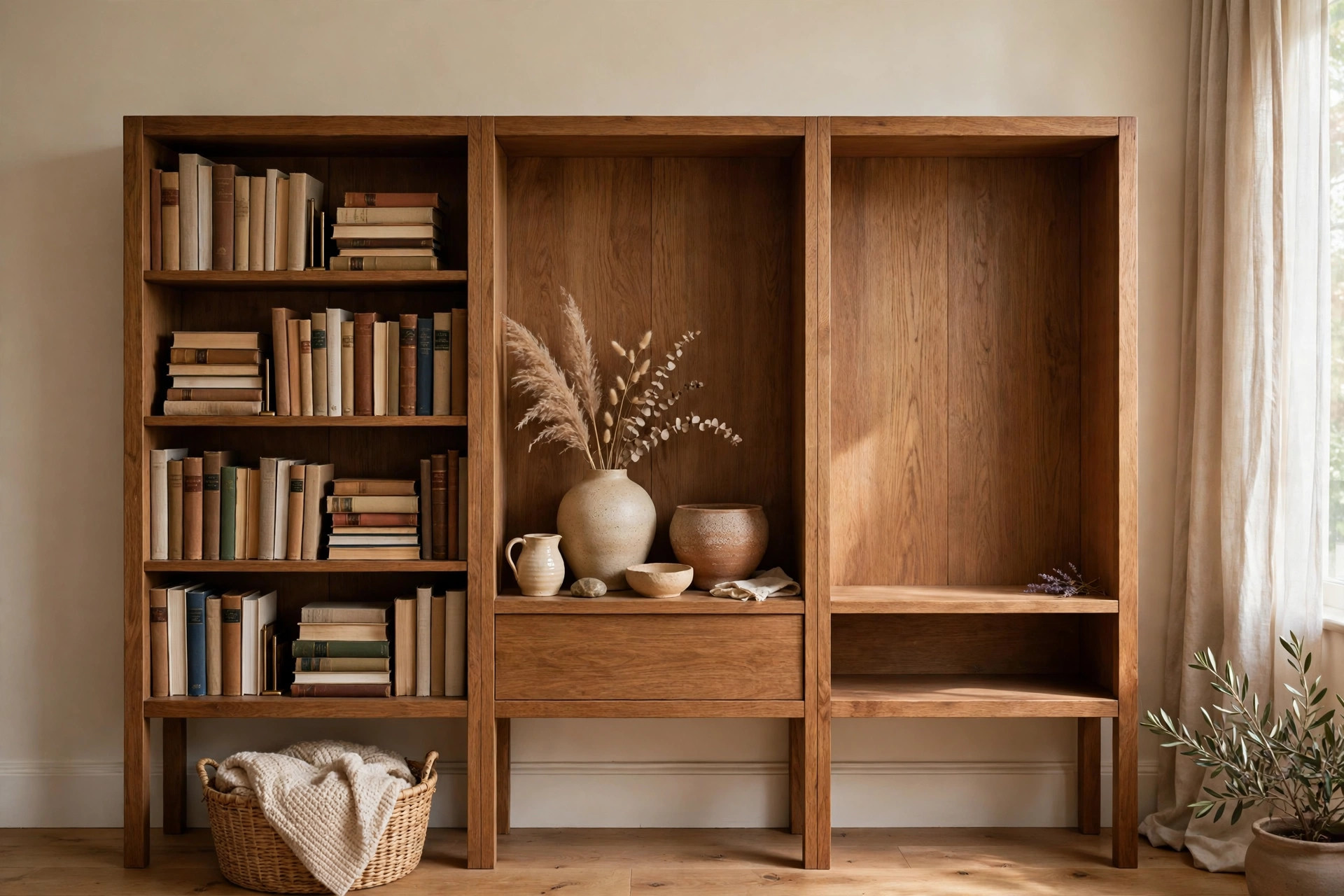
It is not a taste problem. It is a ratio problem. The bookshelf styling ideas for living rooms that work all run on one rough formula: on every shelf, about a third books, a third objects, and a third empty space. Then one thread, a material or a color, repeats down the whole case so the pieces read as one collection. The 11 moves below are that formula in action, from the empty start to the moment you stop.
The short version, before we start:
Thirds on every shelf. Roughly a third books, a third objects, a third air.
One thread. One material or color shows up on most shelves, top to bottom.
Anchors first. Tall, heavy pieces go in before anything small.
Stop on purpose. The last object you resist adding is the one that saves the shelf.
1. Start With Empty Shelves and Three Honest Piles
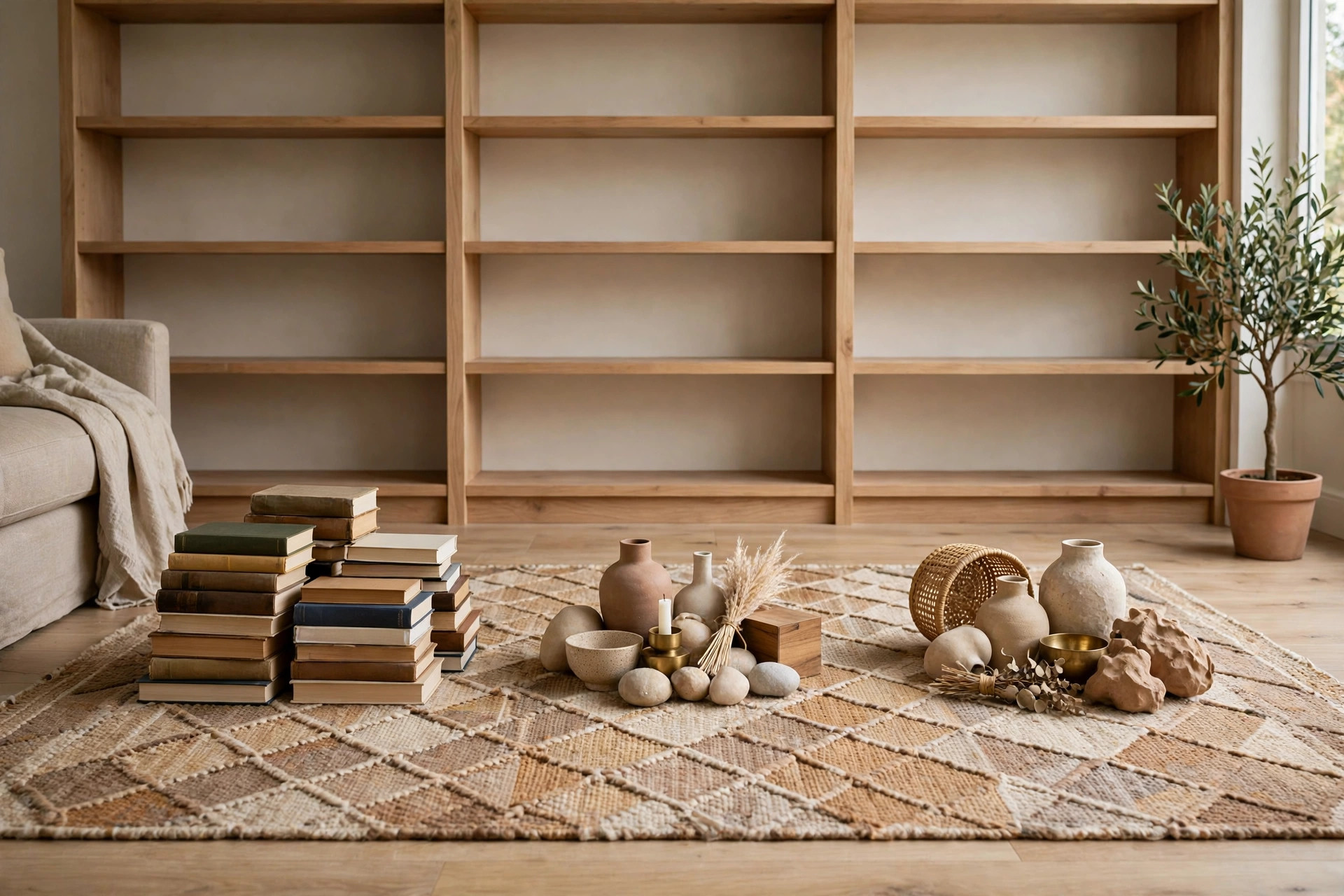
Do not style around what is already there. It never works, and I say that as someone who tried for years.
Take everything off, wipe the shelves down, and sort the lot into three piles: books, objects, and things that never belonged on display at all. That third pile is bigger than anyone expects. Sending it back to cupboards, or out of the house, is the real first styling move in this whole list. Work from the piles, not from habit, and you will usually find you own plenty to style with once the storage leaves. The living room wall art ideas for the wall above can wait until the shelves themselves look right.
2. Give Every Shelf Its Thirds
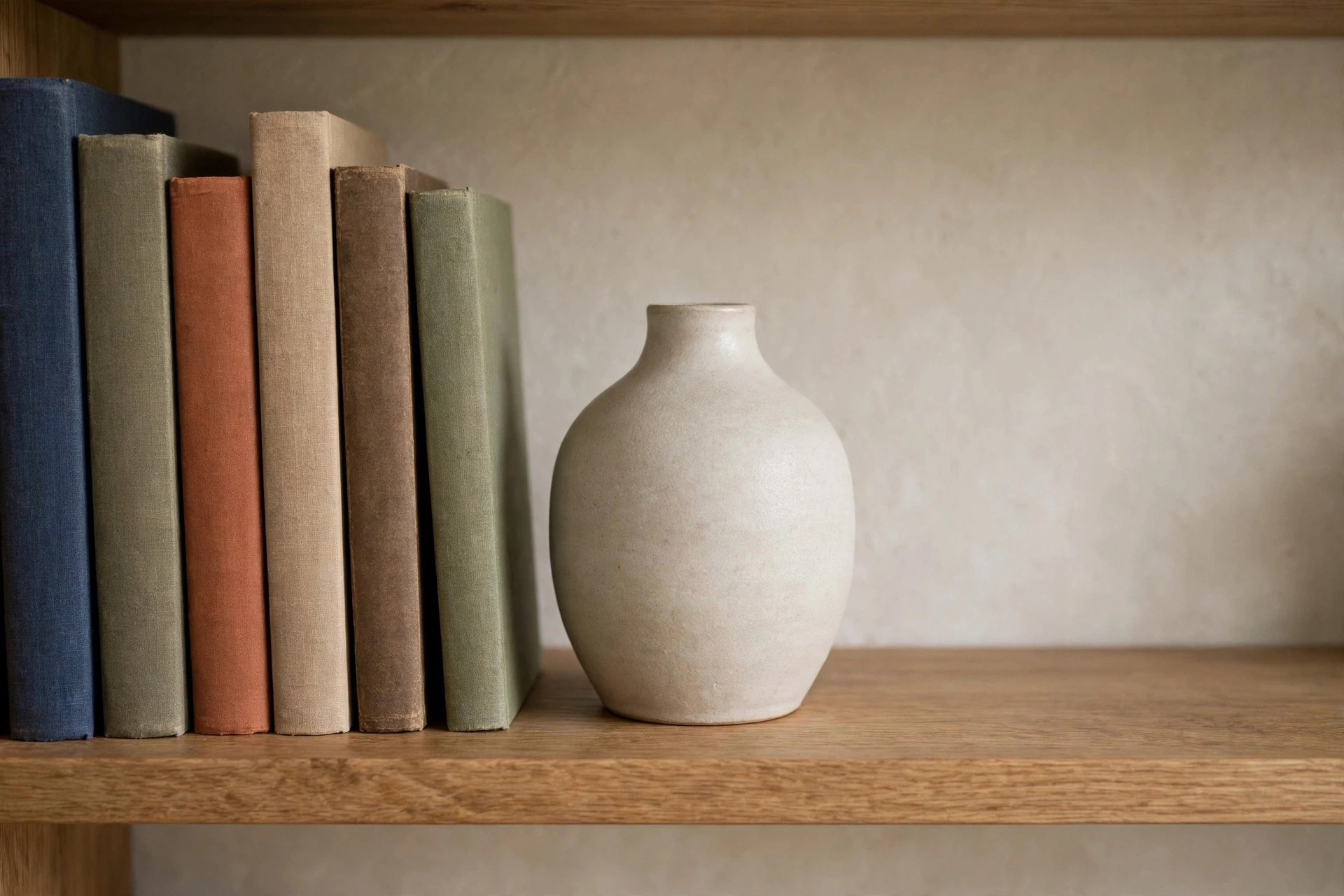
Use the formula as an eye, not a law. On each shelf, let books claim one stretch, objects take another, and leave the rest genuinely empty.
Then step back and check the whole case, not just the shelf in front of you. Balance has to hold top to bottom as well: if every shelf is book heavy at the top and bare below, the case looks top heavy no matter how tidy each shelf is. Move one stack and watch the whole thing settle.
Nobody measures with a ruler. I count in rough shelf widths, a third of books, a third of things, a third of nothing, and that is close enough.
3. Break the Rows With Flat Stacks
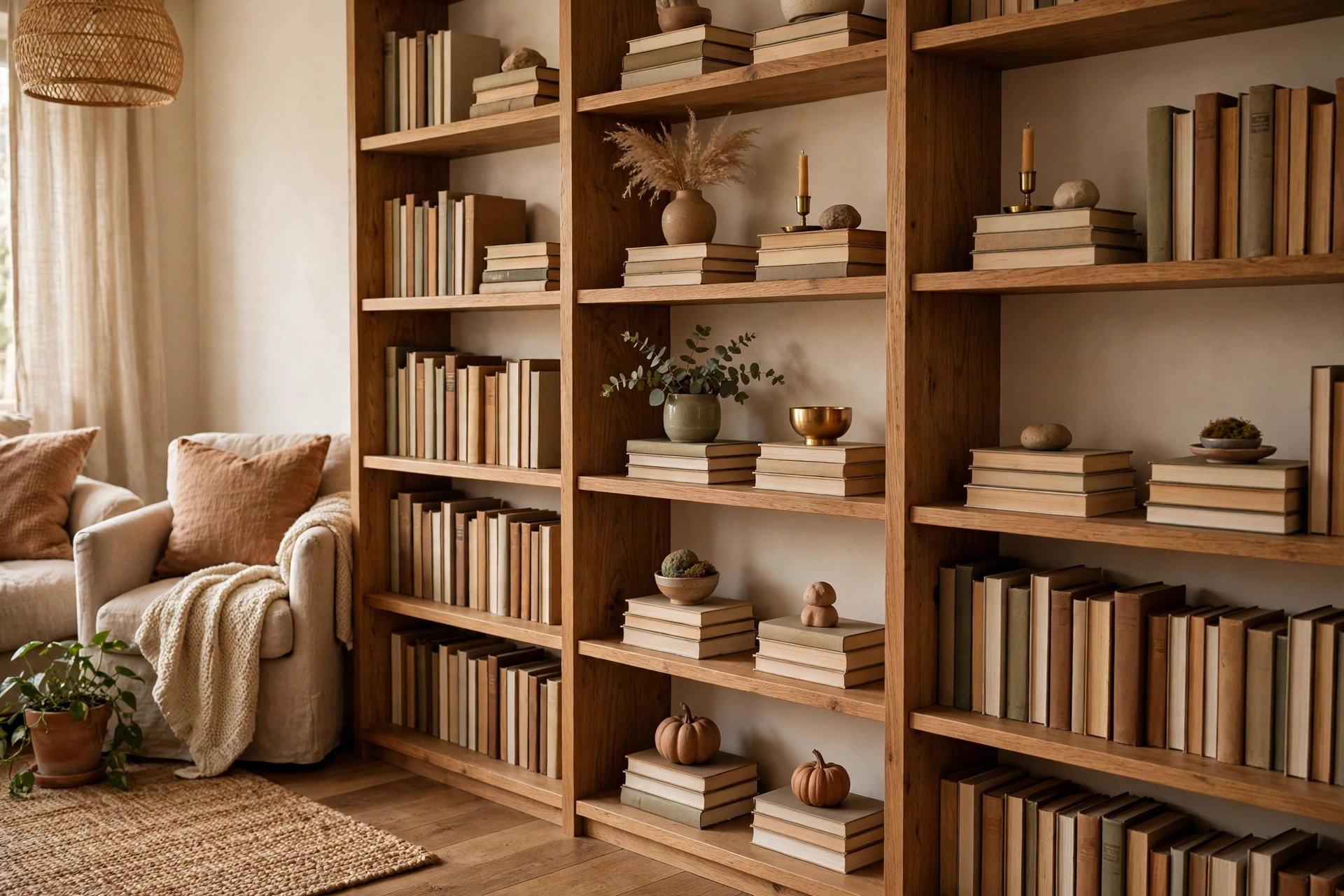
Books all standing in one long row read as a library. A fine look, but rarely a collected one.
Break the rhythm instead: one run of books standing upright, then the next group laid flat in a stack of two to four. Stacks do double duty, because their flat tops become tiny display shelves for a candle, a small bowl or a pair of reading glasses, lifted to a height where the eye actually catches them.
Vary the pattern shelf by shelf. When the groups repeat exactly, the case looks staged. When nothing repeats at all, it looks random. The collected look lives in the middle, and stacks are how you get there.
4. Group Books by Color or by Subject, Never Both

Two systems make calm shelves. Color grouping makes soft blocks of tone. Subject grouping keeps a reader’s logic intact, so the cookbooks stay findable.
Pick one per bookcase and commit. Color suits books you mostly display. Subject suits books you reach for every week. Mixing the two systems shelf by shelf is how shelves end up looking busy again, which is the failure I see most often in other people’s living rooms.
If a loud dust jacket fights the room, take it off. The cloth binding under it is usually calmer, a trick borrowed happily from thrift store decor finds hunting. And keep your most used books at the height you can actually reach, because shelves you cannot use stop being styled and start being resented.
5. Put the Anchors In First, Slightly Off Center
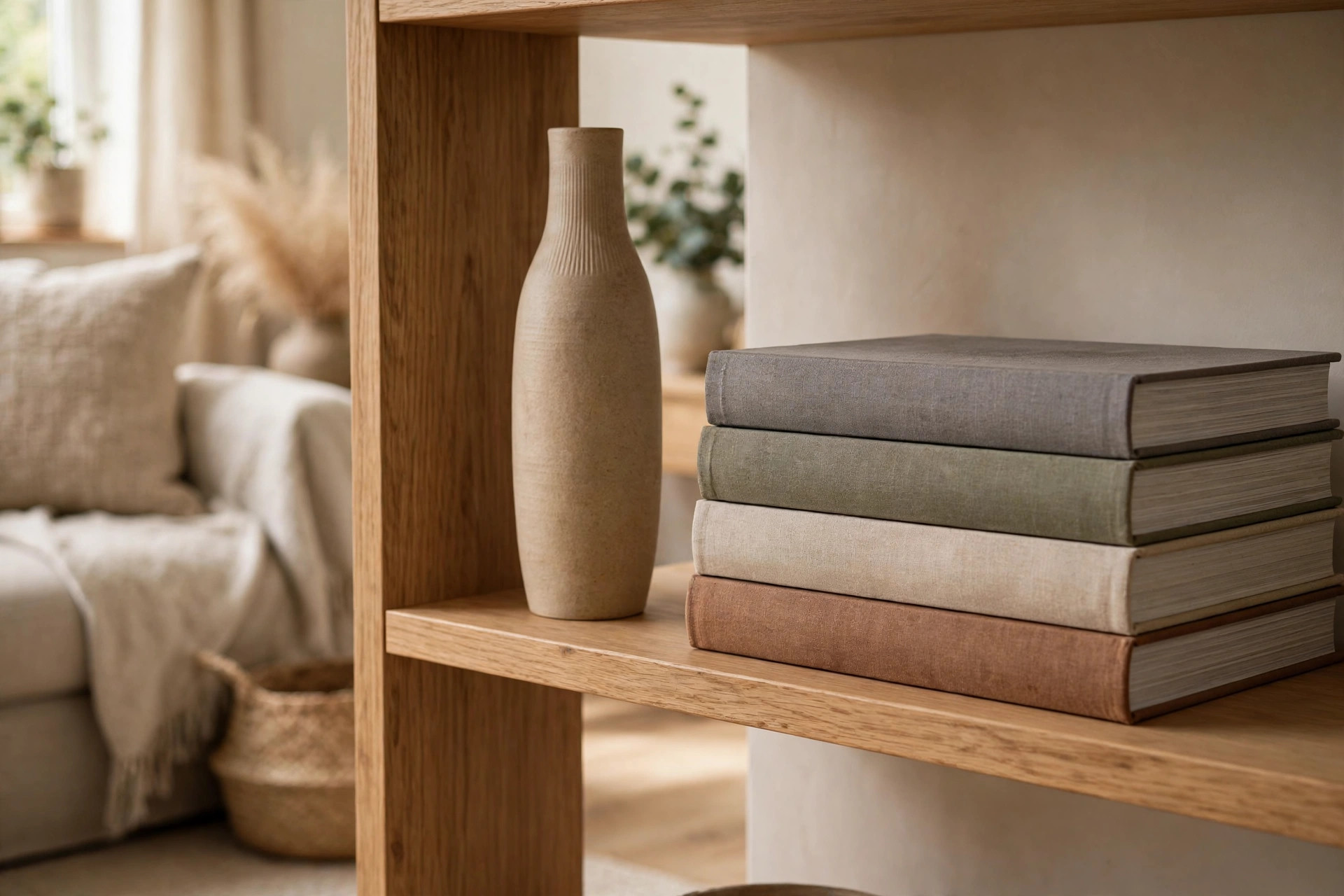
Compose each shelf like a photo: anchors first, details later.
Set the tallest books, the big vase, the heavy box or the stack of art books before one small thing appears. Anchors sit better slightly off center than dead center, and their heights should vary down the case so no two shelves peak in the same spot. Once the anchors are in, the small pieces have something to relate to, and you will find you need fewer of them than you thought.
Style small pieces first and the shelf crowds every time, because nothing ever looks finished and you keep adding. That is the trap. Anchors end it.
6. Group Objects in Threes and Fives, With a Margin
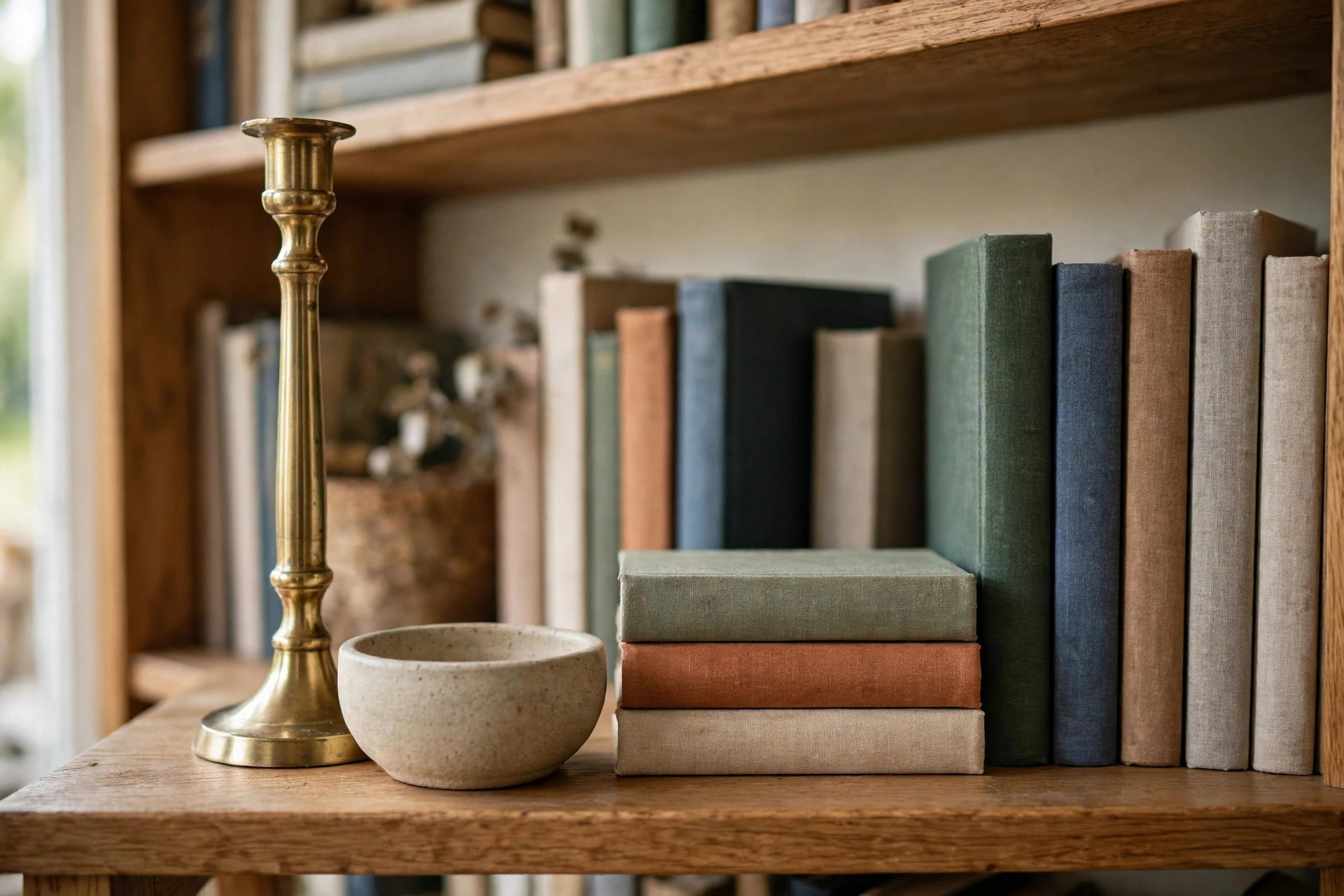
The oldest styling rule still earns its keep: objects in threes or fives look arranged, while pairs and straight lines of small things look like a queue at a bus stop.
Inside each group, vary the heights and shapes, a tall candlestick, a mid height bowl, a low stack or box, so the group makes a soft triangle the eye can travel around. Then leave a margin of empty shelf around it. The margin is what makes it a group instead of a spill.
If a shelf still looks busy, the fix is almost never rearranging. It is taking one object away and watching the rest start to make sense. I remove first and shuffle second, and removal wins nearly every time.
7. Repeat One Material Down the Whole Case
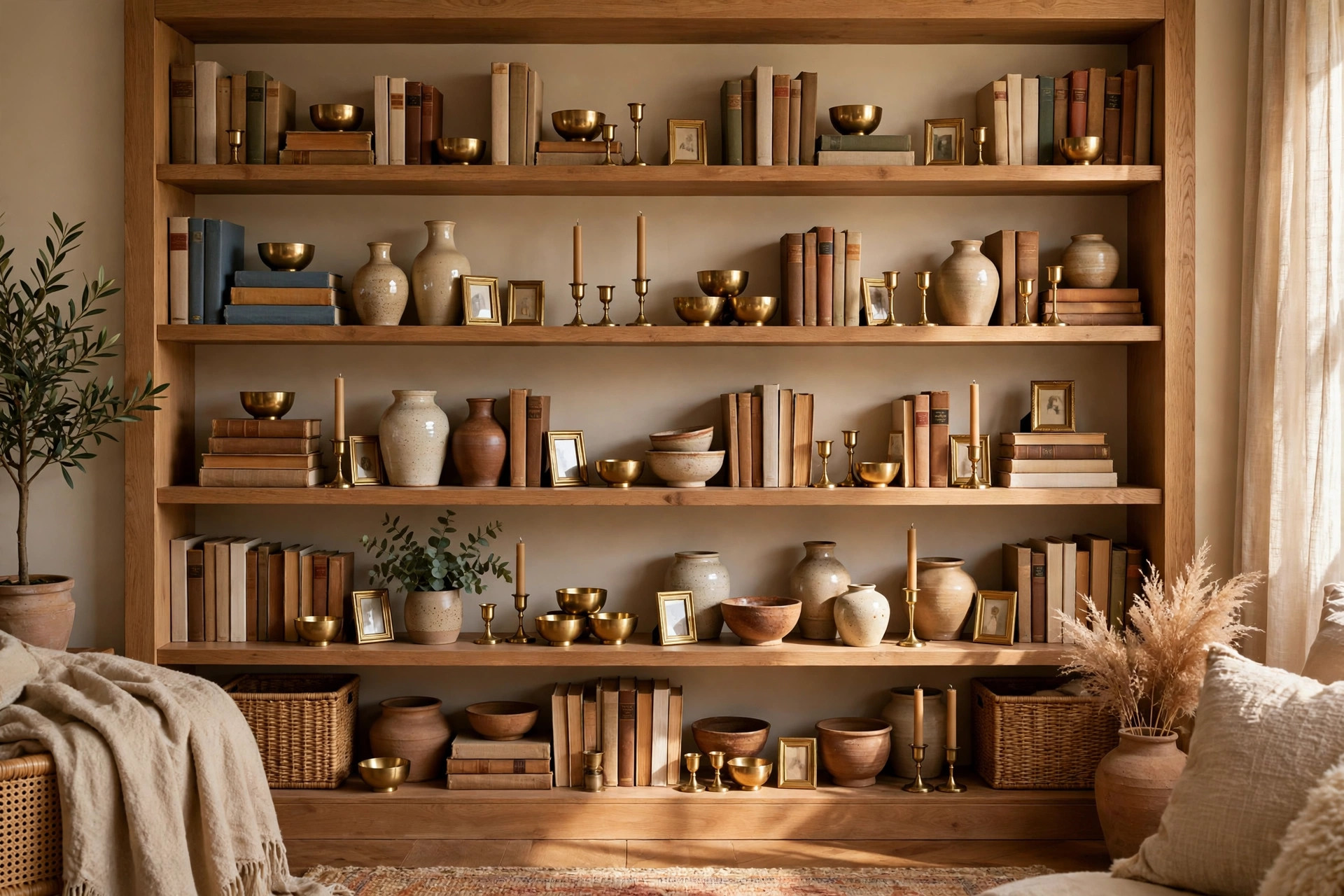
A collection needs a thread, and repetition is the simplest one there is.
Choose one material, brass, black metal, pale wood, woven texture, or one color, and make it show up at least once on most shelves, ideally somewhere on every shelf. That repeat tells the eye these shelves belong to one person with one taste, which is the entire meaning of collected. This is also where the vintage home decor ideas earn their keep, because a few genuinely old pieces in one repeated material give the whole case a depth new objects cannot fake.
You do not need many pieces. Two or three small brass things per shelf, spread out, will do it. You need them related, not numerous.
8. Lean Art Against the Back of Deep Shelves
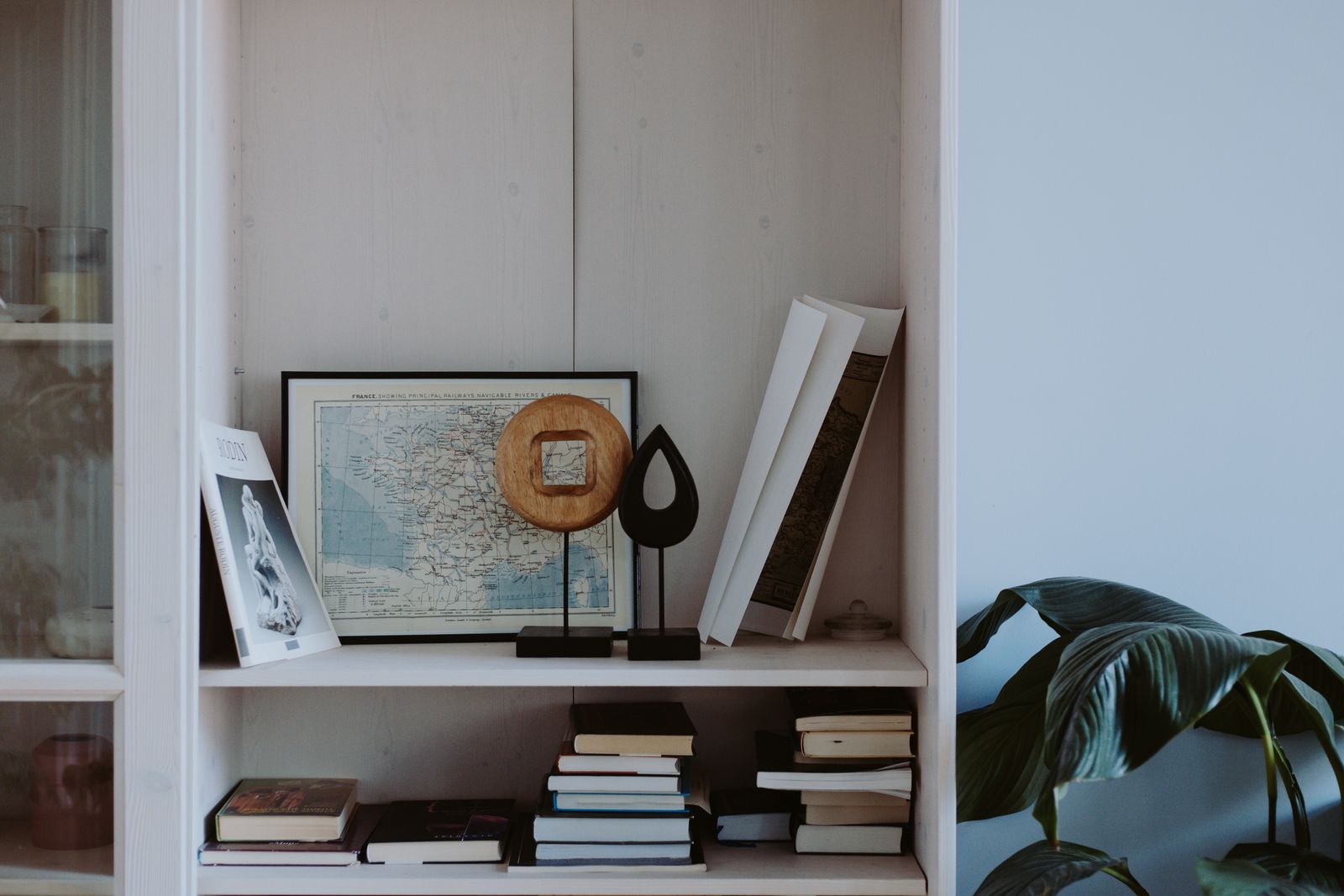
Deep shelves waste their back half behind a single row of books. Give that depth a job.
Lean a framed print, a small painting or a plate against the back panel, then stand books or one object in front of its lower edge. That layered depth is one of the clearest signs of a collected shelf, because plain storage never bothers to layer. Keep the leaned piece tall enough to show well above what stands in front, at least a third of it visible, or it just looks trapped.
Repeat the trick on some shelves only. Lean art everywhere and the bookcase turns into a gallery and the books lose. A mirror or metal frame leaned in a dark corner also borrows light for the whole case.
9. Leave Breathing Room, Then Defend It
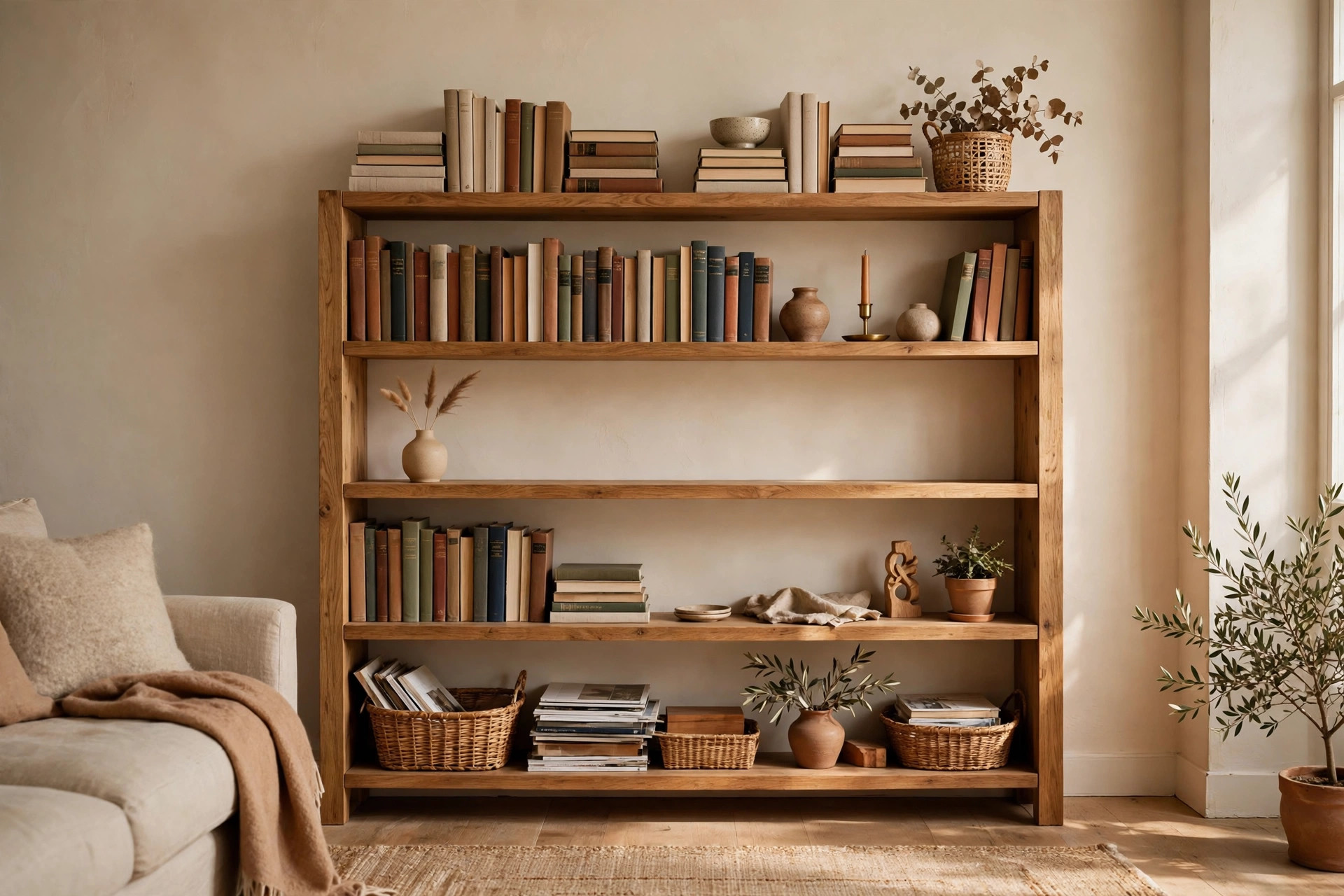
Empty space is not the absence of styling. It is half of it.
Every shelf needs at least one stretch where nothing stands, and the case as a whole looks calmest when the emptiest shelf sits around eye level, where the eye lands first. Breathing room is also what makes the objects you do show look chosen instead of stored.
The hard part is defense, because shelves attract incoming objects the way clear counters do. Give new arrivals one rule in my house: nothing joins the shelves unless something leaves, or the whole case gets a proper restyle. That single rule is why a collected look survives real life instead of lasting one good weekend.
10. Style the Top and the Bottom for Different Jobs
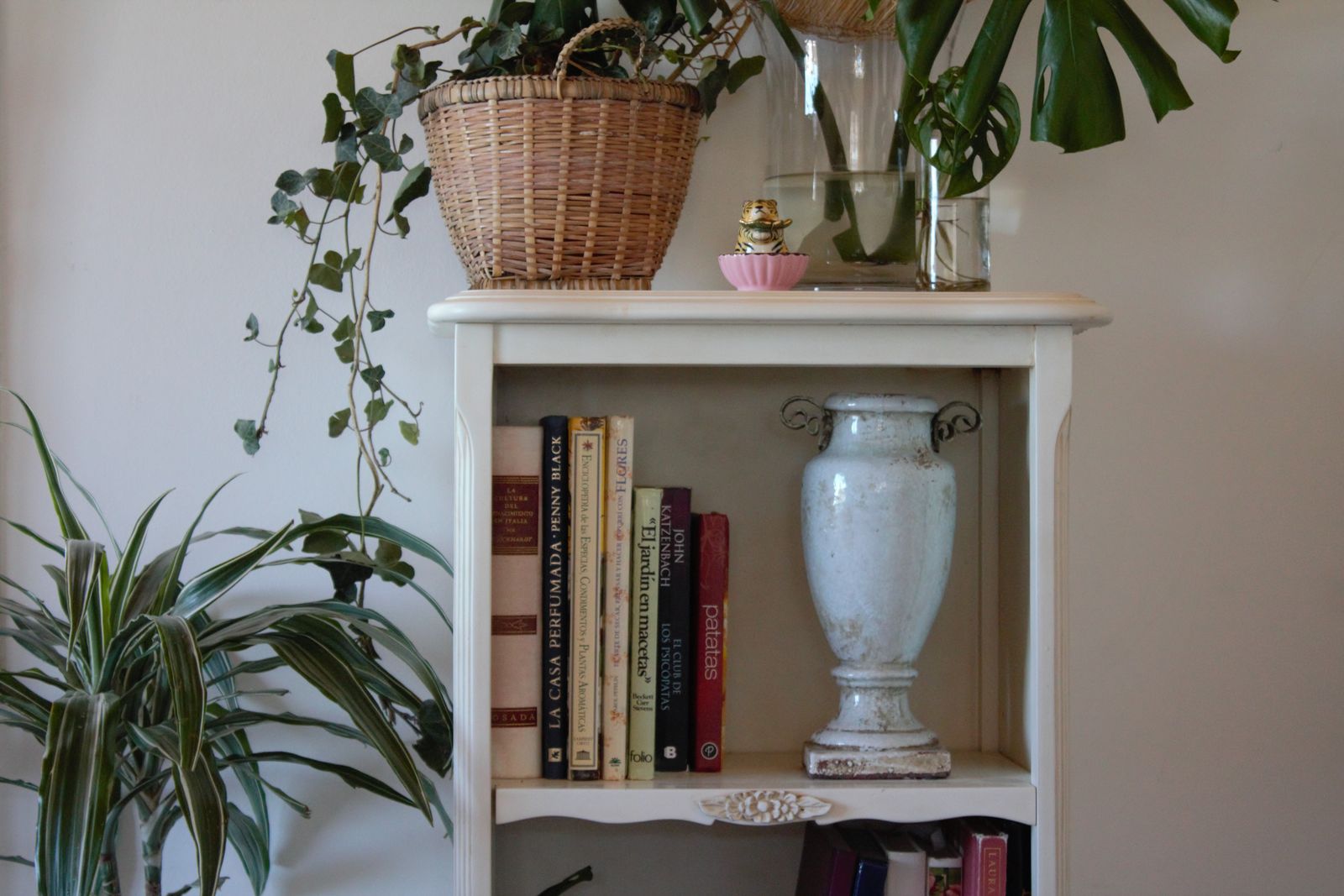
The two ends of a bookcase have opposite problems, so style them for opposite jobs.
Bottom shelves get seen from above and reached by kids, pets and the vacuum cleaner, so give them the heaviest, sturdiest residents: big books, closed boxes and baskets hiding real storage. The top of the case is a long ledge the eye catches from across the room, so treat it as one composition, not a dumping skyline: a plant trailing down one side, one large basket or a low stack, then air.
In a room built around the cozy living room decor ideas on this site, that soft trail of green over the top corner is often the piece that makes the whole wall feel warm.
11. Add One Plant and One Light, Then Stop
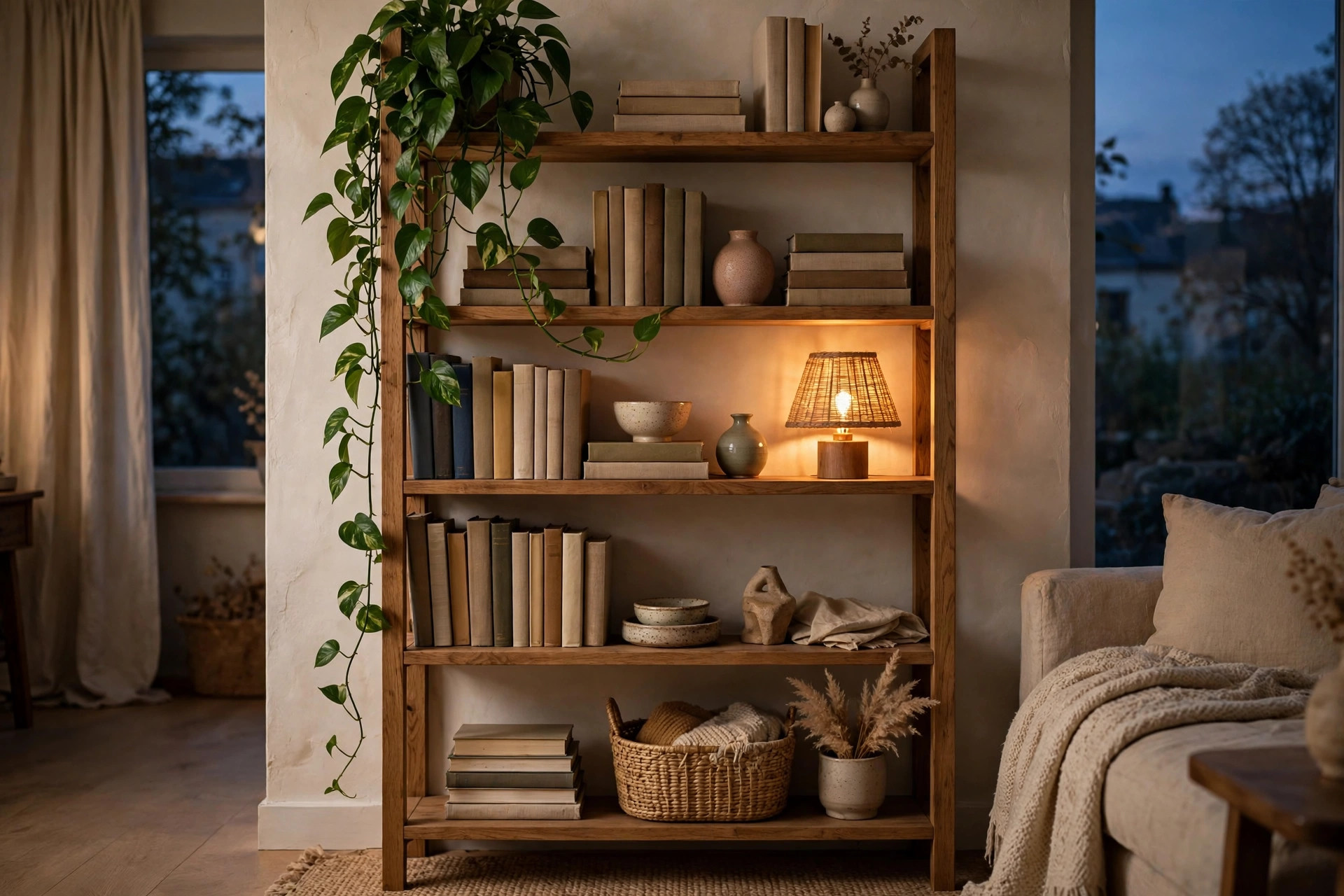
Two finishes separate styled shelves from arranged storage: something alive and something that glows.
A small plant brings movement no object can copy. Pothos is my pick, because it forgives missed waterings and trails beautifully over a shelf edge. For the glow, use a tiny picture light, a candle in glass, or a small lamp on the widest shelf, and the case becomes part of the room’s evening instead of furniture against a wall.
Add those two things, step back, and honor the most important rule on this list: stop. Collected shelves are edited shelves, and the last object you resist adding is the one that keeps them that way.
The Bottom Line
Collected shelves are not about owning prettier things. They are about thirds, books, objects and air, one thread repeated shelf to shelf, and the discipline to stop. Empty the case, place the anchors, mix rows with stacks, group in odd numbers, and defend the empty stretches like part of the display, because they are. Restyle in an afternoon, live with it a week, then edit once more. That second edit is where clutter quietly becomes a collection.
Start by emptying one shelf, just one. Sort it into the three piles and style it back in thirds before you touch the rest.
Frequently Asked Questions
What is the rule of thirds for bookshelf styling?
It is a guide for the eye, not a measurement: on each shelf, aim for roughly a third books, a third objects and a third empty space. Then repeat one material or color down the whole case to tie it together. The empty third is what stops the other two from reading as clutter.
How many objects should go on each shelf?
Fewer than feels natural at first. One group of three to five objects, or a single large piece, is usually enough beside the shelf’s books and its empty stretch. If a shelf looks busy, remove one object instead of rearranging. Taking away fixes more shelves than shuffling does.
Should books stand vertical or lie in stacks?
Both, in turns. Standing rows give the case its backbone, while flat stacks of two to four books break the rhythm and make flat tops that act as display spots for small objects. A bookcase using only one of the two nearly always looks either stiff or sloppy.
How do you style shelves when you own a lot of books?
Let books be the majority honestly, but edit hard: keep the books you love and use, and let the rest go to other rooms or other readers. Group by subject so the shelves stay useful, break long runs with stacks, and save just one or two shelves for objects and breathing room so the case still feels styled.