Laundry Room Cabinets to Hide Clutter
The laundry room collects clutter faster than any other room in the house. Detergent bottles crowd the top of the washer, odd socks appear from nowhere, and cleaning supplies migrate to whatever surface is free.
Open shelves cannot fix this, because the mess is still on show. Cabinets can. Closed doors turn visual chaos into calm in one move, and they keep dust, moisture and curious little hands away from chemicals at the same time.
This guide walks through eleven cabinet ideas that work in real laundry rooms, from the wall space above the machines to the awkward gap beside them, so every bottle, basket and broom gets a hidden home.
1. Wall Cabinets Above the Washer and Dryer

The wall above your machines is the most wasted space in the room, and a row of wall cabinets is the fastest way to claim it. Mount them high enough that a top loader lid opens fully, and choose a shallower depth than kitchen cabinets so you are not leaning over the machines to reach the back. This is the natural home for detergent, stain removers and dryer sheets, the bottles that otherwise live on top of the washer and make the room look messy even on a tidy day. If the budget is tight, two cabinets now and a matching one later still look planned, as long as you keep the same door style.
2. Tall Cabinets for Brooms, Boards and Bulk Buys

Every laundry room has tall, awkward things with no home. A broom leans in a corner, the ironing board falls over, and bulk packs of paper towels sit on the floor. One tall cabinet, the pantry style unit sold for kitchens and utility rooms, swallows all of it. Look for a model with adjustable shelves so the lower section can stand empty for the board and mop while the upper shelves hold supplies. If your room has no spare wall, a tall cabinet can also act as a divider between the laundry zone and the rest of a shared utility space. Measure your ironing board before you buy. It is the item most often half an inch too long.
3. Base Cabinets with a Folding Counter on Top

Folding on top of a warm dryer works until it does not, and clothes slide off mid pile. A run of base cabinets with a simple countertop on top gives you a proper folding station and a bank of hidden storage in the same footprint. The cabinets below hold baskets, the iron, spare linens and the sewing kit for emergency buttons. Choose a smooth, water resistant counter surface that wipes clean and can take a hot basket straight from the machine. In a small room, even a single base cabinet with a counter bridging to the wall makes sorting and folding faster and keeps piles off the floor.
4. Cabinets with Built-In Pull-Out Hampers

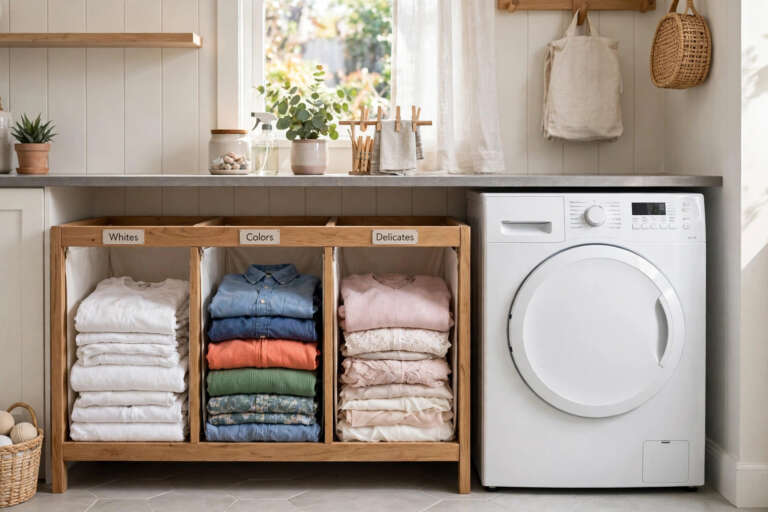
Dirty laundry on the floor is the clutter everyone notices first. A cabinet with built in pull out hampers hides it completely and sorts it at the same time. Two or three tilt out or pull out bins let you separate lights, darks and delicates as clothes come off, so wash day starts halfway done. Removable fabric liners make the trip to the machine easy and can go in the wash themselves. Place the hamper cabinet where people naturally undress or where laundry enters the room, not in the farthest corner, or the floor pile will simply move. Ventilated fronts or mesh liners help keep stored laundry fresh.
5. A Slim Cabinet for the Gap Beside the Machines

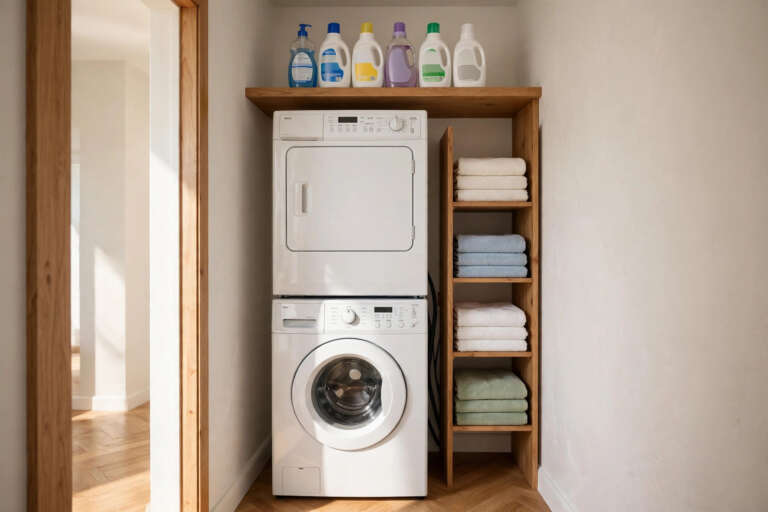
Most laundry rooms have a narrow, useless gap between the machines or beside them, just wide enough to collect dropped socks and dust. A slim pull out cabinet or rolling storage tower turns that dead space into storage for the bottles you use every wash. The best versions hold detergent, softener and stain sprays upright and slide out with one hand. Measure the gap carefully, including skirting boards and hoses at the back, and leave a small clearance so the unit rolls freely. It is one of the cheapest upgrades in this guide and one of the most satisfying, because it uses space you had written off.
6. Under-Sink Cabinets That Hide the Plumbing Mess

If your laundry room has a utility sink, the space beneath it is usually a tangle of pipes, sponges and half used bottles. A vanity style cabinet built around the sink tidies the whole zone. Inside, work around the plumbing with stackable bins and a small tension rod for hanging spray bottles by their triggers, a trick borrowed from under kitchen sinks. Keep a lidded caddy for the truly messy jobs, like drain unblocker and bleach, ideally with a child resistant latch if little ones visit. The closed doors also protect supplies from sink splashes and give the room a finished, bathroom like neatness.
7. Frosted and Glass Front Cabinets for a Lighter Look

Solid doors hide everything, but a wall of them can feel heavy in a small laundry room. Frosted or fluted glass fronts are the middle path. You get a hint of what is inside, enough to find the detergent, while the clutter stays blurred and calm. Use glass fronts on the cabinets holding your neatest supplies, clear jars, folded towels and matching bottles, and keep solid doors for the messy overflow. Frosting film on plain glass is a budget friendly way to test the look. Just remember that glass shows dust and fingerprints faster, so save it for upper cabinets rather than the hard working base units.
8. Open Shelves Paired with Closed Cabinets

The most practical laundry rooms mix both worlds. Closed cabinets take the clutter, chemicals and bulk, while one short run of open shelving holds the daily items you want in reach and the few pretty things worth seeing. Decant detergent into a labeled jar, add a small plant and a folded stack of towels, and the shelf becomes the styled moment that makes the room feel designed. Keep the open section short and edited. The moment it starts holding overflow, it stops looking intentional. A good balance for most rooms is roughly three quarters closed storage to one quarter open display.
9. Corner Cabinets and Rotating Inserts

Corners are where laundry supplies go to be forgotten. A corner cabinet fitted with a rotating tray insert brings everything back within reach with one spin, and it makes the deepest part of an L shaped layout genuinely usable. Rotating inserts suit bottles and jars best, since round items pack the tray without wasted gaps. If a new corner unit is not an option, a simple turntable tray placed inside an existing deep cabinet gives most of the same benefit for very little money. Either way, the rule is the same. Nothing should live in a corner unless it can come to you, instead of you climbing to it.
10. Labeled Bins and Dividers Inside Every Cabinet

Closed doors hide clutter from view, but without order inside, every cabinet becomes a junk drawer standing up. Small bins, shelf risers and simple dividers keep categories apart, so batteries never meet bleach and the good cloths stay away from the cleaning rags. Labels sound fussy until the first time someone else does the laundry and puts everything back in the wrong place. Label the bins, not the shelves, so you can rearrange freely. Clear containers work best for supplies you count, like pods and clothespins, while opaque bins calm the visual noise of mixed packaging. Ten minutes of sorting now saves a frustrating dig every wash day.
11. Matching Doors and Hardware for a Finished Look

Cabinets collected over time often look mismatched, and that patchwork is part of what makes the room feel untidy. Unifying the doors and hardware pulls everything together without replacing a single unit. Paint is the cheapest route. One color across all cabinet fronts, including a secondhand tall unit, makes the set look bought together. Swap the knobs and handles for one style in one finish, and the effect doubles. This finishing step matters more than it sounds, because a laundry room that looks cared for is a room people keep tidy. Calm, matching storage quietly encourages the habit the cabinets were bought for.
Conclusion
Hiding laundry clutter is not about owning more storage. It is about putting closed storage in the right places. Cabinets above the machines for daily supplies, a tall unit for the awkward tools, hampers that sort as you go, and bins inside the doors so the order survives real life. You do not need to do all eleven ideas at once. Start with the one that removes the mess you see every day, usually the bottles on the washer, and build from there. A laundry room with calm, closed doors makes the whole chore feel lighter, and that is worth more than any single product in it.
For the next step, see these how to hide a washer and dryer.
Frequently Asked Questions
Are cabinets or open shelves better for a laundry room?
Cabinets win for most supplies, because they hide visual clutter, keep dust and moisture off bottles, and store chemicals safely out of reach. Keep one short open shelf only for daily items and a few neat pieces. A mix of mostly closed storage with a little open display works best.
How deep should laundry room wall cabinets be?
Shallower than kitchen cabinets is usually better above machines, so you can reach the back without leaning across the washer. Standard wall cabinets around 12 inches deep suit most laundry rooms. Always check that a top loader lid opens fully before fixing cabinets in place.
What should I store in laundry cabinets to keep them safe?
Keep everyday detergent and softener in the most reachable cabinet, ideally at adult hand height. Store bleach and strong chemicals in a lidded bin, higher up or behind a latch if children are in the home. Reserve tall cabinets for brooms, the ironing board and bulk paper goods.
How can I add cabinet storage on a small budget?
Start with one wall cabinet above the machines and a slim pull out unit for the side gap. Add bins and labels inside what you already own before buying more furniture. Secondhand kitchen wall cabinets, repainted, are a well known budget source and fit laundry rooms perfectly.