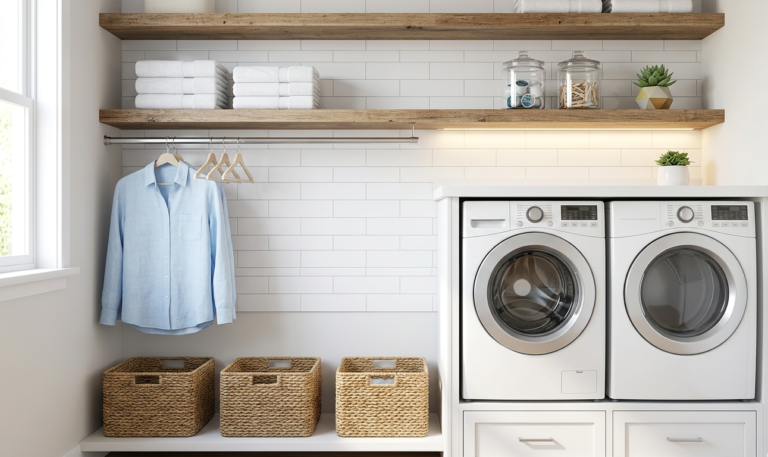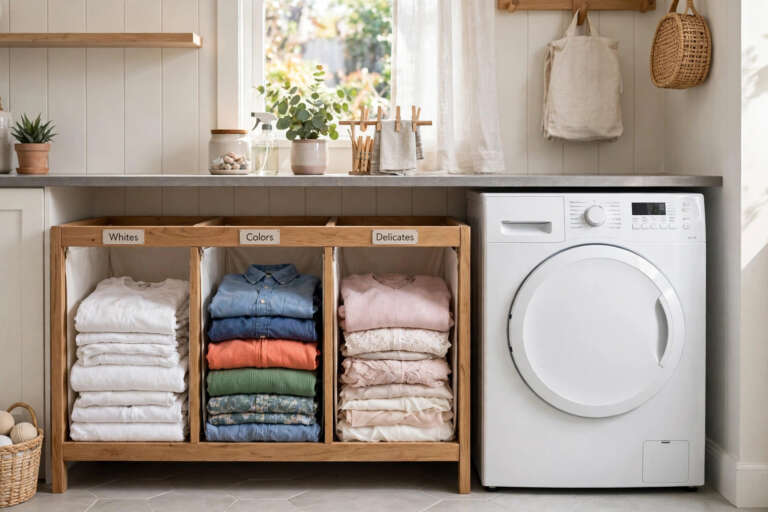
Laundry Room Flooring Ideas You’ll Love
Laundry room flooring has the hardest job in the house. It sits under heavy machines that vibrate, in front of sinks and hoses that can drip or leak, and it gets walked on with wet feet and full baskets.
Pick the wrong material and you get swelling, stains and a floor that always looks tired. Pick the right one and the whole room feels cleaner, quieter and easier to live with.
These laundry room flooring ideas cover the materials that actually survive the room, from waterproof vinyl and cork to porcelain tile, with honest notes on comfort, safety and style so you can choose once and choose well.
1. Waterproof Luxury Vinyl Plank
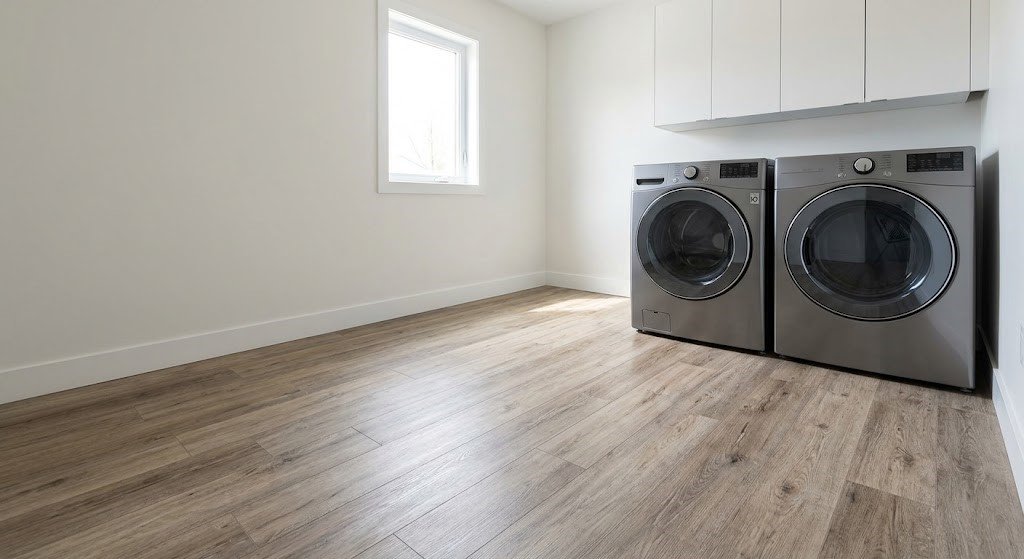
Luxury vinyl plank is the most popular laundry room choice for good reason. Quality planks have a waterproof core, so a leaking hose or an overflowing sink becomes a mopping job instead of a flooring emergency. The printed wood and stone designs look convincing, and the surface has a little give underfoot, which matters when you stand folding laundry. Installation is friendly too. Planks click together over most flat existing floors, and single damaged planks can be replaced later. Look for a thick wear layer and keep a few spare planks from the same batch in a cupboard. It is the closest thing this room has to a worry free floor.
2. Seamless Sheet Vinyl
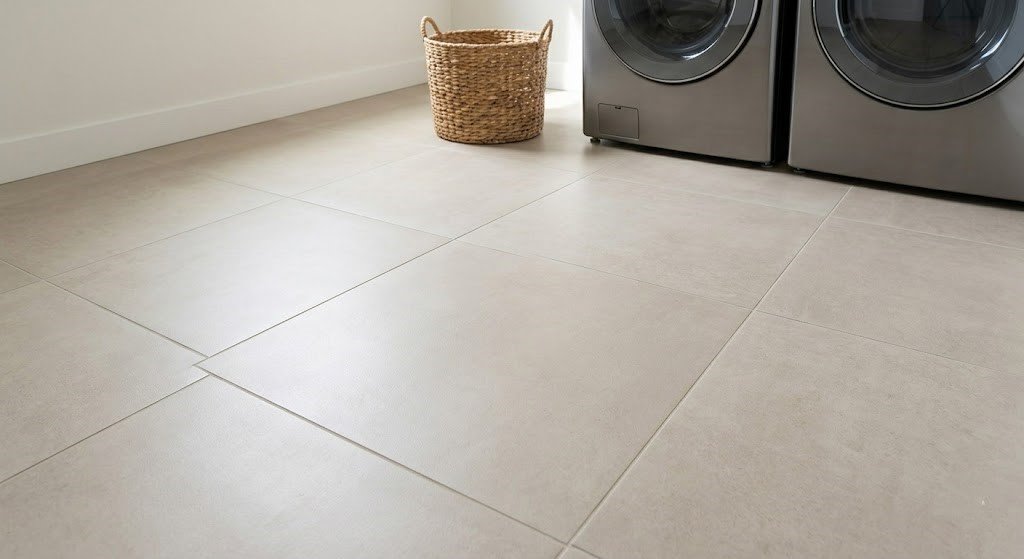
Sheet vinyl is the quiet hero of small laundry rooms. Because it is laid as one continuous piece, there are no seams or grout lines where water can sneak underneath, which is exactly where laundry floors usually fail. Modern sheet vinyl has moved far beyond the shiny patterns of the past. Matte stone, concrete and subtle tile designs look surprisingly upmarket, especially in a small space where the pattern does not repeat. It is also one of the most budget friendly options per square foot, and it is soft and warm compared with tile. Have it fitted by someone experienced, since one wrong cut shows, and seal the edges at walls and pipes with silicone for a truly watertight finish.
3. Sustainable Cork Flooring
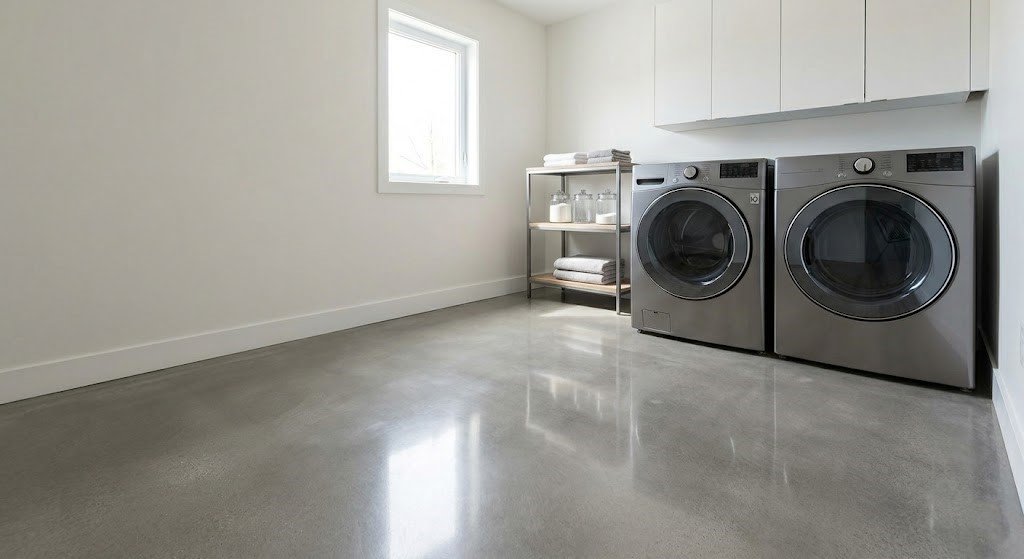
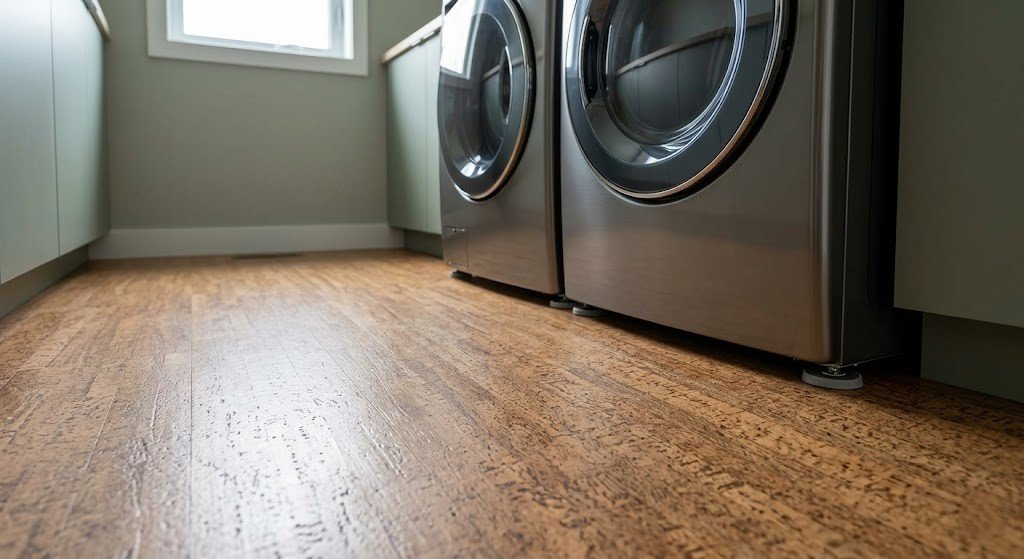
Cork is the comfort pick. It is warm in winter, soft underfoot, naturally cushioned when you drop a full bottle of detergent, and it absorbs sound, which your spinning washing machine will thank you for. Cork is harvested from bark without cutting the tree down, so it suits anyone building a lower impact home. The honest catch is water. Cork handles damp mopping happily, but standing water is its enemy, so choose sealed cork tiles or planks made for kitchens and utility spaces, wipe spills promptly and place a washable mat in front of the machines. Treated kindly, cork gives a laundry room a calm, natural warmth that hard floors never match.
4. Wood-Look Porcelain Tile for Cohesion
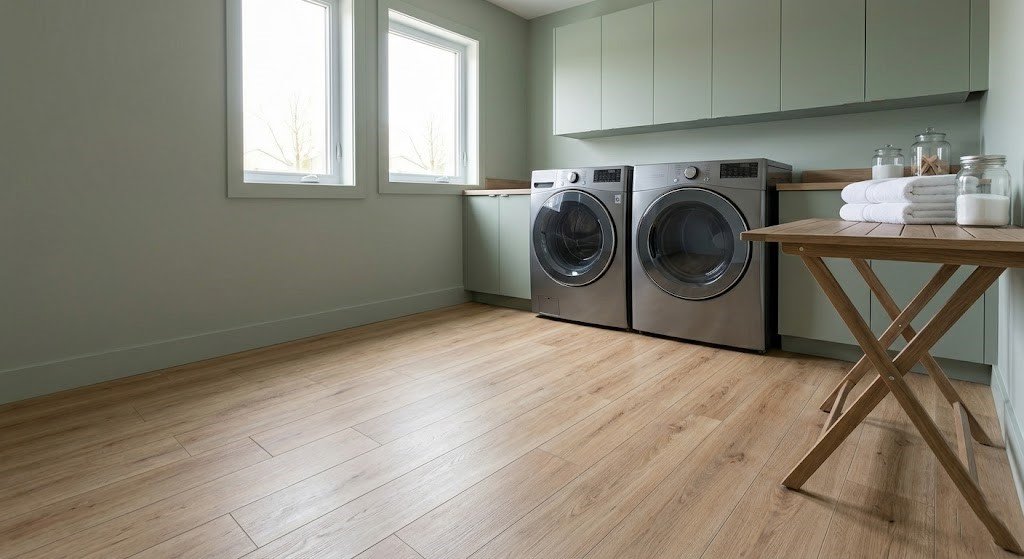
If your laundry room opens off a kitchen or hallway with wood or wood look floors, porcelain planks printed with a wood grain let you continue that flow without putting real timber in a wet zone. Porcelain is fired clay, so it does not swell, stain or warp, and it shrugs off machine leaks that would ruin laminate. Run the planks in the same direction as the adjoining floor and match the tone as closely as you can, then use a slim transition strip at the doorway. The eye reads one continuous floor, which makes both rooms feel bigger. Choose a matte finish and a grout color close to the tile so the joins all but disappear.
5. Safety First with Slip-Resistant Textures
A laundry room floor is a wet floor waiting to happen, so grip is not a detail, it is the whole point. Whatever material you choose, look for a textured or matte surface rather than a polished one, and check the slip rating if the manufacturer lists one. Small format tiles are a smart safety trick, because more grout lines mean more edges for wet feet to grip. Underfoot comfort matters too. A machine mat under the washer reduces vibration noise, and a washable runner where you stand keeps feet dry and steady. Avoid thick plush mats that stay damp. In this room, the safest floor is the one that dries fast and never feels like ice.
6. Wood-Look Porcelain Tile for Timeless Cohesion
There is a difference between matching the next room and choosing a floor that still looks right in fifteen years, and wood look porcelain wins on both counts. Real wood tones never really date, which is why this tile is the safe long term investment of the list. To keep it timeless, choose a mid tone grain without heavy knots or dramatic color variation, a plank width similar to real floorboards, and a matte finish that reads as timber, not plastic. This floor also gives you freedom above it. Cabinets, walls and machines can change color over the years while the warm wood base stays quietly cohesive with everything.
7. Patterned Tile for Visual Interest
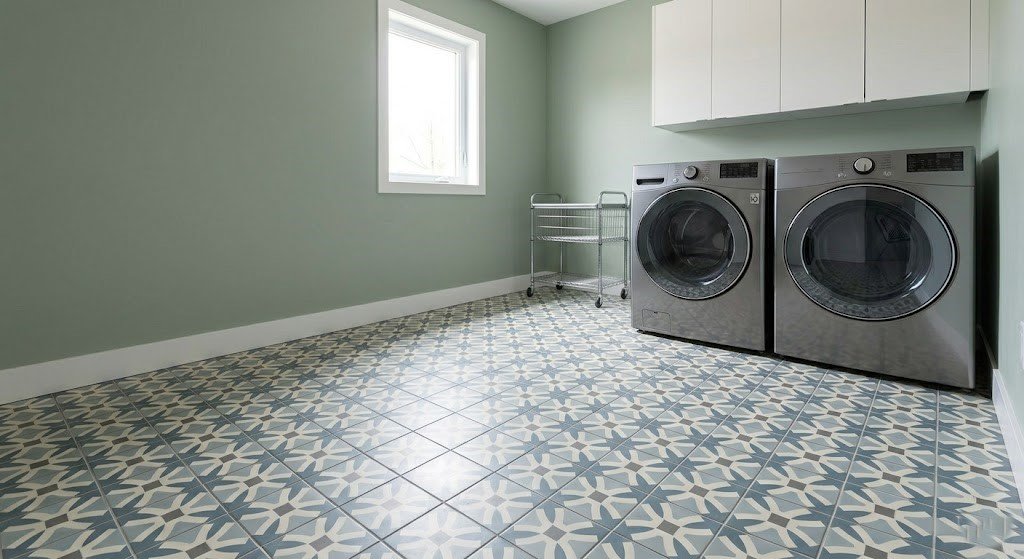
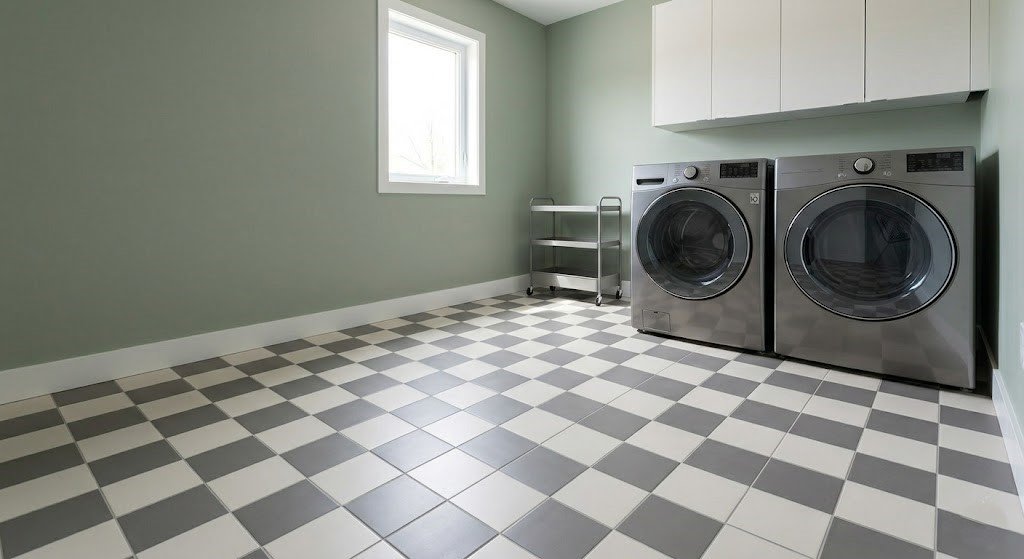
Laundry rooms are small, and small rooms can take a bold floor better than any other space in the house. Patterned porcelain or ceramic tile, in encaustic style geometrics, soft checks or a classic black and white design, turns a purely practical room into one you actually enjoy walking into. The pattern hides lint, dust and the odd drip between cleans, which is a genuine daily advantage. Keep walls and cabinets simple so the floor stays the star, and pick a pattern with at least one color that appears elsewhere in the room, in a basket, a curtain or the machines themselves. Porcelain versions give you the pattern with the toughest surface.
Conclusion
Choose laundry flooring the way you would choose work boots, waterproof first, comfortable second, good looking as the reward. Vinyl plank and sheet vinyl are the easy, budget friendly all rounders, cork is the warm and quiet comfort pick, and porcelain, plain or patterned, is the longest lasting investment. Match the floor to how your household really does laundry, add grip where feet land wet, and this hardest working little room will feel calm, clean and finished every single wash day.
Frequently Asked Questions
What is the most waterproof laundry room flooring?
Porcelain tile and waterproof core vinyl plank are the strongest choices. Porcelain does not absorb water at all, and quality vinyl plank is waterproof through its core, so both survive leaks that would destroy laminate or real wood.
Can I put real wood flooring in a laundry room?
It is risky. Solid wood swells and stains when water sits on it, and laundry rooms have hoses, sinks and machines that can all leak. Wood look porcelain gives you nearly the same appearance with none of the worry, which is why it appears twice in this guide.
What is the cheapest flooring that still works well?
Sheet vinyl is usually the lowest cost per square foot, and because it is seamless it performs far above its price in a wet room. Vinyl plank costs a little more but is easier to install yourself and simpler to repair plank by plank.
How do I make a tile laundry floor less cold and hard?
Use a washable runner where you stand, keep slippers nearby, and choose cork or vinyl in the standing zone if you are reflooring. Under a tile installation, electric heating mats are an option, but a good runner solves the comfort problem for far less.