11 Small Laundry Closet Ideas With Stacked Machines
The strip of floor beside your stacked machines is the most wasted space in the whole closet. It is usually 6 to 10 inches wide, too narrow to look useful, and it ends up holding nothing but lint.
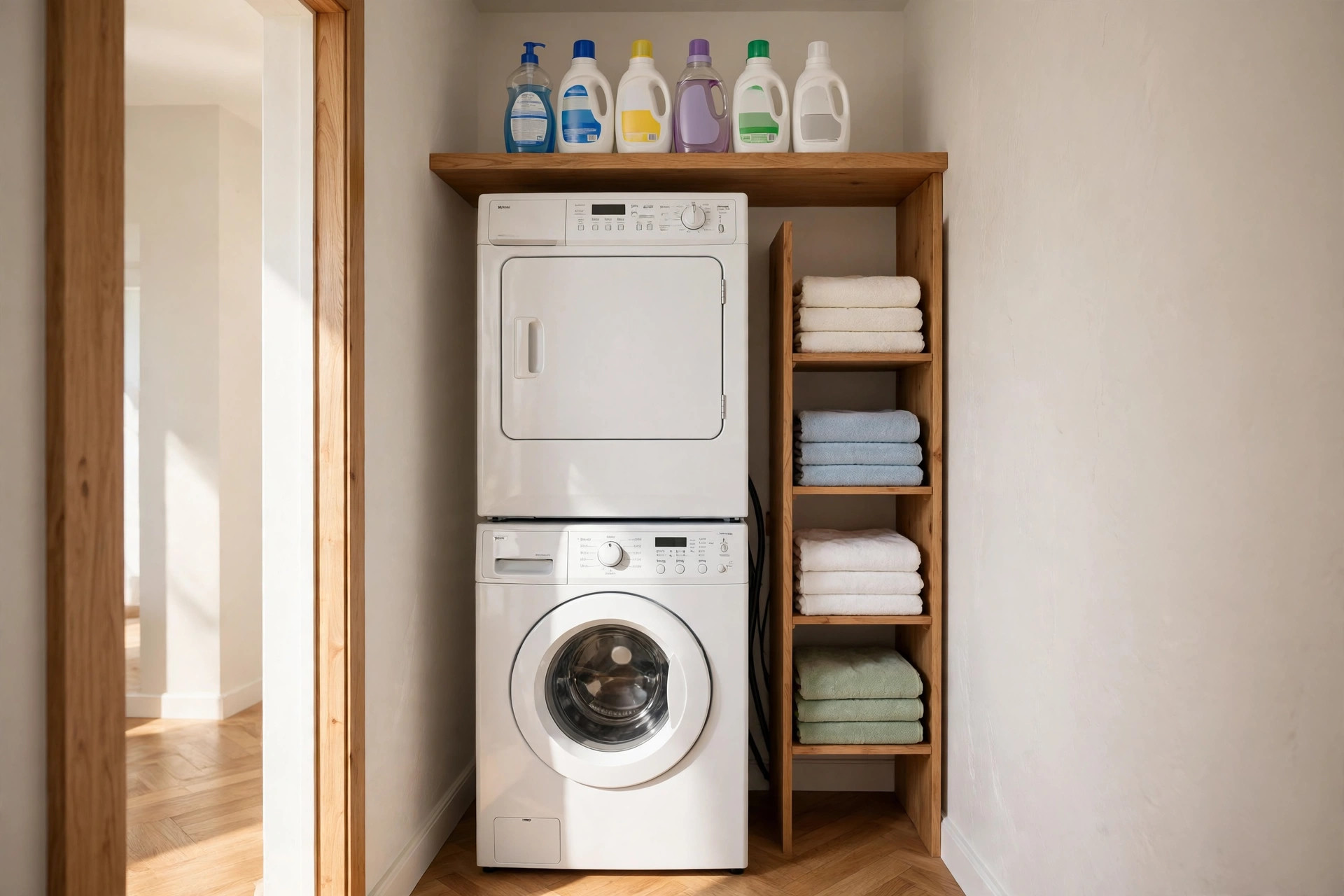
Treat the stack like one wall of a tiny room and that strip turns into storage. One shelf above the machines for the daily row, a slim tower in the side gap, and the back of the door for the small stuff. Follow the install guide for your own pair for clear space behind and above the machines, since stacked models differ. I taped off the no go zones in my own closet before a single bin was bought, and that 10 minutes saved a lot of returns.
The short version, before we start:
Measure 3 numbers first. Width, depth and ceiling height, plus the door opening and swing, before you buy a thing.
One shelf above the stack. About 12 to 16 inches deep, bottles in 1 row, labels out.
The side gap works. A slim tower 6 to 10 inches wide holds sprays, cloths and back stock and rolls out for cleaning.
The door and the high wall count. Flat hooks on the door and 1 high shelf for monthly stuff, not daily stuff.
1. Measure First, Buy Nothing Yet

Get the tape out. The shopping can wait 10 minutes.
Write down 3 numbers: closet width, depth and ceiling height. Then measure the door opening and check how far the door swings. Read the install guide for your exact pair and note the clear space it asks for behind the machines for hoses and venting, and the space to leave above and beside them.
Mark those no storage zones with painter tape right on the wall. That tape is the fix for the most common failure here, which is buying a shelf or tower first and then finding it sits in space the machines need for air and pipes.
2. Put One Deep Shelf Right Above the Stack
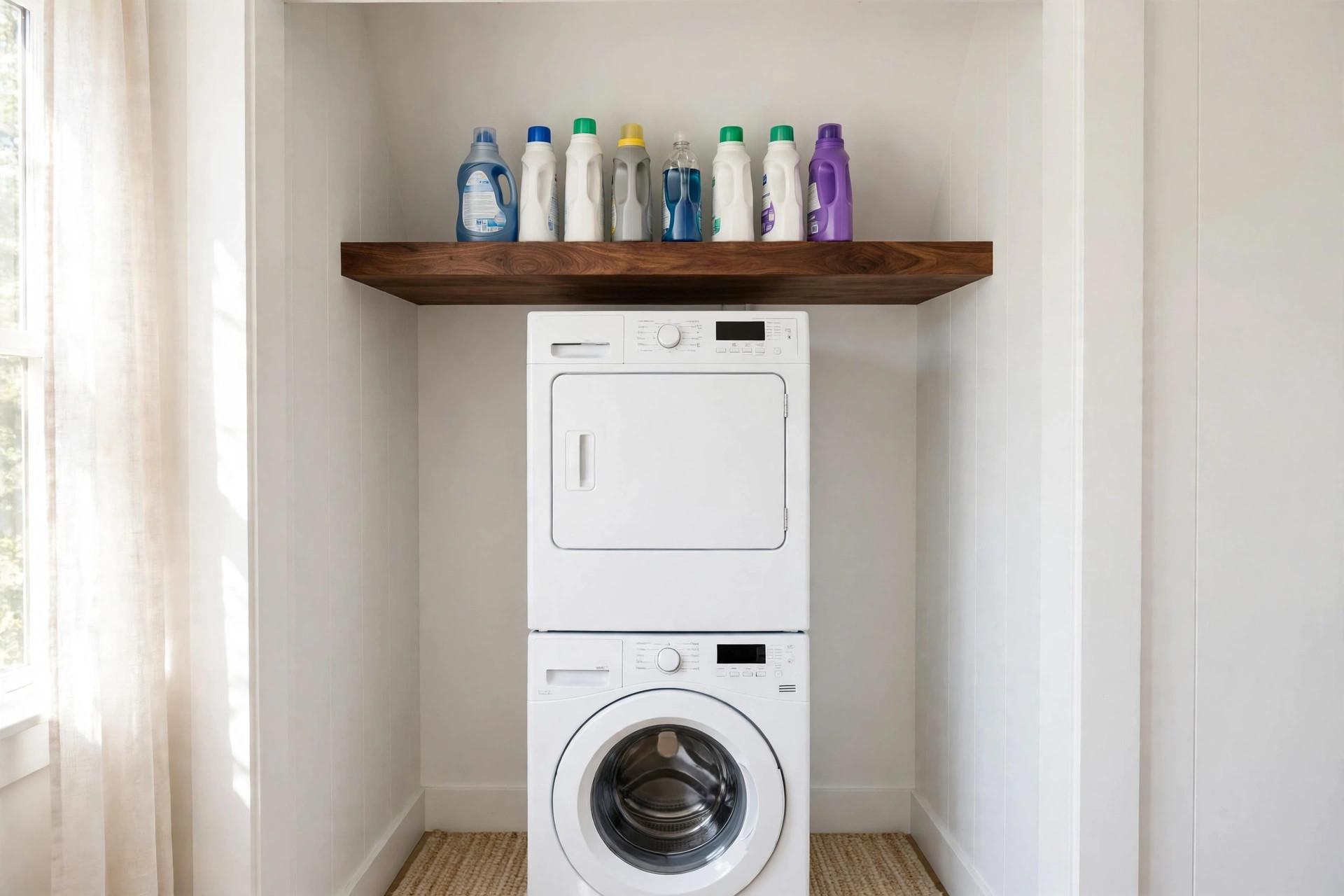
This shelf does the heavy work. Put the daily row here and nowhere else.
One shelf about 12 to 16 inches deep holds detergent, stain spray, a small basket for delicates and a fold of cleaning cloths, all in 1 row with labels facing out. One row is the rule, so nothing hides behind anything else. Wire shelves let drips and lint fall through where you can see them.
Respect the clear space your guide asks for above the machines and do not load this shelf with heavy bulk bottles. Bulk refills live high or low, in ideas 7 and 3. The daily shelf stays light, current and easy to wipe in about 2 minutes.
3. Slide a Slim Tower Into That Side Gap
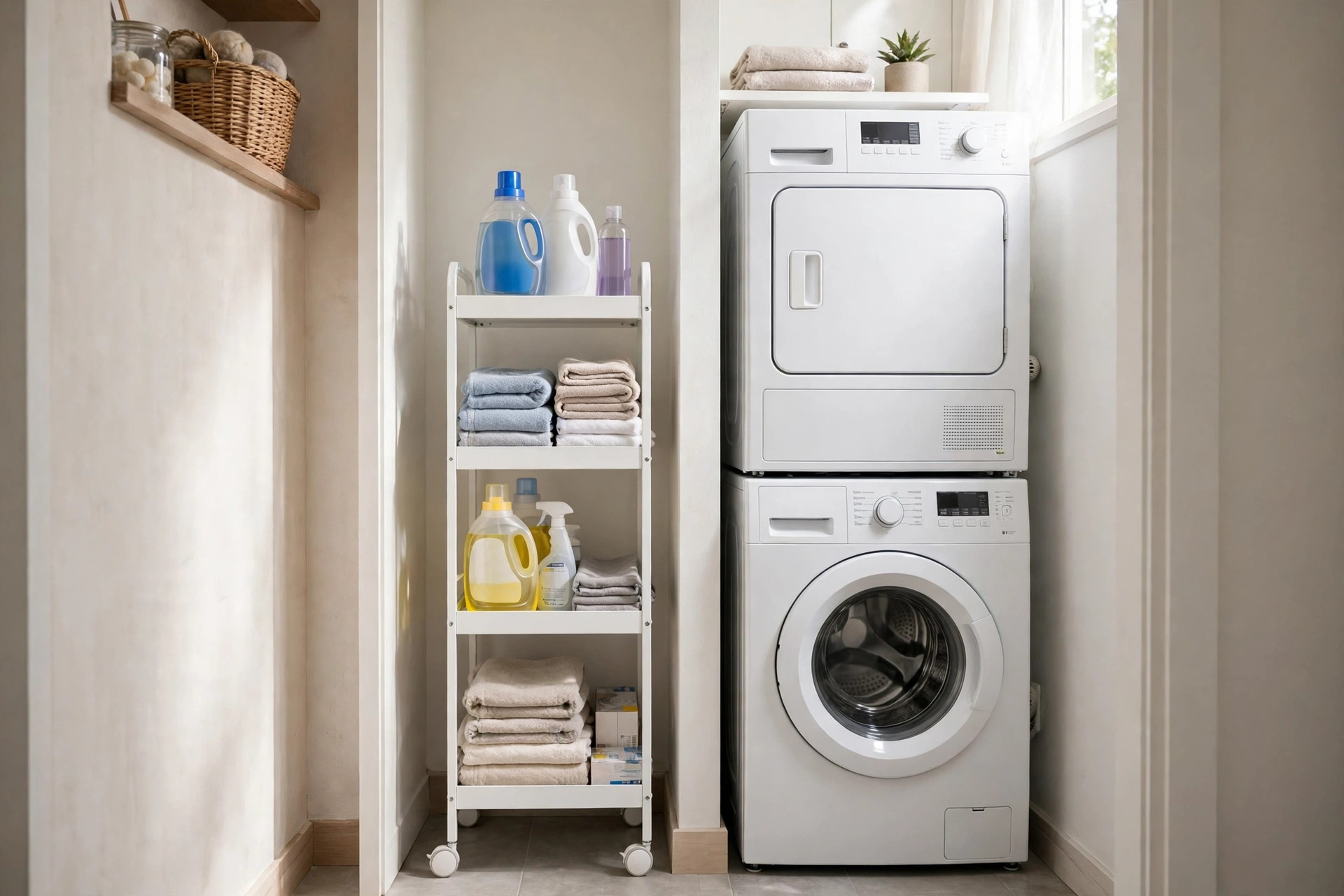
Do not leave that gap empty. It fits more than you think.
A slim rolling tower, about 6 to 10 inches wide with 3 tiers, turns the strip beside the machines into real storage. Top tier for what gets grabbed mid load, like stain spray. Middle tier for dryer sheets and clothespins. Bottom tier for back stock. Because it rolls, you can pull it out and clean the lint that builds up behind the machines.
I pull mine out once a month and the lint behind it is always a shock. Catch: measure the door frame, not just the gap. A tower 1 inch too wide for the frame scrapes in and out and soon stays stuck halfway. Gap under 5 inches? Skip the tower and use a flat wall rack instead.
4. Use the Back of the Door, It Is Free Storage
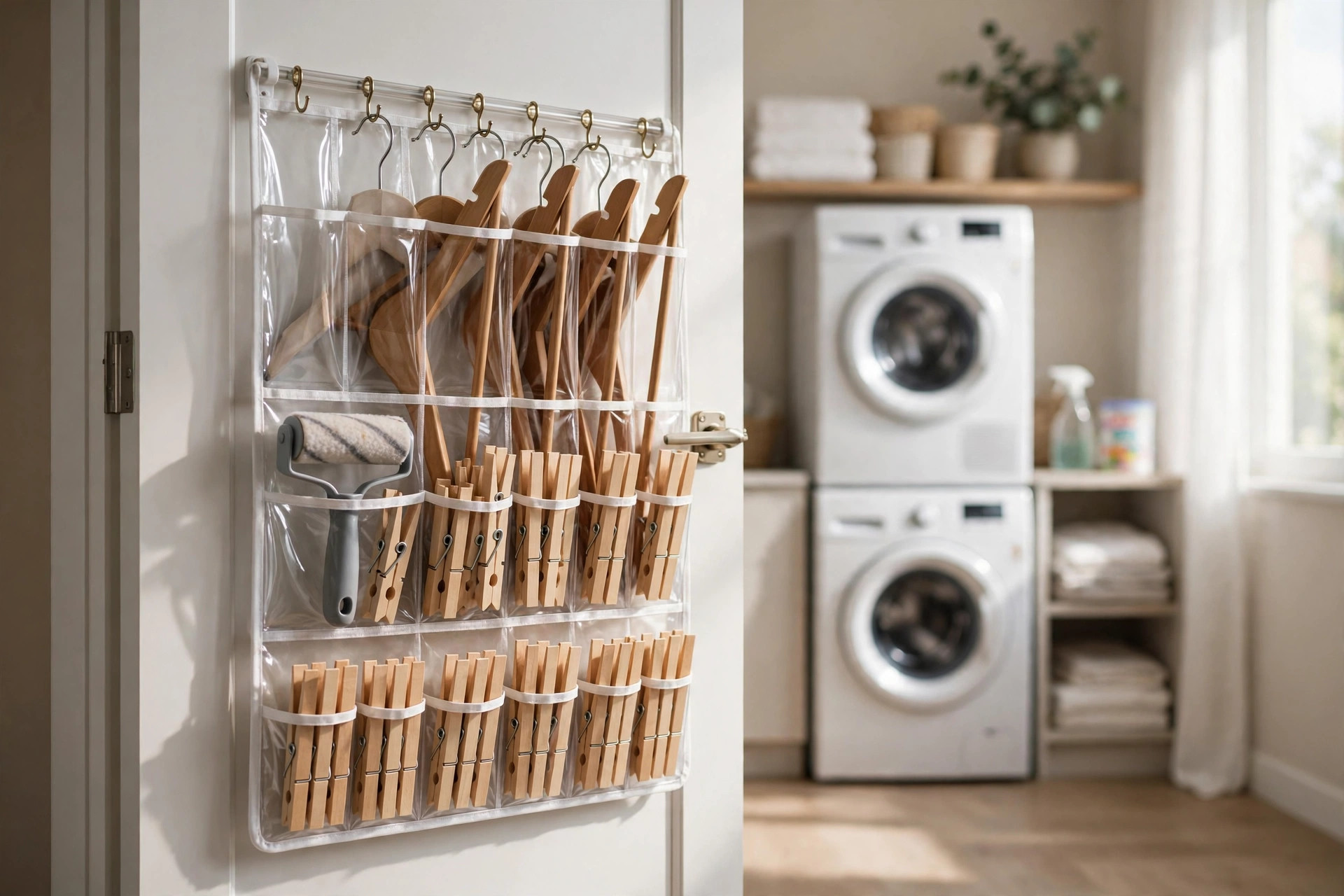
Flat, close and empty. That door back is begging to work.
An over door rack or a row of adhesive hooks holds hangers ready for shirts, a mesh bag for items that need a mend and the lint roller. Slim pockets take clothespins, dryer balls and the odd sock. Keep it all light and flat, within about 1 inch of the door, so the door still shuts clean against the machines.
Failure to watch for: hooks loaded with heavy bottles peel off in a warm closet and drop the lot at 2 am. Door storage is for light stuff only. Bottles stay on the shelf from idea 2, full stop.
5. Keep Detergent in One Washable Caddy
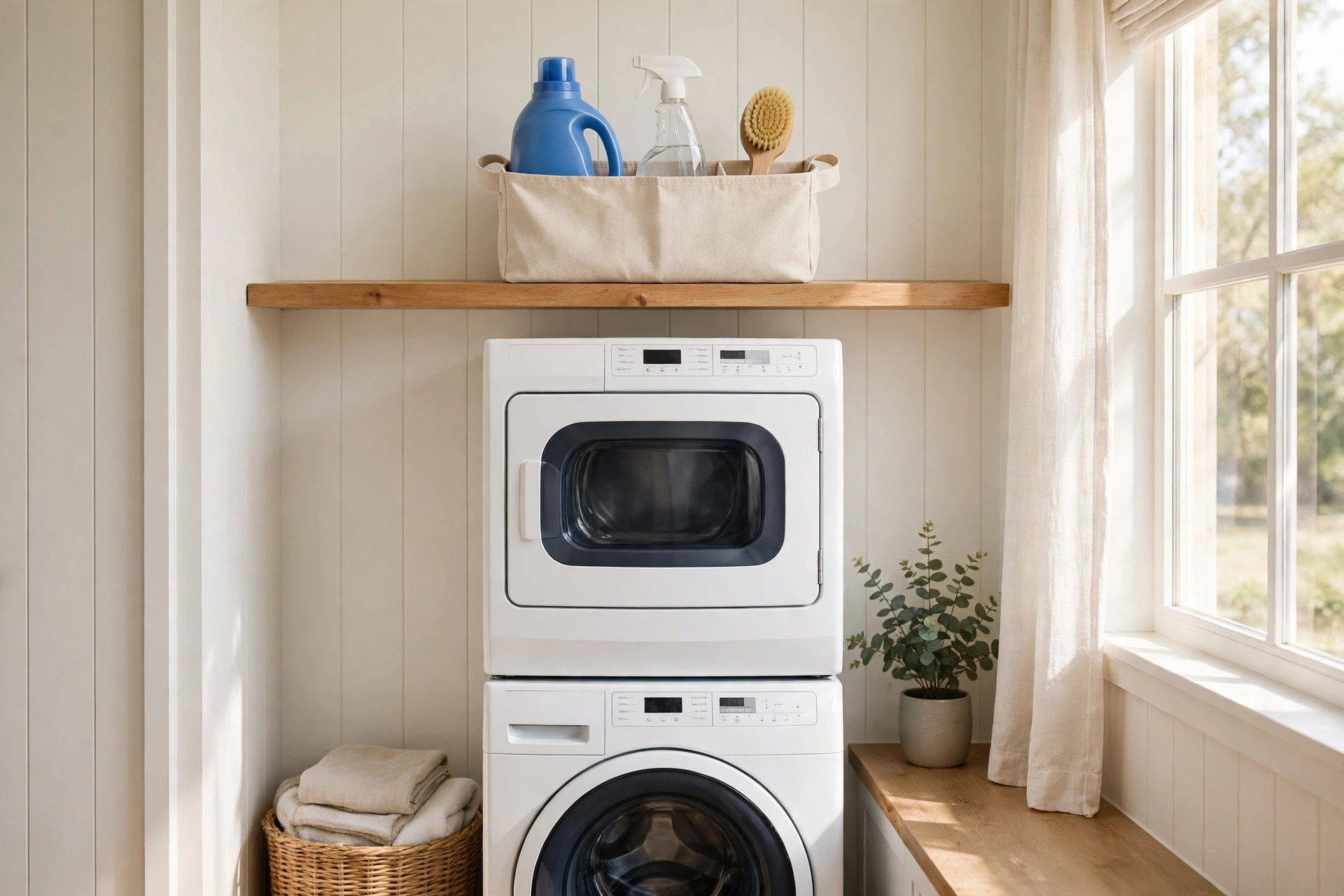
Loose bottles spread. One caddy stops the spread.
A low washable caddy or bin on the shelf holds 4 things: detergent, stain spray, a small measuring cup and a scrub brush. The whole kit lifts out in one hand when the shelf needs a wipe. This is the same grouping rule behind all good laundry room storage ideas: stuff that works together lives together.
I keep just the current bottles in the caddy and send the big refill bottles to the high shelf. A caddy usually runs $8 to $20. If detergent drips down the side, rinse the caddy under a tap for 1 minute on wash day.
6. Fold a Drying Rack Down From the Wall
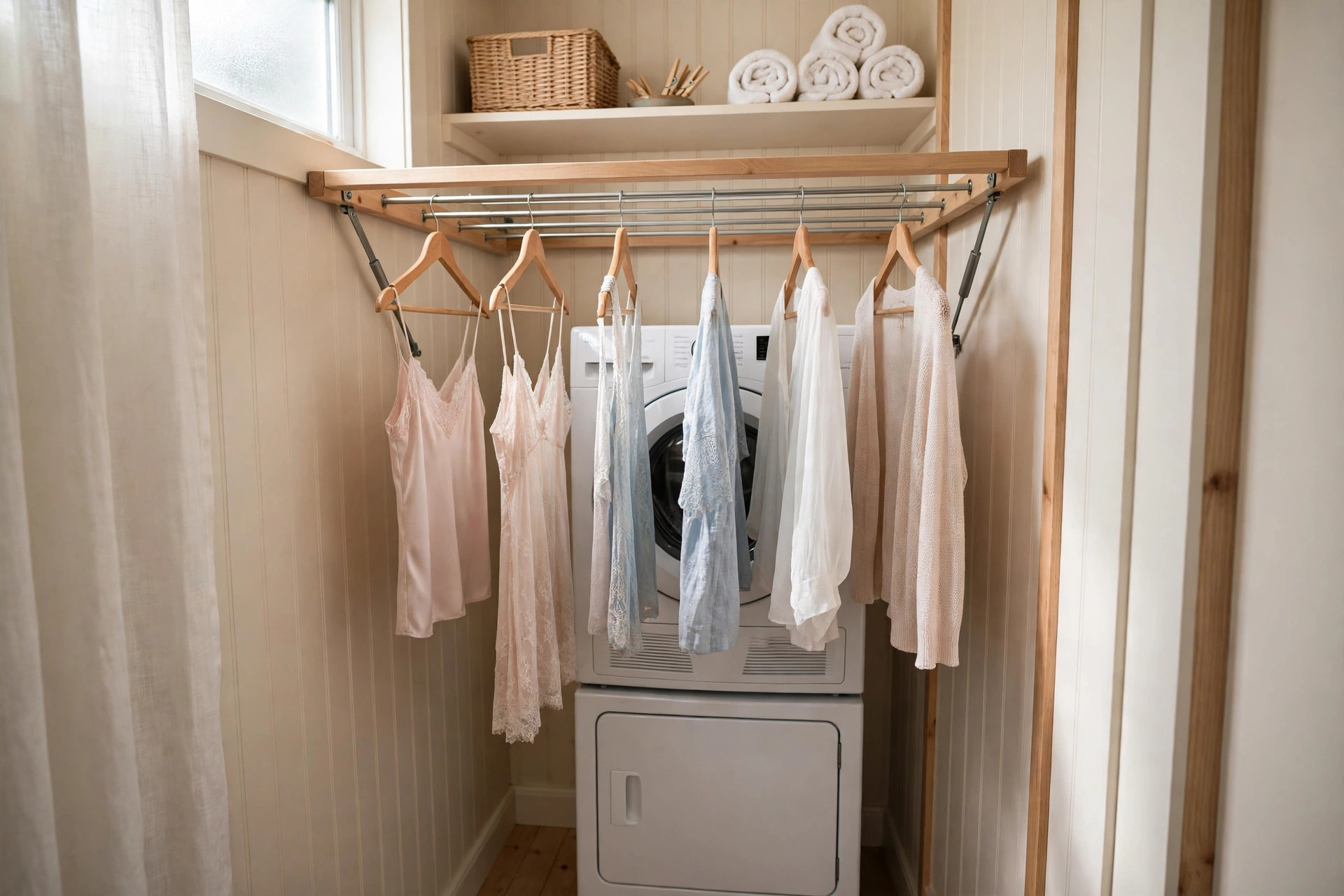
No floor for a rack? The wall has room.
A fold down rack on the side wall gives delicates and gym clothes a place to air without blocking the doors of the machines. Open it for drying, fold it flat after, and the closet goes back to full work space. Flat, it sticks out about 2 inches. Most small racks hold 6 to 8 light items at once.
Mount it high enough that wet hems clear the floor and far enough from the shelf that sleeves do not brush the detergent row. What goes wrong: a rack set too low drips right onto the machine tops. Raise it, or put a thin towel on the top machine while things drip for the first hour.
7. Look Up, There Is a Shelf Above the Door
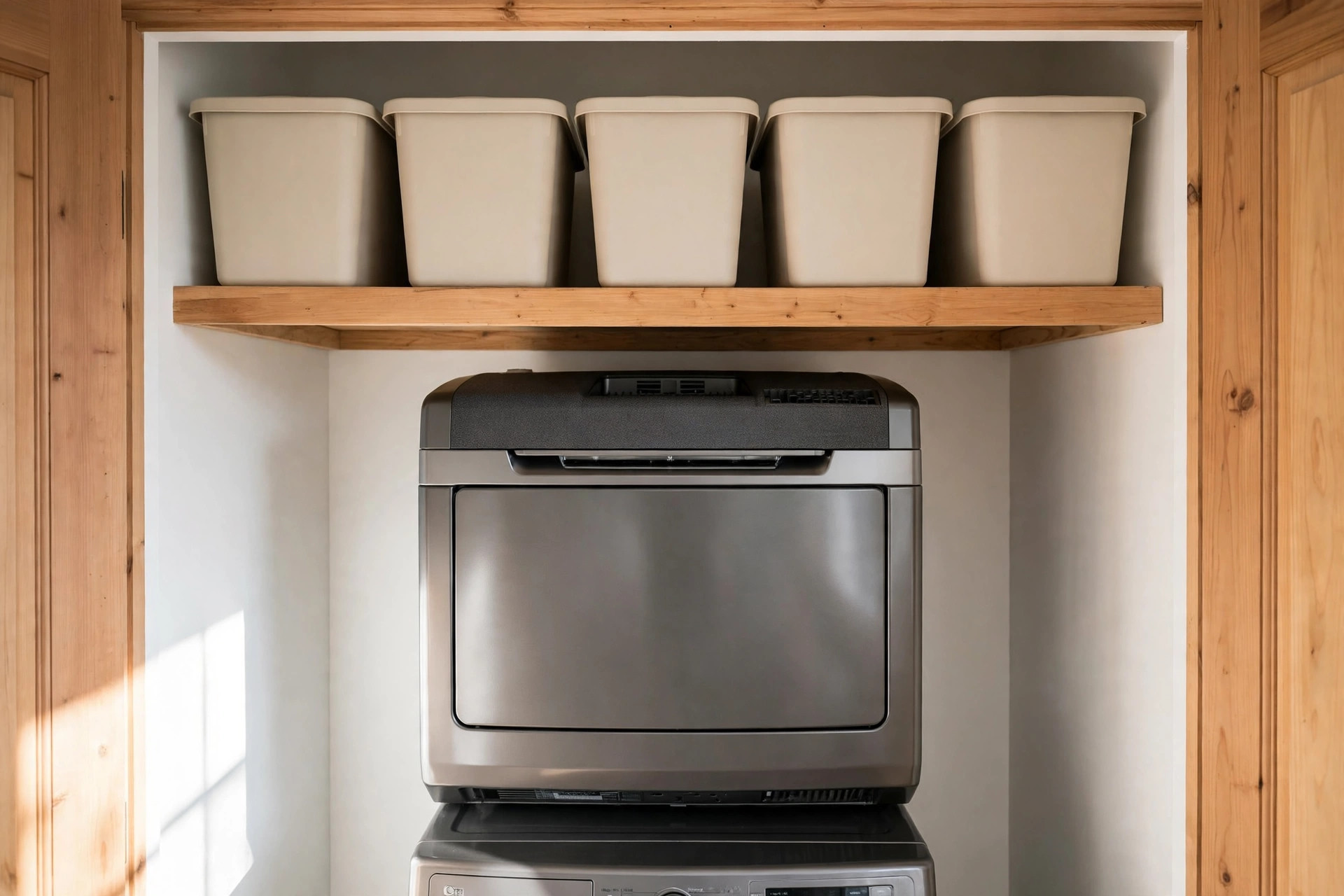
The closet is not full yet. Check the wall over the door frame.
Inside most closets that high wall fits 1 more shelf. Use it for monthly stuff, not daily stuff: bulk refill bottles, the iron and a basket of spare linens. Put it all in closed bins so the shelf reads as one calm line when the door opens, and label each bin on the front edge.
Here is the buy and skip call for this closet. Skip the pricey set of matching bins for now and buy the shelf and the light from idea 9 first. Keep each bin light, under about 10 pounds, since a heavy bin lifted over head height is a drop waiting to happen. That weight rule is the fix for the high shelf failure people learn the hard way.
8. Pull Out a Shelf When You Need to Fold
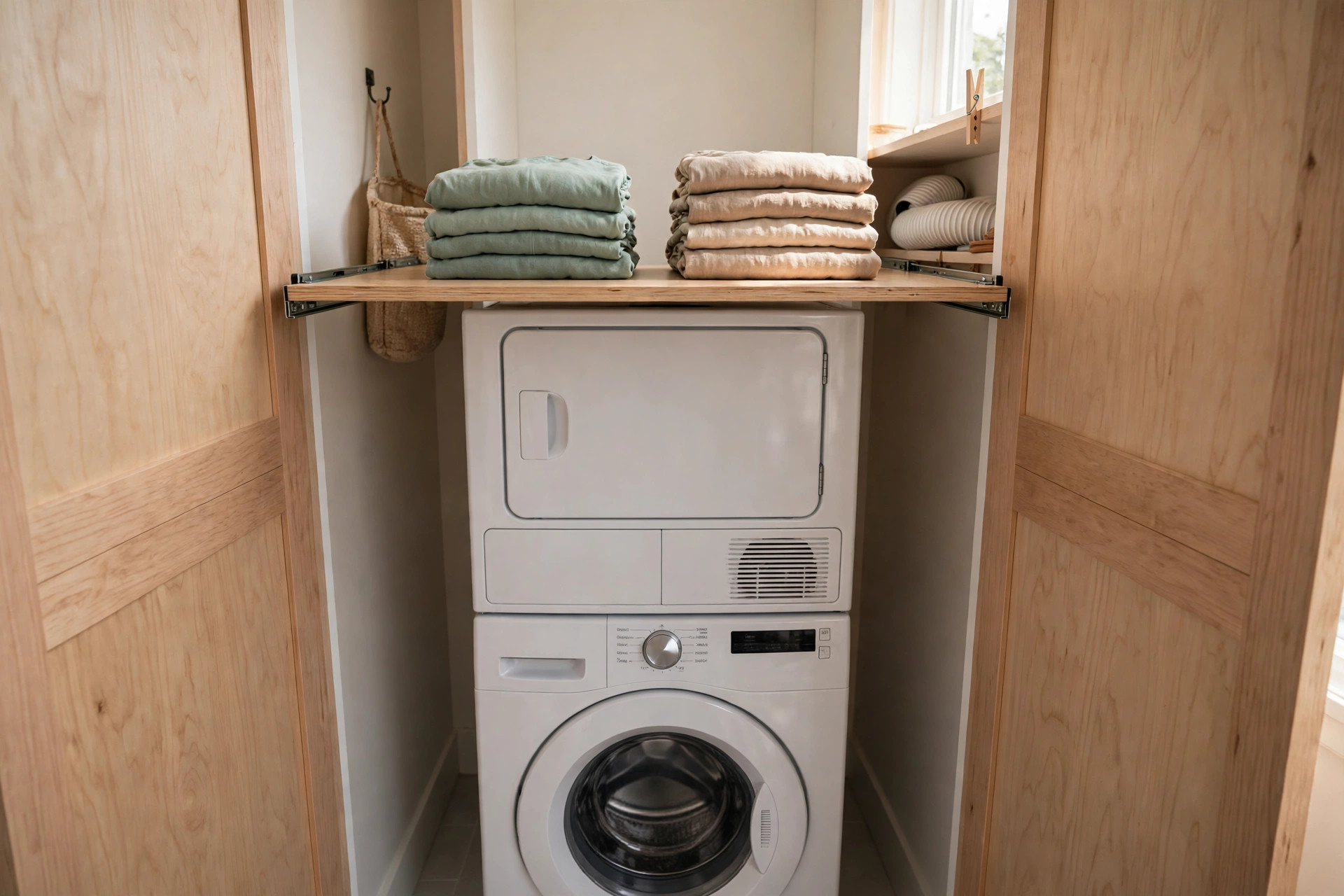
No counter is why clean clothes end up in a basket on the floor. Fix that with a shelf that hides.
A pull out shelf, or a plain board that rests across the top of the lower machine, gives you a fold spot for the 10 minutes you need it, then slides away. Sort right on it: lights on one side, darks on the other, using the same habit as full size laundry sorting station ideas shrunk to closet size.
I fold straight onto the board and carry the stack out in one trip, since a planned spot beats a basket every time. Just do not rest a board on a machine top that your guide says to keep clear, and take it off before the next wash starts.
9. Stick Up a Light, You Will Miss Less
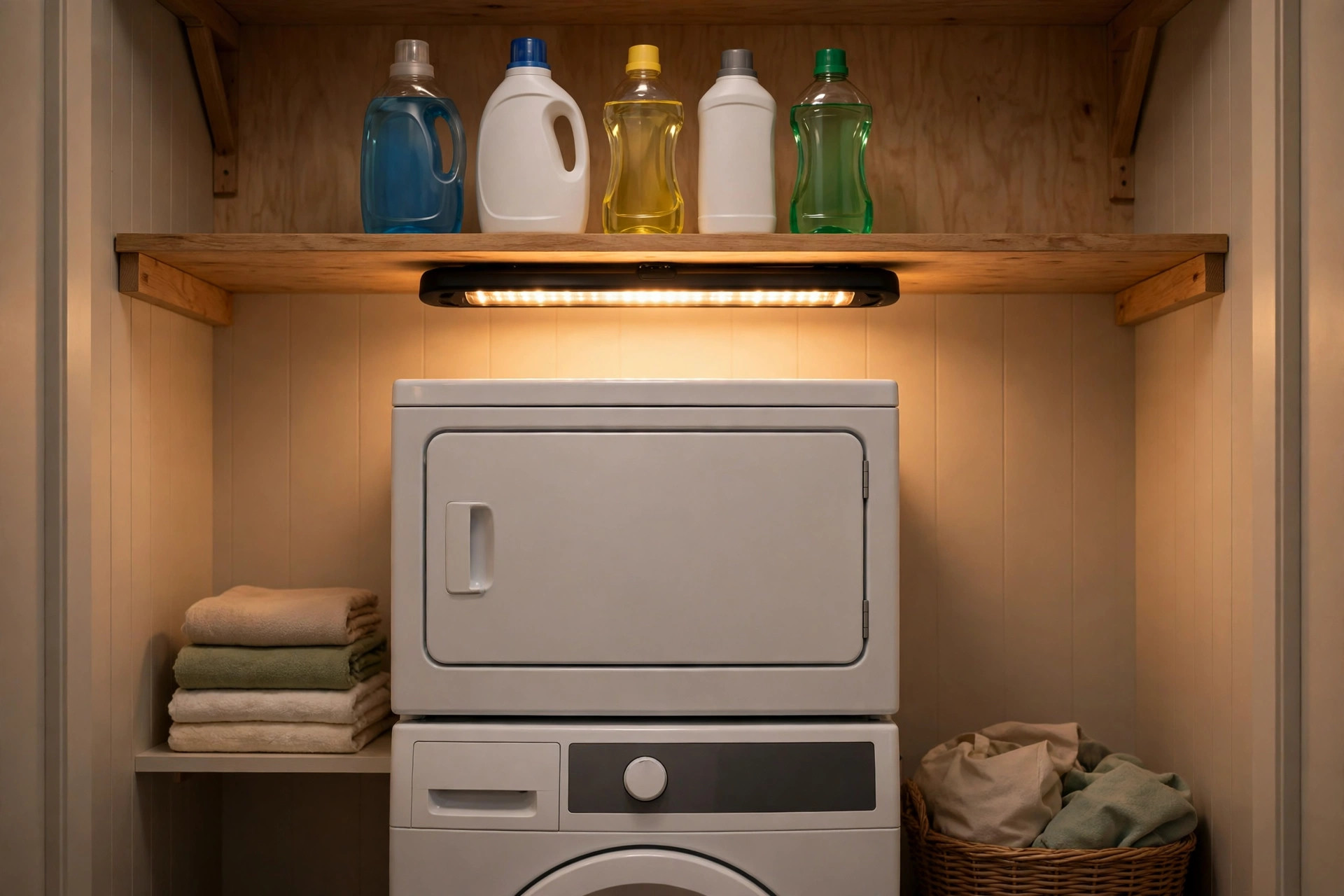
Dark closets hide stains, socks and the dial settings. Light fixes all 3.
A battery LED bar, about 12 to 18 inches long, sticks under the shelf with no wiring and no electrician. Aim the light at the back wall so it washes over the shelf row. Rechargeable bars keep cords out of a wet room.
I stick mine under the shelf edge so the detergent labels can be read without a phone torch in the other hand. Heads up: plain adhesive pads can let go in the heat and damp of a laundry closet, and the bar drops behind the machines. Use the screw clips or stronger pads in the box from day one, not after the first fall.
10. Pick a Door That Lets Air Move
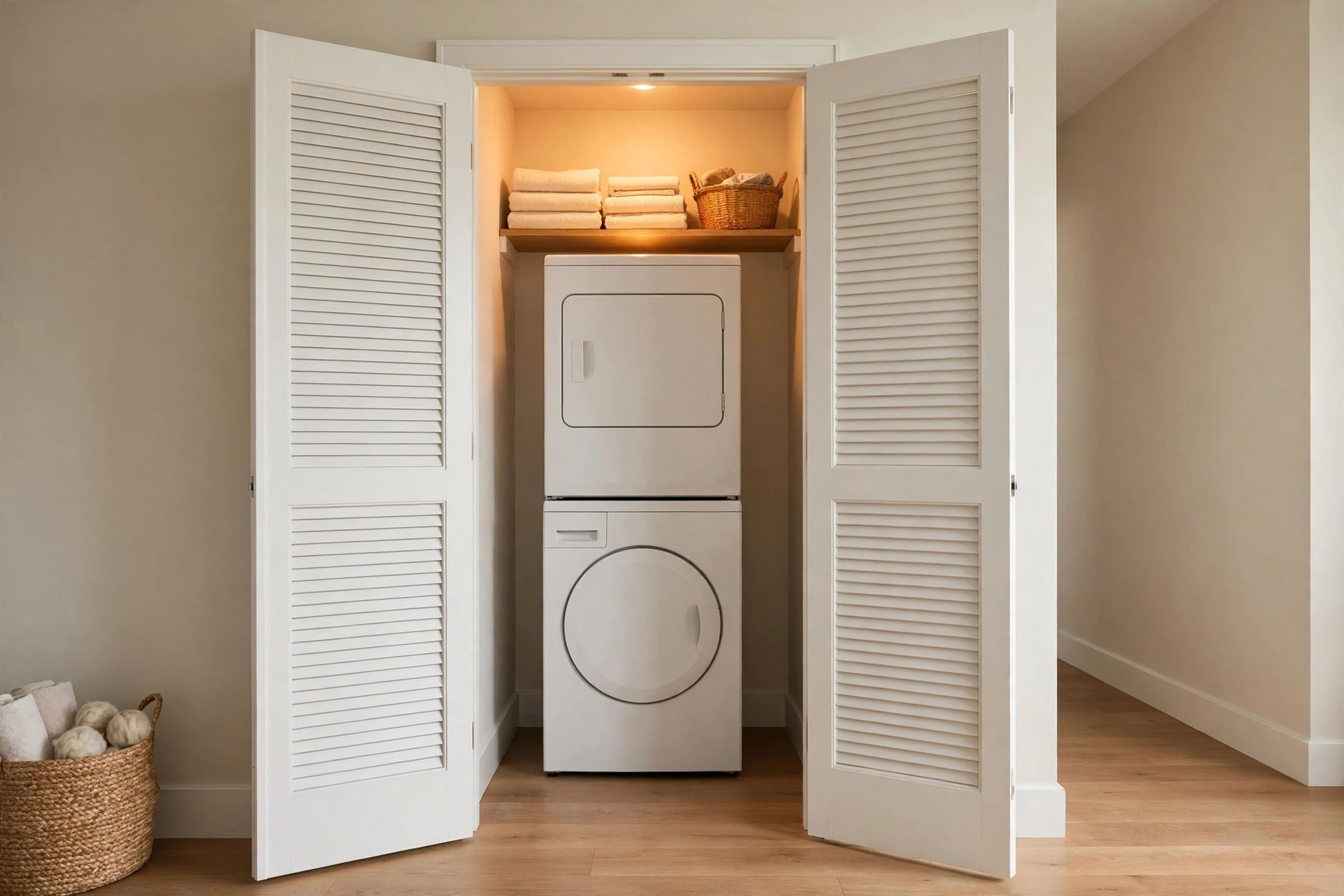
Stacked machines push out warm damp air. A tight solid door traps it.
Louvered or bifold doors let air move while the machines run, and many makers ask for airflow and clear space around stacked pairs, so check your guide before you seal a closet shut. The door still needs to open wide for loading. In a hall or kitchen closet, a curtain on a tension rod is the renter friendly pick, and the full run of how to hide a washer and dryer covers doors and screens in more depth.
Failure sign to act on: a musty smell when you open the door after a wash day. Fix it with a louvered door, or leave a solid door open for about 30 minutes after cycles end, if your guide allows the setup.
11. Label Every Zone and Catch the Lost Socks
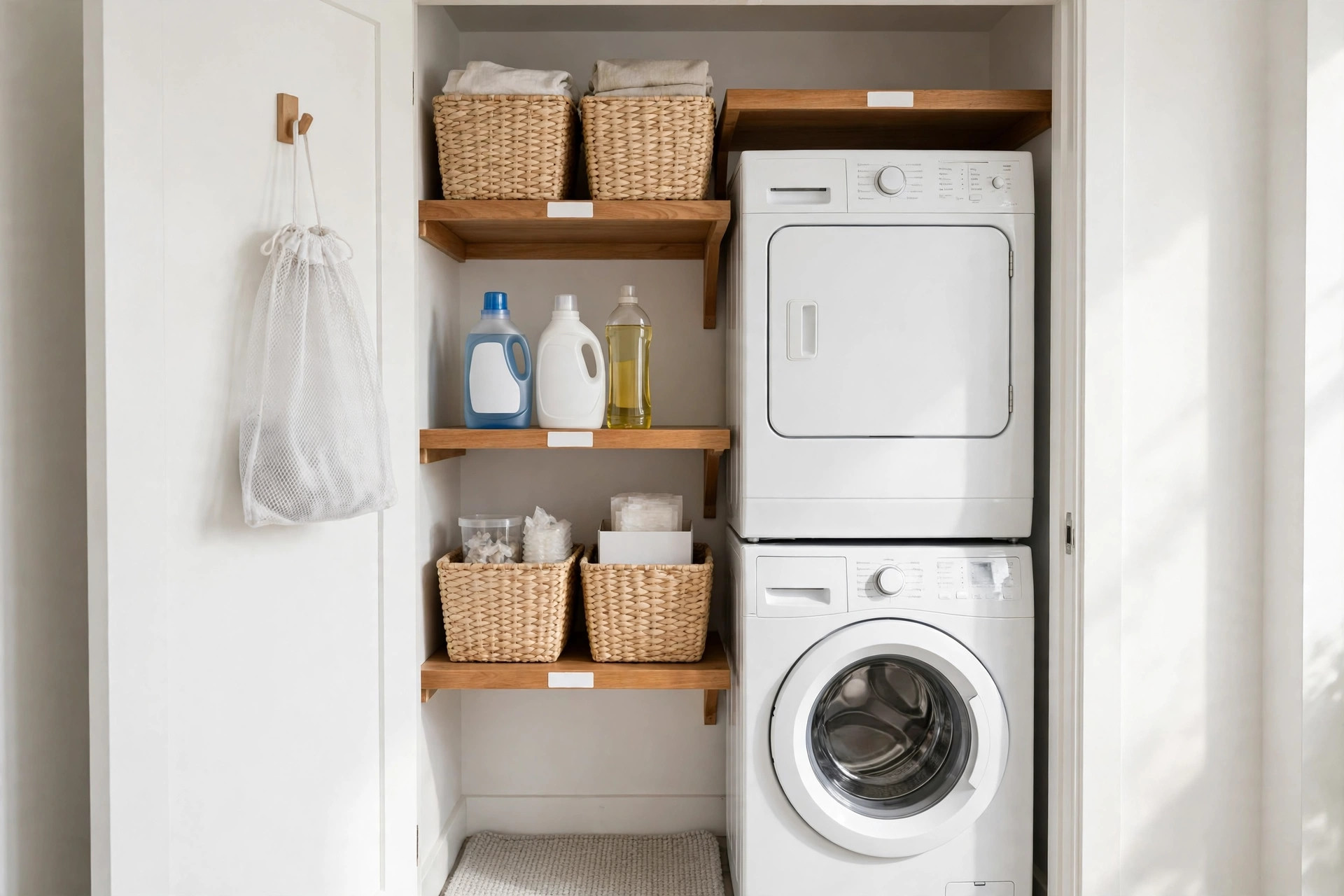
Last pass. Make the system plain to read for anyone who opens the door.
Small labels on the shelf edge and on each tower tier end the daily guess about where things go back. A tiny mesh bag or a clip strip on the door gives single socks a holding spot instead of a trip to the floor,. This is borrowed straight from the best small laundry room ideas, where each zone says what it is.
Keep this pass short, about 5 minutes with a label maker or tape and a pen. If a label keeps getting ignored, the zone is in the wrong place, so move the zone, not the label.
The Bottom Line
A stacked closet works like a cabinet, not a small room. One shelf for the daily row, one slim tower for the rest, and a fold spot that shows up only when needed. Measure first, tape the clear zones and label the lot. Do that and a full wash day fits without a sock in the hall.
Start with the tape and the 3 measurements, since every good pick in this closet hangs off those numbers.
Frequently Asked Questions
How much space do you need for a stacked washer and dryer closet?
Most stacked pairs take the floor space of 1 machine, about 27 inches wide for a standard pair. The closet also needs depth for hoses and venting and clear space above and beside the units. Add the door swing to the plan, since a door that cannot open wide shrinks the closet you can use.
What shelving fits above stacked machines?
One shelf about 12 to 16 inches deep, set at a height you can reach with the clear space your guide asks for left in place. That depth holds detergent bottles in 1 row, labels out. Keep daily stuff only up there, no heavy bulk bottles.
How do you store detergent in a tiny laundry closet?
In 1 washable caddy on the shelf above the machines, holding about 4 items: detergent, stain spray, a measuring cup and a brush, in 1 row with labels out. Refill bottles go in a labelled bin on the high shelf or in the slim tower.
Can you close the door on a stacked laundry closet while it runs?
It depends on the door and on your guide. Louvered and bifold doors are common picks since they let air move while machines run,. With a solid door, check the guide for your model and think about leaving it open for about 30 minutes after cycles if the closet smells musty.