10 Laundry Sorting Station Ideas That End the Clothes Pile
The pile is on the floor again. Shirts on top of towels. One dark sock hiding in the whites. A gym top you meant to wash on its own, now buried under the lot.
That pile is not a character flaw. It is a spot problem. Clothes land where there is no clear place to put them, so they land on the floor. I stopped sorting on wash day a while ago and started sorting at the drop, and the floor pile mostly quit on its own. The 10 ideas below set that up in a small room, a closet or a hallway corner, and each drop takes about 10 seconds.
The short version, before we start:
Sort at the drop. Put a divided hamper where clothes come off and each load is half sorted before it reaches the machines.
Three bags is enough for most homes. Lights, darks and one more load you really run. Extra bags just collect junk.
Labels go on the front, not the lid. Big plain words at eye level, with the wash temp written under each one.
Give strays one small home. One catch all basket, emptied on wash day, or the odd socks take over again.
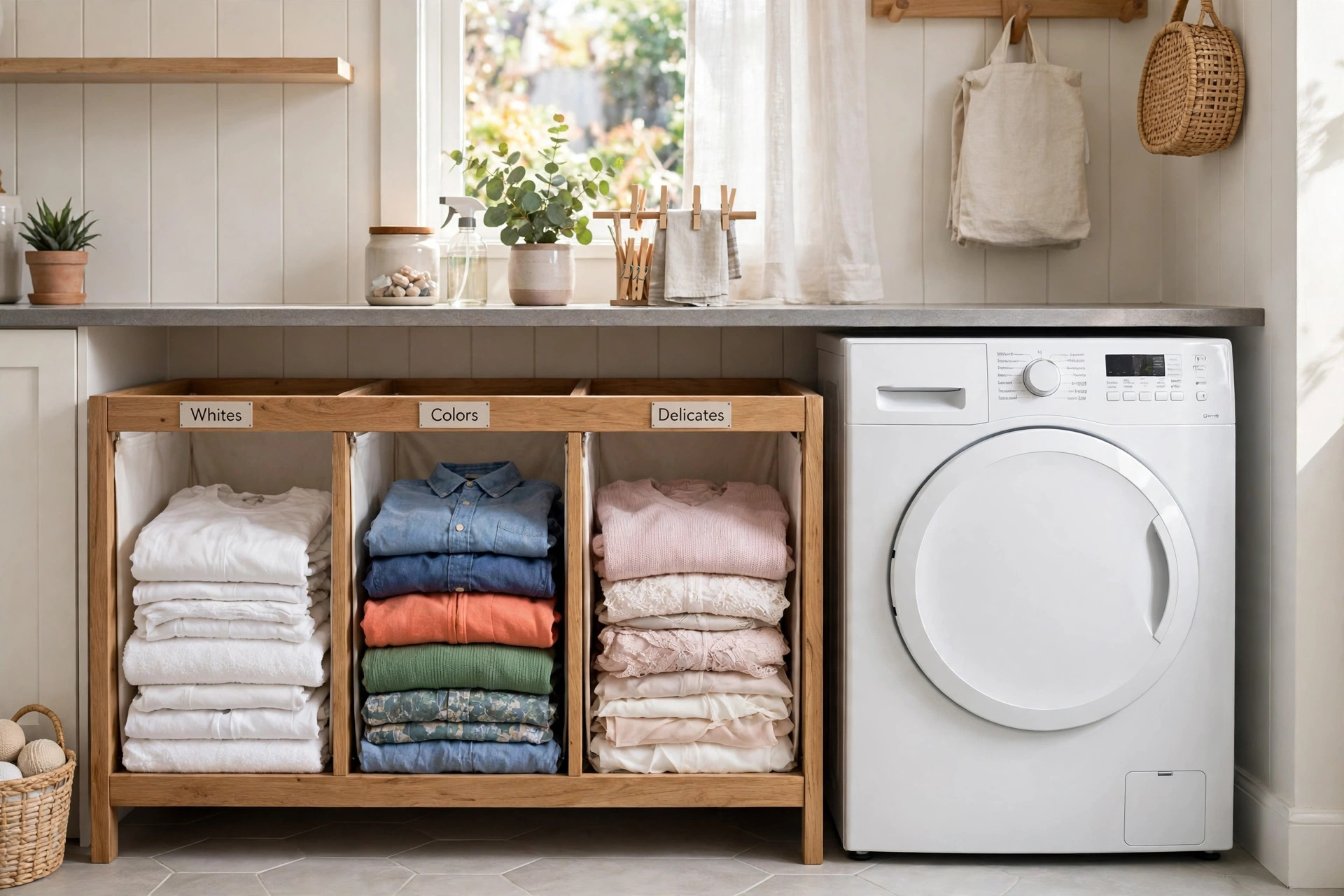
1. Start Where the Clothes Actually Come Off
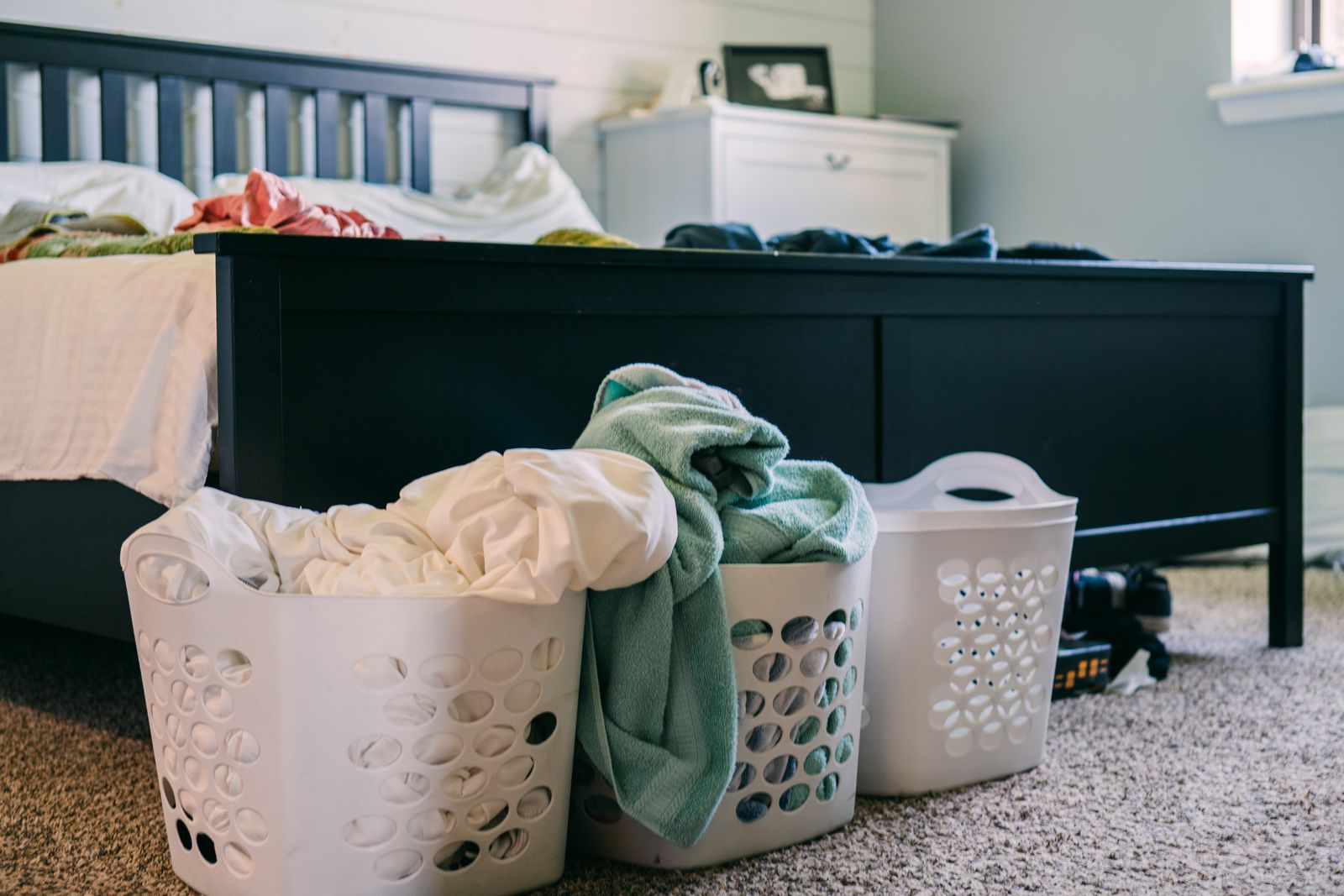
Do not start in the laundry room. Start in the bedroom.
That is where the pile is born, so that is where the first hamper goes. A divided hamper in the corner where people get undressed means each item lands in the right load the second it comes off. No cold sort through a mixed heap later. No 15 minute dig on wash day.
One hamper with 2 sections covers a single person or a couple fine. If the hamper sits more than a few steps from where clothes come off, people drop them on the floor anyway. Move the hamper, not the habit.
2. Buy the Three Bag Sorter, Not the Big One
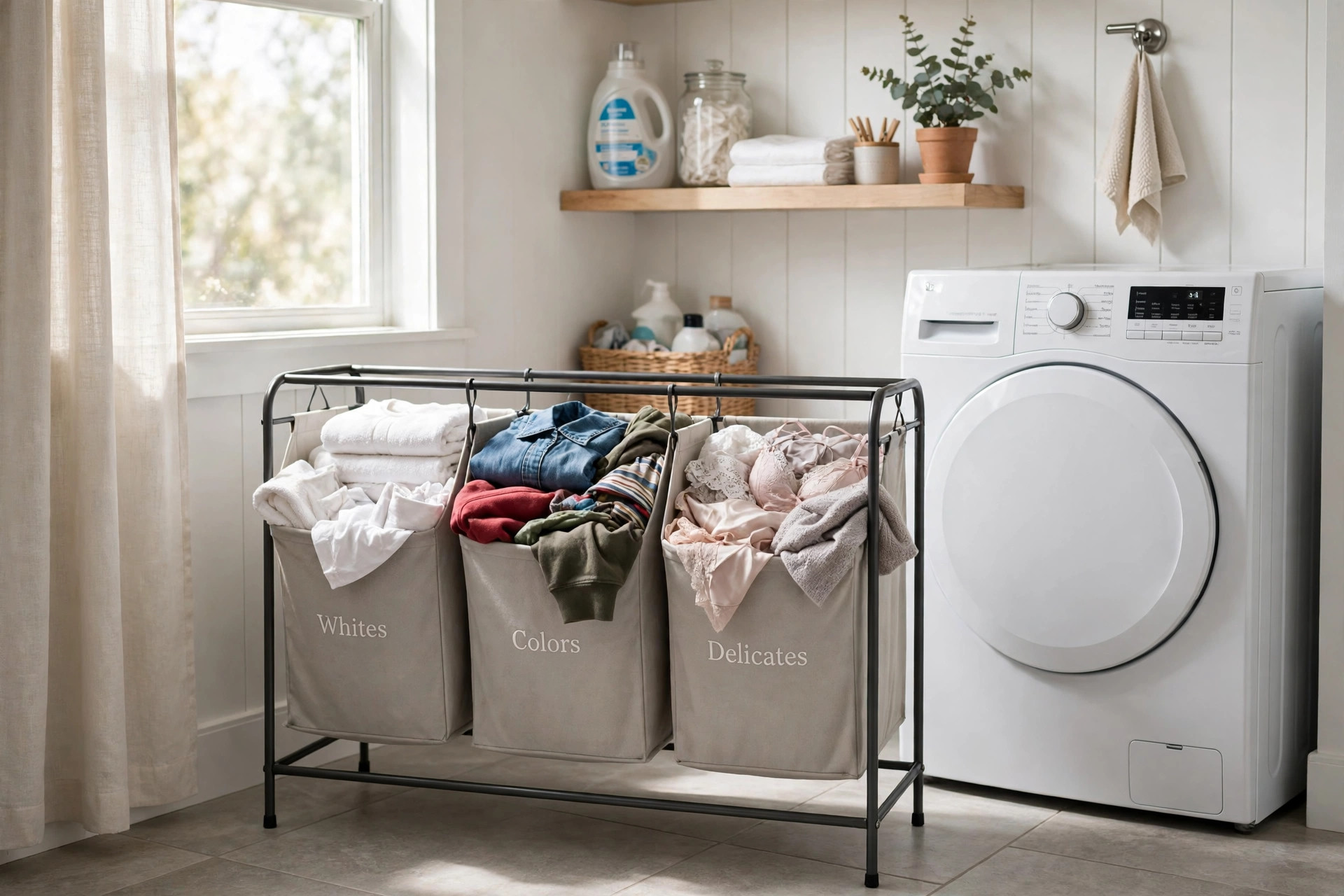
Count your real loads for one week before you buy anything. Then buy the sorter that matches that count and stop there.
Most homes run 3 loads: lights, darks and then delicates or towels and bedding. A frame with 3 lift out bags fits that life. The bags matter more than the frame. You carry one full bag to the machine instead of dragging the whole unit. Each bag should hold about one full load, so a full bag is your cue to wash.
Here is the buy and skip call. Skip the 5 bag sorter. I run 3 loads and the 2 spare bags I once had just filled with stuff that was not laundry at all. A solid frame with washable bags usually runs $30 to $70 and lasts. The cheap thin frame bends at the corners within a few months.
3. Write Labels a Tired Person Can Read
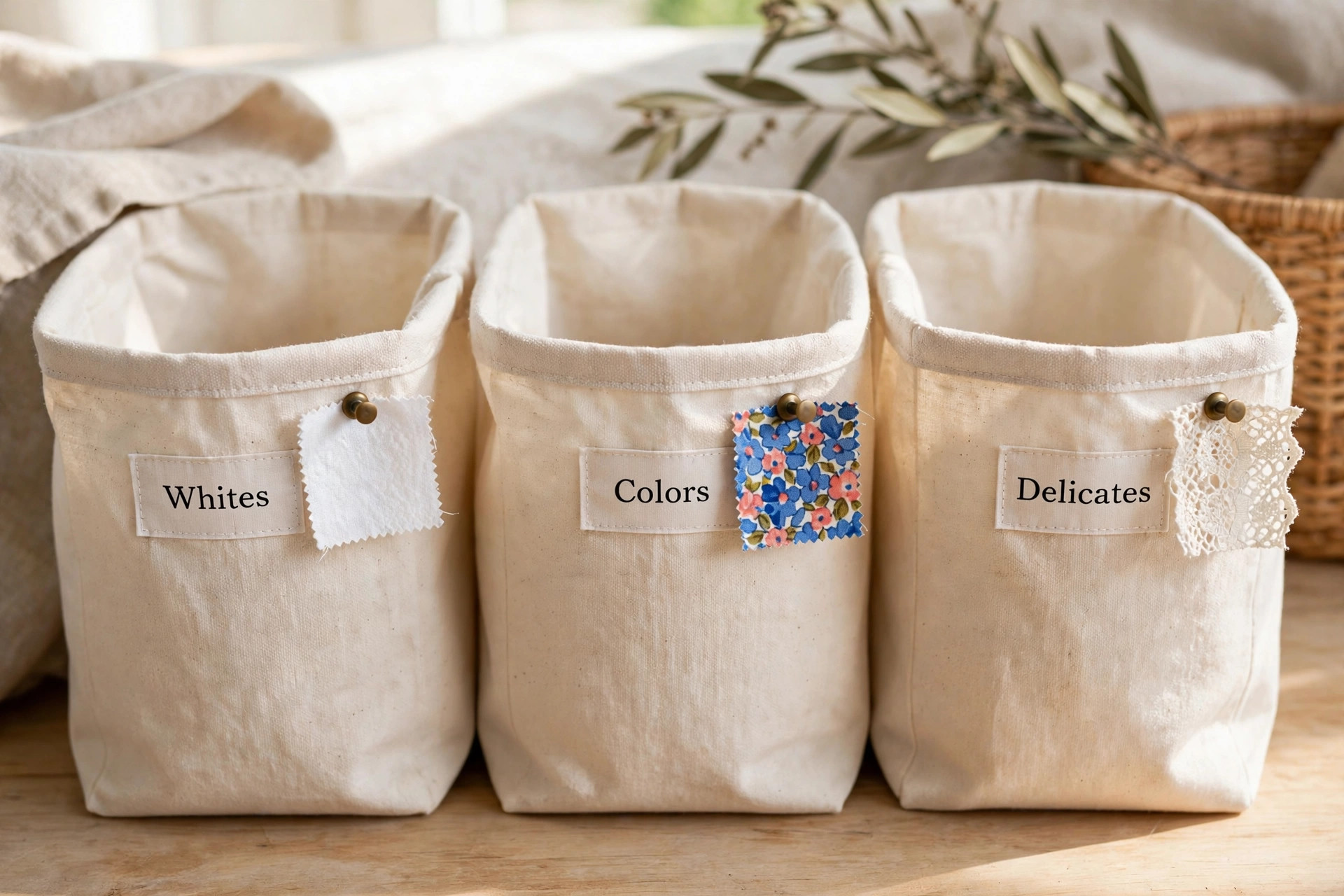
Small cute labels fail. Plain big ones work.
Write the load in plain words on a card about 3 by 5 inches: Whites, Colors, Delicates, Towels. Add the one fact that stops mistakes under the word, like wash cold or wash warm. Stick the card on the front face of the bag at eye level, where you see it mid drop. For kids and guests, pin a small bit of cloth in the right color range next to the word.
What goes wrong most: labels stuck on a lid. The lid shuts, the label hides and every bag gets a mix again. Fix is plain. Front face only, nothing on top. A label you cannot read is the same as no label.
4. Go Slim and Rolling When the Room Is Narrow
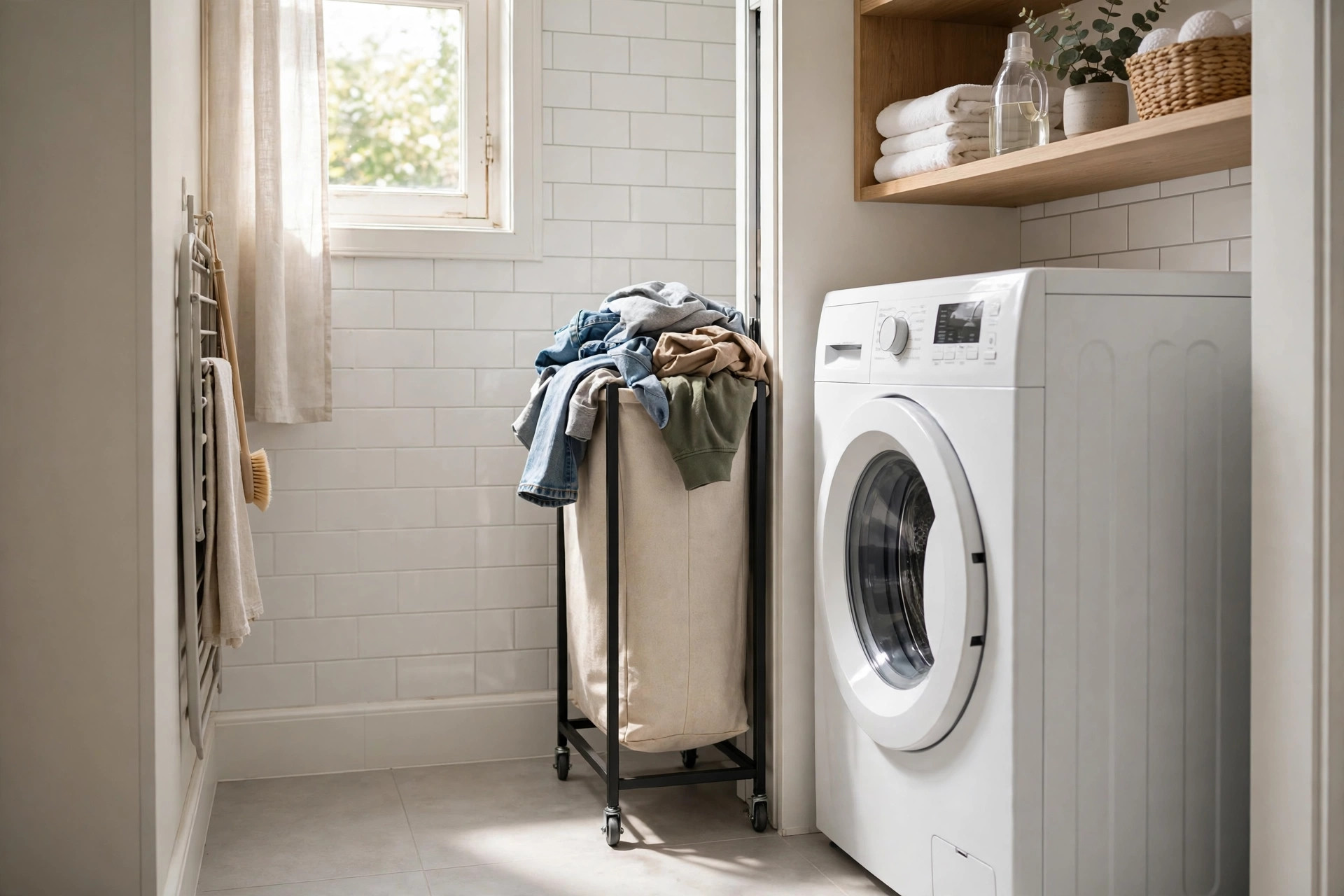
Measure the gap first. Then pick the sorter.
Slim rolling sorters are usually 12 to 15 inches wide and slide into the gap beside a machine or between the machines and the wall. The wheels are the point, not the look. A sorter you can pull out with one hand gets emptied. One you have to lift gets left until it overflows. I push mine out with one hand while the other holds the wash basket, and that small ease is the reason it gets used daily.
Pair it with the wider run of small laundry room ideas for the walls. Catch: a cart just 1 inch too wide wedges tight and scratches both sides. Measure at floor level and at the top, leave about half an inch spare, and check the door trim too. Gap under 10 inches? Skip the cart and use idea 5 instead.
5. No Floor Left? Hang It on the Door
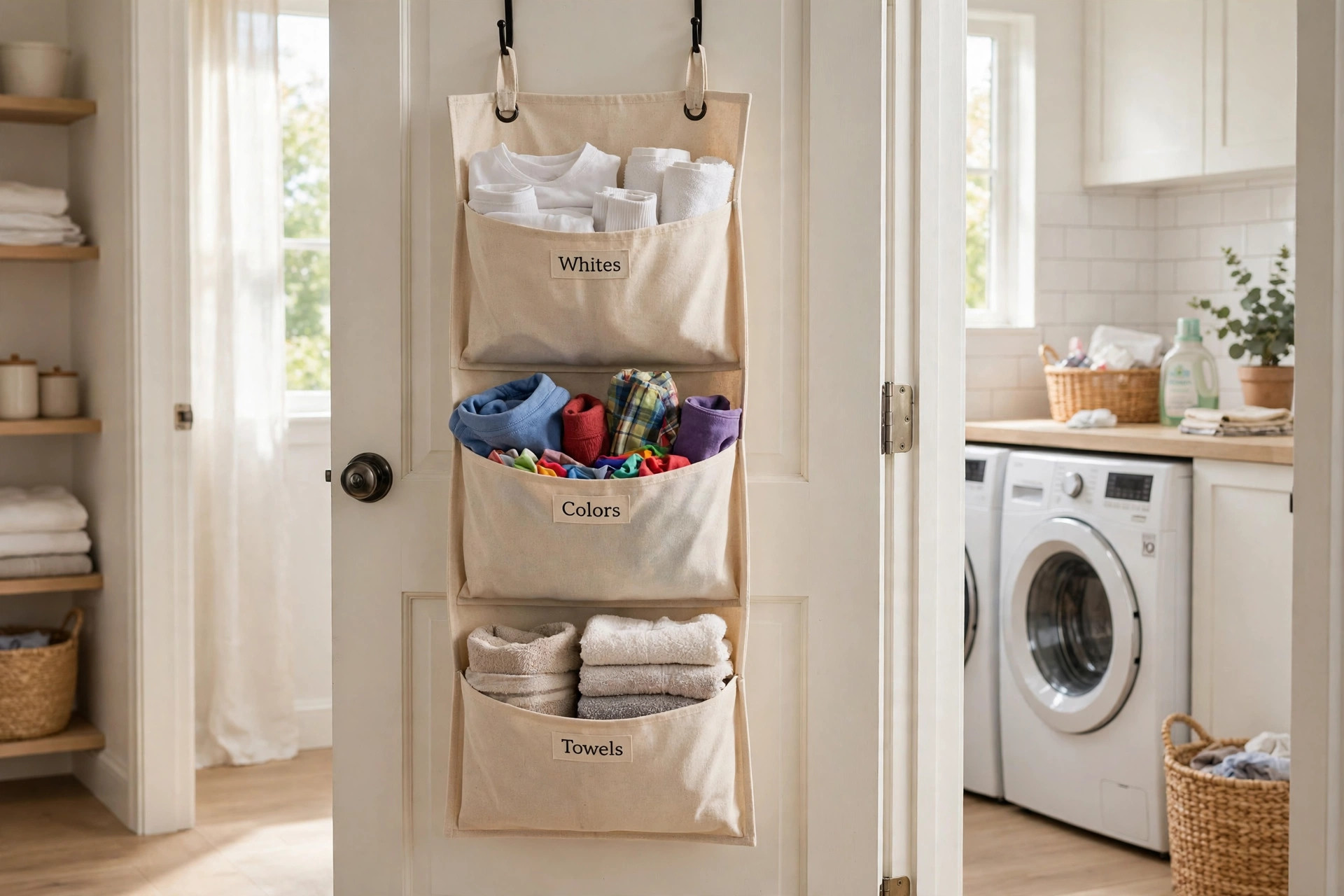
Hang the sorting. The floor is done helping here.
A fabric sorter with 2 or 3 pockets hooks over the laundry room door or a cupboard door. Each pocket takes one load, labelled on the front as always. It lifts off in seconds if you rent.
Keep wet towels out of the door pockets. That is the failure that kills this setup. A pocket of wet towels is heavy, it pulls on the hooks and over time the door starts to sag and stick. Towels get a shelf basket from idea 6 instead. This is the same up not out logic as good small laundry closet ideas, just used for sorting.
6. Steal the Wall Above the Machines
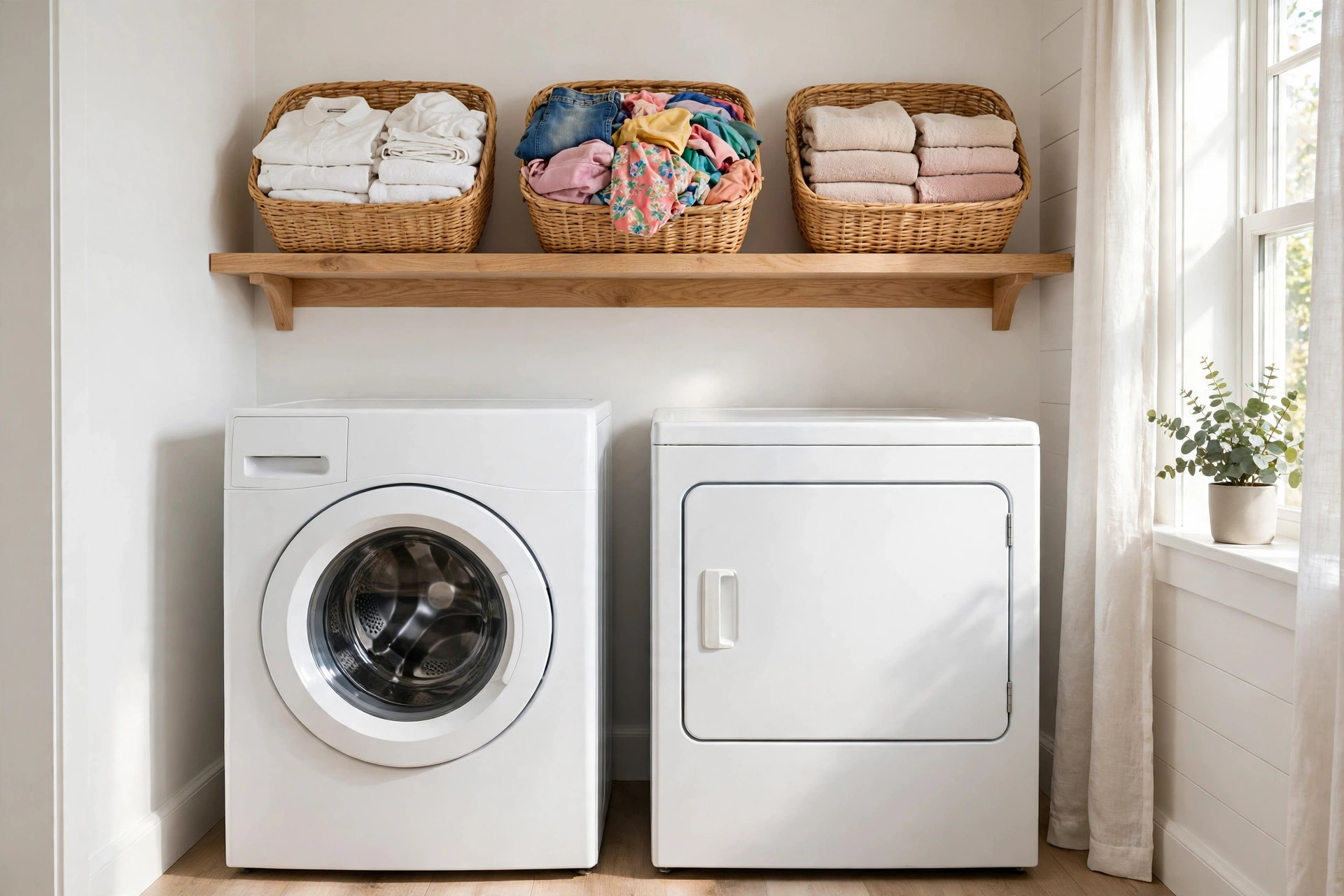
Look up. That empty wall is your extra shelf.
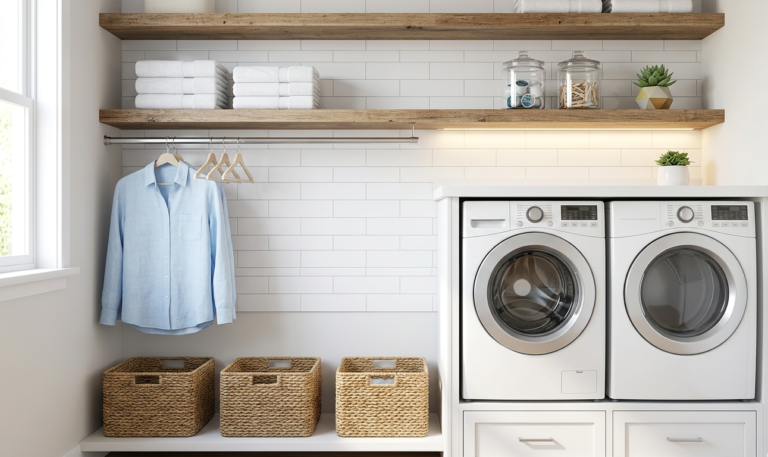
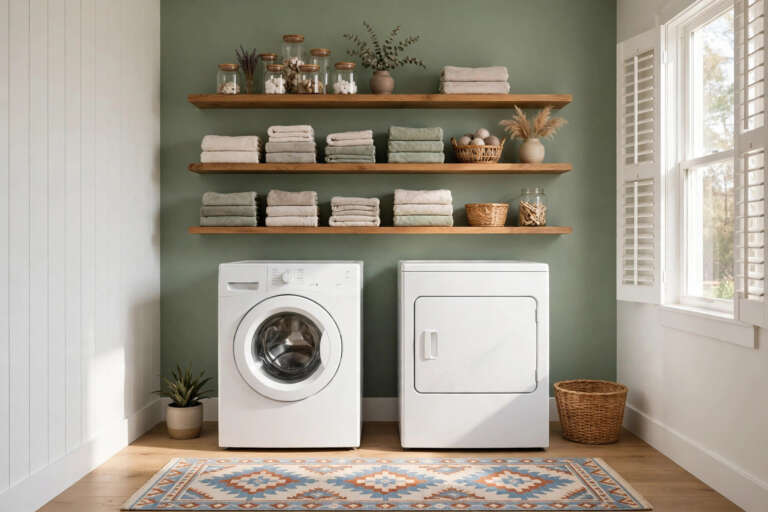
One strong shelf fixed into studs above the washer and dryer holds a row of open baskets, 1 per load that is waiting its turn. Open baskets beat closed bins here because you can see in one glance which load is close to full. Leave the clear space above and behind the machines that the maker of your machines asks for. Most shelves like this need to be about 12 inches deep to hold a basket without it hanging over the edge.
This follows the same rule as all good laundry room storage ideas: the wall does the work so the floor does not have to. If a basket slides from the shake of a spin cycle, line the shelf with a thin grip mat and push the baskets to the back.
7. Put the Stain Kit Right in the Station
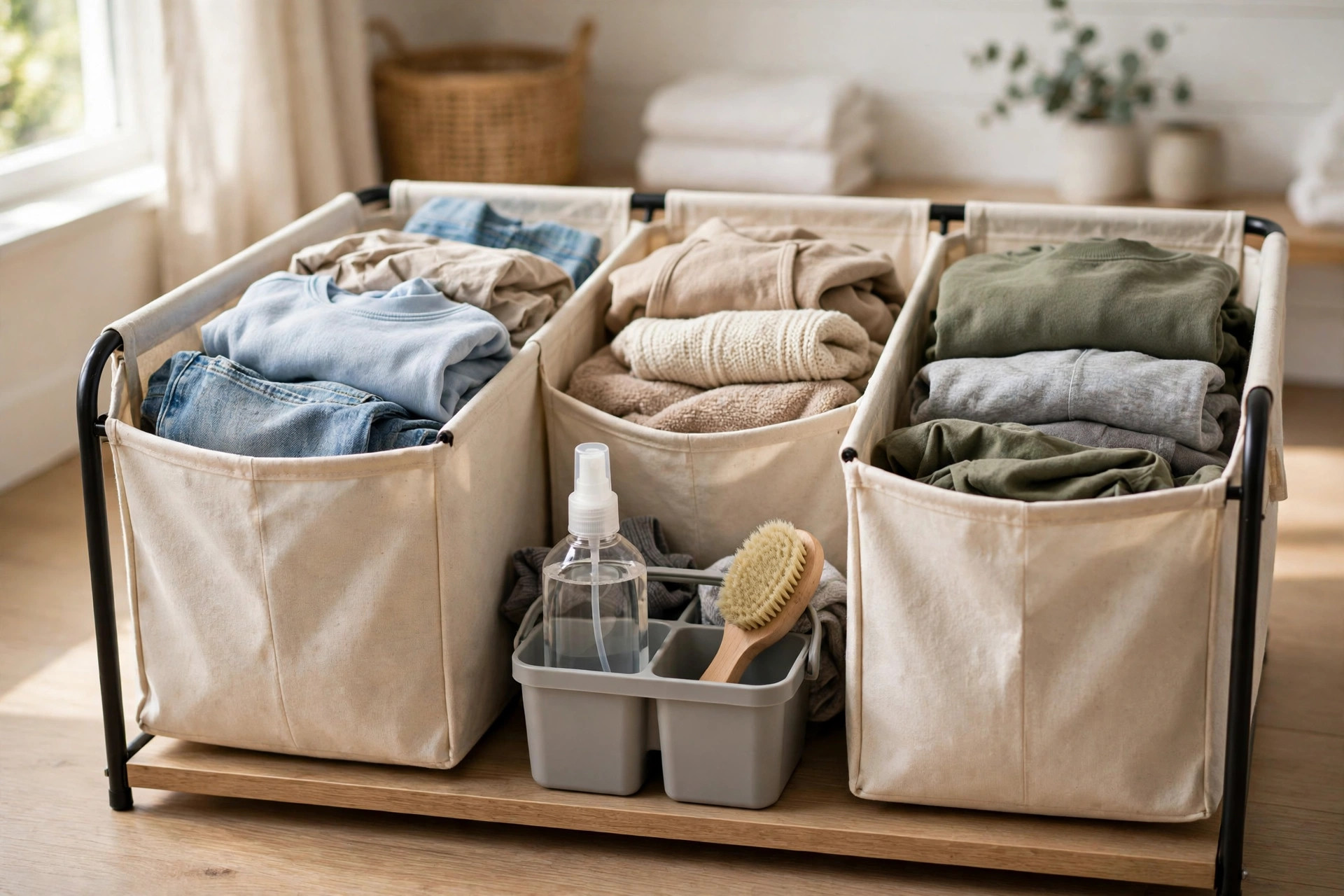
Treat the stain while the shirt is still in your hand. Later is too late.
Sorting is when marks show up, so the kit lives here, not under the sink. One small caddy holds 3 things: stain remover, a soft brush and a soaking bucket or bowl beside the station. Treat the spot in about 30 seconds, drop the item in the right bag and move on. A stain found after a hot wash is often set for good.
I keep the brush on top of the caddy so the next step is obvious and nothing has to be hunted for. Keep the caddy small on purpose. Once it turns into a full cleaning cupboard, the brush goes missing under bottles and the habit dies.
8. Give the Odd Stuff One Small Basket
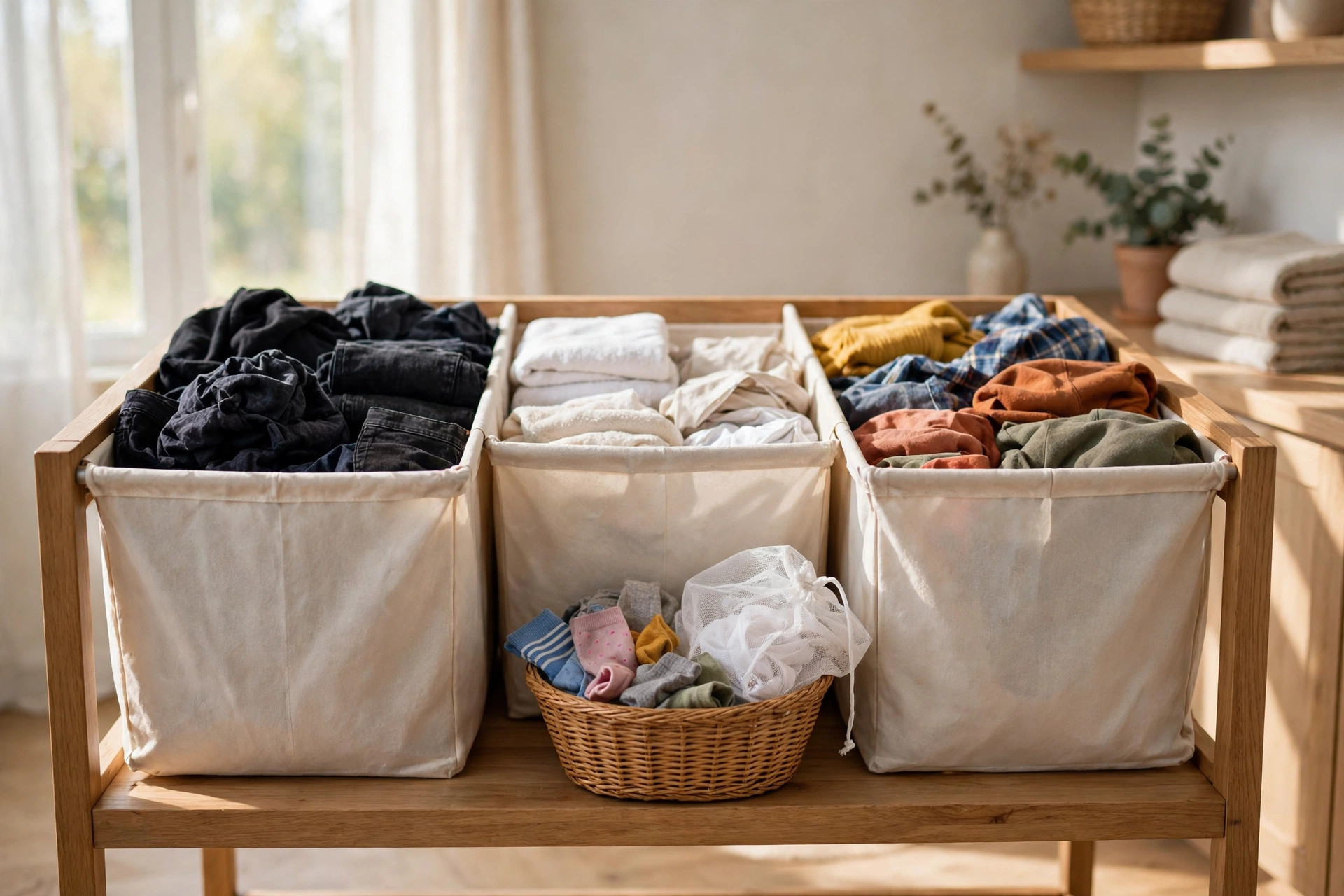
Every system meets stuff that fits no load. Give it one basket or it will take the floor.
The single sock. The hand wash only top. The costume that needs a gentle wash. One small catch all basket, about 12 inches wide, sits inside the station for the lot of them. Keep the basket clearly the odd one out, not a 4th main load.
Failure mode: this basket never gets emptied. Then it turns into a second pile with a nicer name. Fix: empty it on wash day by choice, not by overflow. Sort each item into a real load, hand wash the one that needs it, and put the basket back empty.
9. Put It on the Route People Already Walk
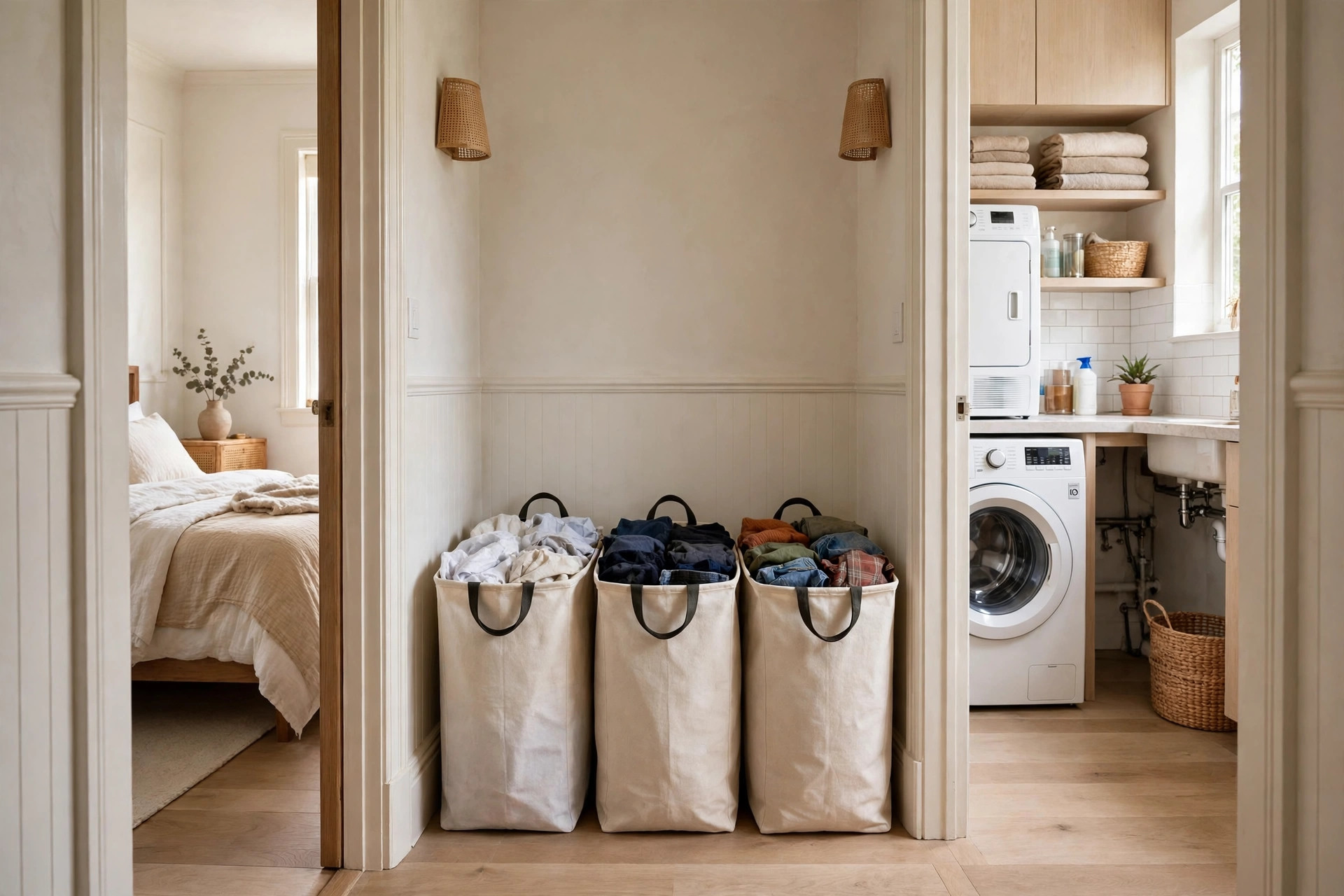
A station in the wrong corner is just decor. Put it on the path.
Clothes travel from bedroom to bathroom to laundry. Place the main station on that path, in a hall alcove, at the top of the stairs or in the bathroom itself, and it catches laundry as people pass. Hide it in a far corner and the spot beside the bed wins, every night. If there is room for just 1 station, pick the bathroom or the main bedroom over the laundry room.
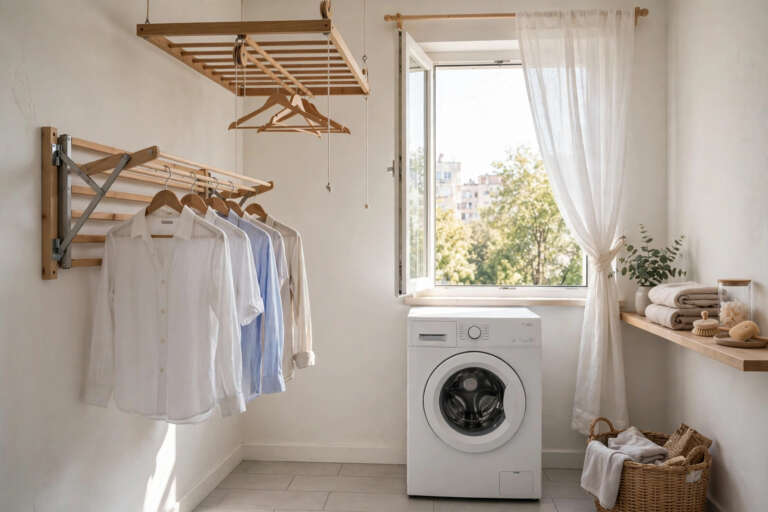
Once the wash is done, indoor drying rack ideas on the same route make the trip back just as easy. Heads up: if the station blocks a door swing or a walk path, people will shove it aside and the system breaks. Pick a spot that needs no moving, ever.
10. Reset It in Two Minutes on Wash Day
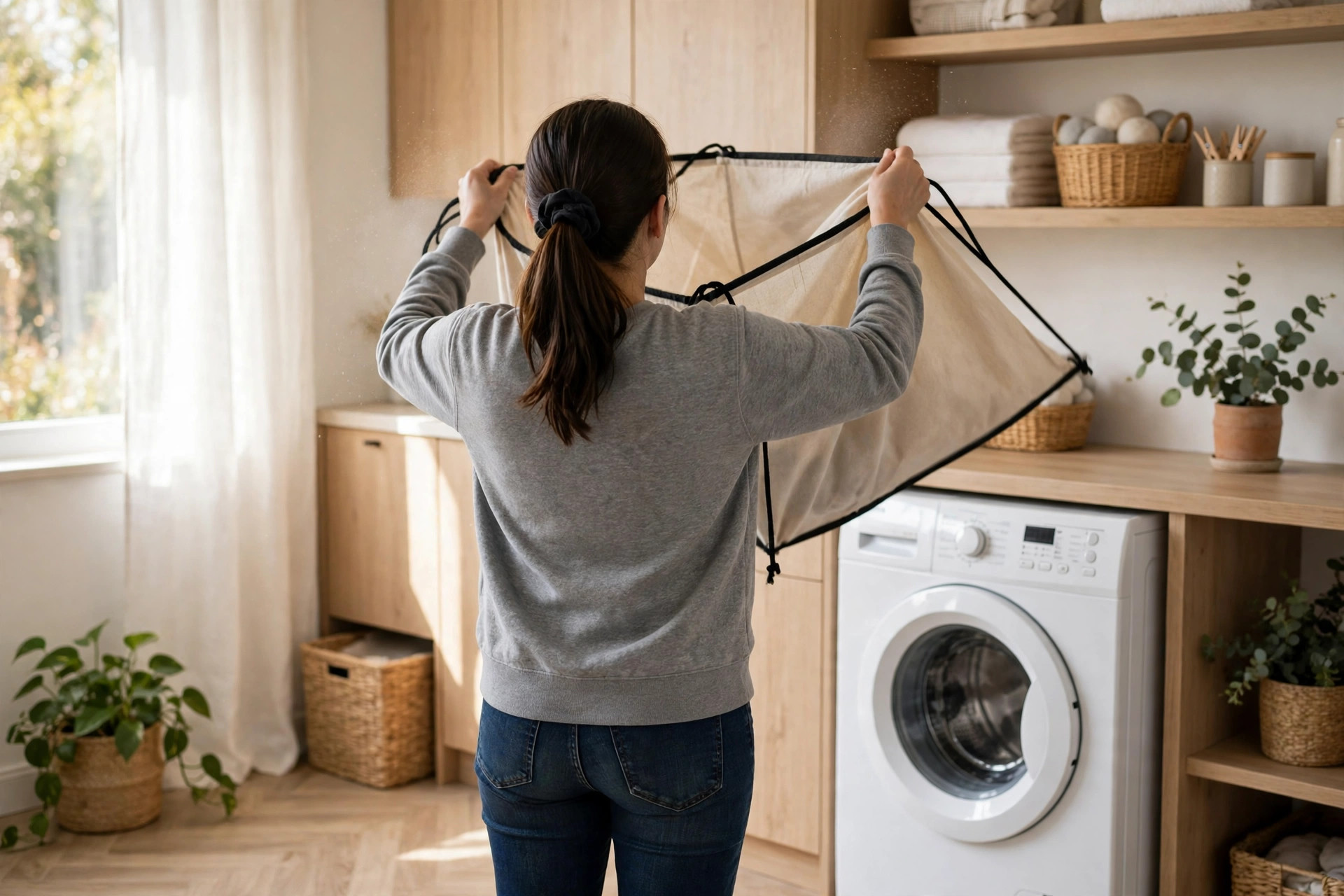
Stations drift. One wrong item, then three, then the labels mean nothing again.
Tie the reset to a job that already happens. When the last load starts, shake out the empty bags, move the strays that landed in the wrong bags, wipe the shelf and check the stain caddy. It takes about 2 minutes while the machine fills. That small reset is why a station like this lasts past month one.
I set a timer the first few weeks until the reset felt normal, then dropped the timer and kept the habit. If a bag has ripped or a label has peeled, fix it that same wash day. Small breaks left alone teach the whole house that the system is optional, and optional systems end up back on the floor.
The Bottom Line
The pile ends when sorting moves to the drop, not the wash day dig. Start where clothes come off, keep it to 3 main loads with big plain labels, and go up the wall or over the door when the floor runs out. Add the stain caddy and one small basket for odd stuff. Then guard the whole thing with a 2 minute reset.
Start with one divided hamper in the bedroom, labelled on the front, and the floor pile shrinks this week.
Frequently Asked Questions
What is the best laundry sorter for a small space?
A slim rolling sorter 12 to 15 inches wide with 2 or 3 lift out bags. It fits the gap beside a machine, rolls out with one hand. If there is no floor at all, a 2 or 3 pocket door sorter is the backup.
How many sections should a laundry sorter have?
Three for most homes: lights, darks and delicates or towels and bedding. Count the loads you ran in the last week and match that number. More than 4 sections and the spare bags fill with junk that is not laundry.
Where should a sorting station go if the laundry room is tiny?
Where clothes come off, not next to the machines. A hamper in the main bedroom or bathroom, or a station on the hall route, sorts at the drop in about 10 seconds a time. The tiny laundry room then just has to wash, dry and fold.
Do labels actually help a family sort laundry?
Yes, more than the frame does. Big plain words on the front face at eye level, on cards about 3 by 5 inches, with the wash temp under the word. Labels on a lid or in tiny cute script do not.