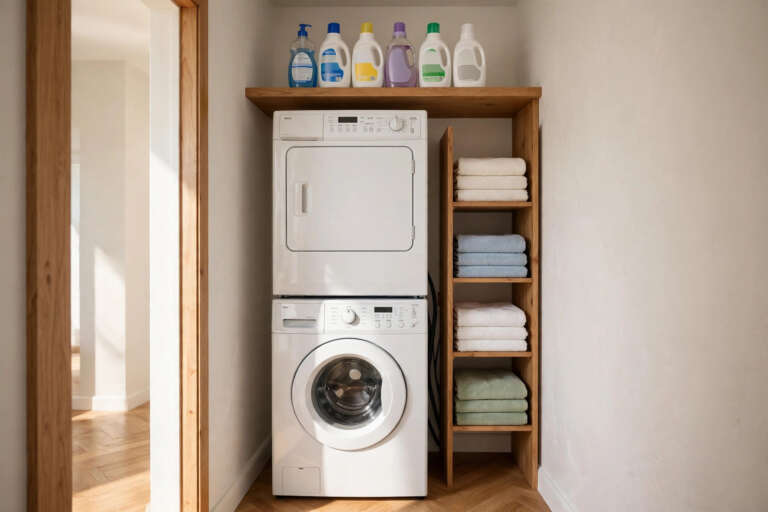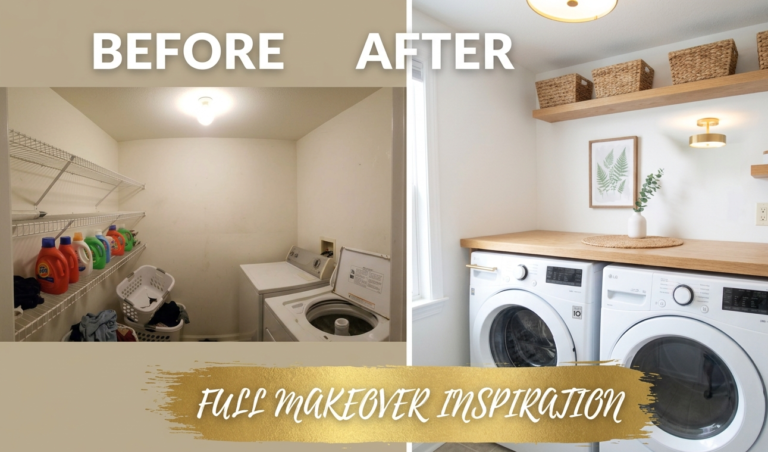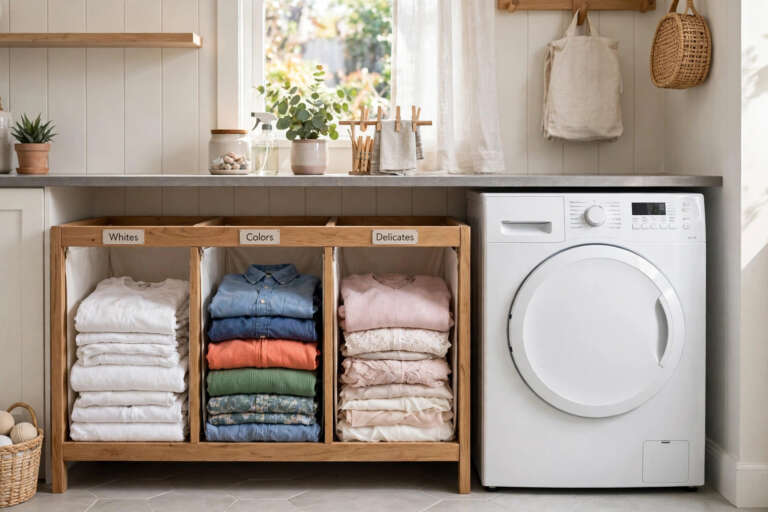
How to Hide a Washer and Dryer: 10 Curtains, Doors and Cabinet Ideas
Your washer sits in the kitchen, right where guests eat.
Your dryer hums next to it. The detergent lives on top. The laundry basket lives in the way.
That is not a laundry problem. It is a sightline problem. The 10 how to hide a washer and dryer ideas below cover the machines where they already stand, from a curtain you can hang tonight to a cabinet box that takes a weekend. One rule runs through all of them. Machines need air and access to hoses, vents and filters, so follow the clearance guide in your manual and never seal a dryer vent shut.
The short version, before we start:
Curtain first. A tension rod and washable fabric hide a pair in about 20 minutes for roughly $20 to $50, with zero screws.
Air always. Leave the clearances the maker asks for, usually 1 inch at the sides and 4 to 6 inches at the back, and keep vents wide open.
Counter counts. One board across front loaders gives you a folding spot about 54 to 60 inches wide and hides the machine tops at once.
Finish the corner. A rug, one print and decent light stop the covered machines from still reading as utility.
1. Hang a Curtain and Call It Done Tonight
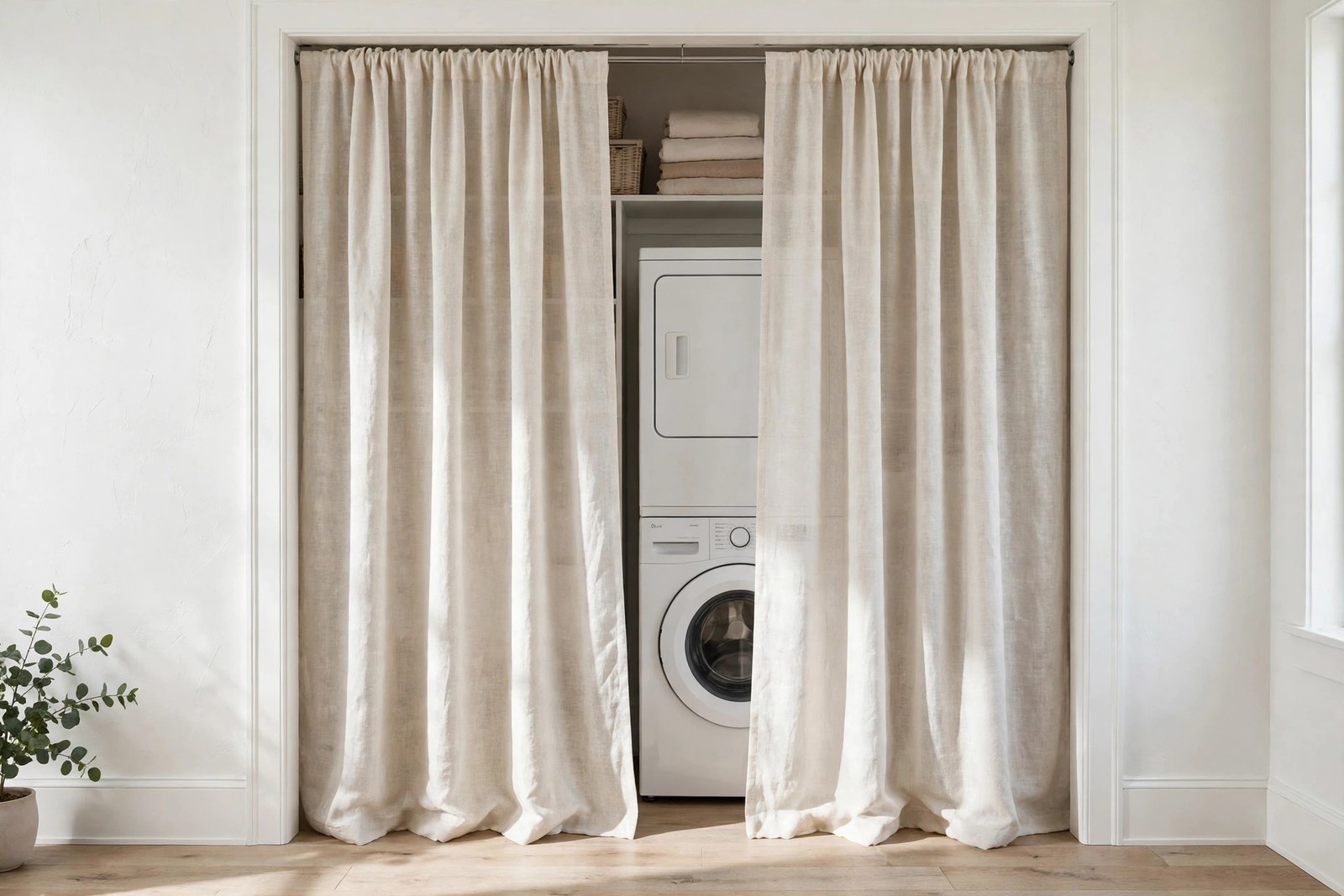
Start here. It is fast, cheap and fully undoable.
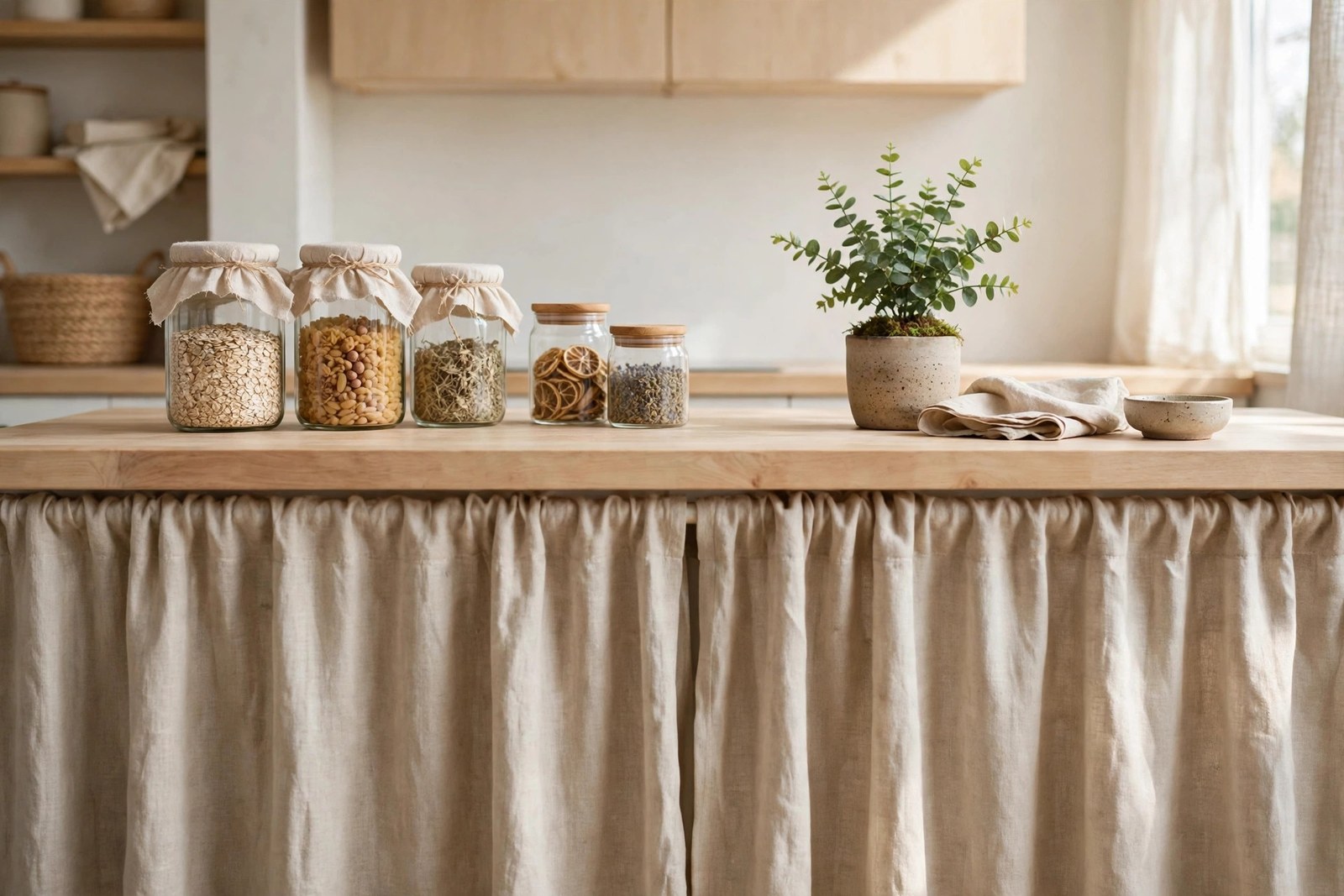
A tension rod inside a closet opening or a track under a counter lets fabric slide across both machines in one pull. The fabric works because it reads as a soft wall. Your eye stops there instead of hunting for dials and doors. Pick washable linen look fabric or canvas in the wall color, about 2 panels at 40 to 50 inches wide for a standard pair.
Hem it to end about half an inch above the floor. Here is the common failure. A hem that pools on the floor soaks up splash water and smells sour within weeks. Lift it, pin it, and rehem it short. If a tension rod slips under the weight, switch to a ceiling track with screws, or split the fabric into 2 lighter panels.
2. Close It With Bifolds That Let Air Through
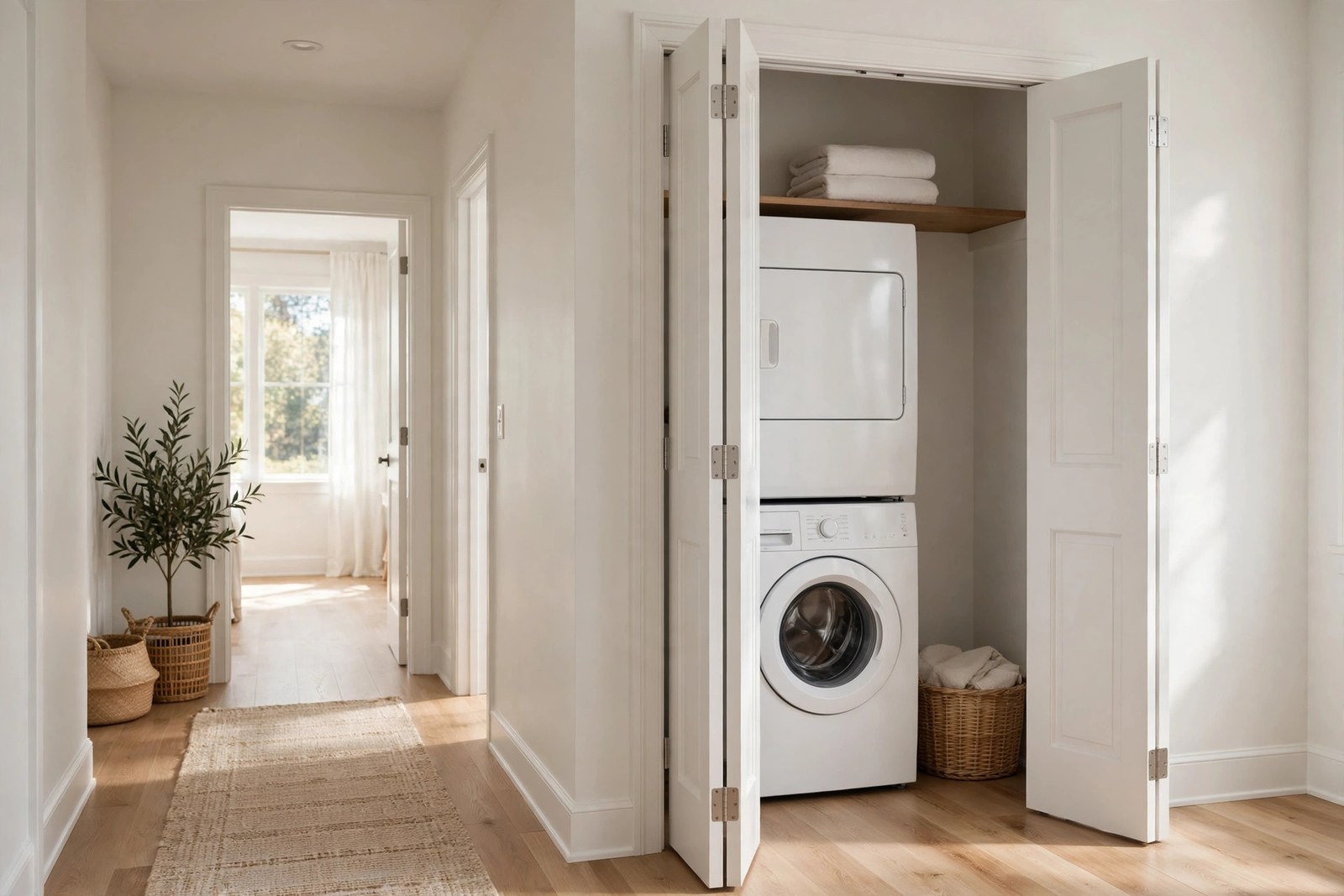
If the closet is already there, doors finish it properly.
Bifolds fold back flat to the sides, so they need no swing space in the hall. Louvered slats let air move, which your dryer needs every single cycle. A standard pair covers an opening about 48 to 60 inches wide, and most sets go up in 1 to 2 hours with basic tools.
Paint decides the result. I paint mine the exact wall color, because I want the closet to vanish, not pose. Measure the opening height in 3 spots before you order. Old frames are rarely square. The usual failure is a door that drags at the bottom and gaps at the top. Fix it by planing a sliver off the dragging edge and adjusting the top pivot before you blame the door.
3. Build the Cabinet Box If You Own the Place
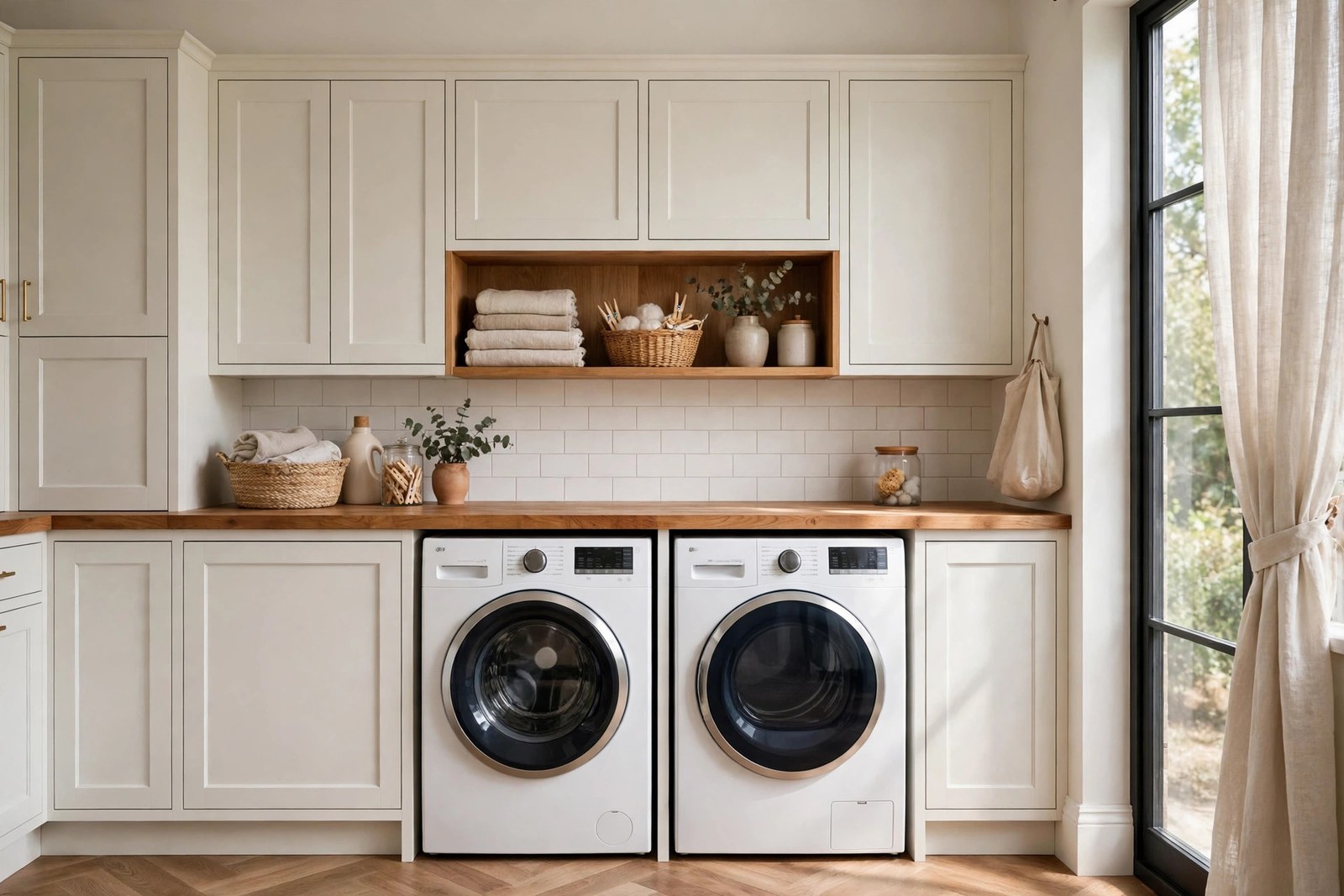
This is the most finished fix, and the only one on this list that needs real commitment.
Side panels, cupboards above and a solid worktop make the pair read as fitted furniture. The cupboards hold detergent and spare towels. The worktop, set about 36 to 38 inches high, becomes your folding spot. Leave about 1 inch at each side and 4 to 6 inches behind the machines, just as the manual says.
Keep one side panel easy to remove on screws, not glue. Hoses fail. Valves drip. A plumber who has to wreck your carpentry to reach a valve will charge you for the wrecking. This is the natural partner to laundry room cabinets to hide clutter, which handle the storage half of the same wall. Skip this build if you rent. The curtain in idea 1 gives you 80 percent of the look for about 5 percent of the cost.
4. Lay One Counter Across Both Machines
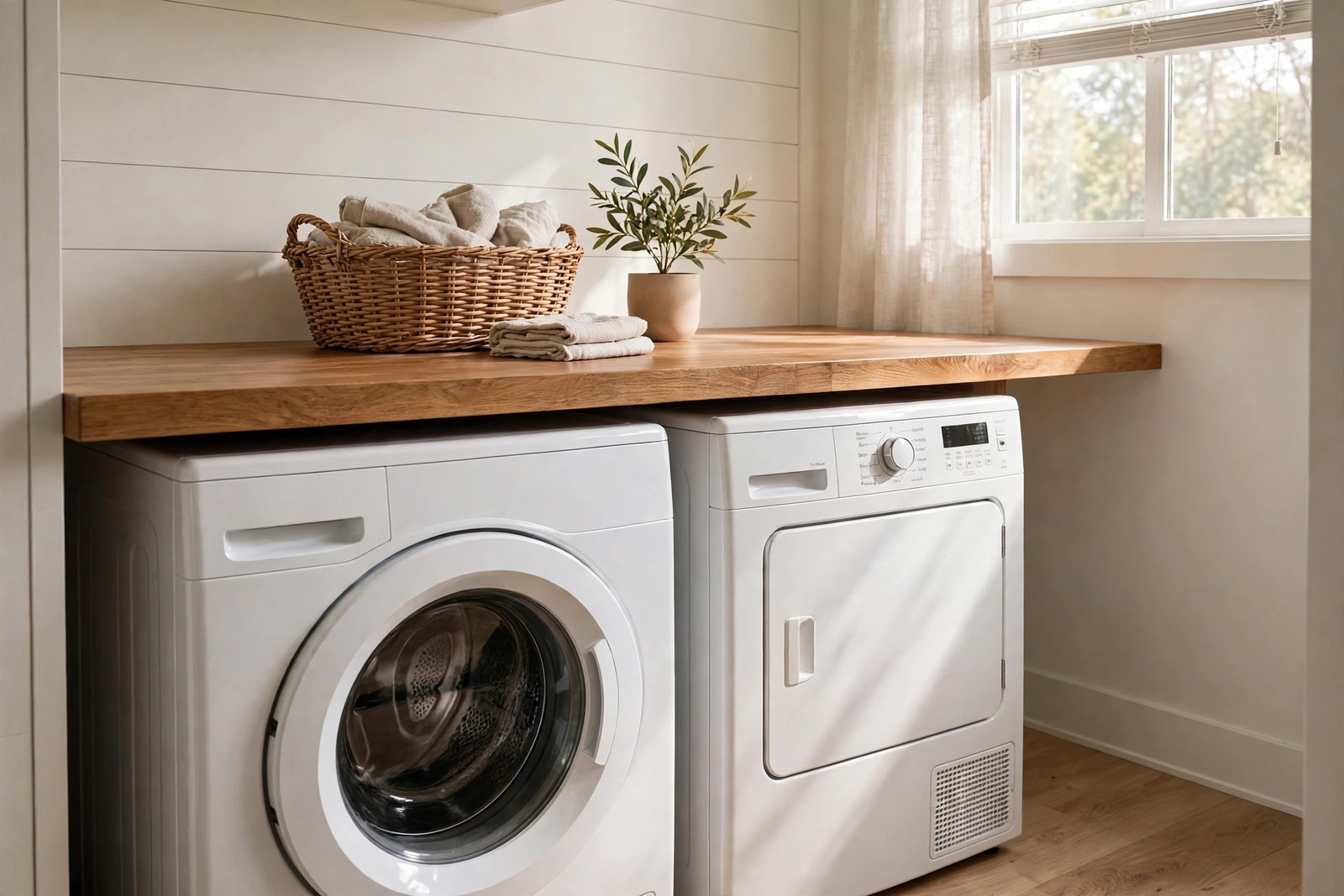
Front loaders give you a free surface. Use it properly.
One long board across both tops, about 54 to 60 inches long and 28 to 30 inches deep, hides the scratched tops and turns 2 machines into 1 calm block. Butcher block, a worktop offcut or a thick shelf board all work. Leave about 1 inch open at the back for hoses and cords.
Heads up on the classic failure. A board laid tight on both machines will rattle and walk sideways when the washer spins at full speed. Fix it with 4 felt or rubber pads under the board and a small gap at each side. Then style it light. I keep just a basket and a jar up there, because a crowded counter invites dumping. The result looks like the styled runs in modern laundry room ideas, not like appliances in exile.
5. Stand a Screen in Front and Walk Away
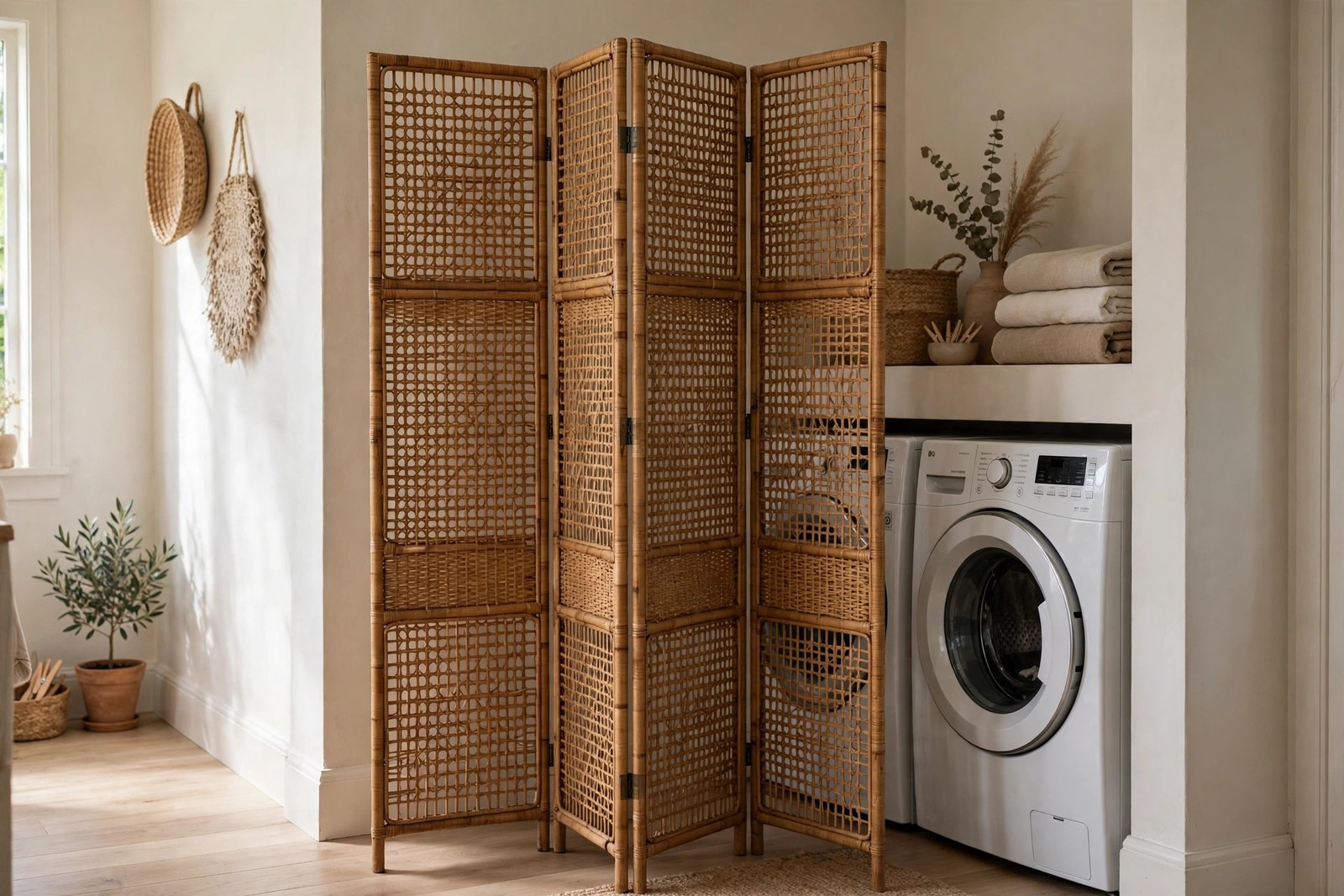
No rod. No screws. No permission needed.
A folding screen stood in front of the pair breaks the sightline from the door, which is the whole job. Rattan, cane and painted wood all work. Pick one about 4 to 6 inches taller than the machines, usually 42 to 48 inches high, and wide enough to span the pair in 3 panels.
Stand it at least 6 inches clear of the machines so doors open without a shuffle. Never leave it pressed close while the dryer runs, because a hot dryer needs air moving freely around it. I move mine to hide the drying rack on guest days, which is the quiet bonus here. Nothing else on this list does 2 jobs.
6. Slide Doors Across the Hallway Nook
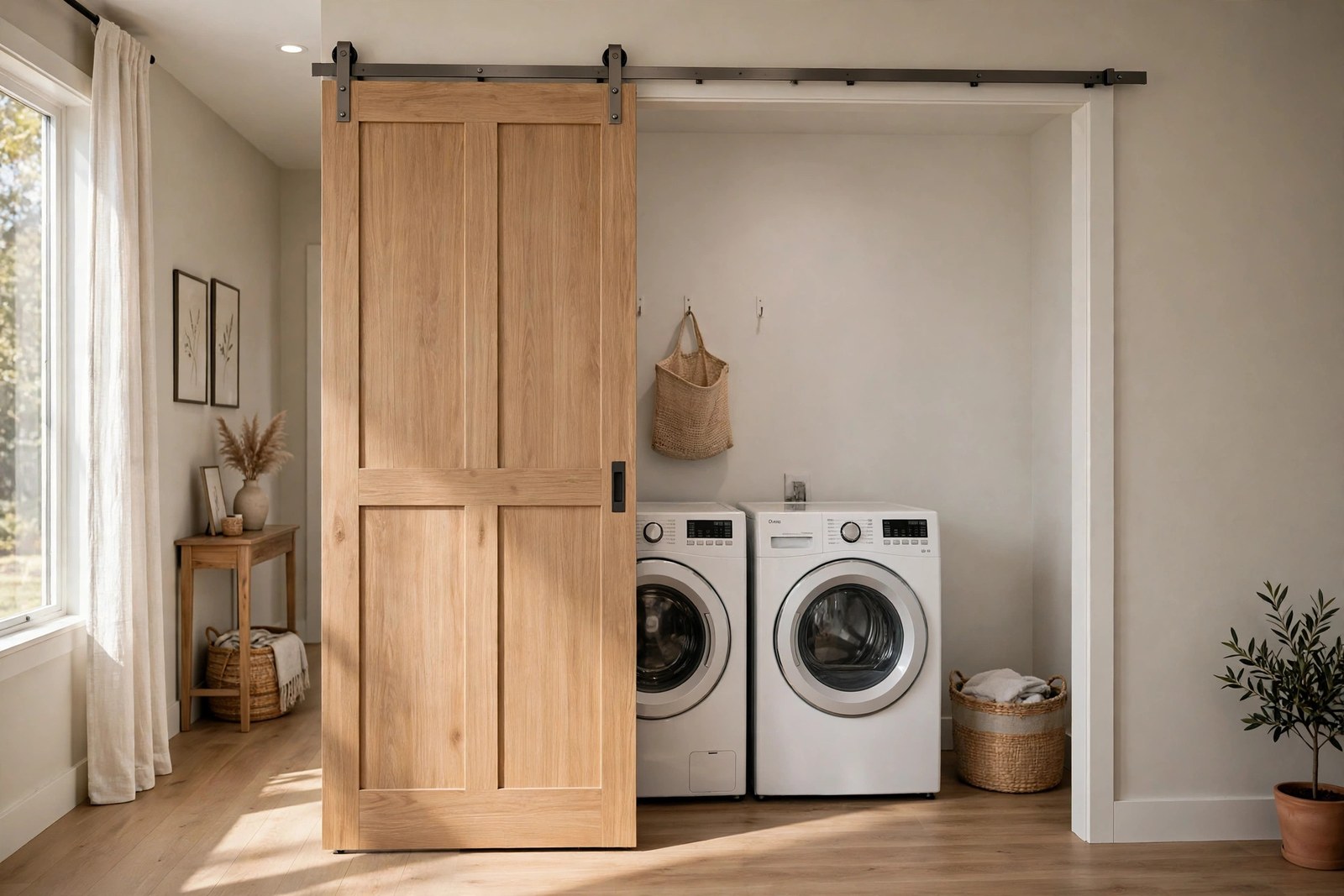
Hallway machines need doors that ask for no floor space.
Sliding panels on a top track need zero swing room, which matters in a hall that is only 36 to 42 inches wide. One panel parks behind the other, so put the overlap over the machine you open less. Paint or panel the doors to match the hall doors and the nook simply stops existing.
This is what small laundry closet ideas do best. The failure to watch is lint. Lint and dust pack into the floor guide and the doors start to judder, then jump the track. A 2 minute vacuum along the track once a month fixes it. If your floor guide needs screws and your lease says no, use a top hung track with a stick on floor guide instead.
7. Hide Them Behind Kitchen Doors That Match
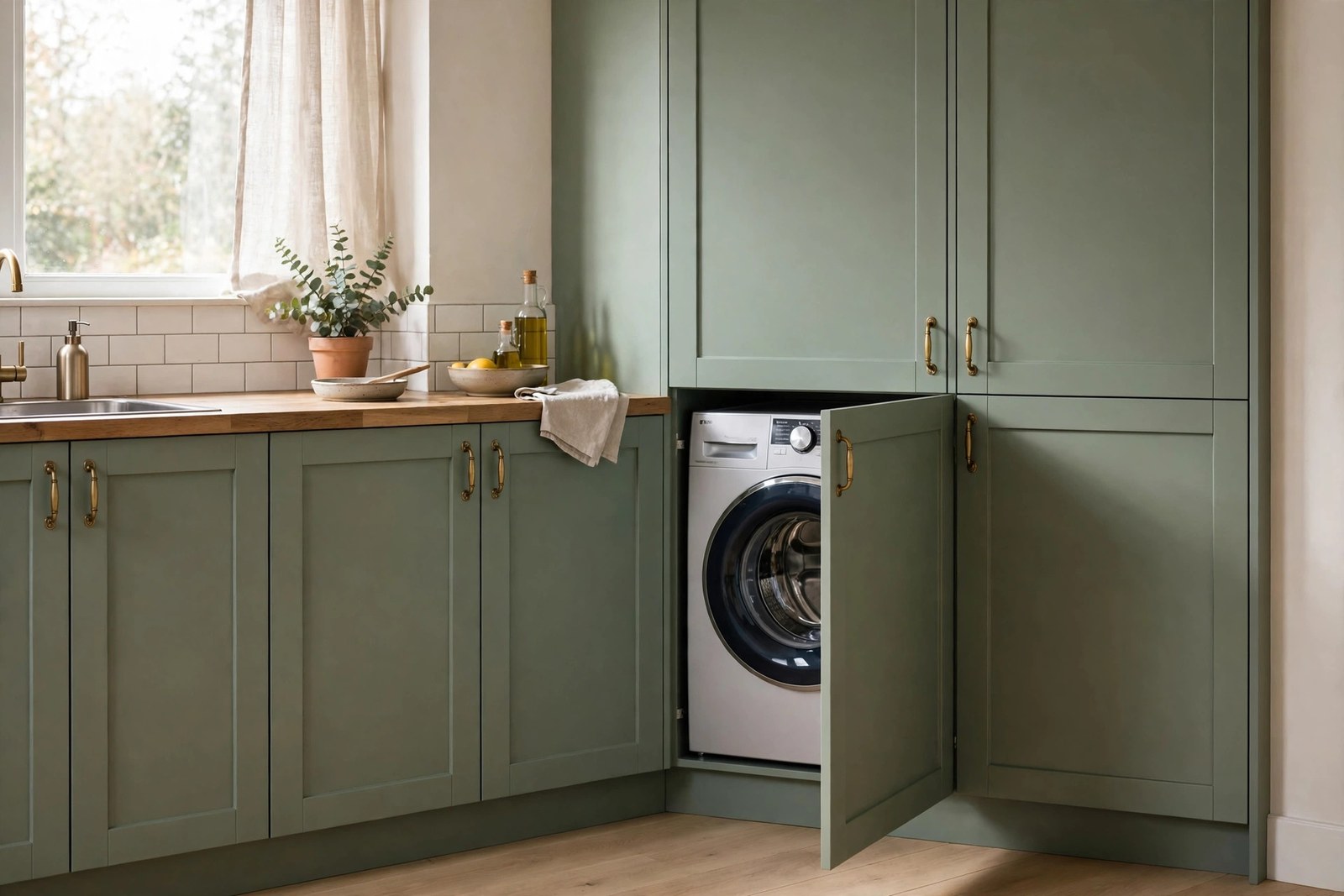
In a kitchen, copy the kitchen. That is the whole trick.
Real integrated machines take a standard cabinet door, about 24 inches wide, straight onto the front. Standard machines can sit behind wider cabinet style doors on a frame, but only if you measure depth honestly. Most kitchen cabinets run about 24 inches deep and most washers need 27 to 30 inches with hoses, so test the door swing with cardboard before you order anything.
Leave the vent gaps the maker asks for, mostly for the dryer. And put a small label inside the door. Guests will open 4 wrong doors hunting for mugs, and a future owner should not have to guess where the washer lives. If the depth test fails, stop. A counter from idea 4 plus a curtain under it hides a kitchen pair nearly as well.
8. Sew the Cheap Skirt for Awkward Gaps
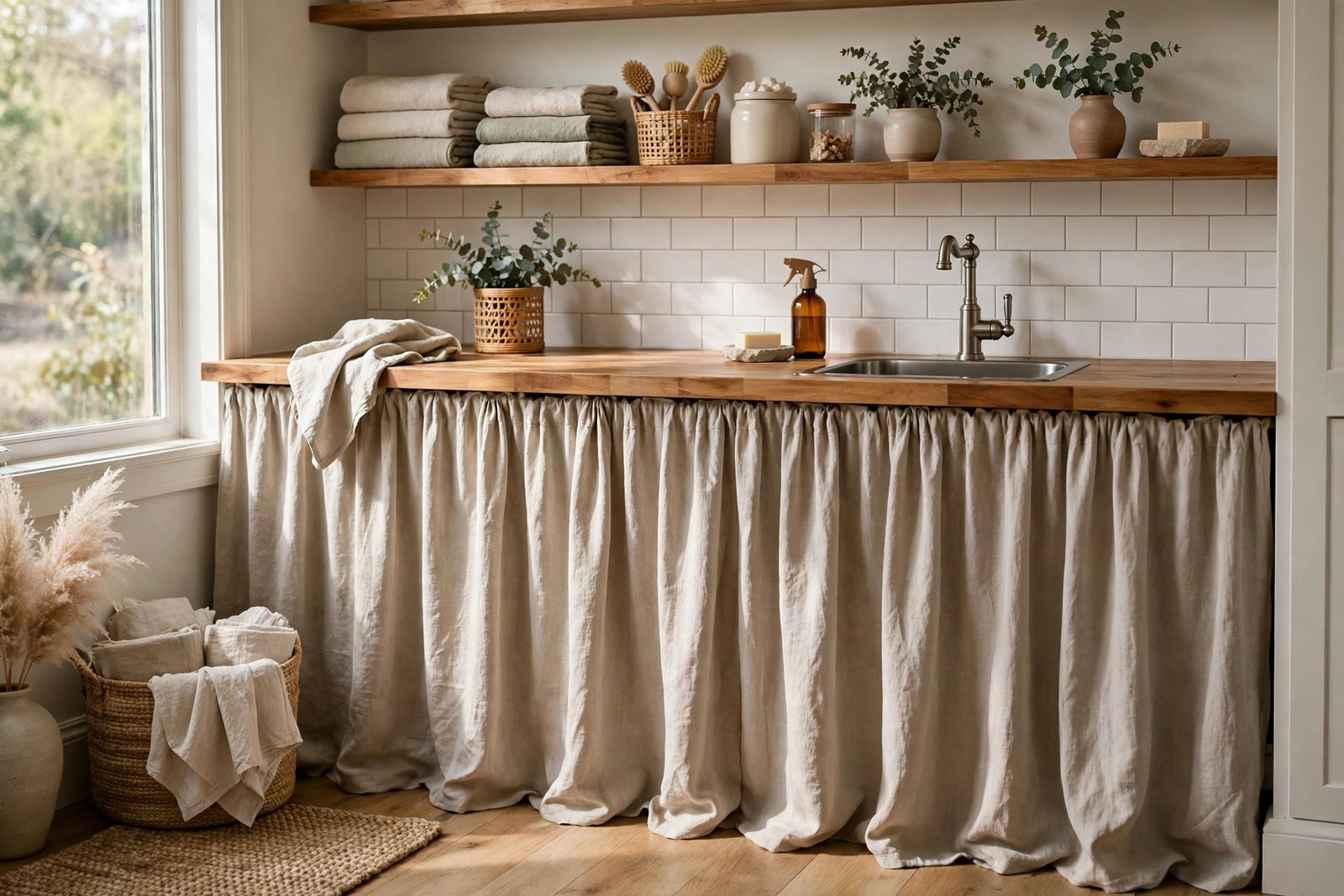
Some gaps are too uneven for doors. Fabric forgives that.
A gathered skirt on a small rod or a stick on strip hides machines and pipes under a counter for about $10 to $25 in fabric. Cut it about 1 and a half times the width of the opening so the gathers stay full, and hem it half an inch clear of the floor. It goes up in about 15 minutes and comes off in 1 minute for the wash.
Pick dark or patterned fabric on purpose. This spot gets splashed. A pale skirt shows every mark and ends up in the wash every week. I choose a busy print for mine for exactly that reason. If the stick on strip lets go in damp air, and in laundry corners it often does, sew a slim rod pocket instead and hang it from 2 small hooks.
9. Paint Them Into the Wall When Covers Will Not Fit
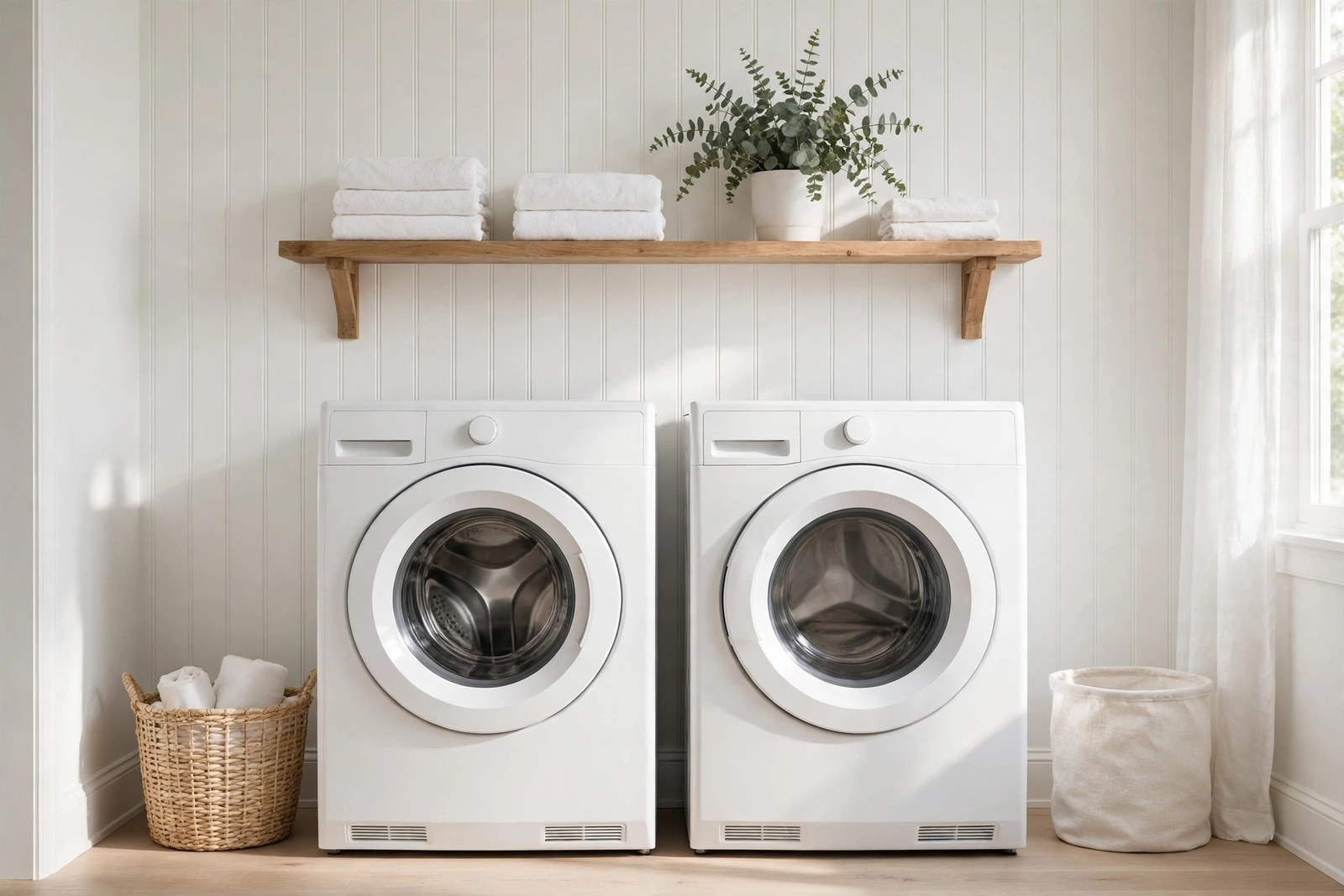
Sometimes there is no room for a door, a curtain or a screen. Paint is left, and paint works better than you expect.
Paint the wall behind and beside the machines the same color as the machines, white on white in most homes. Add beadboard or simple panels across that wall section, then hang 1 shelf about 12 inches above the machines with folded towels and a small plant. The machines flatten into the wall because nothing outlines them, and the eye goes to the shelf instead.
This suits bathroom and studio corners where any cover would crowd the door swing. Be honest about the limit. The machines are still visible if someone stares. But the room stops announcing them, and for many homes that is enough. I would spend the door money elsewhere in a room this tight.
10. Finish the Corner or Nobody Will Believe It
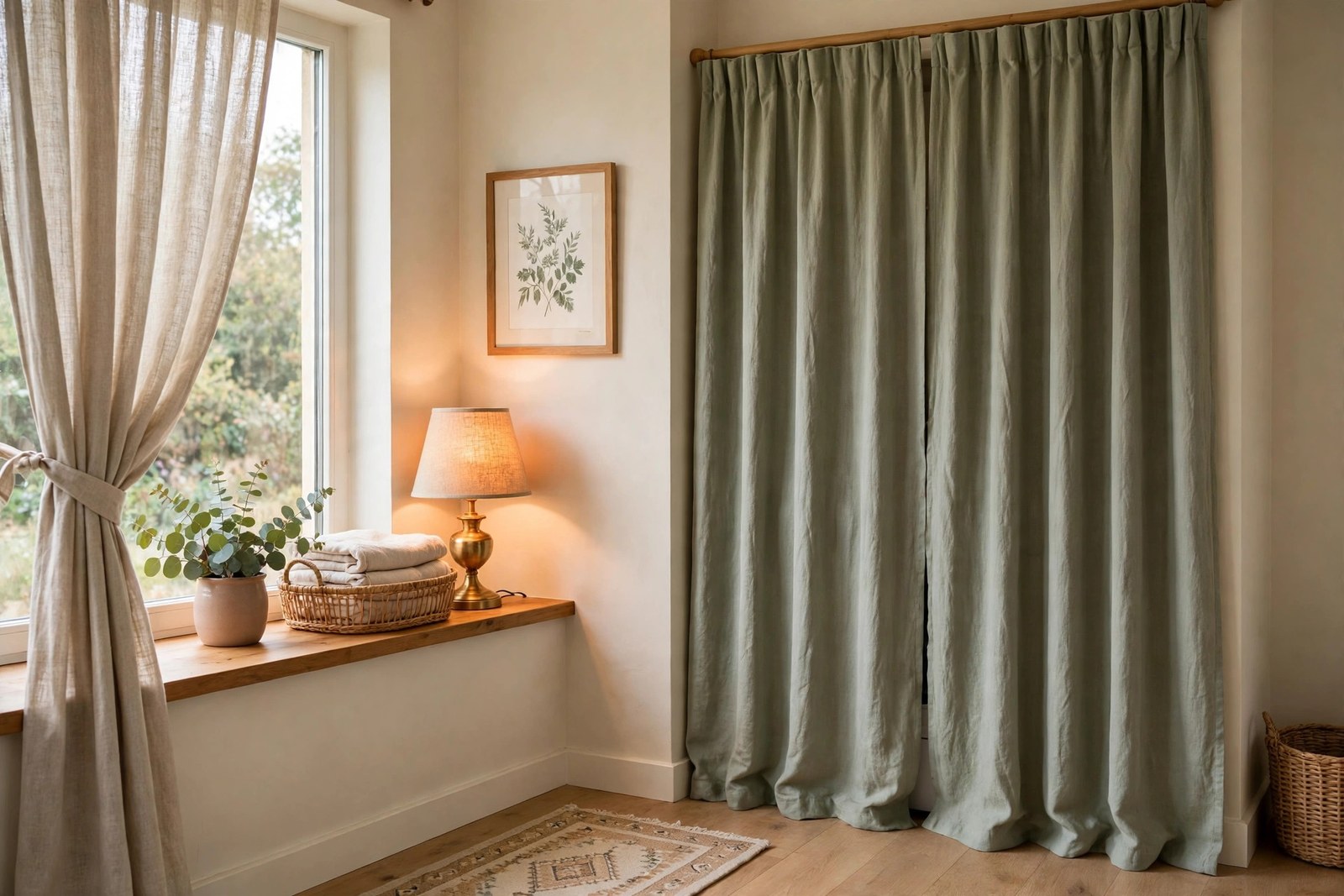
A covered machine next to a mop and a bare bulb still reads as utility. The last 10 percent is styling, and it is not optional.
Add a small washable rug, about 2 by 3 feet, one framed print at eye level, and warm light near 2700K. Keep the colors and art in the same family as the next room. Borrow the palette and sign tricks from cute laundry room decor ideas and the corner starts to read as a place, not a problem.
Then do the doorway test. Stand where a guest stands and look for 5 seconds. If your eye slides past the corner, you are done. If it snags on a hose, a bright detergent bottle or a power cord, fix that one thing first. I do this test last on purpose, because it catches what measuring never does.
The Bottom Line
Hide the sightline, not the machine. A curtain or screen fixes it tonight, doors fix it this weekend, and a cabinet box fixes it for good, as long as air can move and hoses stay reachable. Pick by your lease and your room, in that order, and finish the corner like you meant it.
Start with the curtain on a tension rod. Twenty minutes, about $20 to $50, and the machines stop greeting your guests.
Frequently Asked Questions
Can you put a curtain in front of a washer and dryer?
Yes. A tension rod and washable fabric hide a pair in about 20 minutes for roughly $20 to $50. Hem the fabric about half an inch above the floor, keep it clear of vents, and never let it rest against a hot dryer.
How do you hide laundry machines in a kitchen?
Lay one counter, about 54 to 60 inches long, across front loaders, or front the machines with doors that match the cabinets. Check depth first, because most washers need 27 to 30 inches with hoses while cabinets run about 24 inches deep. Keep one panel removable for valves.
Do you need ventilation space when enclosing a washer and dryer?
Yes, always. Keep about 1 inch at the sides and 4 to 6 inches at the back, or whatever your manual asks for, and never seal a dryer vent shut. Louvered doors and a gap at the back of a counter keep air moving.
What is the cheapest way to hide a washer and dryer?
The curtain wins. It costs roughly $20 to $50 and needs no tools. A gathered skirt at about $10 to $25 runs it close, and a screen you already own costs nothing at all.