Living Room Wall Art Ideas You’ll Love
Bare walls are why so many living rooms feel finished on paper yet oddly temporary in person. Furniture does the heavy lifting, but art is what tells the eye where to land and tells guests whose home this actually is.
The good news is that living room wall art does not demand a gallery budget or an art history degree. It demands a few decisions made in the right order: how big, how high, how many, and how personal.
The eleven ideas below move from bold single statements to collected, story driven displays, so you can stop at the one that matches your walls, your budget and your nerve.
1. Oversized Statement Pieces for Dramatic Impact
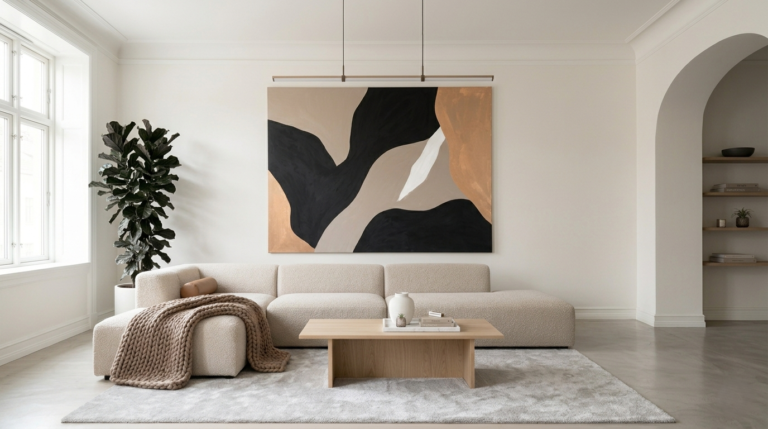
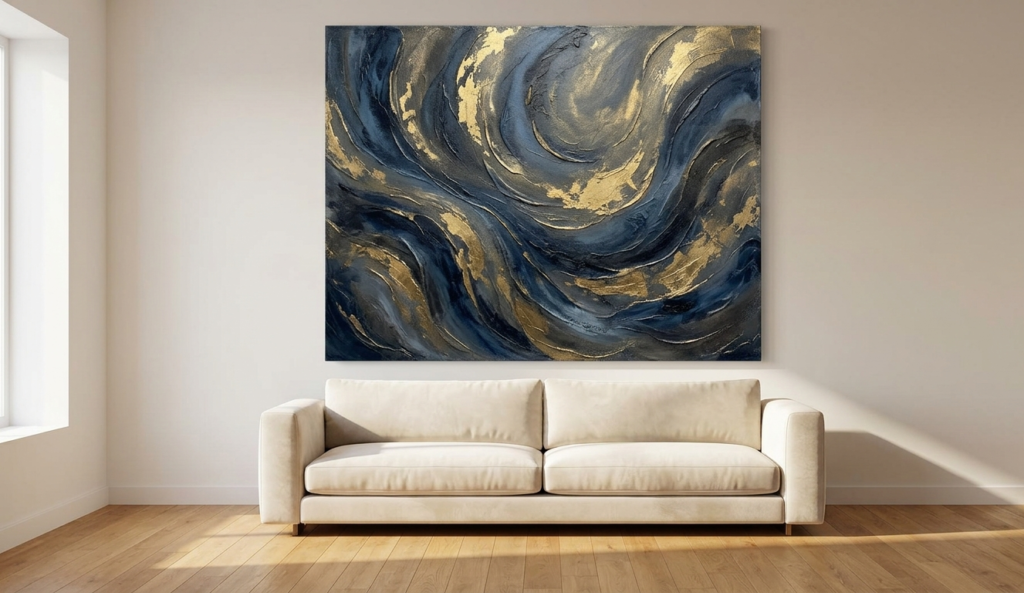
One large piece is the fastest route to a room that looks designed. Above a sofa, aim for art that spans roughly two thirds of the furniture’s width, hung so its center sits near eye level and the frame clears the sofa back by a hand’s width or two. Too small is the classic mistake, because a lonely little canvas floating over a big sofa reads as an afterthought. Go big with abstracts, landscapes or large scale photography, all of which carry a room without demanding matching skills. In rentals, a large lightweight canvas can lean on a console instead of hanging, which gives the same drama with zero holes.
2. The Classic Symmetrical Gallery Wall
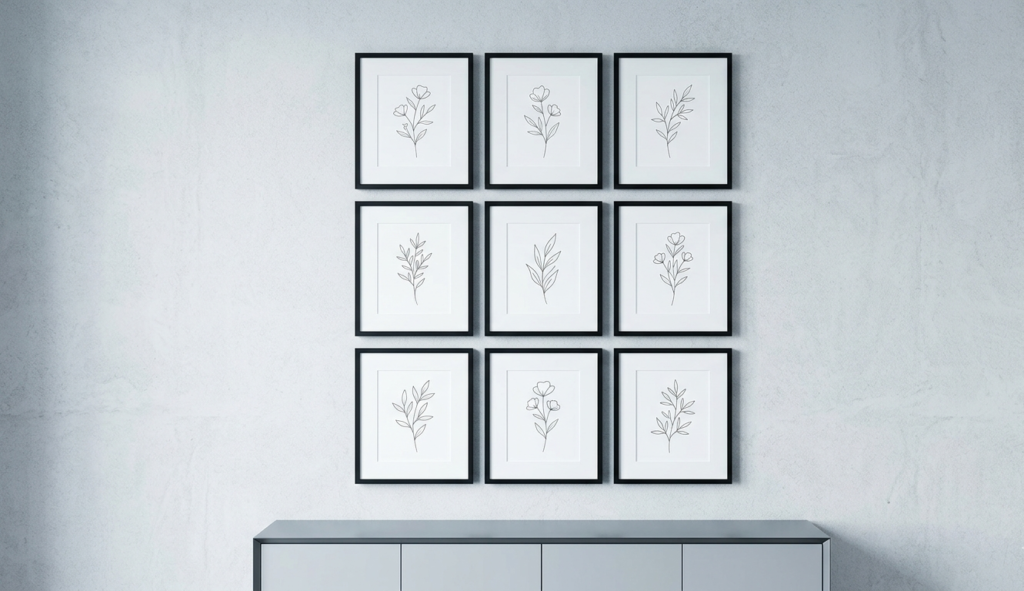
A symmetrical grid is the gallery wall for people who like their calm with straight edges. Identical frames, equal spacing and a series of related prints, photographs or botanical studies create order that suits formal rooms and satisfies anyone bothered by visual noise. Lay the whole grid on the floor first, or tape paper templates to the wall, and only start drilling once the spacing pleases you. Keep gaps consistent, usually a couple of inches, and treat the whole arrangement as one large rectangle. This style rewards restraint, so print the series in one session on the same paper for a truly matched finish.
3. Eclectic Mix-and-Match Gallery Walls
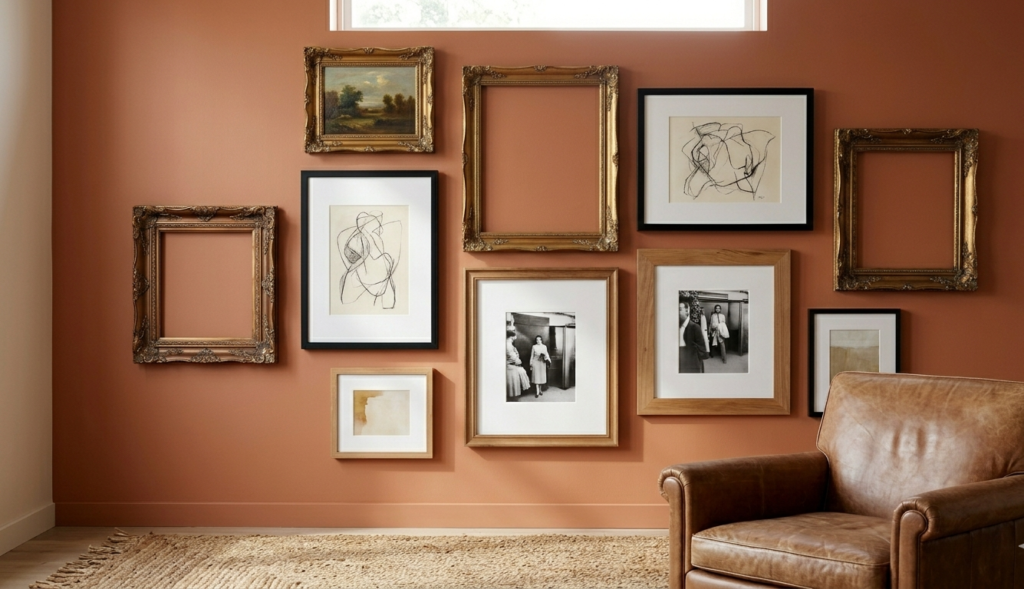
The eclectic wall is the collected cousin of the grid: mixed frames, mixed sizes, paintings beside prints beside a small woven piece or plate. It looks effortless when it works and chaotic when it does not, and the difference is one shared thread. Repeat a color from the room, keep frames within two or three finishes, or stick to one theme such as travel, family or abstracts. Start with the largest piece slightly off center, then fill outward, keeping spacing tight and fairly even. Build it over time. A wall that grows with your life will always beat one bought in a single cart.
4. Incorporating 3D Sculptural Elements
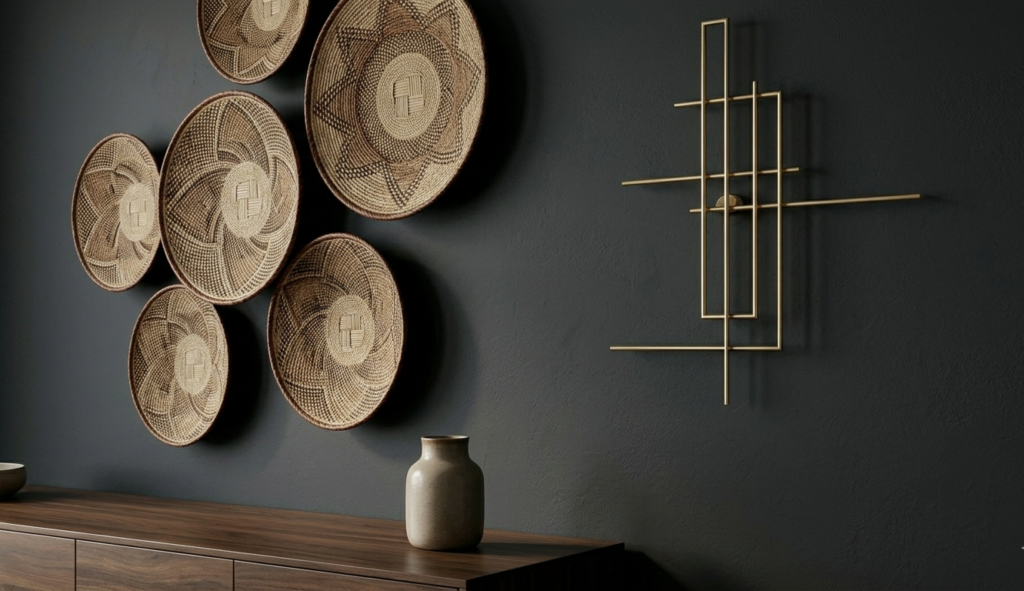
Flat art is only half the story. Woven baskets, carved wood panels, metal wall sculptures and ceramic pieces push off the wall and catch light and shadow through the day, which makes a room feel layered in a way prints cannot. Hang sculptural pieces where hands and heads will not collide with them, and give each one breathing room so its silhouette reads clearly. A cluster of baskets above a sideboard or a single large relief near the entry makes a strong, tactile focal point. Mix one three dimensional moment into a flat gallery wall and the whole arrangement suddenly looks curated.
5. Floating Shelves for a Rotating Gallery
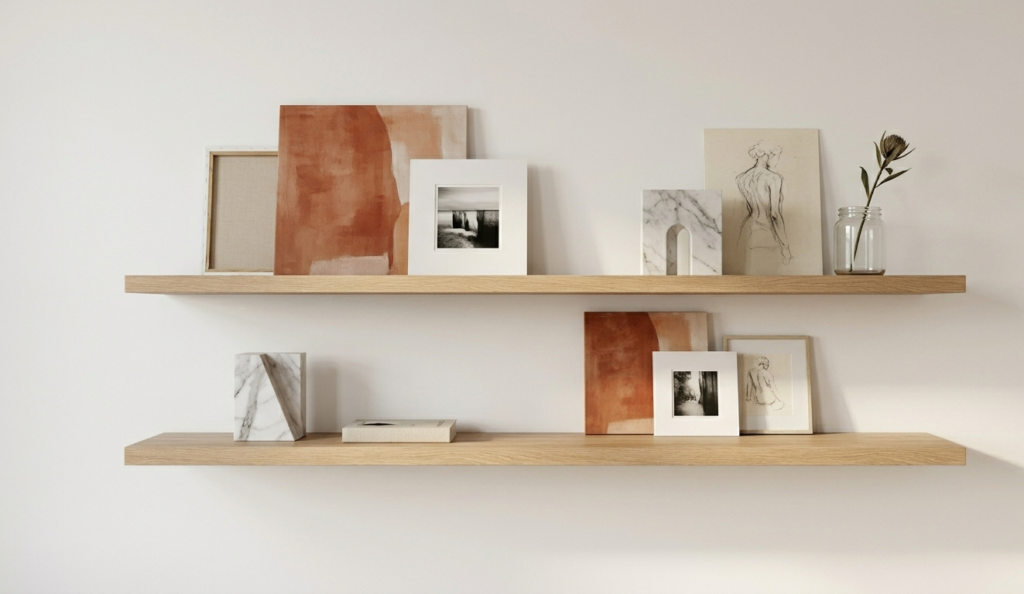
Picture ledges are the commitment phobe’s best friend. Art leans instead of hanging, so you can rotate prints with the seasons, layer a small frame over a large one, and add objects like a vase or a stack of books between frames. Two ledges at staggered heights turn a plain wall into a display that evolves with your mood. Anchor shelves into studs if you plan to lean anything heavy, and keep the front lip in mind when choosing frame thicknesses. This is also the kindest option for freshly painted walls, since one line of screws replaces a dozen scattered holes.
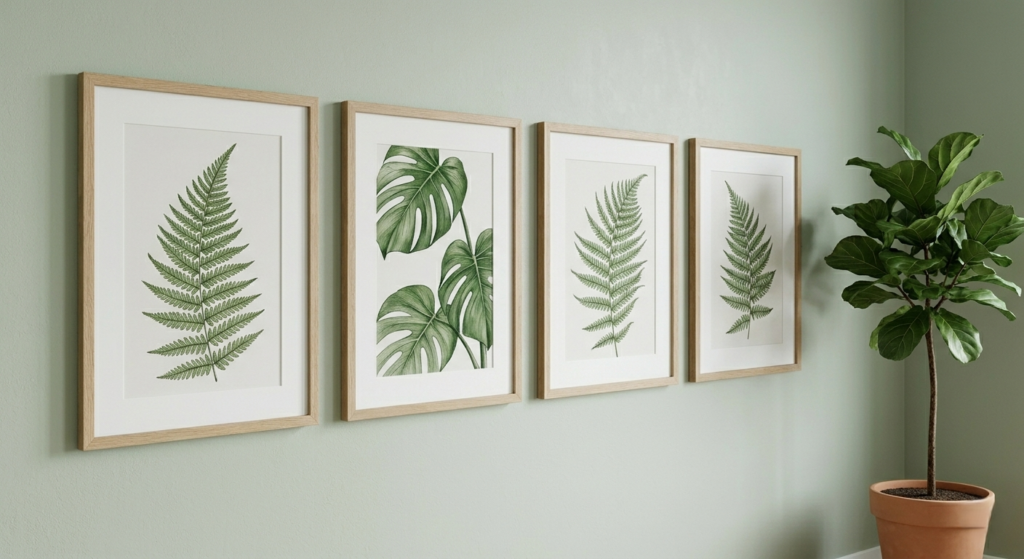
6. Nature-Inspired Botanical Prints
Botanical prints are the quiet achievers of wall art. Leaf studies, fern illustrations and landscape photographs bring color and calm without arguing with patterned cushions or bold rugs. They pair naturally with wood frames and linen mounts, and a series of four to six in matching frames can fill a wall for very little money, especially when printed from public domain illustration archives. Group them over a sofa or run them down a hallway style wall in pairs. If your room lacks natural light or thriving plants, botanical art borrows the feeling of a garden without asking you to keep anything alive.
7. Modern Abstract Art in Bold Tones
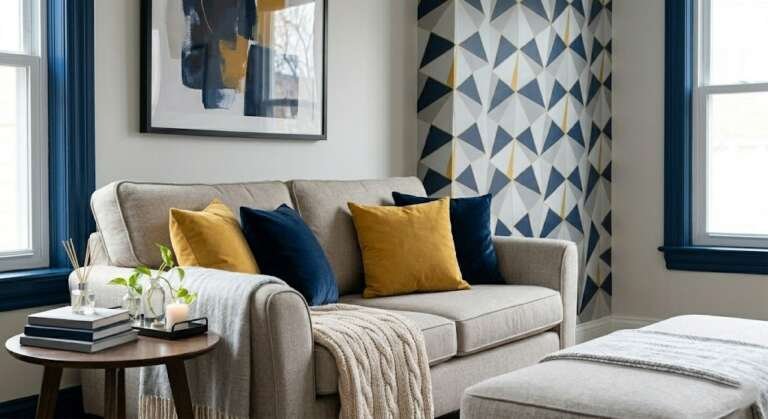
Abstract art is how a safe, neutral room gets its pulse. Big shapes and bold color do not need to match the sofa exactly; they need one or two tones that echo something already in the room, a cushion, a book spine, a rug border. Because abstracts carry no subject to tire of, they outlast trend driven prints, and large canvases can be surprisingly affordable from print on demand services. Give bold art a calm neighborhood. It shines over simple furniture and struggles in a room already busy with pattern. When in doubt, bigger and simpler beats smaller and fussier.

8. Vintage Mirrors as Functional Art
A mirror is wall art that also does a job. An ornate vintage frame brings the detail and history modern furniture often lacks, while the glass bounces daylight across the room and visually doubles whatever it faces. Hang one opposite a window or above a mantel so it reflects something worth seeing, like greenery or a chandelier, rather than a blank ceiling. A cluster of small mirrors in mixed shapes can work like a gallery wall with light built in. Check the weight before hanging, because old mirrors are heavy, and use fixings rated for the load and your wall type.

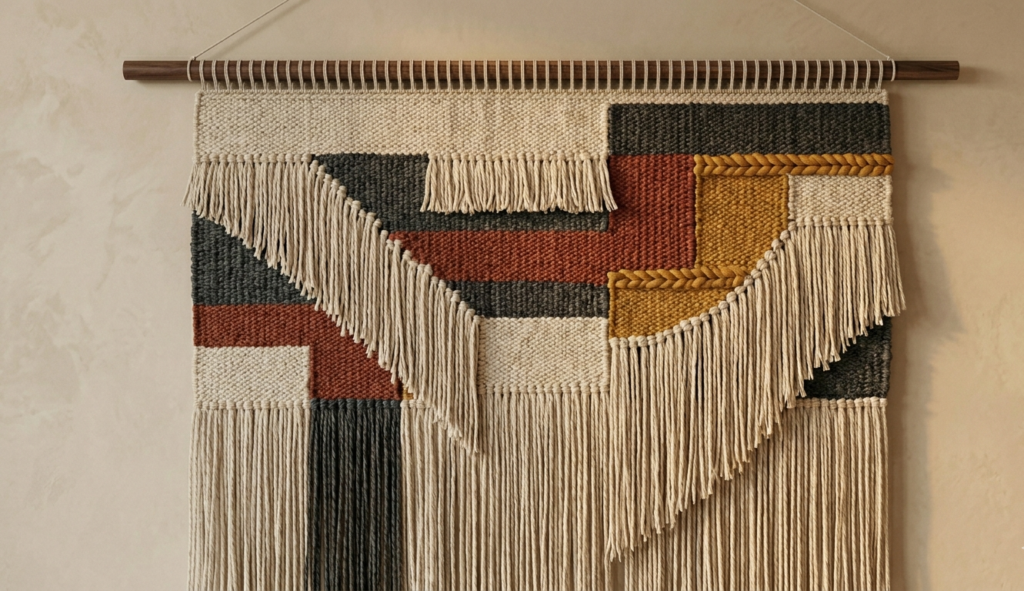
9. Textile Art and Tapestries
Hard rooms with wood floors, leather and glass can sound and feel sharp, and textile art softens both problems at once. A woven hanging, a framed piece of mudcloth, macrame or a tapestry absorbs echo, adds handmade texture and covers a large area for a fraction of the cost of a comparably sized canvas. Hang textiles from a simple wood dowel or curtain rod for a clean finish, and let them sit slightly away from the wall so the fabric drapes naturally. Textiles also travel well between homes, rolling into a tube instead of demanding a van of their own.
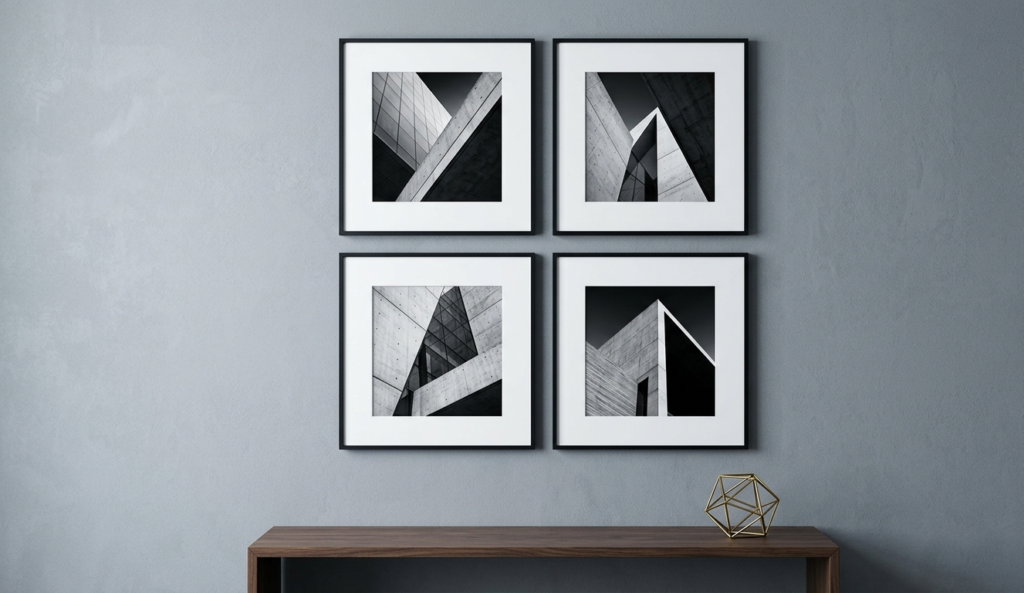
10. Black and White Photography for Timeless Elegance
When color decisions feel overwhelming, black and white photography removes the problem entirely. Monochrome images blend with every palette, survive every furniture change and bring a quiet, gallery like sophistication to family photos, travel shots and city scenes alike. Print your own photographs in black and white and they instantly look more intentional than they did in color. Use consistent frames, usually black or dark wood with white mounts, and the set reads as one artwork. This is also the safest long term investment in this whole guide, because nothing here will ever clash with a future sofa.
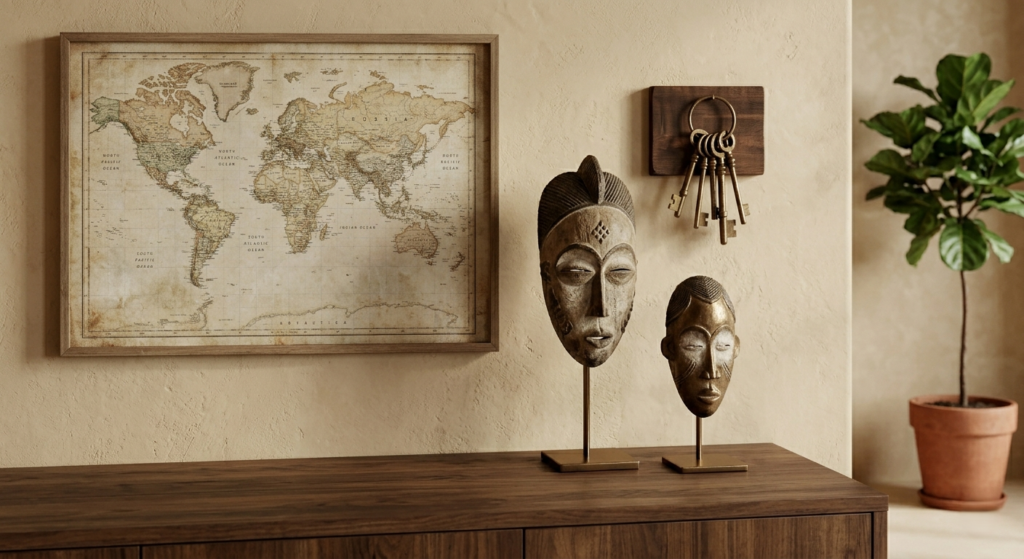
11. Personal Heirlooms and Global Artifacts
The most memorable walls cannot be bought in one store visit. A framed map from a honeymoon, a grandparent’s letter, a child’s first drawing, a mask or textile carried home from a trip: these pieces turn decoration into biography. Give personal items the gallery treatment, with a proper mount, a decent frame and space around them, and they hold their own beside any print. Mix one or two heirlooms into a broader display rather than isolating them on a memory wall, so the room feels lived in rather than museum like. Guests will ask about these pieces first, every single time.
Conclusion
Great living room wall art is a formula, not a mystery: right size, right height, and enough of you in it. Decide first whether your room wants one bold statement or a collected wall, then commit to the scale, because nearly every disappointing display is simply art that is too small or hung too high. Use shelves or textiles when you want flexibility, mirrors when you want light, and heirlooms when you want meaning. Start above the sofa, live with it for a week, and adjust spacing before adding more. Your walls will stop looking rented and start looking like yours.
And if you want to go further, start with these bookshelf styling ideas.
Keep going with these gallery wall ideas above the couch, they pick up right where this leaves off.
And if you want to go further, start with these decorating around a tv.
Frequently Asked Questions
How high should living room wall art hang?
Hang art so its center sits around eye level, roughly 145 centimeters from the floor, and lower it slightly when it hangs above furniture. Above a sofa, leave a hand’s width or two between the frame and the sofa back.
How big should art above a sofa be?
Aim for a piece or a grouped arrangement that spans about two thirds of the sofa’s width. Smaller than half the width usually looks lost, while a full width arrangement can feel heavy unless the art itself is calm.
How do I plan a gallery wall without drilling mistakes?
Trace each frame on paper, tape the templates to the wall and live with the layout for a day. Adjust until spacing feels even, mark the nail points through the paper, then drill once with confidence.
Can renters hang real art without losing a deposit?
Yes. Picture ledges concentrate fixings into one line, large canvases can lean on furniture, and rated adhesive strips handle lighter frames. Keep heavier mirrors and pieces for walls where a couple of proper fixings are allowed.