Color Drenching Ideas for Small Rooms: 11 Looks to Copy
Color drenching means one color on everything: walls, trim, doors and ceiling all take the same shade, so the eye never finds a hard edge where one surface stops and another starts.
In a small room that blur is pure gain. The corners and the ceiling line that normally shrink the box melt away, and the room feels bigger and calmer in one move. It also deletes a dozen small decisions, because there is no trim color to pick. The 11 color drenching ideas for small rooms below copy the look room by room, from gentle sage to full burgundy, with the finish and furniture notes that make each one work. Fair warning: this is a whole room commitment, samples and all, not a one wall weekend.
The short version, before we start:
Everything takes the color. Walls, trim, doors and ceiling, or it is just an accent wall.
The ceiling is the point. Leave it white and the hard line stays, chopping the room down.
Test big. A sample patch at least 2 feet square, checked in daylight and lamplight.
Texture does the talking. With one color, the eye reads fabric, wood and weave instead of contrast.
1. Start With Soft Sage in the Small Bedroom
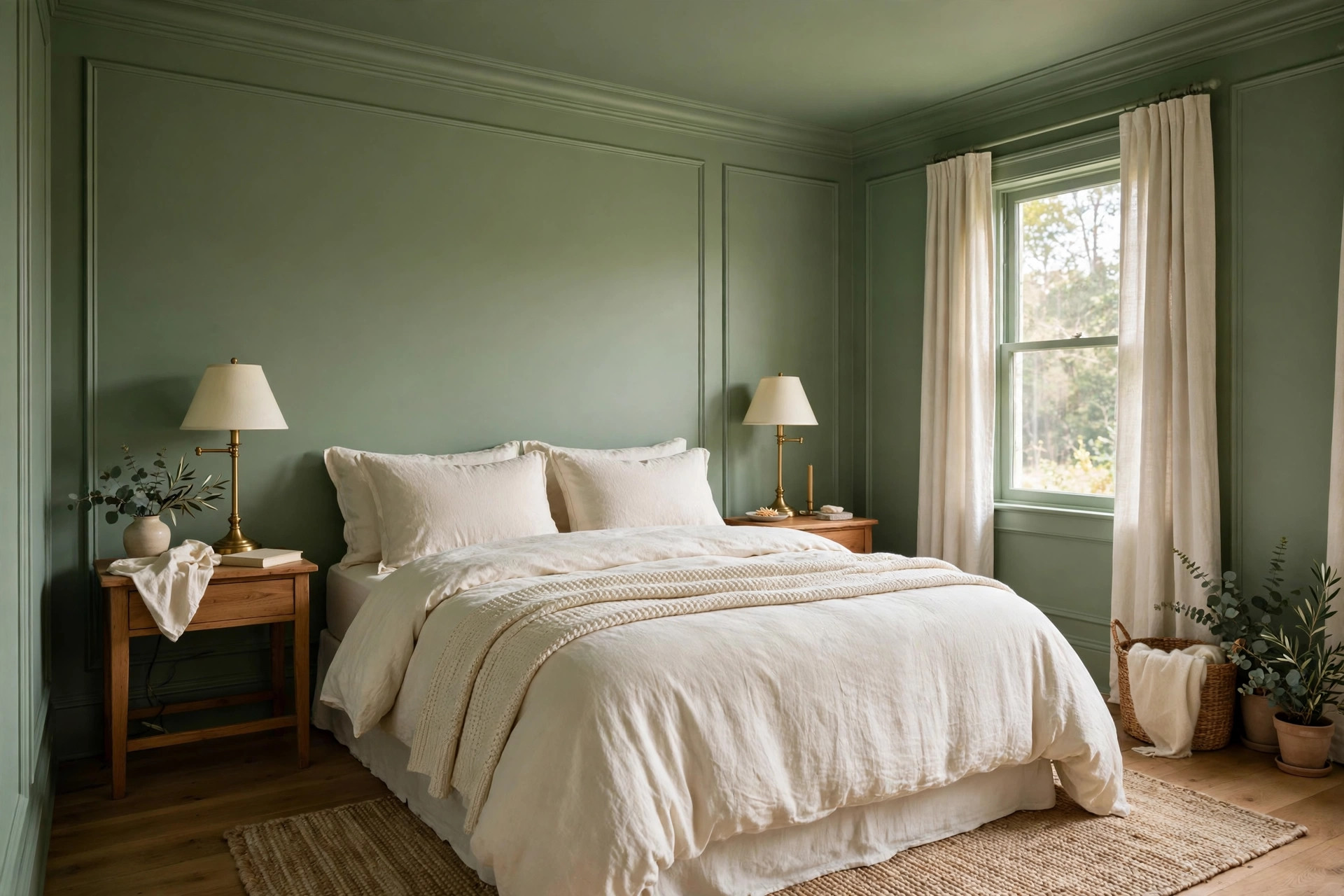
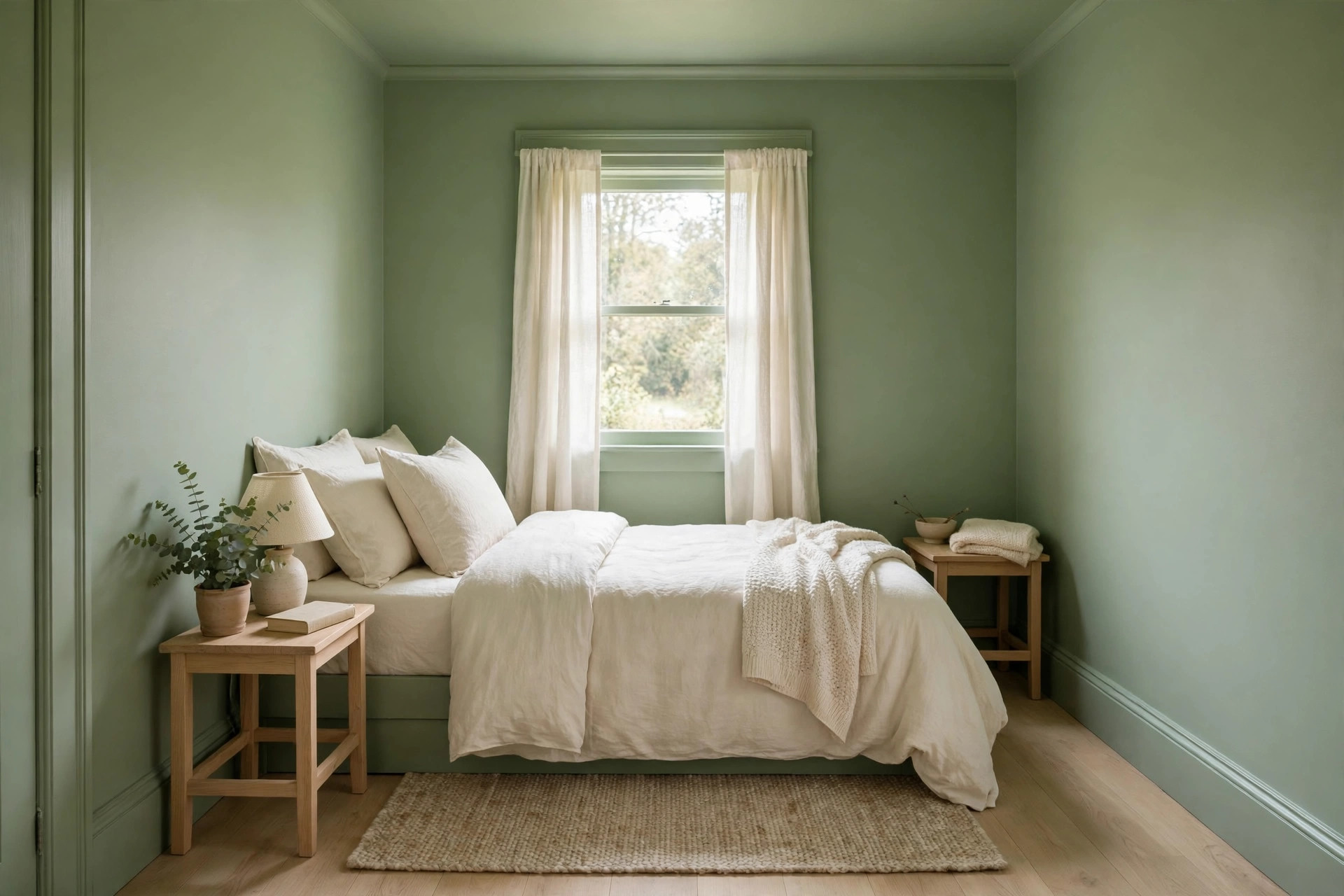
If you are nervous, start here. Sage is the gentlest way into drenching, colorful enough to change a room and quiet enough to sleep in.
Take it across the walls, skirting, door and ceiling, then dress the bed in white and cream linen so the green wraps the room like a garden wall behind pale bedding. The ceiling line vanishes, which is exactly what a low bedroom needs. Keep metals warm, brass or aged bronze, and wood pale.
Sage also forgives bad light better than any color on this list, and it pairs with almost any bedding you already own. That is why this is the look I point first timers to, every time.
2. Go Deep Navy in the Tiny Home Office
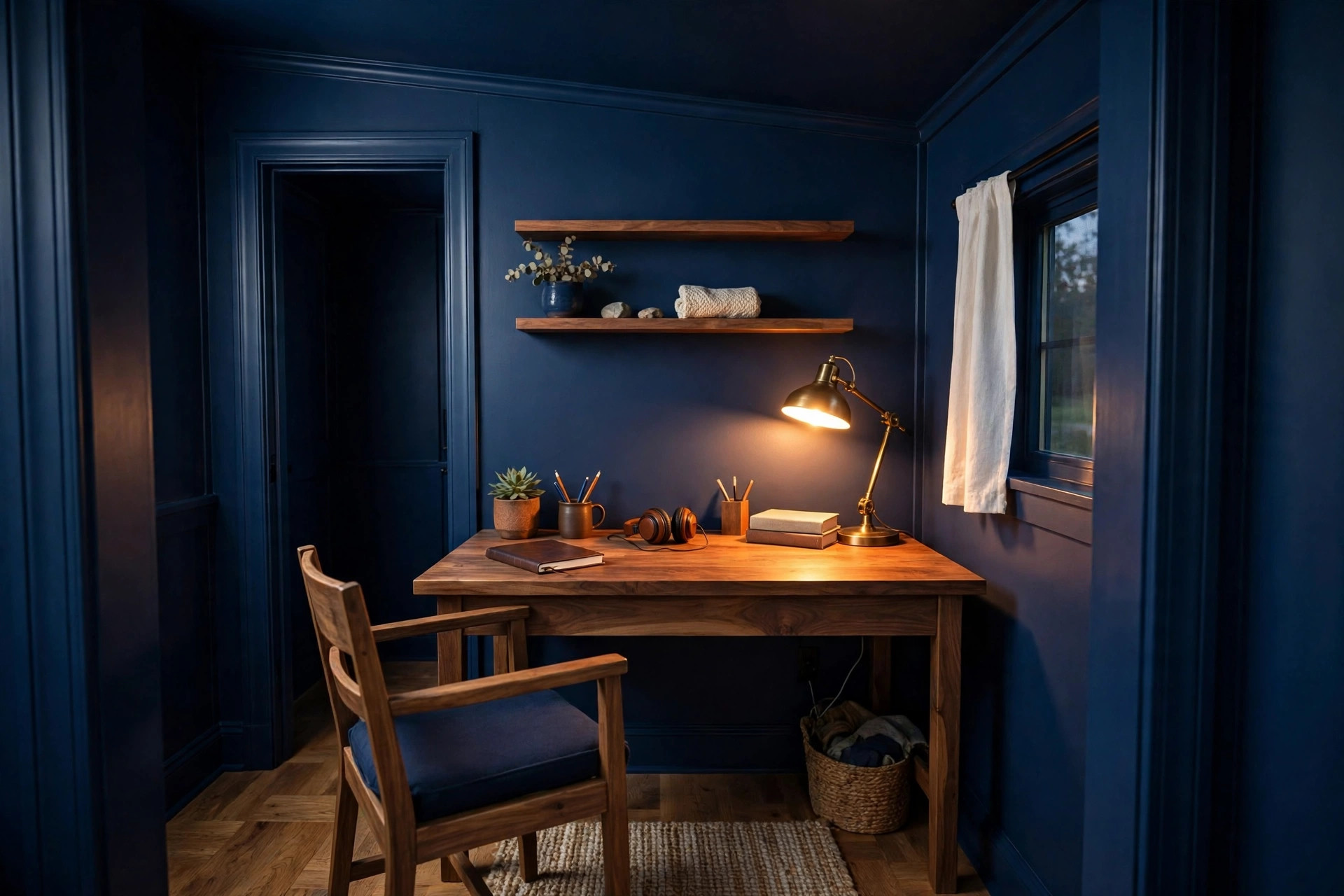
A small study drenched in deep navy turns into a focused box where the walls fall back and the desk takes the stage.
Navy swallows the edges of a small room better than almost any color, and warm task light glows against it like a lamp in a window. Paint the built in shelves the same navy so storage disappears into the wall, then set one warm wood desk surface and a tan leather or woven chair against it for contrast.
The catch is light. A navy office with one weak bulb feels like a cave by 3 in the afternoon, so plan a proper desk lamp and one more light source before the paint dries.
3. Wrap the Dining Nook in Warm Terracotta
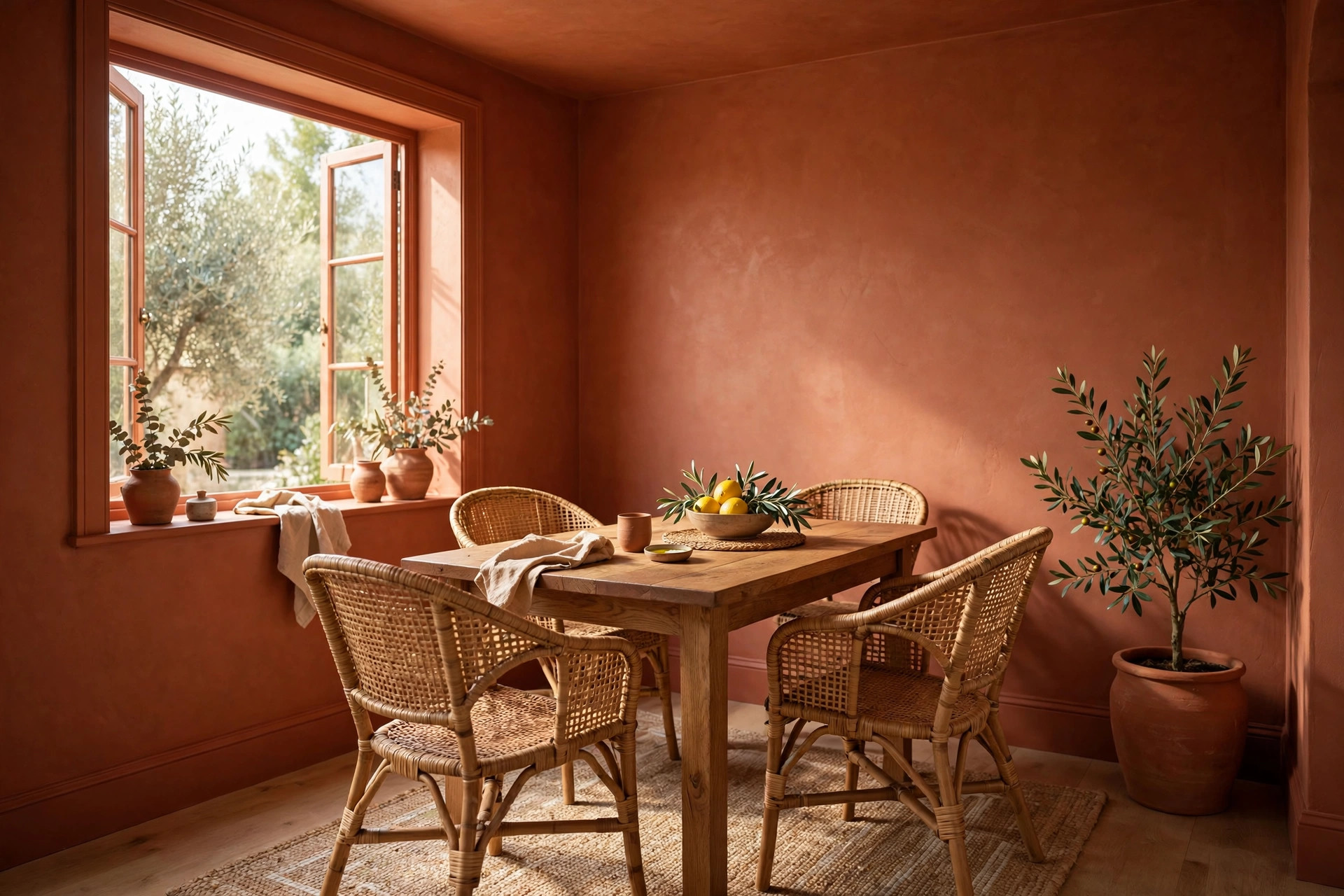
Terracotta turns a small dining corner into sunset: walls, trim and ceiling in one warm clay tone, with a plain wood table and woven chairs sitting inside the glow.
The color flatters food, faces and candlelight, which is the whole job of a dining space. And the unbroken wrap makes a nook feel like a deliberate room instead of a table parked in a kitchen corner. Keep the table settings pale, cream stoneware and natural linen, so the terracotta stays the star, and give the eye one resting point, a single pendant in a dark finish.
North facing nook? Test the sample through a full grey day first, because clay tones can go muddy without some daylight to warm them.
4. Soften a Guest Room or Nursery in Blush
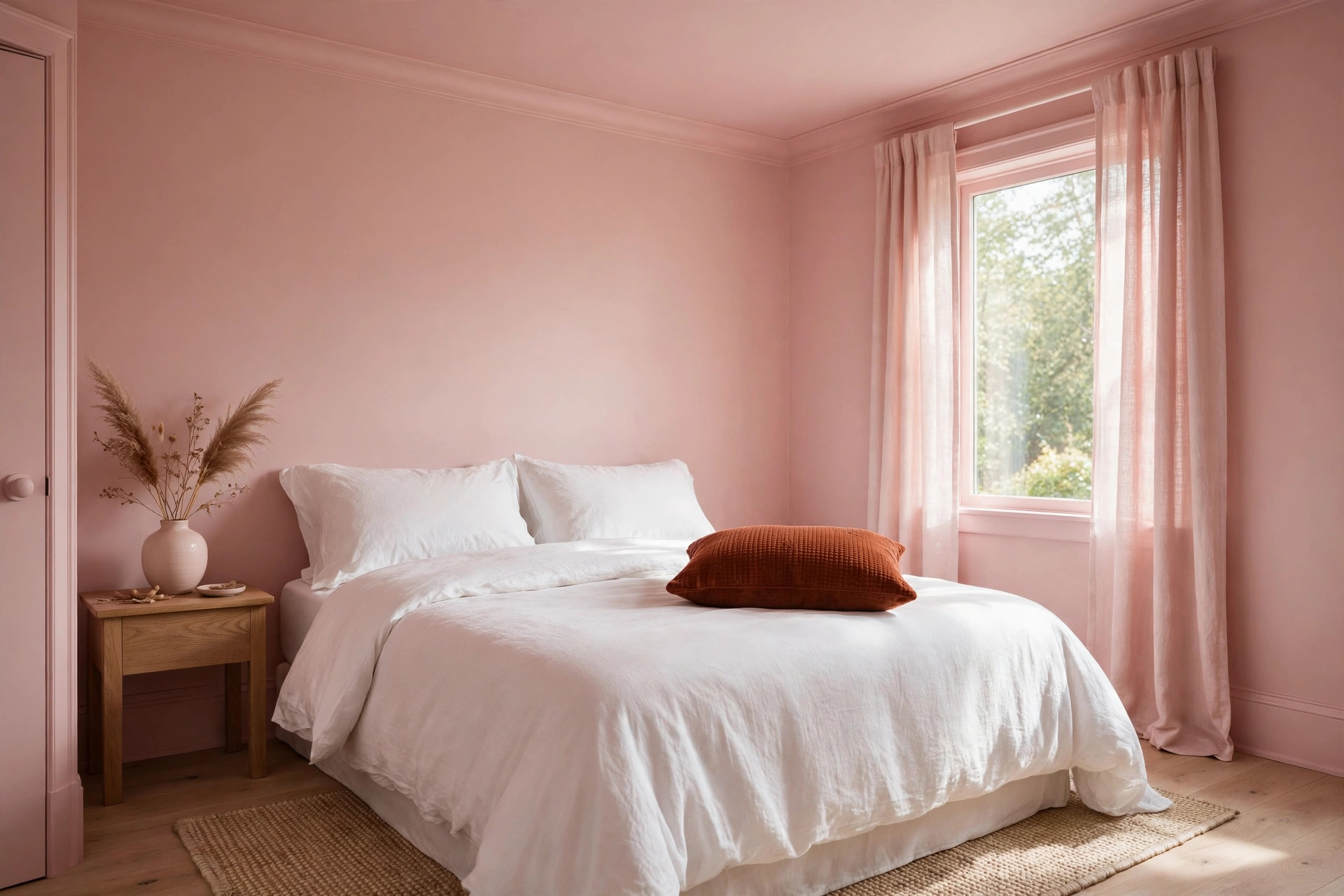
Blush is the softest drench on this list, a warm pink pale enough to act almost as a neutral while still making a small room feel chosen.
Drenched across every surface, it kills the nursery cliché of one pink wall and replaces it with a gentle envelope that suits a guest room just as well. Layer white bedding and natural wood, then add one deeper accent, rust, burgundy or olive, as a cushion or throw, so the room does not float away into sweetness.
Skip the accent and blush drifts. I have seen blush rooms read as plain beige by winter because nothing anchored them, so that one deep cushion is not optional.
5. Turn the Awkward Snug Charcoal
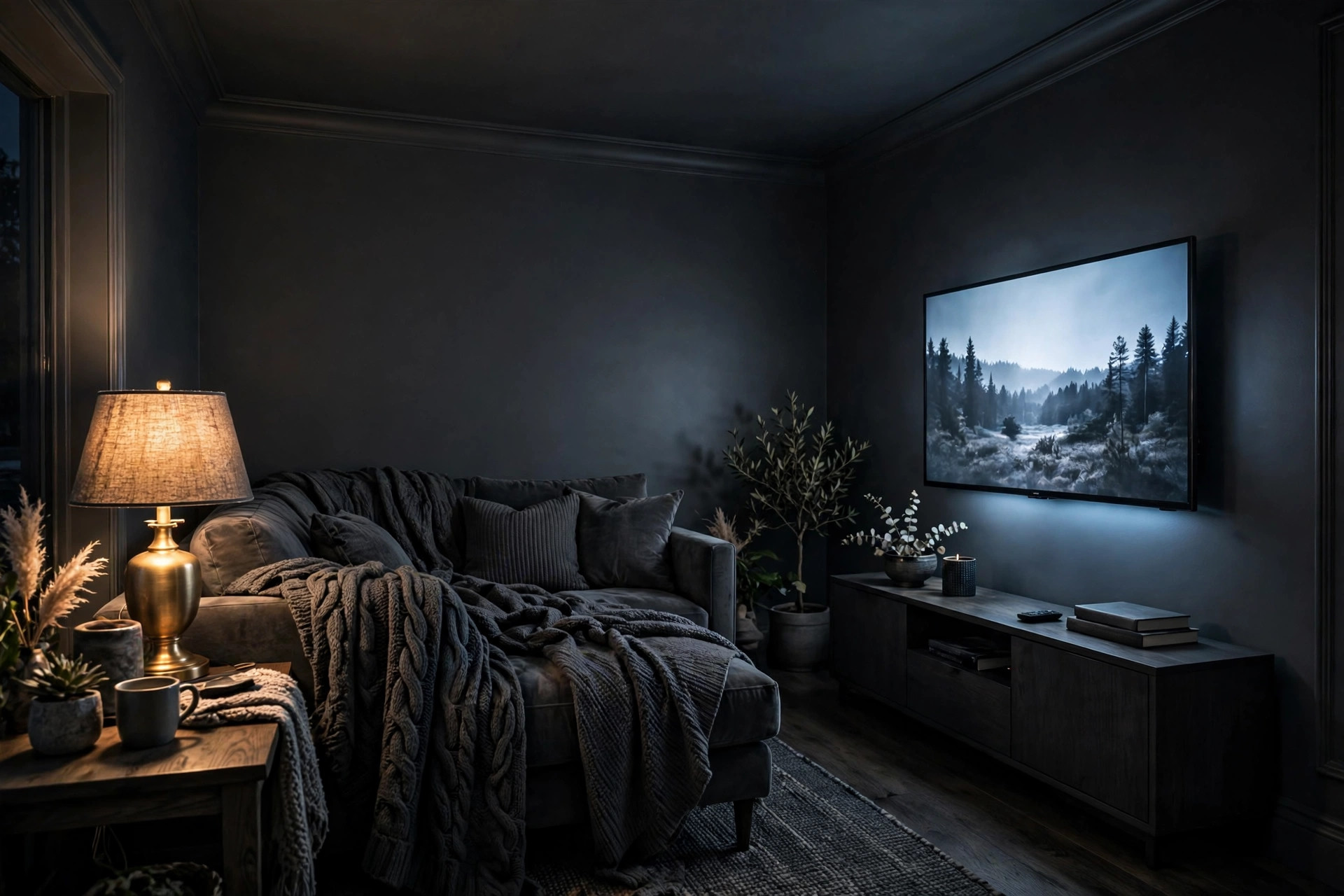
Charcoal drenching is how a small, awkward room becomes everybody’s favorite room.
A box room, a TV corner or a reading snug painted head to toe in charcoal loses its pokiness and gains cinema mood: the screen glows, lamps pool warm light, and the corners simply stop existing. Charcoal has sat among the bold color trends for your home for several seasons now, and drenching is what makes it livable instead of gloomy.
Add texture generously, a nubby throw, a wool rug, a leather cushion, because in one dark color texture is what the eye reads in place of contrast. Flat charcoal with flat furniture is the failure here, and it feels like a waiting room.
6. Paint the Small Bathroom Pale Blue, Ceiling Too
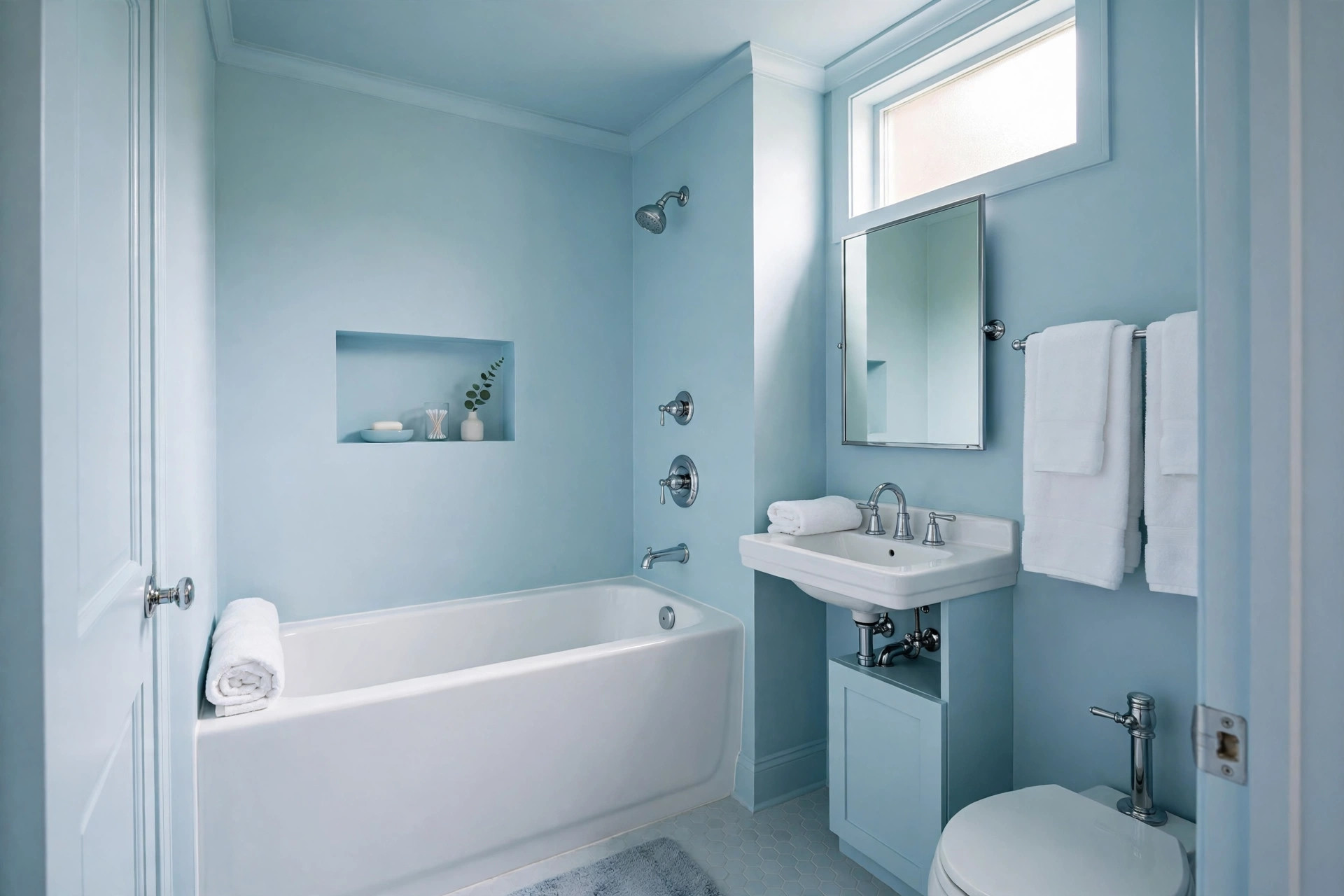
A small bathroom drenched in pale blue feels clean in a way white never quite manages. The color carries the water feeling, and the unbroken surfaces make the little room feel calm instead of stark.
Paint the walls, ceiling and trim, and if the cabinets can be painted, take them blue too, leaving chrome or brushed fixtures to sparkle against it. This look sits inside the wider set of small bathroom color ideas on this site, but drenching goes one step past any accent wall: there is no white ceiling slicing the room in half at its shortest point.
One practical catch: bathrooms need washable paint. Use a bathroom rated finish on the ceiling especially, or steam will have it peeling within a year.
7. Drench the Narrow Hallway in Warm Cream
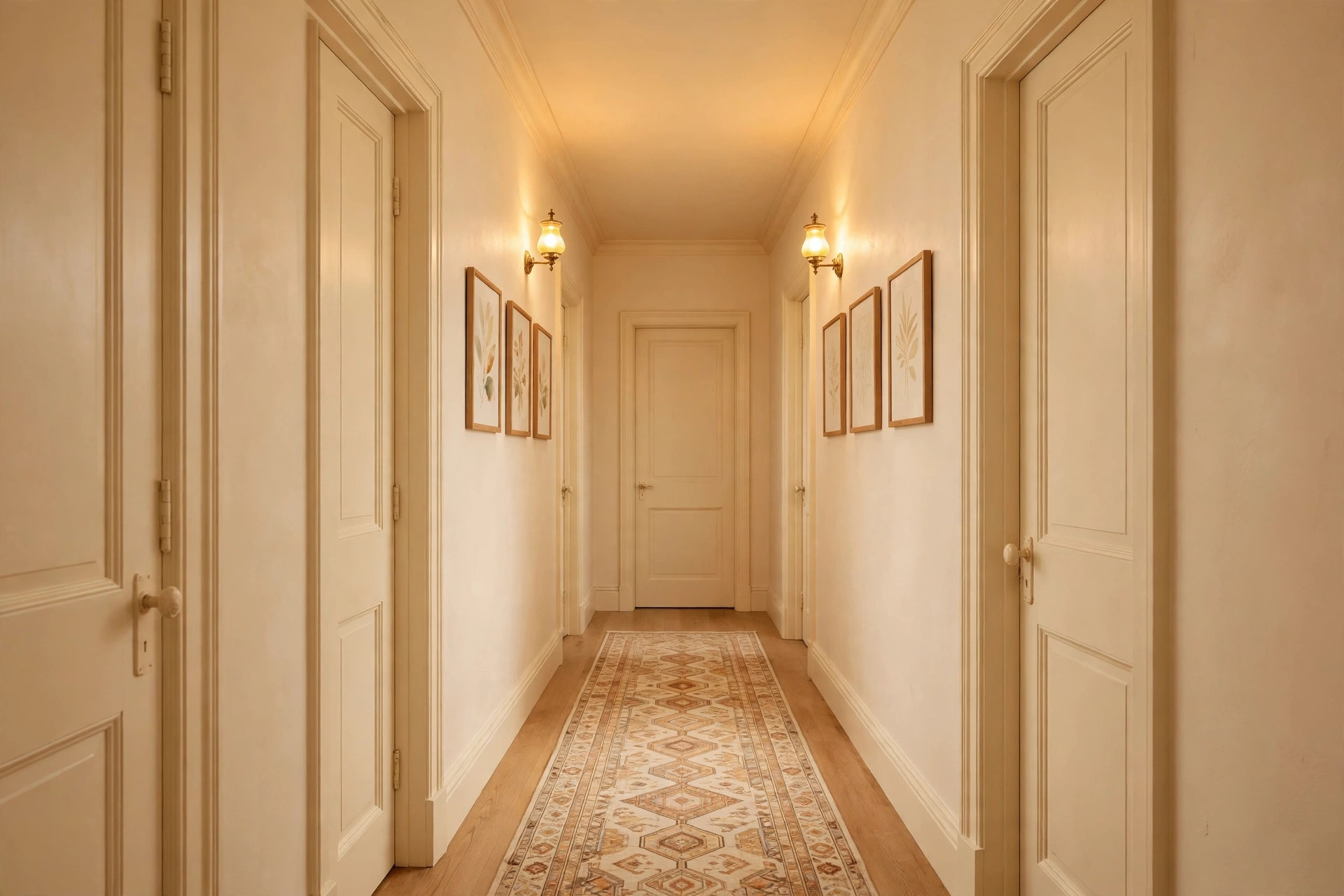
Hallways are all edges: doors, trim, corners and a ceiling line every few feet. It is the most chopped up space in most homes.
One warm cream over everything dissolves that fussiness into a calm run of light, especially when the doors take the same color and become plain planes in the wall. Use a washable finish with a soft sheen, because halls take knocks and bags brush the walls daily. Add one patterned runner and one piece of art in a dark frame for punctuation.
Cream is not a free pass, though. Pick a cream with a warm base and test it on the hall’s darkest stretch, or the whole run can read as dingy yellow under warm bulbs.
8. Make the Reading Corner Forest Green
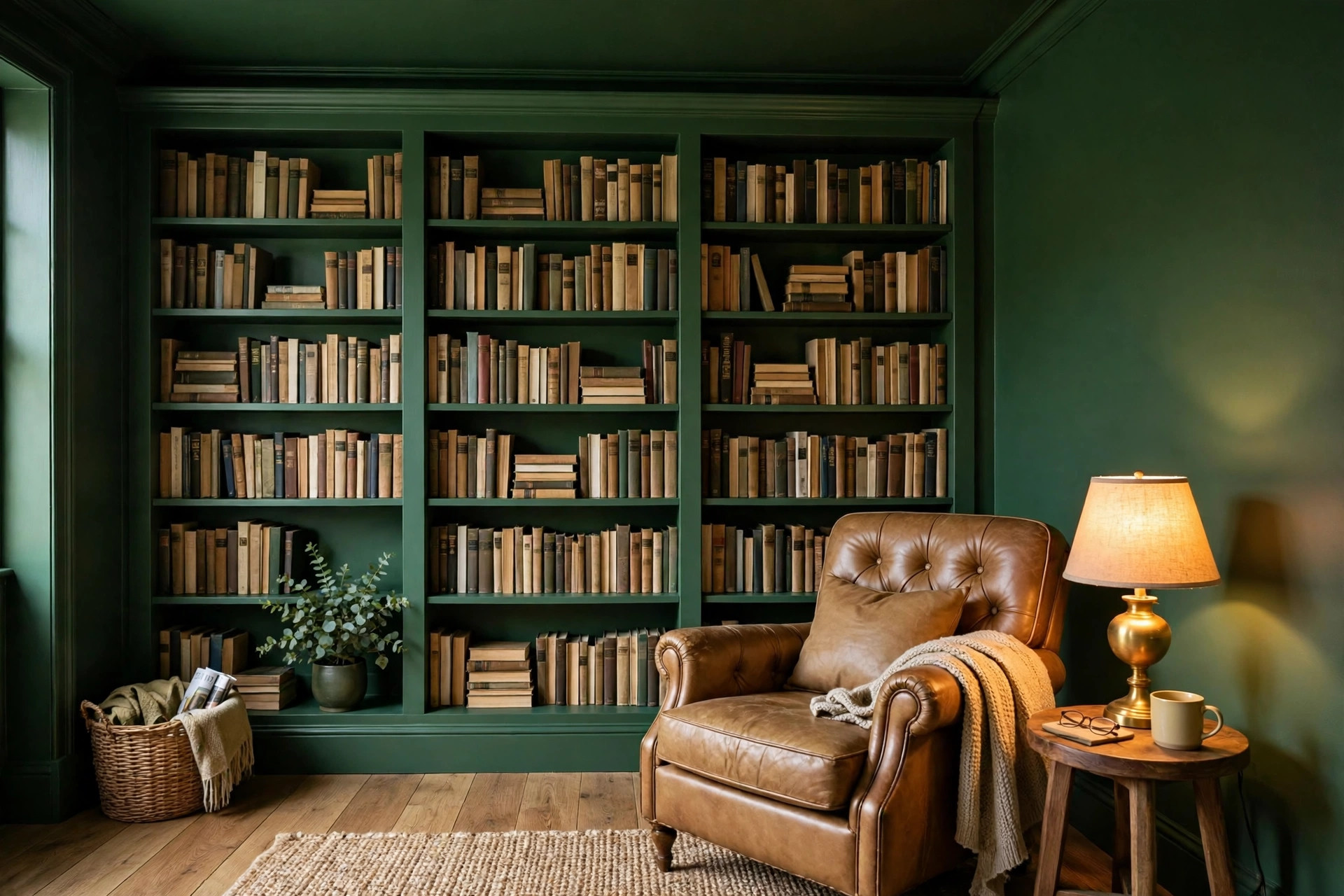
A reading corner drenched in deep forest green is the cocoon readers dream about, and it is a small, cheap place to be brave.
Paint the walls, the bookcase, and the ceiling if the corner has a defined one, all the same green, so the shelves of books sit inside the color like a clearing in woods. One good chair in tan, cognac or cream, a warm lamp at shoulder height, and the corner feels twice its size because its edges have gone soft and dark.
Green is restful to sit inside, and at corner scale the richness never gets the chance to overwhelm. My rule: if you can touch both walls from the chair, the color can go as deep as you dare.
9. Test Butter Yellow in the Small Kitchen First
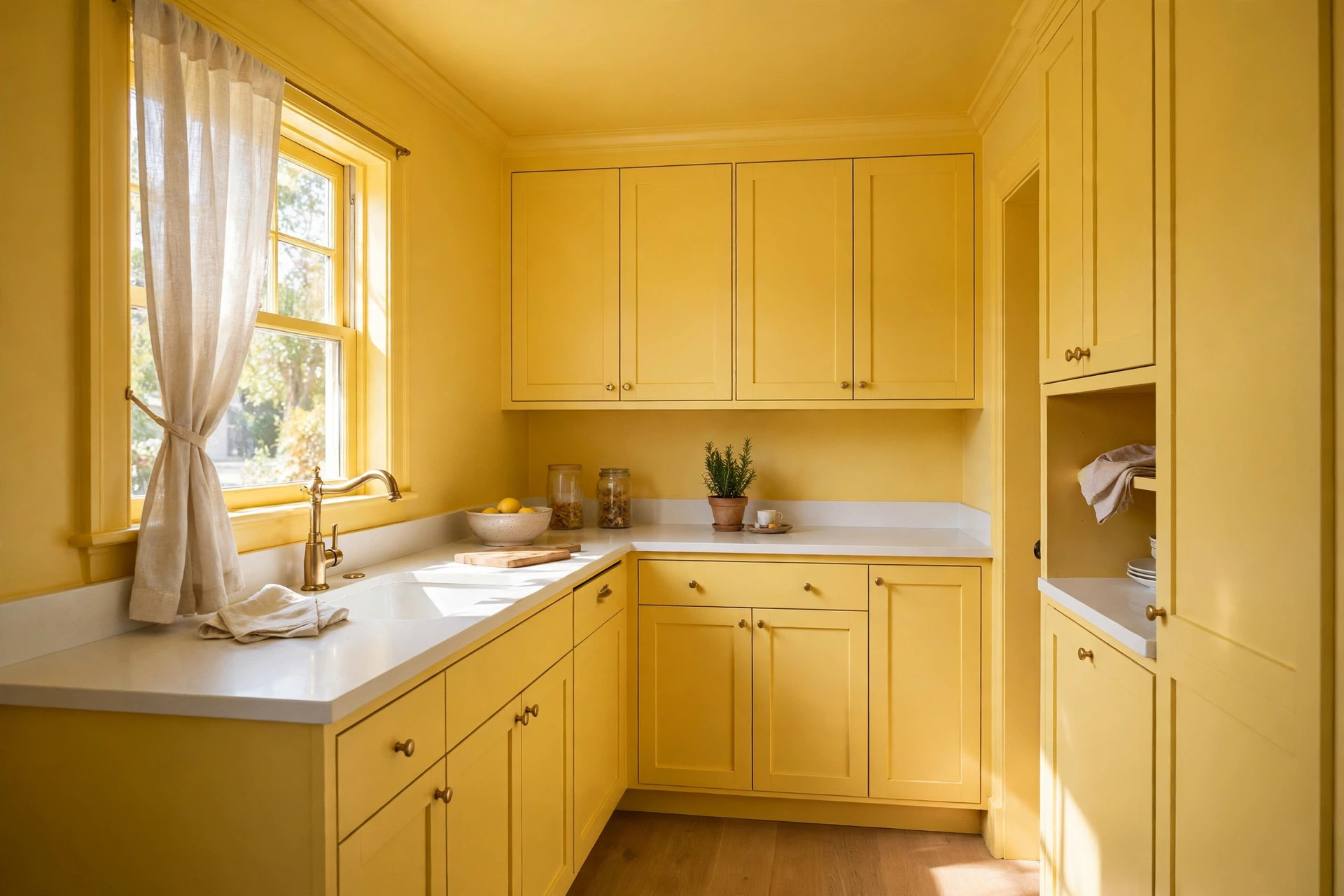
A compact kitchen drenched in soft butter yellow feels like morning all day. It is also the biggest commitment on this list, so it comes with a test built in.
The bold version paints the cabinets the same yellow as the walls and ceiling, turning a small fitted kitchen into one cheerful block of color, with appliances and a pale worktop as the only breaks. Do not start there. Drench the walls and trim first, live with it for a month, and paint the cabinets only if you still love it, because cabinet paint is the hard one to undo.
Keep the rest plain, white ceramics, pale wood, one black accent in a tap or rail, and the yellow stays fresh instead of frantic.
10. Drench the Whole Studio in Dusty Teal
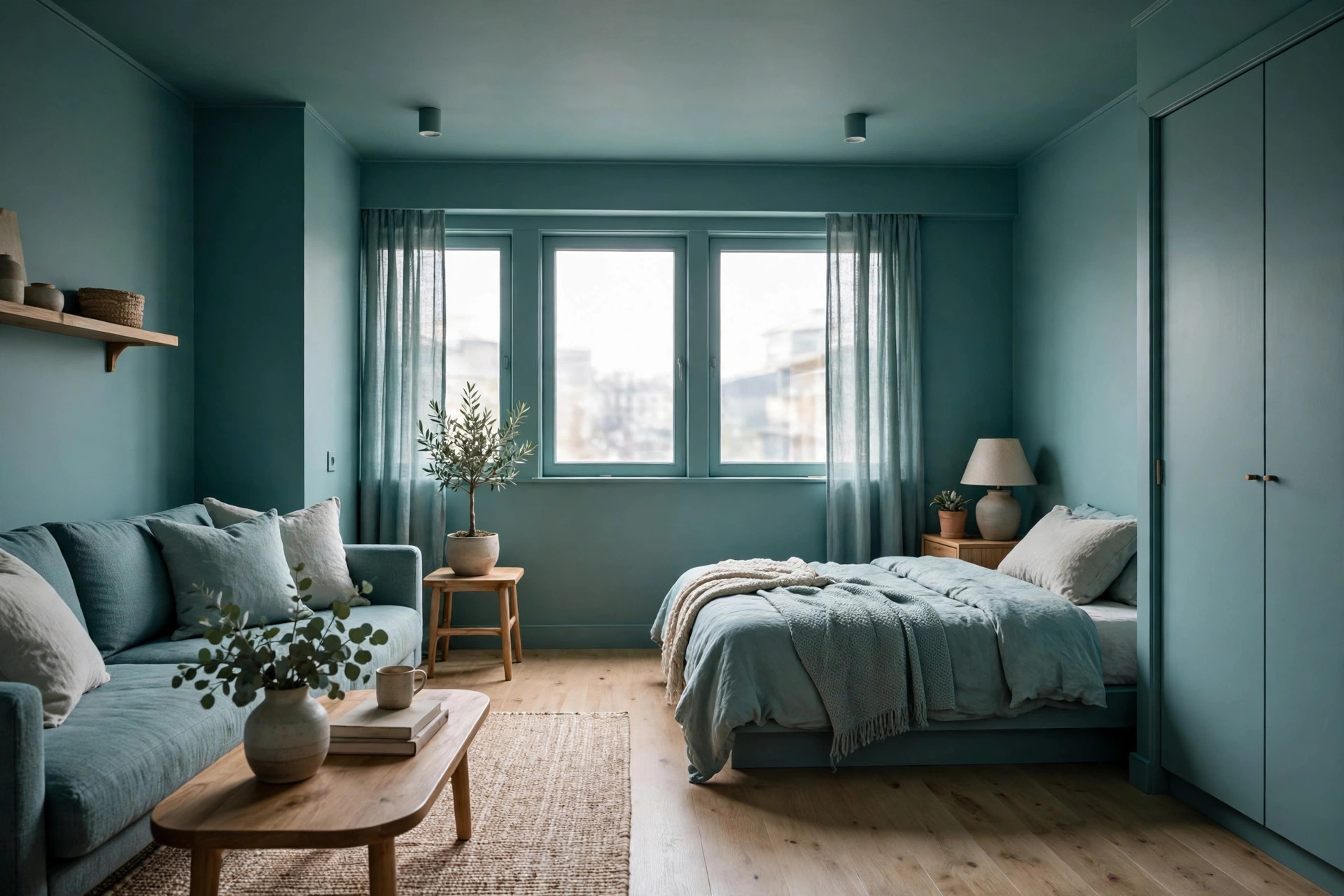
The studio flat is where drenching proves itself, because one room has to be bedroom, living room and office, and color zones usually chop it into confetti.
One dusty teal across every wall, the trim and the ceiling makes the whole box feel bigger and hands the zoning job to furniture instead: a rug marks living, a bookcase edge marks sleeping. It also dodges one of the classic small space decor mistakes, a bright white ceiling pressing down on colored walls like a lid.
Keep the big textiles pale so the teal reads as atmosphere rather than darkness. One grey toned teal in a north facing studio can feel cold by evening, so warm the sample up a shade before you commit.
11. Commit to Rich Burgundy in the Small Living Room
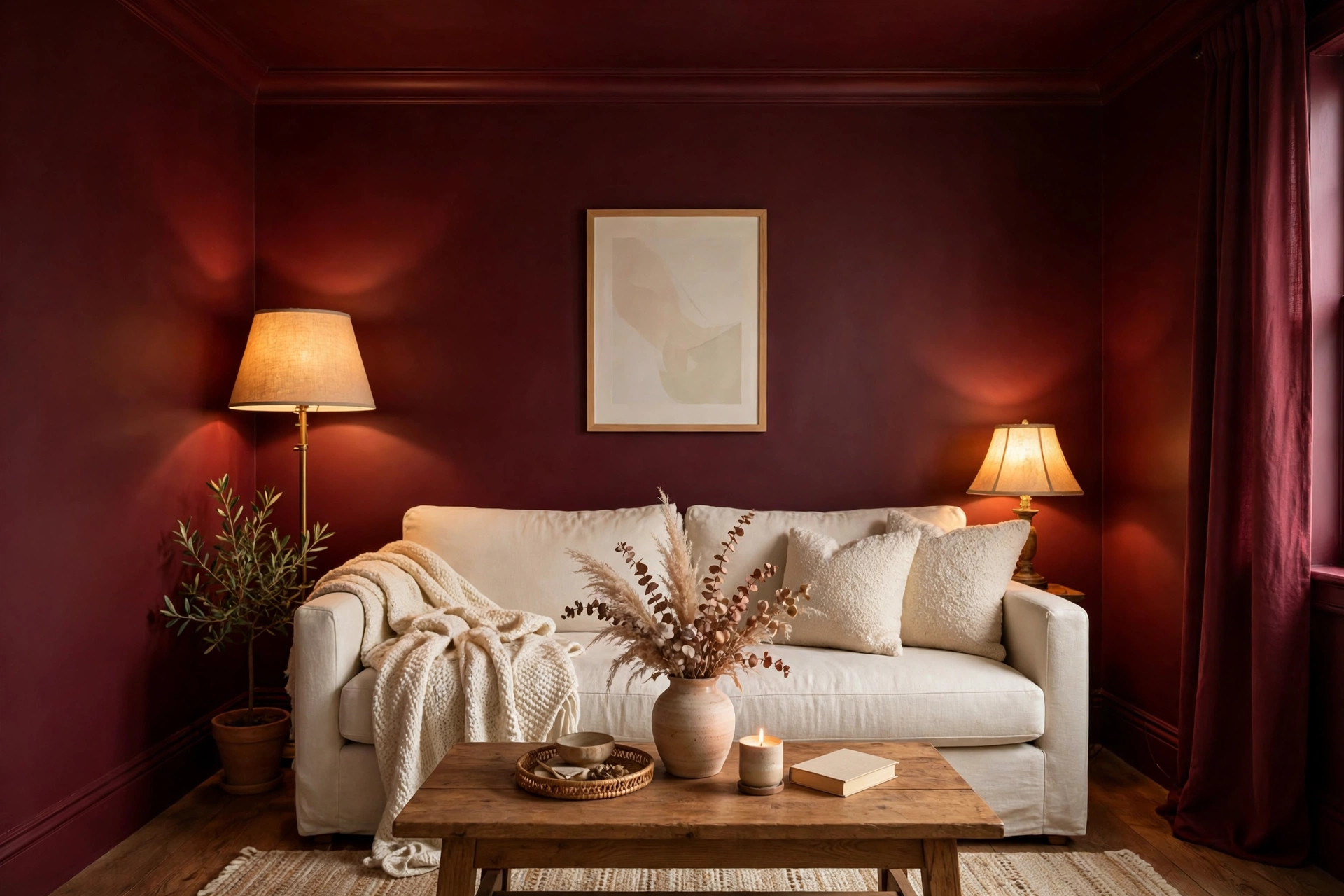
Burgundy is the showpiece look: walls, trim, ceiling and even a painted bookcase in one deep wine tone, with a camel or cream sofa glowing in the middle of it.
It takes confidence, but the principle is the same one that makes every gentler look here work, and anyone nervous about decorating with bold colors will find one single color far easier to live with than a bold accent wall fighting white trim. Use lamps at several heights, keep metals warm, and hang one large pale artwork as a window for the eye.
I buy the best paint I can for a color this deep. Cheap burgundy needs 4 coats and still looks patchy; good paint covers in 2 and the depth is the whole point.
The Bottom Line
Color drenching works in small rooms because it removes the interruptions, white ceilings, contrasting trim, chopped edges, that make a small box feel smaller. One color over every surface lets furniture and texture do the talking instead. Start with the room that bothers you most, in a color you already love in cushions or art, test it big, and commit to the ceiling as well as the walls. Half a drench is just an accent wall with ambition. The full wrap is where the small room magic lives.
Start with a 2 foot test patch in sage on the bedroom wall and ceiling corner. Live with it for three days before you buy a single full tin.
Frequently Asked Questions
Does color drenching make a small room look bigger or smaller?
Bigger, in most cases, because taking the contrast away between walls, trim and ceiling blurs the room’s edges, and the eye reads one continuous space instead of a small box with a lid. Deep colors can feel enclosing in a pleasant, cocooning way rather than cramped, especially with warm light at a few heights.
What colors work best for color drenching?
Mid tone and deep colors with a soft, muted quality: sage, dusty teal, forest green, navy, terracotta, blush and warm cream all drench well. The shade matters less than the commitment. One color everywhere, in a tone you already love in cushions or art, is the safest test of the idea.
Do you paint the ceiling when color drenching?
Yes, the ceiling is the whole point. A white ceiling left above colored walls keeps the hard horizontal line that chops a small room down. Paint the ceiling the same color and that line lifts away, which is why drenched rooms feel taller than their measurements.
Is color drenching renter friendly?
Only with written permission to paint, because it covers every surface including trim and doors, and putting it back to white takes more coats than a single wall. Without permission, borrow the idea softly instead: one color family across curtains, bedding and big textiles gives a hint of the wrapped feeling with none of the repainting risk.