Japandi Home Decor Ideas for Calm, Clutter-Free Rooms
Low lines. Bare floor. One branch in a tall vase, and nothing else asking for your attention.
That quiet is the whole point of Japandi, the blend of Japanese minimalism and Scandinavian warmth: low wooden furniture, linen and natural texture, a calm palette of warm neutrals, and space left empty on purpose around every piece. It is not a look you buy in one order. It is a room edited down to the things that work well and look calm, then left alone. These 11 japandi home decor ideas build it layer by layer, from the furniture line up to the last small object, and most of them cost nothing but decisions.
The short version, before we start:
Go low. Platform sofas, low tables, short legs. The low line is the look.
Three warm neutrals, max. Warm white, oatmeal, sand or clay, repeated everywhere.
No surface holds more than three objects. Useful or loved, or it goes.
Edit before you buy. The first stage of Japandi costs nothing at all.
1. Drop the Furniture Line Low
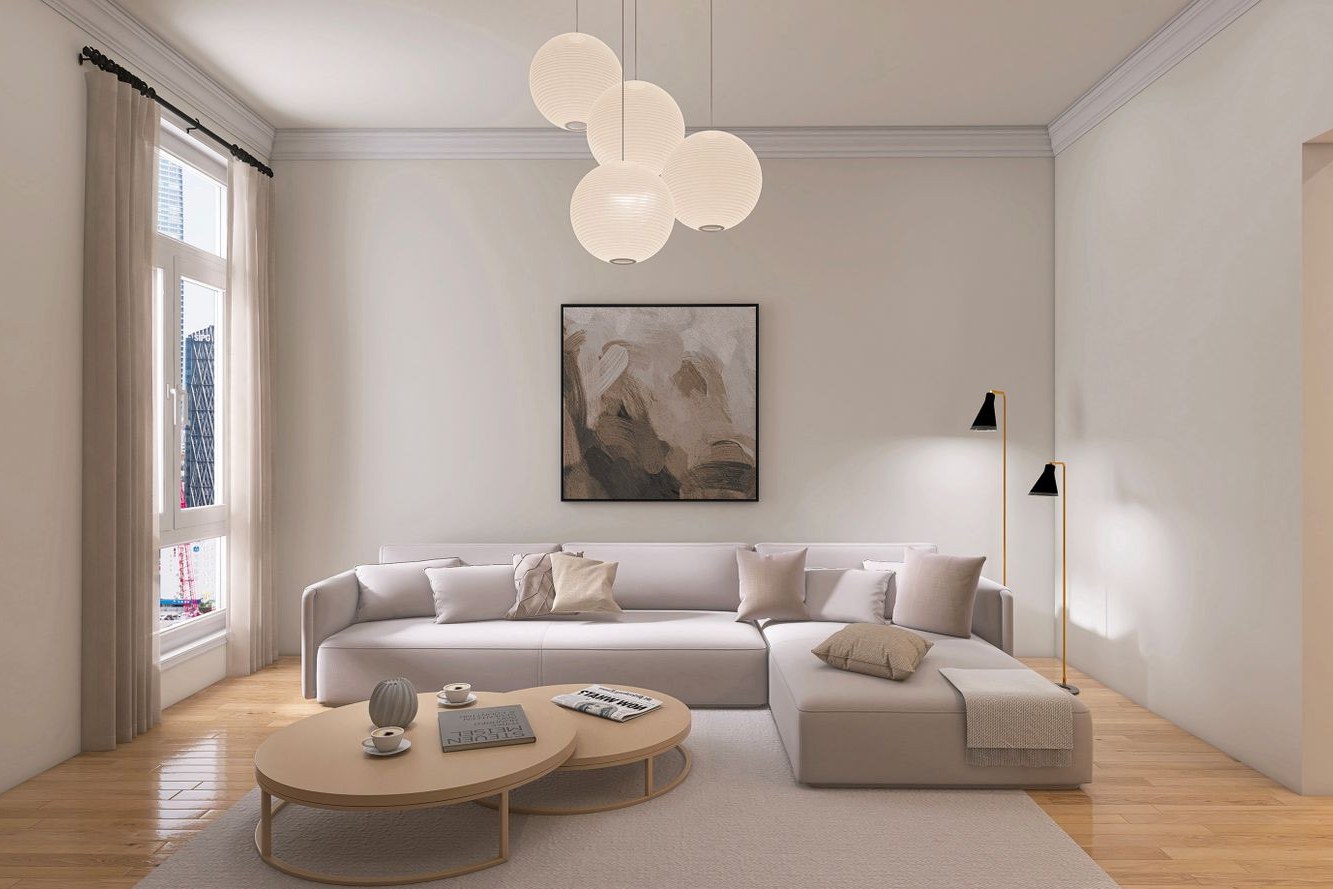
Height is the first thing the eye reads in a Japandi room, so start there.
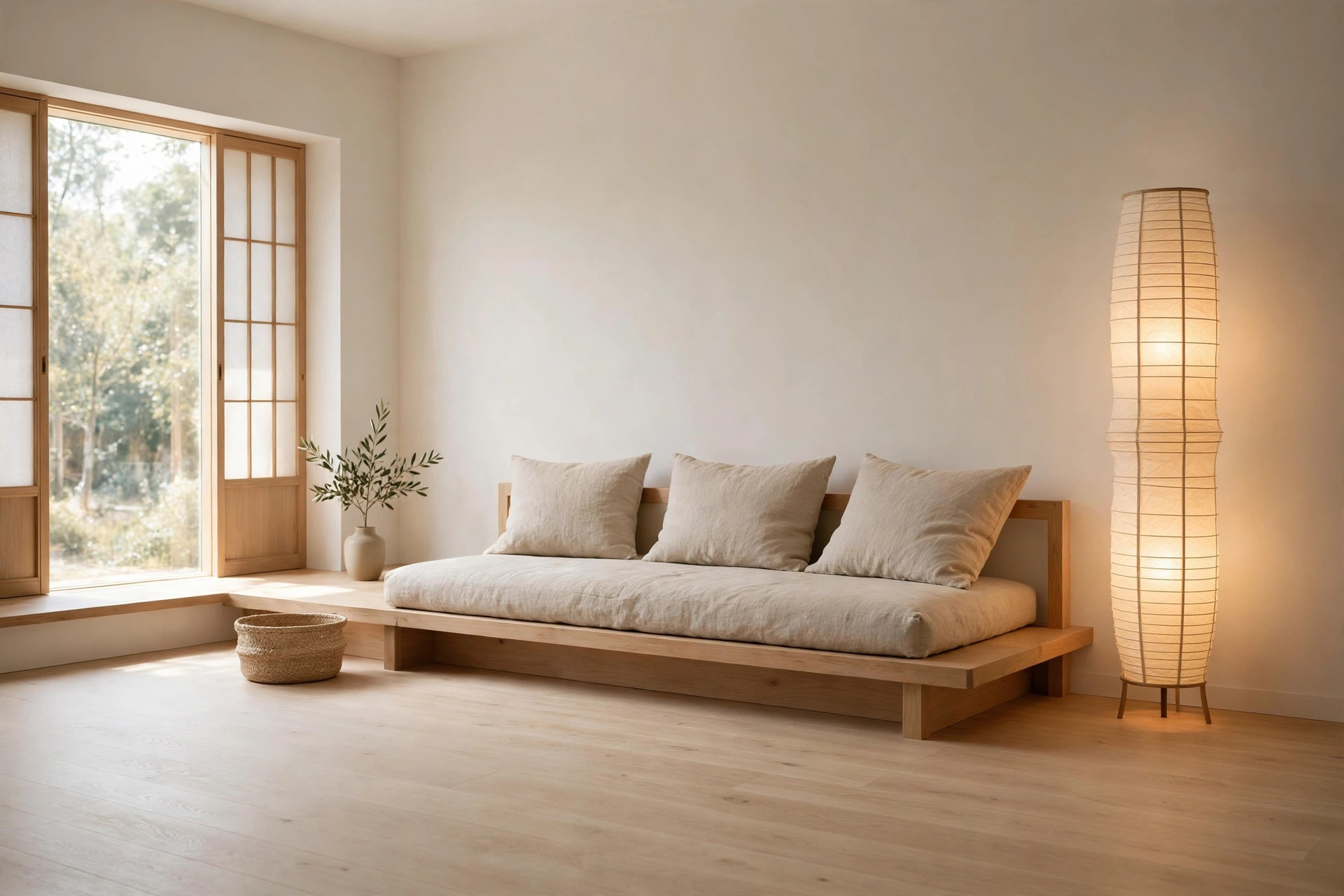
Furniture sits low to the ground: platform style sofas and beds, low coffee tables, short legged chairs. The low line opens the wall above it, makes ceilings feel taller, and gives the room its grounded, settled posture. Choose one or two solid low pieces in warm light wood instead of many small ones. Five small tables read as clutter at any height.
Working with what you own? Take the tall legs off a piece where the design allows it, or move your lowest seating into the main spot. From the doorway, that first view, low sofa back, low table, clear floor beyond, reads as calm before a single material registers. I judge every Japandi room from the doorway first, and so will your guests.
2. Build the Palette From Two or Three Warm Neutrals
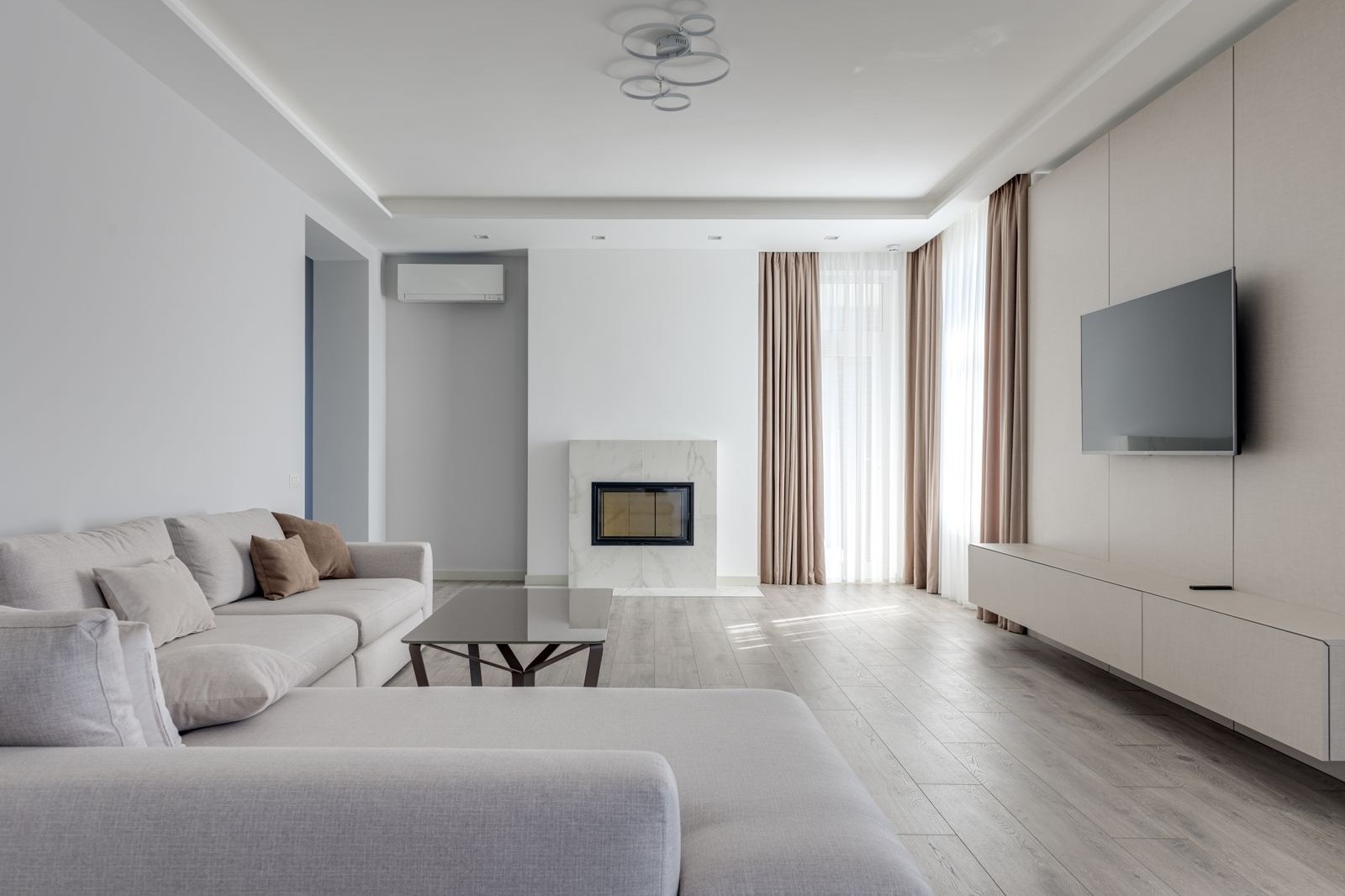
The Japandi palette is quiet but never cold: warm white, oatmeal, sand, clay, soft taupe, and the tones of the wood itself, with black or deep charcoal in small doses as punctuation.
Pick two or three of these and let them repeat across walls, textiles and furniture until the room feels woven from one cloth. Two things break it fast. Stark bright white tips the room toward a clinic, and grey that leans blue goes icy by evening.
Test your neutrals in both lights before you commit: true Japandi tones look warm and calm at noon and stay gentle under lamps. If a sample turns cold at night, it is the wrong neutral, whatever the tin says.
3. Let Each Tradition Fix the Other
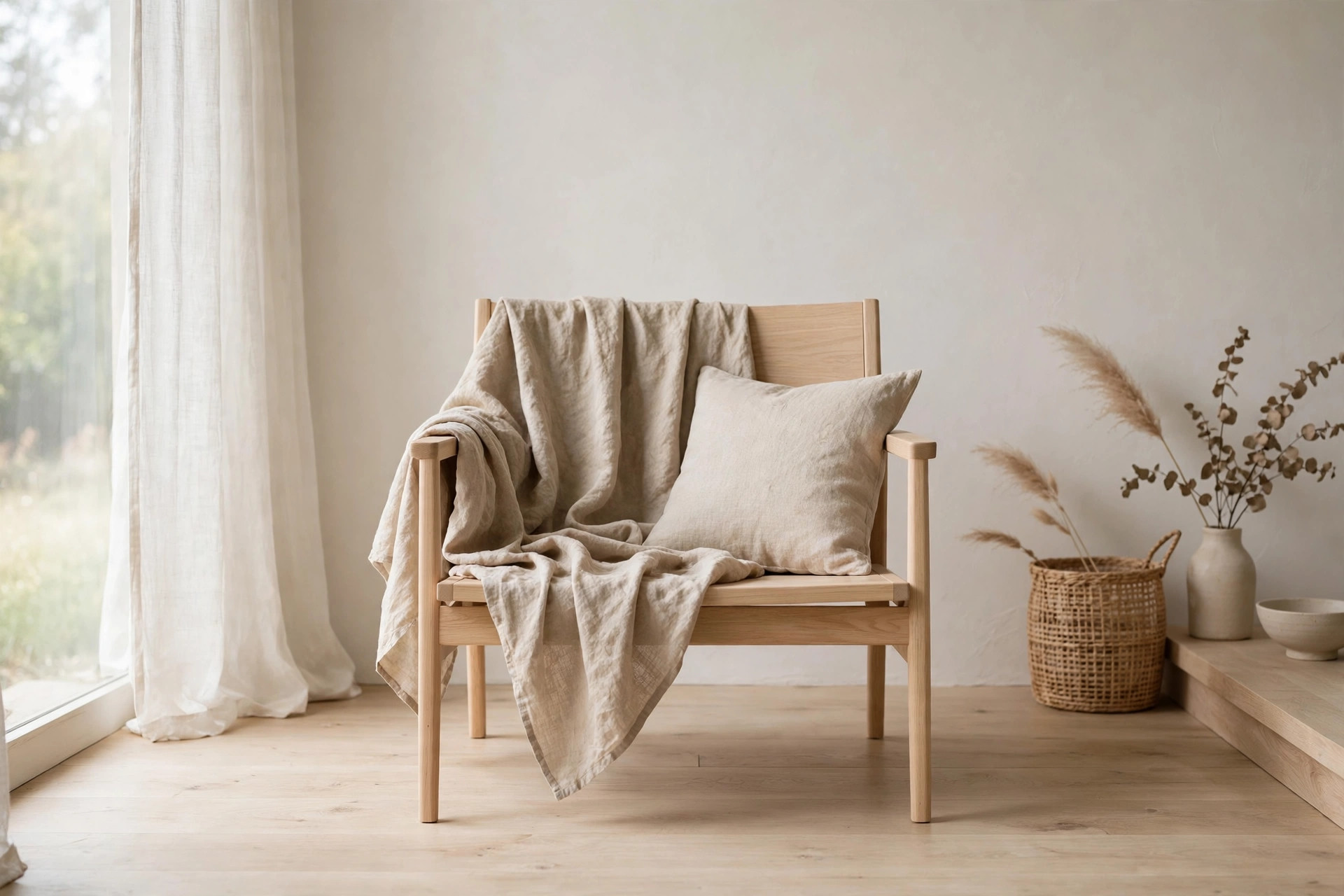
Japandi works because each side corrects the other, and knowing how to mix decor styles is what keeps the blend looking planned instead of accidental.
From the Japanese side take restraint: clean lines, a little asymmetry, respect for empty space. From the Scandinavian side take comfort: soft textiles, warm light, furniture made for long evenings. In one room that usually means Japanese shapes with Scandinavian softness, spare low furniture warmed up with linen throws, sheepskin style texture and cushions in natural fibers.
My test for any piece is simple. If it is neither useful nor beautiful, it belongs to neither tradition, and it goes. Both sides agree on that rule completely.
4. Let the Materials Do the Decorating
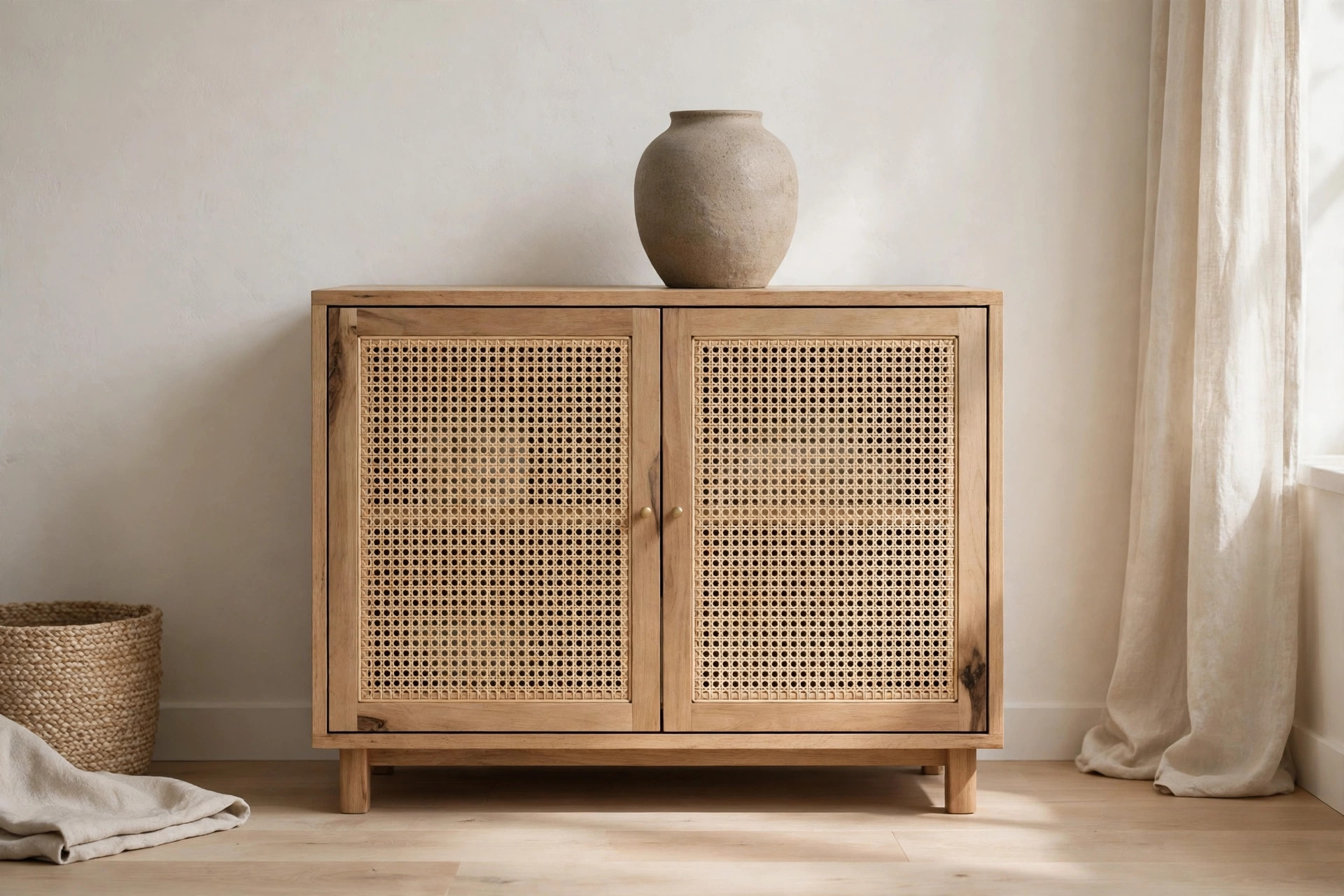
In a Japandi room, materials are the decor. Light woods like oak, ash and bamboo, plus rattan, cane webbing, stone, clay and paper bring all the pattern the room needs, through grain and weave instead of applied ornament.
Choose fewer, better pieces and let each texture show: a cane fronted cabinet, a stoneware vase with a handmade rim you can feel, a wooden bench with honest joinery. Keep finishes matte and natural. Gloss is the failure here; one shiny surface can make the whole room feel like a showroom.
This honesty is also why the style sits so naturally beside sustainable home decor tips: buy once, buy natural, keep it for years. In Japandi that is not a compromise. It is the philosophy.
5. Dress the Room in Linen, Then Take One Cushion Away
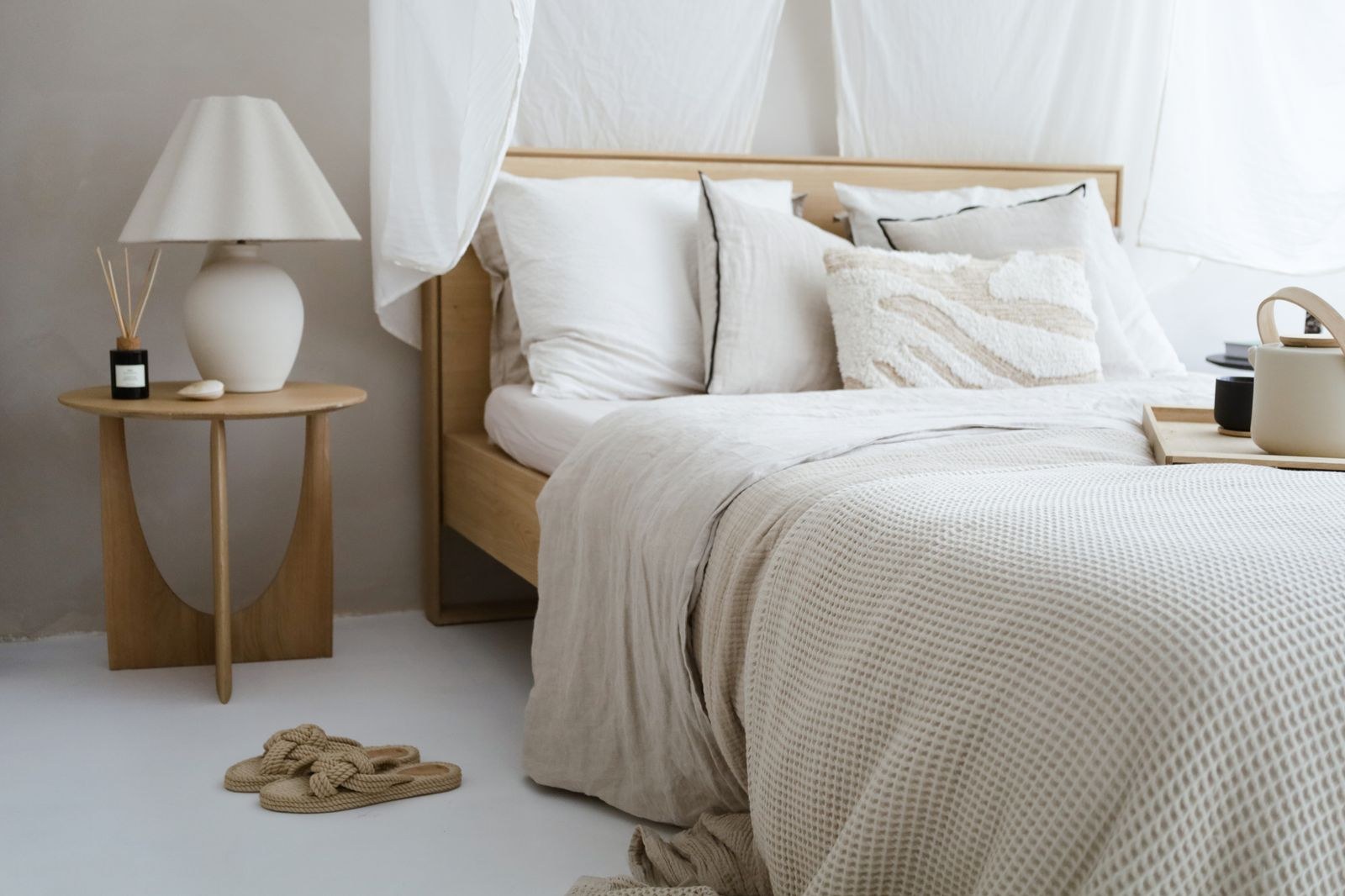
Textiles carry the warmth in this scheme, and natural fibers carry it best.
Linen for curtains, cushion covers and bedding. Cotton and wool for throws. A woven rug in an undyed or softly flecked tone to soften the clean lines without adding visual noise. Keep patterns at zero or near zero, because the weave itself is the texture, and keep colors inside the palette: oatmeal, flax, warm white, clay.
Dress the bed and the sofa more simply than feels natural at first, then live with it a day. My standing rule: Japandi rooms almost always improve when one more cushion comes off. If the sofa looks slightly bare, you are probably right where the style lives.
6. Protect the Empty Space Like It Is Furniture
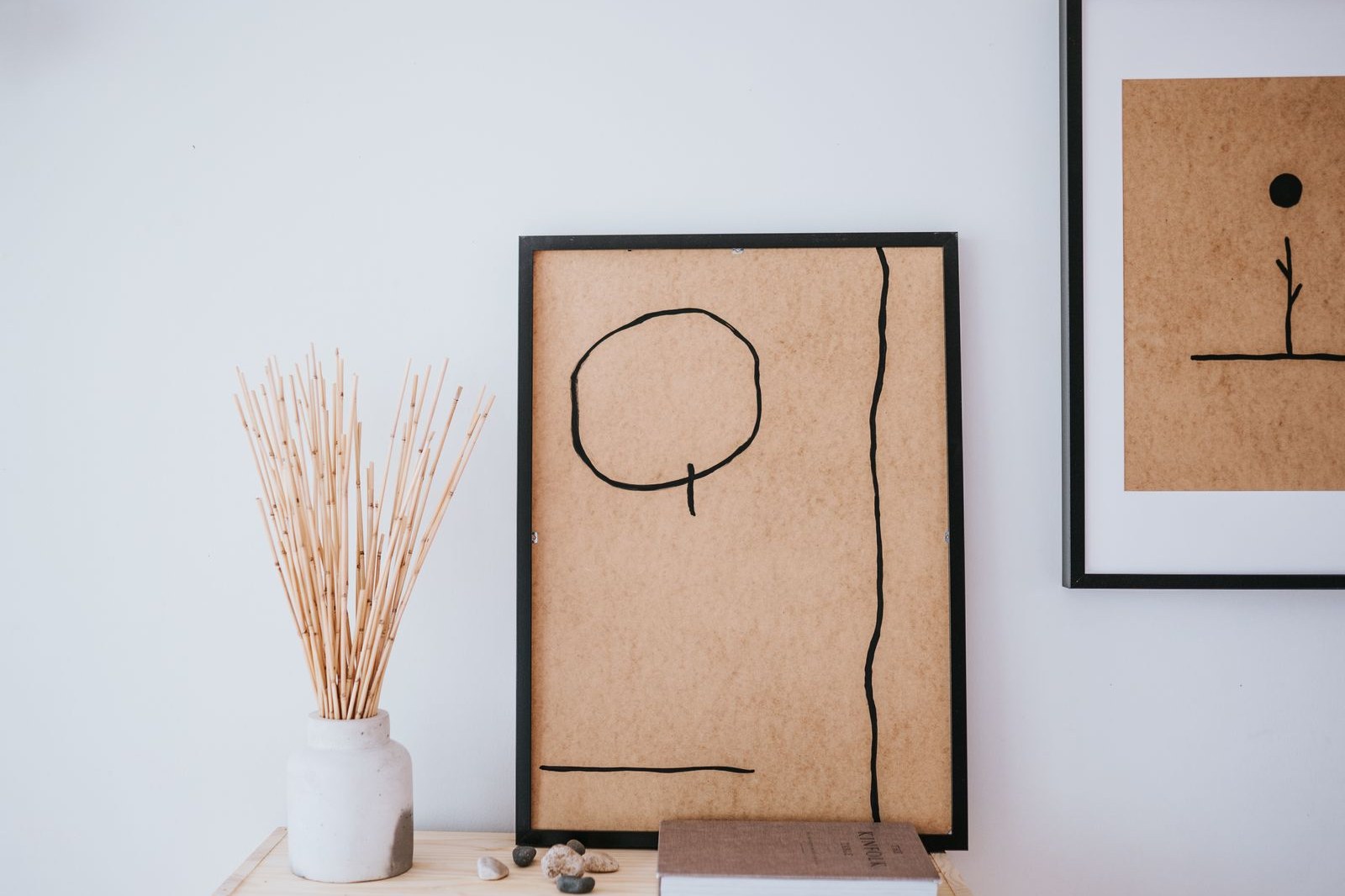
Negative space, the empty area around and between things, is the most important material in a Japandi room. It is also free, and it is the first thing guests fill with stuff.
Leave walls partly bare. Keep surfaces mostly clear. Resist the corner that begs for one more thing. Two rules hold the line in my home: one in, one out, and no surface holds more than three objects, each one useful or genuinely loved. When the urge to add something shows up, subtract instead.
The upkeep is one slow pass a week with a basket, about 5 minutes, returning whatever drifted onto surfaces to its closed home. Emptiness is not the absence of decor here. It is the decor, and it needs the same care as any object in the room.
7. Buy Furniture That Works Twice and Closes
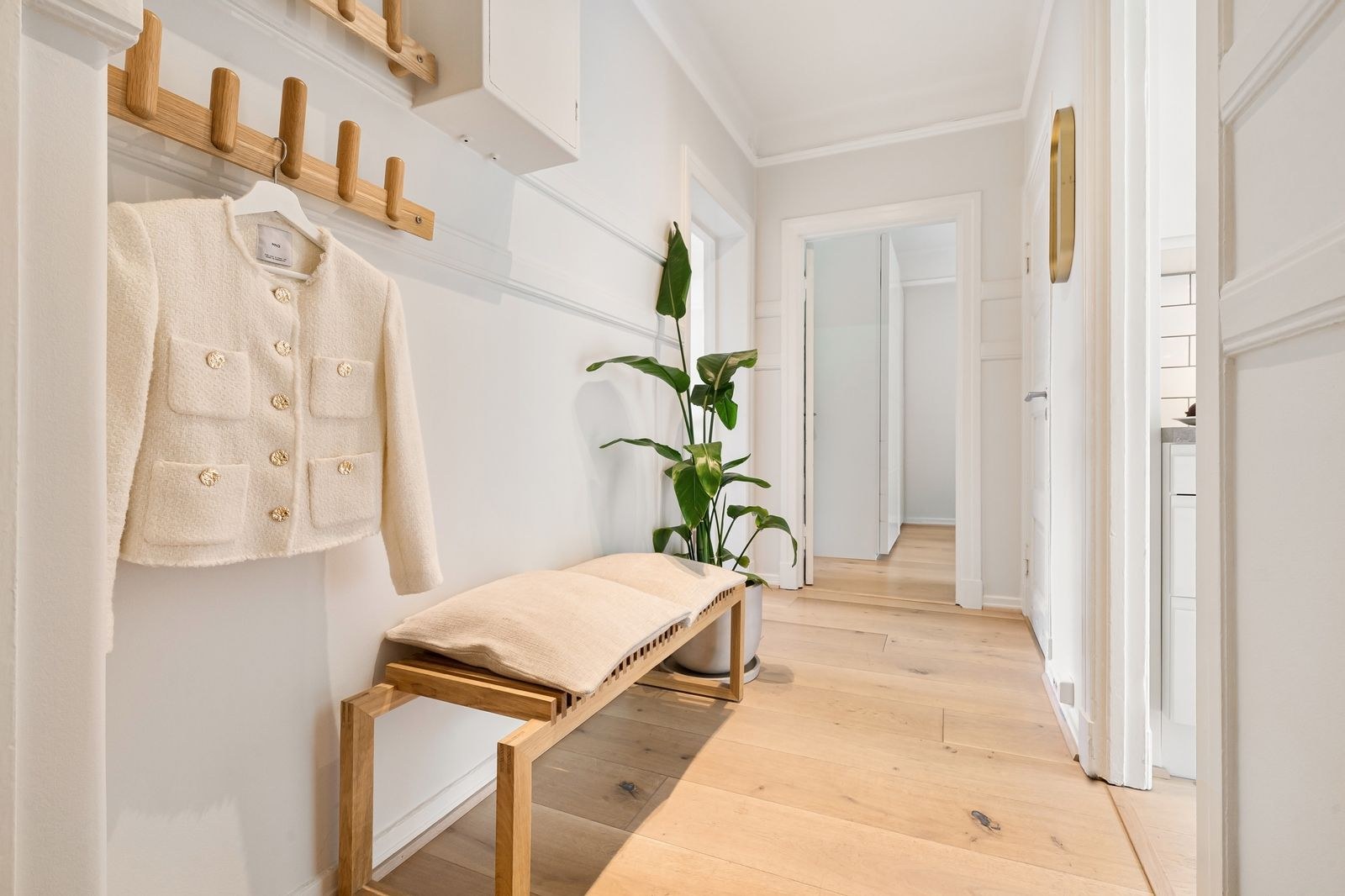
Every Japandi piece earns its footprint twice: once by working well, and once by looking quiet.
Look for slim profiles, simple joinery and no decorative fuss: a bench that is also shoe storage, a side table with one drawer for the small mess of daily life, a cabinet that closes so its contents vanish. Closed storage matters more than any single pretty piece, because clutter hidden is clutter removed, and this style runs on visual silence.
It matters most in the bedroom, where the calmest minimalist bedroom ideas and Japandi thinking overlap almost completely: low bed, clear surfaces, nothing that glows or shouts.
8. Light It Low, Warm and in Layers
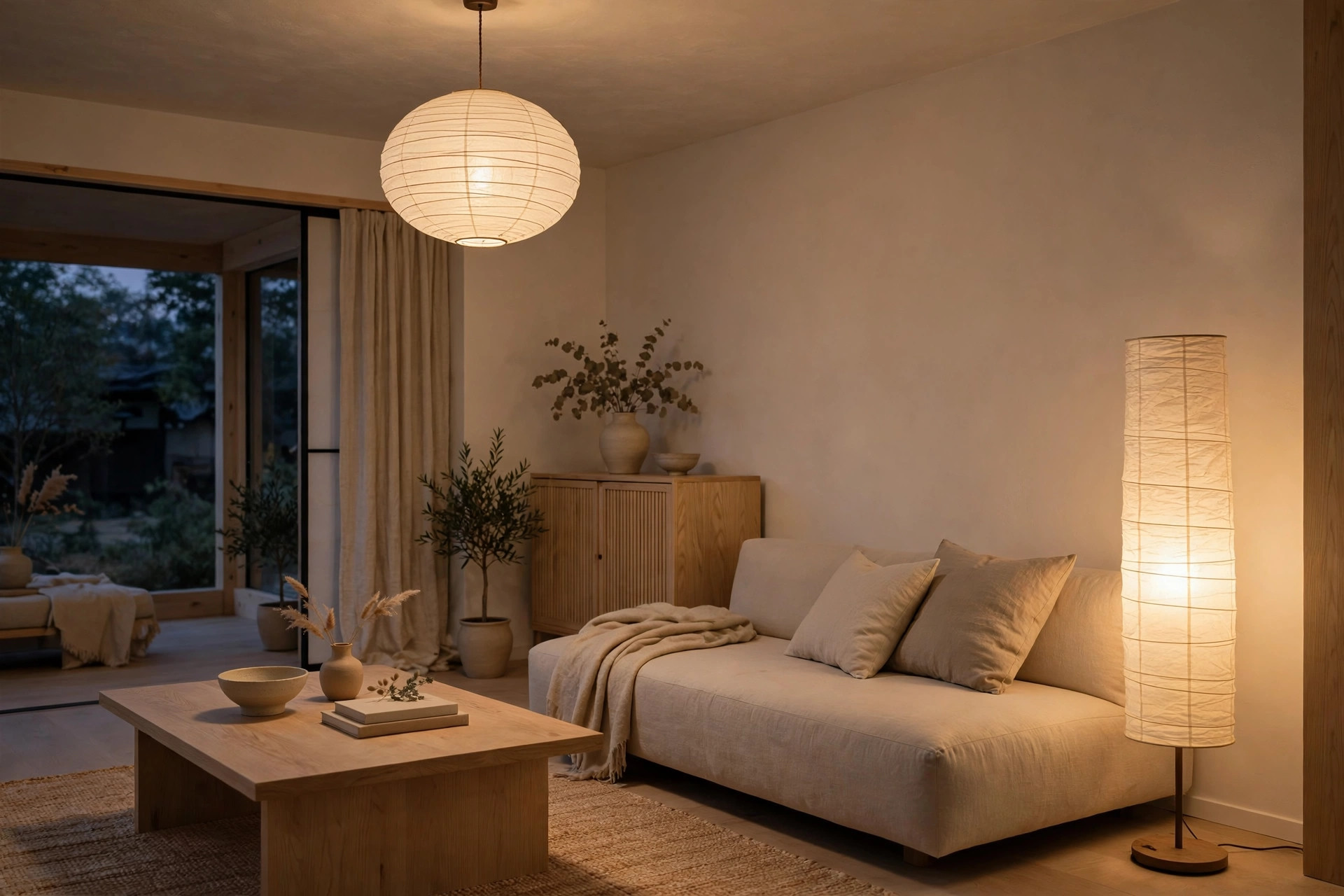
Japandi light is soft, warm and kept low, echoing the furniture line.
Paper lantern style pendants and floor lamps are a signature of the style for a reason: a rice paper shade turns a harsh bulb into a glow. Layer three sources at different heights instead of one bright ceiling light, a pendant above, a floor lamp beside the reading chair, and one small table lamp or candle for the evening level. Choose warm white bulbs and keep metal finishes minimal.
The failure mode is the single ceiling light left to do everything. Under it, a Japandi room looks flat and a little sad, like a showroom at noon instead of dusk in a garden.
9. Bring Nature In One Piece at a Time
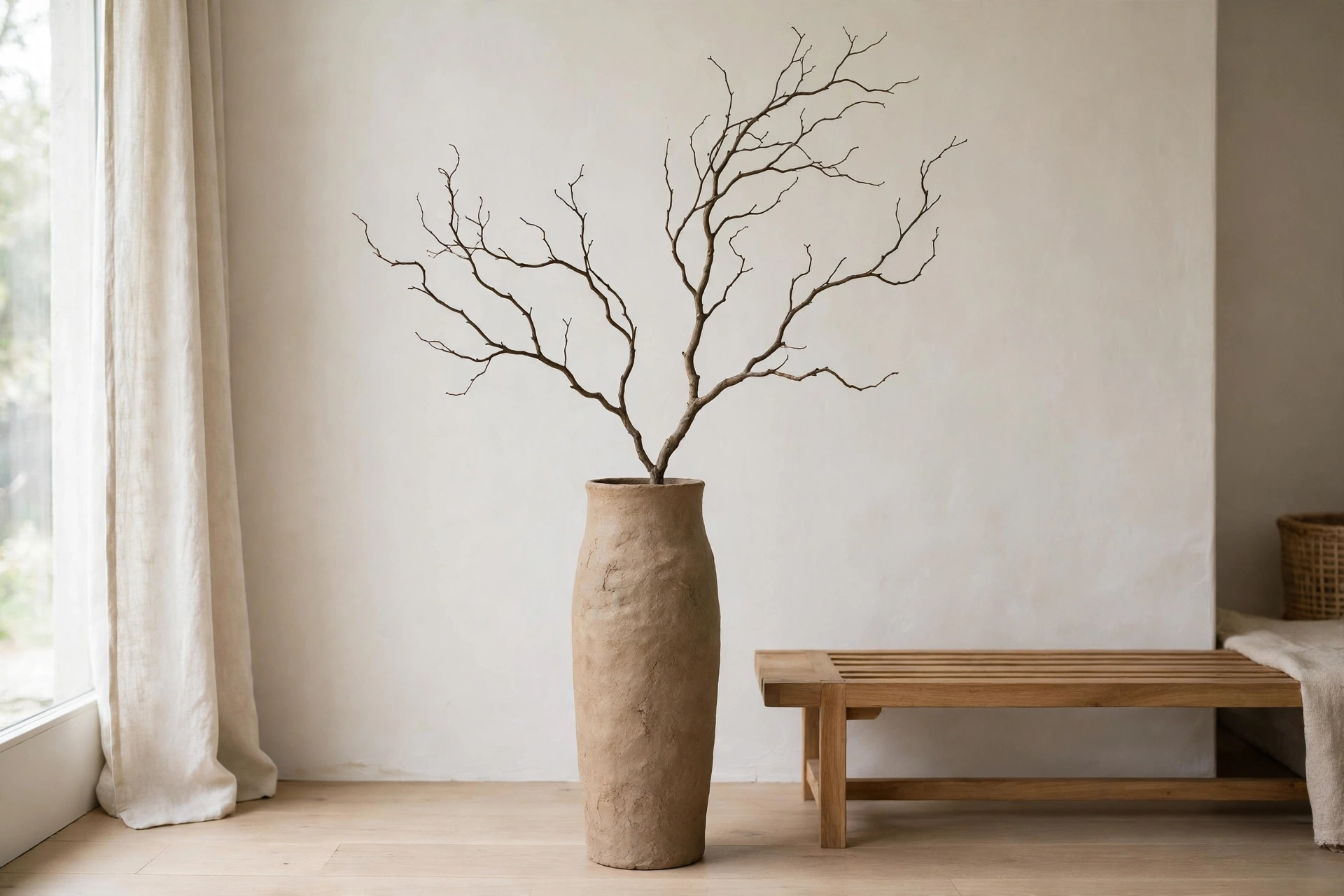
Japandi rooms borrow from nature with real restraint. One sculptural branch in a tall vase, a single bonsai style plant, or a few stems placed off center in an unglazed vase does more than a shelf of houseplants, because the eye can actually take in the shape against all that calm.
Choose plants with interesting structure over lush bulk, and keep pots inside the palette: stone, clay or woven baskets. The same restraint goes for flowers: a few stems, asymmetrically placed. A crowded windowsill of pots is the fastest way to break the spell, and it happens one gift plant at a time.
Nature in this style is a guest of honor. Not a crowd.
10. Shrink It Down for a Small Apartment
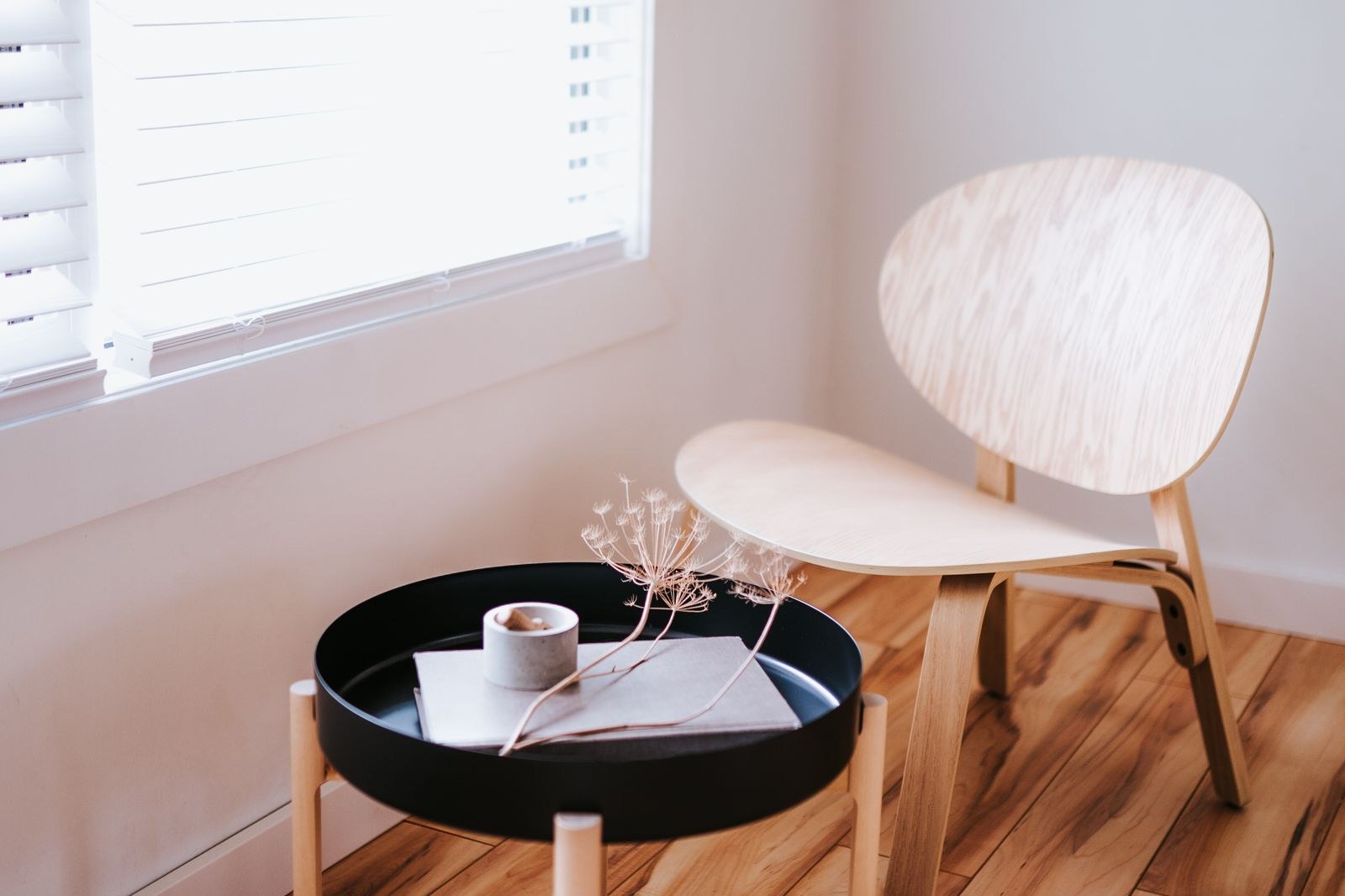
Japandi may be the kindest style of all for small apartments, because its rules are the rules of small space survival: low furniture that opens sightlines, a tight palette that makes rooms feel joined up, closed storage, and ruthless editing.
Start with one room, or even one corner: a low chair, a small wooden table, a paper lamp, and clear space around the three of them. Let that corner set the standard and spread it room by room. Multi use pieces matter more as rooms shrink, so favor benches with storage and a table that can host dinner and desk work both.
It is the exact opposite philosophy from maximalist decor ideas for small spaces, and the contrast is useful: Japandi proves calm needs no square footage either.
11. Do It on a Budget by Editing First and Buying Slow
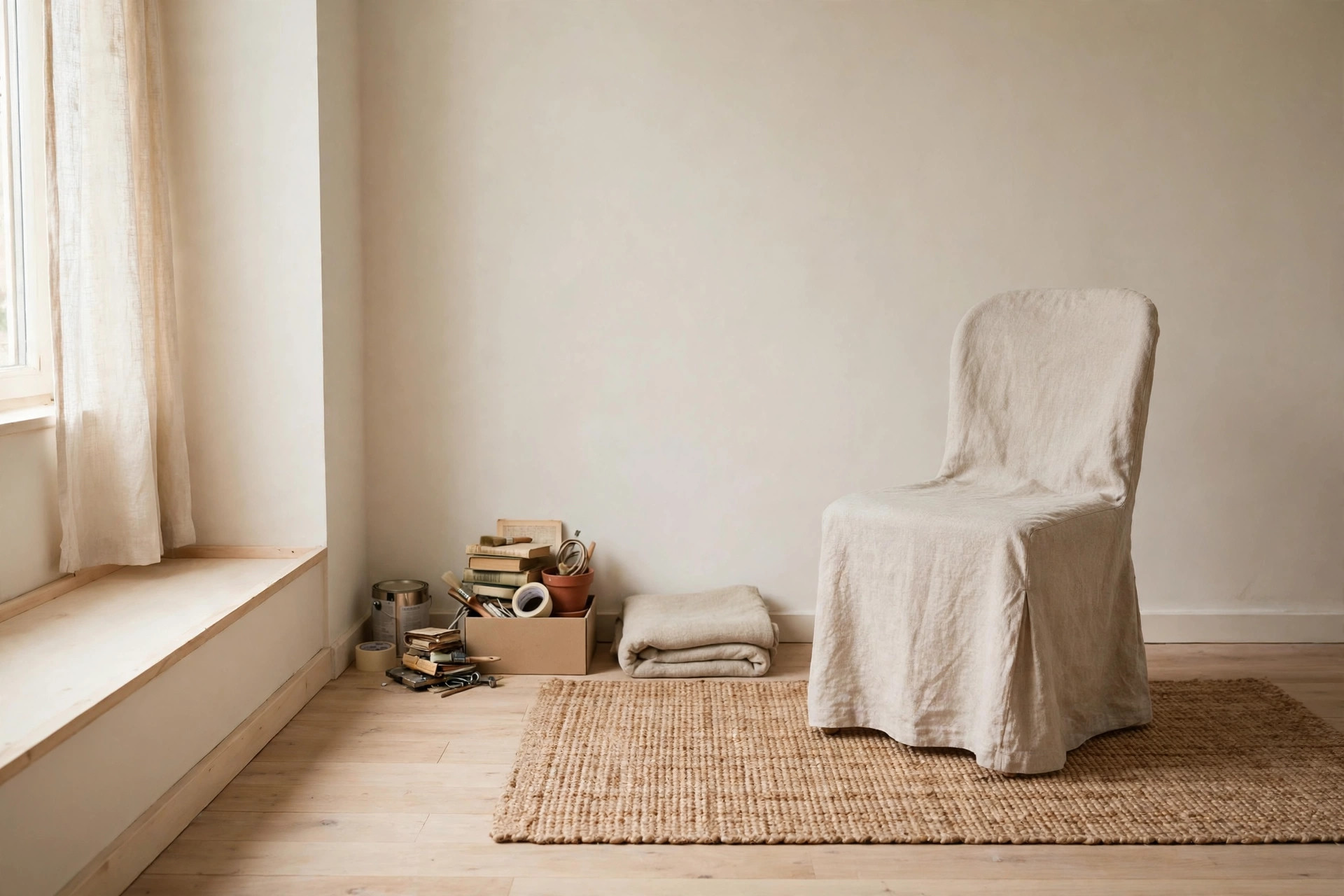
The honest secret of Japandi on a budget: the first stage costs nothing, because the style is mostly subtraction.
Take out the excess furniture, clear the surfaces, strip the visual noise, and many rooms are halfway there before a dollar moves. Then spend slowly and in order. Textiles first, because linen covers and a woven rug change the feel fastest. Lighting second, since one paper shade changes every evening. Furniture last, bought once in real wood, thrifted where you can, instead of over and over in flat pack.
I keep a short list of the exact pieces a room still needs, with measurements, so patience never turns into an impulse buy. A budget Japandi room built over about six months will out calm a room bought in a weekend, every single time.
The Bottom Line
Japandi is less a shopping list than a way of treating a room: low lines, honest materials, warm neutrals, soft natural textiles, and space left empty on purpose so the eye and the mind can rest. Begin with the edit, because removing is the cheapest and strongest step there is. Add the low wooden anchor, the linen, the paper light and one branch, then stop sooner than your instincts suggest. What is left should be useful, beautiful and quiet.
Start tonight by clearing one surface completely and leaving it empty. That bare surface is the style, and it costs nothing.
Frequently Asked Questions
What colors are used in Japandi decor?
Warm neutrals: warm white, oatmeal, sand, clay and soft taupe, drawn from natural materials like light wood, linen and stone. Black or deep charcoal shows up only in small accents, to give the calm palette some definition. Stark bright whites and blue leaning greys are avoided, because they cool the room and break the warm, restful mood.
What is the difference between Japandi and minimalist decor?
Minimalism is mainly about owning less, and it can feel stark or gallery like. Japandi adds the Scandinavian idea of comfort to Japanese restraint, so rooms stay warm: natural textiles, warm light, handmade textures and furniture chosen for long, comfortable use. The result is edited like minimalism but feels like a home, not an exhibition.
Can you do Japandi style on a budget?
Yes, and it is one of the few styles where a small budget is barely a handicap, because the base is editing what you already own. Clear surfaces, remove excess pieces, then spend in a set order: natural textiles, one warm paper style light, and finally real wood furniture bought once, secondhand where possible. Slow, few and natural beats fast and many.
What furniture defines Japandi style?
Low, clean lined pieces in light natural wood: platform beds and sofas, low coffee tables, benches with hidden storage, and cabinets with cane or plain fronts that close the clutter away. Pieces work at two jobs, are honestly made, and sit with room around them. If a piece is tall, glossy, ornate or purely decorative, it does not belong to the style.