FunHaus Decor Ideas You Can Try
FunHaus is the style for people who walk into an all beige room and feel their mood dip. It borrows from the bold shapes of Memphis design, the confidence of maximalism and the simple idea that a home should make its owner smile on an ordinary Tuesday.
There are no strict rules to break, because FunHaus runs on personality, color and a sense of humor. What it does need is a little structure underneath the fun, so the room feels curated rather than chaotic.
These eleven ideas show how to layer playfulness into a real home, one joyful decision at a time, without a renovation or a huge budget.
1. Embrace the Power of Dopamine Decor
Dopamine decor means choosing pieces because they lift your mood, not because a trend chart told you to. It starts with honest questions. Which colors make you feel awake and happy? Which objects in your home make you smile every single time? Build the room around those answers. If a full wall of bubblegum pink feels like too much commitment, test the idea on a door, the inside of a bookshelf or a single painted piece of furniture. Joy scales down well. The only real rule is that everything in the room should earn its place by meaning something to you or cheering you up.

2. Mix Eras for an Eclectic Edge
A FunHaus room refuses to pick one decade. A sleek mid century sideboard, a curvy 1980s lamp and a grandmother’s wooden chair can share a room happily when one thread ties them together, usually a repeated color or material. Mixing eras is also what stops playful decor from feeling like a theme park. The older, quieter pieces ground the loud ones. Shop second hand first, because thrift stores and flea markets are where eras naturally collide, and a worn piece carries the stories this style loves. Aim for roughly one statement from each era you use, rather than a crowd of competing antiques.

3. Use Oversized Art for Instant Impact
Scale is the fastest route to playful. One huge, high contrast print above the sofa does more for a FunHaus room than a careful grid of small frames, because it commits. Abstract shapes, pop art color and big typography all work, and large prints are widely available at friendly prices. If a single piece is out of budget, paint your own on a big canvas with leftover wall paint, embracing wobbly lines as part of the charm. Hang it low enough to connect with the furniture beneath it. Oversized art also simplifies the rest of the wall, which can then stay calm and let the piece perform.

4. Statement Furniture as a Focal Point
Every FunHaus room deserves one piece of furniture that makes guests ask about it. A velvet armchair in emerald or mustard, a wavy edged bookcase, a sculptural side table or a chair with an unexpected shape can carry a whole room’s personality. Let it be the only loud voice at that volume. Keep the surrounding furniture simpler and let cushions, art and lighting echo its color in smaller doses. One statement piece is a focal point; three are a furniture showroom. Choose the piece you will use daily, because joy you sit on beats joy you only look at.

5. Incorporate Neon and Playful Lighting
Lighting is where FunHaus gets its evening personality. A small neon or LED sign with a word or shape you love, a lamp with a sculptural base, or bulbs in tinted glass all shift a room from daytime tidy to nighttime fun. Modern LED versions use little power and stay cool, so they are safe around fabric and children. Place playful light where people gather, above a bar cart, in a reading corner or over the sofa, and keep practical task lighting in place for reading and cooking. Layering is the secret: the neon is the sparkle, not the only light in the room.

6. Texture Clashing for Visual Interest
Texture clashing sounds like a mistake until you see it done with intent. A shaggy rug against a smooth checkered floor, metallic cushions on rough linen, or a glossy ceramic vase beside matte clay pottery creates the friction that makes a room interesting to look at and to touch. The trick is contrast with a plan. Keep the color palette limited while the textures vary, so the eye reads richness rather than mess. Two or three strong texture pairings per room are plenty. This is also a kind, forgiving technique, because it welcomes the mismatched pieces you already own and turns them into a deliberate mix.

7. The Bold Checkered Entryway
The entryway is your home’s opening line, and checkers are the boldest way to say it. A black and white or color and cream checkered rug, painted floorcloth or peel and stick tile pattern sets the tone before a guest reaches the living room. Entryways are small, which makes them the safest place in the house to go big, since a strong pattern in a tiny zone reads as confidence rather than overwhelm. Add one primary color in a bench cushion, a hook rail or the front door’s inside face, and the entry will feel designed instead of decorated by accident.

8. DIY Upcycled Accent Pieces
FunHaus and upcycling were made for each other, because both celebrate one of a kind pieces. An old dresser with each drawer painted a different pastel, a side table rescued and lacquered in gloss red, or standard cabinet knobs swapped for mismatched vintage finds all bring story and color for very little money. Sanding and priming are the unglamorous steps that decide whether the finish looks intentional, so do not skip them. Keep one upcycled hero per room and let bought pieces stay quieter around it. The goal is a home that could only belong to you, and nothing delivers that faster than something you remade yourself.

9. A Maximalist Reading Nook
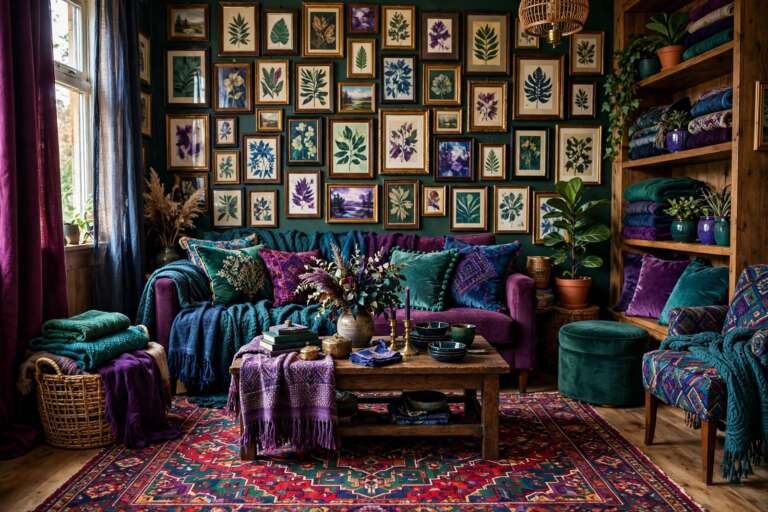
A reading nook is the perfect small scale test of maximalism. Take one corner, one comfortable chair and permission to layer. Mix a patterned cushion with a striped throw, stack books as a side table, add a lamp with a colored shade and hang art close and low around the chair. The nook works when everything in it is slightly too much, held together by a shared palette of three or four colors. It stays functional because the zone is small and every piece earns its place by being used. If maximalism in a whole room worries you, master it here first, where the stakes are one cushion deep.

10. Bring the Outdoors In with a Twist
Plants belong in a FunHaus, but the pots get to join the joke. A fern in a disco ball planter, a trailing plant in a vintage tea tin, or herbs in painted terracotta with faces all turn routine greenery into decor with a sense of humor. Group plants at different heights so the collection reads as an indoor jungle rather than a row of pots, and keep the healthiest, happiest plants in the funniest containers, where eyes land most. If you struggle to keep plants alive, start with pothos and snake plants, which forgive missed waterings and still give you that lush, layered green.

11. The Ultimate Playful Gallery Wall
Forget the ruler. A playful gallery wall mixes framed prints with objects that have depth: a small shelf with a figurine, a woven piece, a clock, a letter, even a mounted toy that means something. Lay the whole arrangement on the floor first, take a photo, and adjust until the balance of sizes and colors feels right before a single nail goes in. Start from the center and build outward, keeping gaps roughly even even when the pieces are not. This kind of wall is meant to evolve, so leave a little room to grow. When a wall can change with your life, it never goes stale.

Conclusion
FunHaus works because it is honest. It admits that color, humor and personal history are legitimate decorating tools, and it uses them with just enough structure to keep the joy readable. Start where the risk is smallest, the entryway, a reading nook or one upcycled piece, and let your confidence grow with each layer. Keep one thread, a palette or a repeated material, running through the room, edit anything that does not make you happy, and remember that the only taste a FunHaus must satisfy is yours. A home that makes you smile daily is never a decorating mistake.
When you are ready for more, these maximalist decor ideas for small spaces round it out.
Frequently Asked Questions
What exactly is FunHaus style?
FunHaus is a playful, eclectic approach to decorating built on bold color, mixed eras, statement pieces and objects chosen for joy rather than fashion. It borrows energy from Memphis design and maximalism, but the real definition is personal: if it makes you happy and the room still works, it belongs.
How do I try FunHaus without making my home look chaotic?
Keep one thread running through the room, usually a palette of three or four colors or one repeated material. Limit yourself to one statement piece per zone, and let the supporting pieces stay calmer. Small zones like an entryway or reading nook are the safest places to begin.
Is FunHaus expensive to do?
It is one of the friendliest styles for a small budget. Upcycled furniture, thrifted finds, paint and DIY art are core tools of the look, and second hand pieces often suit it better than new ones. Spend first on any piece you will use daily, like a great chair, and let the rest be found and remade.
Where does FunHaus work best in the home?
Living rooms and entryways carry it most easily, because they are social spaces where personality is welcome. Bedrooms can take a softer dose, with joyful color and art but calmer layering for sleep. Kitchens suit playful lighting, colored cabinets and humorous planters well.