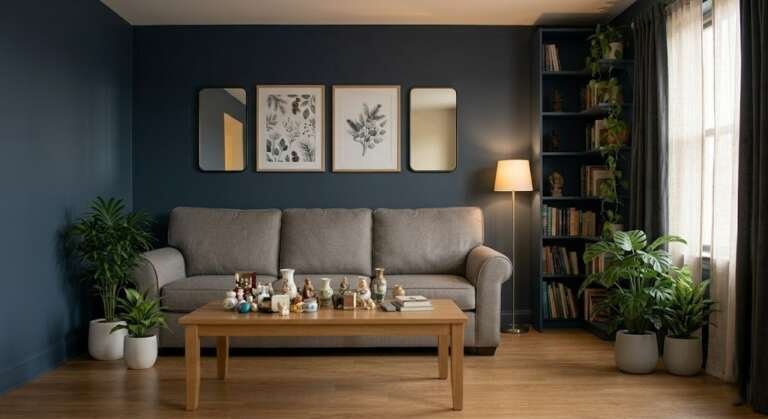
11 Home Office Corner Ideas for Small Apartments
A home office corner is one corner claimed on purpose, with a desk, a boundary and a way to shut it all away at night.
That is it. No spare room needed. The 11 home office corner ideas for small apartments below are built for renters, with desks under 4 feet wide and one honest test at the end of every day. Can the room go back to being a living room in 5 minutes? If yes, the corner works. If no, it is just work that moved in.
I test a corner with a folding chair for a full day before any desk gets ordered. Glare, noise and foot traffic show up in a day. Regret shows up for months.
The short version, before we start:
Corner first, desk second. Sit in the spot for a full day and check glare, wifi and traffic before you spend a cent.
Desk size rule. About 48 inches wide and under 24 inches deep fits most corners and still holds a laptop, a notebook and a lamp.
Storage goes up. Two to 3 shelves above the desk keep the floor clear and the desk down to what today needs.
Five minute shutdown. Laptop away, papers in 1 tray, chair pushed in. Every night, no exceptions.
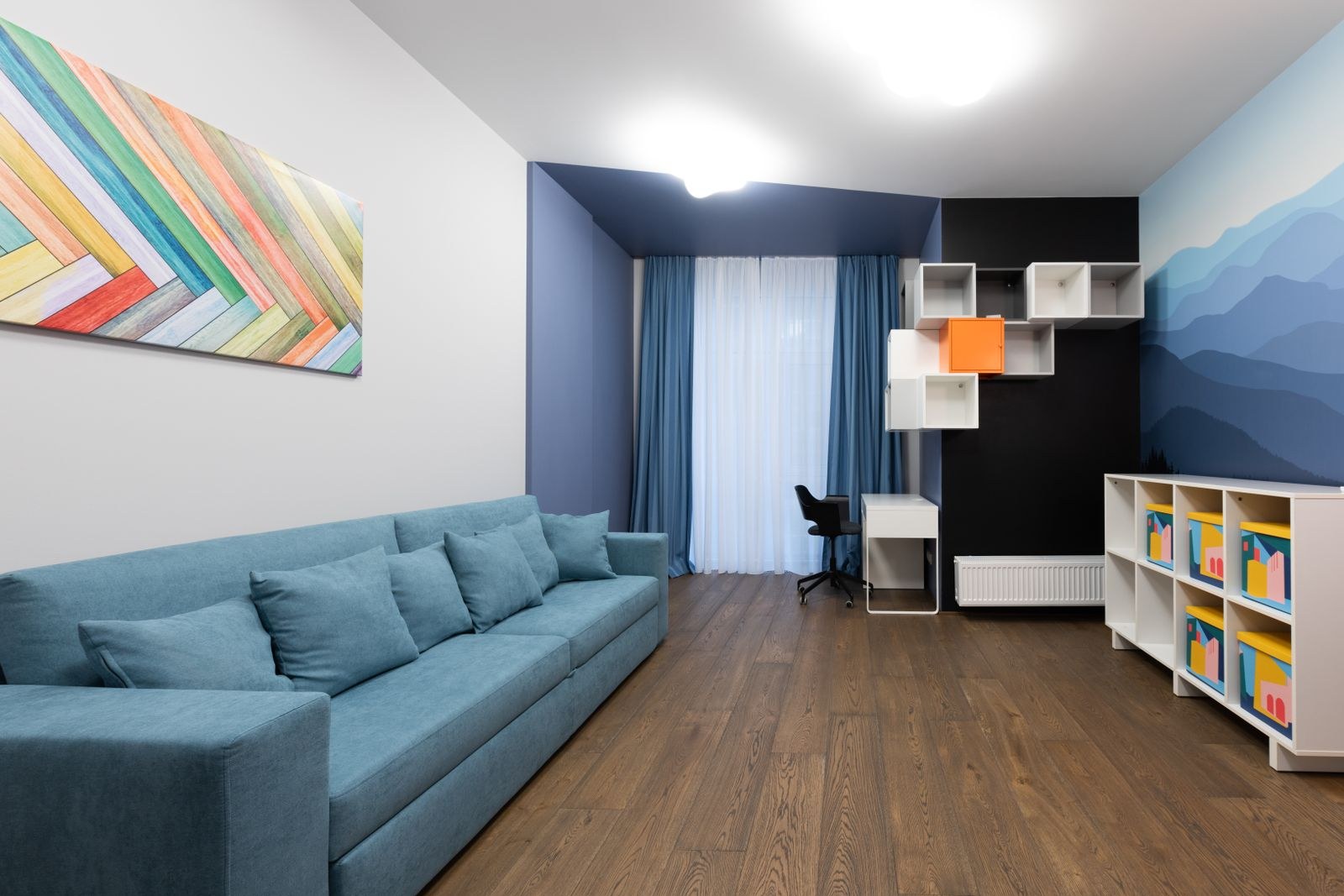
1. Pick the Quiet Corner Before You Buy a Thing
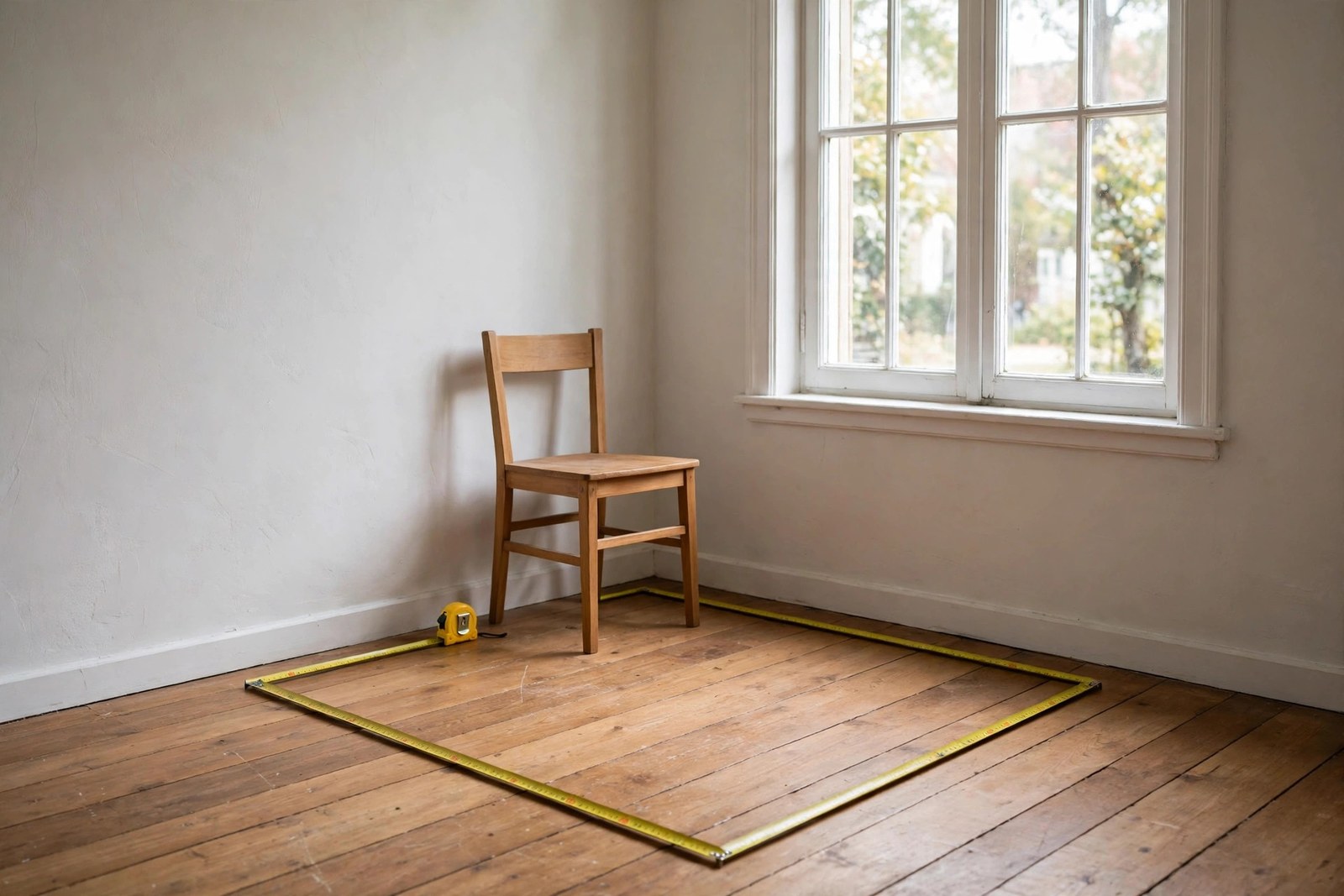
Do not start with a desk. Start with a chair and a day.
Sit in the corner you like, away from the TV and out of the main walk through. Near a window is best, because daylight keeps you alert and looks kinder on calls. The corner behind the sofa often works well. Check 3 things at your real work hours. Wifi strength, glare on a screen, and how many people walk behind you.
The classic failure is picking by looks at 9 in the morning, then finding hard glare across the screen at 2 in the afternoon. Fix it by testing at 2, or by turning the desk 90 degrees so the window sits to your side, never right behind you.
2. Draw the Line With a Rug
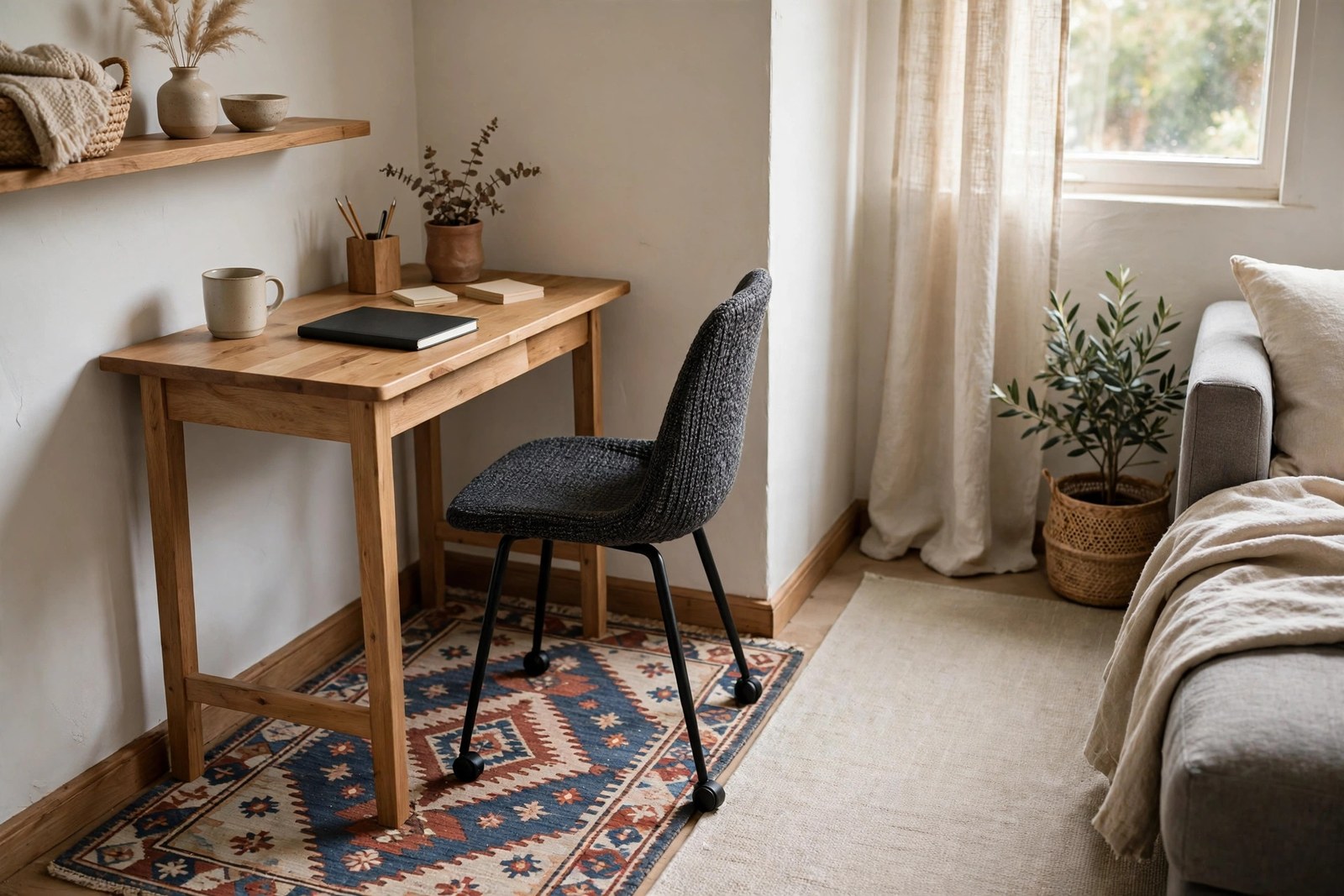
A rug tells your brain where work starts. It really is that simple.
Put a rug under the desk and chair, big enough that all 4 chair feet or wheels stay on it when you roll back. For most corners that means about 5 by 7 feet, in a low pile. Set it offset from the living room rug so the 2 zones read as separate rooms.
This is the same zoning trick used in small living room furniture layouts, where rugs draw rooms inside rooms. A rug that is too small lets the back wheels catch the edge all day, and the edge curls within a month. Fix it by sizing up, or by adding a flat chair mat under the chair only.
3. Buy the Desk That Fits, Not the One You Liked Online
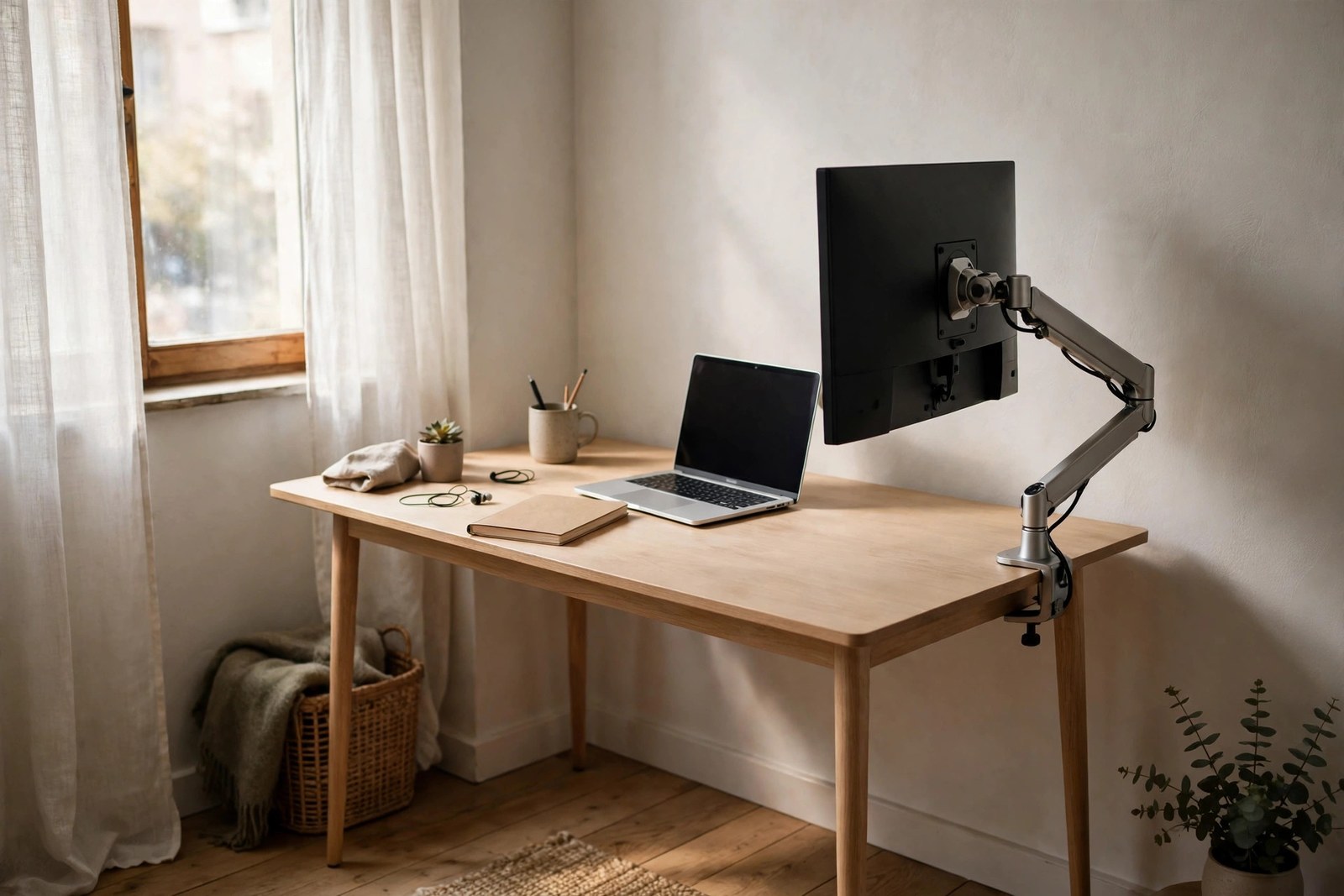
Measure the corner twice. Then look at desks. In that order.
About 48 inches wide and 20 to 24 inches deep is the sweet spot. It holds a laptop, a notebook and a lamp without eating the room. Leave about 30 inches behind the desk edge for chair and knees. Leggy, open desks keep a corner light. A heavy pedestal desk shrinks the room.
I stick to desks under 24 inches deep, because deeper desks push the chair into the walkway every time. For tiny spots, a wall mounted fold down desk or a secretary desk with a closing front hides the whole work surface at night. Add a monitor arm, about $25 to $60 as a general guide, and you gain screen space with zero extra footprint.
4. Send Every Shelf Up the Wall
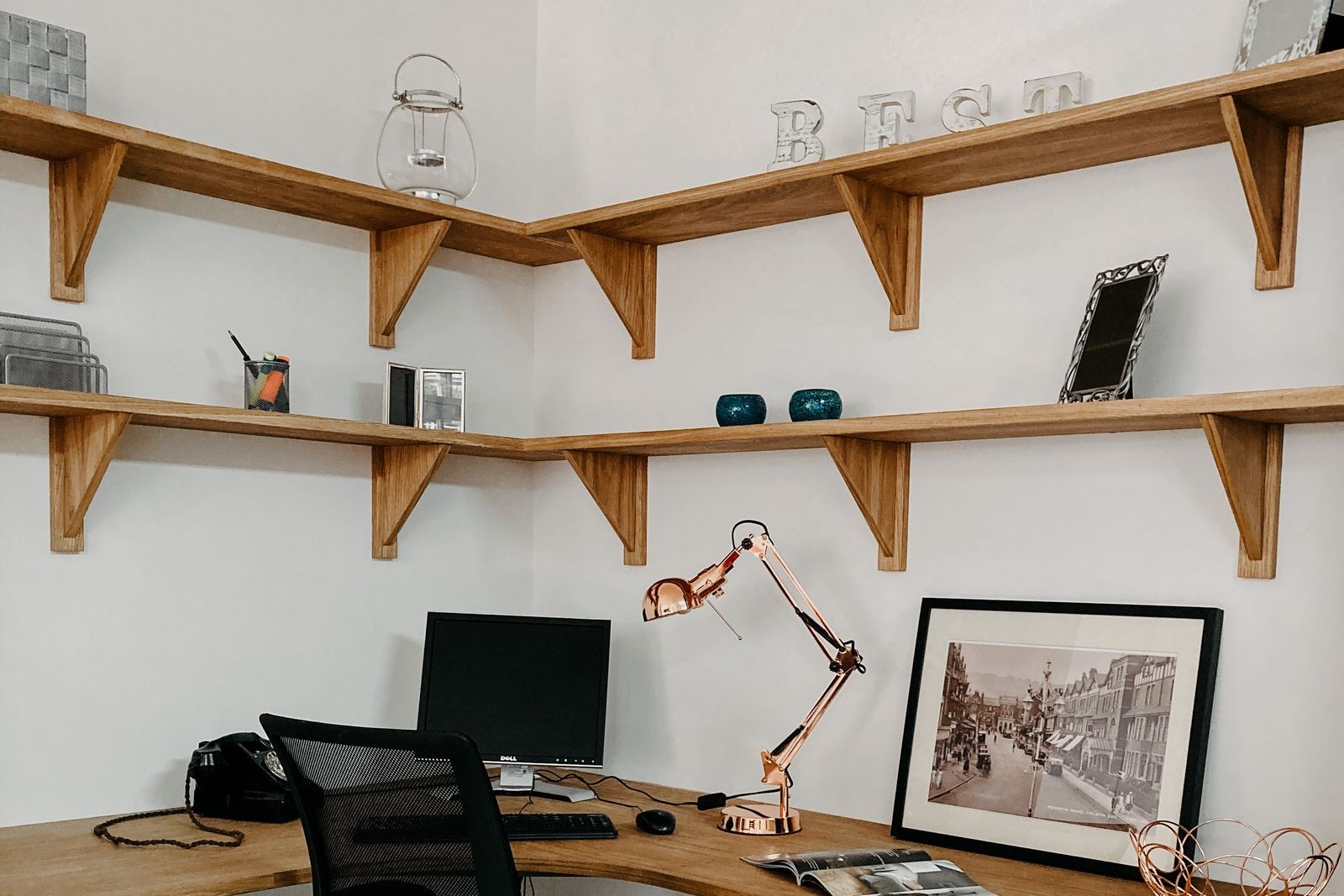
Floor space is gone. Wall space is free. Act like it.
Hang 2 to 3 floating shelves above the desk for books and boxes. Keep only today on the desk itself. Give each shelf 1 job, group loose stuff in matching boxes, and leave a few empty inches so the wall reads as styled, not stored.
Follow the same rule as small space decor hacks and stop at 3 shelves. A fourth turns storage into clutter at eye level. A bottom shelf hung too low gets hit by a raised monitor, or by your head when you stand up. Fix it by hanging the lowest shelf about 18 to 20 inches above the desk top and checking head clearance while standing, not sitting. Renters can swap shelves for a pegboard on lease safe fixings.
5. Fix the Light or Video Calls Will Look Rough
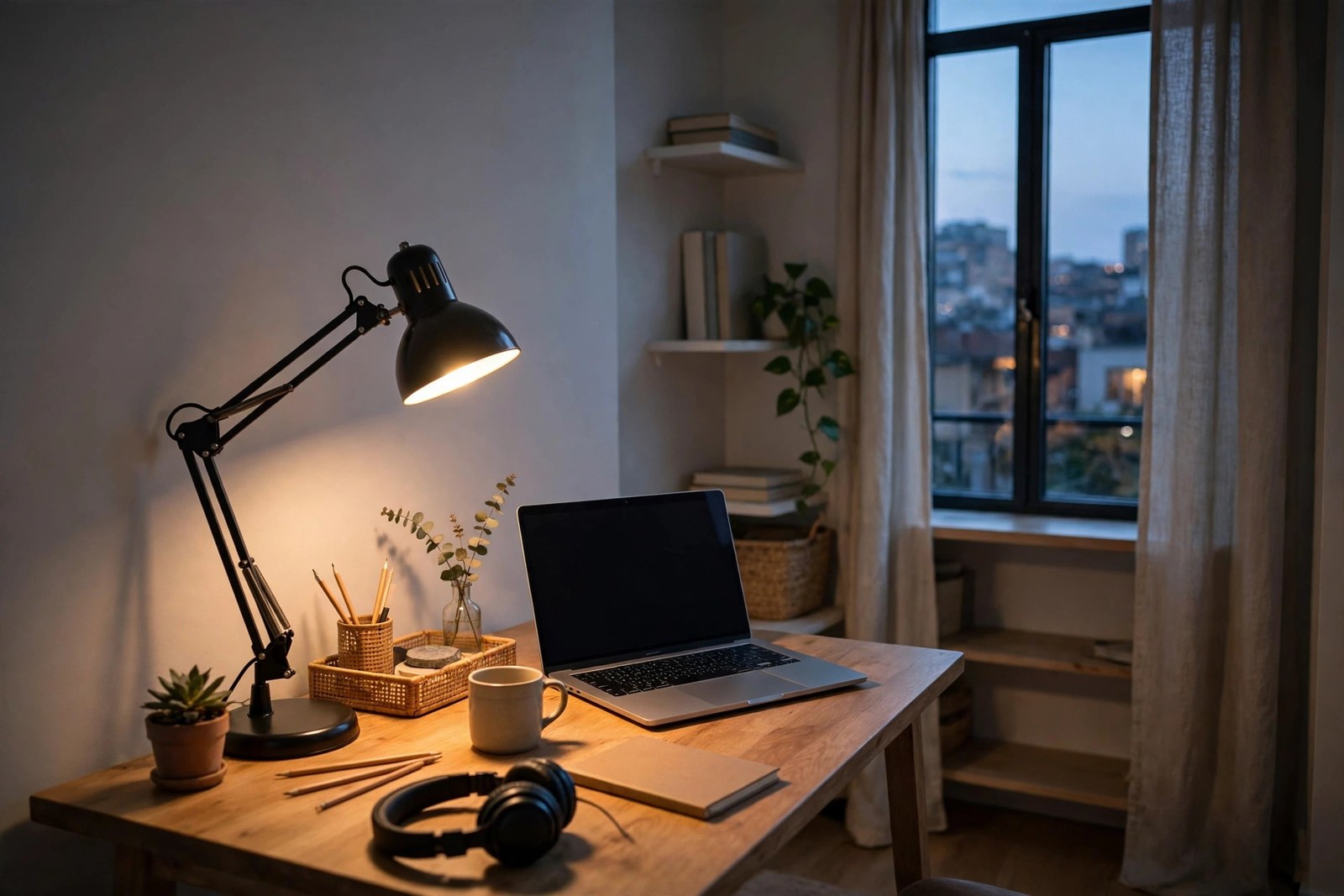
Corners are dark by nature. Light has to be planned, not hoped for.
Use a desk lamp with an adjustable arm and aim it at the desk, not at the whole room. A warm bulb near 2700K suits evening work. For calls, put the light beside the camera and facing you, at about face height. Light from behind you turns you into a shadow, every time.
No window in the corner? Use a daylight bulb near 5000K for daytime calls, then let the room lamps take over at night. Keep the lamp at least 12 inches from paper and fabric shades. And if calls still look flat, the cheap fix is moving the lamp 12 inches closer, not buying a ring light.
6. Choose a Chair That Can Pass as Furniture
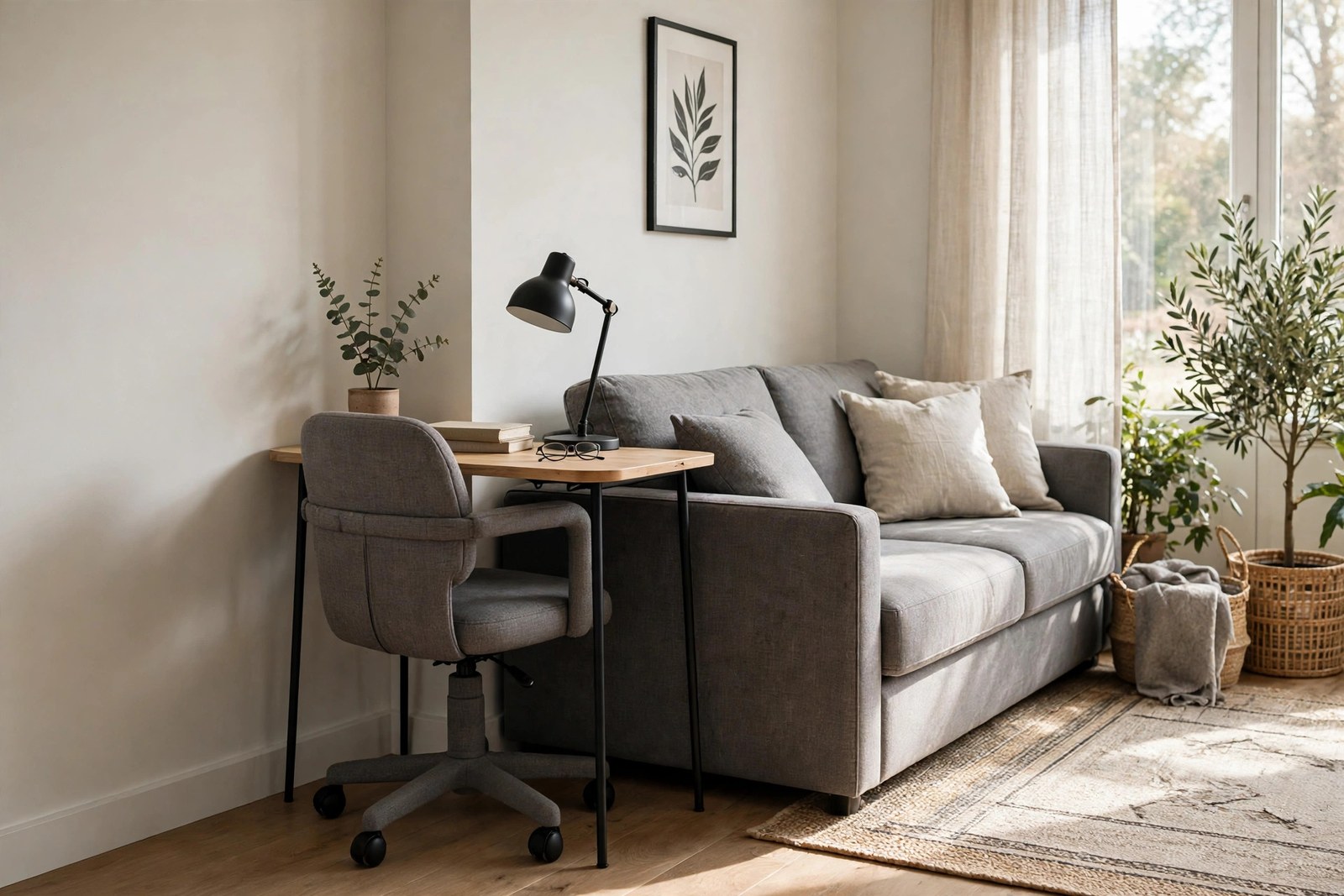
A huge gaming chair announces office all evening long. Your living room deserves better.
Pick a compact chair with a firm, supportive back, in fabric that matches your dining chairs. Armless chairs, or slim arms under 24 inches high, slide fully under most desks, and a tucked chair makes the office vanish at night. Sit in any chair for a full workday before you commit. A corner has no room for a backup chair.
Skip the $300 to $500 statement chair for now. Buy the desk and rug first, then add a lumbar cushion for about $15 to $30. I keep a small cushion in sofa fabric on the chair, because it ties the corner to the room for almost no money.
7. Trap Every Cable Under the Desk
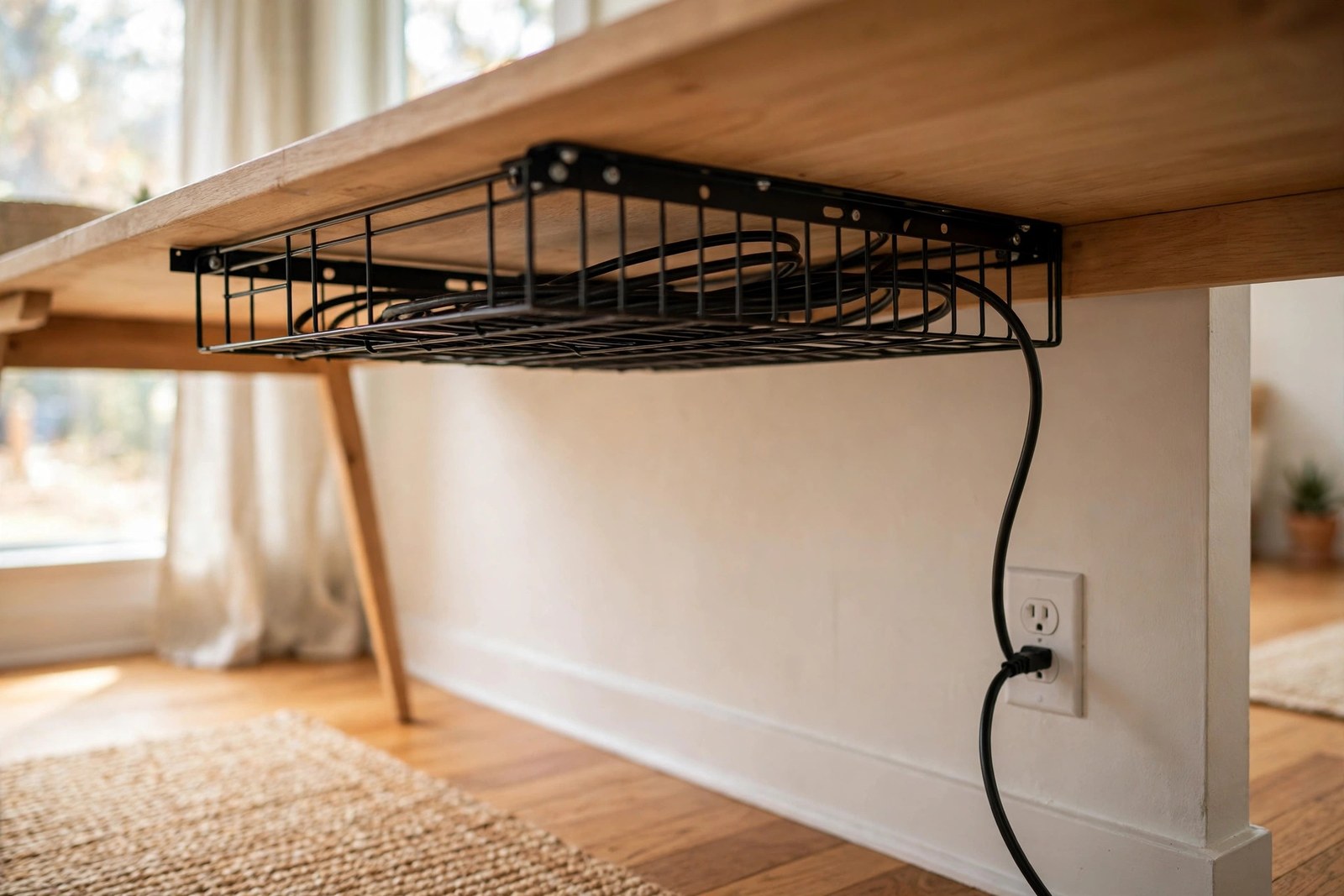
Loose cables are what make a corner look makeshift. Nothing else comes close.
Fix a cable tray or basket under the desk, route every cord into it, and run just 1 cable down to the outlet. Clip the run every 12 inches with stick on clips. Label plugs when 3 or 4 devices share one strip, and park the laptop charger on a hook at the desk edge so it stays put.
This is pure renter friendly decorating guide thinking, all stick on, nothing drilled. The known failure is heat. Stick on channels peel off in a warm room within weeks. Fix it by screwing the tray under the desk top, where the holes never show, or by resting the strip in a floor basket beside the desk leg.
8. Give Your Video Calls a Calm Background
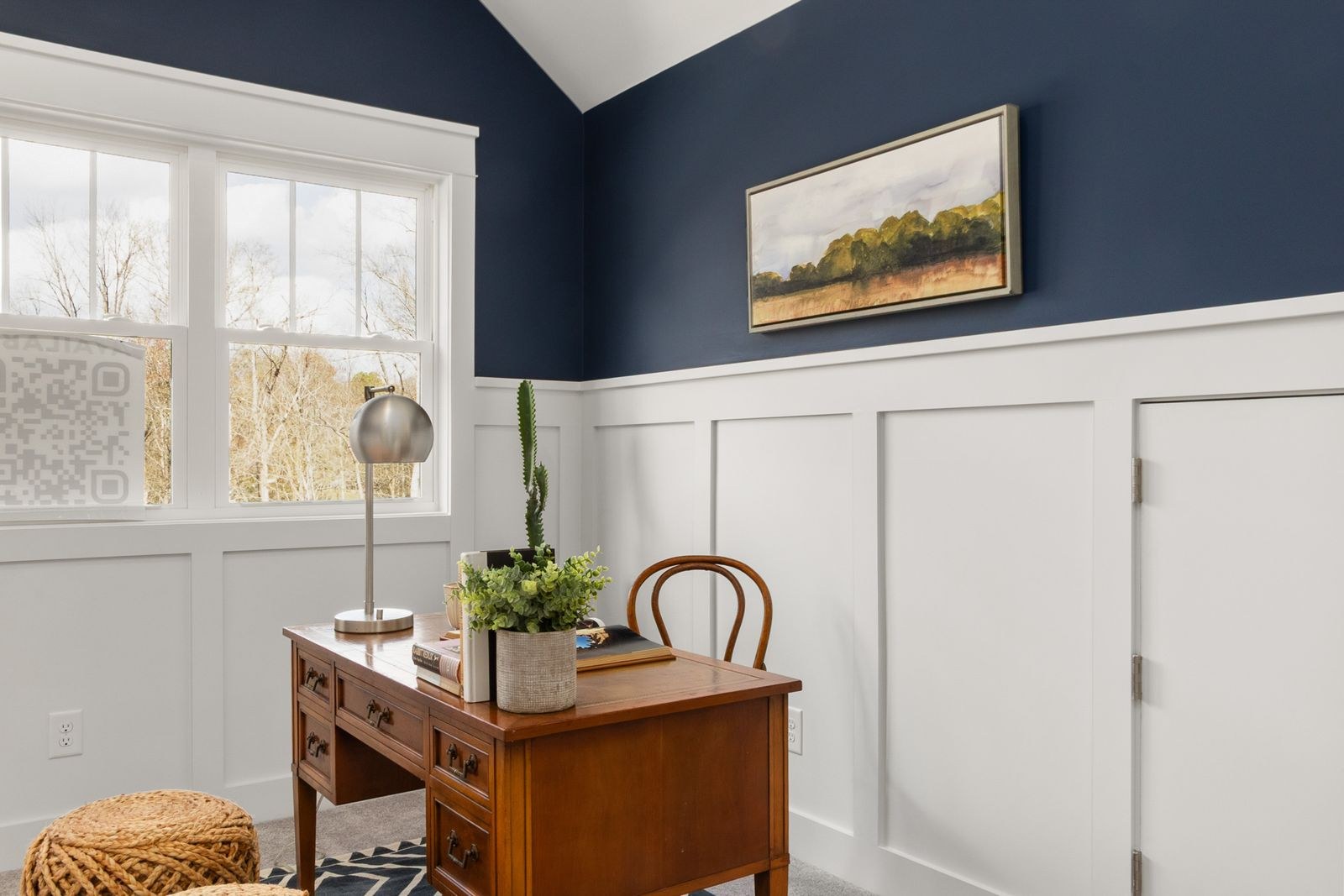
The wall behind the desk is on camera for hours a week. Treat it as part of the job.
Keep it to 2 or 3 calm pieces. One framed print, a small pair of prints, or a fabric covered pinboard all read as deliberate on screen. A wall packed edge to edge distracts everyone on the call.
Use removable strips for light frames, rated above the frame weight. Heavy frames on small strips are the failure here, and they fall at night, loudly. Fix it by weighing the frame first and doubling the strip count the packet asks for. One small plant on the desk edge softens the shot.
9. Hang a Soft Wall When You Need to Clock Out
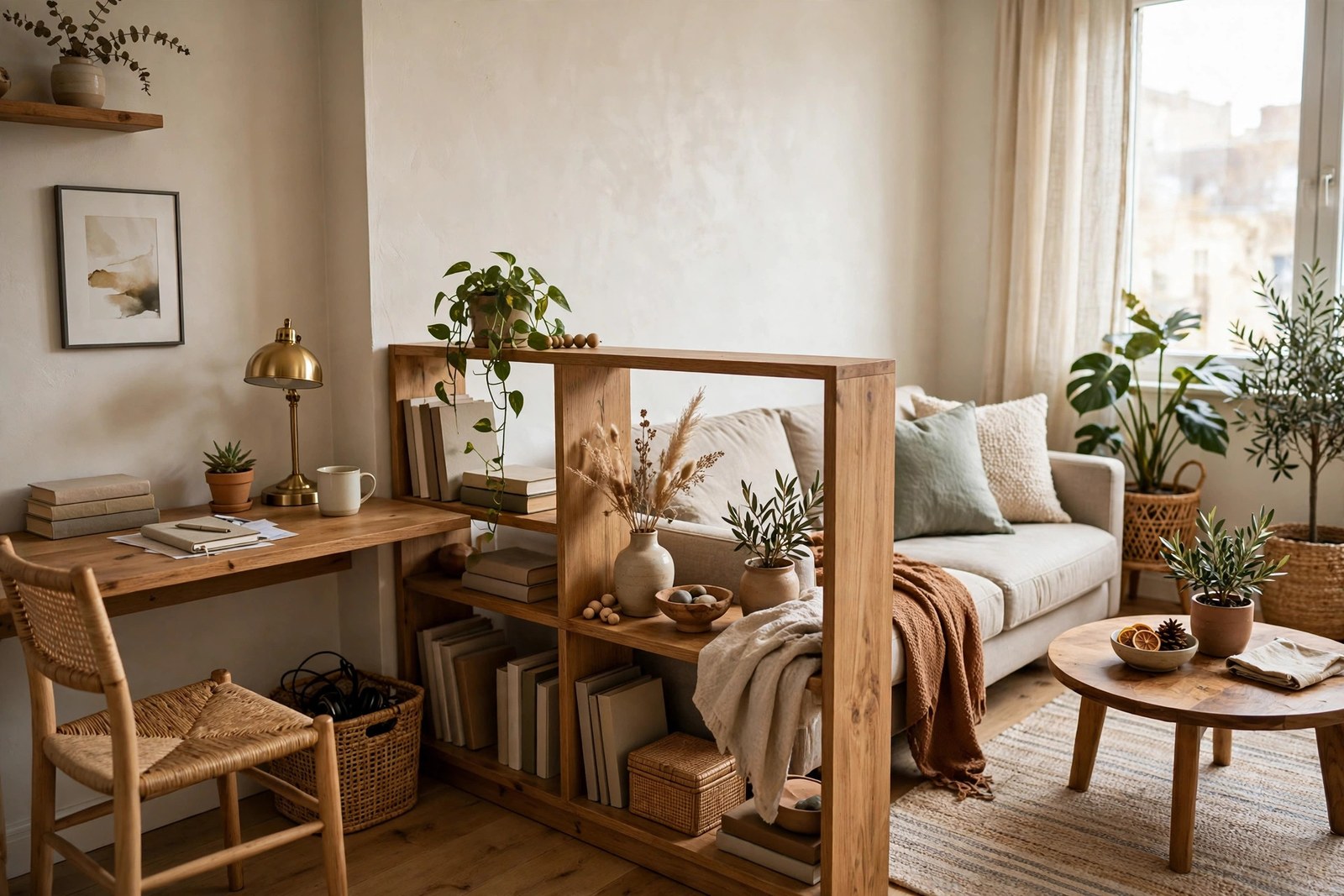
If the desk faces the room, your brain never quite leaves work. A soft divider fixes that without any building.
Use a folding screen, a low bookshelf set at a right angle, or a curtain on a tension rod across the corner. Keep the divider under about 60 inches high so light and air still move over it. A bookshelf divider earns its floor space twice, work boxes on one side, nice objects on the other.
I use a plain curtain in winter and nothing at all in summer, because light matters more than privacy in the bright months. In a studio this matters most, because desk, sofa and bed share one view.
10. Borrow the Dining Table and Roll Work Away
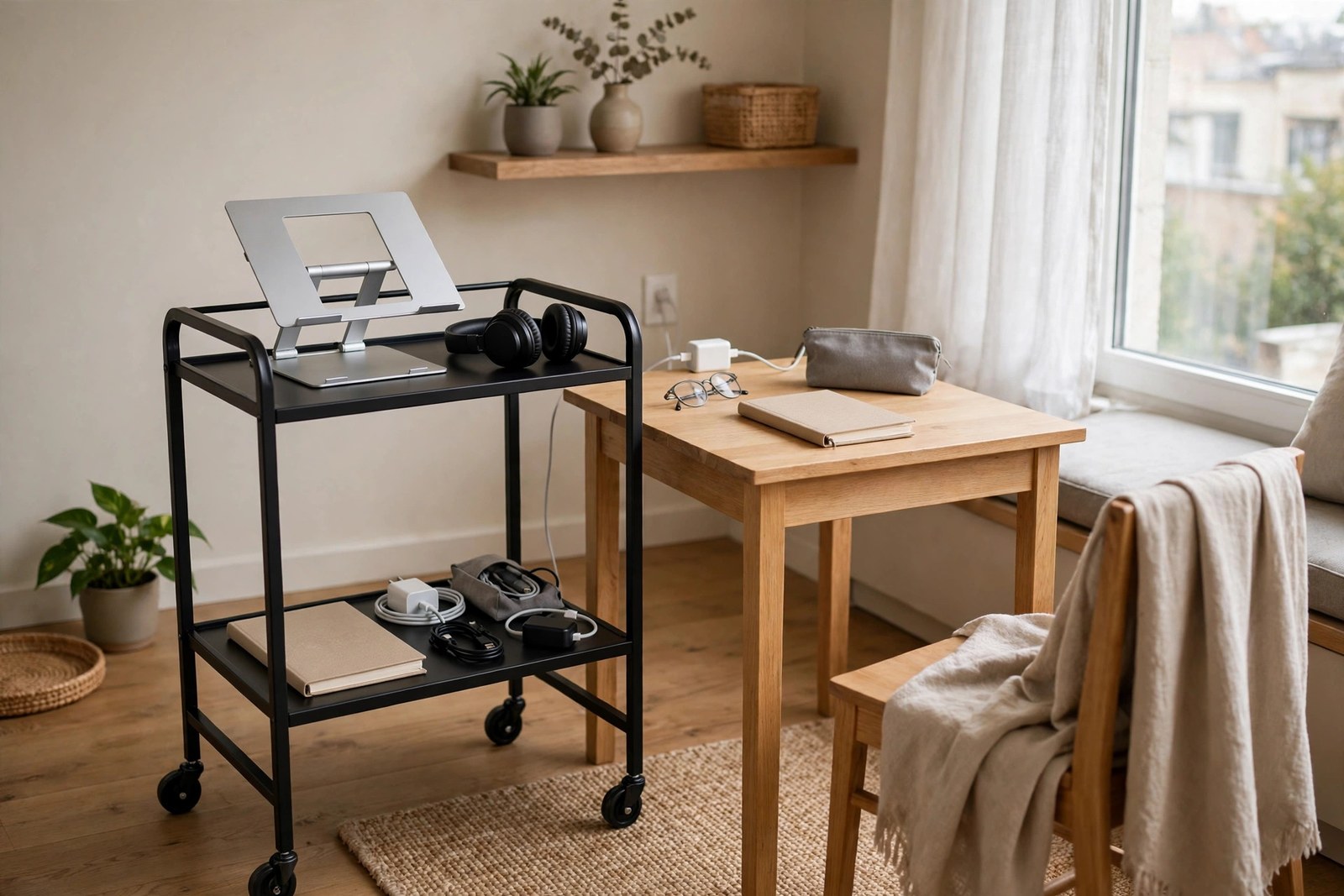
No spare corner at all? Then stop hunting for one. The dining corner already exists.
Set a desk pad, about 24 by 32 inches, on the dining table to mark your patch. Load 1 rolling cart, usually $20 to $45, with a laptop stand, notebook, chargers and headphones. Roll it to the table at 9 and into a closet or behind the sofa at 6. The table changes jobs twice a day.
Got a spare closet near the dining spot? The full cloffice ideas route, an office that closes behind doors, is the upgrade version of this same trick. The failure mode is a cart with no home at night. Measure its parking spot, about 14 by 18 inches of floor, before you buy the cart.
11. Shut It Down in Five Minutes Every Night
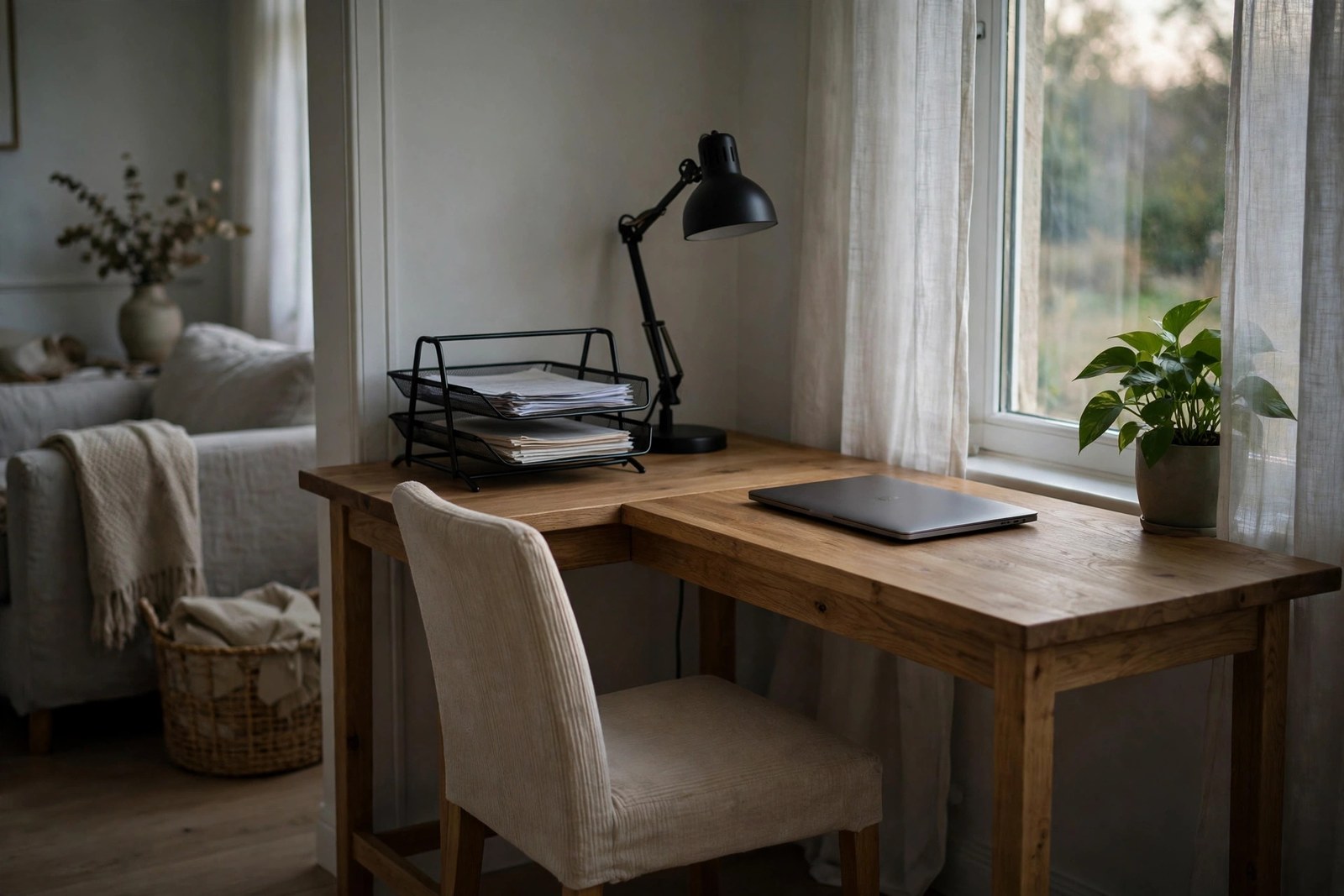
A corner office only works if work can disappear. This ritual is the whole point.
Set a timer for 5 minutes. Laptop closed and into a drawer or bag. Papers into 1 tray, never 2. Chair pushed in. Lamp off. A lidded box or a secretary desk with a closing front makes the routine take about 2 minutes.
Add 1 small closing act if it helps, water the desk plant or light a candle. Sounds silly. Works anyway. I end with the lamp off and the chair tucked in, in that order, because the dark corner is the signal that the flat is a home again. Skip the ritual for a week and work spreads across the sofa.
The Bottom Line
Pick the corner by testing it, size the desk to the corner, send storage up and hide the day in 5 minutes. That order matters. One small apartment can hold a real office and a real living room, as long as work knows where it lives and when it stops.
Start with the chair test. One day in the corner, zero spending, and you will know if the spot works.
Frequently Asked Questions
Where is the best place for a desk in a small apartment?
In the quietest corner, away from the TV and the main walk through, near a window if you have one. Test it with a chair for a full day and check glare at about 2 in the afternoon. A tested corner beats a bigger desk in the wrong spot.
How do you separate a work corner from the living space?
Layer small boundaries. A rug of about 5 by 7 feet under the desk, a divider under about 60 inches high, and light that belongs to the corner. Then clear the desk in 5 minutes each night so the split holds after hours.
What desk size works in a living room corner?
About 48 inches wide and 20 to 24 inches deep suits most corners, holding a laptop and a lamp. Leave about 30 inches behind it for the chair. Fold down and secretary desks go smaller still, and a monitor arm adds screen room with no extra footprint.
How do you hide work clutter at the end of the day?
Give it all a closed home. Laptop in a drawer or bag, papers in 1 tray, supplies on 1 rolling cart, and cables in a tray under the desk. Push the chair in, turn the lamp off, and the corner reads as furniture in about 2 to 5 minutes.