12 Indoor Drying Rack Ideas for Apartments and Small Laundry Spaces
Wet towels are on the shower rail. Jeans are over two chairs. A sheet hangs off the bedroom door and still feels damp at the edges.
That is not a laundry problem. It is a space problem. You do have room to dry a full load, it is just hiding on walls, doors and the ceiling. The 12 indoor drying rack ideas for small spaces below use that hidden room, need no yard, and fold or roll away when people come over. I keep one rack out at a time, right where the air moves.
The short version, before we start:
Put air first. A fan or open window cuts drying time by hours. A rack in still air will always be slow.
Fold flat wins. A wall rack that closes to 1 to 2 inches deep takes up almost no room at all.
Match rack to load. Heavy towels need fixed rails. Shirts need hangers with about a finger of space between them.
Two racks beat one. One fixed rack for weekly loads plus one that moves covers sheets, towels and small washes.
1. Fold It Flat and Forget It Is There
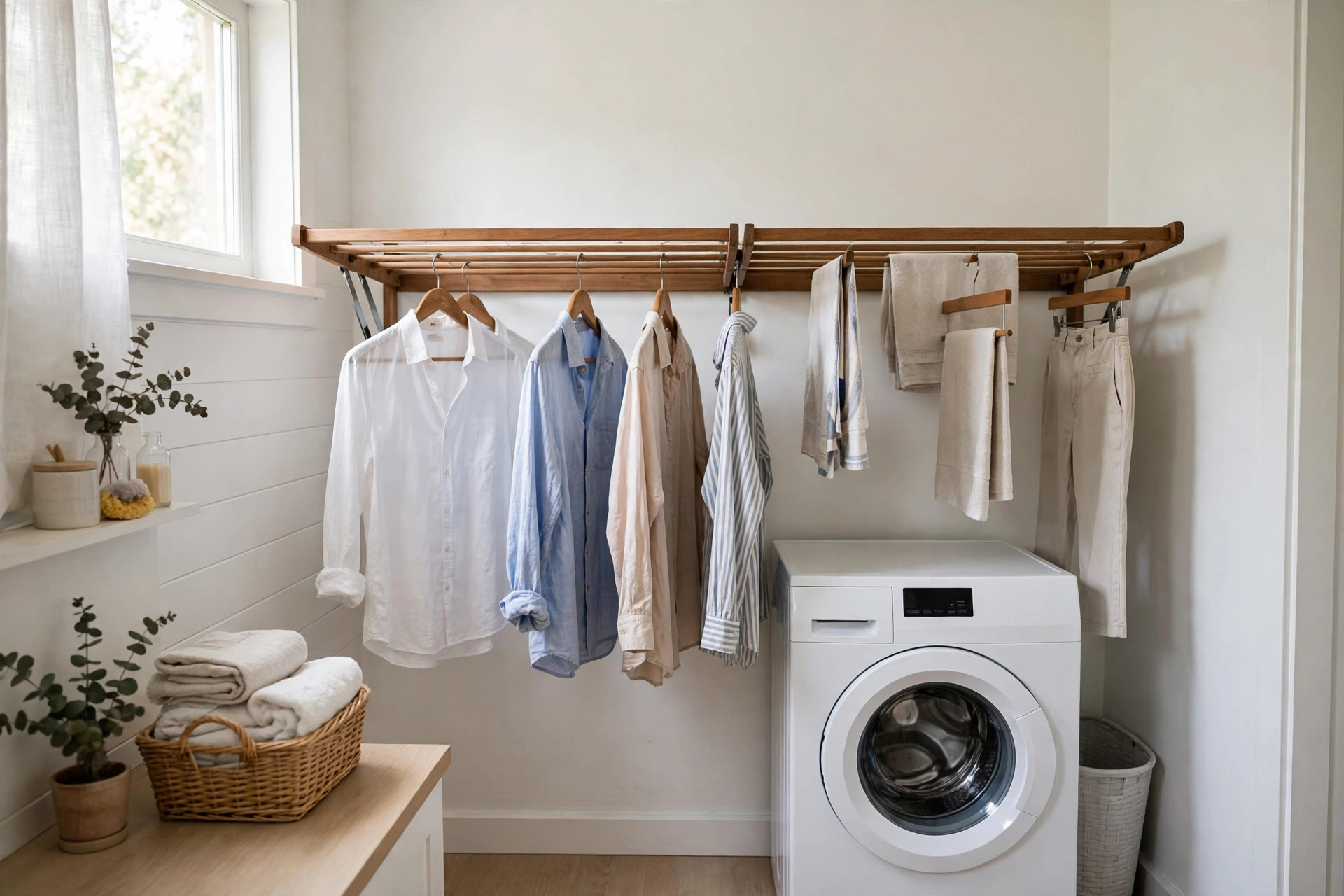
Start here if you have one clear bit of wall.
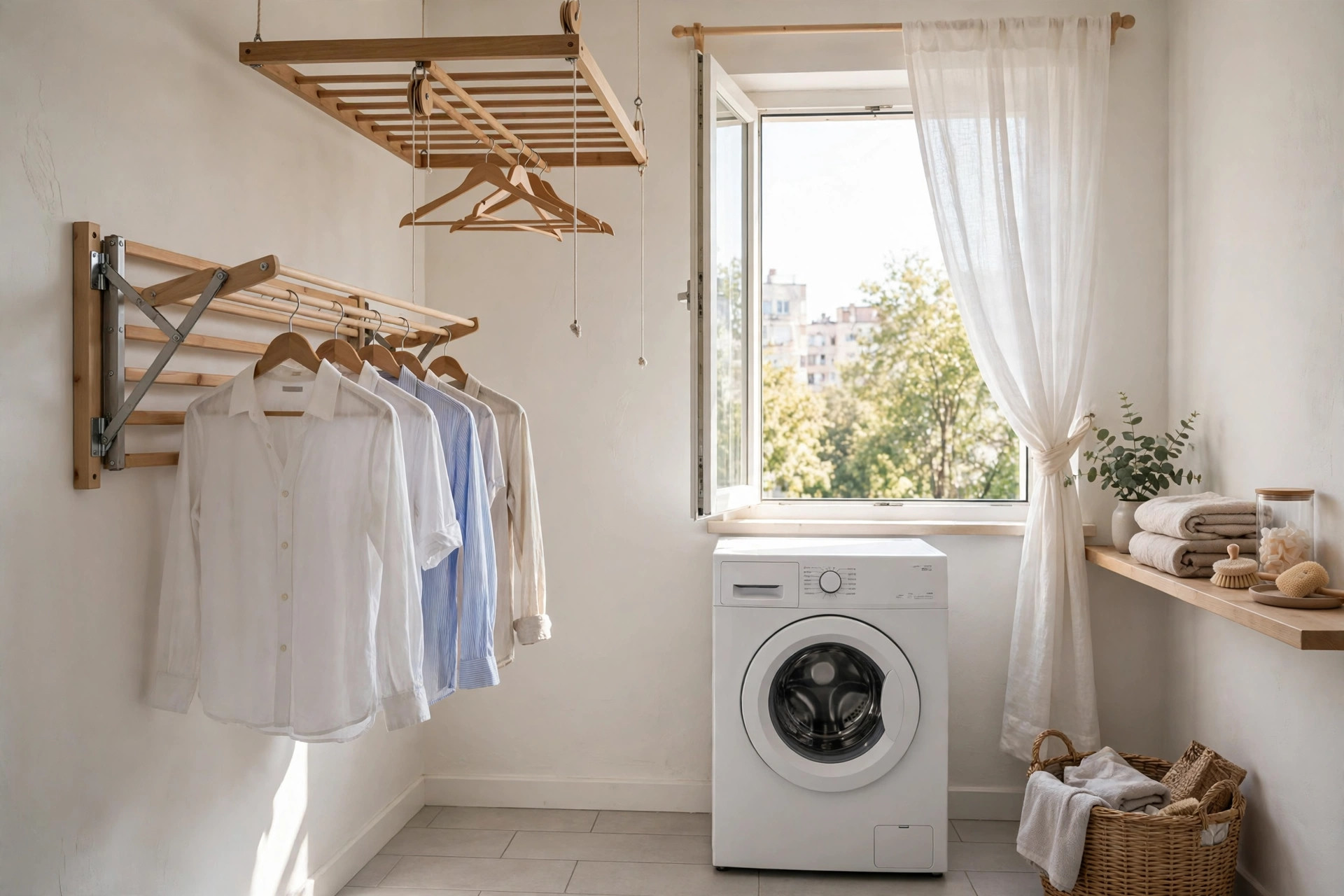
It folds out to rails at different heights, so air gets around each piece. Closed, it sits 1 to 2 inches off the wall. I keep mine above the machines, about 2 steps from the drum, the same short route that makes most small laundry room ideas work.
Heads up: a wet load weighs 2 to 3 times what it weighs dry. Screws in plasterboard alone will pull loose under towels. Fix into studs or use proper wall plugs. No solid wall? Skip this and use idea 2.
2. Use the Door, Skip the Floor
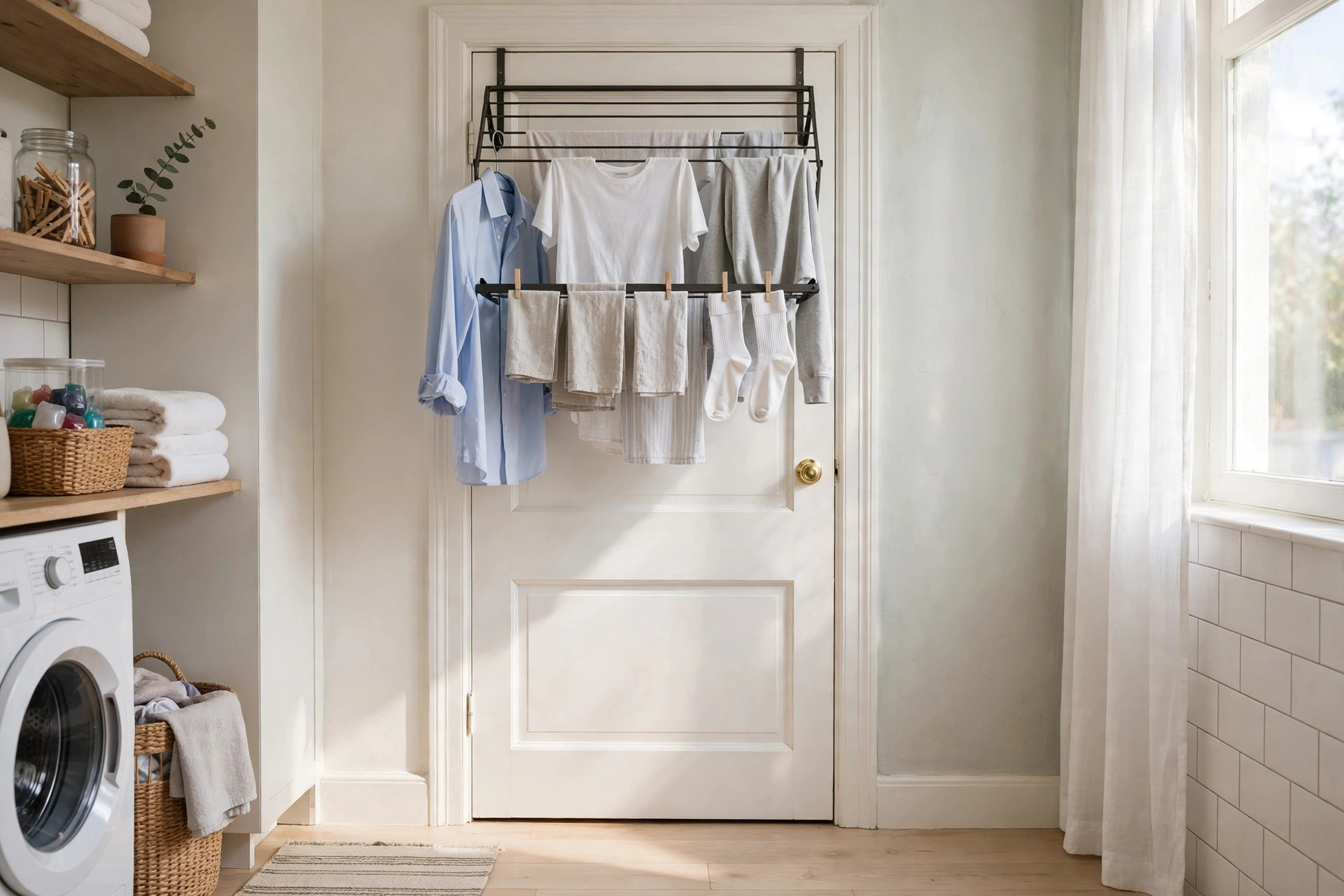
No floor space? No wall space? Use the door you already have.
Hooks sit over the top and hold rails with no drilling and no floor use at all. It suits any door near the machines. Stick to light pieces: shirts, underwear and gym clothes. A moving door is the wrong place for heavy, dripping towels.
Measure first. Most hooks fit doors about 1.4 to 1.8 inches thick. A loose hook rattles, slides, and drops clothes on the floor. A strip of felt behind the hook fixes the wobble in a minute. If the door will not shut with it on, move it to a door that stays open on wash day.
3. Hoist It to the Ceiling Where the Warm Air Lives
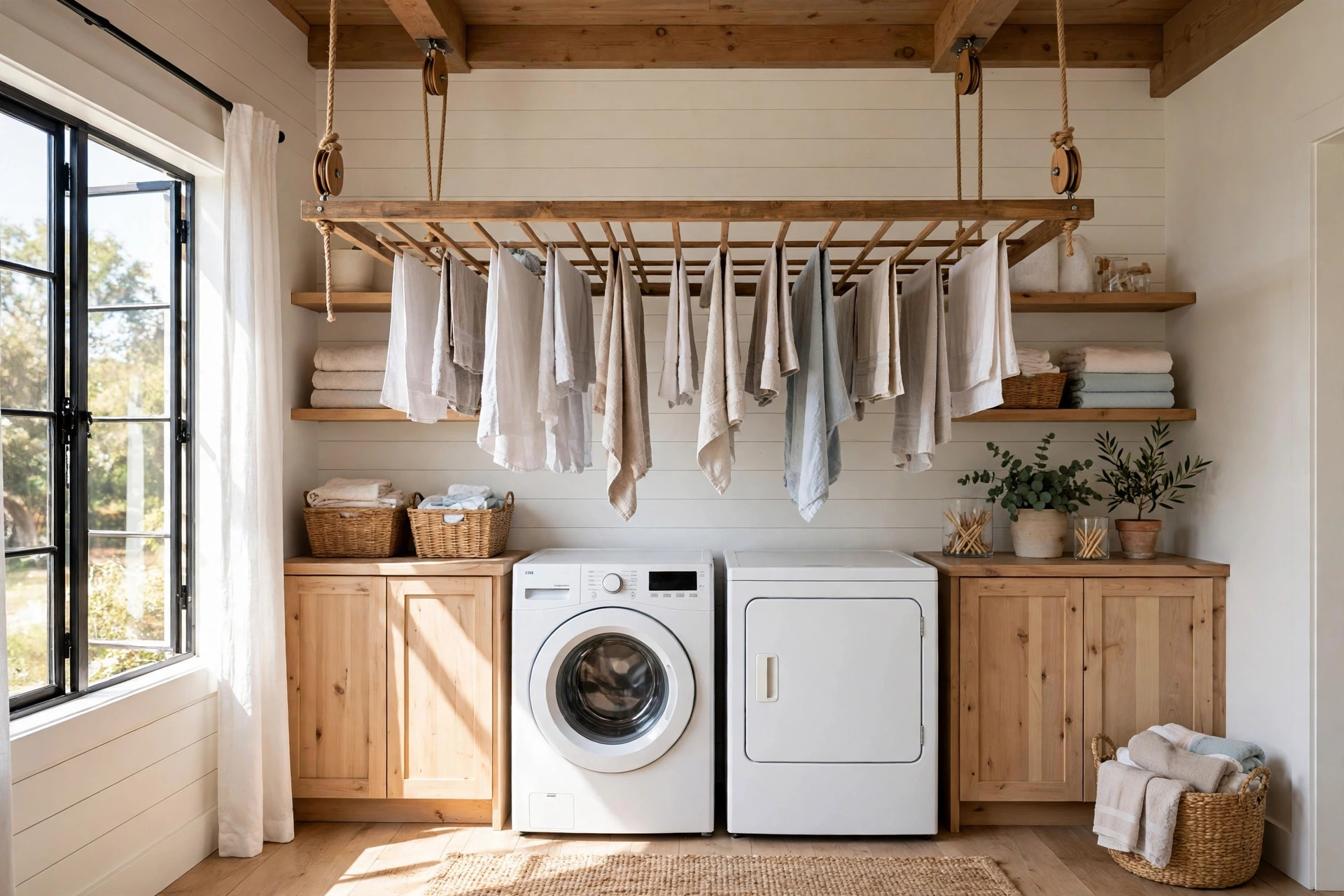
This old idea still beats most new ones for sheer size.
Wooden rails hang from a pulley. You load them at chest height, then pull the rack up to the ceiling. Warm air rises, so clothes sit in the warmest air in the room and dry faster, and the floor stays clear. Count all the rails and you get about as much room as a 30 to 50 foot line.
The catch is the fitting. You need solid ceiling joists, not just plaster. Renters, this is usually a skip. Most leases say no to ceiling holes, and idea 1 gives you much of the same gain with far less fuss.
4. Pull a Line Across the Tub, Then Reel It Away
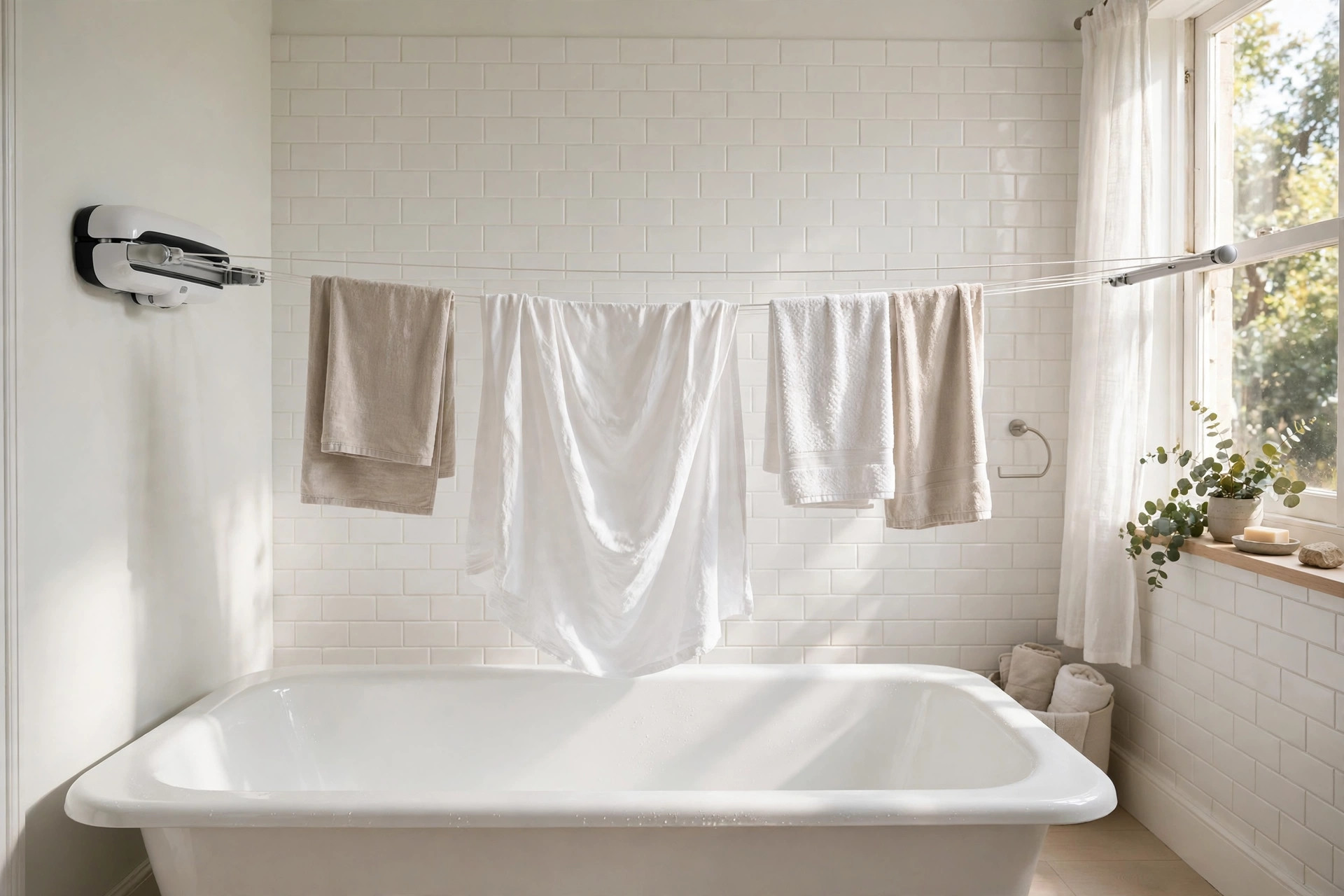
Buy this for sheets. Nothing else here handles them as well.
A small case fixes to one wall and the line pulls out to a hook on the far wall. Across a tub, drips land in the bath and heavy towels dry fine. Most lines pull out 10 to 15 feet. Done, it reels back and the room looks normal.
Fit both ends at the same height, about 5 to 6 feet up over a tub. One end lower and everything slides to the low end and dries in a bunch. Keep it tight, too. A sagging line lets towels dip and stay wet at the fold.
5. Stand the Cheap Rack Right in the Tub
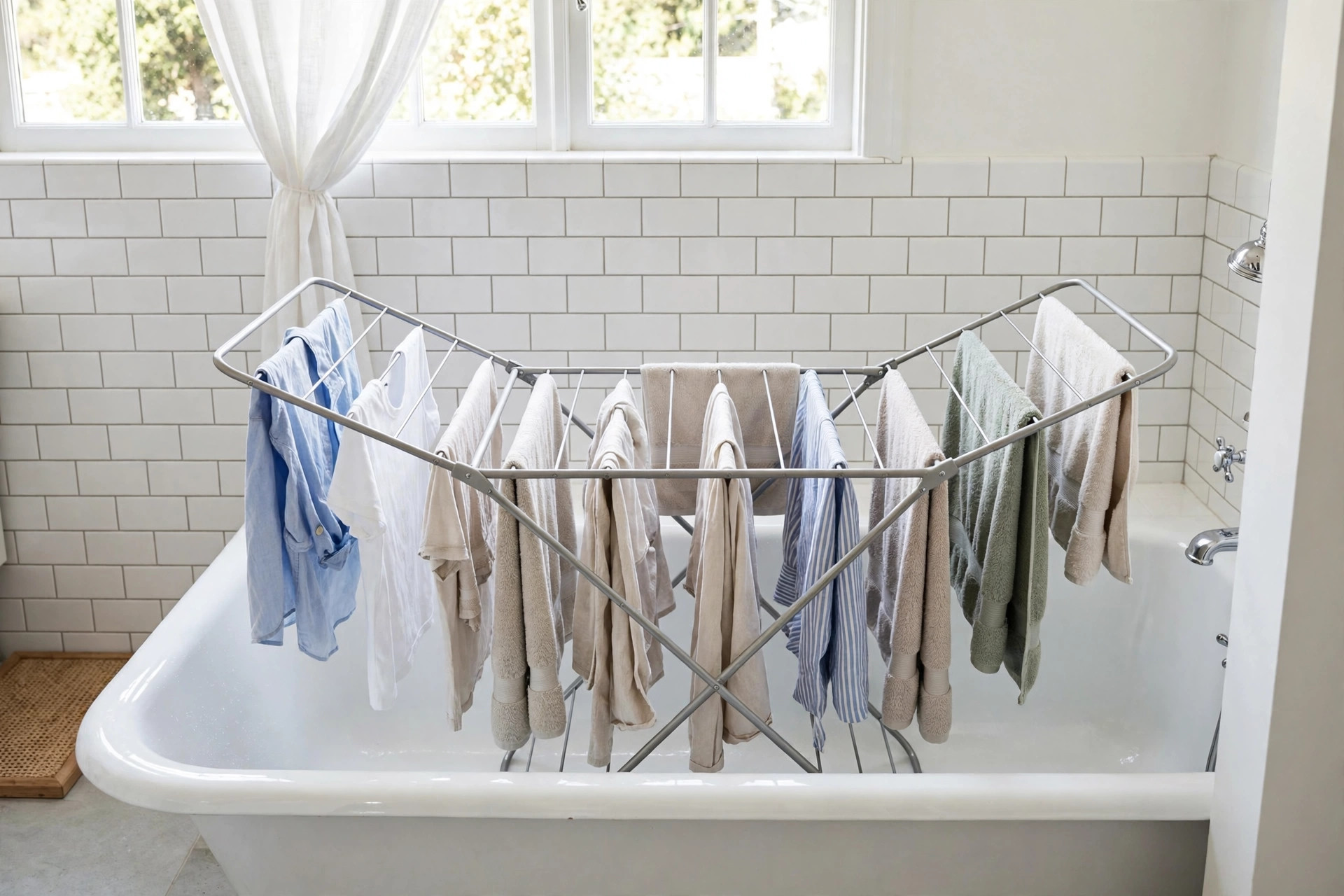
Do not laugh at this one. It is the rack I reach for when I need the living room back fast.
A simple X frame rack stands inside the bath and dries a load right over the drain. No fixings, no measuring. Most cost about $15 to $35 and fold flat enough to slide behind a door or under a bed. Move it to the room with the best air that day.
You do lose the bath while it works. Dry in the morning, fold it by evening, and the problem goes. One fix: put heavy jeans over two rails, not one. Over one rail the fold stays wet hours after the legs feel dry.
6. Open the Wings Only on Wash Day
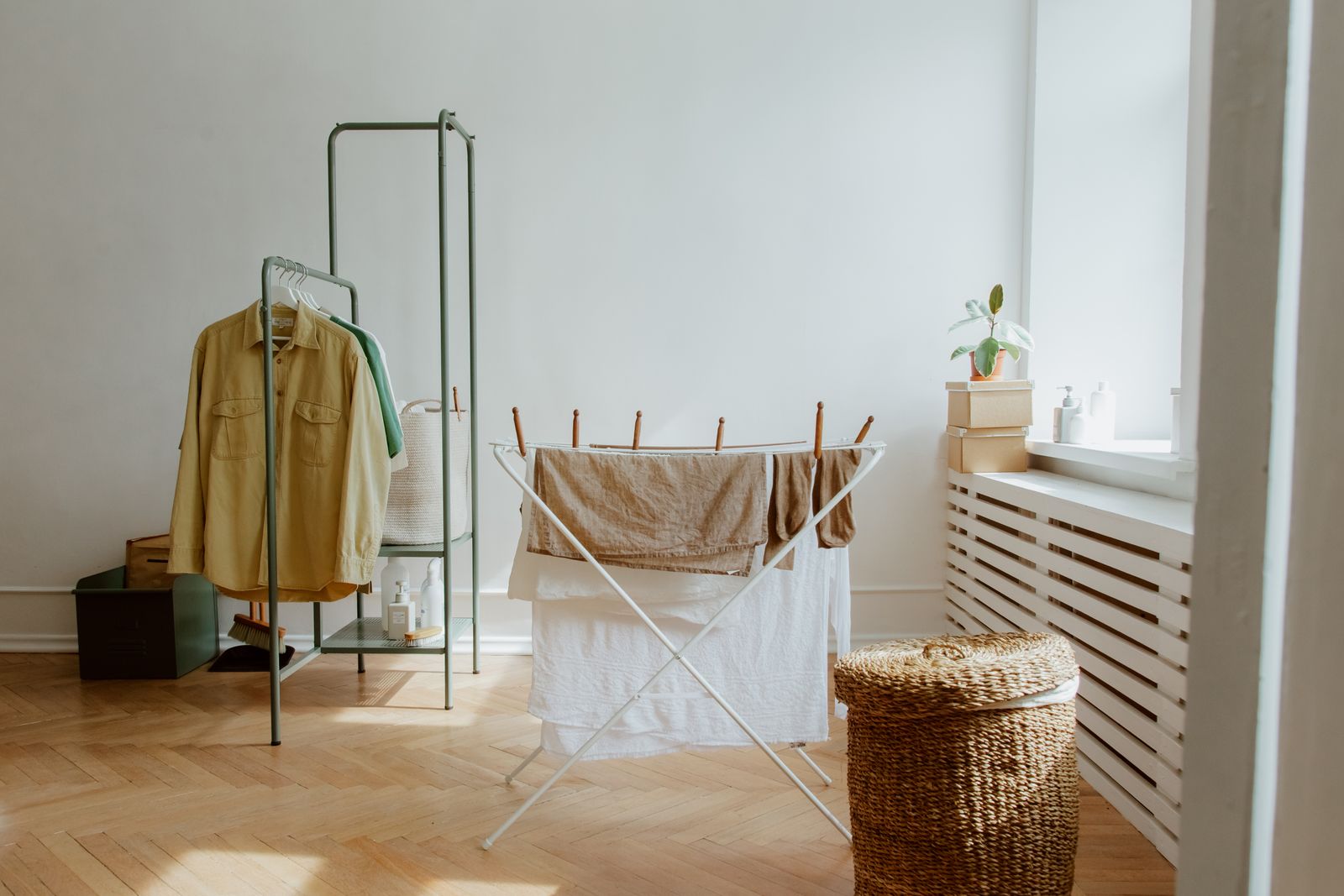
If you buy one freestanding rack, buy this shape.
Two wings fold up to give rails on three levels, and the flat top takes towels and knits that must dry flat. Open, it often holds 1 to 2 loads if you space things with care. Closed, it is about 3 to 4 inches thick and stands behind the door. That wash day only size is why it shows up in so many modern laundry room ideas for flats.
Pick one with a hanger rail on the top bar. Shirts go from machine to hanger in one move and most need no ironing. But measure first. Open wings need about 3 feet by 2 feet of clear floor. A wing that cannot open fully is just a smaller, dearer rack.
7. Screw Rails to the Back of the Door
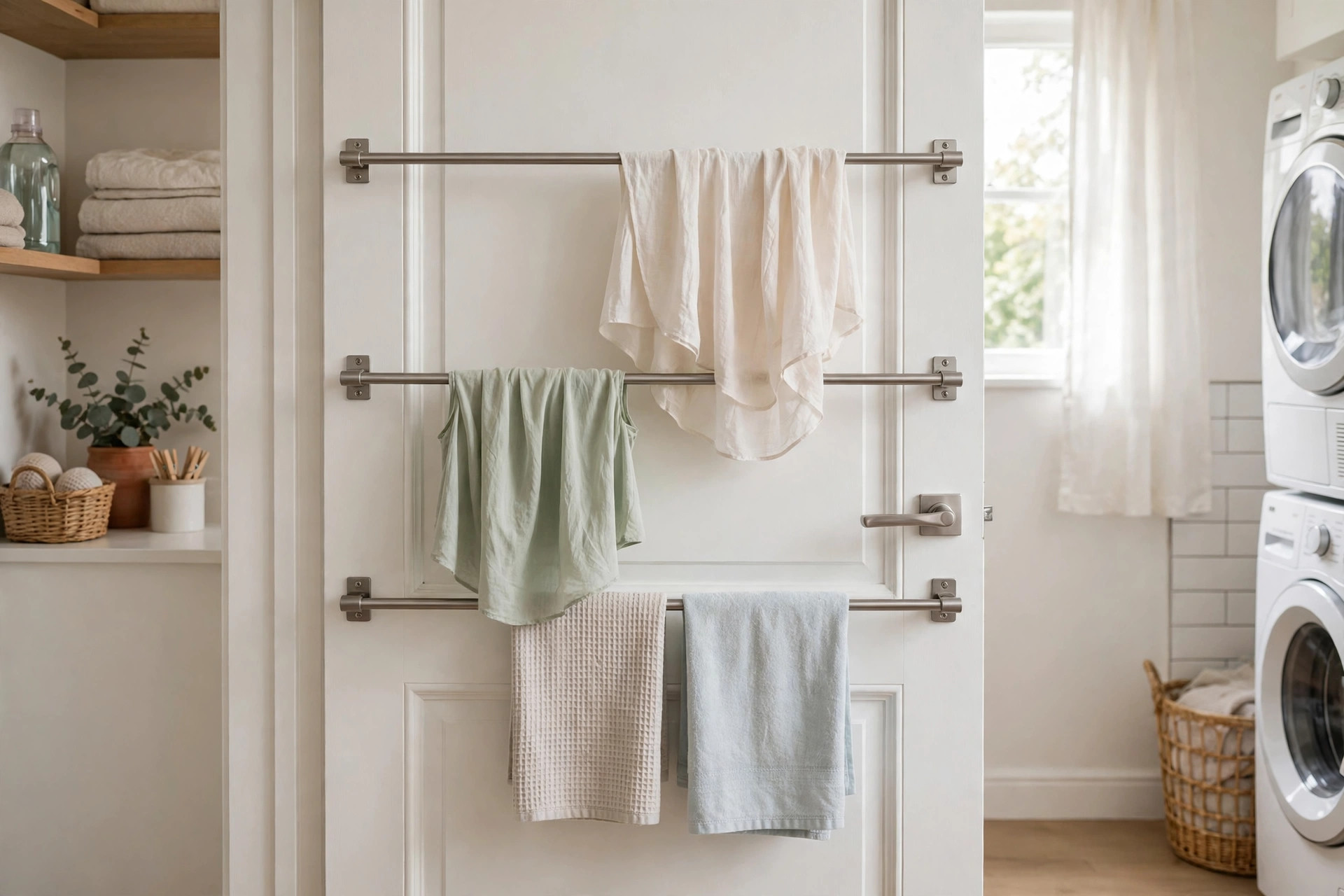
The back of the door is dead space. Put it to work every wash.
Fix one rail across the top half, or fit 2 to 3 bars like a towel ladder. This is the spot for hand wash pieces, swimwear and gentle items you would never put in a dryer.
Leave about 2 inches clear of the frame or clothes rub and bunch each time the door swings. And use screws that bite into solid wood. On a hollow door, short screws pull out in weeks. Hollow and light? Skip fixed rails and double up on idea 2 instead.
8. Roll It to the Air, Park It in the Closet

A rack on wheels solves the worst spot problem. Your laundry corner may have no window, but another room does.
Roll a slim garment rack to that window or in front of a fan, then wheel it away when the load is dry. Shirts and dresses go from machine to hanger in one move, which cuts ironing too. A slim rack is about 20 to 24 inches deep and holds 20 to 30 hangers with a gap between each one. It parks in a closet or in the small laundry closet ideas zone most homes already have.
Measure the tightest door on the route before you buy. If it cannot travel, it cannot do its one job.
9. Pay for Heat Only When Winter Drags
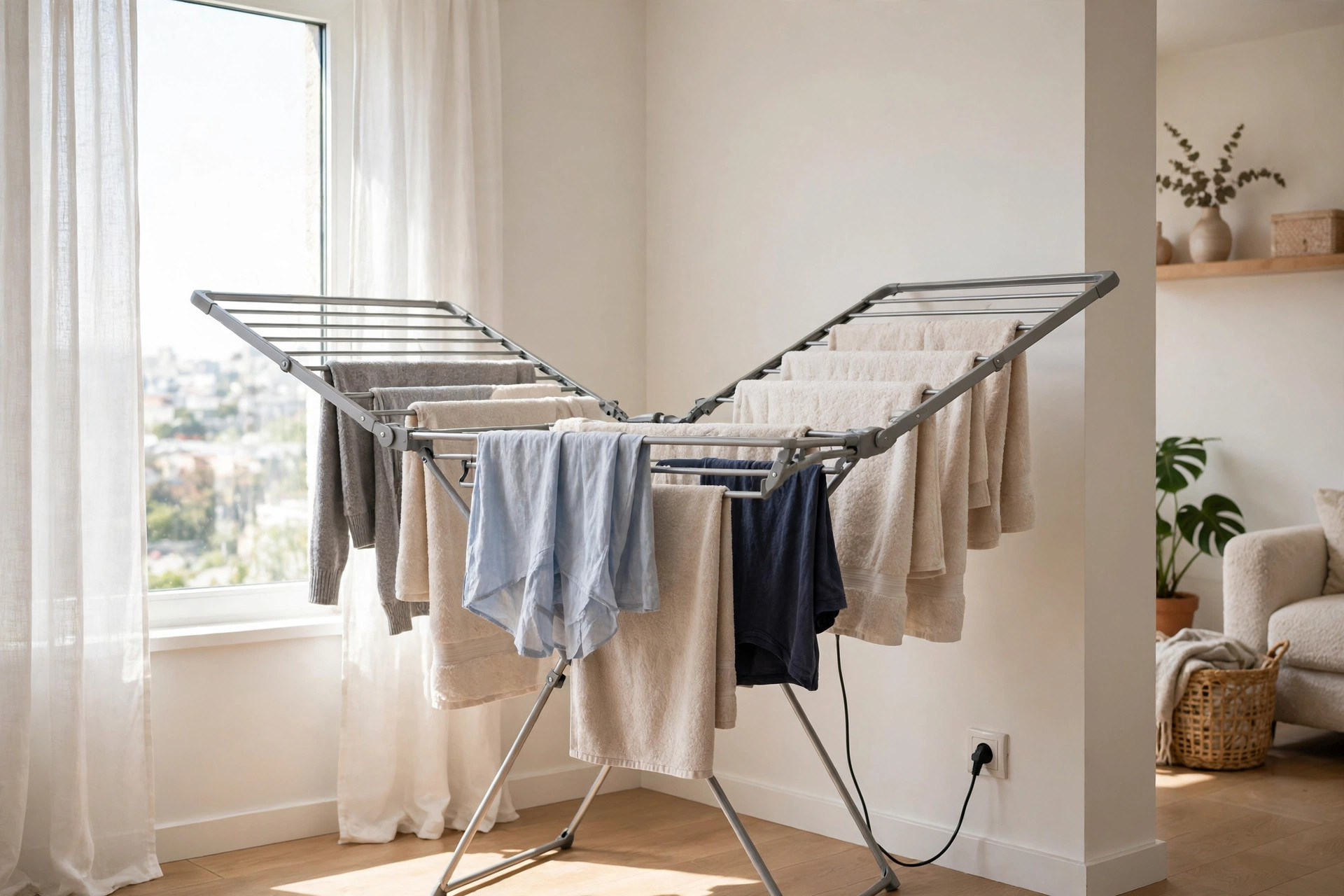
Cold rooms are the one time a plain rack lets you down. Clothes can sit damp for 2 days and start to smell.
A heated airer warms its rails so water leaves fabric faster, and most loads finish in about 3 to 5 hours. It is not free to run. Most use about 100 to 230 watts, so check the cost on the box. I only switch mine on for work clothes needed on Monday and for towels in a cold snap.
Skip the heat if your flat is warm and you have a fan. And keep spacing. Warm rails cannot save shirts packed tight. They dry in patches and smell at the seams.
10. Hang Shirts From the Shower Rail and Skip the Iron
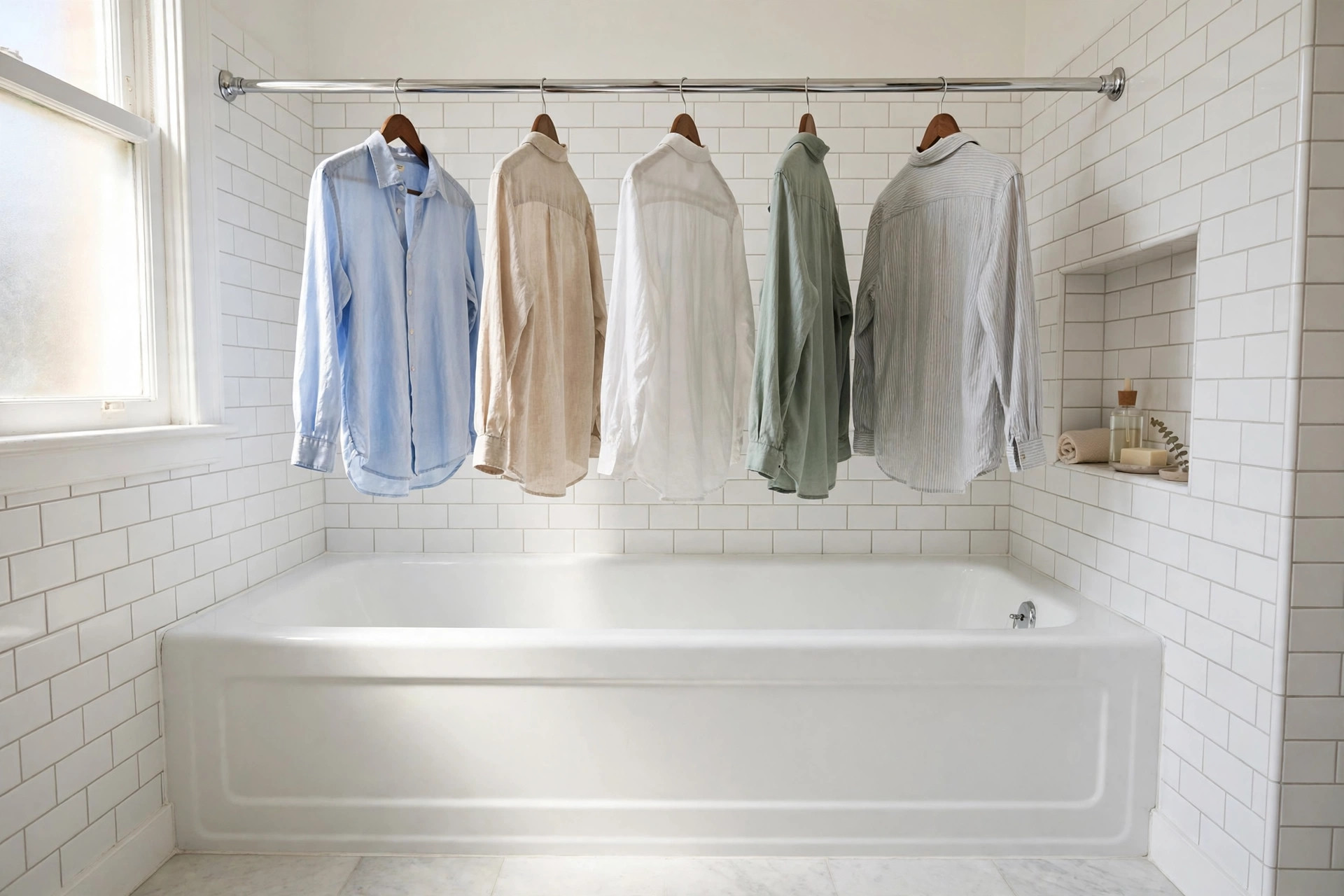
The best rack in a small flat is often already up.
A shower rail or strong towel rail takes a row of shirts on hangers. Shirts dry in their worn shape, so many need no ironing at all. Leave about half an inch to 1 inch between hangers so air can move around each shirt.
Do not hang wet knits this way. A wet jumper can stretch 2 to 3 inches longer under its own weight and will not bounce back. Lay knits flat on idea 6 instead. Test the rail with a gentle pull first, too. Spring held rails can slide down under 6 or 7 wet shirts.
11. No Airflow, No Dry Clothes
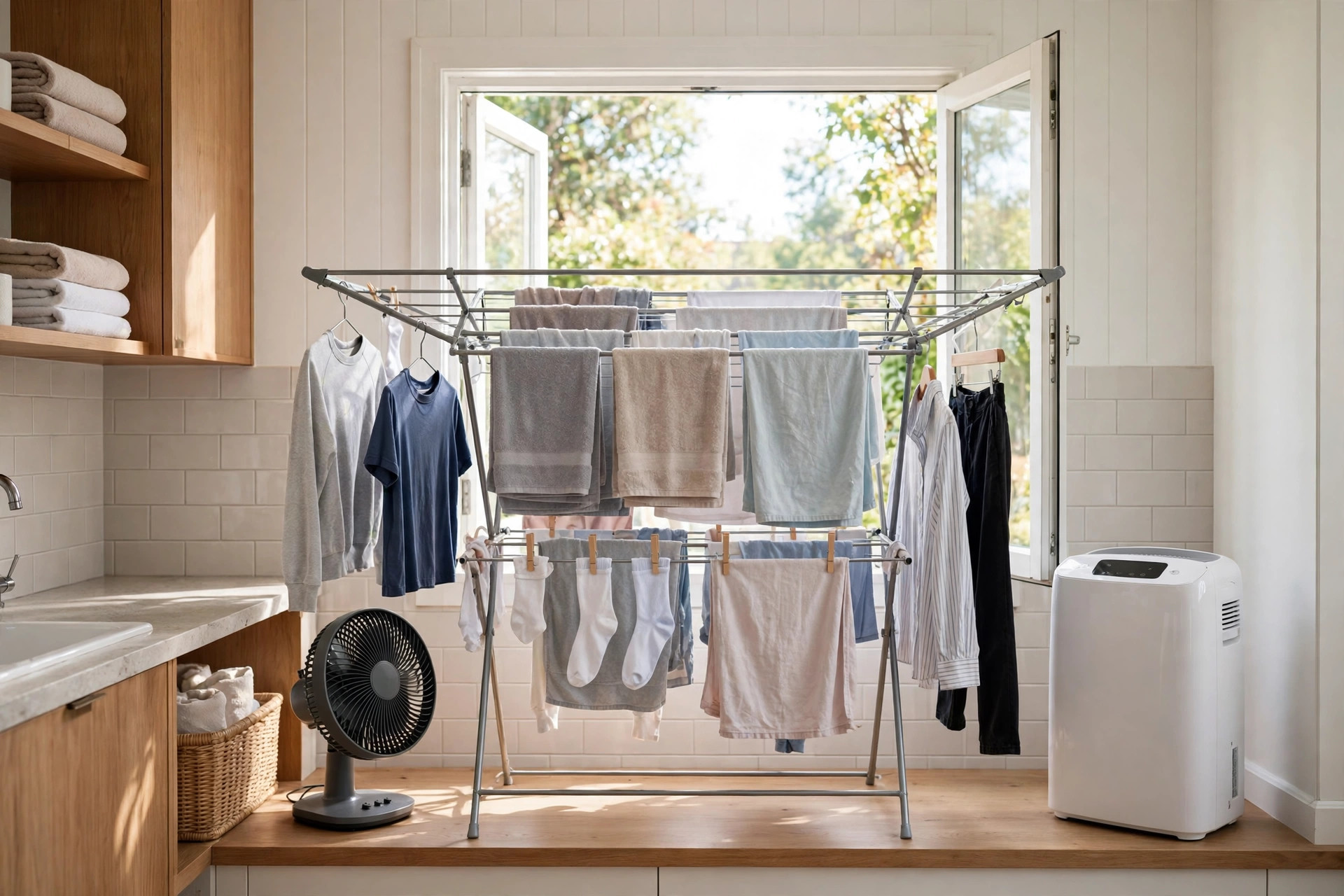
Read that heading again. It is the truest thing in this article.
Any rack dries about twice as fast with moving air. An open window with a door open across the hall gives a soft through draft for free. In a room with no window, aim a small fan across the rails and leave the door open 4 to 6 inches. I aim the fan low and across, since wet hems hang low and dry last. That pairing also sits at the heart of good laundry sorting station ideas, where wash day runs one way, from sort to wash to dry.
If clothes still smell damp after a day, the fix is rarely a bigger rack. Space pieces wider, spin again for 5 to 10 minutes, and move the rack closer to the air.
12. Chase the Sun to the Balcony Door
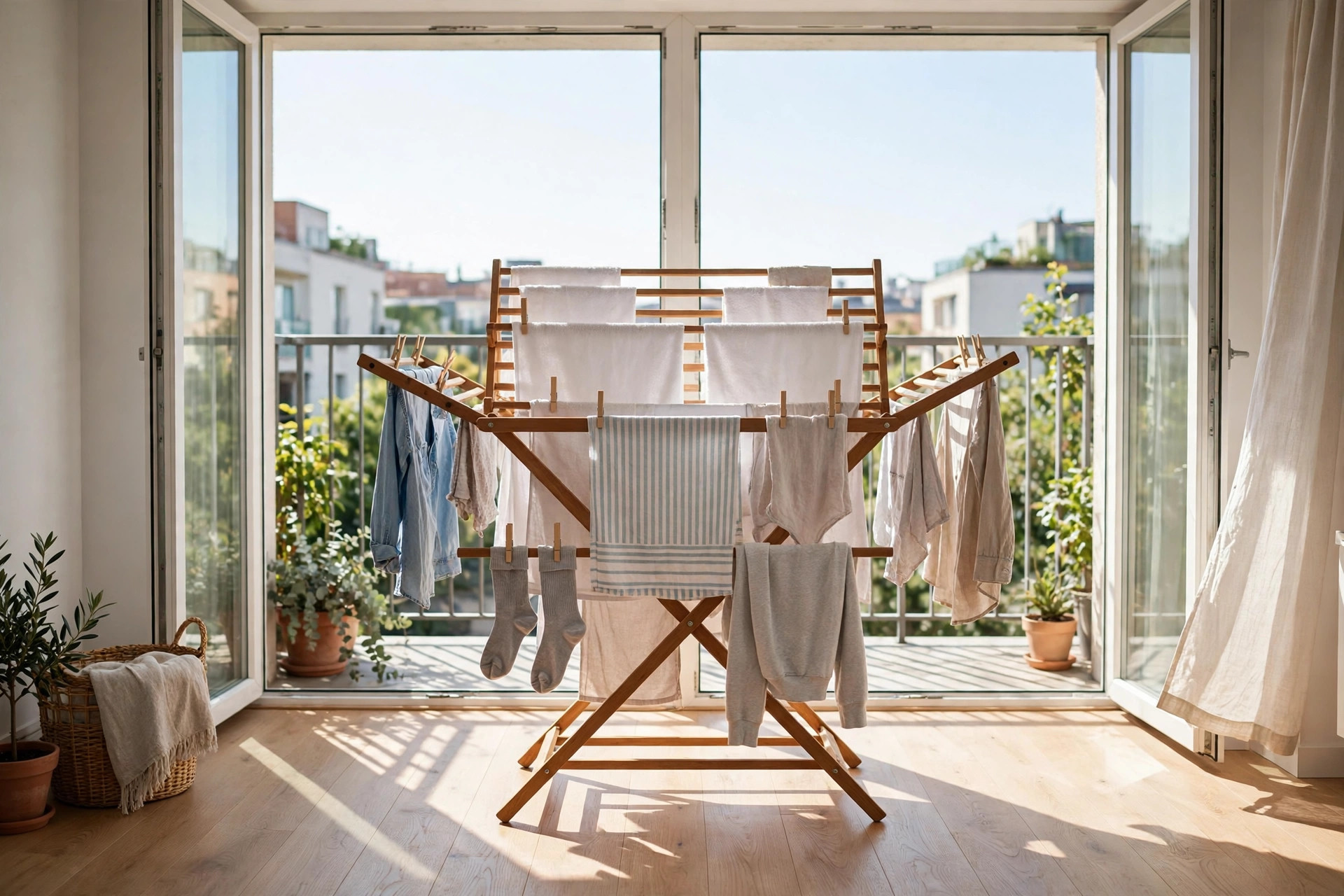
On a bright day, the floor in front of a balcony door is the best drying spot you own. Use it.
Light and moving air arrive free there, and a rack in that spot can finish a load 2 to 3 hours faster than the same rack in a dark corner. Keep about 12 inches clear of the door swing or you will clip wet sleeves each time you step out.
Check your lease before drying on the balcony itself. Some buildings ban laundry seen from the street. Inside the glass is almost always fine. In wind, weight the feet with heavy towels on the low rails so the rack stays put.
The Bottom Line
Pick the rack for the load, put it where air moves, and fold it away when it is done. Fixed racks do the weekly work, a moving rack chases good air, and a line across the tub solves sheets. Start with one fixed rack and one that moves, space clothes with a real gap, and the dryer turns into the backup.
Start with the fold down wall rack above the machines. It is the biggest space win for the least floor lost.
Frequently Asked Questions
How do you dry clothes indoors without a dryer?
Spin well first, then hang each piece with about half an inch to 1 inch of space where air moves. Shirts go on hangers, heavy towels on fixed rails, and most loads dry overnight, in about 8 to 12 hours with a window open or a fan on.
Can drying clothes indoors cause damp problems?
Yes, if loads dry in a closed room with no air moving. Open a window, run a fan, or set a dehumidifier near the rack for the 3 to 5 hours the load is wettest, and keep racks out of the bedroom where you sleep.
What drying rack takes up the least space?
Fixed racks win. A fold down wall rack closes to 1 to 2 inches deep, an over door rack uses no floor, and a retractable line reels away fully. A winged rack folds to about 3 to 4 inches thick and stores behind a door.
Where is the best place to put an indoor drying rack?
Where air moves and drips do no harm. Over the bath, in front of an open window or balcony door, or in the laundry room with a fan across the rails. Keep about 12 inches clear of any door swing.