First Apartment Living Room Ideas on a Budget: 12 Essentials First
First apartments get furnished in the wrong order. Almost always.
The fun stuff comes home first: a plant, some prints, a cushion everybody liked in the shop. Then the money runs out, and the room spends a year as a nice rug short of working, with mugs balanced on the floor beside a sofa that was bought in a hurry. I have set up two first flats, mine and my sister’s, and the lesson cost us both: order beats budget. Buy the essentials in the sequence below and the room works from the first week, feels finished at every stage, and never needs one expensive rescue trip at the end. These first apartment living room ideas on a budget are that sequence, essential by essential.
The short version, before we start:
Seat first. One comfortable place to sit, bought once and bought well. It takes the biggest share of the budget and it should.
Rug second, sized to the seating. It must reach under the front legs of the sofa and chairs. A small rug strands good furniture, and it is the most common first apartment mistake there is.
One lamp, at sitting height. Rentals give you one harsh ceiling light. One warm lamp beside the seat changes the room more per dollar than anything after it.
Then curtains, surfaces, storage. Privacy and softness, somewhere for a mug, somewhere to hide the clutter. The pretty layer comes last, and most of it you already own.
1. Buy the Seat First, and Sit on It Before You Pay
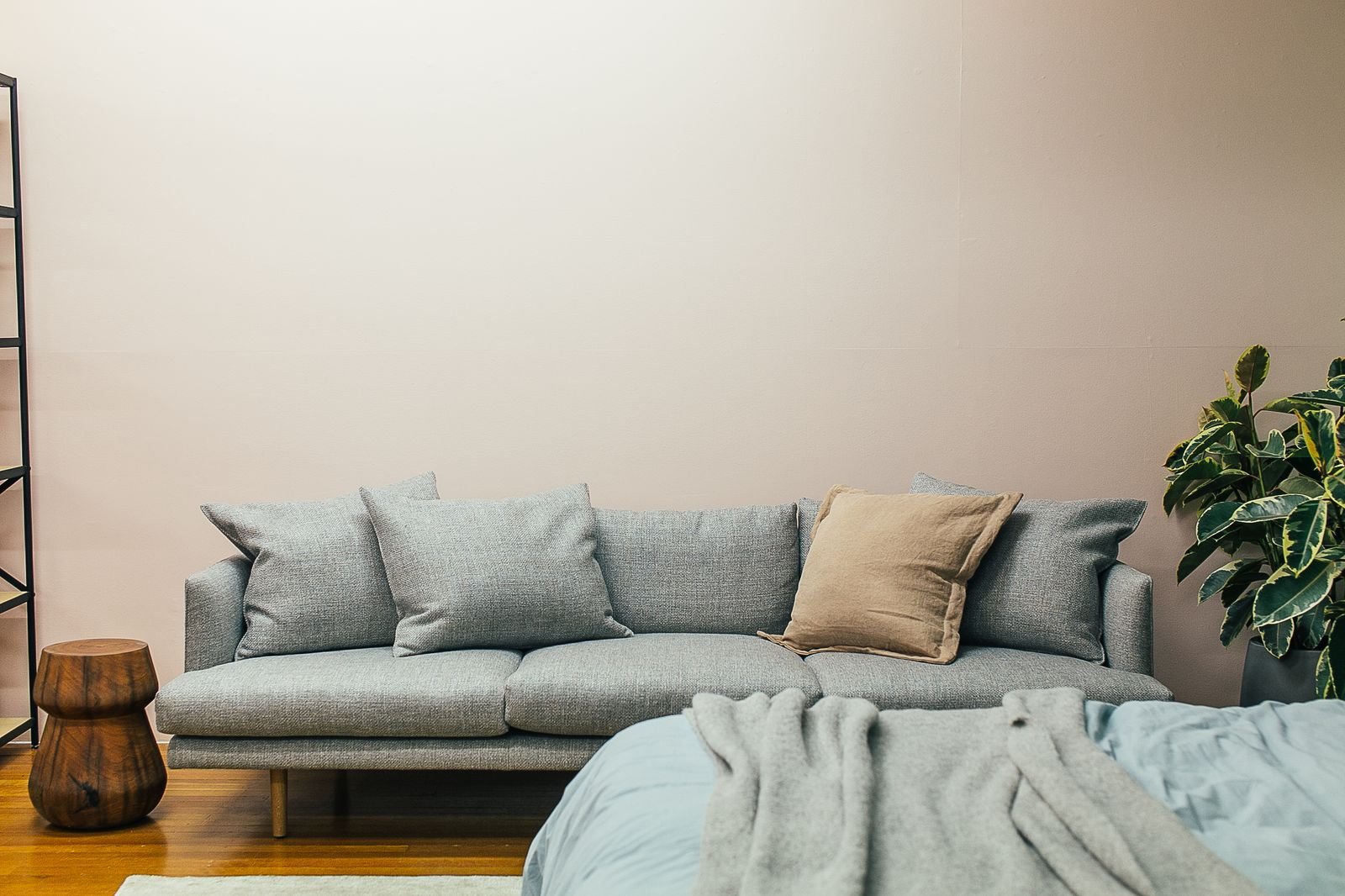
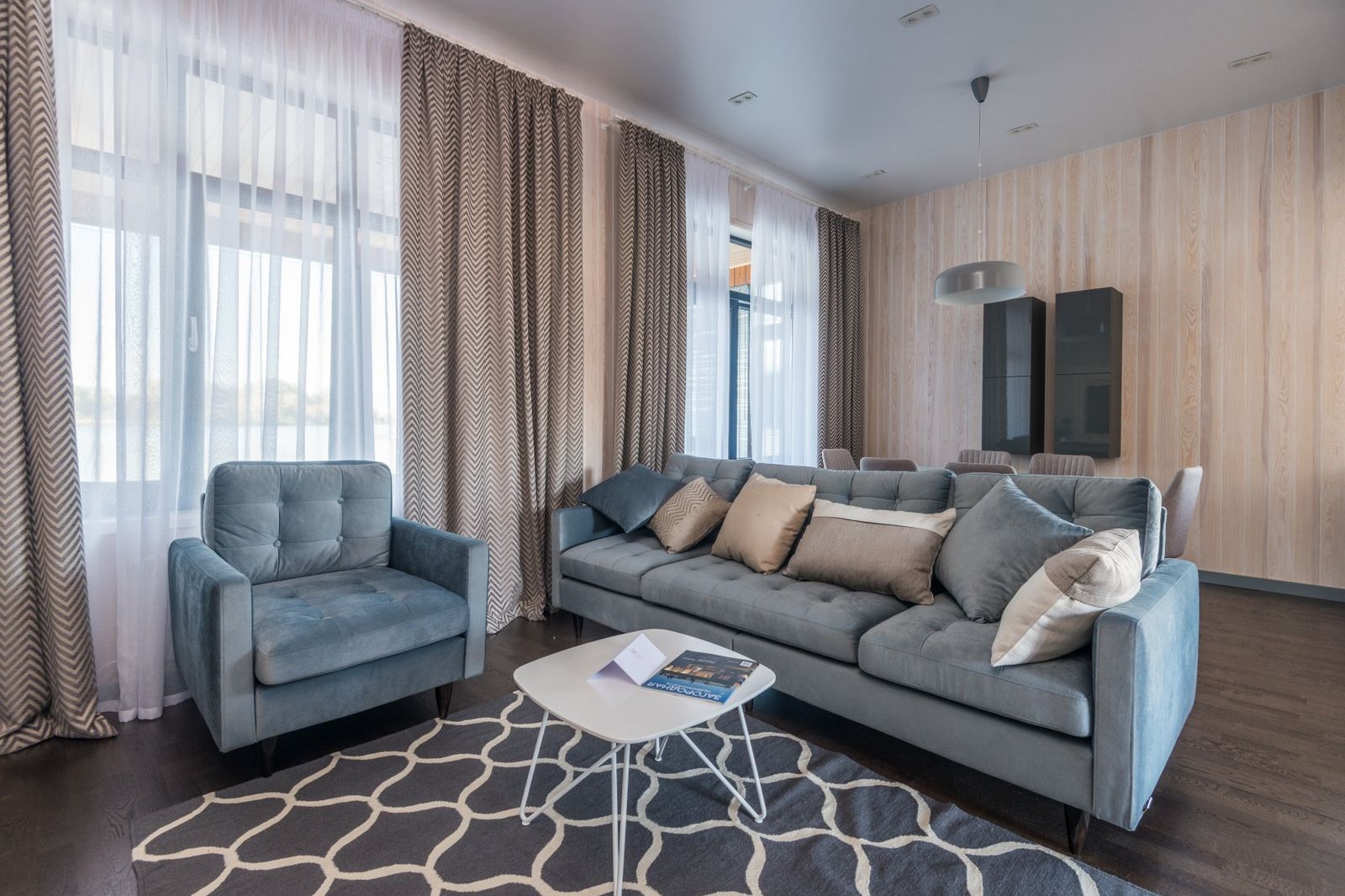
The sofa, loveseat or good futon is the room. Everything else in this article arranges itself around it, so it comes first and takes the largest share of the budget.
Sit on it before buying if you possibly can. Check the seat depth suits your legs and that you can get up without a negotiation. Choose a neutral, hard wearing fabric that cushions and throws can recolor for years. Secondhand is fine and often better value, but do the checks: rock the frame for wobbles, and sit down and sniff, properly, because old smells in sofa cushions do not leave. They move in.
This buy in order thinking is the living room chapter of whole home budget apartment decorating ideas: biggest piece first, bought once, bought well. A cheap sofa bought fast costs you twice, once now and once when it sags in year two.
2. Size the Rug to the Seating, Not the Room
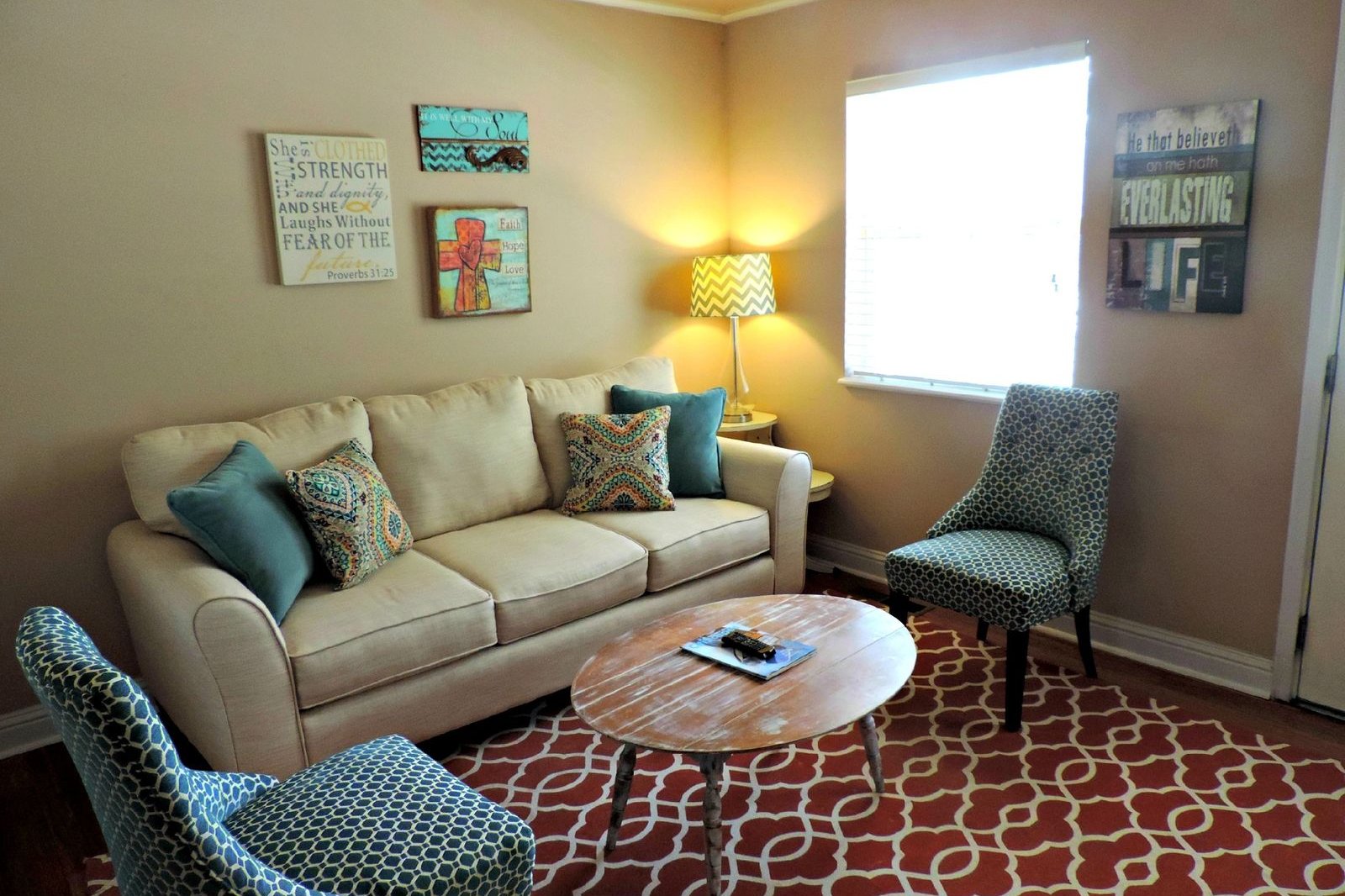
A rug that is too small makes even a good sofa look stranded on a raft. It is the most common first apartment mistake, and the easiest to avoid.
Follow the widely used guideline: the rug reaches at least under the front legs of the sofa and any chairs, tying the seating into one group. So measure the seating zone, not the whole room, and sketch the small living room furniture layouts your measurements allow before the rug arrives. Choose the largest rug the budget honestly allows, in a forgiving pattern, because first apartment floors see crumbs, spills and one memorable curry.
If the dream rug is out of reach this year, a large plain one now beats a small perfect one. Layer a small thrifted rug over it later when you crave pattern.
3. Get One Good Lamp at Sitting Height
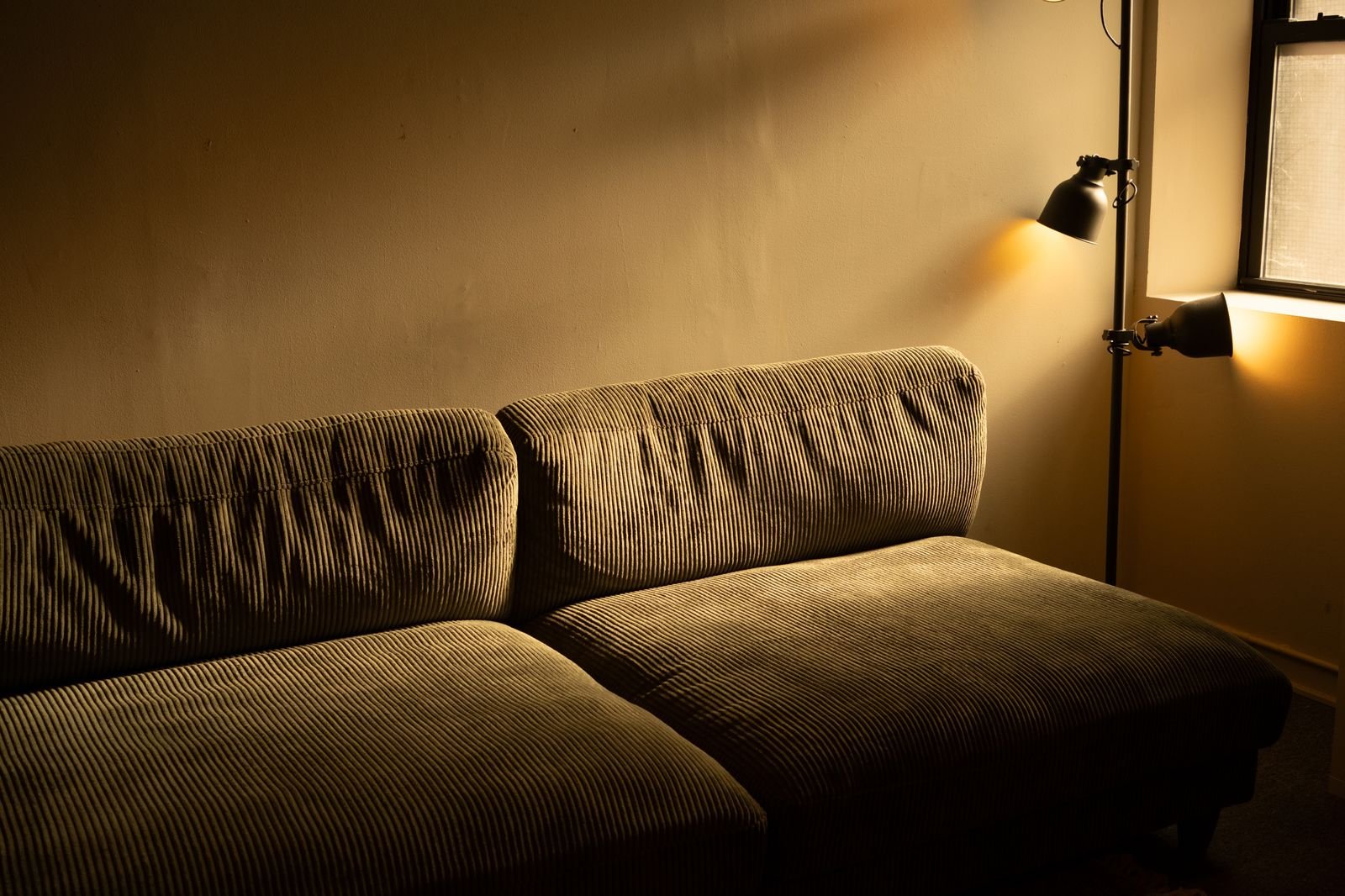
Most rentals offer one harsh ceiling light and nothing else, which is why the room feels like a waiting room at night.
One floor lamp, or a table lamp on a sturdy box or stool, placed beside the seat and glowing at sitting height, changes the room more per dollar than almost anything else here. Pick a warm bulb, around 2700K, and a shade that spreads light down onto books and laps rather than up at the ceiling. Let that single warm pool carry the room until a second lamp joins it. It will look intentional, not unfinished.
Secondhand lamp? Check the cord and the switch with care before it comes home. Frayed cords and crackling switches are the two findings that send a bargain lamp straight back.
4. Hang Curtains for Privacy and Softness
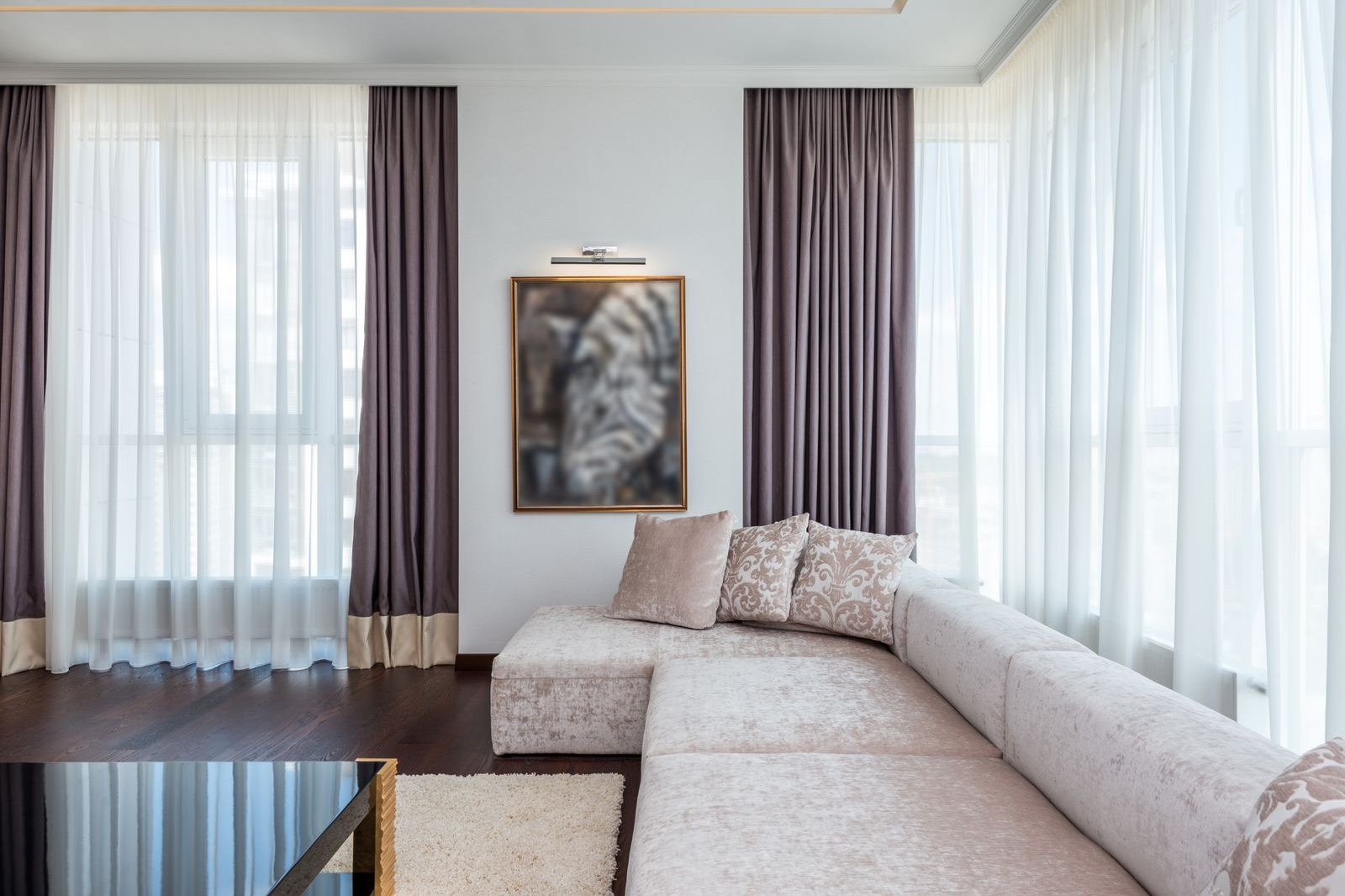
Bare rental windows make a room feel temporary, and they echo. Curtains fix privacy, soften hard walls, muffle sound and add the first real color, all for the price of two panels and a rod or tension bar.
Hang them as high and wide as the hardware allows, so the window reads bigger and daylight still gets in during the day. Plain linen look panels in a warm neutral go with every style change coming later, and they wash easily, which matters.
Measure before you order, because length is where this purchase fails. Panels that stop awkwardly a few inches above the floor undo the whole effect. A gentle kiss of the floor or the sill looks intentional; the in between length just looks like a measuring error, because it is one.
5. Put Something Flat in Front of the Seat
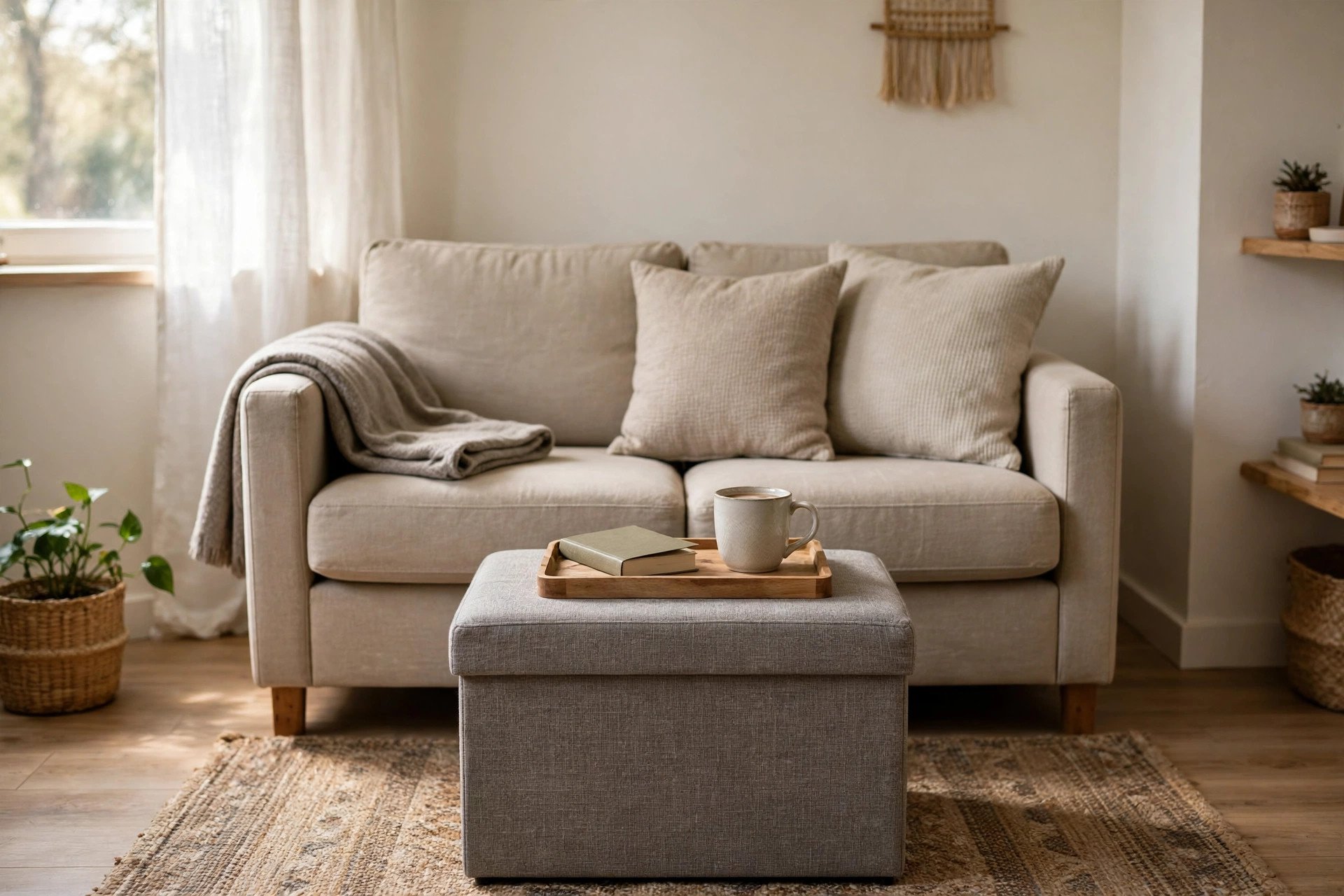
Every living room needs one flat surface in front of the seat, for drinks, books, feet and the remote that otherwise lives inside the sofa cushions. A simple coffee table, a storage ottoman with a tray on top, or a sturdy wooden crate all do the job.
Secondhand tables are plentiful and cheap. Check for wobble and decide honestly about water rings. Leave walking room around it, about 14 to 18 inches between sofa and table, close enough to reach a mug, far enough to pass without turning sideways.
If the room is tiny, choose the ottoman. It works as table, footrest and emergency extra seat, three essentials in one purchase, and on a first apartment budget that arithmetic wins. My sister’s ottoman has done all three jobs in a single evening, more than once.
6. Give Every Seat a Side Table
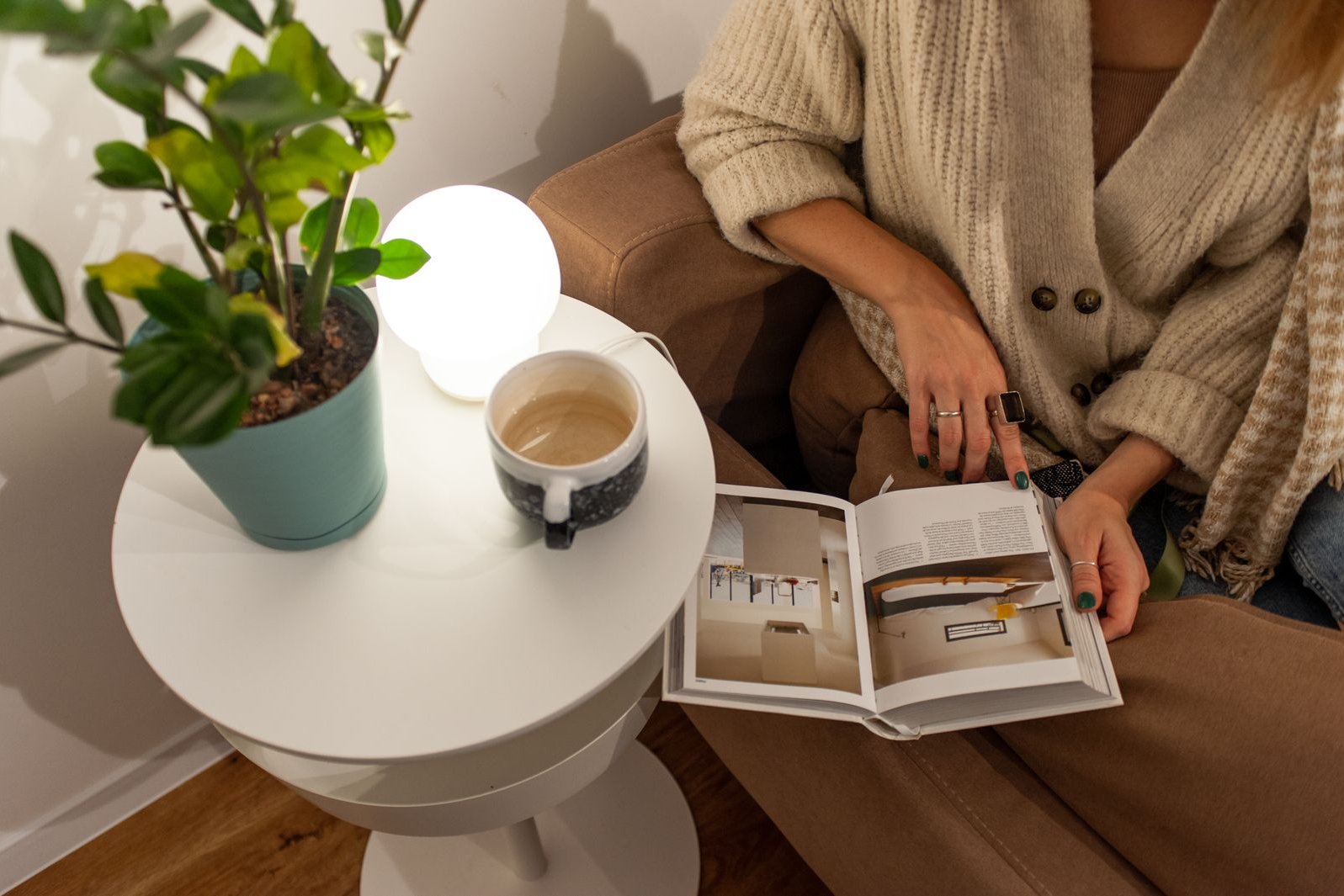
The rule is simple: nobody should have to put a mug on the floor.
One small side table, stool or nesting table beside the main seat catches drinks, books and phones, and costs very little new or secondhand. In a small flat, pick one with a shelf or a raised lip edge so it stores as well as holds. Keep it light enough to move when guests come, because in a first apartment every piece moonlights in a second job.
People skip this essential because it feels minor. Then they spend a year balancing cups on chair arms and losing the remote to the floor gap. Buy it early. It is the small purchase that makes the seating feel finished.
7. Buy Closed Storage Before Anything Decorative
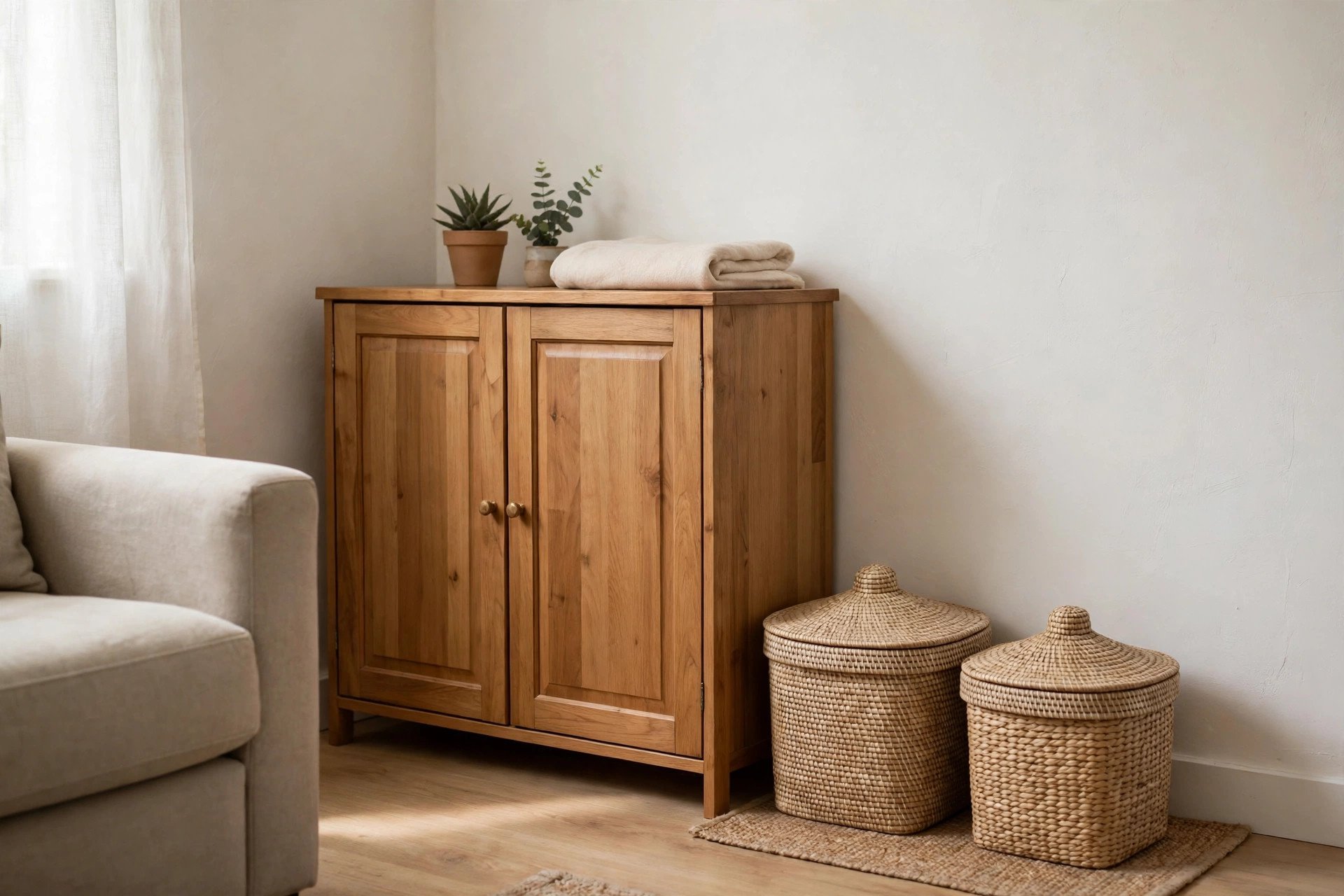
First apartments collect chargers, paperwork, games and blankets faster than they collect furniture, and open shelving displays all of it to everyone who visits.
One piece of closed storage fixes the room’s whole mood: a cabinet, a lidded ottoman, a dresser doing living room duty, or baskets fitted inside an open shelf. Closed doors make a small room look calm instantly, between tidies, which is when rooms actually get judged. Buy it before the decorative extras, because no cushion arrangement survives visible clutter.
Size it by your most awkward object, the board game, the vacuum, the instrument case. Measure that thing first and let it set the cabinet’s dimensions. Storage bought by eye is storage that fits everything except the one item you bought it for.
8. Add Two Cushions and a Throw for Instant Warmth
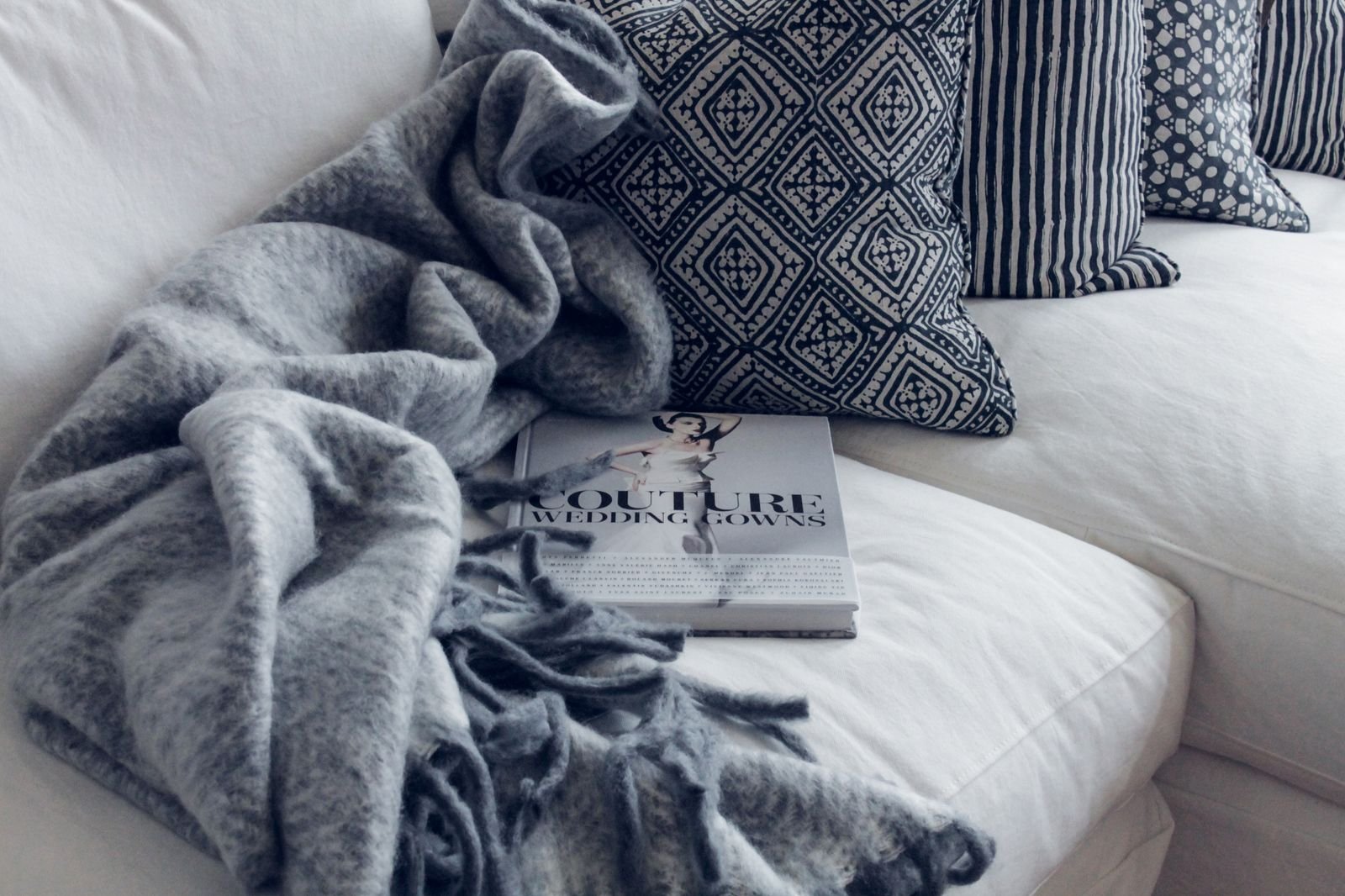
Once the bones work, softness is the cheapest transformation left. Two cushions and one throw, in colors pulled from the rug, turn a plain sofa into a place people choose to sit.
They add the room’s accent color, and they cost less than almost anything else in this article. Choose washable covers, because first apartment sofas host dinners, naps and movie nights in equal measure, and at least one of those involves sauce. Mix one pattern with one plain in a shared color so the arrangement looks chosen rather than random.
This layer is also the easiest to change later. New covers recolor the room for about the price of a takeaway, which is exactly the kind of flexibility a tight budget needs.
9. Hang One Large Piece of Art, Not Six Small Ones
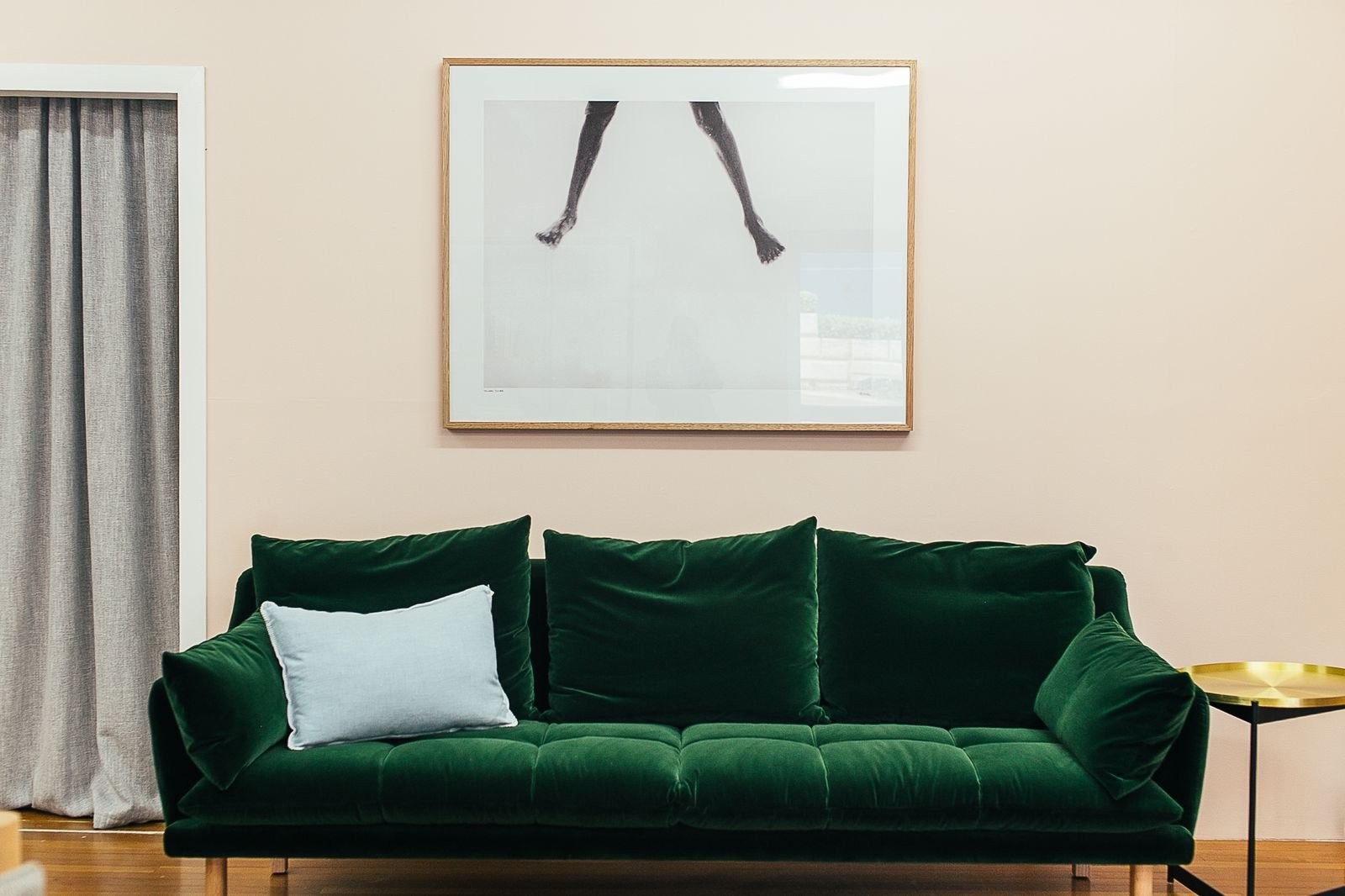
One big piece beats six small ones in a first living room. It gives the eye a destination and makes the room feel decided, settled, done on purpose.
A large framed print, a canvas, a tapestry or a mirror over the sofa all work, and frames are cheap secondhand in exactly the big sizes that cost most new. Hang it safely for a rental with the methods in the renter friendly decorating guide: rated adhesive strips for lighter pieces, leaning on a shelf or cabinet for heavy ones. Center it on the sofa, not on the wall, and keep the middle of the piece around eye level for the room.
Six small prints scattered to fill a wall read as indecision from the door. One large piece reads as a home. Skip the set, buy the single.
10. Bring In a Plant or Two
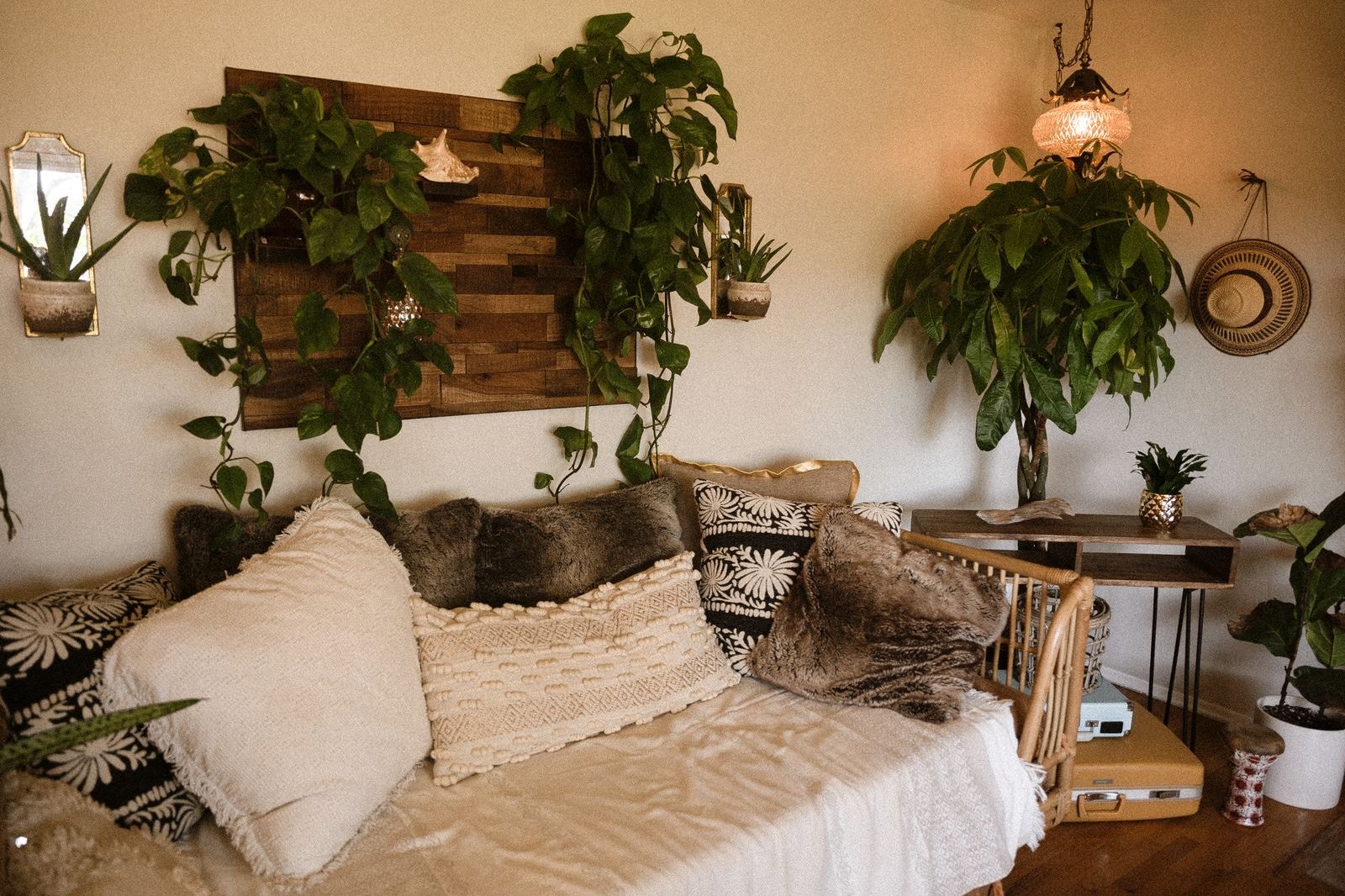
A living room with nothing alive in it feels like a showroom. One plant on the side table and one taller one softening a corner add the color and the irregular shapes furniture cannot.
Hardy choices forgive new owners and lower light: pothos, snake plants, the usual survivors. A cutting from a friend’s plant costs nothing, and pots are a classic thrift store find. Water honestly, meaning set a day of the week and keep it, because most first plants die of kindness in bursts and neglect in between.
Almost no light in the room? One convincing faux plant in the darkest corner beats a dying real one. Nobody has ever been judged by a healthy looking fake fern, and the real one in the bin judges you daily.
11. Build a Landing Strip by the Door
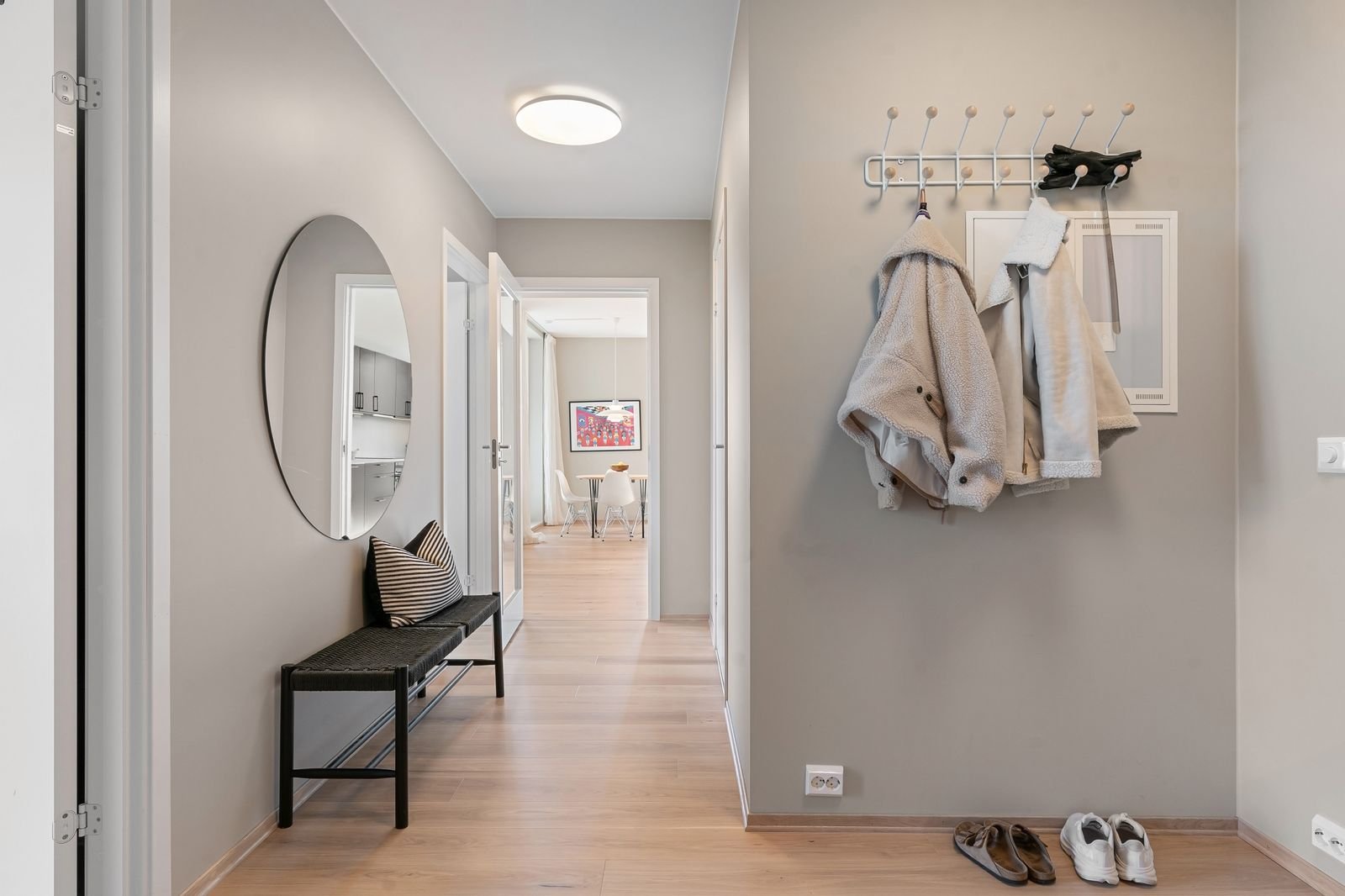
Keys, mail, bags and shoes land somewhere. Without a plan, they land on the sofa and the coffee table, and the room is untidy by Tuesday no matter how well it was furnished.
A small landing strip by the door stops clutter before it spreads: a tray or shallow bowl for keys, two hooks for bags and coats, a mat that catches the day at the threshold. It costs very little, takes about an hour to set up, and protects every other essential on this list from becoming a dumping surface.
In a studio or small flat where the living room is also the entry, this humble station is the difference between tidy and chaos. I set mine up on day two. Day one taught me why.
12. Finish With the Layer That Makes It Yours
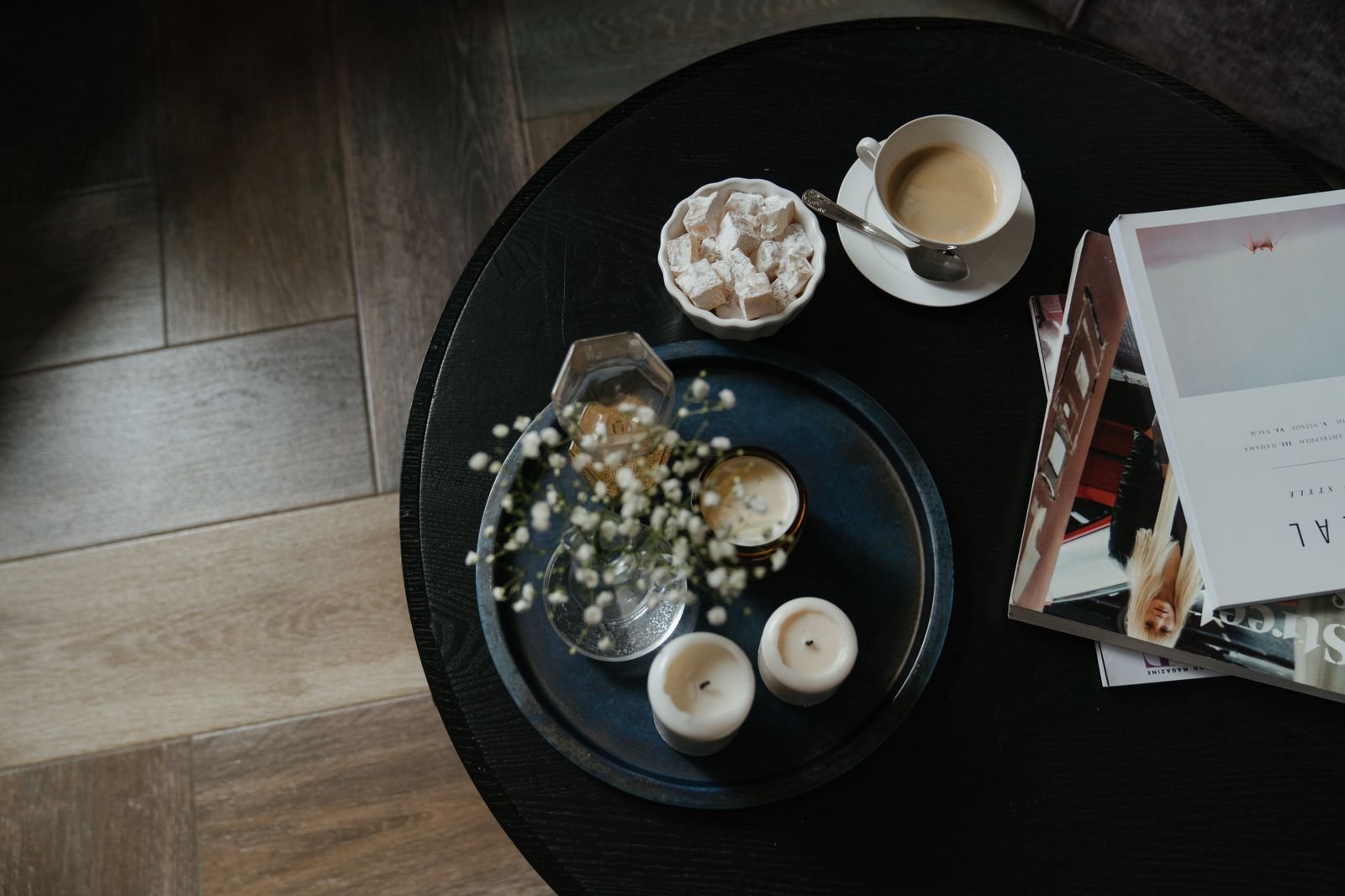
Last comes the layer that makes the room yours instead of a catalog’s: a small stack of books you actually read, a tray corralling the remote and the coasters, one object with a story, a photo, a market find, something from home.
Most of this layer lives in the territory of living room updates under 100 dollars, small, cheap and high impact, and much of it you already own in boxes that are still taped shut. Unpack those before you buy anything for this layer. The story objects are already paid for.
Add slowly and stop early. A first living room should keep some wall and shelf space empty for the life that is about to happen in it. Finished is a feeling, not a receipt, and the room gets there faster when you stop feeding it.
The Bottom Line
A first apartment living room does not need a big budget. It needs the right order: a seat you love, a rug that fits the seating, warm light, curtains, surfaces, storage that hides the mess, and only then the pretty layer. Buy in that sequence and the room works at every stage, guests included, instead of waiting on one final shopping trip that never quite happens. Let each purchase prove itself before the next one joins it.
Start with the seat. Sit on three sofas this weekend, pick the one your legs vote for, and let every later decision arrange itself around it.
Frequently Asked Questions
What are the must-have items for a first apartment living room?
A comfortable seat, a rug sized to the seating, one good lamp, curtains, a coffee table or ottoman, a side table, and one piece of closed storage. Those seven make the room function. Cushions, art, plants and personal pieces then make it feel like home.
In what order should you furnish a first living room?
Seat first, then the rug, light and curtains, then surfaces and storage, and the decorative layers last. The order matters more than the total spent, because each early piece decides the size, color and placement of everything after it.
What living room items can safely wait until later?
Accent chairs, bookshelves, extra lamps, large art collections, media units and matching furniture sets can all wait. A room with the essentials and empty corners feels calm and finished. A room crowded with cheap extras bought in a rush feels neither.
What size rug does a first apartment living room need?
Follow the widely used guideline: the rug should at least reach under the front legs of the sofa and chairs, grouping the seating into one zone. Inside that rule, choose the largest your budget allows, because a too small rug is the hardest mistake to disguise later.