15 Kitchen Storage Ideas for Homes With No Pantry
The cans are behind the glasses. The pasta lives on top of the fridge. The flour is in a bag, in a corner, going stale.
That is not a storage problem. It is a territory problem. Food with no home wanders, and a kitchen with no pantry has to give it one on purpose. The reliable fix comes in four shapes: a rolling cart that acts as a mobile pantry, racks that claim the backs of doors, a furniture piece borrowed from another room, and cabinets zoned strictly by food type. I zone before I buy anything, and the 15 ideas below are in that order: fastest wins first, furniture swaps last.
The short version, before we start:
One territory for food. A cart, a bookcase, a hutch or one zoned cabinet. When food has one home, putting it away takes minutes.
Nothing hides. Risers, turntables and single file storage, so every label shows and nothing gets bought twice.
Heavy low, daily at hand height. The heaviest jars sit on the lowest shelf, and daily food lives between knee and shoulder height.
Zone first, buy second. Half of this list costs nothing, and it tells you what, if anything, is actually worth buying.
1. Start With a Rolling Cart Pantry
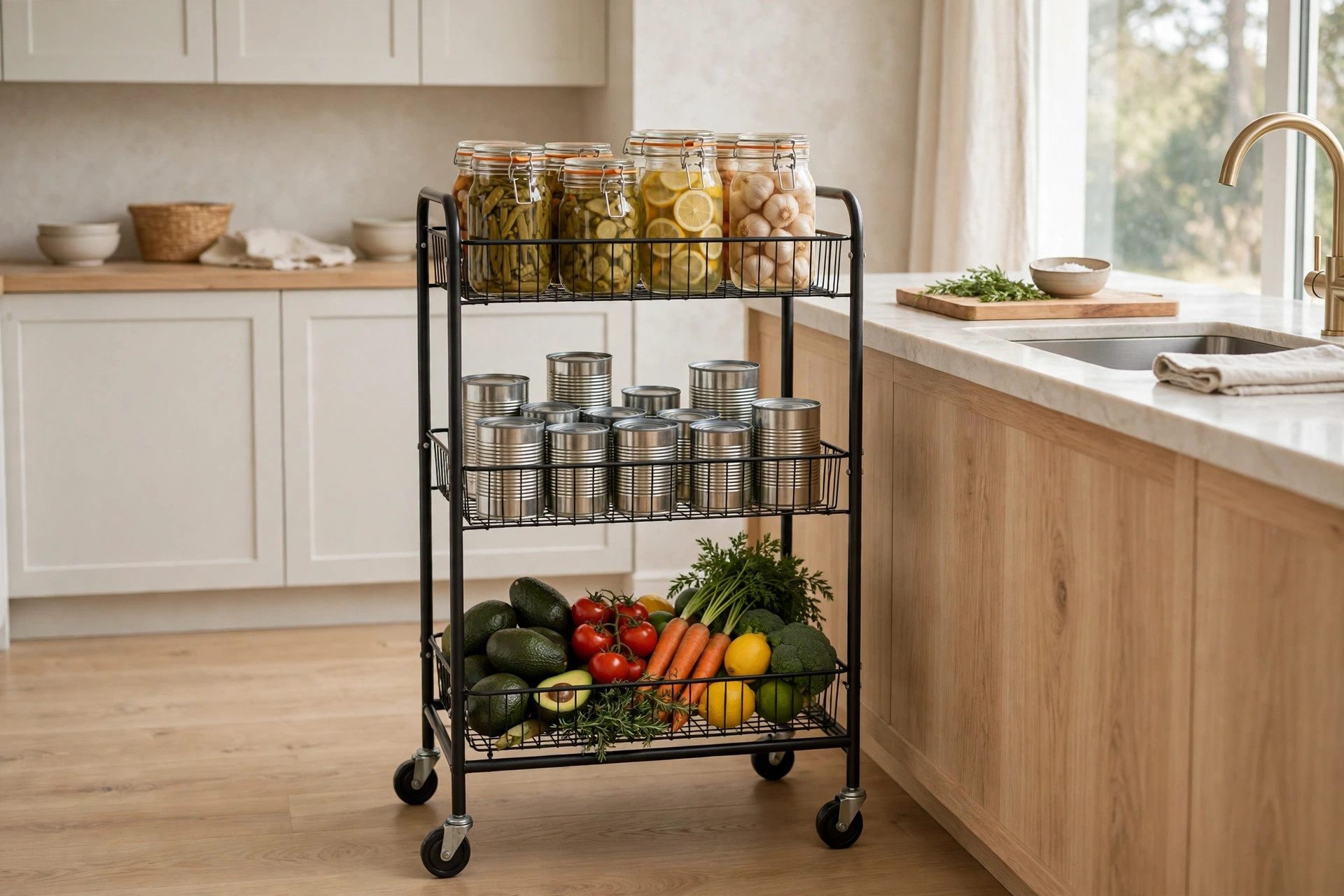
A sturdy rolling cart is the quickest pantry substitute there is.
Load it by category, three tiers and three jobs: cans and jars on the bottom tier where the weight belongs, packets and boxes in the middle, fresh produce or bread on top. It parks against any free wall, rolls to the counter while you cook, and rolls away when guests come. This cart is the workhorse behind most small kitchen organization ideas for apartments, because it adds pantry capacity without touching a single cabinet.
Choose locking wheels if your floor slopes, and measure your tallest bottles before you buy; a tier an inch too short for the oil bottle annoys daily.
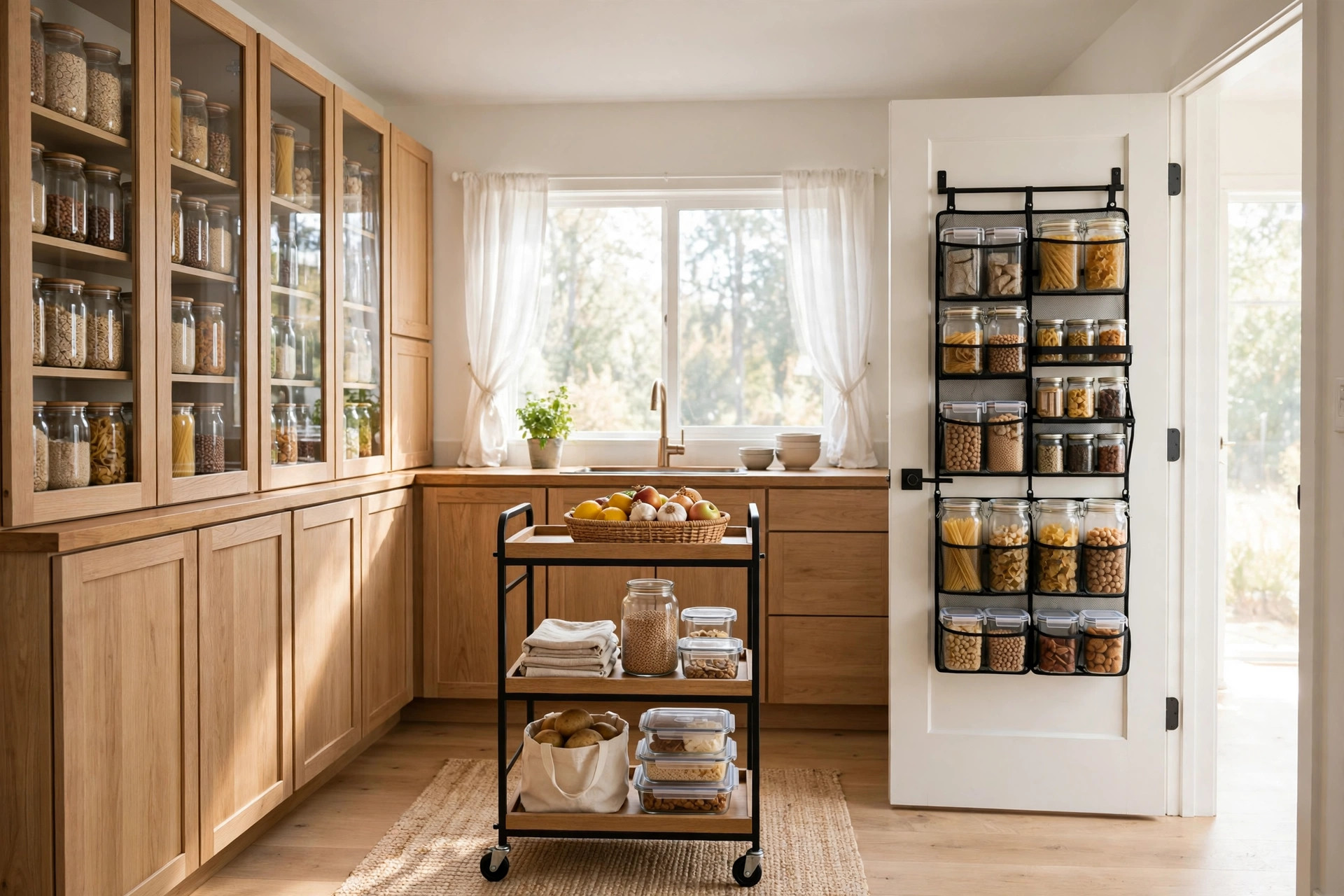
2. Claim the Back of a Door
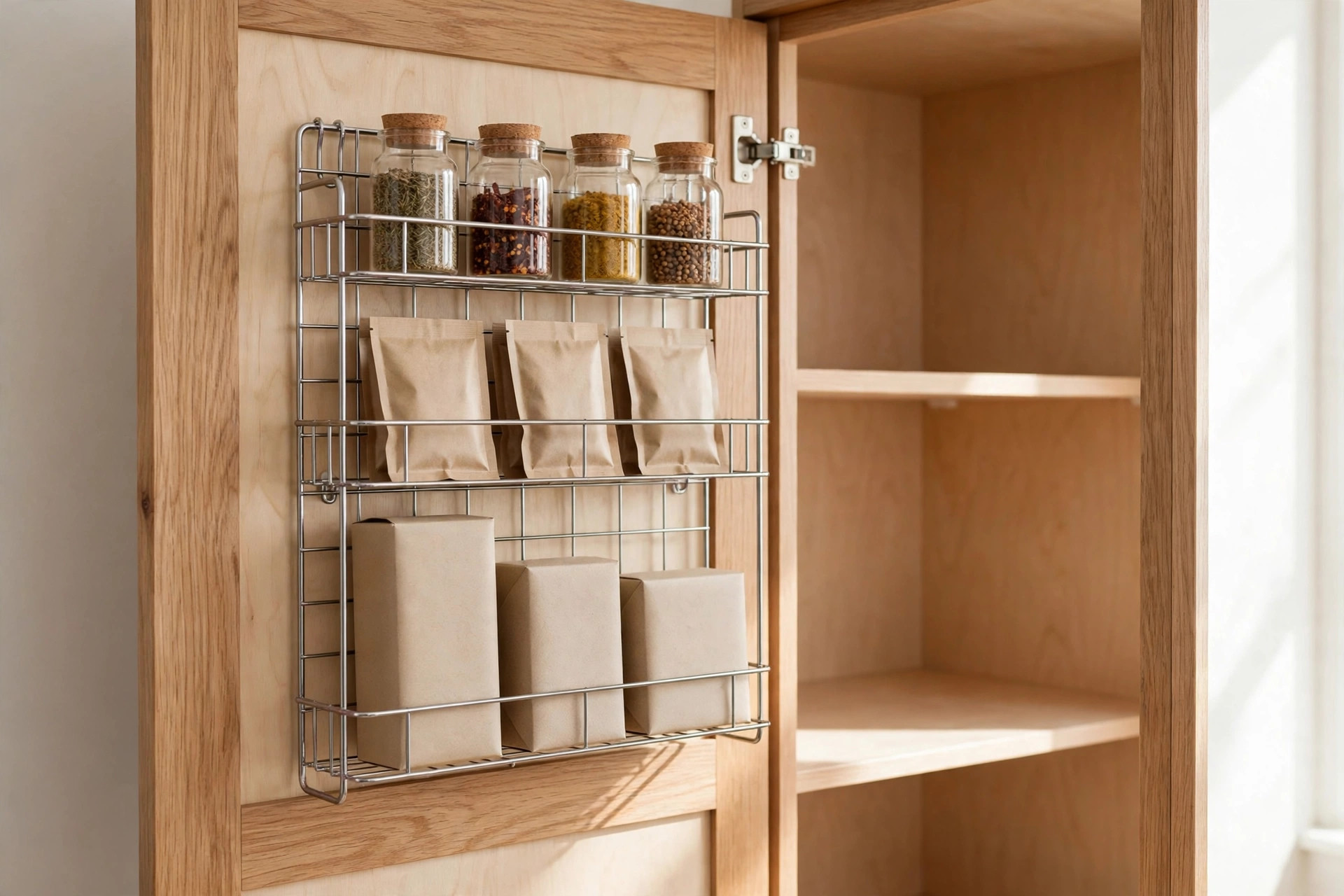
No pantry door does not mean no doors at all.
A wire rack on a cupboard door, or on the back of the kitchen door itself, holds spices, packets, wraps and small jars in one shallow layer where nothing hides. These racks waste almost no depth, which is exactly why they work.
Check two things before loading: the door swing, and a finger of clearance so the door still closes softly with everything aboard. And keep heavy cans off the highest rows. A loaded rack is real weight on small hinges, and a door that starts to sag is a door that stops closing.
3. Turn a Bookcase Into Open Pantry Shelves
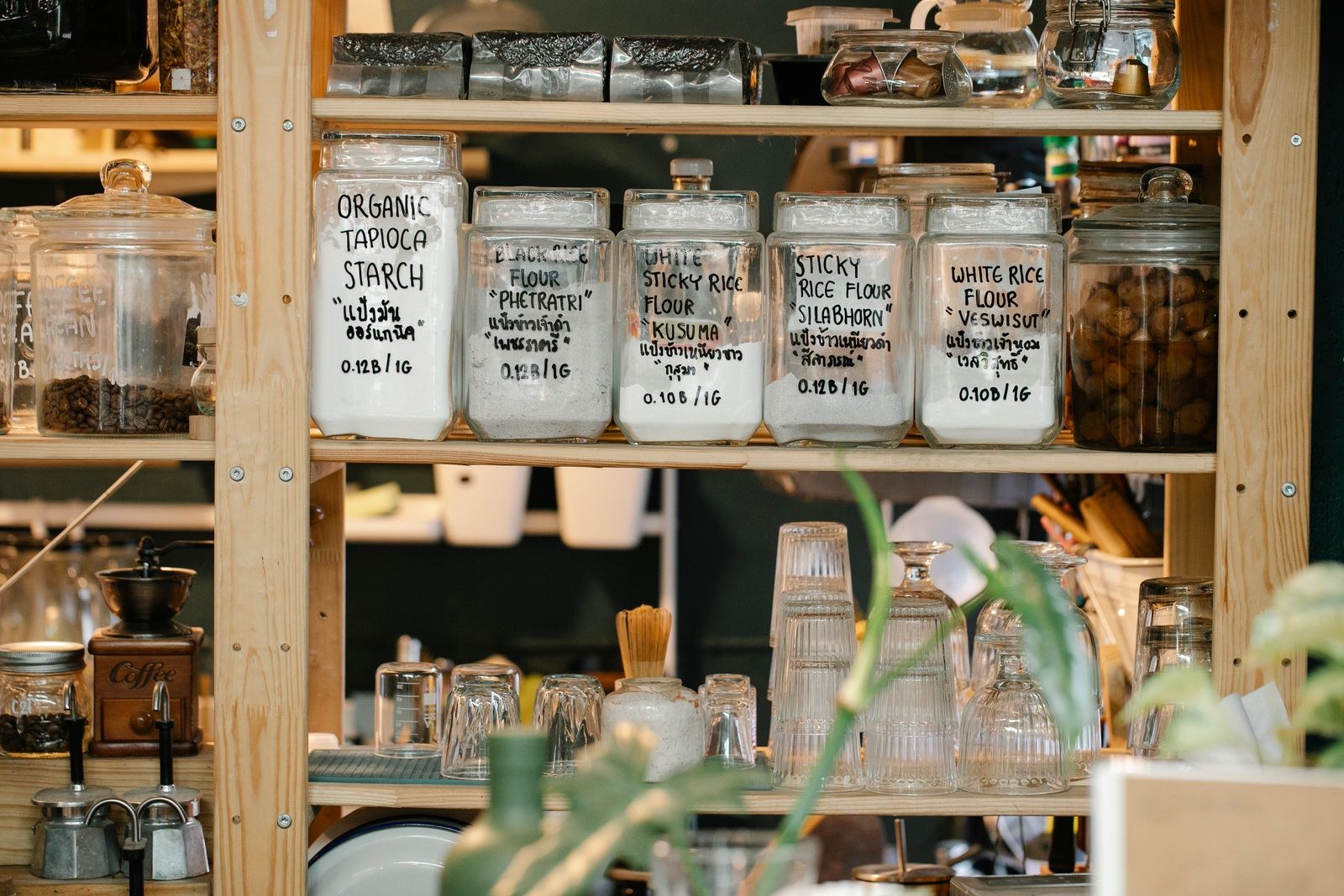
A plain bookcase is a pantry waiting to happen.
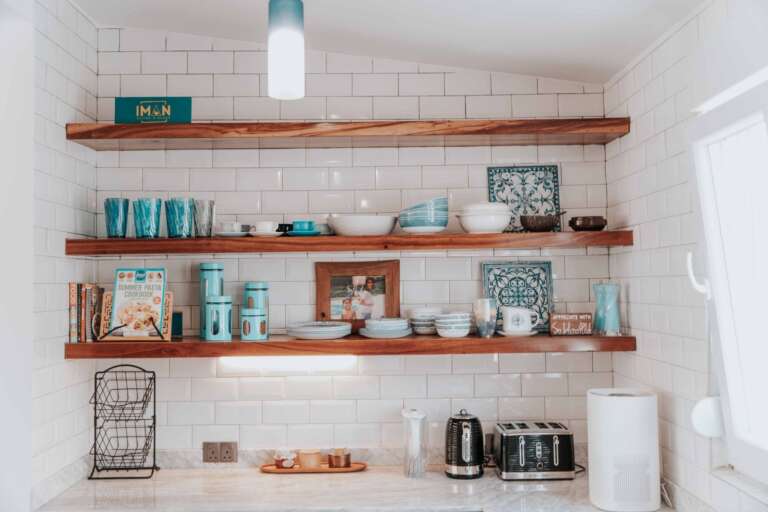
Its shelves, usually about 12 inches deep, are roughly right for cans, jars and storage containers, and it fits the narrow wall stretches kitchens often waste. Decant into matching containers, line items up in rows, and let one shelf hold cookbooks and a plant, so the piece reads as furniture rather than overflow.
One non negotiable: anchor a tall bookcase to the wall, especially with children in the house. And put the heaviest jars on the lowest shelf, so the piece is bottom heavy and calm.
4. Use a Hutch or Sideboard as the Pantry
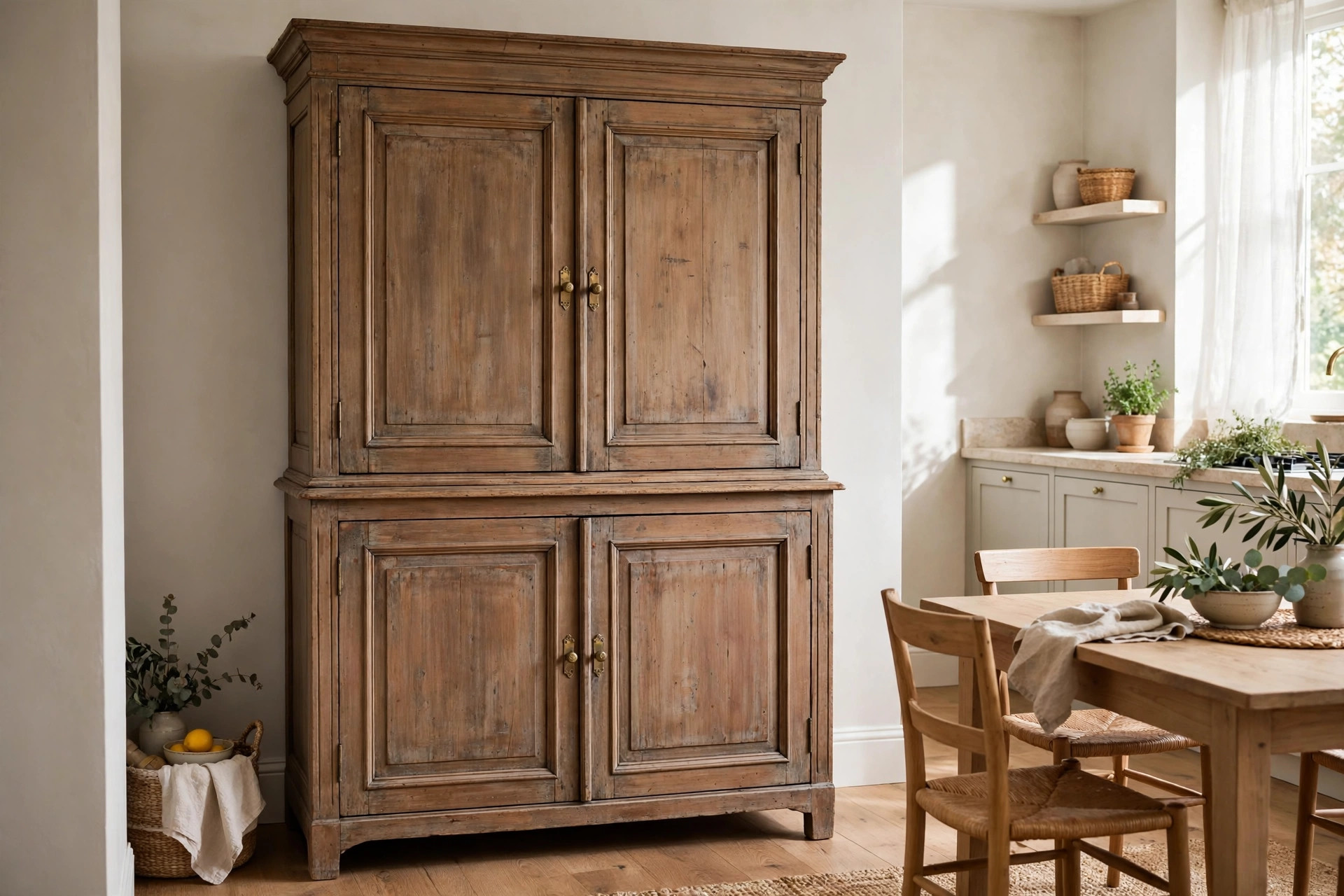
Furniture with doors beats open shelving when you want calm.
A secondhand hutch, a low sideboard or a freestanding kitchen cabinet gives food a closed home with far more presence than a rack, and the top surface becomes bonus counter or coffee station space. In a kitchen that is also the dining room, it matches the dining furniture, which is why it works socially as well as practically.
Measure door openings and turning space before buying, and check shelf heights against your tallest cereal boxes, usually 12 to 14 inches. A hutch the cereal does not fit in is a hutch that failed its first job.
5. Zone the Cabinets You Have by Food Type
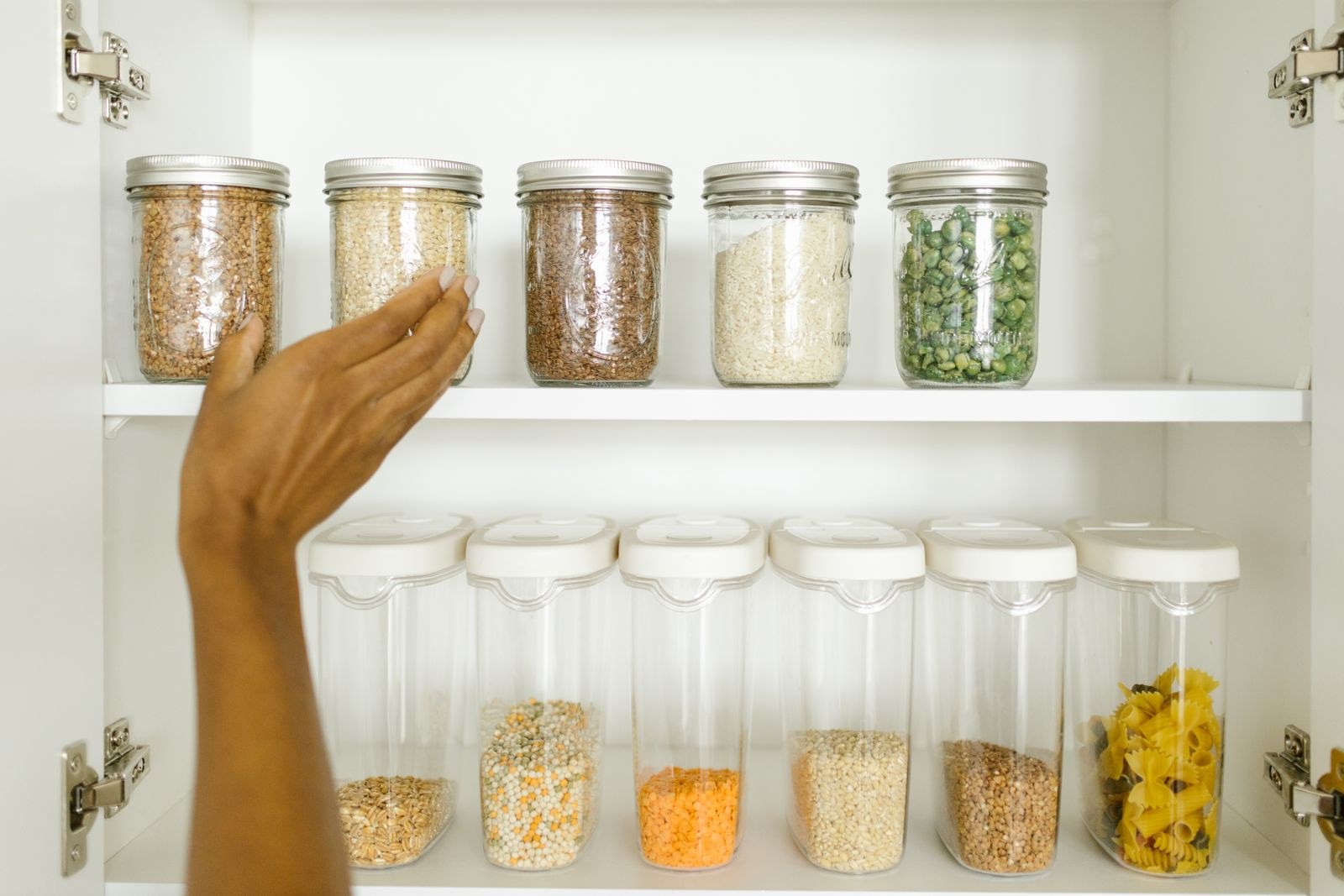
Before adding anything, give the cabinets you already own stricter jobs.
One cabinet becomes food only: no mugs, no medicines, no mystery gadgets. Inside it, zone by type, baking together, cans together, breakfast together, so the cabinet behaves like pantry shelving in miniature. This single rule stops the slow scatter that makes a no pantry kitchen feel chaotic. It borrows from the same zone first thinking as the better small kitchen design tricks: when every category has one home, putting groceries away takes minutes and finding them takes seconds.
This step costs nothing, and I do it before buying anything, because zoning half the time reveals the kitchen had room all along.
6. Add Tiered Risers So Cans Stop Hiding
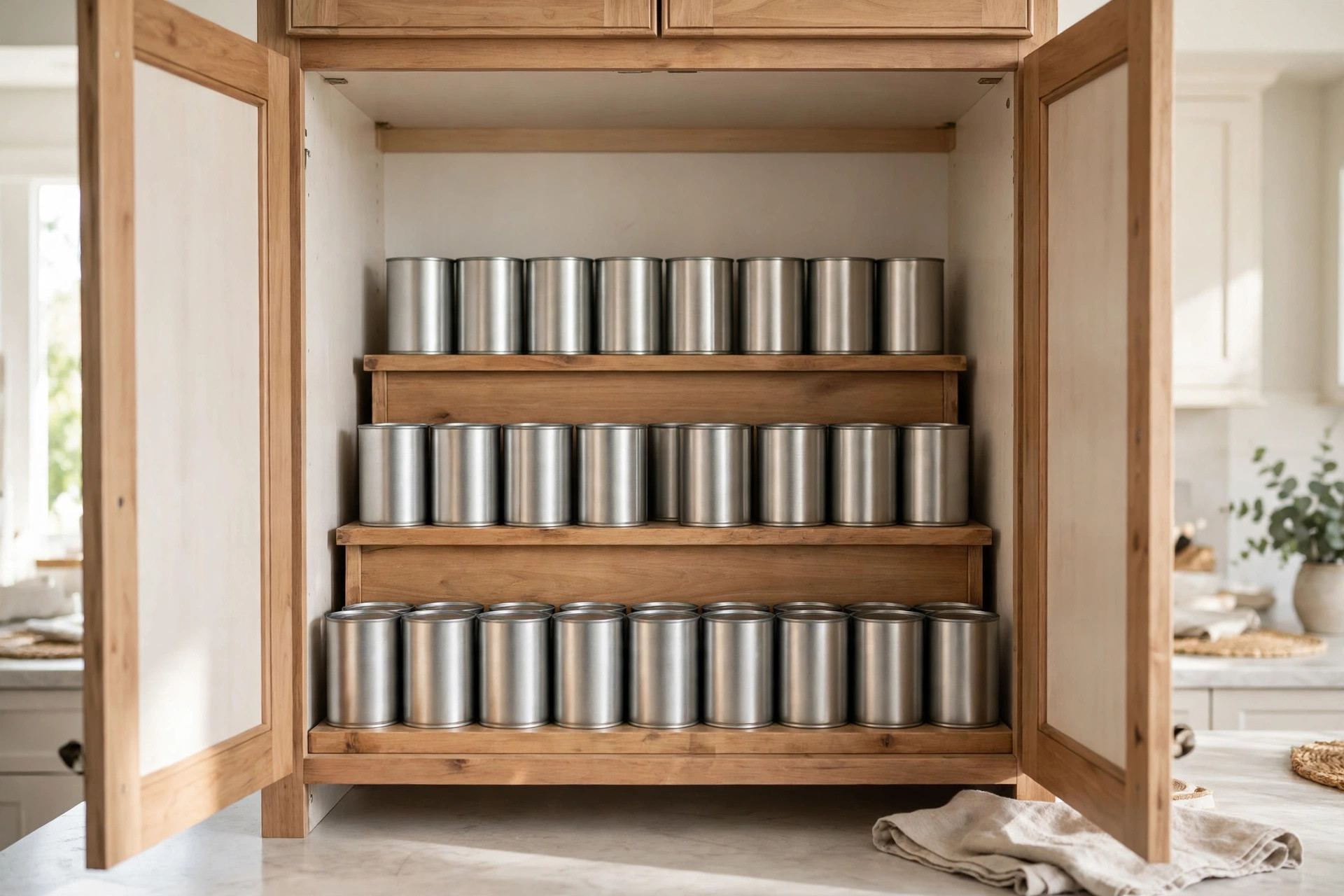
Cans stored in a single layer on a deep shelf are cans you will buy twice.
A tiered riser, stadium steps for food, lifts each row above the one in front so every label shows at a glance. Risers work in cabinets, on bookcase pantry shelves and inside deep drawers alike. Group cans by type on each step, vegetables with vegetables, soups with soups, and rotate older cans to the front when you shop.
It is a small buy that behaves like a renovation, because suddenly the back of the shelf exists again.
7. Decant Dry Goods Into Stackable Containers
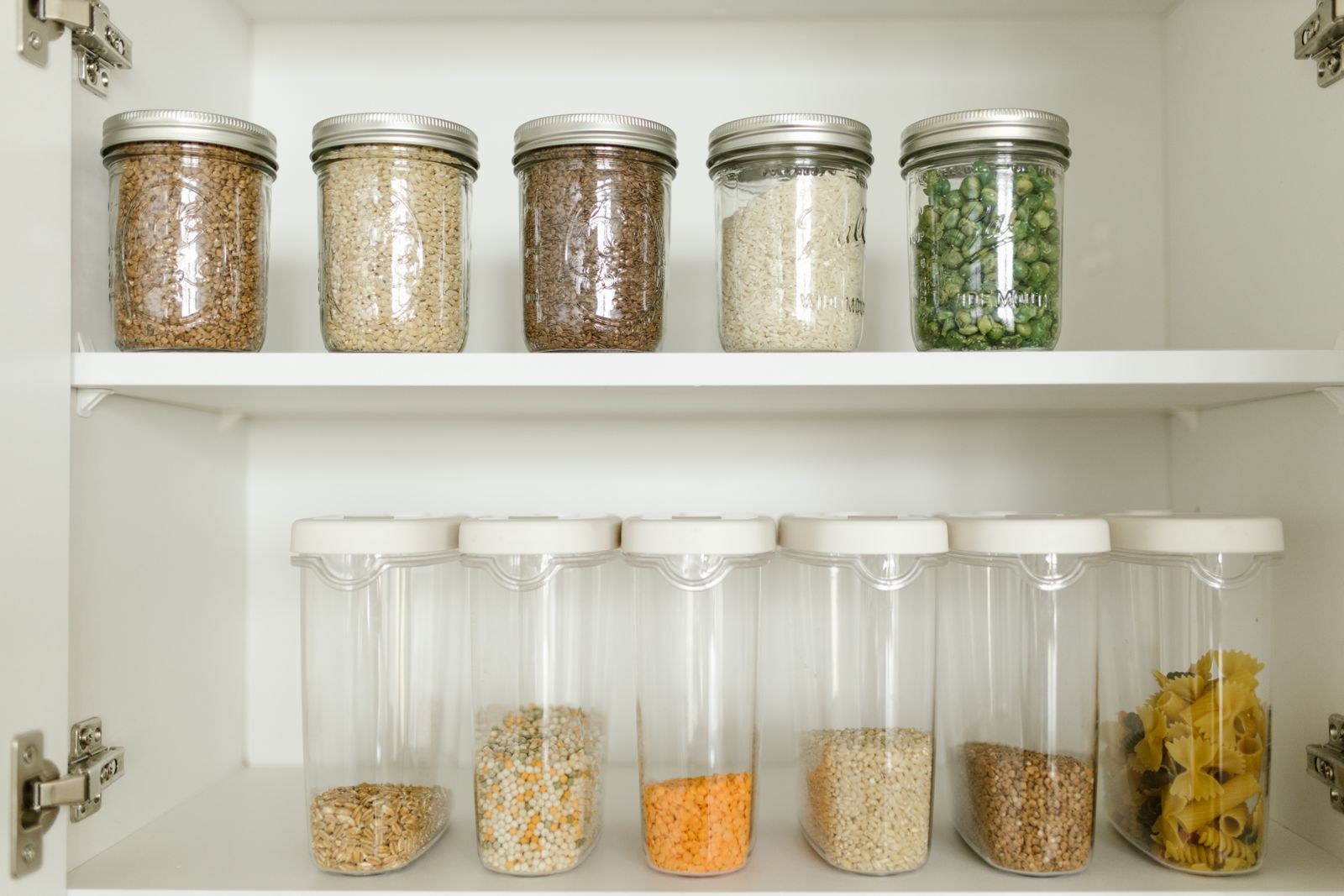
Bags and half open boxes are why no pantry kitchens feel messy.
Move the daily staples, flour, rice, pasta, oats, sugar, into clear stackable containers and the food zone tidies itself. Containers stack to the full height of the shelf, pour without spills, and show at a glance what is running low. I label each one with the contents and the date it went in, and keep a scoop inside the big containers.
Skip buying a matched designer set if money is tight; plain containers in two sizes do the same job. And keep the original cooking instructions as a photo on your phone if you need them.
8. Spin Bottles and Jars on a Turntable
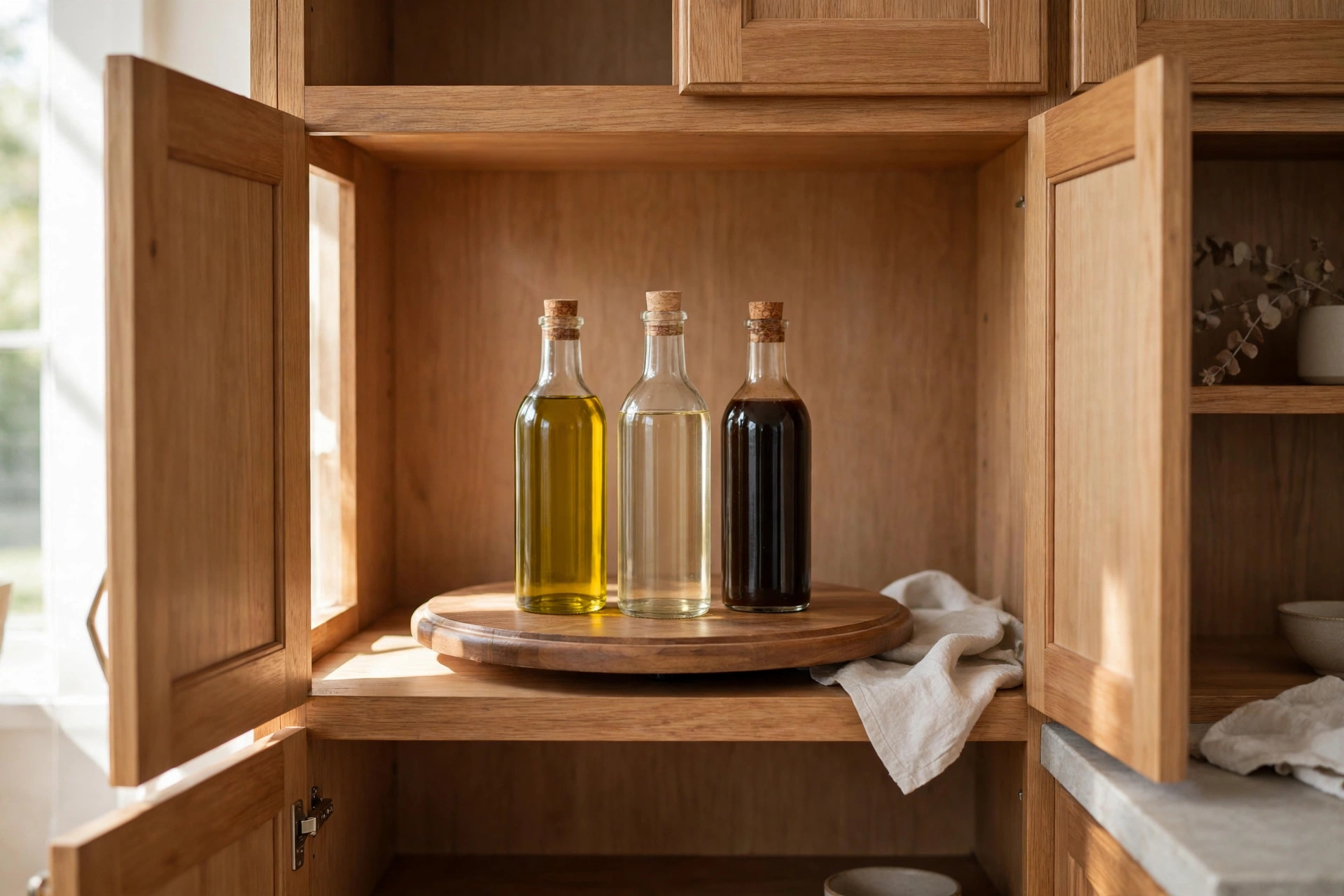
Oils, vinegars, sauces and small jars are the items most likely to colonize a counter.
A turntable inside a cabinet or on the cart gathers them into one spinning station: one turn brings the soy sauce forward instead of a five bottle dig. Choose a turntable with a low lip so bottles cannot slide off mid spin, and keep it to one layer. A turntable stacked two deep has just moved the hiding problem up a floor.
Wipe it once a month; drips are the only maintenance it ever asks for.
9. Divide Deep Cabinets Into Pull Out Bins
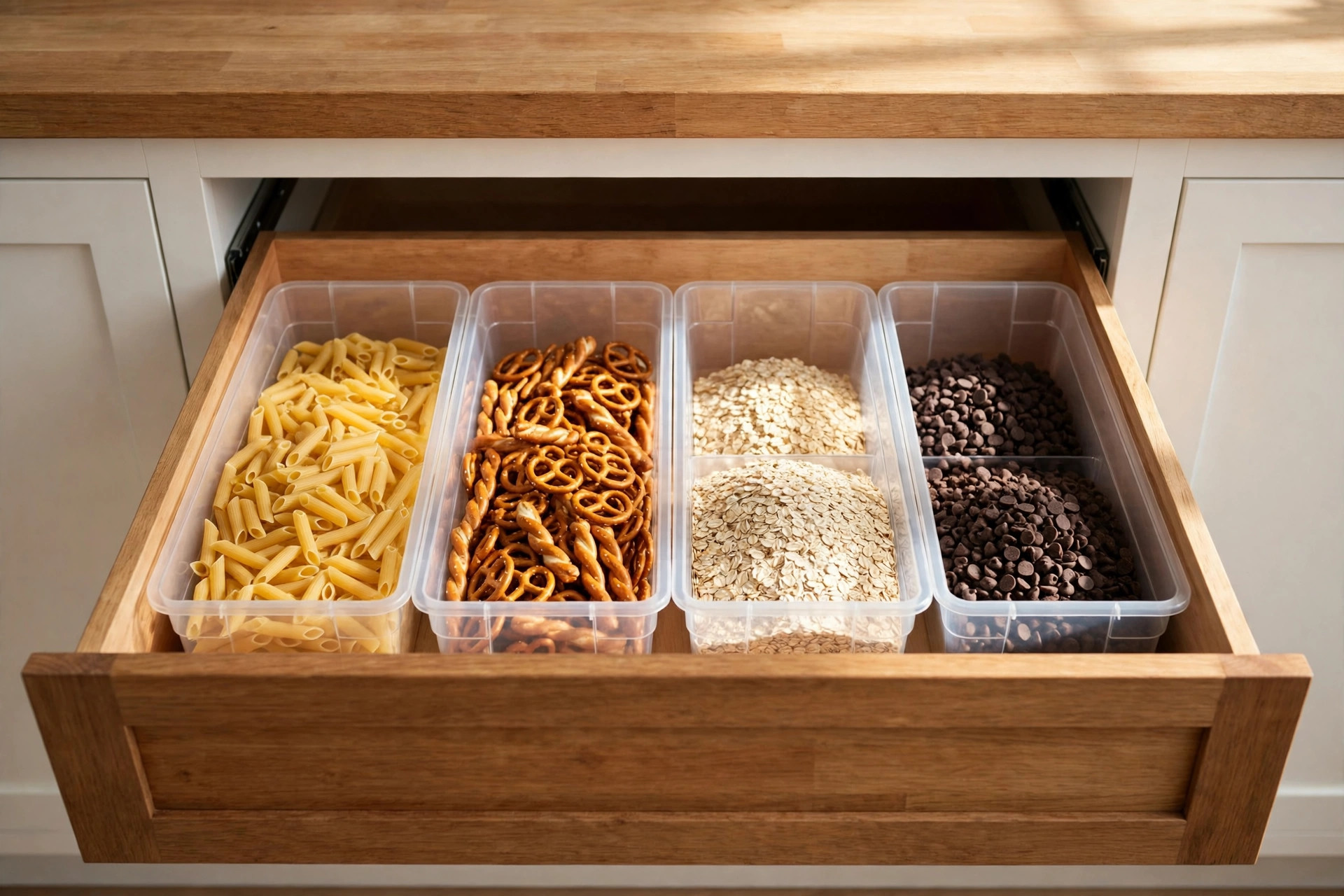
Deep base cabinets swallow food packaging whole. Replace the loose pile with a few open bins, one per category, and pull the whole category out like a drawer when you cook.
Pasta and grains in one, snacks in another, baking in a third. Label the front of each bin if other people share the kitchen, because a system only survives if putting things back takes no thought at all. Keep the bins slightly smaller than the cabinet so they slide without scraping.
Reserve the very back of the cabinet for genuine back stock only. If daily food drifts back there, the bin system is already breaking.
10. Hang Under Shelf Baskets Inside Cabinets
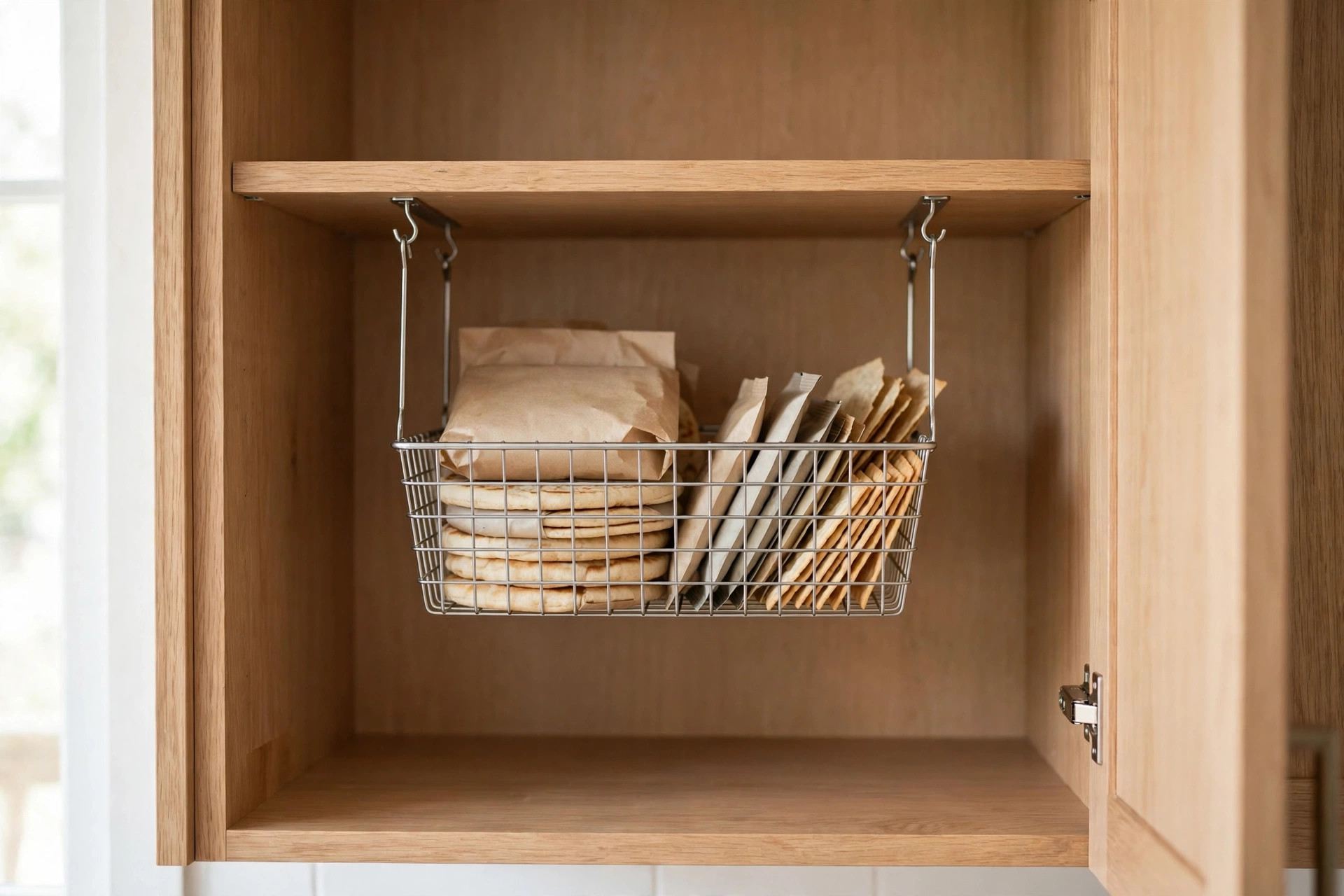
Every cabinet shelf has a wasted strip of air beneath it. Clip on under shelf baskets reclaim that strip for light, flat food: tortillas, packets, spice refills, tea and coffee sachets.
The basket hangs from the shelf above and slides like a small drawer. It suits the awkward flat items that fall over in door racks and vanish under cans.
Keep loads light, because the basket is only as strong as the shelf edge it grips, and use one per cabinet so the space below stays open. A sagging basket crammed with jars drags on the shelf above and helps nothing.
11. Use the Top of the Fridge, Deliberately
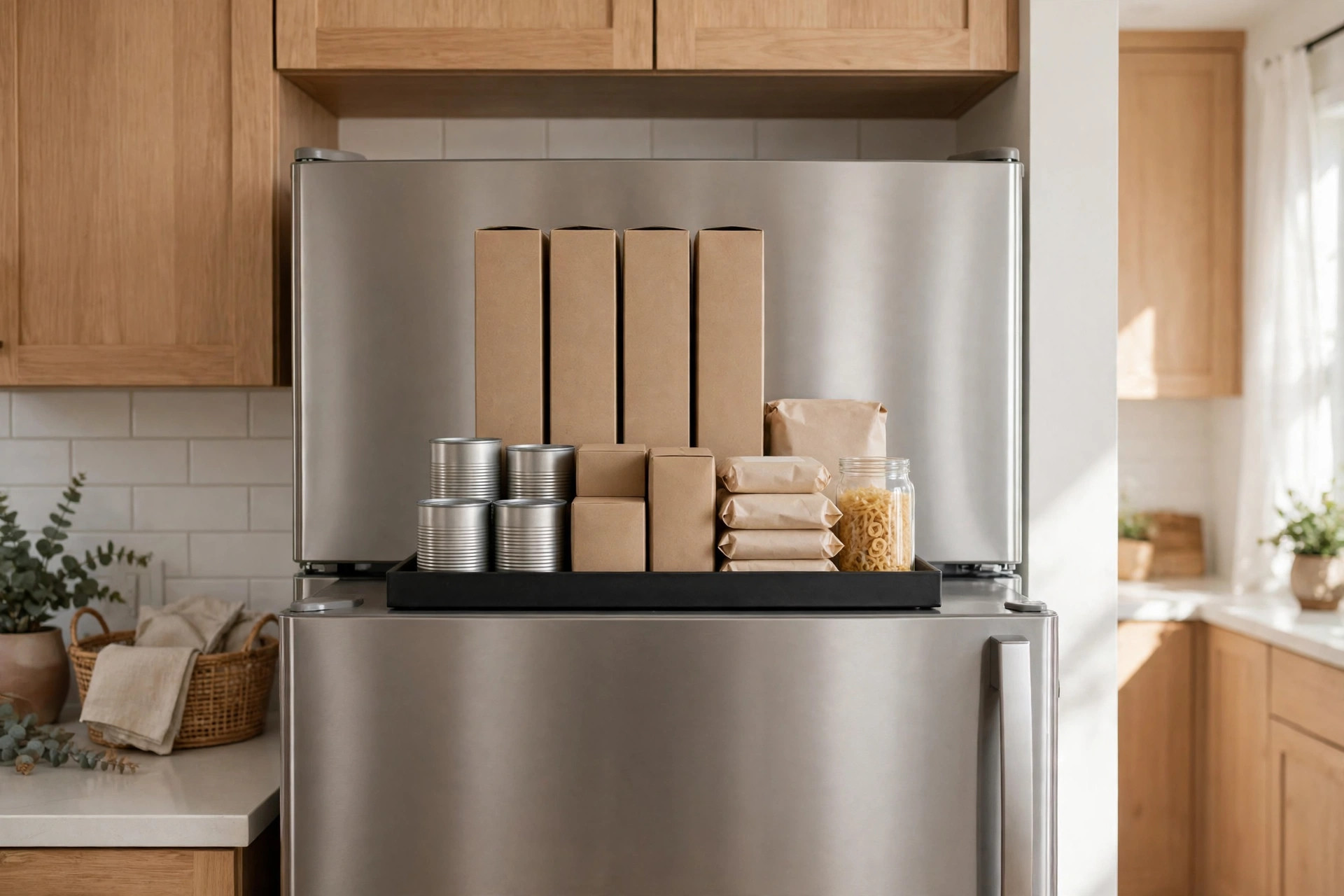
The top of the fridge becomes a junk shelf by default, so claim it on purpose instead.
A single tray or low basket up there corrals the overflow: the cereal boxes too tall for the cabinets, the party sized chip bags, the back stock of paper goods. One container is the whole rule; if it does not fit in the tray, it does not live up there. That one rule is the difference between storage and a junk shelf with a tray on it.
Wipe the surface before you start, because fridge tops collect a film of cooking grease and dust. And keep a step stool nearby, so reaching is never a stretch and a prayer.
12. Slide a Slim Tower Into the Fridge Gap
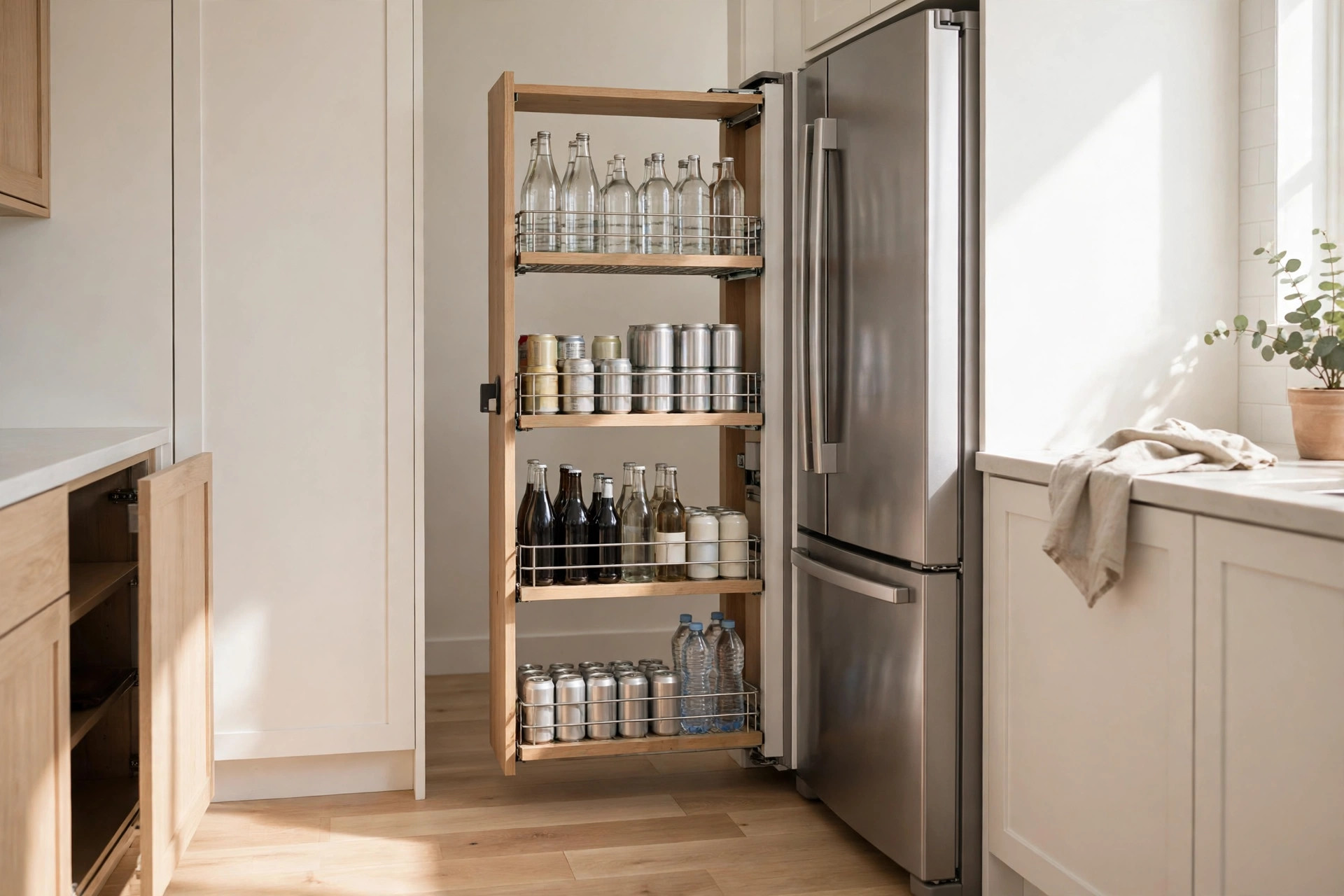
The narrow gap between the fridge and the counter, or the dead strip beside the stove, often fits a slim slide out tower.
These tall, shallow racks, some as slim as 5 to 6 inches wide, hold bottles, cans and jars in single file, which is exactly how small items should be stored: nothing behind anything else. Because it hides completely when closed, it suits kitchens where visible storage would fight the room’s look. One tower usually replaces a full cabinet of scattered bottles.
Measure the gap honestly, including baseboards and the fridge door swing, before ordering. A tower that clears the gap but catches the door swing is money spent on a wobble.
13. Hang a Rail of Baskets for Produce
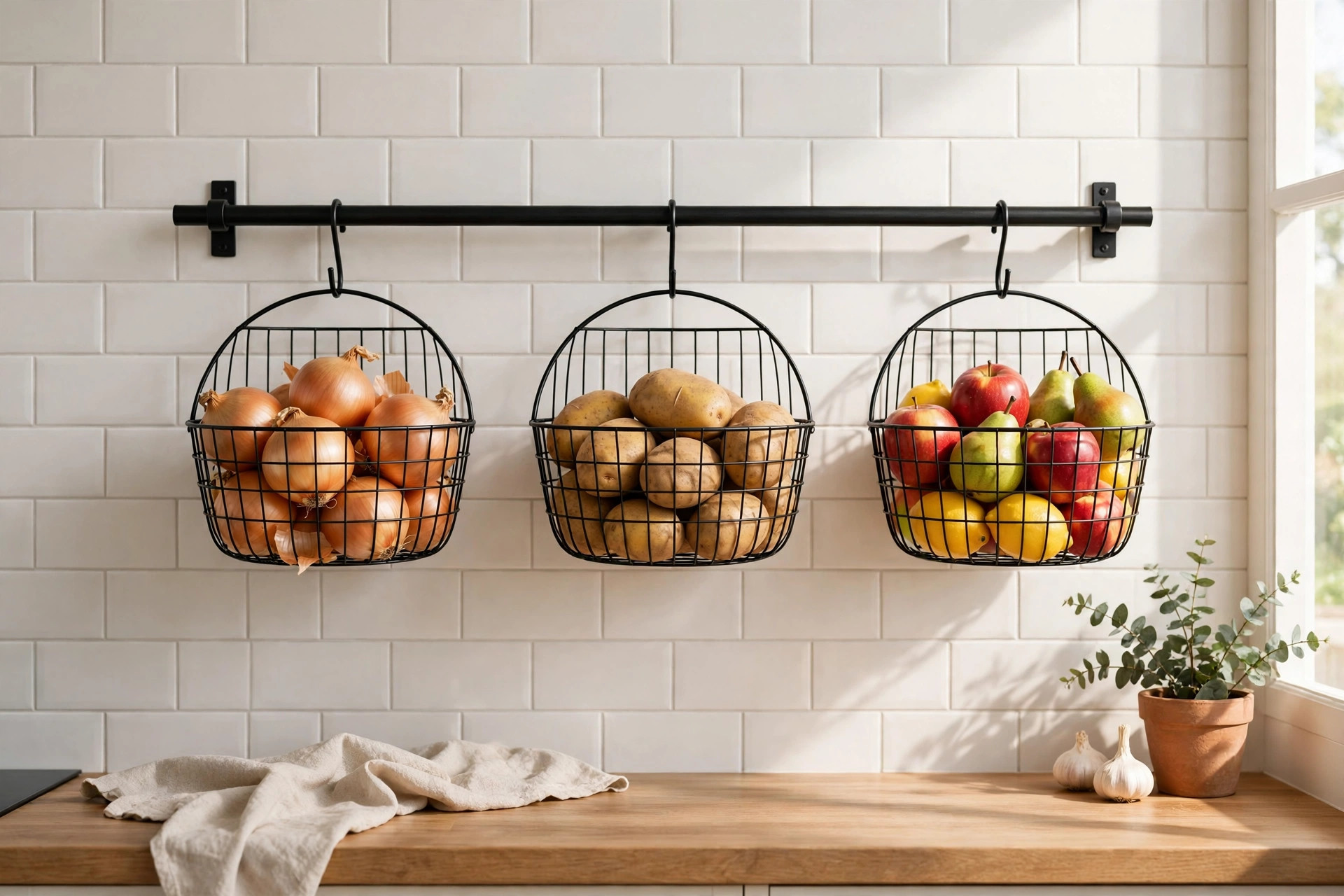
Onions, potatoes, garlic and fruit do not need the fridge or a cabinet. They need air, and a home off the counter.
A wall rail with two or three hanging baskets gives produce a visible, ventilated station and frees the fruit bowl spot for actual prep. Hang the rail away from the stove’s heat and steam.
Keep potatoes and onions in separate baskets. Stored together they spoil faster, each quietly ruining the other, and a rail makes separating them easy. Renters: adhesive and over door versions exist, and the wall is left clean when you go.
14. Style the Pantry Substitute Like Furniture
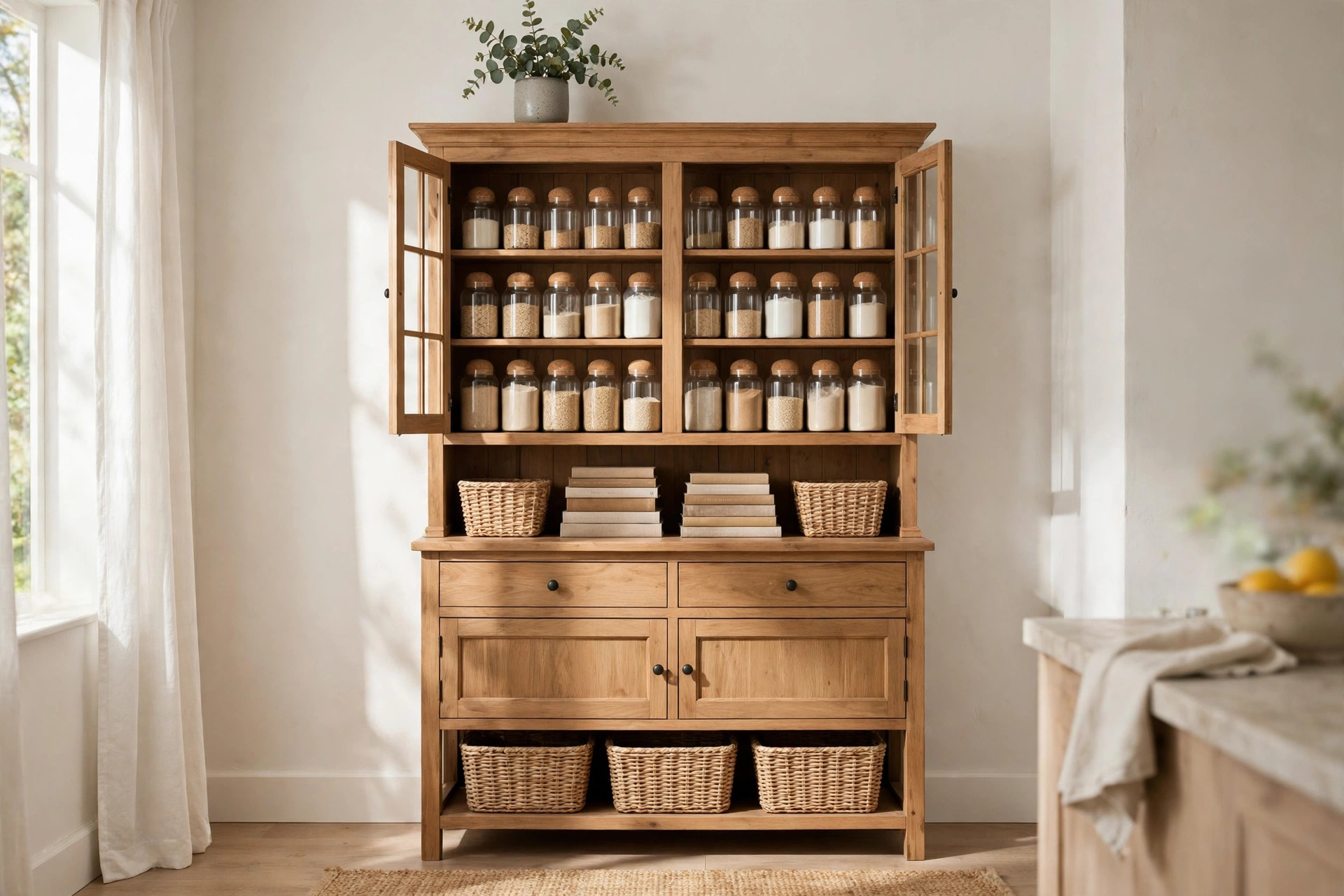
A pantry substitute fails socially, not practically: it looks like storage that escaped.
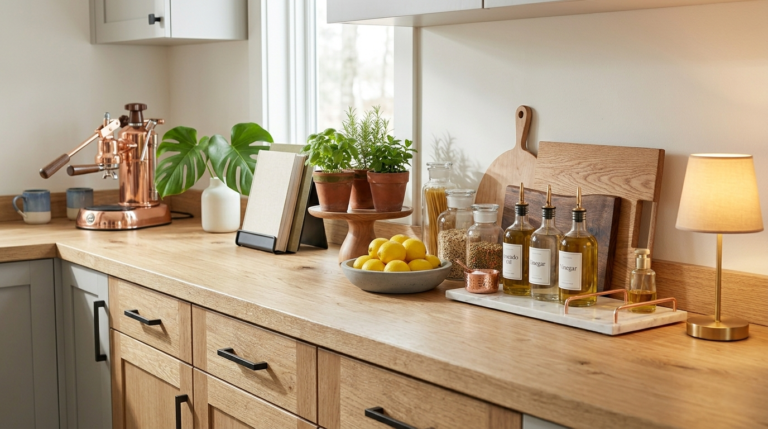
Fix the impression with the same styling moves you would use on any visible piece. Corral small items in matching baskets, decant into uniform containers, and leave the top styled with a plant, a stack of cookbooks or the fruit bowl. The guidance in these easy kitchen counter decor ideas applies to the top of a hutch or cart exactly as it does to a counter: one tray, grouped items, breathing room.
When the pantry piece looks intentional, nobody asks where the real pantry is. I consider that the finish line of this whole list.
15. Add a Portable Island With Shelves Underneath
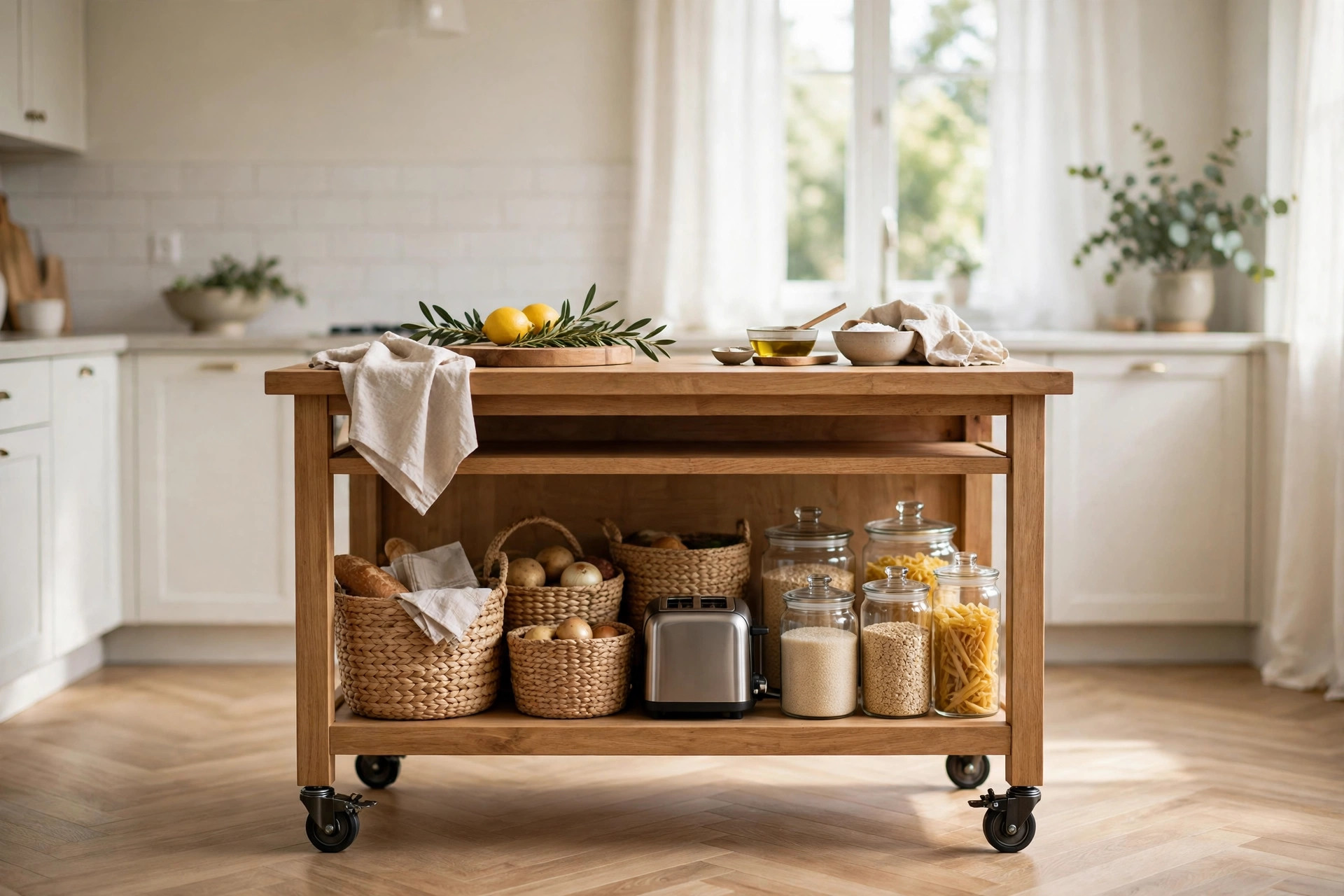
When floor space allows one bigger move, a portable island earns it twice: counter on top, pantry below.
The open shelves or basket shelves under an island hold the heavy back stock, small appliances and bulk buys that no cabinet wants. It is the boldest of the portable kitchen island ideas because it behaves like the pantry and the prep surface in one piece.
Choose lockable wheels, keep the heaviest items low and centered, and leave one side of the shelf space open for stools if the island doubles as your table. An island loaded lopsided rolls like it, so balance the weight as you load it.
The Bottom Line
A pantry is a function, not a room, and any kitchen can perform it. Give food one territory, the cart, the bookcase, the hutch or a strictly zoned cabinet, then fix the details so nothing hides. Style the visible pieces like furniture and the system survives daily life instead of collapsing by Thursday.
Start with the zoning. One food only cabinet, tonight, before you spend a single dollar.
Frequently Asked Questions
How do you organize food without a pantry?
Give food one territory instead of letting it scatter: a rolling cart, a bookcase or hutch, or one cabinet run zoned by food type. Inside that territory, use risers, turntables and bins so every item stays visible, and decant staples into stackable containers that use the full height of the shelf.
What furniture works best as a pantry substitute?
Closed furniture, a hutch, sideboard or freestanding cabinet, hides the most and looks the most intentional, while a bookcase gives cheaper open storage that suits decanted jars. A rolling cart is the best first buy because it is inexpensive, movable and renter safe. Match the piece to your floor space: slim and tall beats wide and deep in a small kitchen.
How do you store cans and dry goods in a small kitchen?
Cans belong on tiered risers or in single file slide out racks so no can hides behind another. Dry goods keep best decanted into labeled, stackable containers stored together in one food zone. Keep the heaviest items low, rotate older stock to the front, and store daily items between knee and shoulder height.
Can a kitchen cart really replace a pantry?
For a small household, mostly yes. A three tier cart holds the daily working pantry, cans, jars, packets and produce, especially paired with one cabinet zone for back stock. It will not swallow bulk warehouse buys, but it keeps everyday food visible, grouped and close to the counter, which is what a pantry is actually for.