11 Portable Kitchen Island Ideas for Small Kitchens
The cutting board lives on the stove. The mixing bowl balances on the edge of the sink. Every dinner starts with moving the fruit bowl somewhere, then moving it back.
That is not a tidiness problem. It is a counter problem, and a small kitchen cannot grow more counter. What it can grow is a counter that moves. A portable island gives you a work surface while you cook and a home for the tools crowding your drawers, then it parks against the wall and hands the floor back. I keep coming back to the rolling cart in my own cramped kitchen, and the 11 versions below are the ones that earn their floor space.
The short version, before we start:
Clearance first. Keep about 36 inches for walkways and about 42 inches for a work aisle with one cook, the standard NKBA planning numbers. Tape the footprint on the floor before you spend anything.
Size down. A cart 36 to 48 inches long and 18 to 24 inches deep is plenty for most small kitchens.
Locking wheels, always. At least two casters must lock. A surface that drifts mid chop is a hazard, not a helper.
Weight goes low. Heavy pots and cans live on the bottom shelf, so the cart rolls steady instead of top heavy.
1. Start With the Classic Rolling Cart
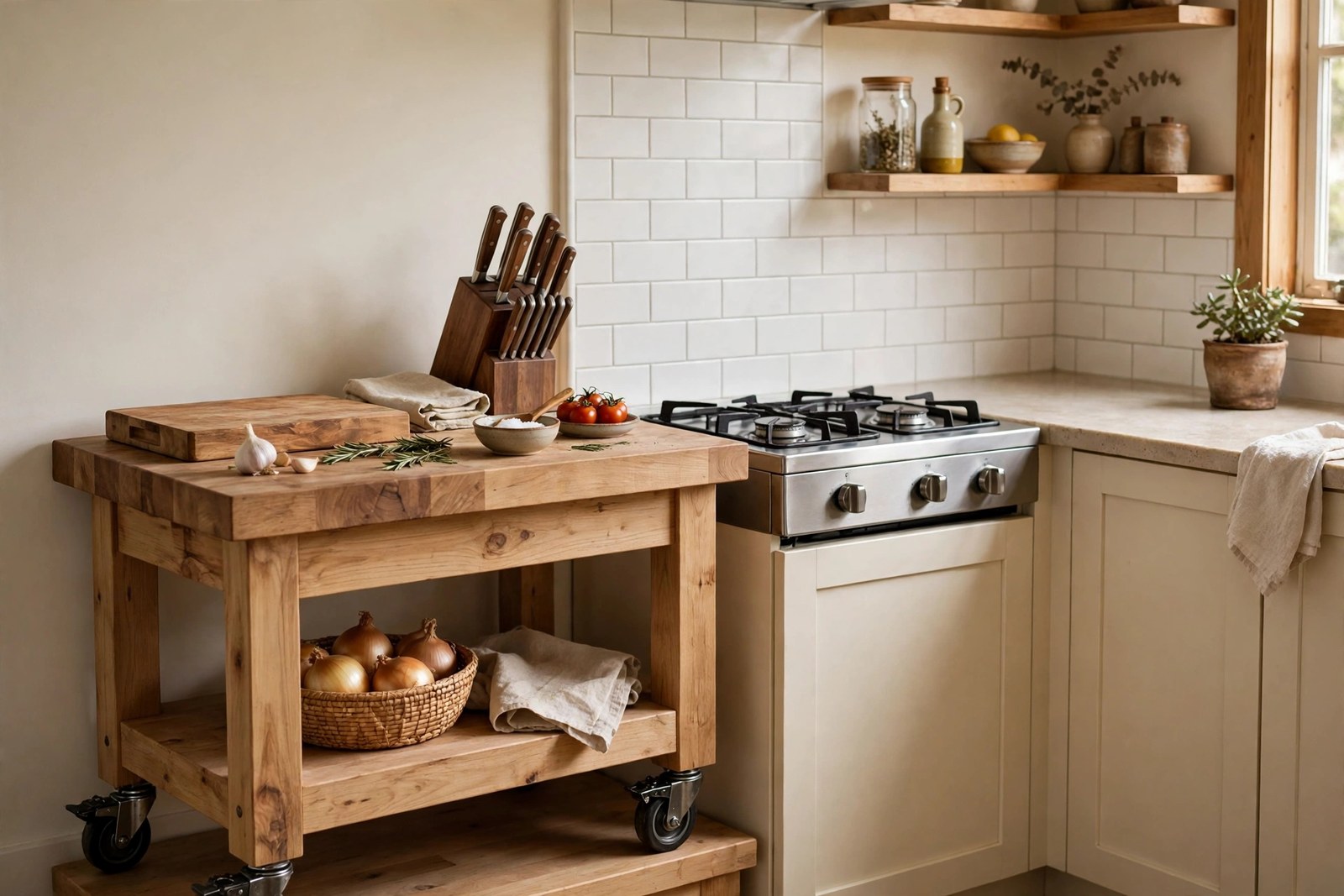
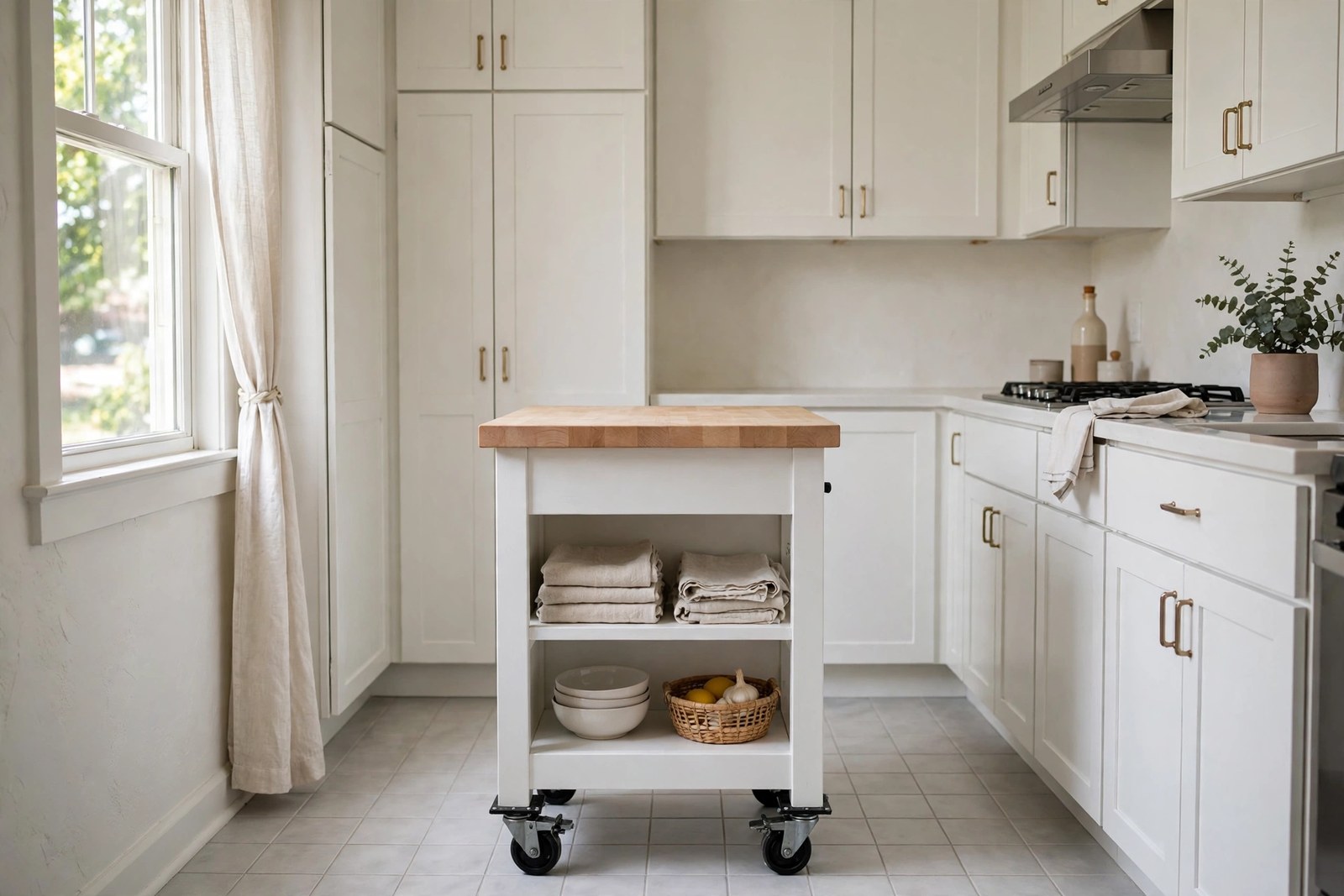
This is the one most small kitchens end up with, and for good reason.
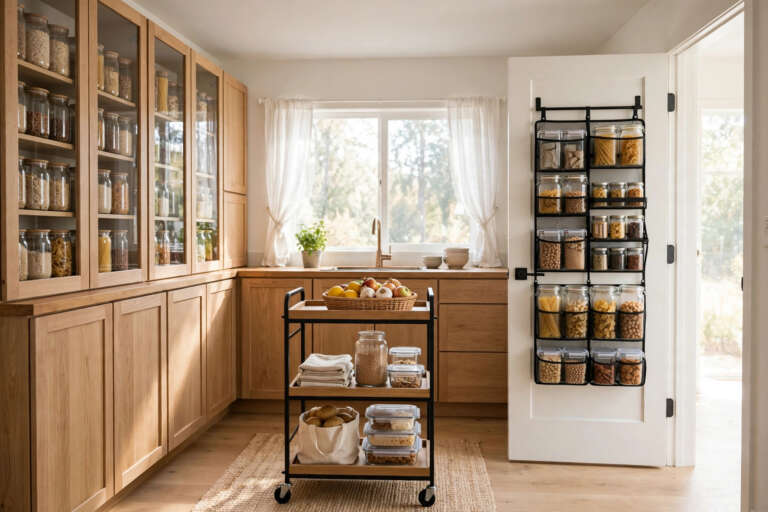
A sturdy frame, a real wood top at about counter height, 36 inches, and casters that roll smoothly over your actual floor. The wood top takes a cutting board workout without complaint, and the whole thing behaves like the island your kitchen was never built with. Park it against the wall loaded with everyday tools, roll it out when a recipe needs room.
The catch is the wheels. Cheap casters wobble and wander, and a cart that drifts while you chop is dangerous. Lock two wheels before any knife work, every time, and test the roll in the shop with weight on it, not empty.
2. In a Galley, a Console Table Beats a Cart
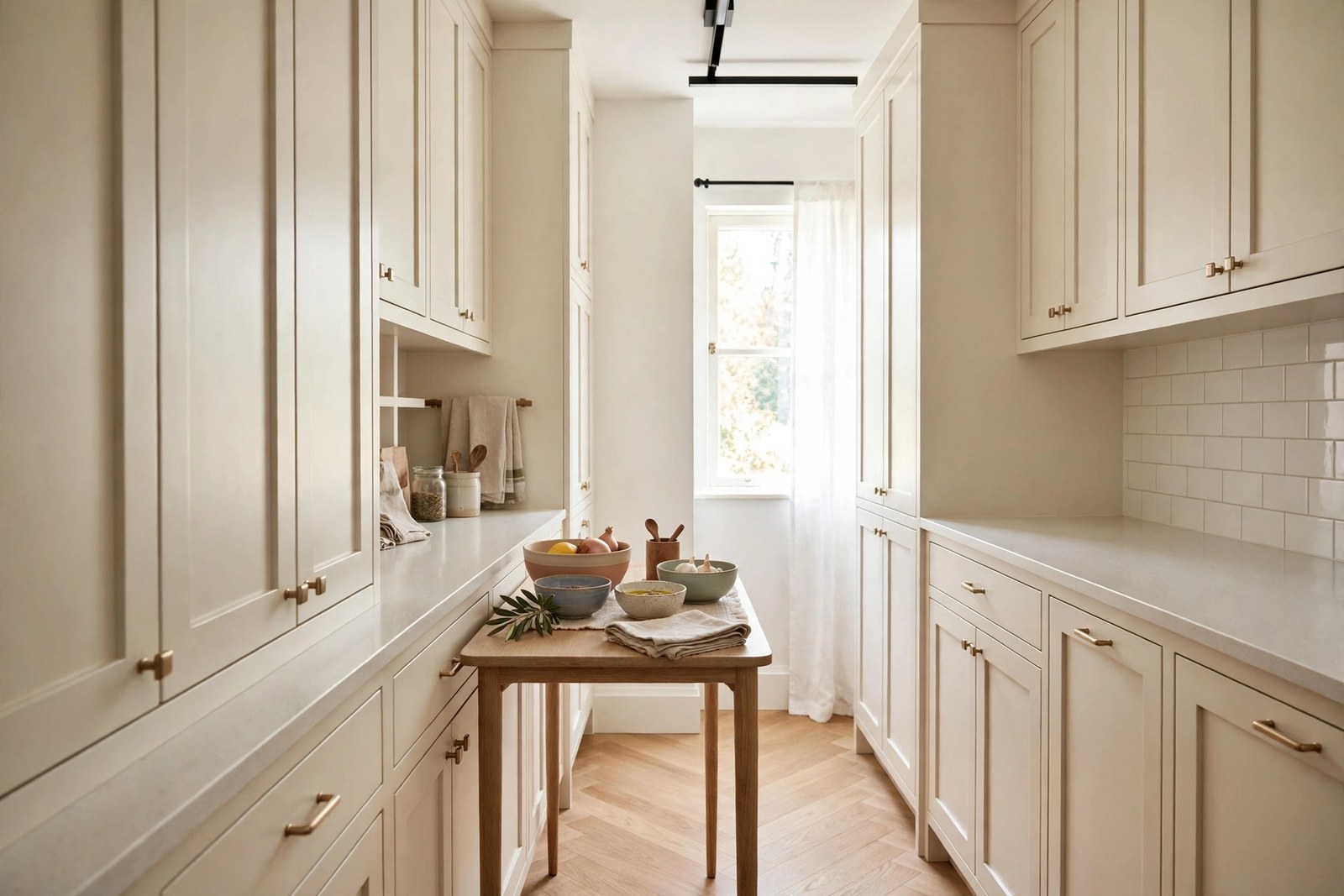
Long thin kitchen? Skip the cart and look at the furniture you walk past in the hallway.
A narrow console or sofa table, 12 to 16 inches deep, keeps walkways open while still holding a row of bowls, a cookbook stand and tonight’s ingredients. Pick one with a lower shelf so it stores as well as it surfaces, and it doubles as a serving station when guests crowd in, which a fixed narrow kitchen rarely offers any other way.
Because it has no wheels, this version has to earn a permanent lane. Measure the fridge door swing before you settle it, because a console that blocks the fridge by an inch will annoy you daily.
3. The Drop Leaf Cart Shrinks on Demand
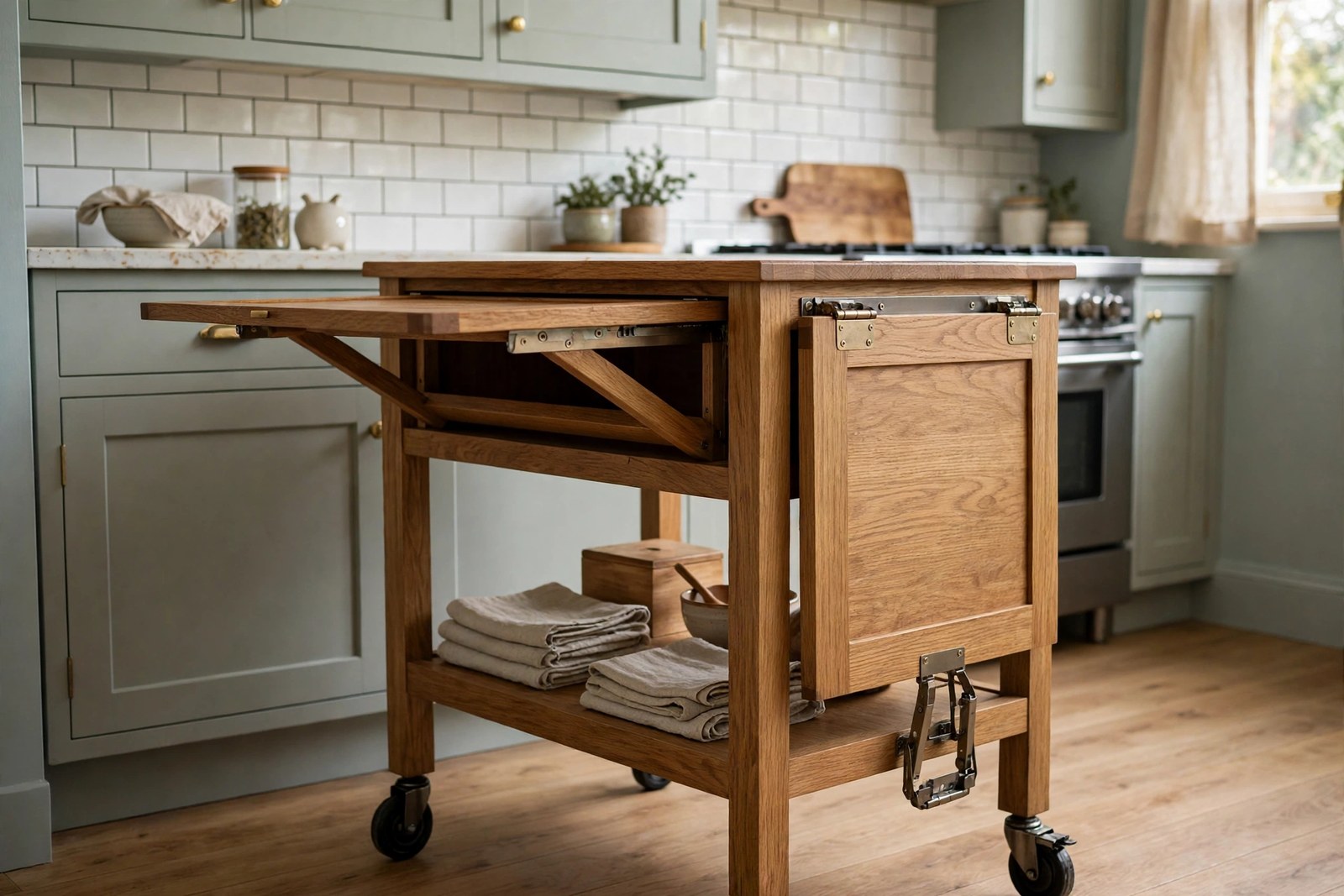
Two kitchens live in your small one: the big cooking day and the ordinary Tuesday. A drop leaf cart fits both.
Leaves up, it is a real work surface with room for two stools. One leaf down, it parks in half the footprint. This is the version to choose when the cart also has to be your only dining table, a common apartment compromise that works far better than eating at a desk.
Heads up: the hinges take the strain of every meal. A leaf loaded with a heavy stand mixer will sag within a year. Keep heavy gear on the fixed center section, work on the leaf, and tighten the hinge screws each spring.
4. Serious Cooks, Look at Stainless
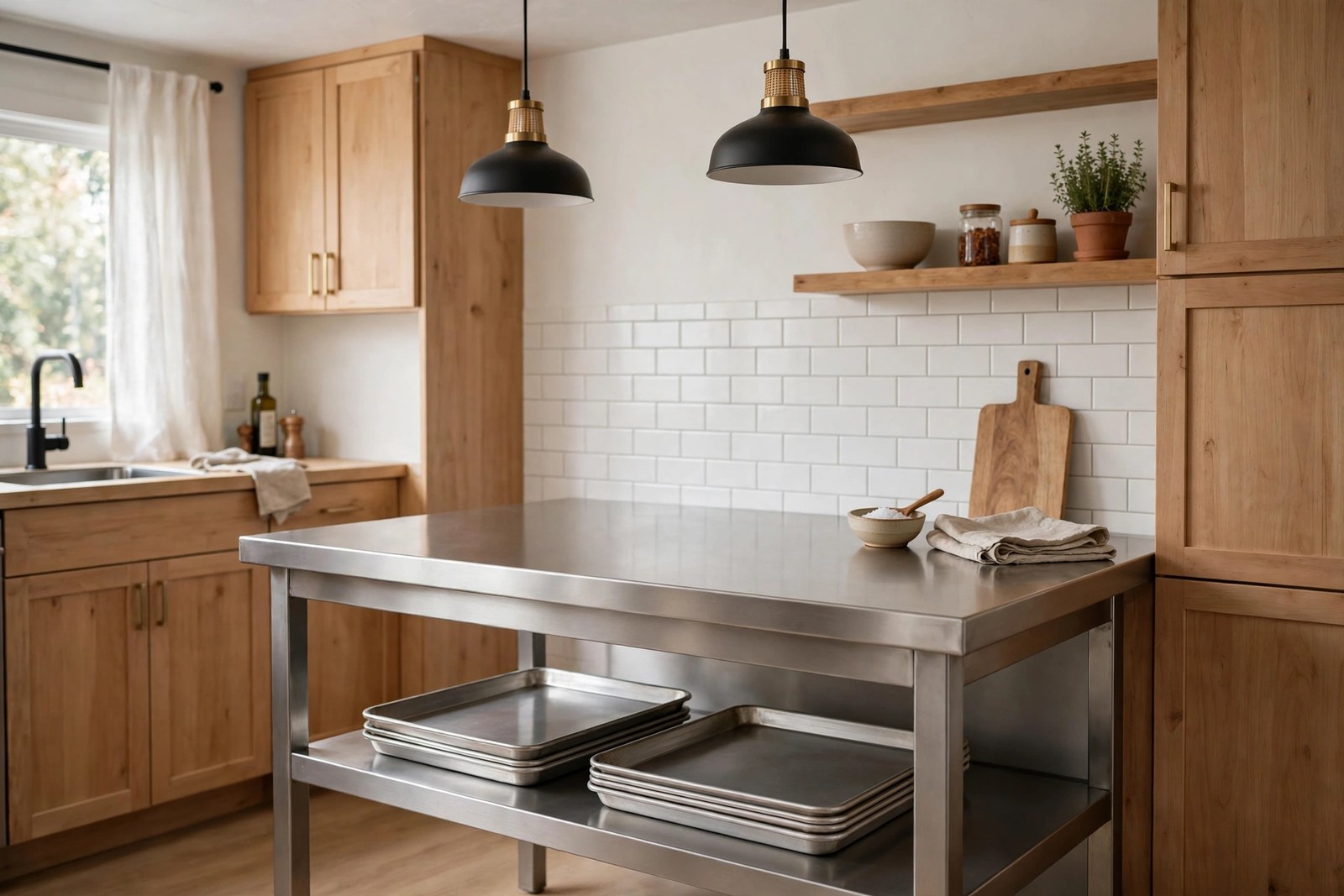
Restaurant supply tables are the quiet bargain of this whole list. They are light, tough, and they wipe clean in seconds.
The open undershelf holds sheet pans, mixing bowls and the stockpot that fits nowhere else. Most run about $80 to $150 depending on size, which is less than most decorative carts. If your floors slope, choose one with adjustable feet and level it once, properly.
The trade is noise and chill. Metal on metal clangs, and the top feels cold and a bit industrial. I put a big wood board on top of mine and both problems go away, and the board lifts off for a proper scrub.
5. Short on Storage? Buy the Drawers
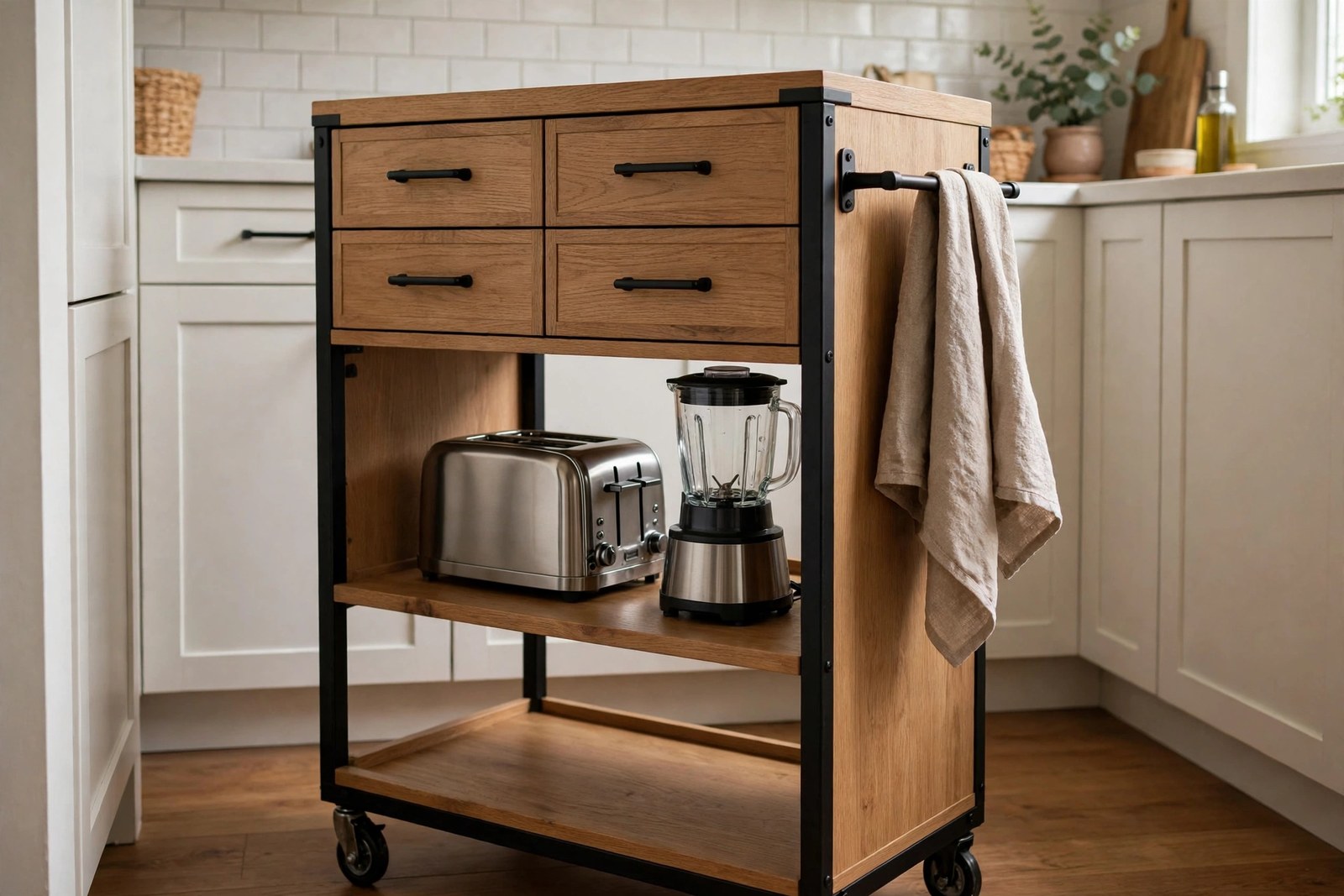
Some carts are mostly surface. This one is mostly cupboard, and that is the point.
Drawers swallow utensils and linens, shelves take the appliances, and a towel bar on the end keeps the most grabbed item in the kitchen off the oven handle. Pick this version when storage, not counter space, is your real shortage, especially if the wider kitchen storage ideas for no pantry homes are already doing duty elsewhere in the room.
Load it like you mean it: daily tools in the top drawer, heaviest items low and centered. A storage cart loaded top heavy wobbles every time it rolls, and wobbling is how jars meet the floor.
6. Put a Low Dresser on Casters
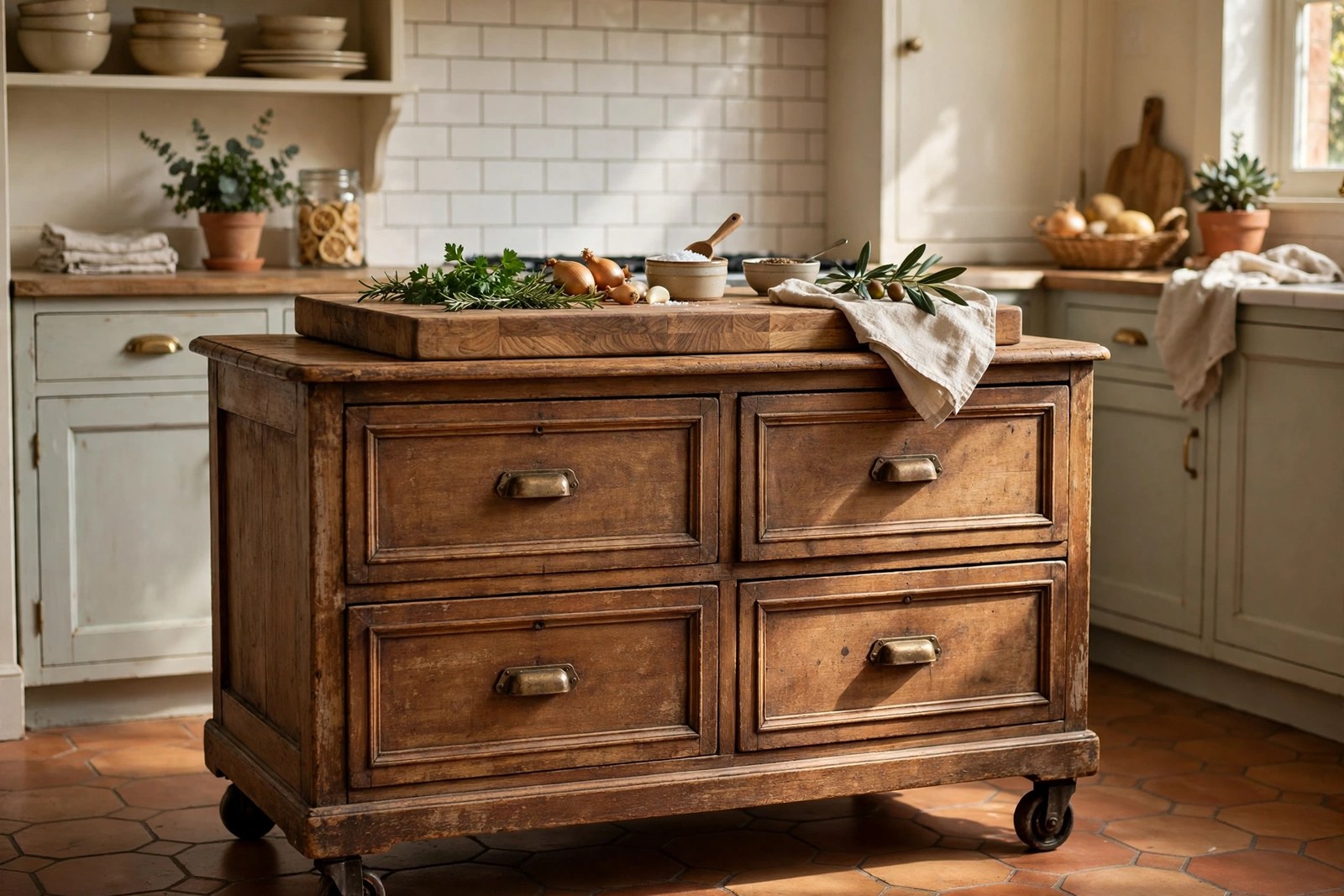
A low dresser or sideboard with casters underneath becomes the island with the best drawers in the room. No kitchen cart matches deep, real drawers.
Casters add about 4 to 5 inches, which usually lands the top right around counter height. Lay a large board or tray on top to protect the finish while you work. This is the island for cooks who want the kitchen to feel furnished rather than fitted, and I would take a solid old dresser over a flimsy new cart every single time.
Buy the sturdiest one you can find, though. Drawers full of cans and cast iron ask a lot of old joinery, and a cracked drawer runner is a miserable repair. Keep the cast iron in the lightest load spot, or in the oven, and let the dresser carry the rest.
7. The Best Island Might Fold Away
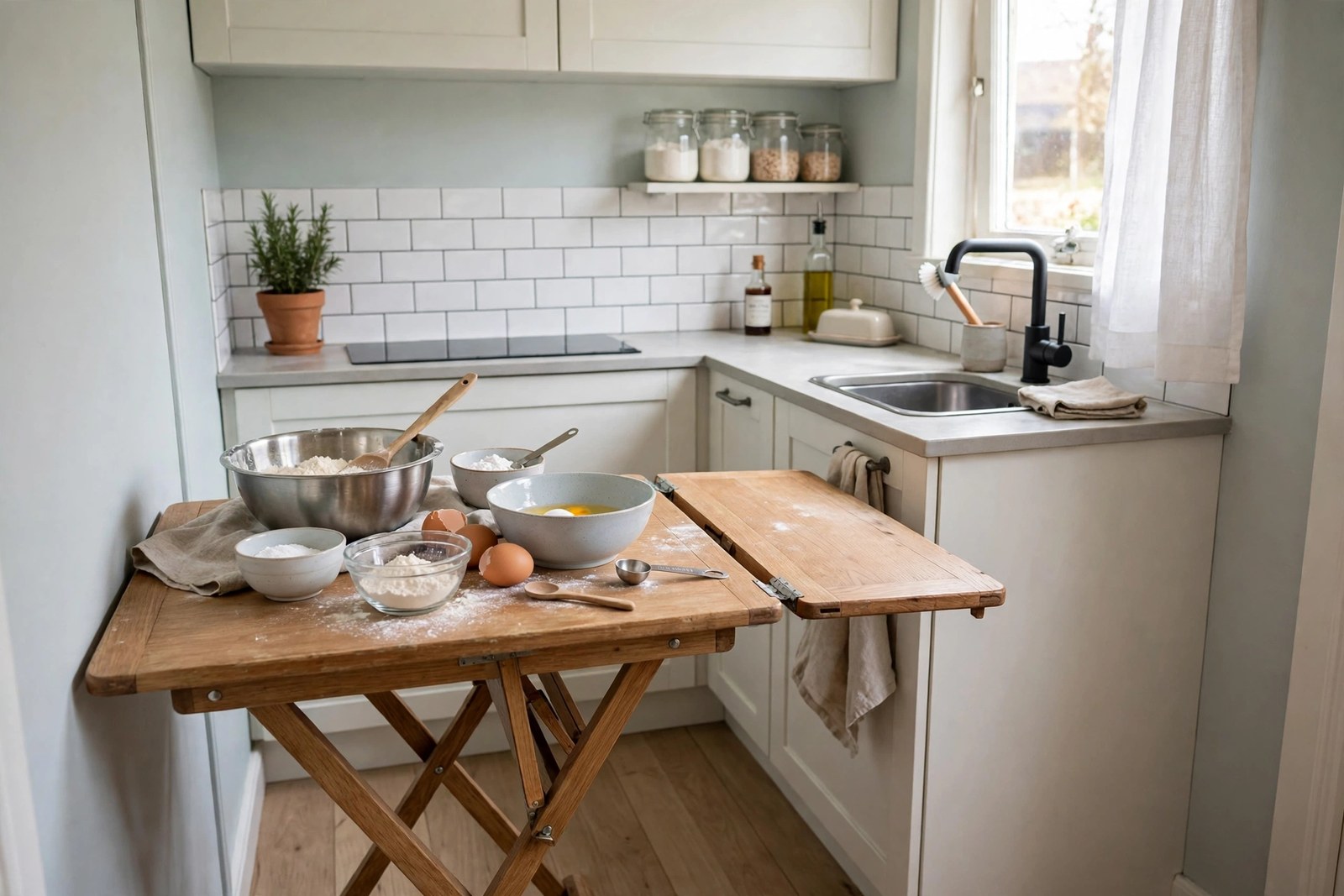
For the tiniest kitchens, the smartest island is one that does not exist most of the time.
A sturdy folding table, gateleg style or a simple trestle design, sets up in about a minute for baking days, holiday prep and serving. Because it stores away, it can be generous when open, which no always out cart can match. Flat against a wall, behind a door, into a closet, gone.
The failure here is storage, not the table. A folded table left leaning is a falling hazard in a small home. Keep a hook or strap where it lives so it stands secured, and treat setup as part of the ritual of a big cooking day. Mine hangs on two hooks behind the kitchen door, upright and out of the way.
8. Let the Bar Cart Run Breakfast
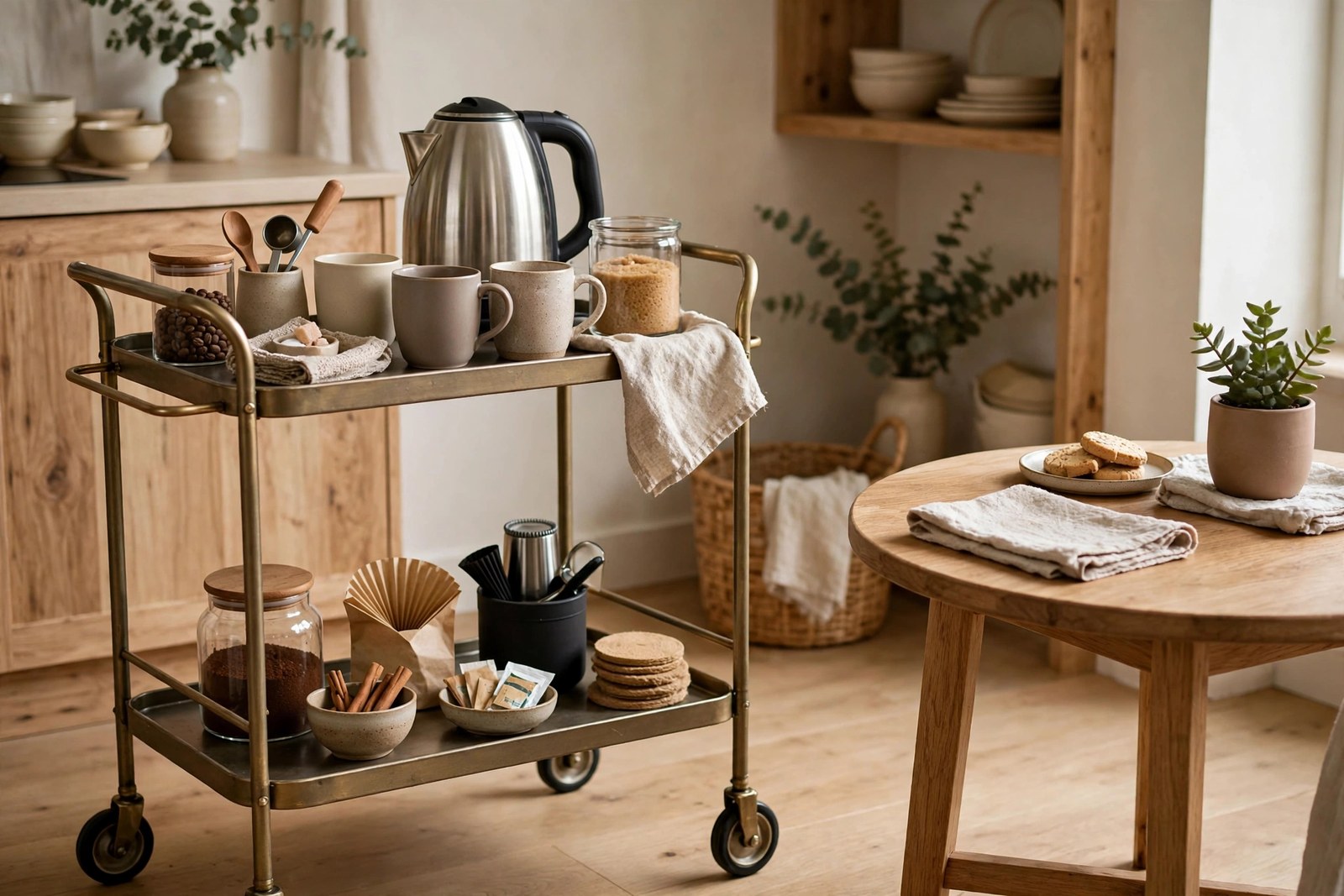
That glamorous bar cart can earn its keep in the kitchen instead of gathering dust by the sofa.
Its two open tiers suit a dedicated drinks or breakfast station: kettle and mugs up top, supplies below, rolled to the table when guests come. It will never be a chopping surface, and it should not try to be. Its strength is mobility and a tiny footprint, which makes it a smart second island beside a bigger cart.
Styled with the coffee station ideas for small kitchens in mind, it becomes the hardest working piece in the apartment on weekend mornings. Just measure the parking spot first, outlet included.
9. An Inch Wrong Everywhere? Build One
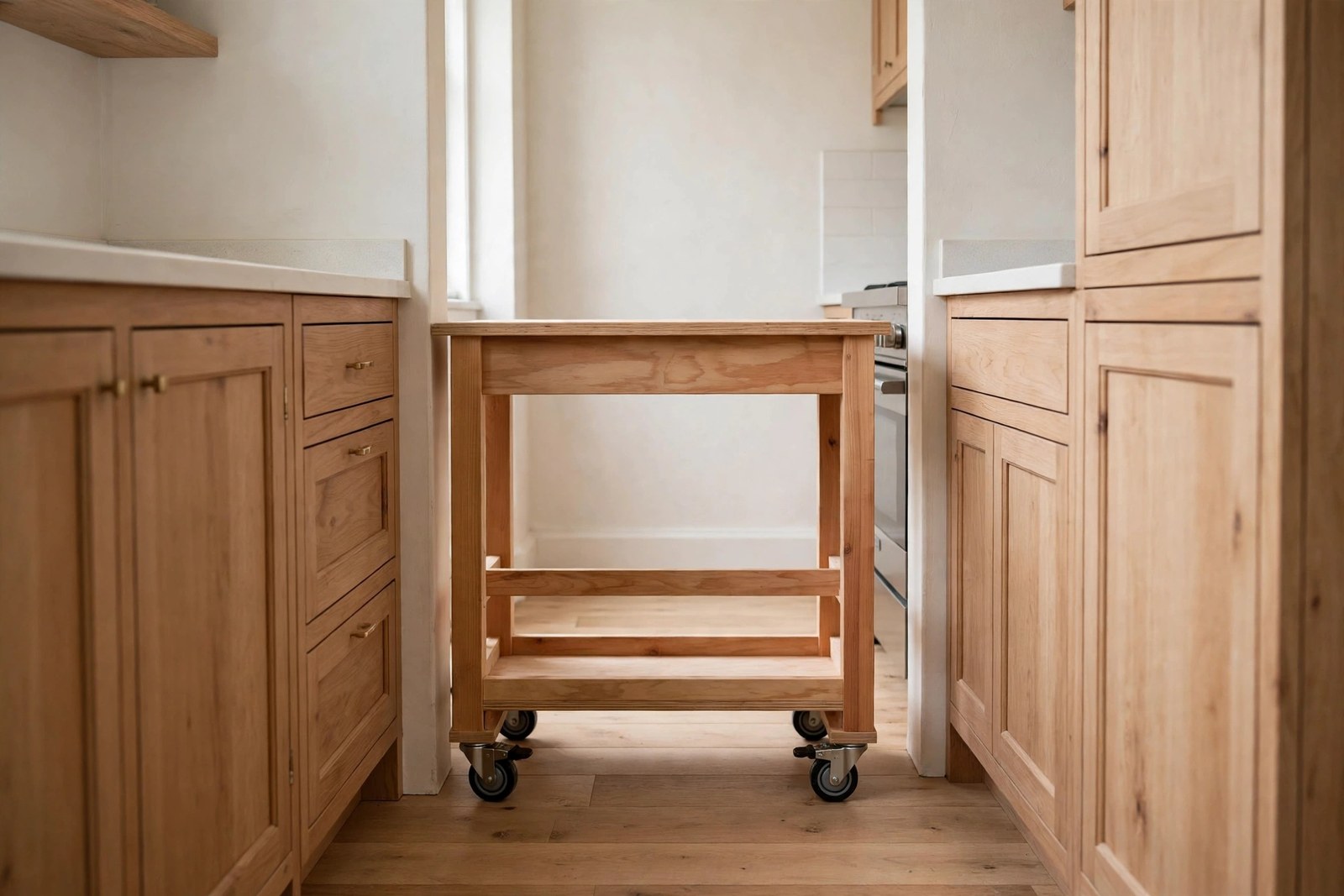
If every ready made cart is an inch wrong, a simple custom build solves it: a thick wood top on a frame with locking casters, sized exactly to your gap and your height.
A local carpenter or a confident DIY weekend can produce it, and the payoff is a piece that fits like it was designed with the house. Add one shelf below and stop there. Overbuilding storage into it makes it heavy to move, and heavy is how a portable island stops being portable.
My rule: skip the custom build until you have lived with a cheap cart for a month. A month teaches you the exact width, height and habits you actually need, and then the built one is right the first time. Measure the doorway swing and the fridge door before anyone cuts wood.
10. Go Tall With a Baker’s Rack
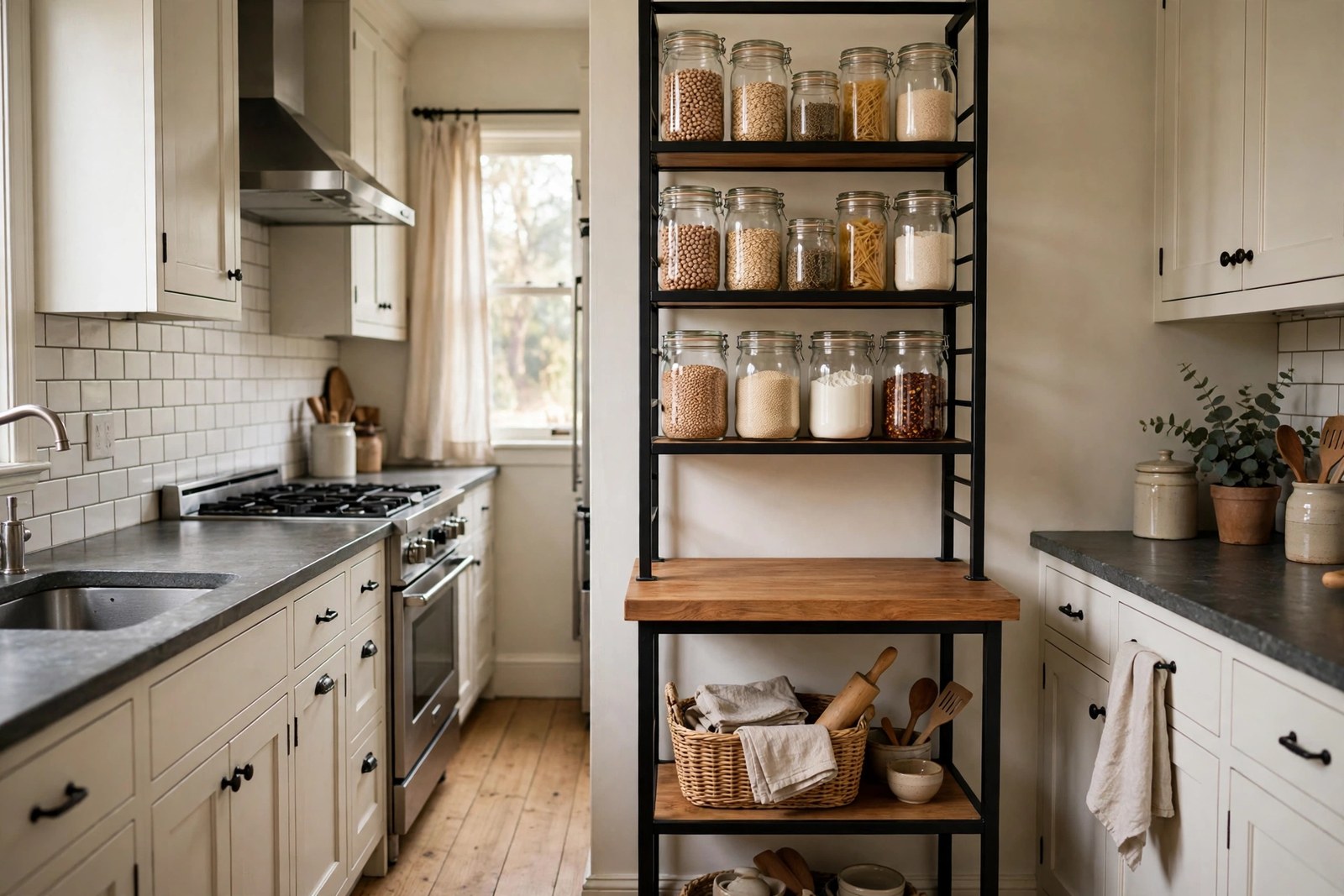
A baker’s rack style cart trades island bulk for height: work surface at counter height, shelves rising above for jars, cookbooks and a plant.
It suits the end of a galley run or a blank wall that needs a job. Keep daily prep items at the middle level and pretty, lighter things up top. This piece blurs into the small kitchen organization ideas that make tiny kitchens behave, because it is as much a storage system as a work surface.
One hard rule: never load the high shelves with cast iron or full jars. Weight up high makes a tall, narrow piece tip happy, and a rack that leans is a rack you unload and start again.
11. Pick a Cart That Works the Balcony Too
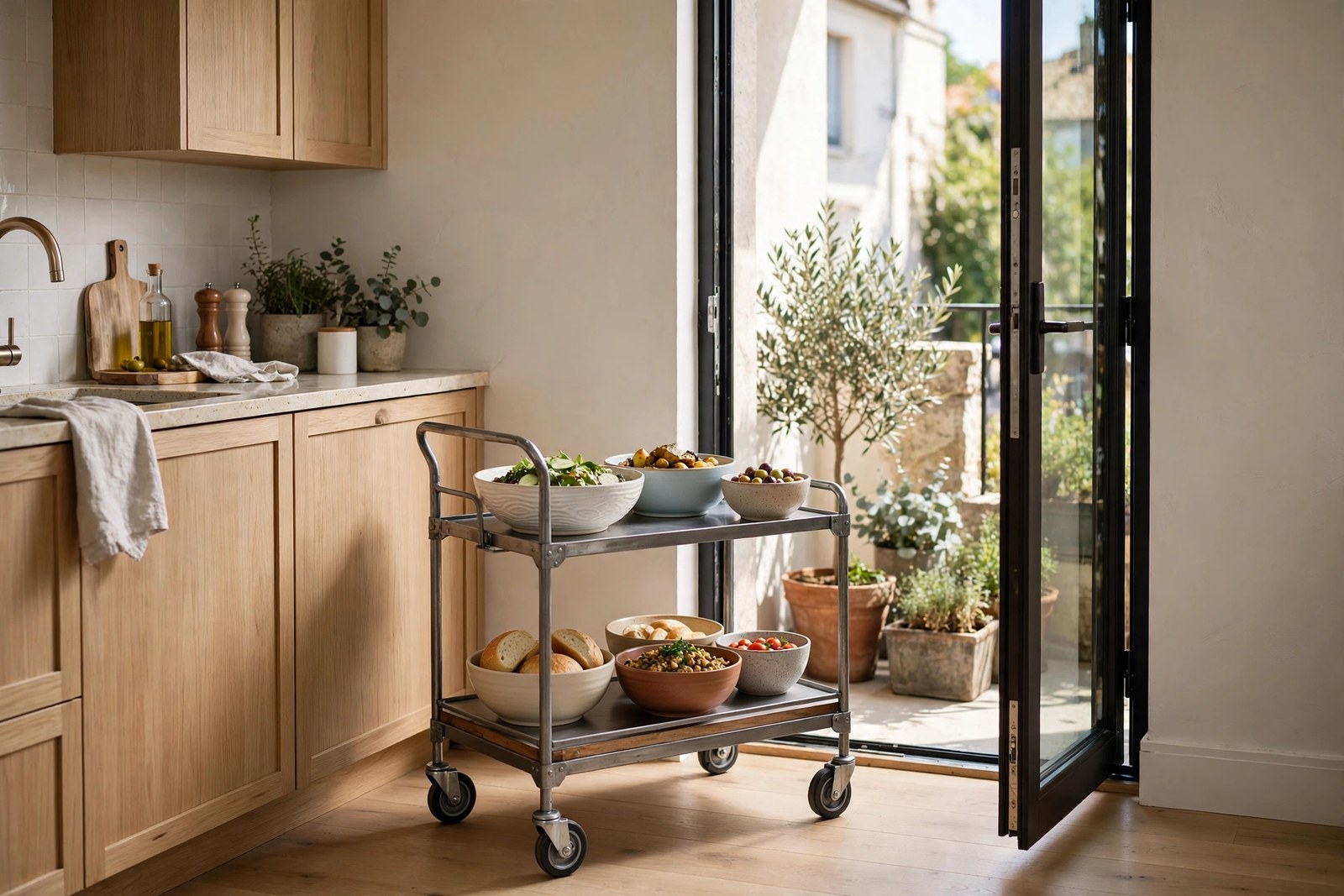
Apartments with a balcony or a small yard can get double duty from a weather tolerant cart. Indoors it is the prep island. Rolled out, it becomes the serving station and drinks trolley beside the grill or the garden chairs.
Choose wheels that handle thresholds and paving without a fight. This flexibility is exactly why portable beats fixed in small homes, and paired with a habit of measuring before buying and the small kitchen design tricks that govern the rest of the room, it finishes the picture.
The catch is weather. A wood top left out in the rain warps and splits, one forgotten wet weekend at a time. Either wheel it back in the same evening or choose metal and weatherproof finishes and let it live outside honestly.
The Bottom Line
A portable island works when it is honest about its two jobs: surface and storage while you cook, near invisible when you do not. Measure the walkways, pick the version that matches your real shortage, and insist on locking wheels and a frame that does not flex. Get those three right and the movable island stops feeling like a compromise.
Start with the tape test. Mark the footprint on the floor, live with it for a day, and only then go shopping.
Frequently Asked Questions
How much space do you need around a portable kitchen island?
Enough to walk and work without turning sideways. NKBA planning guidelines suggest about 36 inches for walkways and around 42 inches for a work aisle used by one cook. Before buying, tape the island footprint on the floor and live with it for a day, checking that doors, drawers and people can all still move.
What size island works in a small kitchen?
Smaller than instinct suggests. A cart around 36 to 48 inches long and 18 to 24 inches deep gives a useful work surface and still parks neatly. Your own clearances rule, though: if the tape test leaves less than comfortable walking room, go narrower or choose a drop leaf design.
Are kitchen carts sturdy enough for real prep work?
Good ones are. Look for a frame that does not twist when you lean on it, a top thick enough to take a cutting board, and locking casters rated for the loaded weight. Test by pressing down and rolling it loaded; a cart that rattles empty in the store will only get worse at home.
Where do you park a portable island when it is not in use?
Against the least used wall, under a window, at the end of a counter run, or in front of a rarely opened closet, so the good floor stays clear. Renters often park carts over the least convenient patch of floor for exactly this reason.