Small Kitchen Design Tricks That Work
A small kitchen rarely feels small because of its square footage. It feels small because counters disappear under clutter, cabinets loom dark and heavy, and every tool fights for the same few inches of workspace.
The good news is that none of those problems need a renovation to fix. The tricks in this guide work on layout, light, storage and sightlines, the four things your eye and your hands actually judge a kitchen by.
Some take an afternoon, a few take a weekend, and several cost nothing but a ruthless sort out. Start with the walls and the light, then fix the storage, and save the pretty finishes for last.
1. Utilize Vertical Real Estate with Open Shelving
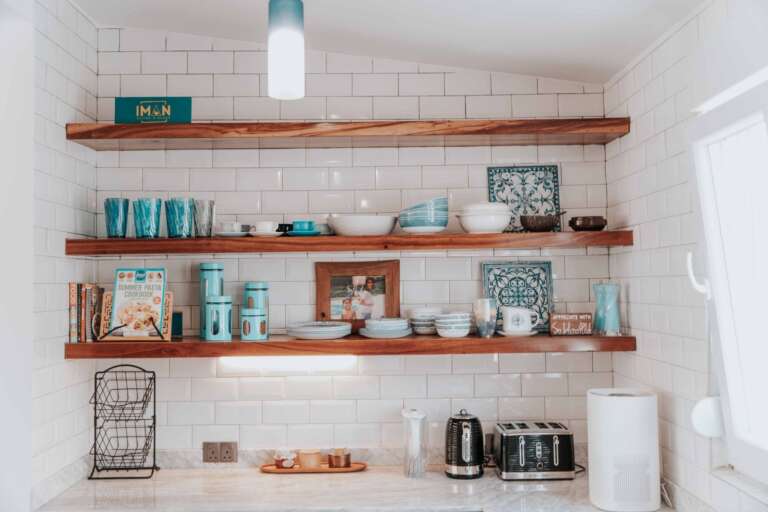
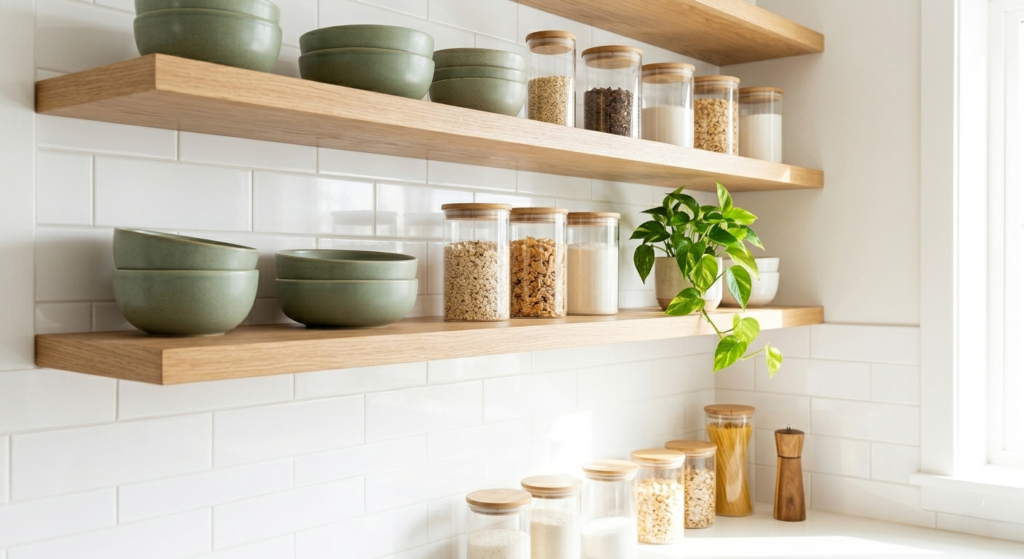
The wall space above your counters is the most underused storage in a small kitchen. Swapping one run of heavy upper cabinets for open shelves instantly removes the visual bulk that makes a compact room feel boxed in, and it puts the things you use daily within easy reach. Keep shelves to two rows at most, group items by type, and leave some empty gaps so the display breathes. Everyday plates, glasses and a few cookbooks earn their place here. The dusty fondue set does not. Dust is the honest trade off, so store only what cycles through the dishwasher often.
2. Opt for a Monochromatic Light Palette
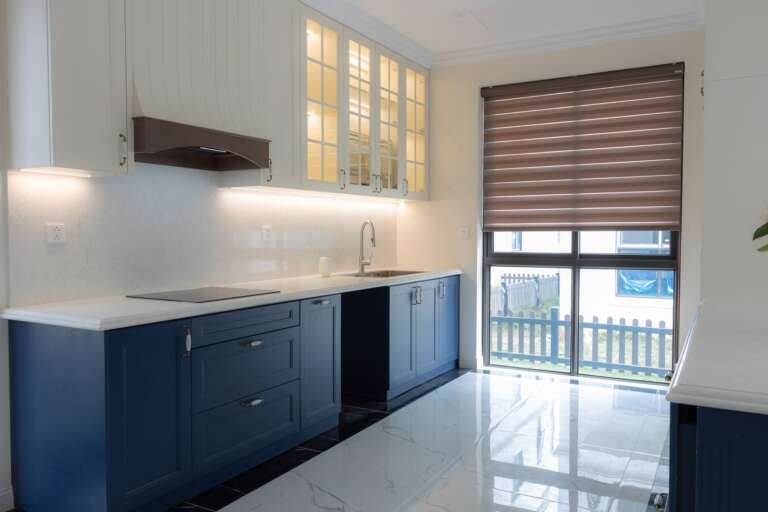
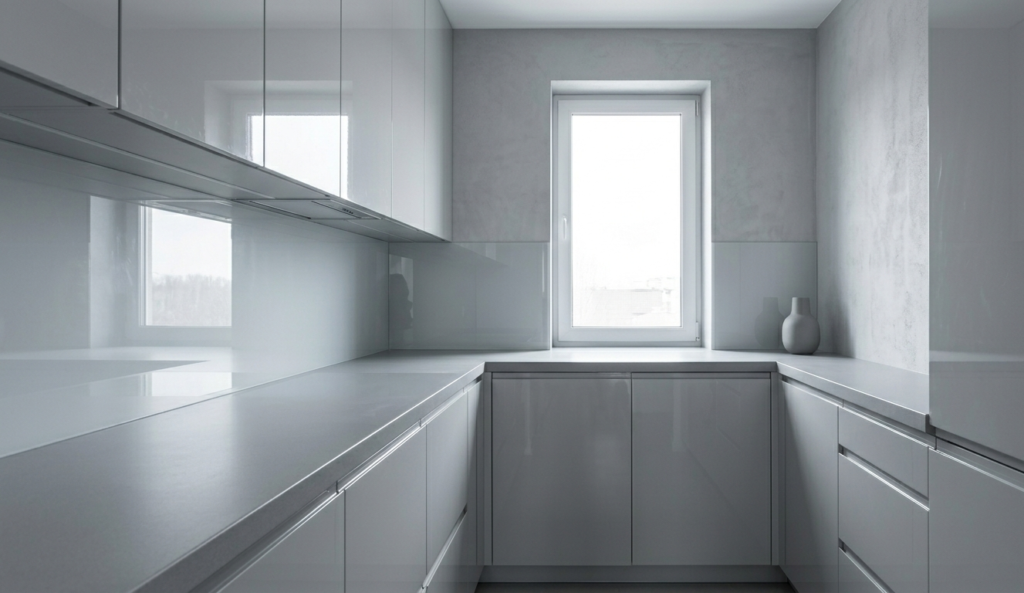
Nothing enlarges a small kitchen faster than removing contrast. When walls, cabinets and backsplash sit in one family of whites, creams and soft greys, the eye stops reading edges and the room reads as one continuous, bigger space. This does not mean a cold white box. Layer the tones: warm white cabinets, a slightly deeper countertop, pale wood or brushed metal accents for warmth. Glossy or satin finishes help too, because they bounce daylight around instead of swallowing it. If you crave color, bring it in with things that move, like a rug, towels, fruit or herbs.
3. Integrate Multi-Functional Islands on Wheels
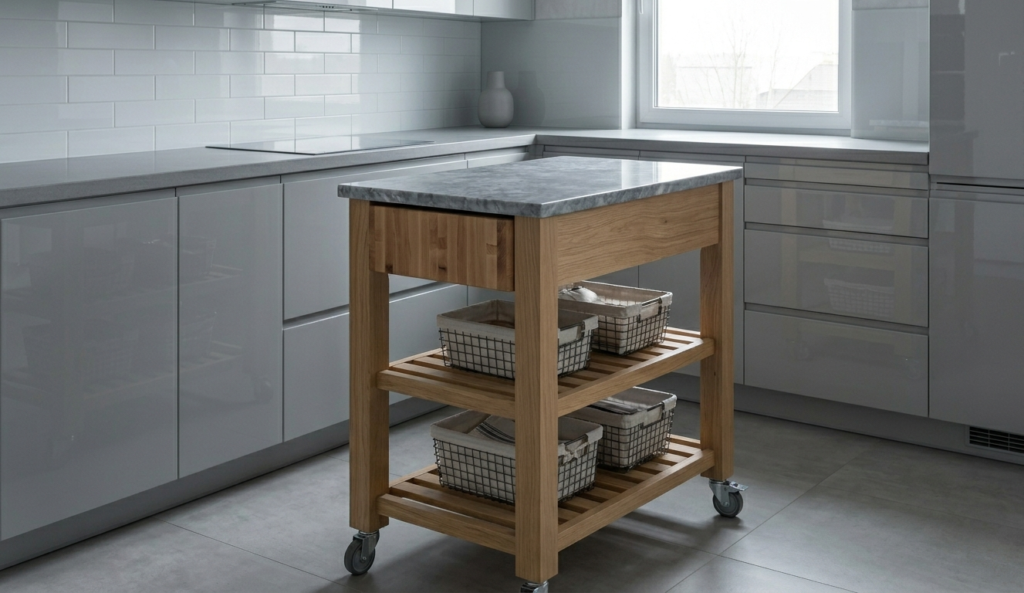
A fixed island can strangle a small kitchen, but a narrow cart or butcher block on locking casters gives you the same benefits with an exit plan. Roll it to the center when you need prep space or a second cook, then park it against a wall, under a window or in a hallway nook when the floor needs to be clear. Choose a model with a lower shelf or drawers so it earns its footprint in storage too. Locking wheels matter more than looks here, because a work surface that drifts while you chop is a hazard, not a feature.
4. Hidden Storage and Pull-Out Pantries
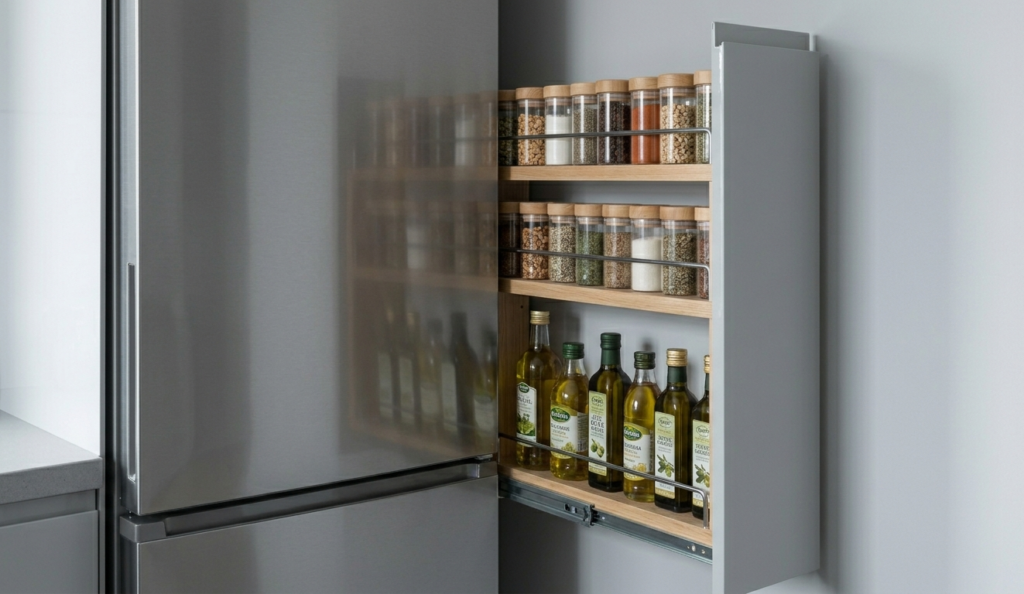
Every small kitchen has dead gaps: beside the fridge, under the sink, between the stove and the wall. Slim pull-out racks are built for exactly those slots, turning six wasted inches into a full pantry for spices, oils and canned goods. Toe kick drawers hide baking trays at floor level, and the inside of cabinet doors can hold measuring spoons, lids and cleaning supplies on hooks. The rule behind all hidden storage is simple. If you can see it, it should be beautiful or used daily. Everything else goes behind a door, a drawer front or a pull-out.
5. Magnetic Knife Strips and Hanging Racks
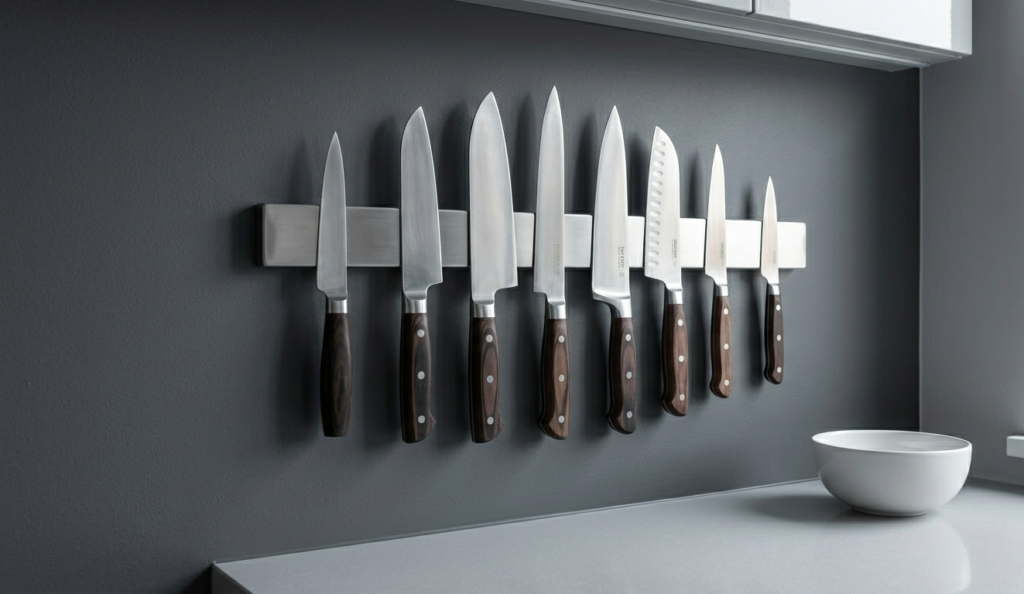
A knife block is a countertop hog, and a utensil crock is not far behind. Move both jobs to the wall and you can win back a surprising amount of prep space. A magnetic strip keeps knives visible, dry and easy to grab, while a simple rail with hooks holds ladles, whisks and pans by their handles. Mount them within one step of where you chop and cook, but out of the splash zone behind the stove. In rentals, look for strips that mount inside a cabinet door or use strong adhesive rated for weight, and always check what your tiles can handle before drilling.
6. Use Mirrored Backsplashes for Depth
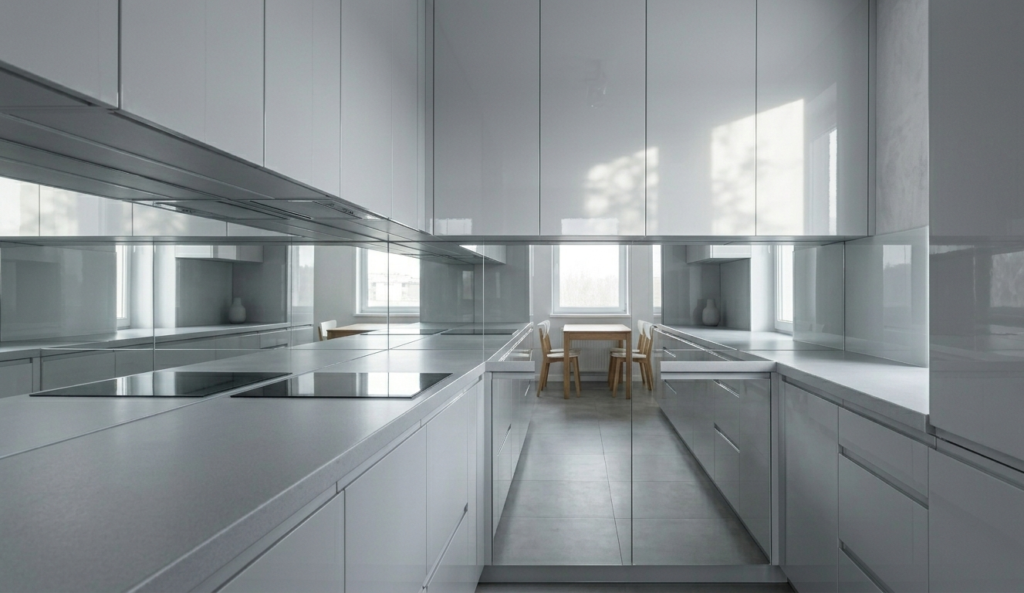
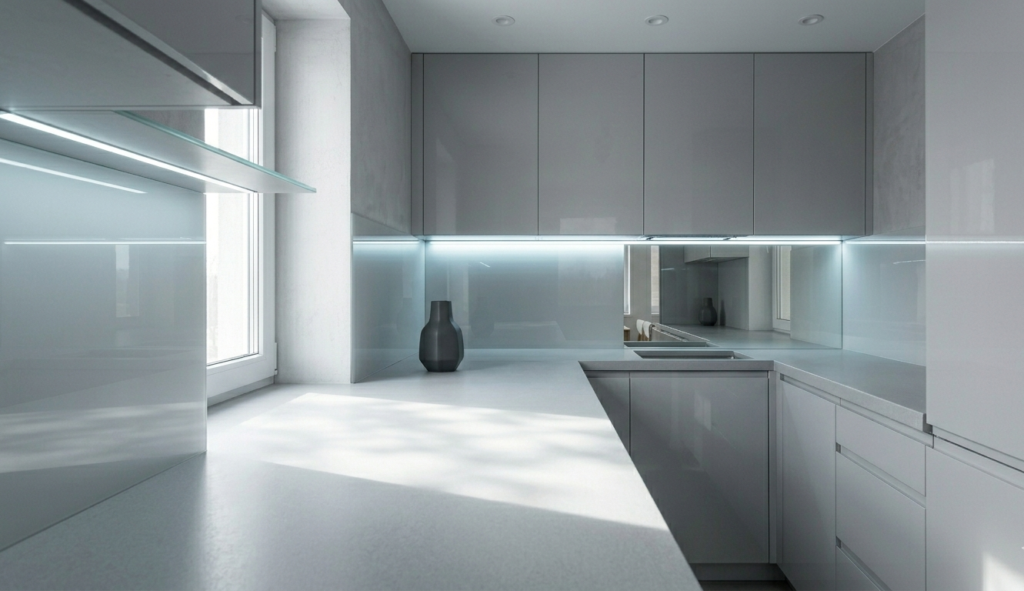
A mirrored or high gloss glass backsplash is the oldest theater trick in the book: it reflects the room back at itself and fakes a second window’s worth of light and depth. Antique or smoked mirror softens the effect if a bright mirror feels too bold, and large panels keep grout lines from chopping the reflection into pieces. Be honest about upkeep, because mirror shows every splash and fingerprint. Pair it with under cabinet lighting and the whole counter run glows at night. If full mirror feels risky, start with the stretch behind the stove and live with it for a month.
7. Sleek Handle-less Cabinetry
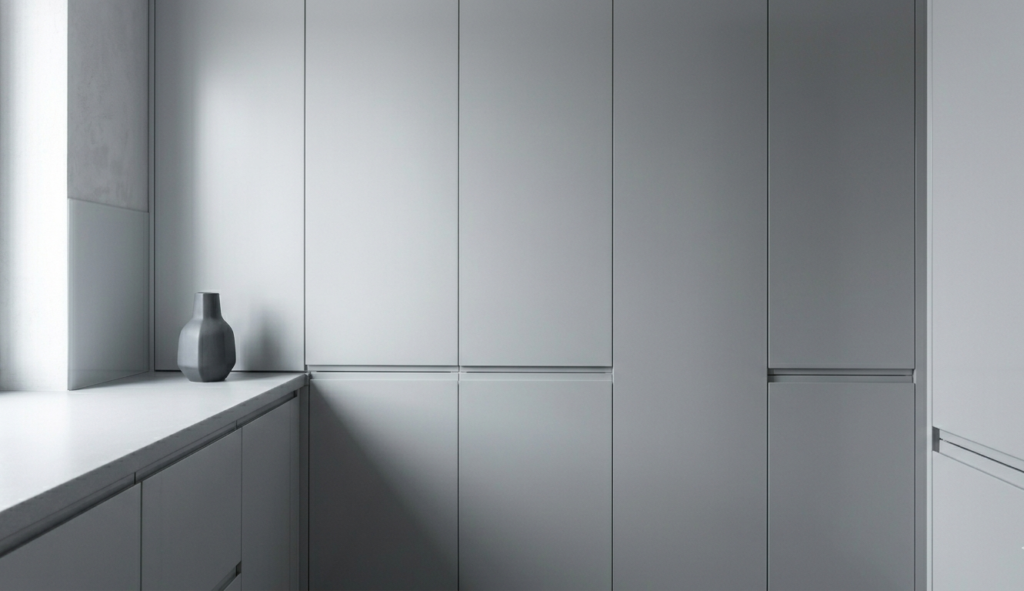
Protruding knobs and bar handles catch sleeves, collect grime and break up the clean lines a small kitchen depends on. Handle-less fronts, whether push to open latches or integrated channel pulls carved into the door edge, let cabinetry read as one calm surface. The room looks calmer and, oddly, bigger, because nothing interrupts the sightline. If a full cabinet swap is not in the budget, simply replacing chunky handles with slim edge pulls gets you halfway there. Choose a finish that matches the cabinet color rather than contrasting with it, and the hardware all but disappears.
8. Strategic Recessed Lighting
Small kitchens often suffer under one dim ceiling fixture that leaves the counters, where the real work happens, in shadow. Layer the light instead. Recessed ceiling lights for a general glow, strip lights under the upper cabinets to flood the worktop, and one warmer source, like a small pendant over the sink, for mood. Put worktop lighting on its own switch so the kitchen can go from bright prep mode to soft evening mode. Bulbs around a warm to neutral white keep food looking appetizing, and a dimmer costs little but changes the room completely after dark.
9. Incorporate a Fold-Down Dining Table
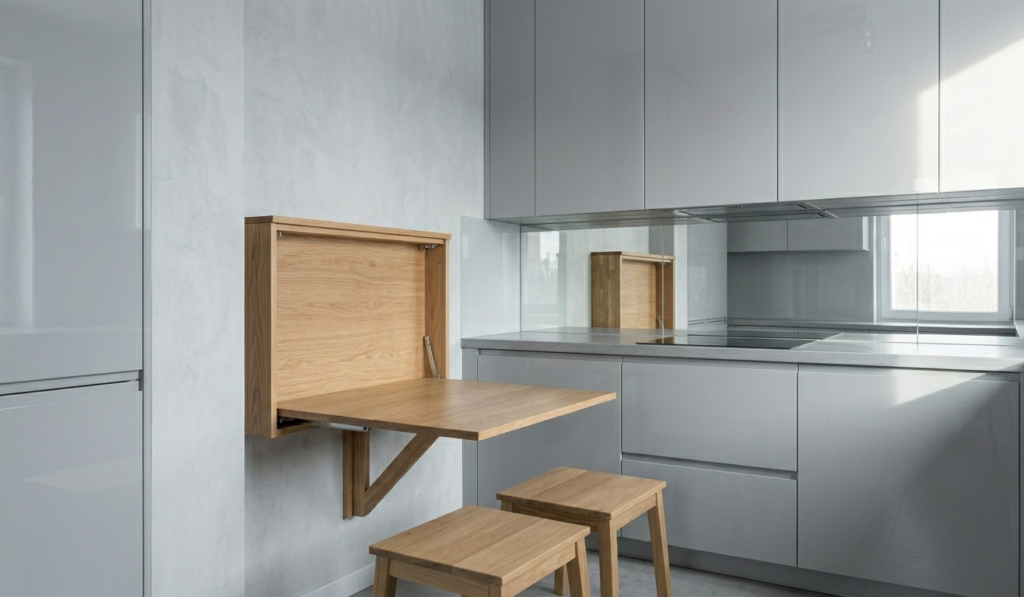
A dining table that folds flat against the wall gives a small kitchen a breakfast nook, a homework station and extra prep space, then vanishes when you need the floor. Wall mounted drop leaf tables are widely available, and the sturdier ones support a surprising amount of weight. Pair yours with folding or stackable chairs that hang on hooks when not in use. Position the table where daylight lands if you can, because a sunny seat gets used far more than a dark corner. When it is folded away, the wall above it is prime space for a slim shelf or a piece of art.
10. Clear Glass Cabinet Doors
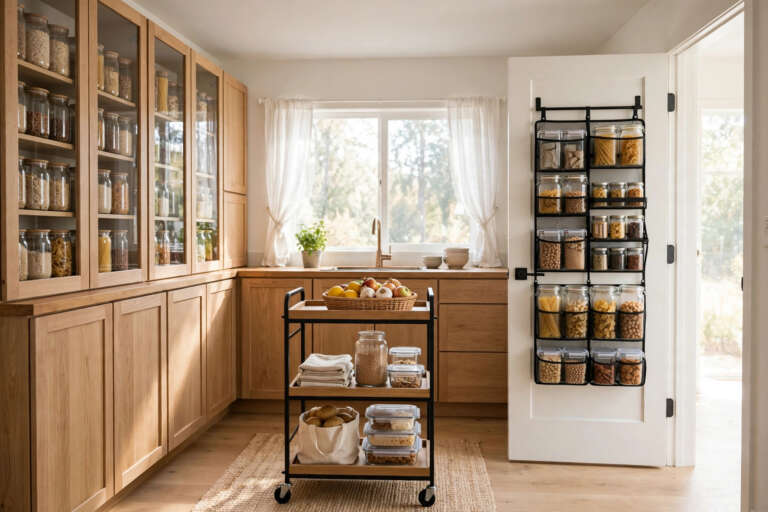
Glass front doors give you closed storage without the visual weight of solid fronts. Because the eye travels through the glass to the back of the cabinet, the wall feels deeper and lighter. The catch is discipline: glass displays whatever you store, so keep those cabinets for matching dishes, glasses and jars, and move the chaotic plastic containers behind solid doors elsewhere. Frosted or fluted glass is the forgiving middle ground if your shelves are more real life than showroom. This is also one of the cheapest tricks here, since many cabinets accept replacement glass inserts in the existing frames.

11. Integrate the Sink with a Cover
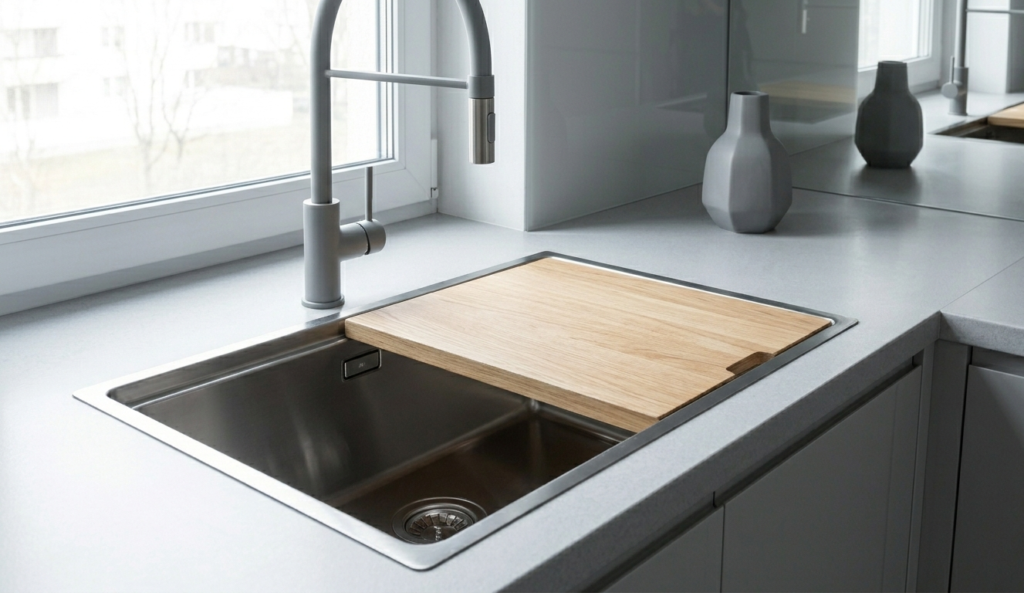
The sink is the largest single hole in your countertop, and a fitted cover turns it into workspace. Many undermount sinks accept a cutting board or cover made to sit flush inside the rim, so you can chop directly over the basin and sweep scraps straight in. When guests arrive, the covered sink becomes a serving station or a place to set hot dishes. Measure carefully before ordering, because a cover that rocks or gaps is worse than none. If a custom board is out of reach, a large over sink dish rack delivers much of the same gain by lifting drying dishes off the counter.
Conclusion
A small kitchen that works well is never the result of one big purchase. It is the sum of a dozen small decisions: walls that store, light that flatters, surfaces that stay clear and storage that hides in the gaps. Start with the tricks that cost nothing, clearing counters, moving tools to the wall and editing what lives on your shelves. Then add the bigger moves, a rolling island, glass doors or a fold-down table, one at a time. Measure your room honestly, buy only what fits the plan, and your small kitchen will start feeling like it was designed on purpose.
For the full system behind these tricks, see these apartment kitchen organization ideas and set the kitchen up zone by zone.
This pairs well with our guide to portable kitchen island ideas for small kitchens.
Also worth a look: small breakfast nook ideas.
For the next step, see these kitchen storage ideas for homes with no pantry.
Frequently Asked Questions
What is the fastest way to make a small kitchen feel bigger?
Lighten the palette and clear the sightlines. A monochromatic scheme in whites and creams, plus open shelving in place of one run of upper cabinets, changes the feel of the room in a single weekend.
Are open shelves practical in a small kitchen?
Yes, if they hold only what you use every day. Daily dishes stay dust free because they cycle through washing constantly. Occasional items belong behind doors, where dust cannot reach them between uses.
How much clearance does a rolling island need?
Aim for roughly a meter of walk space on the working sides when the island is in use. Choose a narrow cart, lock the casters while you work, and park it against a wall when the floor needs to be open.
Can renters use these small kitchen design tricks?
Most of them. Adhesive rails, rolling carts, sink covers, plug in lighting and fold-down tables that mount with minimal fixings are all renter friendly. Keep original hardware in a labeled bag so everything can be restored at move out.