Living Room Wall Ideas That Pop: Creative Designs for a Stunning Home
The largest surface in your living room is not the floor or the ceiling. It is the walls, and in most homes they are doing almost nothing. A sofa against a blank painted wall is a room waiting for its main act, because walls set the style before a single cushion is noticed.
These living room wall ideas range from one weekend of paint to built in architecture, and they share one principle: give the eye a deliberate place to land. Choose one strong treatment for your main wall and let the others stay quiet, or layer two gentle ones together. Either way, start by deciding how brave this room wants to be.
1. The Bold Geometric Accent Wall

Painter’s tape, two or three colors and one free weekend can produce the most energetic wall in this whole guide. Mark out large triangles, arches or diagonal blocks, keep the shapes big rather than busy, and let one color dominate while the others play supporting roles pulled from your rug or cushions. Geometric walls suit the wall behind the sofa or a media wall, where furniture breaks the pattern into glimpses. Crisp lines are everything, so press tape edges firmly, peel while the final coat is nearly dry, and touch up with a small brush rather than redoing whole sections.
2. Sophisticated Floor-to-Ceiling Wood Paneling

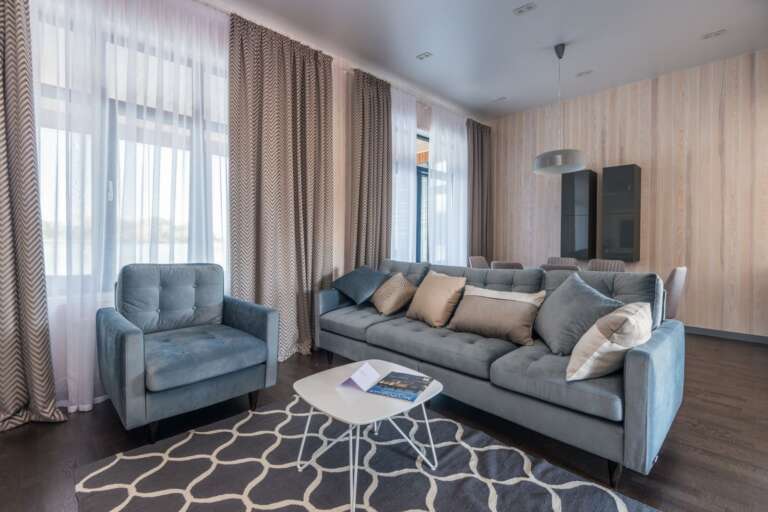
Modern paneling is not the dark, dated wood of old rec rooms. Vertical slats, wide boards and light toned veneers add warmth, rhythm and genuine architecture to a flat wall, and they make televisions and doorways look intentional instead of apologetic. Running paneling floor to ceiling matters, because stopping halfway dates the look instantly. Slatted panels also soften the sound of a hard room, a quiet bonus in open plan spaces. This is a real project with real cost, so treat it as the room’s permanent backbone and keep everything hung on it minimal. One artwork, or none, is usually enough.
3. Oversized Abstract Art Installations

If building and painting sound exhausting, one enormous piece of art delivers most of the same drama by Friday. Oversized abstracts work because they carry color and movement without a subject that dates, and at large scale they behave like architecture, giving the seating area a clear center of gravity. Size up honestly: over a sofa, the canvas should span about two thirds of its length. Keep the palette connected to the room by one or two shared tones, and give the piece a simple frame or none at all. This is also the most reversible idea here, which makes it the natural first step for renters and the chronically undecided.
4. Textured Wallpaper and Grasscloth

Some walls should be felt as much as seen. Grasscloth, woven textures and embossed papers add a fine physical grain that paint cannot imitate, and they make a room feel layered and expensive even when the furniture is simple. Use textured paper on one wall, or inside wall panels and alcoves, where light rakes across it and shows the texture at its best. Natural grasscloth varies in tone from roll to roll, which is part of its charm, but order all you need in one batch. Keep the pattern quiet if the texture is loud, and let smoother walls around it stay plain.
5. Floating Shelves with Curated Decor

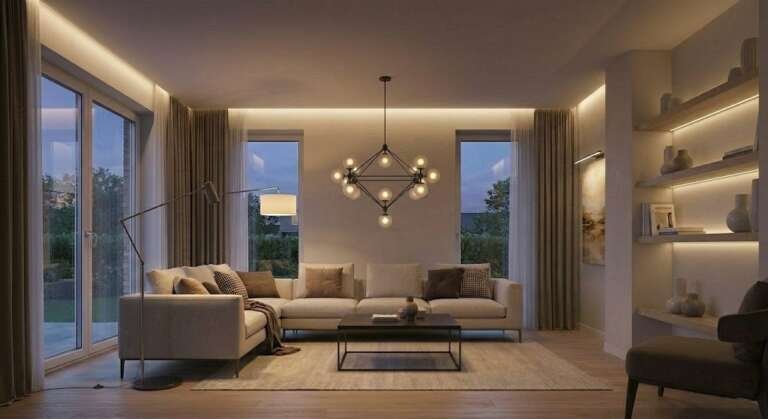
Floating shelves turn a wall into a slow changing exhibition. Lean framed prints, stand ceramics and small sculptures, stack art books with their spines as color, and leave real empty space between groups so each object can be seen. Shelves suit living rooms especially well because the display can evolve with seasons and new finds, unlike fixed treatments. Keep the styling rules simple: odd numbered groups, one repeated material, and nothing so precious that dusting becomes a ceremony. Anchor shelves properly for their load, and style them from the sofa’s viewpoint, because that is where they will actually be admired from.
6. Arched Wall Niches for Depth

An arch softens everything it touches. A built in arched niche gives a flat wall instant architecture and a natural stage for one beautiful object, a stack of books or a small plant under a picture light. Niches can be genuinely constructed in stud walls or faked convincingly with a painted arch and a shallow shelf, and the painted version is a legitimate renter scale project that still delivers the shape. Paint the inside of the niche a shade deeper than the wall, or in a contrasting color, to exaggerate its depth. One arch per wall is plenty; repetition turns a feature into a theme park.
7. Moody Monochrome Paint Effects

Color drenching means painting the wall, the trim, the baseboards and sometimes the ceiling in one deep color, so the whole surface reads as a single velvet backdrop. Charcoal, forest green, ink blue and deep plum all work, and the effect is cocooning rather than gloomy when the room has decent natural light and warm lamps to glow against it. Furniture in lighter tones and metallic or pale accents will stand out like exhibits. Test the color large before committing, because deep shades shift dramatically between daylight and lamplight. This is paint, not surgery: one brave weekend, and fully reversible when your taste moves on.
8. Metallic Inlays and Luxury Trim

Thin lines of brass, bronze or chrome set into wall paneling catch light like seams of jewelry, and they lift plain painted panels into something that looks commissioned. The detail works best in formal living rooms and alongside other panel treatments in this guide, where the trim can outline each panel or run as a single horizon line. Restraint is the whole game: metal should glint, not shout. Match the tone to hardware already in the room, like lamp bases or picture frames, so the wall feels connected to the furniture instead of competing with it. Adhesive metal strips make a convincing budget version for a first attempt.
9. Large-Scale Mirror Walls

A large mirror, or a grid of mirrored panels, does what no paint can: it adds a second window’s worth of light and makes the room read almost twice its size. Position the mirror to reflect something worth doubling, a garden view, a chandelier, your best wall, rather than a cluttered corner. Antiqued or smoked mirror softens the effect for rooms that find bright mirror too sharp. This treatment earns its keep most in small or north facing living rooms starved of light. Mind the practical side: big mirrors are heavy, need proper fixings, and show fingerprints at child and dog height with total honesty.
10. Living Green Walls (Vertical Gardens)

A green wall is the boldest living finish a room can wear. Modular planters of real plants give texture, scent and a sense of the seasons changing indoors, while preserved moss panels deliver the same lush look with almost no upkeep, no watering and no light demands. Real systems need honest planning for water and light, so start with one panel rather than a whole wall if you are new to indoor gardening. Hardy species and a simple irrigation routine keep a living wall thriving instead of patchy. Either version pairs beautifully with wood and stone, and both photograph like a boutique hotel lobby.
11. Symmetrical Sconces and Lighting Focus

Finish the wall by lighting it properly. A pair of sconces placed symmetrically around a fireplace, a mirror or your main artwork frames the feature like punctuation and adds the warm, face level glow that ceiling lights cannot. Symmetry is what makes sconces feel architectural, so measure from the feature’s center line and keep heights identical to the centimeter. Plug in and battery models remove the wiring barrier for renters and older homes. Choose shades that throw light up and down the wall rather than into eyes, and put the pair on a dimmer if you can. A wall you have styled deserves to be seen after dark.
Conclusion
Walls that pop are never an accident of one product. They come from choosing a single strong idea, a geometric paint treatment, paneling, texture, mirror, greenery or one great artwork, and then giving it quiet company. Brave does not have to mean permanent: art, paint and adhesive trim can all change with you, while paneling and niches reward the rooms you plan to keep. Walk your living room tonight and pick the wall your eyes already visit most. That is your canvas. Give it one deliberate treatment, light it well, and the whole room will stand up straighter around it.
Also worth a look: gallery wall layouts that work.
When you are ready for more, these tv wall decor ideas round it out.
Frequently Asked Questions
Which wall should be the feature wall in a living room?
Choose the wall your seating faces or the one behind the sofa, whichever the eye meets first when entering. A feature wall works hardest where furniture already points attention, not on a wall everyone sits with their back to.
Can I combine two wall treatments in one room?
Yes, if one clearly leads. Paneling with sconces, or a painted arch inside a textured wall, both work. Two loud treatments at equal strength, like a geometric pattern beside busy wallpaper, will fight instead of layering.
What is the cheapest living room wall idea that still looks dramatic?
Color drenching with paint. One deep color across the wall and its trim costs little more than a standard repaint, changes the room’s whole mood, and can be painted over in a weekend when you want a new direction.
Are living green walls hard to maintain?
Preserved moss walls need almost nothing beyond dusting. Real planted walls need light, regular watering or a simple irrigation setup and occasional plant replacement, so begin with one modest panel and learn its rhythm first.