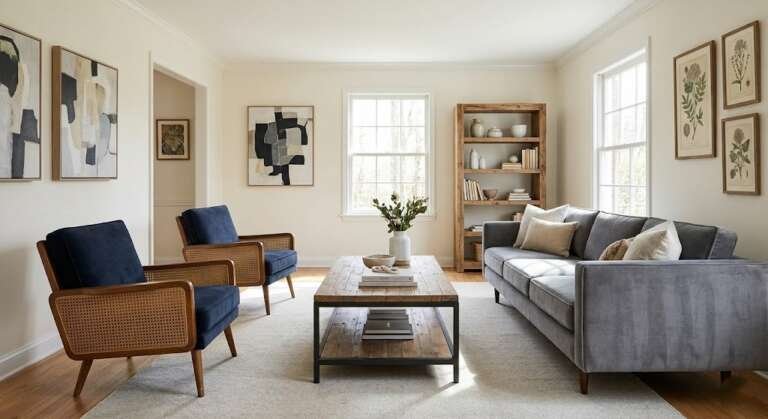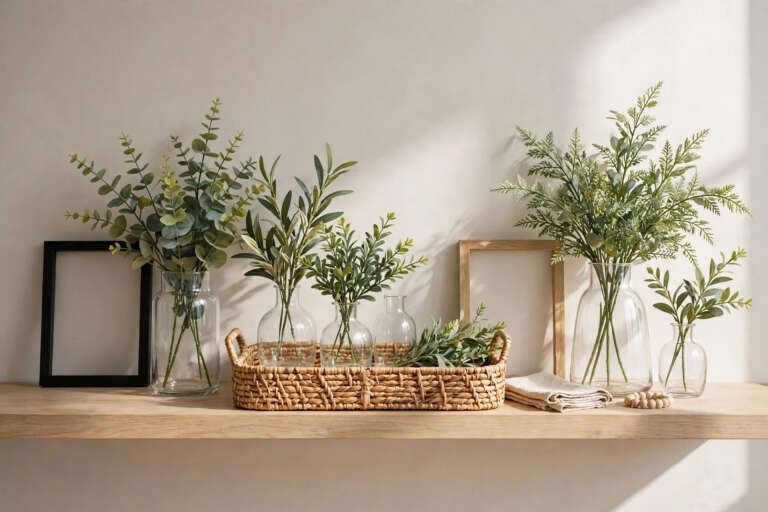
Maximalist Decor Ideas for Small Spaces (Without the Chaos)
A small room can hold a lot. What it cannot hold is a lot of unrelated things.
That one sentence is the whole difference between maximalist and messy. These maximalist decor ideas for small spaces run on rules: one palette per room, every color repeated at least three times so the eye reads a pattern instead of noise, collections kept in tight groups, and a few empty islands left alone where the eye can rest. Inside those rules you can be as generous as you like with pattern, texture and stuff. The 11 ideas below build the look layer by layer, in the order that keeps a small room rich instead of frantic.
The short version, before we start:
One palette per room. Three to five colors, and every color repeated at least three times.
Patterns take scale jobs. One large print, one medium, one or two small. Never four loud ones.
One hero piece. A small room gets one star, and everything else supports it.
Empty islands stay empty. A clear wall stretch and one bare surface are part of the design.
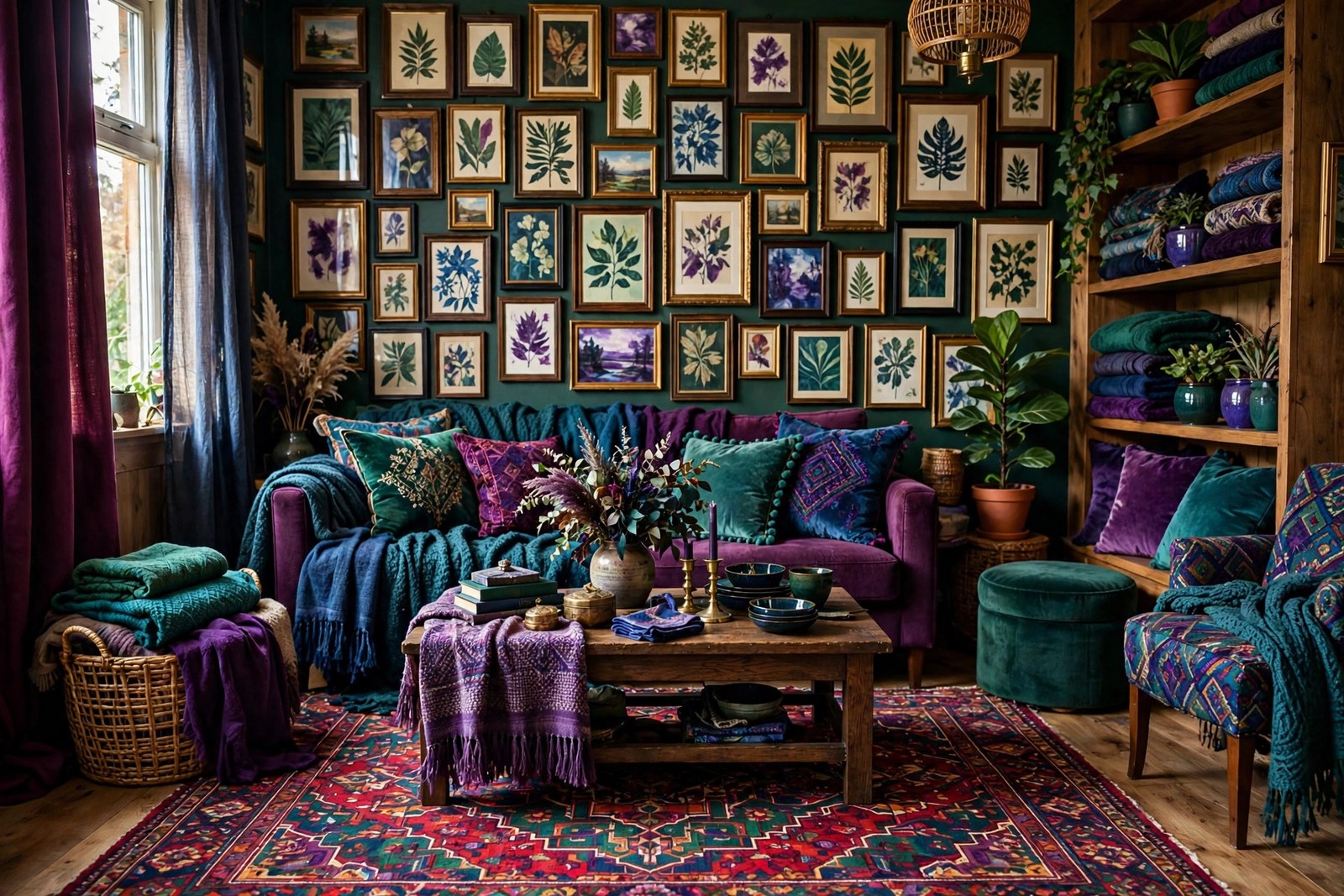
1. Pick One Palette and Repeat Every Color Three Times
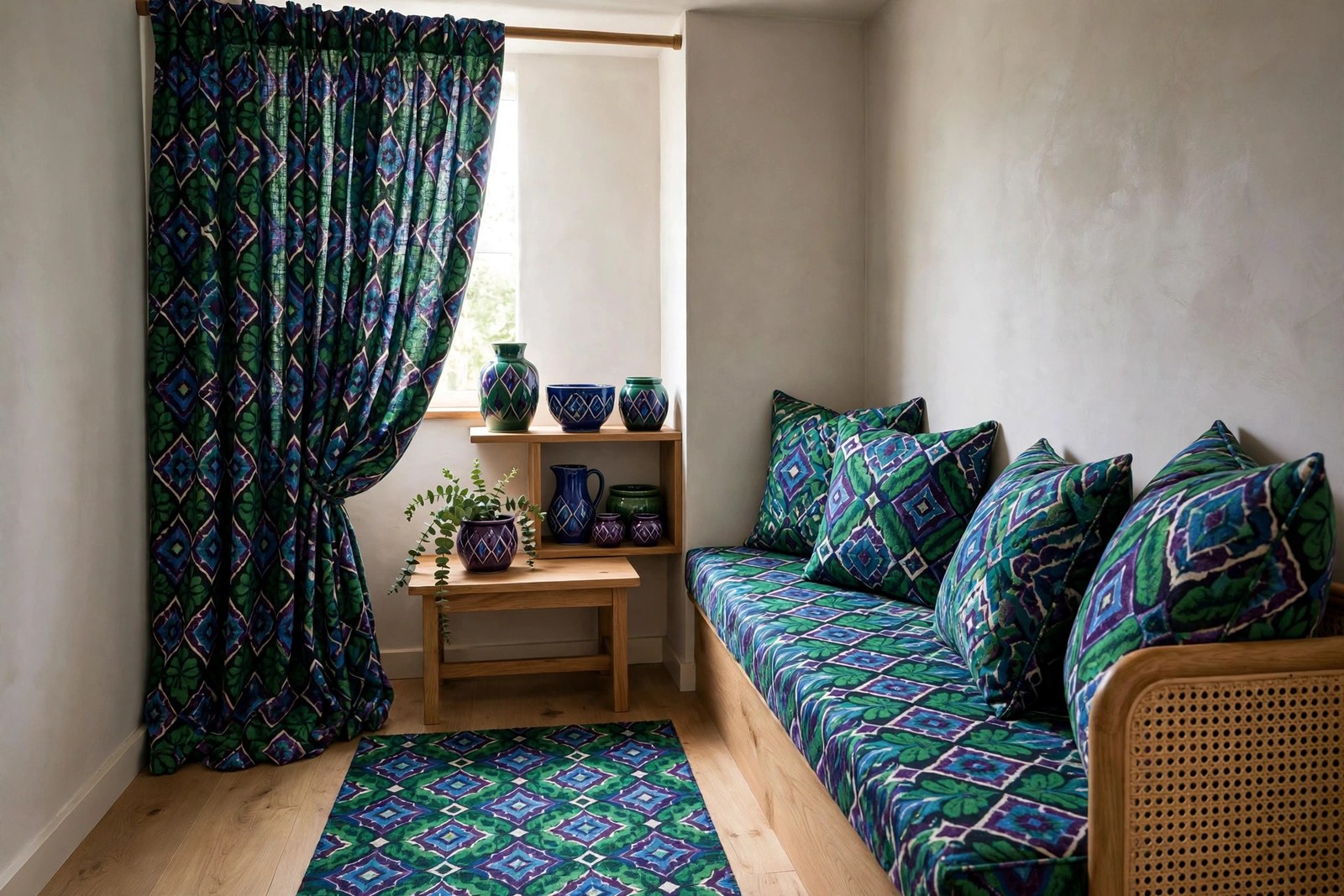
This is the single rule that separates curated maximalism from clutter, so it comes first.
Choose three to five colors for the room. Then make every color appear at least three times across furniture, textiles and objects. A teal in the rug, two cushions and a vase reads as design. A teal that shows up once reads as an accident, and accidents are what the eye trips on. Repetition is what tells the brain a collection is intentional.
Fall for something outside the palette? It goes in another room, or it does not come home. That one hard rule does most of the work in every idea below, and I do not bend it, even for gifts. Especially for gifts.
2. Mix Patterns by Scale, Not by Loudness
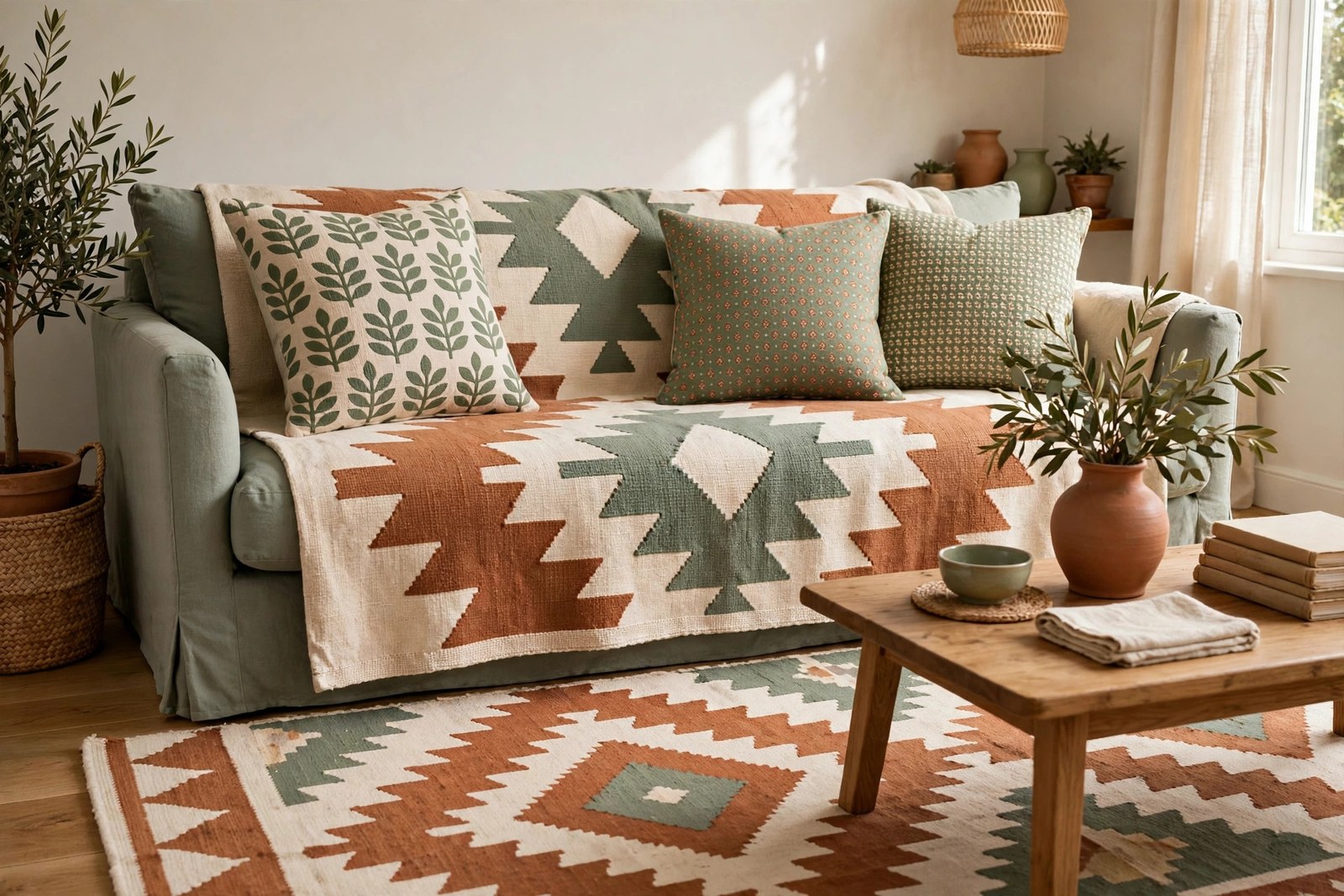
Pattern mixing fails when every print shouts at the same volume. Give each pattern a scale job instead.
One large scale print, usually the rug or the curtains. One medium print on upholstery or bedding. One or two small prints in cushions and accessories. Keep the palette from idea 1 locked while you do it, and the mix reads as richness instead of rivalry. Floral beside stripe beside geometric is a classic trio for a reason: the shapes differ while the colors agree.
Still unsure? Photograph the corner. The camera shows clashes your eye politely covers up at home, and a phone photo has talked me out of more bad cushions than any rule on this list.
3. Build the Gallery Wall on the Floor First
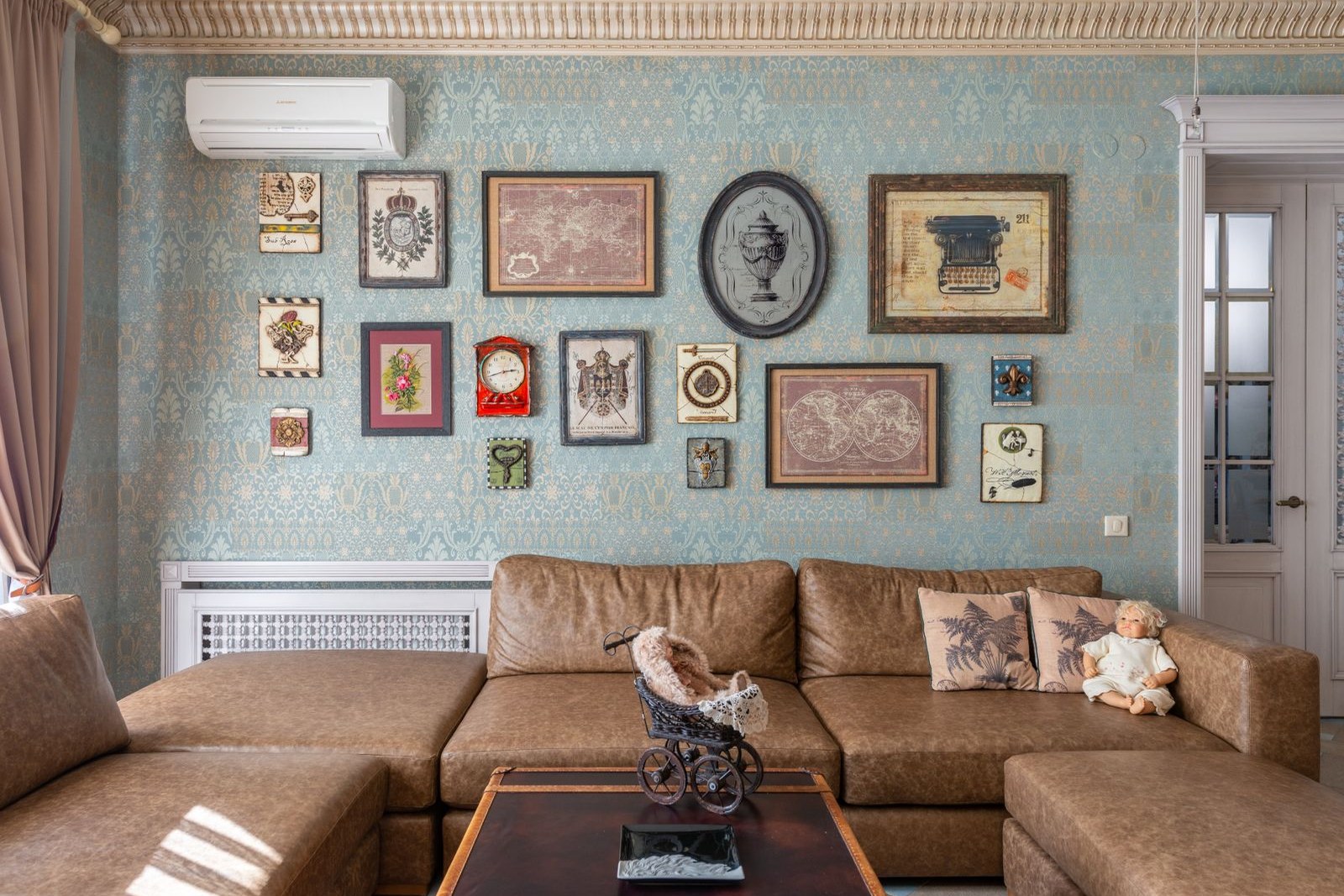
Maximalist walls can hold far more art than minimalist ones, but the density still needs bones.
Plan the whole arrangement on the floor inside a taped rectangle the size of your wall space. Keep the gaps between frames roughly even, about 2 to 3 inches, and hang the largest piece slightly off center as the anchor. Mix paintings, prints, small mirrors, plates and even a textile if you like, as long as the frame finishes repeat and the palette holds.
In a small room, put the gallery wall behind the sofa or the bed, where its richness sits behind you. A dense wall facing the door shrinks the view the moment you walk in, and that first look is the one that decides the room.
4. Layer Textiles, but Give Every Layer a Job
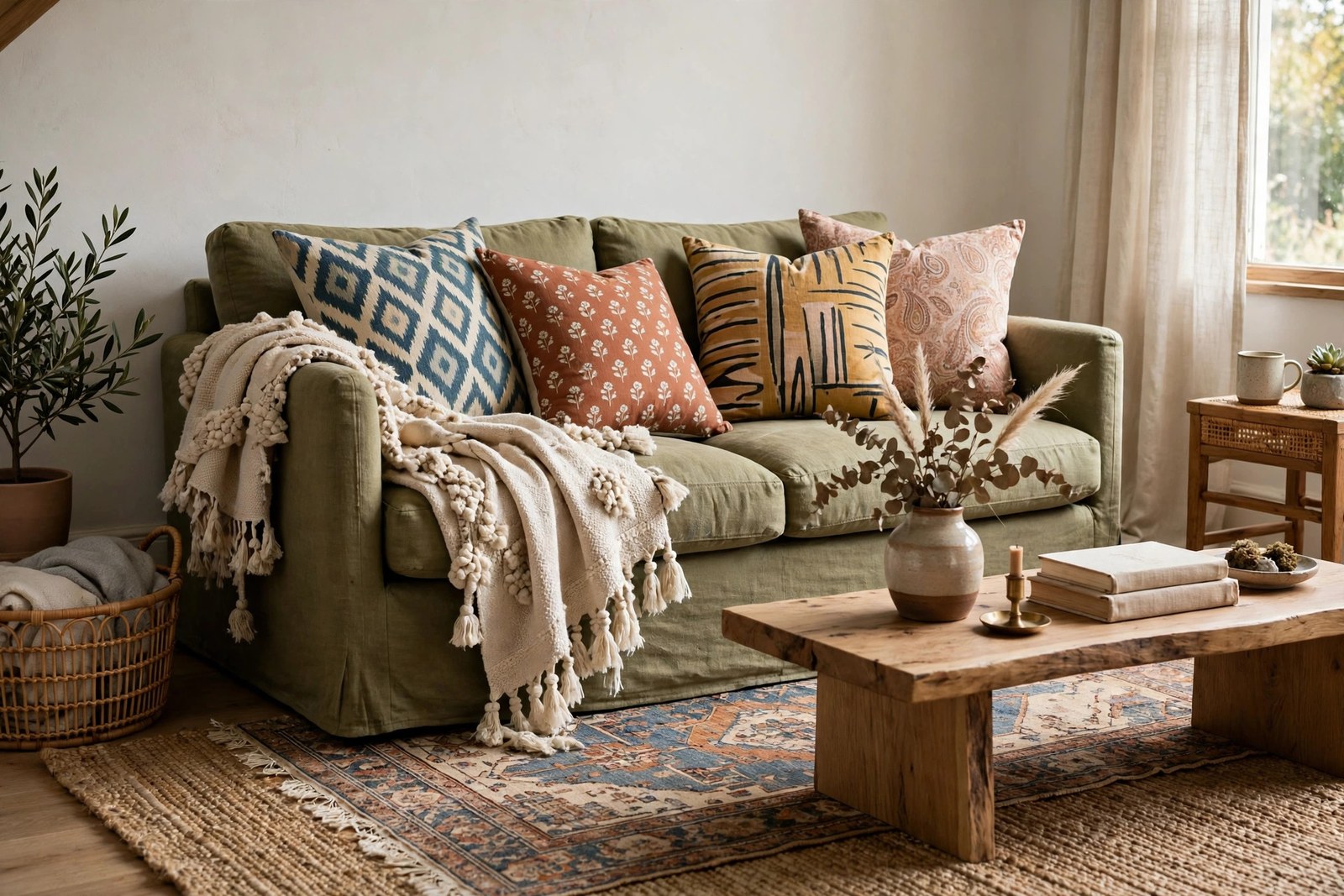
Textiles are where maximalism becomes comfort instead of display.
Layer a patterned rug over a larger plain one to mark the seating zone. Pile cushions in mixed prints and sizes. Add one throw with real texture, fringe, weave or embroidery, within reach of every seat. Vary the texture hard while the colors stay related, and the pile feels plush rather than random.
Here is the line it cannot cross: every textile should have a job. A cushion you actually lean on, a throw you actually pull over your legs. Decorative clutter you have to move before you can sit down is where cozy tips into chaos, and small rooms reach that line fast.
5. Choose One Hero Piece and Protect It
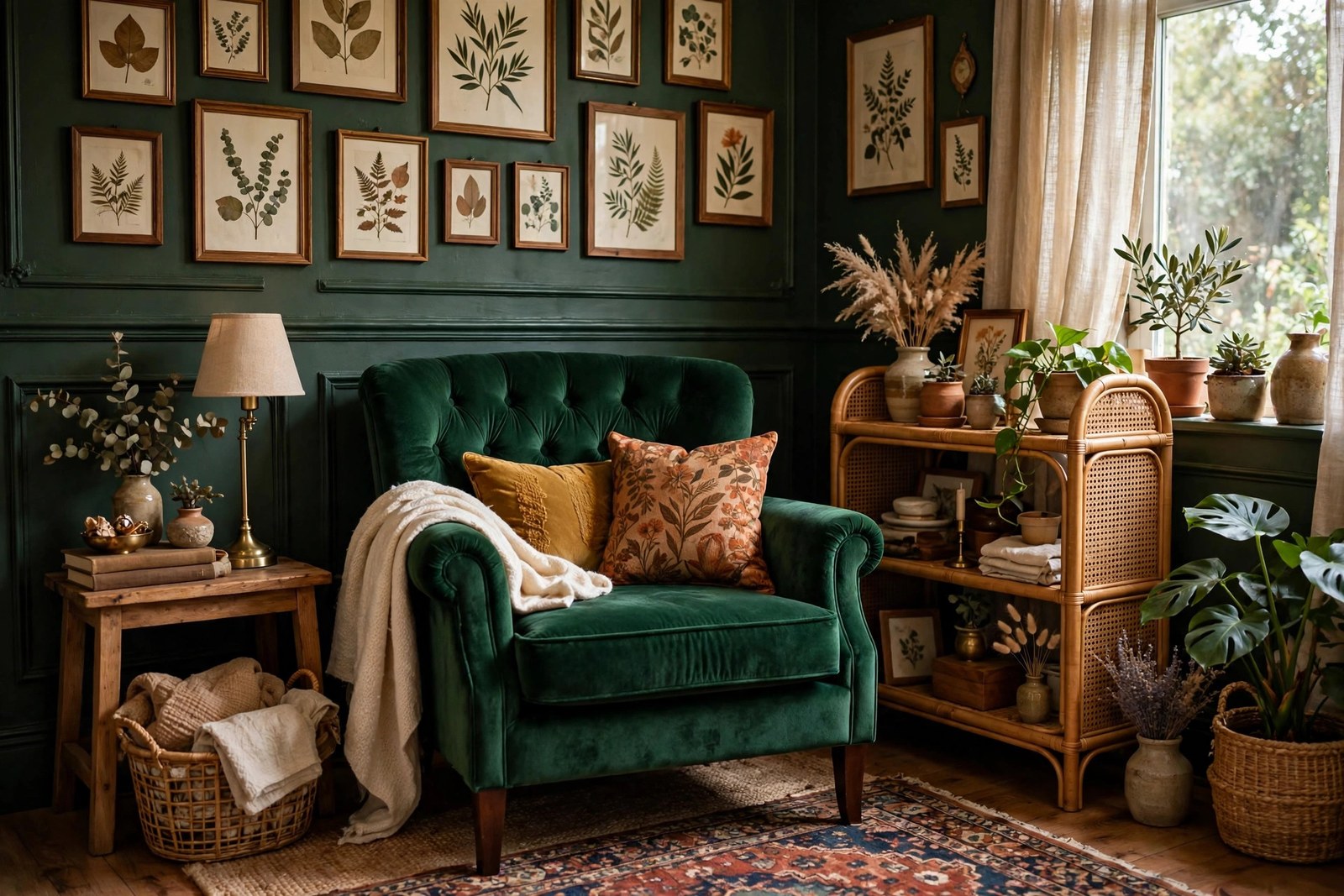
A small room cannot host five statement pieces. It shines with one.
A velvet sofa in a jewel tone, a carved cabinet, one wildly patterned armchair: pick the hero, place it where the eye lands first, and let everything else support it in quieter versions of the same palette. This is the playful spirit behind funhaus decor ideas, where one joyful piece sets the personality of the whole room.
Resist the second hero. Two stars compete, the sightlines tangle, and the room starts to feel like a shop floor. One hero, strongly chosen, makes a tiny room unforgettable instead of overstuffed.
6. Keep Each Collection in One Tight Group
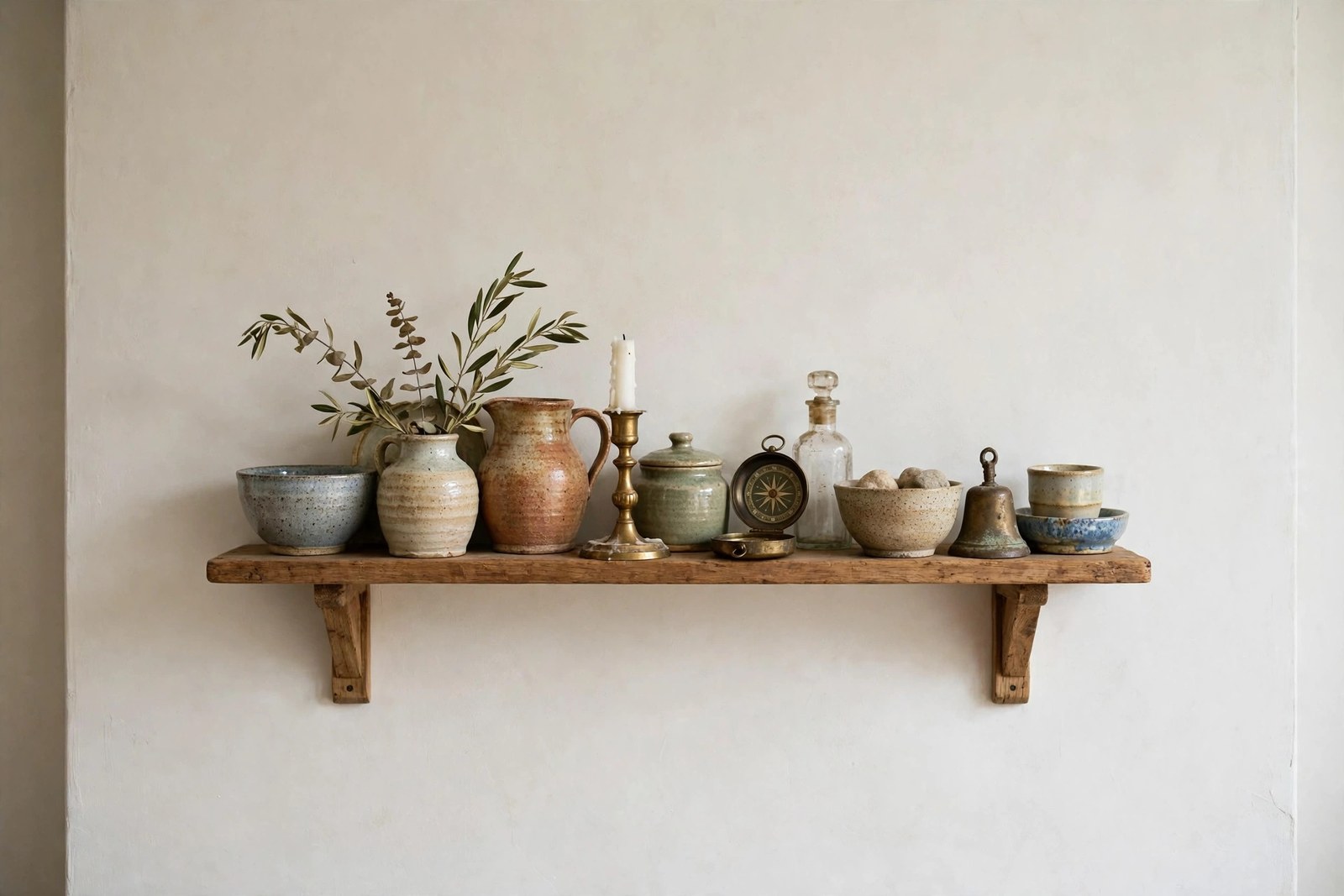
Maximalists collect. Collections are wonderful, right up until they colonize every surface in the home.
Group each collection tightly in one place: all the ceramics on one shelf, the vintage books in one stack with an object on top, the travel finds inside one tray or one cabinet. A tight group reads as a display. The spaces between groups read as calm. Inside the group, vary the heights and leave small gaps so each piece stays visible.
When a collection outgrows its home, upgrade the display or edit the collection. Never let it spill onto the next surface, because spill is how chaos starts, one innocent object at a time.
7. Take the Color Up the Walls
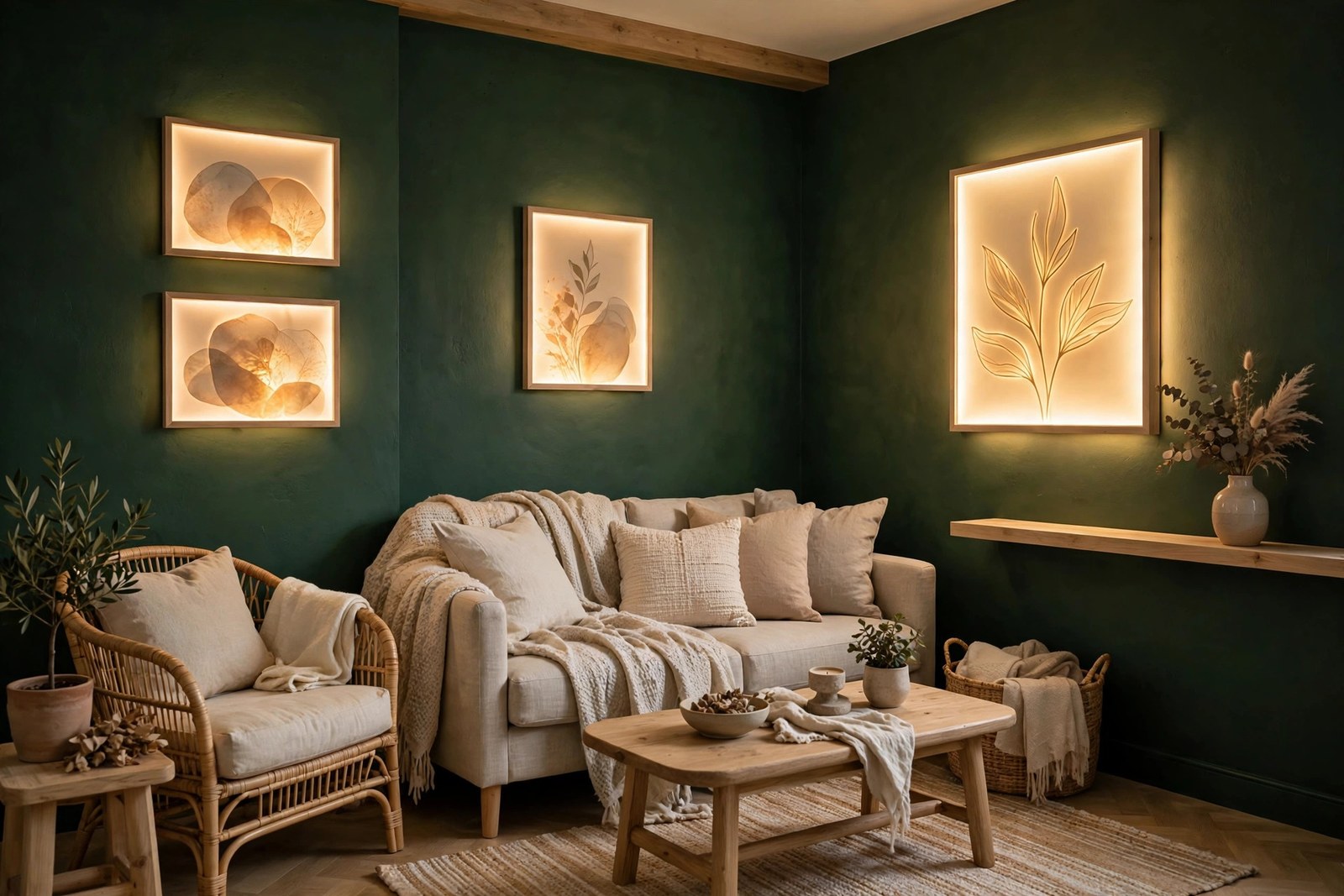
White walls with colorful furniture is only half the maximalist story.
A saturated wall color, deep green, plum, ink blue, warm ochre, turns the room itself into the backdrop and lets lighter objects glow against it. And in a small space, one fully painted room, walls and even ceiling in the same tone, can feel larger than a timid accent wall, because there are no hard contrast lines chopping the space up. The guidance in decorating with bold colors applies doubly here: test the color big, in daylight and in lamplight, before a whole room wears it.
Renters, skip the paint and lean on large textiles and a tapestry instead. A big cloth on the wall gives a similar wrap of color and takes its hooks out clean.
8. Mix Eras Deliberately, One Star Per Style
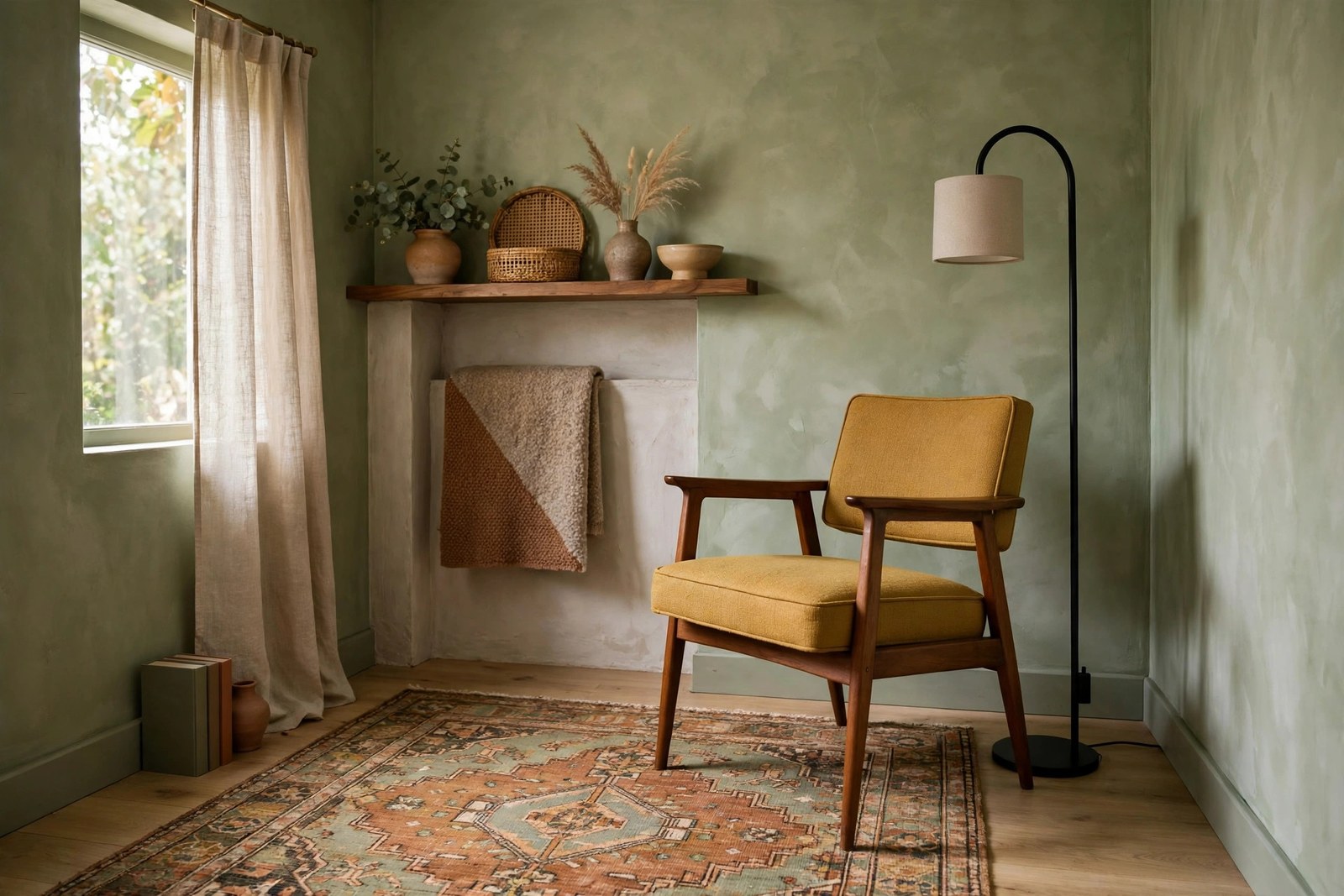
Maximalism loves a mix: a mid century chair, a vintage rug, a modern lamp, a traditional painting, all in one small room.
The mix works when each style gets one clear representative and the palette stitches them together. It fails when every object is a halfway compromise between styles, because then nothing in the room has a point of view. Learn the simple sequencing rules in how to mix decor styles, then add pieces slowly enough to see which era wants to lead the room.
My test is one sentence. Name the mix: vintage and modern, boho and glam. If you cannot name it, the room is not mixed yet. It is just accumulated.
9. Light at Three Heights or the Room Dies at Night
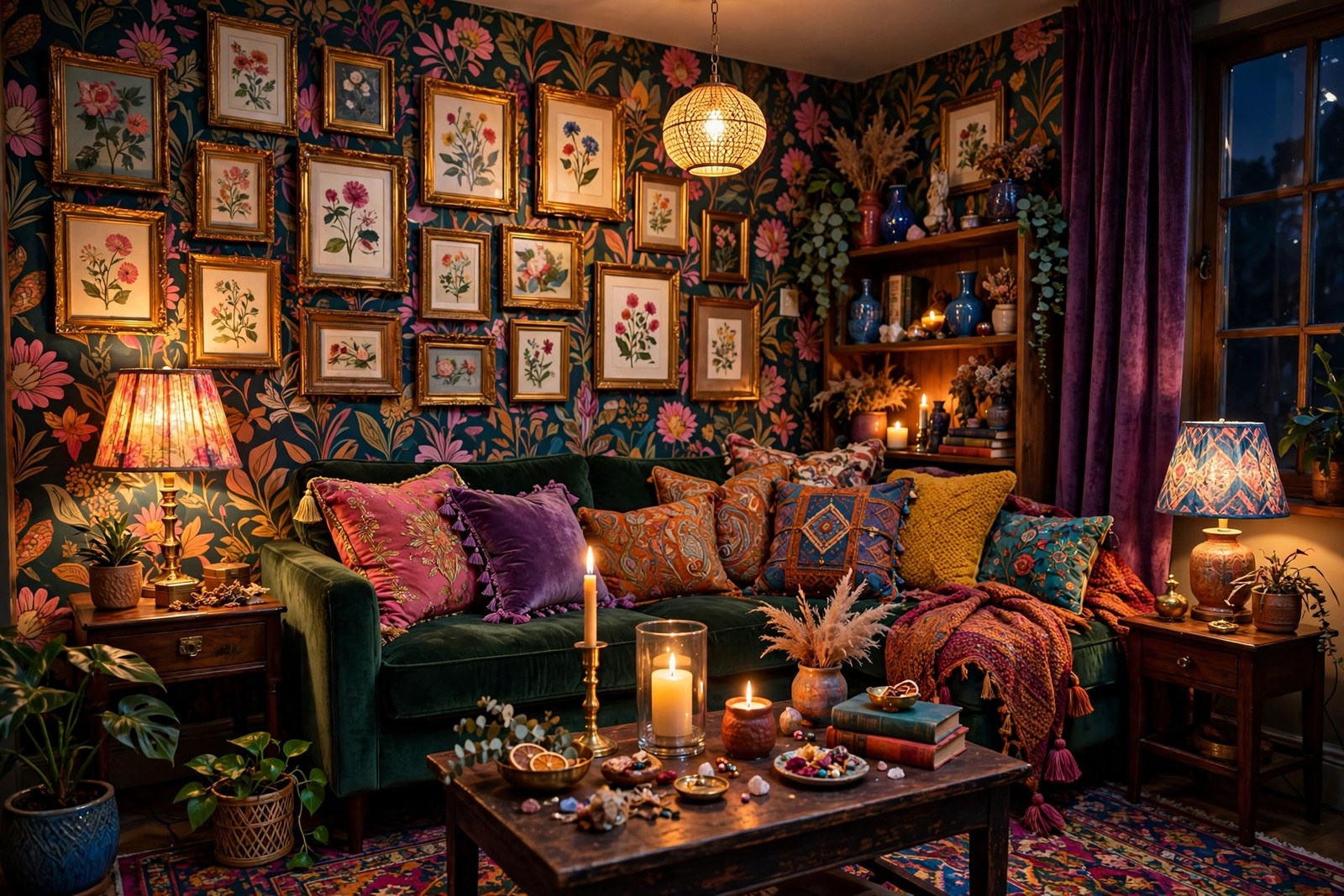
A maximalist room lit by one ceiling bulb looks like a storage unit after dark. All that pattern and texture needs light that flatters it.
Build three heights instead: a ceiling or pendant source for general glow, lamps at table height for faces and conversation, and low light, candles, a small lamp on a stack of books, or picture lights over the gallery wall. Many small sources keep shadows soft and colors rich, where one hard bulb flattens everything.
Put lamps on dimmers where you can, use warm bulbs, and light the corners on purpose. Dark corners are where small maximalist rooms go to feel cramped, and my own rule is simple: no corner stays black.
10. Defend Your Empty Islands
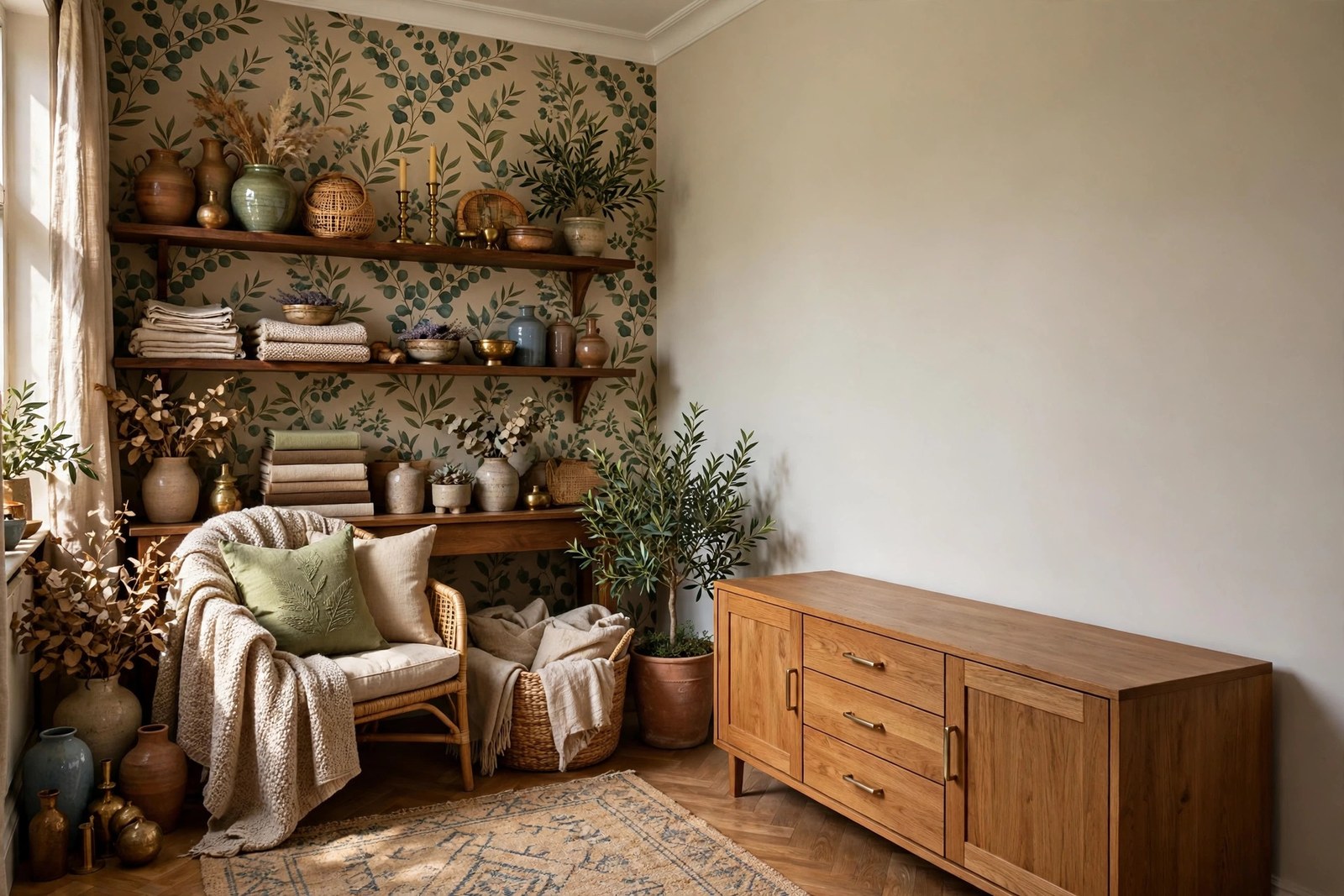
The most important maximalist skill is knowing where to stop.
Keep a few islands empty on purpose: one clear stretch of wall, the top of one sideboard, one plain cushion among the prints, the floor space in the middle of the rug layout. These pauses are what let the eye enjoy everything around them. It is the same lesson, learned from the opposite direction, that japandi home decor ideas teach about breathing room.
When a corner starts to feel frantic, do not add a thing. Take one away. In maximalism, editing is not minimalism sneaking in through the back door. It is curation, and it never ends.
11. Rotate the Collection Instead of Growing It
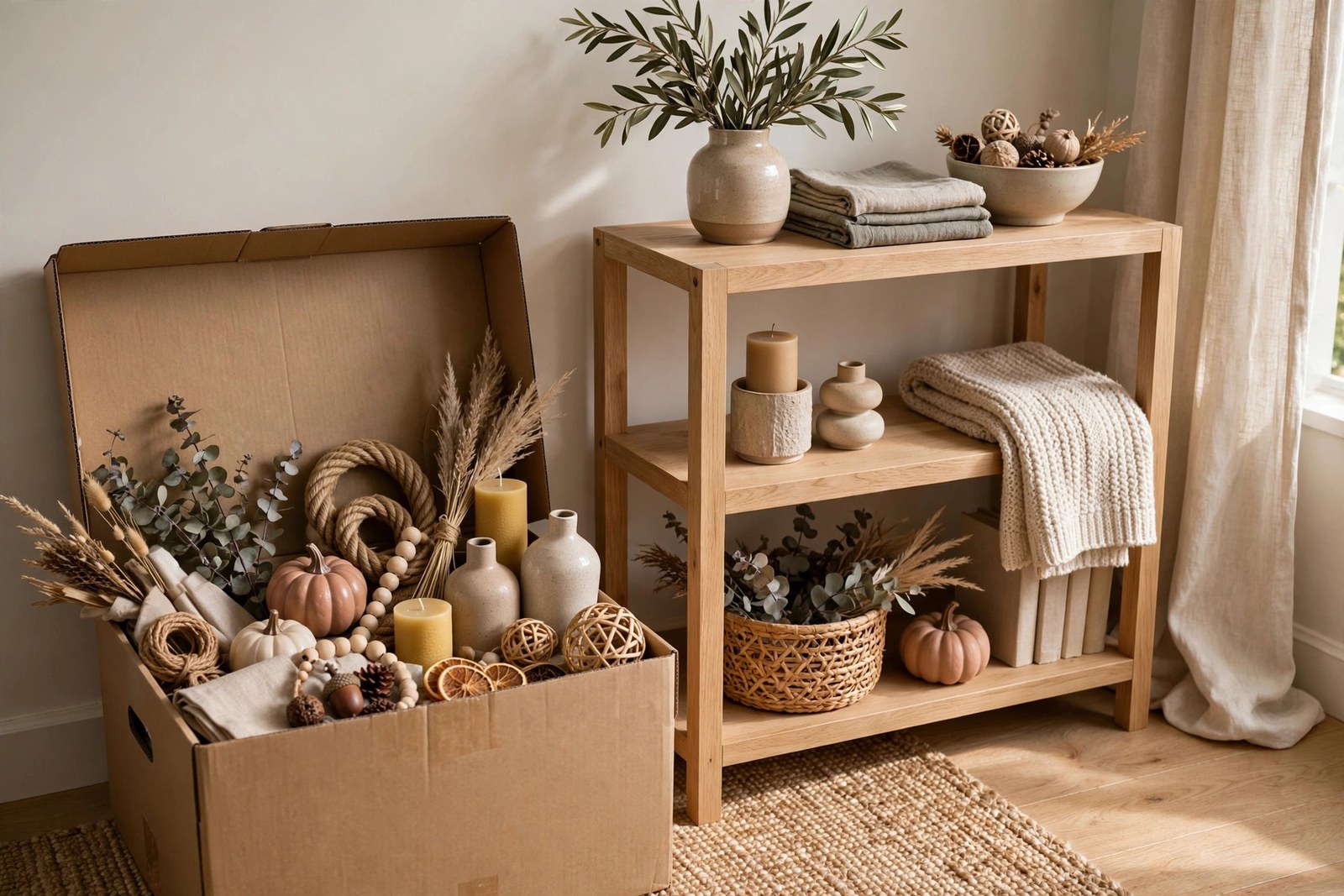
Small maximalist homes stay joyful when the collection rotates instead of only growing.
Keep one storage box or one cupboard shelf as the rotation library. Each season, swap a few textiles, objects and artworks between the room and the box, shift which color in the palette leads, and retire anything that no longer earns its place. The room feels newly decorated four times a year without gaining a single object. I rotate about a quarter of my small pieces each season, and pieces I was bored with in spring feel new again by fall.
Rotation also protects your best things from fading into background noise. When a loved object comes back after a season away, you see it with first time eyes again. That is the whole pleasure of owning beautiful things.
The Bottom Line
Maximalism in a small space is not about owning more. It is about choosing boldly inside a strict palette, repeating colors until they sing, grouping collections tight, lighting at three heights, and defending a few calm islands where the eye can rest. Start with the palette and one hero piece, add pattern and texture slowly, and edit as faithfully as you collect. A tiny room run this way stops apologizing for its size and starts showing off its personality.
Start with the palette. Pick your three to five colors tonight, and let every choice after that answer to them.
Frequently Asked Questions
Can maximalism work in a tiny apartment?
Yes, and small rooms often carry it better than large ones, because the layers sit close enough to feel like an embrace. The conditions are discipline: one palette of three to five colors per room, colors repeated at least three times, collections grouped, and a few protected empty spots, so the richness reads as design rather than storage.
What is the difference between maximalist and cluttered?
Intention and repetition. A maximalist room repeats its colors and materials on purpose, groups related objects, and keeps some surfaces clear, so the eye can travel. Clutter is accumulation without those decisions: unrelated colors, scattered objects and no resting places, which is why clutter feels stressful and maximalism feels generous.
How many colors should a maximalist small room use?
Three to five colors is the working range for a small room, with neutrals counted if they dominate. Fewer feels tame, and more becomes noise unless the tones are very close relatives. Repeat each color at least three times so the palette reads as a system, not a series of accidents.
Where do you start with maximalist decor?
Start with the palette, then one hero piece of furniture, then textiles, because those three decisions set the room’s boundaries. Add art, collections and pattern once the bones agree, and edit as you go. Buying small objects first is the classic mistake: they arrive with no system to join.