10 Mudroom Ideas That Actually Work for a Busy Home
The mudroom is where your home meets the real world of wet boots, school bags, dog leads and shopping that needs putting down somewhere. When that meeting point has no system, the mess does not stay by the door, it walks through the whole house.
The good news is that a working mudroom is not about square footage. Some of the most effective setups live on a single wall of a hallway or in the corner of a kitchen.
These ten mudroom ideas focus on what busy households actually need, storage matched to your clutter, a seat, hooks at honest heights, and a floor that forgives mud, so the rest of your home stays calmer. Start with the audit, and let your own piles plan the space.
1. Defining Your Mudroom Storage Needs
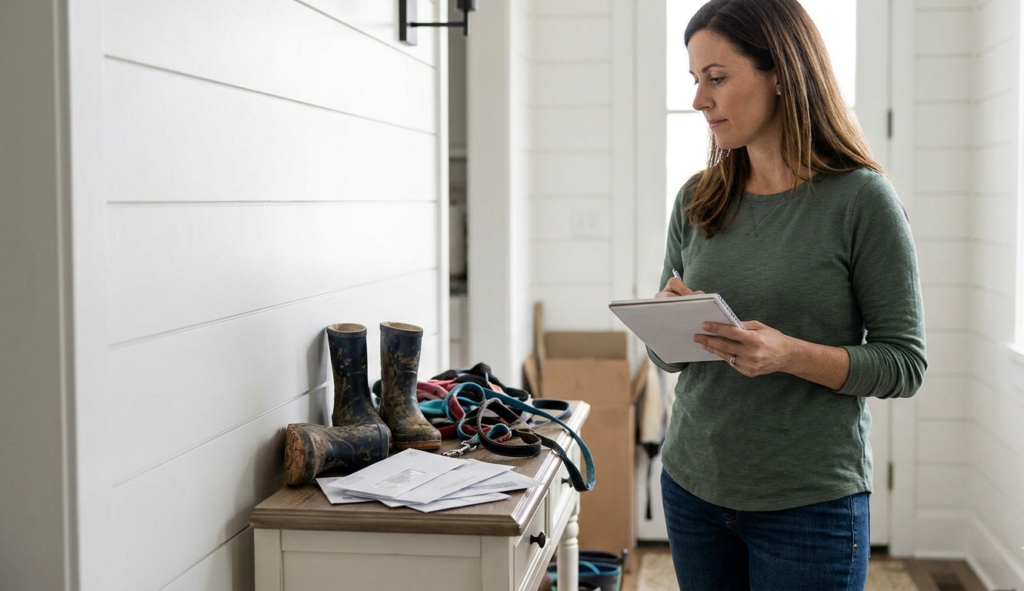
Before you buy a single hook, live with the doorway for three normal days and watch what lands there. Count the coats, shoes, bags and small items that your household genuinely drops in a day, including sports kits and the dog gear. That pile, not a catalogue photo, is your brief. Photograph the worst evening version of the space, then list categories and rough quantities. Most families discover their problem is narrower than they feared, usually shoes and bags, which means a smaller, cheaper fix. Planning storage around real numbers also stops you building beautiful cubbies for clutter you could simply relocate.
2. The Power of Built-In Cubbies
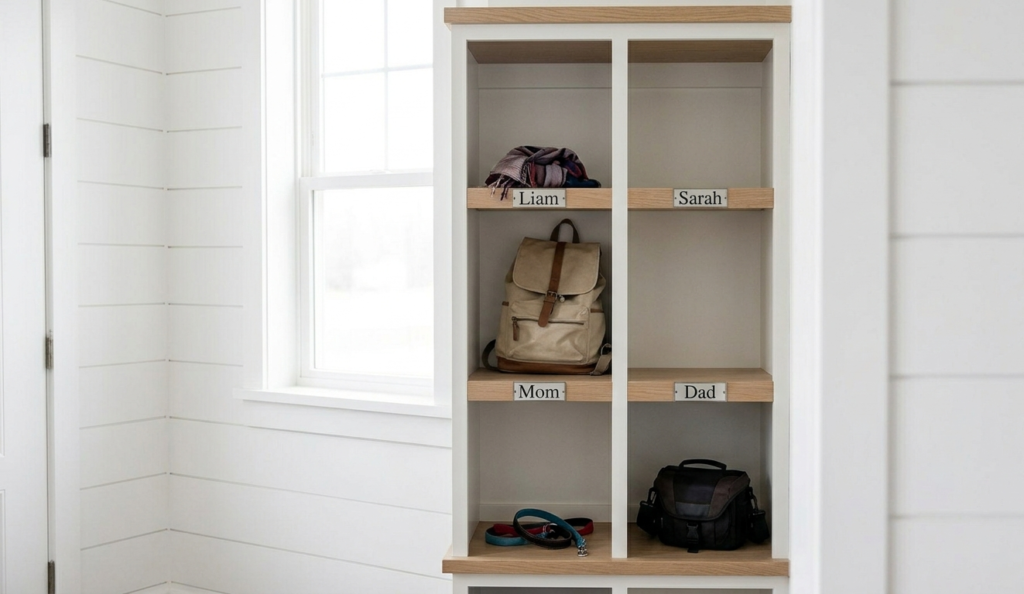
One cubby per person is the closest thing a mudroom has to magic. When a child owns a vertical slot with a hook, a shelf and a shoe space, their belongings stop migrating, and morning searches shrink to one square foot. Build them tall enough for winter coats and add a top shelf for off season items in labeled boxes. Renters and tight budgets can copy the idea with a bookcase on its side, crates or a row of identical baskets under wall hooks. The label matters as much as the carpentry. Names or simple picture labels for young children make the system run itself.
3. Incorporating a Sturdy Bench Seat

A bench does three jobs at once. It gives everyone a seat for pulling boots on and off, its top catches bags for the ten seconds they need somewhere to land, and the space under or inside it stores the awkward extras. A hinged storage bench hides gloves, scarves and dog towels through the summer, while open space beneath suits tall boots in winter. Choose a height that suits the youngest user and a finish that wipes clean. Add one firm cushion if you like, but keep it washable. In a narrow hall, even a sturdy wall mounted folding seat earns its keep daily.
4. Utilizing Vertical Space with Wall Hooks
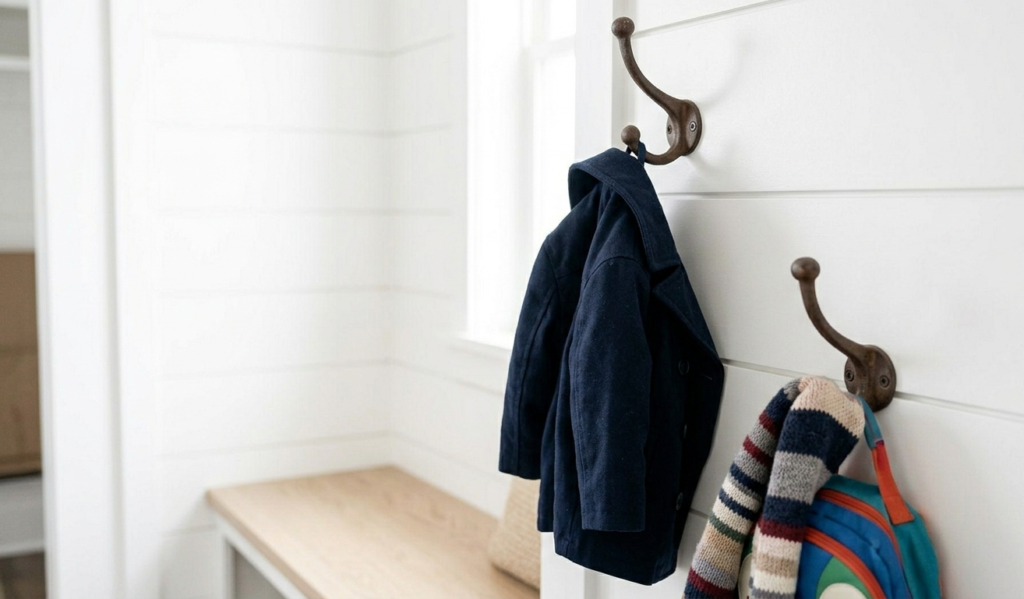
Walls are the free square footage of every mudroom. A double row of strong hooks, high for adults and low for children, holds coats, backpacks and leads at the exact height each person can reach without help. Space hooks generously rather than crowding them, because a hook buried behind three coats never gets used. Screw rails or individual hooks into studs or solid backing. A loaded winter coat plus a school bag is heavier than it looks. Keep one spare hook near the door for guests, so visitor coats join the system instead of draping over your tidy bench.
5. Dedicated Shoe Grids and Trays
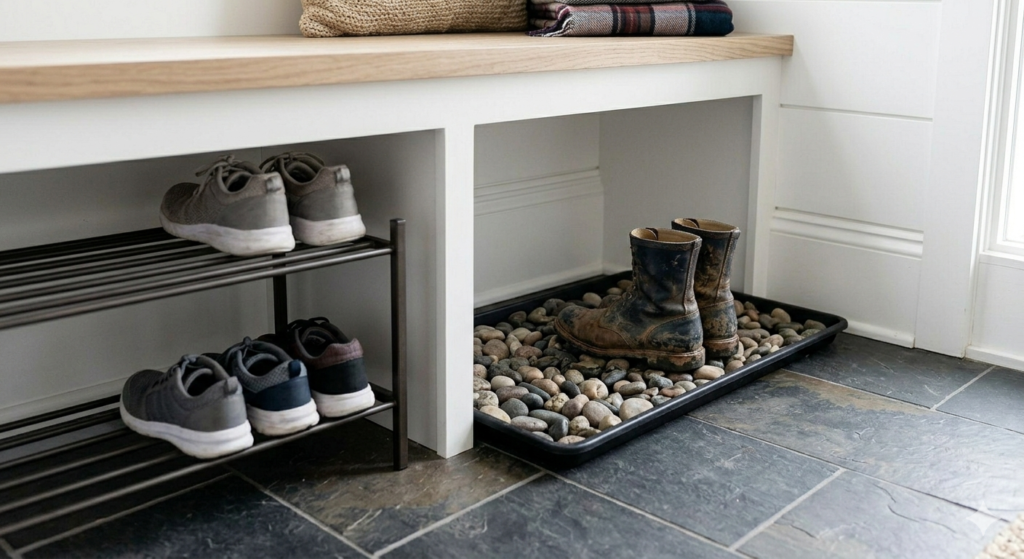
Shoes create more doorway mess than everything else combined, because they arrive wet, muddy and in pairs that separate. A simple grid or tiered rack keeps pairs together and off the floor, while a lipped boot tray under the bench catches the melt and grit. A layer of smooth stones in the tray lifts soles out of puddles and speeds drying. Set a firm household rule, two pairs per person by the door, the rest in bedroom closets. That single limit stops the collection quietly doubling every month and keeps the rack a tool instead of a shoe shop.
6. Closed Cabinetry for a Minimalist Look
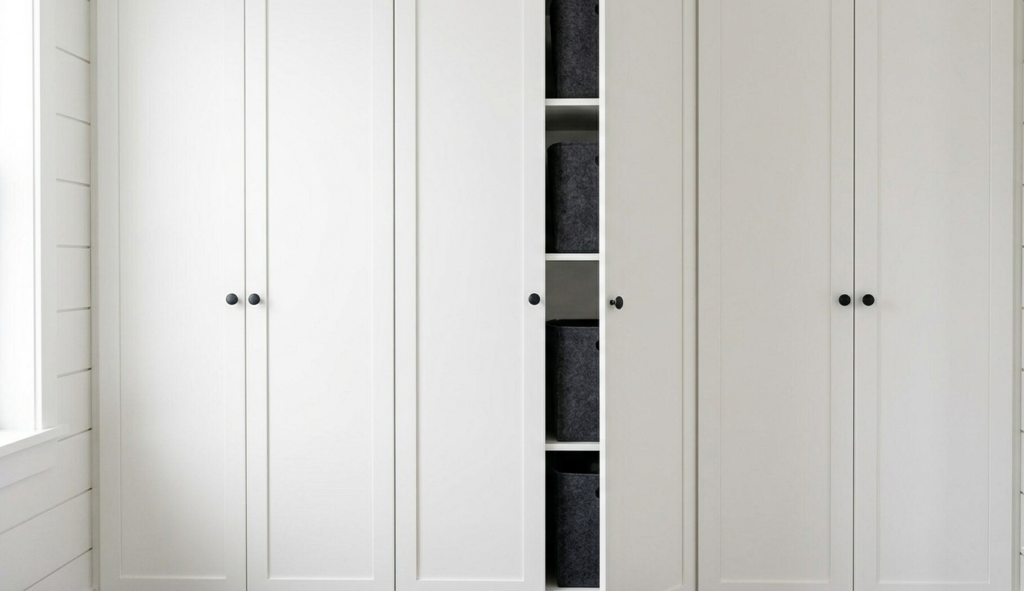
If visual calm matters more to you than open display, closed cabinetry is the honest answer. Tall doors hide the honest jumble of coats, helmets and mismatched umbrellas, and the whole entry reads as one clean wall. Inside, fit a rail, a few shelves and the same labeled baskets you would use in open cubbies, because hidden storage still needs a system or it becomes a cupboard of chaos. Ventilation matters. Louvered doors or a small gap at the top stop damp coats smelling musty. Choose handles that small hands and gloved hands can open without a fight.
7. The Importance of Durable Flooring
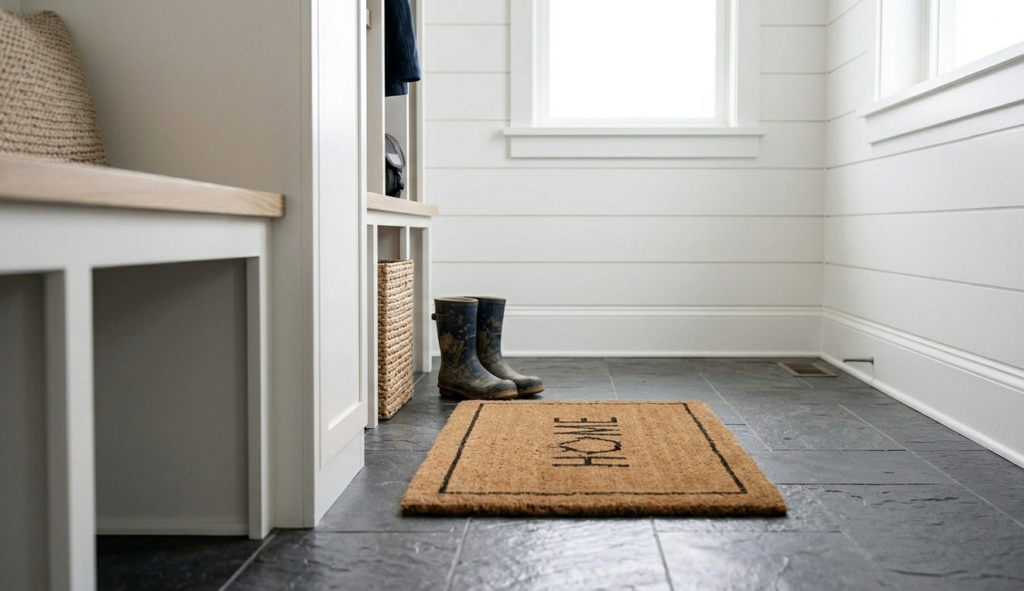
Mudroom floors face water, grit, salt and dragging heels, sometimes all before breakfast. Porcelain tile is the workhorse, nearly indestructible, easy to mop and available in finishes that hide a day of footprints. Slate brings natural texture, though it wants sealing, and quality sheet vinyl or luxury vinyl plank gives a softer, warmer and very forgiving alternative for halls. Whatever you choose, put a washable runner or a large coir mat at the door to catch the worst of it before it spreads. A floor you can clean in two minutes is what keeps the whole system pleasant to use.
8. Integrated Charging Stations
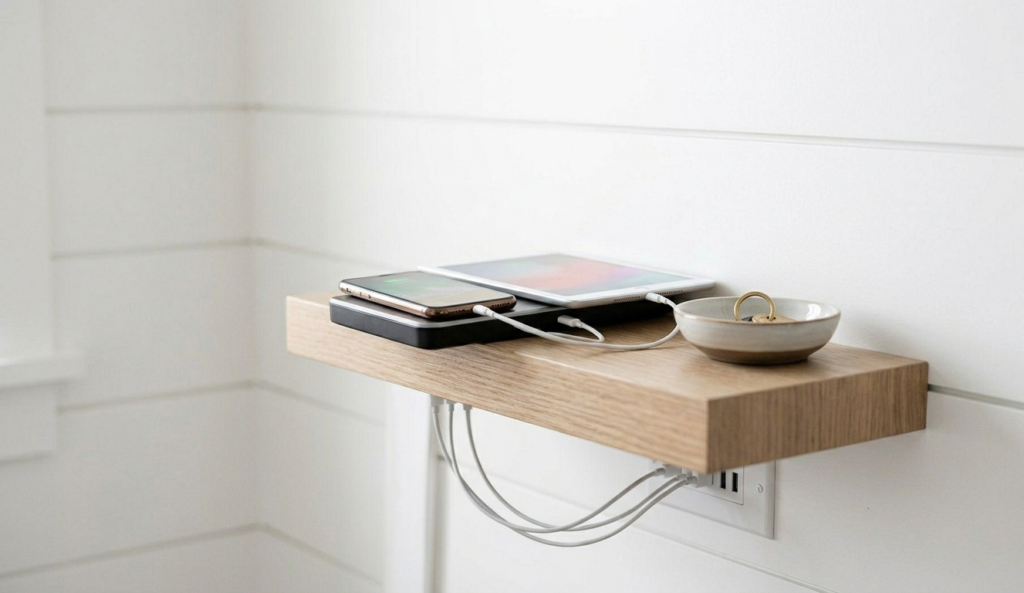
Phones, tablets, torches and headphones all seem to die beside the front door, so give charging a home there too. A small shelf or a shallow drawer with a power strip inside keeps cables contained and devices off the floor, and a family rule of charging overnight in the mudroom makes school and work mornings calmer. Label each cable once, and arguments end. If your mudroom doubles as a homework zone, cables stay away from wet boots on their own shelf above splash height. One basket for spare chargers and power banks keeps the station tidy instead of multiplying wires.
9. Drop Zones for Mail and Keys

Paper and keys are small, but without a home they colonize every surface in the house. A narrow console, a wall mounted letter rack or even one handsome tray on the bench gives post, sunglasses and keys a landing strip the moment you walk in. Add a small recycling box nearby so junk mail dies at the door instead of touring the kitchen. Sort the tray weekly, two minutes, same day each week, before it becomes an archive. A hook or bowl that is always the key place ends the morning hunt more reliably than any resolution to be tidier.
10. Adding Natural Light and Mirrors
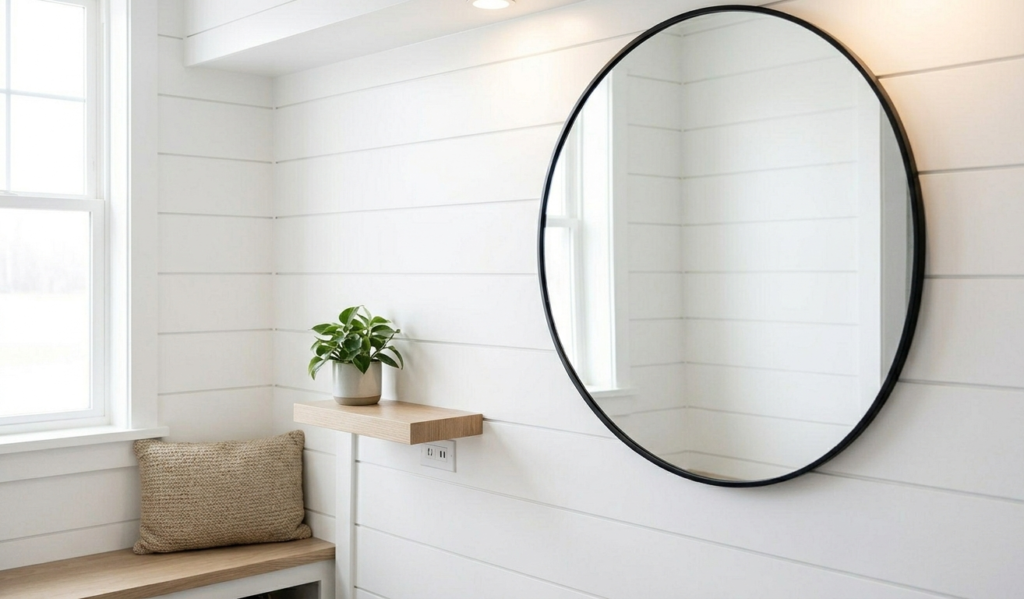
Many mudrooms are borrowed corners with no window, and gloom makes even a tidy one feel cramped. A mirror is the cheapest fix. It bounces whatever light exists, doubles the sense of width and gives everyone a last check for toothpaste and hat hair on the way out. If you are replacing a door, a glazed panel borrows light from the next room beautifully. Finish with a warm, bright ceiling light on a sensor if the budget allows, so nobody fumbles for switches with full arms. Bright entries feel bigger, safer and more welcoming to come home to.
Conclusion
A mudroom that works is not the prettiest one on the internet. It is the one where every coat, shoe and school bag has an obvious home, and where cleaning up takes two minutes because the system does the thinking. Start with your own clutter audit, add cubbies or hooks to match it, protect the floor, and give keys, post and chargers their small territories. Build it in a weekend if you can, or one idea at a time. Either way, the calm you feel at the front door will follow you through the whole house.
Frequently Asked Questions
What if I do not have a mudroom?
Use one wall by your busiest door. A bench, a row of hooks, a shoe tray and a key bowl on a single stretch of hallway deliver most of the benefit of a full room. Vertical storage matters more than floor space, so build upward and keep the walkway clear.
How do I keep a mudroom from smelling damp?
Ventilation and dry storage do the work. Choose louvered doors or leave cabinet doors ajar after wet days, lift boots onto a tray with stones so air circulates, and wash the runner regularly. A small open box of baking soda on a shelf quietly absorbs the rest.
What is the best mudroom flooring on a budget?
Quality sheet vinyl or luxury vinyl plank is usually the most forgiving budget choice. Both handle water and mud, install over many existing floors and clean with a mop. Add a large washable mat at the door and even inexpensive flooring survives years of family traffic.
How many hooks does a family mudroom need?
Plan at least two hooks per person, one for a coat and one for a bag, plus a spare for guests. Hooks at two heights, adult and child, get used far more honestly than a single high row that children cannot reach on their own.