Dark Living Room Trends That Work
A dark living room sounds like a risk, but for many homes it is the change that finally makes the space feel finished. Deep walls absorb the visual noise of everyday life, furniture silhouettes look sharper against them, and evening light turns warm and flattering.
The fear is always the same, that the room will feel smaller or gloomier. That only happens when dark color is used without texture, lighting and contrast to support it. The eleven trends in this guide show how designers make moody rooms feel welcoming rather than cave like, from the paint on the walls to the rug underfoot.
Start with one wall if you are nervous. You can always go deeper. And if you rent, most of these ideas still work without touching the walls at all.
1. Defining the Contemporary Dark Living Room

The contemporary dark living room is not a black box. It is a layered space built on deep, complex colors, charcoal, forest green, ink blue, espresso brown, paired with enough light and texture to keep them alive. Choose colors with warm or muddy undertones rather than flat black, because they shift gently through the day and flatter skin tones at night. Keep the ceiling lighter than the walls if the room is small, or paint everything one deep shade in a large room for a cocoon effect. Test paint on two walls and live with it for a few days. Dark colors change more between morning and evening than pale ones do.
2. Emphasizing Texture in Moody Decor Ideas

In a bright room, color does the talking. In a dark room, texture takes over, because deep shades swallow fine detail and leave surface and shadow to create interest. Mix at least four textures in the seating area. Velvet or boucle upholstery, a nubby wool throw, smooth leather, rough wood and one woven piece is a reliable combination. Place the most tactile pieces where the light lands, beside a lamp or near the window, so their surfaces catch highlights. Matte finishes matter here. A wall in flat paint beside a satin wood cabinet and a soft pile rug gives the eye three different ways of reading the same color.
3. Mastering Strategic Lighting

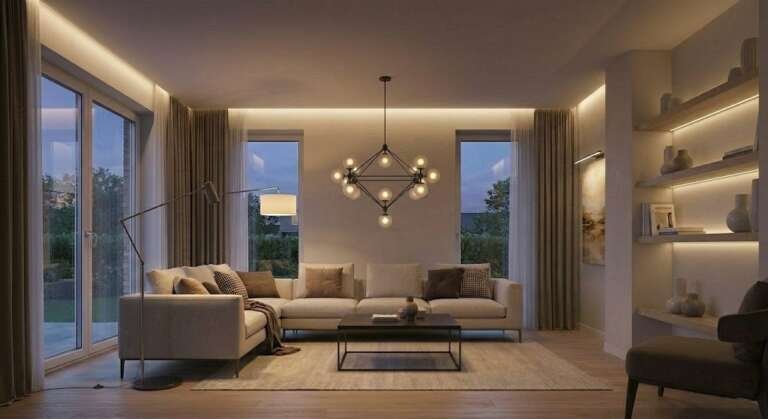
Lighting decides whether a dark room feels moody or just dim. One ceiling light is never enough, because it flattens deep colors and leaves the corners dead. Plan pools of light instead. A floor lamp beside the reading chair, table lamps at both ends of the sofa, and a low light source near the floor, such as a small lamp on a stack of books or candles on the mantel. Use warm bulbs, around the warmth of candlelight, and put the main lights on dimmers so the room can change with the evening. Five smaller light sources at different heights will always beat one bright one in a dark scheme.
4. Introducing Metallic Accents

Metal is the jewelry of a dark room. Brass, antique gold, copper and pewter catch whatever light is available and carry it into the shadows, which is why a single brass lamp can lift a whole corner. Choose one main metal and repeat it in three or four places, lamp bases, picture frames, a tray, cabinet handles, so it reads as a theme. Keep finishes aged or brushed rather than mirror bright if you want the room to feel relaxed. A little metal goes a long way against deep walls. If the room still feels flat, add one more reflective surface before you add more light.
5. Integrating Biophilic Elements in a Moody Space

Green is never more beautiful than it is against a dark background. Leaves look richer, shapes look sculptural, and the room gains the one color that deep paint cannot supply on its own. Choose plants that tolerate lower light, such as snake plants, ZZ plants, pothos and cast iron plants, and place the largest one where it breaks up a long dark wall. Natural materials complete the biophilic picture. A raw wood stool, a stone tray, a jute rug or dried grasses in a tall vase all soften the drama. Group plants at different heights, floor, table and shelf, so the greenery feels woven through the room rather than parked in one corner.
6. Curating Moody Shelving and Displays
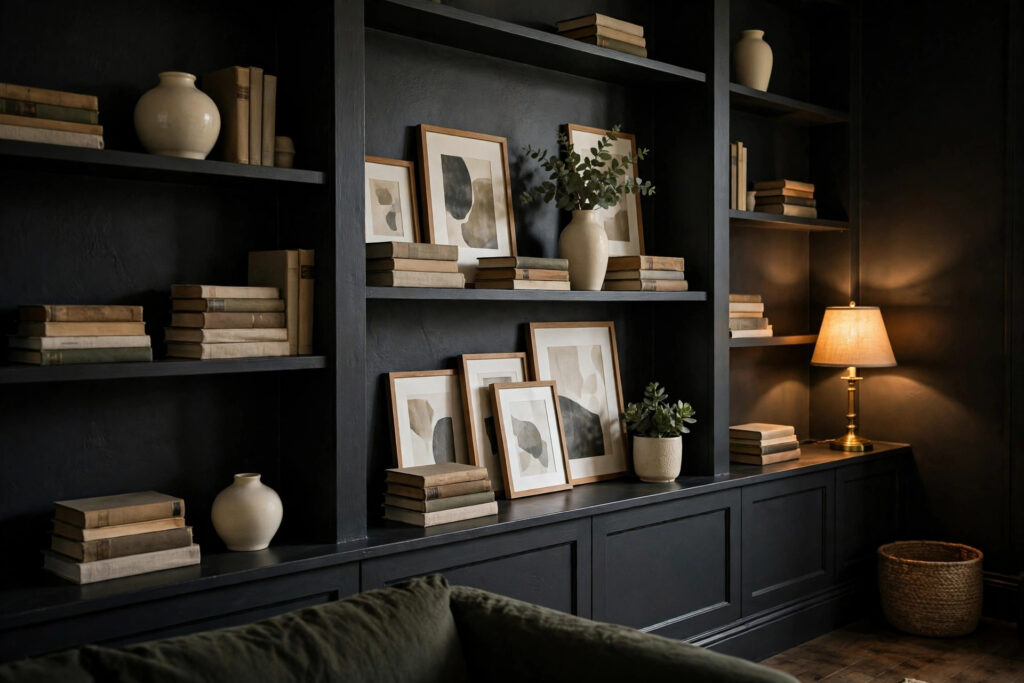
Painting shelves the same deep color as the walls is one of the smartest moves in a dark room. The shelving disappears into the architecture, and the objects on it appear to float in pools of shadow and light. Style the shelves in small groups. Stack books horizontally as plinths, stand ceramics and framed prints against the back panel, and leave some sections half empty so the darkness itself becomes part of the display. Warm materials show up best, pale wood, cream pottery, brass and glass. Add a small picture light or a nearby lamp if the shelves sit in a dim corner. Restraint is the whole trick here. Five considered objects beat twenty small ones.
7. Anchoring with Textural Area Rugs

A dark room needs a rug that mediates between deep walls and furniture. Go too dark and the seating area sinks into a black hole. Go too pale and the rug floats like a raft. A warm mid tone with visible texture, a faded vintage pattern, a high low pile or a natural jute layered under a smaller wool rug, usually lands in the sweet spot. Size up. The rug should reach under the front legs of every seat so the group reads as one island. Texture matters as much as color here, because the rug is the surface your feet read first and the one that catches lamplight across its pile.
8. Framing Windows with Dramatic Drapery

Windows are the light source of a dark room, so treat them like the feature they are. Floor length curtains in a deep, heavy fabric, velvet, linen look weaves or wool blends, frame the glass and make the whole wall feel taller and more deliberate. Hang the rod close to the ceiling and wider than the frame so the curtains stack on the wall, not over the glass, and no daylight is wasted. If the walls are dark, curtains a shade deeper or in a contrasting warm neutral both work. Lined curtains also soften sound, which suits the quiet mood of the room. During the day, tie them back. The contrast between bright glass and dark fabric is the drama.
9. Creating Sculptural Impact with Dark Objects

In a dark room, shape matters more than detail, and sculptural objects earn their place. A large black ceramic vase, a carved wooden figure, an oversized stone bowl or an abstract metal piece reads as a silhouette, interesting from across the room even in low light. Place one strong object where a lighter wall or a lamp can outline it, on a mantel, a plinth or the end of a console. Keep the styling sparse around it so the shape stays the point. Matte black pieces feel modern, while aged bronze, dark wood and charcoal stone feel collected. One hero object per view is enough. More than that and the room starts to feel like a gallery stockroom.
10. Sleek Media Integration in a Dark Context

A television is the one object that improves in a dark room. A black screen on a deep wall nearly disappears when it is off, instead of dominating the room the way it does on white paint. Wall mount it, run the cables inside the wall or in a painted cable cover, and keep the media unit low in a finish that matches the scheme. If you frame the screen with shelving or paneling, it becomes part of the architecture. Bias lighting, a soft strip of light behind the screen, reduces eye strain and adds to the layered glow. Avoid glossy black furniture around the TV. Matte finishes keep reflections down and the look calm.
11. Achieving Balance in the Final Moody Scene

Balance is the difference between a moody room and a gloomy one. As a rough guide, let dark surfaces own about two thirds of the room, the walls, one large piece of furniture, the shelves, and let the remaining third stay lighter, upholstery, rug, curtains, cushions and art. This ratio keeps the drama while giving the eye places to rest. Check the room at the time of day you use it most, usually the evening, and adjust the lighting before the paint. Add one living element, one reflective element and one soft element to every view. Then stop. Dark rooms punish over styling more than light ones do, because every object shows as a silhouette.
Conclusion
Dark living rooms work when the color is only the beginning. Deep paint sets the mood, but texture gives it depth, layered lighting gives it life, and metal, plants and lighter accents keep it in balance. You do not have to commit all at once. Paint one wall, live with it through a full day of changing light, then decide how much further to go. Most people who try a moody scheme do not go back, because few looks make an evening at home feel so considered. Start small, light it well, and let the room prove the trend to you.
Frequently Asked Questions
Will a dark living room make my small room feel smaller?
Not if the lighting and contrasts are right. Deep colors blur the edges of a room, which can actually make it feel larger and calmer, especially with a lighter ceiling and a mid tone rug. Small dark rooms fail when they are dim, so invest in lamps before you invest in paint.
Which dark paint colors are easiest to live with?
Warm charcoals, deep forest greens, ink blues and espresso browns are the most forgiving, because their undertones flatter wood furniture and warm lighting. Pure black is the hardest to manage, since it shows dust, flattens detail and needs the most texture around it to feel comfortable.
How many lamps does a dark living room need?
Aim for at least four to five light sources at different heights, including one near the seating, one in the darkest corner and one low accent light. Put the main ones on dimmers. In a dark scheme, more small lights always work better than one bright ceiling light.
Can I try the dark trend without painting the walls?
Yes. Start with dark upholstery, a deep colored sofa throw and cushions, a moody rug and black or bronze accents against your existing walls. You will get much of the mood with none of the commitment, and you can test how your light behaves before a single wall changes.