Coffee Table Styling Ideas That Work
The coffee table is the one surface every guest sees up close, and the one most of us quietly give up on. Remotes, mugs, mail and a lone candle that has not been lit since spring.
Styling it well is not about buying a cart of accessories. It is about a few repeatable formulas that balance three needs at once, beauty, personality and somewhere to actually set down a drink.
The eleven ideas in this guide are the ones designers return to because they survive real life. Build one arrangement, clear half the table for living, and your whole seating area will look more finished within the hour. The approach works for glass, wood and marble tables alike, and it scales up or down with the room.
1. The Rule of Three

Groups of three look finished to the human eye in a way that pairs and single items rarely do. Use the rule as your base arrangement. One tall item, such as a vase or a small plant. One medium, horizontal item, usually a short stack of books. And one small, interesting object, a bowl, a knot, a brass animal or a favorite stone. Set the three close enough to read as one group, with a little space between them, and leave the rest of the table deliberately empty. If you add a fourth piece later, swap something out rather than crowding the formula. Three is the discipline as much as the look.
2. Utilizing Trays for Organization

A tray is the hardest working styling tool you can own, because it turns scattered small things into one considered object. Choose a tray that covers about a third of your table, in a material that contrasts with the surface, woven on glass, wood on marble, metal on wood. Corral the remotes, coasters and a candle inside it and the clutter instantly reads as a collection. Trays also make real life easier. The whole arrangement lifts off in one move when you need the table for a board game, a puzzle or feet. If your household resists order, the tray sets the boundary gently. Anything that belongs on the table belongs in the tray.
3. Layering with Coffee Table Books

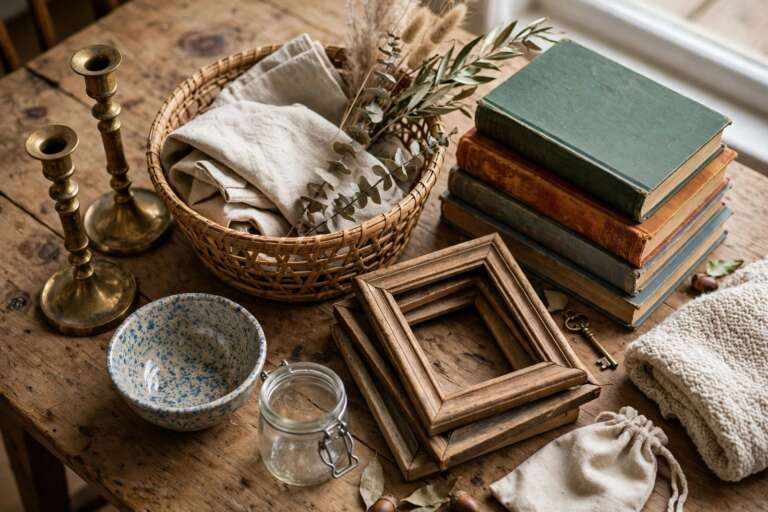
Books give a coffee table its height, its color and most of its personality. Stack two or three large format books with the biggest at the bottom, aligned neatly or turned at a slight angle for a relaxed feel. Choose covers that speak to the household, travel, gardens, food, art or a beloved city, because guests really do pick them up. The stack then becomes a plinth. Rest a small object on top, a pair of reading glasses, a magnifier, a small bowl, and the arrangement is complete. Keep spines and covers in your room’s palette if you can, and rotate the top book with the seasons so the table never goes stale.
4. Adding a Touch of Life

Every styled table needs one living thing. A small potted plant, a vase of eucalyptus or olive stems, or a simple bowl of green apples brings color and softness that no manufactured object can match, and it stops an arrangement from feeling like a shop display. Scale matters more than species. Choose something low enough to see over during conversation, and keep it in one corner of the table rather than the center. Trailing plants soften hard table edges beautifully. If real greenery keeps dying in your light, one good faux stem in water, which fools the eye at a glance, is a perfectly respectable stand in.
5. Varying Heights for Visual Interest

A flat arrangement is an invisible one. Interest comes from a gentle skyline, one tall piece, one or two at medium height, and something low to land on. Build the heights deliberately. A tall vase or candlesticks at the back, a stack of books in the middle range, and a low tray or bowl at the front gives the eye a path across the table. Keep the tallest item under roughly a third of the distance to the ceiling’s visual line from seated height, so conversation flows over it. If everything you own is the same height, books are the fix. One more book under a bowl changes the whole composition.
6. Sculptural Statements

One sculptural object gives a coffee table its identity. A curved ceramic, a knot of chain links, a stone sphere, a piece of driftwood or an abstract figure works like a small artwork, and it carries the table even when everything else is practical. Choose a piece with a silhouette you enjoy from the sofa, since that is where you will see it most. Give it space. Sculpture dies in a crowd, so clear its neighbours back and let shadows do the framing. Matte finishes and natural materials photograph and age the best. This is the one table item worth spending a little more on, because you will look at it every single day.
7. The Power of Scents

Styling is usually visual, but the tables people remember also smell like something. A scented candle is the classic choice because it does three jobs at once, it is an object, a light source when lit and the room’s signature scent. Keep the candle inside your tray or on a coaster to protect the surface, and store matches in a small holder beside it so lighting it is effortless. Reed diffusers suit households that prefer a constant, flame free option. Choose one scent per room and repeat it rather than mixing fragrances, and keep wicks trimmed so the candle burns clean and lasts. Scent is the layer guests notice last and remember longest.
8. Seasonal Transitions

A styled table should breathe with the year, and seasonal transitions only need two or three swaps. In autumn, trade the shell bowl for pinecones or small pumpkins and add a warmer throw over the sofa arm. In winter, bring in candlelight, evergreen clippings and one metallic piece. Spring asks for fresh stems and lighter books on top of the stack, and summer for a woven tray and a bowl of citrus. Keep a small box of off season pieces so the change takes ten minutes. The formula underneath never moves. Only the accents rotate, which is exactly why this habit is sustainable instead of another decor project.
9. Playing with Transparency

Glass and acrylic pieces are the secret weapon of small living rooms. A glass vase, a clear box for remotes or an acrylic riser adds function and a little shine without adding visual weight, so the table looks styled but the room still feels open. Transparency also solves the dark table problem. On a heavy wood or black table, clear and pale pieces stop the surface reading as one dark slab. Mix one transparent item into each arrangement rather than building the whole display from glass, which can feel cold. A glass hurricane around a candle is a good start, because the flame gains a glow and the table gains a highlight.
10. Texture Mixing

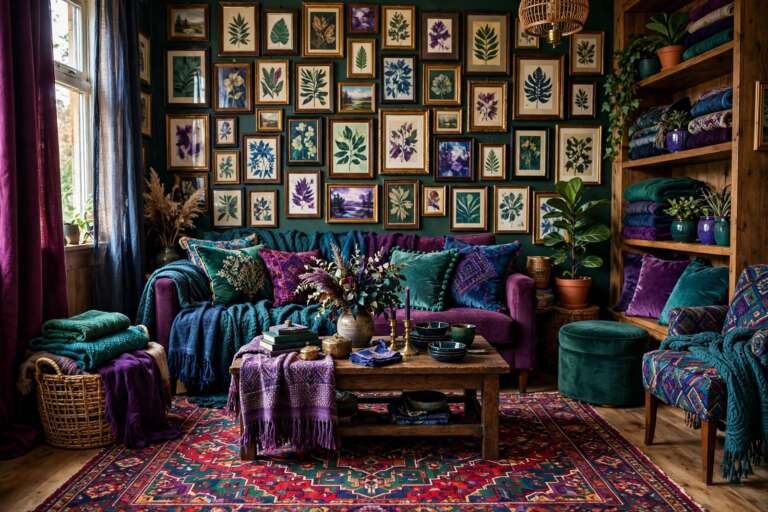
Texture is what makes a simple arrangement feel rich. Aim for three different surfaces in every grouping, something rough, something smooth and something soft. A rough wood tray, a glossy ceramic bowl and a folded linen cloth under one item is a reliable trio. Natural materials keep the mix warm, and they hide the small imperfections of daily use better than pristine finishes do. Run the arrangement past the touch test. If everything feels cool and hard, add fabric or weave. If everything feels soft and pale, add one dark or metallic piece for grip. Texture mixing is also forgiving of budget. Inexpensive natural pieces carry more character than costly smooth ones.
11. Minimalist “Quiet Luxury”

Sometimes the strongest statement is restraint. Quiet luxury styling uses very few pieces, but each one is beautiful in material and shape, a single large art book, a heavy stone bowl, a perfectly plain vase with one stem. The luxury is in the space around them. This approach suits calm rooms, small tables and anyone whose household actually uses the surface hard, because there is almost nothing to move. Quality shows at this scale, so choose natural materials, avoid visible logos and branding, and keep colors tonal rather than contrasty. If your arrangement of three from earlier in this guide feels busy, remove one piece at a time until the table exhales. That is the quiet luxury point.
Conclusion
A coffee table that works is a small system, not a shopping haul. One formula for the arrangement, usually a group of three on a tray. Height, texture and one living thing to give it depth. A clear half for mugs, feet and real life. Start with what you already own, books, a bowl, a plant and a candle will carry most tables, and edit over a few evenings until the balance feels right from the sofa. The best compliment a styled table can earn is that nobody notices the styling at all. The room simply feels finished.
Frequently Asked Questions
How much of my coffee table should I leave empty?
About half. A styled grouping on one side or in the center with clear space around it looks deliberate and stays usable, while a fully covered table reads as storage. If you regularly eat, work or play games at the table, style a tray instead, so the whole display lifts away in seconds.
What if I do not own coffee table books?
Use any large books you have, cookbooks, atlases, photo albums or library sale finds with the dust jackets removed for a calmer look. Two or three stacked together give the height the formula needs. The subject matters less than the size, the colors of the cover and the fact that the stack looks chosen.
How do I style a round coffee table?
Center the arrangement and keep it compact, usually one tray or one group of three with the tall piece in the middle. Round tables have no back edge, so height discipline matters more. Keep everything low enough to see across, and choose a round or oval tray to echo the shape.
How often should I restyle my coffee table?
A light refresh each season is plenty, plus a five minute reset whenever clutter creeps back. Swap the top book, change the greenery and rotate one object from another room. The base formula can stay the same for years, which is what makes the habit easy to keep.