Afroboho Living Room Ideas That Wow
Afroboho is one of the warmest styles you can bring into a living room, because it is built on story as much as on color. It pairs the craft traditions of African design, hand dyed mudcloth, woven baskets, carved wood and feathered juju hats, with the relaxed, layered comfort of bohemian living. Done well, the room feels collected over years, not ordered from one catalog.
The secret is order underneath the freedom: a grounded earthy palette, natural materials repeated from floor to wall, and a few genuine artisan pieces given room to breathe. These 11 afroboho living room ideas build the look layer by layer.
1. Earthy Foundations with Terracotta Tones

Every Afroboho room starts with the colors of the land. Terracotta, ochre, clay, sand and deep brown form a base that makes every textile and carved piece look richer. You do not need to repaint everything. One clay toned wall behind the sofa, or a large rug and cushions in these shades, can set the whole mood. Keep the biggest surfaces in the lighter end of the family, sand and warm cream, and save the deep rusts and browns for accents and wood. Test colors in daylight, because terracotta can turn orange under warm bulbs. When the base is this warm, even a very eclectic mix of finds will feel like one room.
2. The Power of Mudcloth Patterns

Bogolan, known widely as mudcloth, is the signature textile of this style. The hand painted geometric patterns in black, white and earth tones bring graphic strength to a room full of soft textures. Use it where it can be seen and touched: cushion covers, a throw folded over the sofa arm, a wall hanging or an upholstered footstool. Real mudcloth is a woven, dyed cloth with slight irregularities, and good printed versions carry the same patterns at a friendlier cost. Mix one or two mudcloth pieces with plain linen and woven cushions so the pattern stays the hero. Because the palette is neutral, mudcloth also bridges this style with calmer rooms.
3. Sculptural Seating in Natural Rattan

Rattan, cane and wicker give Afroboho rooms their airy, hand made skeleton. A rounded rattan armchair, a cane backed side chair or a woven pendant over the seating area adds sculpture without weight, and the open weave keeps the room feeling breezy next to heavier wood pieces. Pair natural seating with deep, soft cushions in mudcloth or plain earthy linen so it is as comfortable as it looks. One or two woven pieces are usually enough alongside a fabric sofa. Check second hand shops and markets, where rattan ages beautifully and costs less. Keep it out of harsh direct sun and dust the weave with a soft brush to hold its color.
4. Statement Juju Hats as Wall Art

A juju hat is a ceremonial feathered headdress from the Bamileke people of Cameroon, and as wall decor it is hard to beat for softness and presence. The circle of feathers adds a three dimensional texture that flat art cannot, and the natural cream, tan and brown tones suit the palette perfectly. Hang one large hat centered above the sofa, or group two or three sizes together with a woven basket or two mixed in. They are light, so a single small hook does the job, which renters will appreciate. Keep feathers out of direct sunlight and dust gently with cool air. A juju hat is often the piece guests ask about first.
5. Layered Textures: Sisal and Shag

Afroboho floors are meant to be felt. The classic move is layering: a large flat woven rug in sisal or jute as the base, with a smaller, softer patterned rug, such as a Beni Ourain style piece with simple line work, laid on top at an angle under the coffee table. The base rug sets the room’s boundary and adds quiet texture, while the top rug brings pattern and comfort where feet actually land. Keep the base big enough for the seating’s front legs, and let the top layer be the one you can shake out and clean easily. This two rug trick also warms cold tile or wood floors and softens echo in sparse rooms.
6. Indoor Jungles with Tropical Greens

Plants are not an accessory in this style, they are part of the architecture. Tall, leafy plants like bird of paradise, monstera and banana leaf echo the landscapes that inspire the look and fill the vertical space above low furniture. Set the biggest plant in a woven seagrass basket or a carved wooden planter so even the pot speaks the style’s language. Group plants in threes at different heights near the brightest window, and let one trail from a shelf for softness. If your light is weak, a tall snake plant gives the same upright silhouette with far less fuss. Water on a schedule and dust broad leaves, since dusty plants lose their sculptural shine.
7. Hand-Carved Senufo Stools
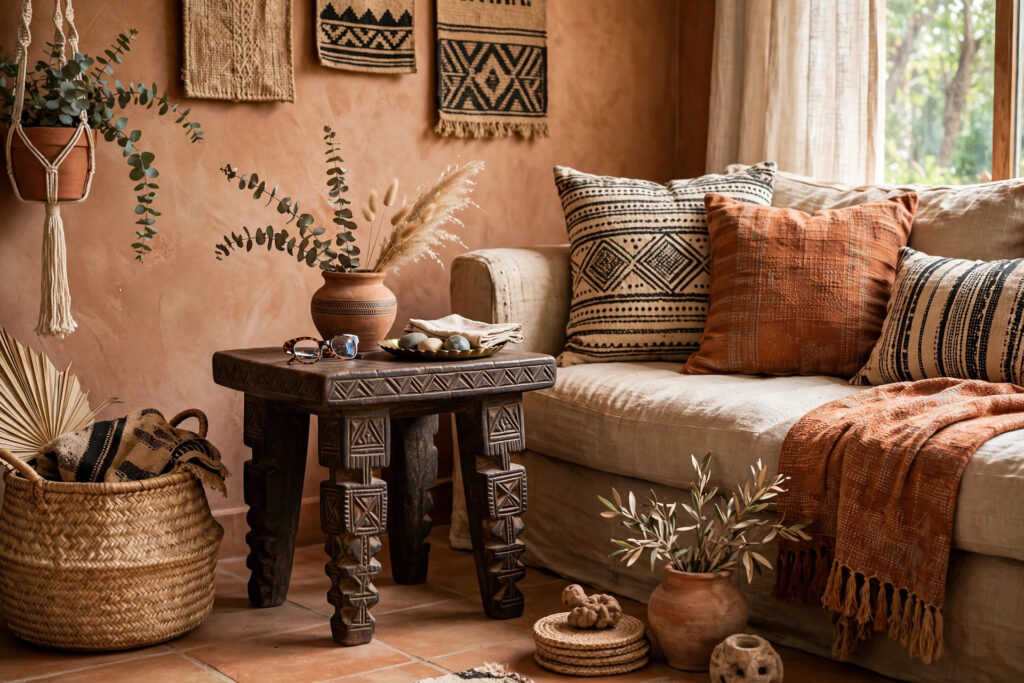
Some of the most loved pieces in an Afroboho room are carved from a single block of wood. Senufo stools from Ivory Coast, with their sculptural legs and worn, hand hewn finish, work as side tables, extra seats, plant stands or a place to stack art books. Their weight and honesty balance all the soft textiles in the room. Place one beside the sofa or an armchair where a table is needed, and let its irregular surface be part of the charm. Genuine vintage stools carry real presence; good carved reproductions give the same silhouette. Either way, one strong carved piece anchors the seating area better than several small ornaments.
8. Gallery Walls of Woven Baskets

A cluster of hand woven baskets is the friendliest gallery wall you can hang. Flat baskets from traditions such as Tonga and Binga weaving carry radial patterns that look like woven suns, and grouped together they fill a wall with rhythm and warmth. Lay the arrangement out on the floor first, mixing sizes and tones, then hang from the center outward with small nails or hooks through the weave. This is a perfect treatment above a sofa, along a hallway or up a stair wall. Baskets are light, inexpensive to ship and easy to thrift, so the wall can grow one find at a time.
9. Warm Lighting with Beaded Chandeliers

Light in an Afroboho room should feel like late afternoon sun. Beaded chandeliers and pendants strung with clay, wood or shell beads cast patterned shadows and bring another hand made material up to the ceiling. Hang one over the seating area or the coffee table zone, and support it with low table lamps with woven or linen shades for the evening. Keep bulbs warm and dimmable, because this style dies under cold white light. If a chandelier is out of reach, a cluster of woven pendant shades at different heights gives a similar glow and shadow play. Candles in metal holders finish the effect safely in the evenings.
10. Metallic Accents in Antique Bronze
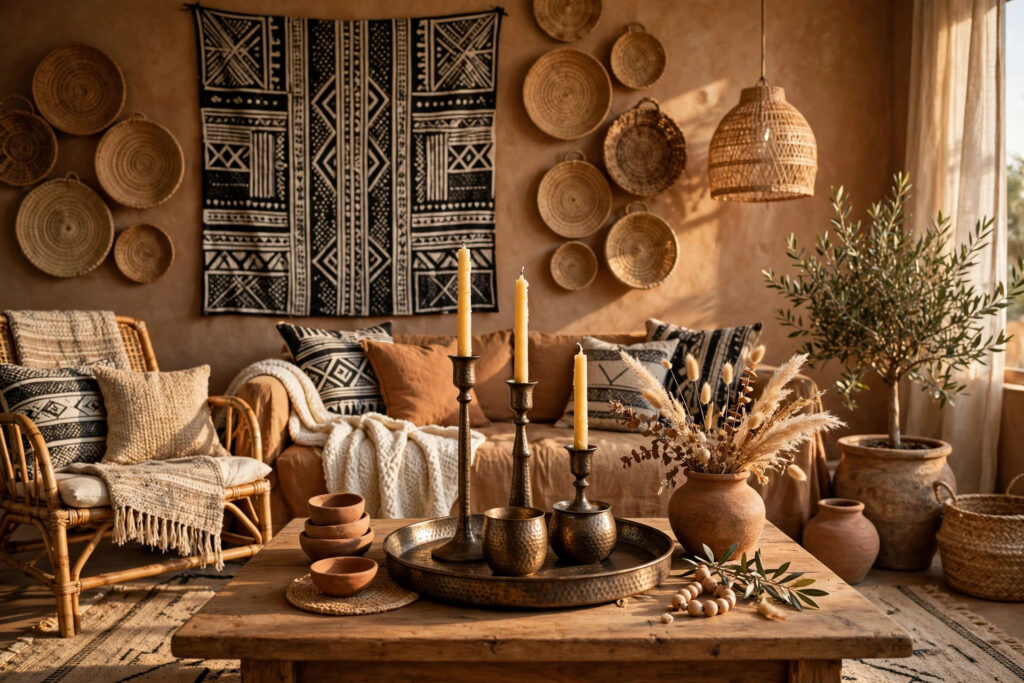
A little aged metal keeps an earthy room from going flat. Antique bronze, aged brass and copper catch warm light and add a quiet gleam against clay, wood and woven fibers. Work it in through useful pieces: a hammered tray on the coffee table, candle holders on the mantel, a metal bowl for keys or the frames of a mirror. Keep the finish matte and aged rather than shiny, and repeat it in two or three places so it feels like a thread running through the room. Metal also pairs beautifully with the black geometry of mudcloth.
11. Curated Global Artifacts

The last layer is the personal one: masks, small statues, vintage pottery, beads and objects with a past. Curation is the discipline that keeps this layer looking like a gallery instead of a gift shop. Group objects in small, edited clusters on shelves, a stool or a tray, leave space around each group, and let one or two special pieces stand alone. Choose things that genuinely draw you, and learn the story of traditional pieces where you can. Rotate a few pieces between rooms through the year so displays stay fresh. When every object earned its place, the room feels collected, which is the entire promise of Afroboho.
Conclusion
An Afroboho living room is built in a forgiving order: warm earthy bones, mudcloth pattern, woven and carved natural materials, plants and baskets for life and rhythm, then warm light and a few personal treasures. Nothing needs to arrive at once, and the style welcomes thrifted and hand made finds, which means the room can grow with your budget and your travels. Keep the palette grounded, repeat your materials, and edit your treasures kindly. Do that, and your living room will feel traveled, warm and completely your own.
Keep going with these boho bedroom ideas on a budget, they pick up right where this leaves off.
Frequently Asked Questions
What colors define the Afroboho palette?
Terracotta, clay, ochre, sand, cream and deep brown are the foundation, with black and white geometry from mudcloth as the sharp accent. Saturated jewel tones are used sparingly, if at all, since the style leans on earth and natural fiber.
How can I get this look on a small budget?
Start with paint or textiles in earthy tones, a layered rug made from an inexpensive jute base, and woven baskets, which are easy to find second hand. One mudcloth style cushion cover set and a big plant will carry the room while you save for a carved or feathered statement piece.
Where do I find authentic pieces respectfully?
Look for fair trade shops, African art dealers and makers who name the origin and tradition of a piece, such as Bamileke juju hats or Senufo stools from Ivory Coast. Learning what an object is and where it comes from is part of styling it well.
Can Afroboho work in a small or rented room?
Yes. The biggest tools, baskets, textiles, plants and a layered rug, are all portable and need no renovation. Use one juju hat or basket cluster as the wall statement, keep furniture low and woven, and the room will feel rich without feeling crowded.