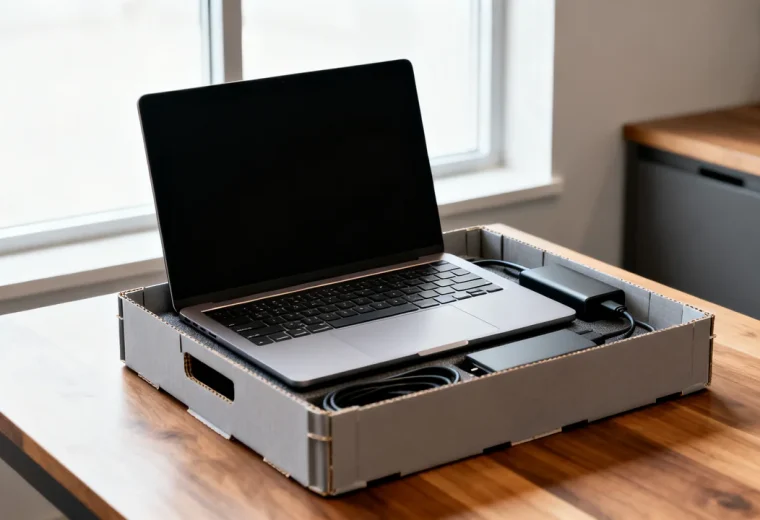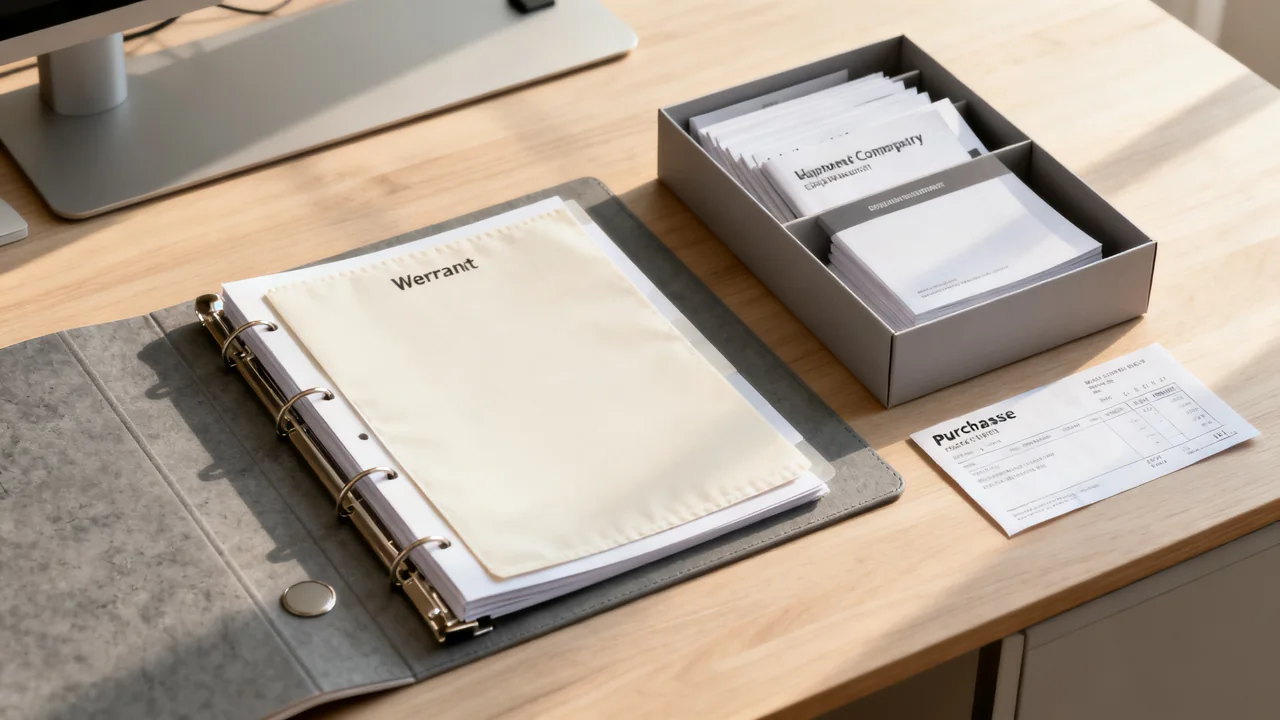
Warranty documents and service contacts are most useful when an authorized colleague can connect them to the exact item that needs attention. Build a simple index linking equipment identity, purchase evidence, applicable terms, and the correct support route. Keep the underlying documents available because a summary cannot establish coverage on its own.
Choose the records worth maintaining
Start with equipment already in the office register and identify which items have warranties, service agreements, leases, or other support arrangements. Include items where downtime, replacement cost, or service complexity makes the record useful. There is no universal price cutoff for inclusion.
Record the exact model, serial number where present, asset identifier, location, owner, and purchase or delivery reference. For a group purchase, retain enough detail to show which individual units are covered. Do not assume a receipt for a quantity identifies every chair or display without an internal link.
Distinguish owned, leased, rented, and supplier-managed equipment. The office may need to contact the owner or service provider rather than make a manufacturer claim directly. Keep that route visible to the person reporting a fault.
Save the applicable documents and dates
Retain purchase evidence, warranty terms, service schedules, registration confirmations where relevant, installation records, and amendments. Use the terms supplied for the actual transaction and region. A current public web page may not describe an older agreement exactly.
Record how the coverage start and end dates were determined. Different documents can use purchase, delivery, installation, or another defined event. If the date is uncertain, mark it for confirmation rather than calculating an expiry from a guessed start date.
Keep manufacturer coverage, seller support, paid service, and any extended arrangement as separate records when they differ. One may cover parts while another addresses labor or visits, but the actual written terms determine the scope.
| Index field | Purpose | What to verify |
|---|---|---|
| Asset identity | Connect the record to the physical item | Model, serial, location, and ownership |
| Purchase evidence | Locate the relevant transaction | Receipt, order, supplier, and covered quantity |
| Coverage document | Read the applicable terms | Correct agreement version and region |
| Dates | Support renewal and service planning | Defined start event and confirmed expiry |
| Service route | Contact the appropriate provider | Claim method, authorization, and current contact |
| Document owner | Keep information maintained | Named owner and backup |
Summarize scope without rewriting the agreement
A short note can highlight important exclusions, required preauthorization, approved service providers, shipping responsibility, or evidence needed for a claim. Link each note to the relevant document so someone can check the full wording.
Do not turn a note into a broad legal conclusion such as “any outside repair voids everything” or “all failures are free until the expiry date.” Coverage can depend on the type of fault and other terms. Refer uncertain or significant questions to the provider or the organization’s appropriate adviser.
Record confirmation from the provider when a specific case is accepted or declined, including the reference and date. A past decision on one repair does not automatically establish the outcome of a later fault.
Keep service contacts usable and secure
Store the provider name, official support route, relevant account or agreement reference, service hours where needed, and the internal person authorized to request or approve work. Identify an alternative route if the first contact is unavailable.
Verify contacts against official provider information or established correspondence before sending sensitive details. Service contacts can change. Avoid relying on an old search result, an unsolicited message, or a telephone number copied from an unrelated product.
Keep passwords and recovery secrets in the organization’s approved credential system, not in the warranty spreadsheet. Give authorized staff access to the documents they need while protecting purchase and account information. Maintain a backup owner so the record does not depend on one person’s availability.
Walk through an illustrative support lookup
Assume an imaginary office has twelve chairs, three meeting displays, two printers, and a scanner. The quantities describe the example, not a recommended tracking threshold. Each item or clearly identified purchase group links to its evidence and applicable terms.
When display D-03 develops a fault, the coordinator finds its model and serial, the purchase record, and the relevant agreement. The index shows a recorded end date, but the coordinator still checks the terms and asks the listed provider to confirm the service route.
The coordinator then opens a ticket with the observed symptom and obtains any required approval. The example does not promise a free repair, a response by the next day, or a fixed retrieval time. Its value is that the information needed for the decision is connected and available.
Maintain the index through changes and retirement
Add or update records when equipment is purchased, moved, replaced, serviced, or transferred. Save changes to agreements and keep earlier versions where required by the organization’s record policy. A renewal should not silently overwrite the history needed to understand a past claim.
When an item leaves service, mark its status and preserve the relevant history under the retention policy. Do not simply delete the row because the equipment was sold or recycled. Some records may still support accounting, warranty questions, or service reconciliation.
Set review reminders around real needs, such as an agreement renewal or a planned equipment review. A reminder should prompt evaluation, not automatic purchase of an extended plan. Check current use, support options, terms, and quotes before making that separate decision.
- Link each tracked item to identifiable purchase evidence.
- Retain the exact applicable terms and amendments.
- Confirm date definitions and keep uncertainties visible.
- Separate scope notes from legal or coverage conclusions.
- Maintain current contacts, secure access, and a backup owner.
- Archive retired-item history under the organization’s policy.
Have a question or a correction?
Contact the editorial team