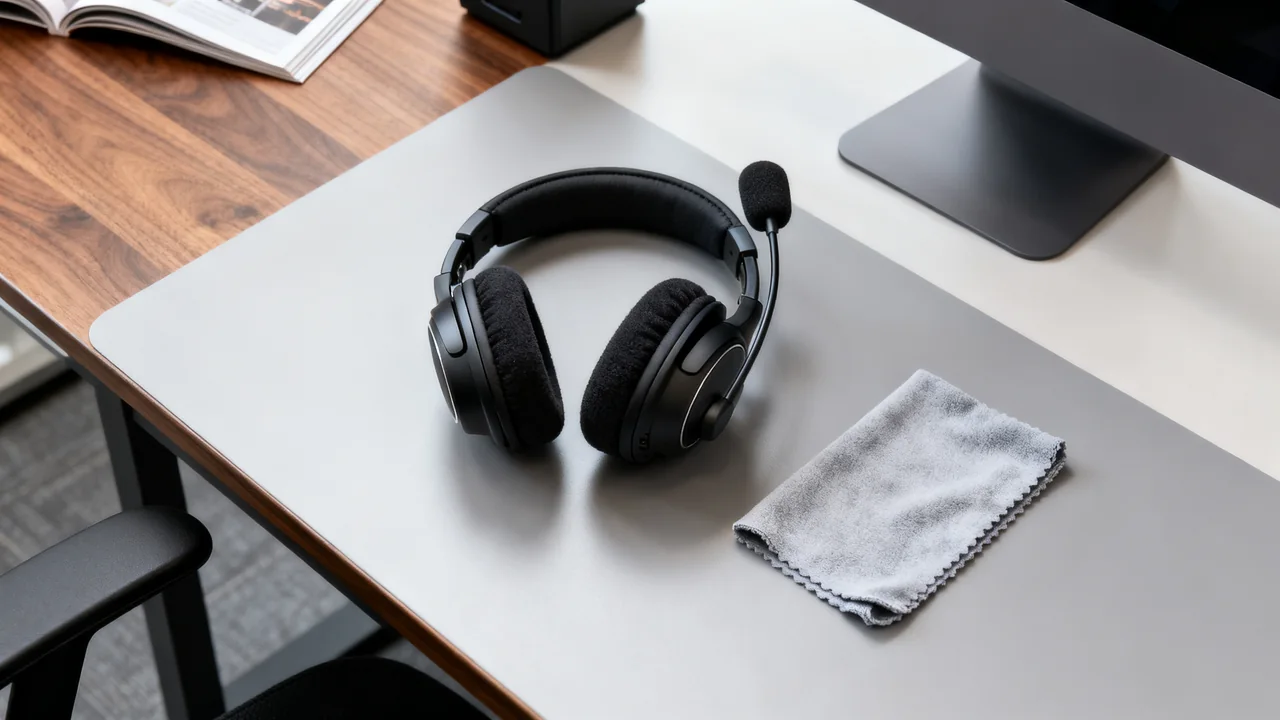
A between-user headset process needs to match the exact model and the parts people share. Cushions, microphone covers, plastics, coatings, controls, and connectors can have different care requirements. Do not copy a generic electronics-wipe recipe across all of them or assume a headset is ready for another user as soon as it looks dry.
Confirm what may be shared and how it is cared for
Identify the headset model, included accessories, and current manufacturer guidance. Check whether the manufacturer recommends individually assigned ear cushions, ear tips, or microphone covers rather than sharing those parts. Keep any personal components labeled and stored appropriately.
Separate cleaning from disinfection. A cleaning step removes unwanted material; it does not automatically establish a disinfecting result. If the workplace requires a particular hygiene process, the responsible person should confirm a method compatible with both the device instructions and the chosen product’s directions.
Do not assume alcohol, soap, water, UV equipment, or a wipe marketed for electronics is suitable for every headset. For example, Jabra’s published care sheet warns against certain alcohol-based products for the products covered by that guidance and advises against sharing certain contact parts. The exact current model instructions remain the starting point.
Prepare the device and identify problems before cleaning
Follow the model’s shutdown and disconnection steps. Remove only components and batteries that the instructions designate as user removable, and only as directed. Do not open a sealed battery housing or force cushions off a headset to make cleaning easier.
Inspect accessible parts for frayed leads, cracks, damaged cushions, loose components, or other problems. Keep a damaged or suspect headset out of the ready supply and report it through the service process. Cleaning should not hide a defect that the next user needs to know about.
Provide a suitable work area with the approved materials and a clear separation between awaiting-care and ready equipment. Avoid resting a cleaned contact surface on the same dirty area from which the headset was collected.
| Component | Question for the model instructions | Boundary |
|---|---|---|
| Cushions, ear tips, or foam covers | Are they shared, individually assigned, removable, washable, or replaceable? | Do not assume all soft parts accept the same liquid or method |
| Housing and headband | Which cloth and product are approved for the finish? | No direct spraying, soaking, or unapproved abrasives |
| Microphone and speaker openings | What user cleaning, if any, is permitted? | Do not insert tools or brush openings by a generic rule |
| Controls, cables, and connectors | How should accessible exterior areas be treated? | Keep moisture out of openings and contacts |
| Charging equipment | What separate disconnection and care steps apply? | Do not reconnect before the specified readiness conditions are met |
Translate approved instructions into a short local procedure
List the exact approved product, its intended component, and the applicable method. If a cloth is to be dampened, follow the stated amount and handling guidance. Do not automatically squeeze a premoistened wipe or immediately dry-wipe after every application; doing so could conflict with a product’s required use.
Where an approved disinfecting process is required, preserve any specified contact time, subsequent steps, and drying requirements. If the device and product directions cannot both be met, stop and obtain an appropriate alternative rather than shortening one instruction to fit the other.
Keep liquids away from ports and other openings. Do not damp-wipe connector contacts or assume immediate reconnection is safe after a quick wipe. Follow the actual readiness and drying instructions before use or charging.
Choose supplies and storage that support the process
Disposable products can simplify issuing clean materials, but they still need exact compatibility and storage checks. Reusable cloths need a suitable cleaning, replacement, and storage process so dirty materials do not return to the clean supply.
Disposable covers are not a blanket substitute for cleaning. Verify that the headset supports them, that the relevant contact parts and other surfaces are still handled appropriately, and that fit, controls, and audio are not impaired. Do not claim that a cover alone makes sharing hygienic.
Store ready headsets according to their instructions, with cords and moving parts protected. Keep personal cushions or tips identifiable where those are used. Avoid mixing ready, awaiting-care, and faulty equipment in one unmarked drawer.
Use an illustrative shift-change plan
Assume an imaginary office shares a supported headset body between two shifts while assigning approved contact parts to individual users. This is a planning example; whether that arrangement is appropriate depends on the actual product and workplace requirements.
The room owner checks the model instructions, agrees the care process with the responsible workplace staff, and places a concise procedure beside the approved materials. The outgoing user reports visible damage and returns the headset to the designated awaiting-care position. The authorized person completes the specified process and records readiness only after its required steps are complete.
If the available time between users is insufficient for that process, the office provides another ready device or changes the assignment arrangement. It does not abbreviate drying or contact time simply to keep the original schedule.
Verify readiness and maintain the instructions
After care, confirm that permitted removable parts are correctly fitted and the headset is ready under the instructions. Check ordinary operation as appropriate, including mute and the intended connection, without using cleaning as a substitute for service.
Review the procedure when the headset model, replacement cushions, or cleaning product changes. A new formula or similar-looking accessory may have different compatibility. Keep the source instructions and revision owner available for questions.
- Identify the exact model and shareable components.
- Use only compatible materials and approved methods.
- Keep cleaning and disinfection claims distinct.
- Preserve required application, contact, and drying steps.
- Separate ready, awaiting-care, and faulty equipment.
- Update the process when devices or supplies change.
Reference: Jabra’s product-care guidance illustrates why headset care and shared contact parts require product-specific instructions.
Have a question or a correction?
Contact the editorial team