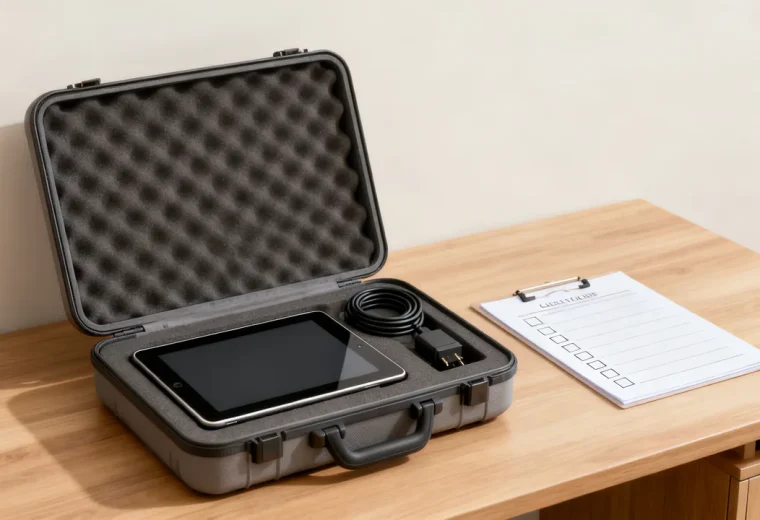
A quarterly review is a useful planning rhythm for an office whose supplies change slowly. It brings together stock counts, purchase records, and staff feedback to identify surplus and unmet needs. Adjust the timing to the workplace; a busy or rapidly changing operation may need more frequent checks, and the time required depends on the size and condition of the inventory.
Pre-Review Prep: Gather Data Before You Sort Stock
Start by compiling three sets of information to avoid making decisions based solely on current visible stock. First, pull all supply purchase receipts from the past three months, either from your accounting tool, shared purchase records, or card statements. Group purchases by category (writing tools, paper products, breakroom consumables, tech accessories, office furniture parts) to see how much you spent on each category. Second, pull any open purchase requests that have been submitted but not yet fulfilled, noting which items are requested repeatedly. Third, send a 3-question survey to all team members 3 business days before your review: 1) What supply do you currently need that is never in stock? 2) What supply do we have too much of that you never use? 3) Have you switched to a different tool or process that makes an old supply unnecessary? This feedback will flag gaps you can’t see from just counting stock in the supply cupboard.
Step 1: Full Stock Count and Expiration Check
Clear a large work surface near your main supply storage area, then remove every item from shelves, drawers, and cabinets one category at a time. Count each item, and note three details for each SKU: quantity on hand, any printed expiry or use-by date and relevant storage instructions, and condition (unopened, partially used, damaged). For partially used items, estimate remaining quantity as a percentage (e.g., 50% of a pack of 12 ballpoint pens = 6 usable units). Separate damaged, expired, or unusable items into a discard pile as you go; note the total value of these items to track waste for future reviews.
Compare physical counts with the inventory record using the same unit. Investigate discrepancies that matter to ordering or accountability; there is no universal percentage that is “normal.” Check unrecorded receipts, transfers, open packs, returns, and counting errors before assigning a cause.
Illustrative Example: 12-Person Marketing Team Review
In a hypothetical hybrid team, the supply owner finds a large quantity of pens, photo paper for a discontinued workflow, reusable bottles left from an event, and chargers for devices no longer in use. Staff feedback identifies a separate shortage of compatible whiteboard markers.
The owner verifies quantities and condition, checks whether any other team can use the surplus, and confirms whether pending orders can be adjusted. The marker shortage is considered separately: having a full cupboard does not mean the right supplies are available. This scenario illustrates a review and does not describe observed spending or disposal results.
Step 2: Usage Rate Calculation and Overstock Identification
A stock balance can help estimate consumption: opening usable stock plus receipts and transfers in, minus closing usable stock, transfers out, returns, and recorded losses. Keep counting units consistent. Purchases are not necessarily receipts in the same period, and changes between locations must not be counted as consumption.
Illustrative example: an office starts a quarter with 30 packs, receives 20, ends with 32, transfers five to another office, and records one damaged pack. Estimated consumption is 30 + 20 − 32 − 5 − 1 = 12 packs for the quarter. If use was reasonably even, that is an average of four packs per month. The figures are hypothetical.
A negative calculated consumption is a signal to investigate missing receipts, transfers, unit mismatches, or counting errors. It does not prove that no items were used or that staff donated personal supplies.
For steady consumption, dividing usable stock by average monthly use gives a rough months-of-supply figure. This is unreliable when use is near zero or is changing substantially. Flag surplus by expected future demand, delivery time, storage, compatibility, and any product limitations rather than a universal number of months.
Overstock Resolution Decision Framework
| Condition and need | Possible action |
|---|---|
| Usable and still needed | Pause or reduce new orders while preserving an appropriate replenishment plan. |
| Usable but no longer needed here | Consider return, internal transfer, or an approved donation after checking recipient suitability. |
| Partly used and suitable | Make it visible for use before opening equivalent new stock, where appropriate. |
| Expired, damaged, or unidentified | Set it aside for the responsible person to assess and follow product and local disposal instructions. |
Record the quantity and reason for any transfer or disposal so the next stock balance remains meaningful. Do not donate unsafe, damaged, incompatible, or data-bearing equipment without the appropriate checks.
Adjust Reorder Rules to Prevent Future Overstock
The most critical outcome of the review is updating your reorder processes to avoid repeating overstock issues. For each item, adjust your reorder point (the stock level at which you place a new order) and reorder quantity to match your current calculated usage rate, using evidence that reflects the current workflow while accounting for recurring seasonal needs. For items that the team no longer uses at all, remove them from your approved supply list and block them in your purchasing tool if you have that functionality.
There are tradeoffs to consider when adjusting reorder rules. Lowering reorder quantities to reduce overstock may increase shipping costs if you have to place more frequent small orders, so weigh the cost of excess overstock waste against increased shipping costs for your team. For example, if you discard $80 worth of expired cleaning supplies per quarter, paying an extra $15 per quarter in shipping for smaller, more frequent orders of cleaning supplies is a net cost reduction. For long-lead-time items or confirmed recurring demand, a larger reserve may be justified. Compare the expected use, usable storage, product life, and cost rather than imposing a fixed ceiling.
Actionable Quarterly Review Checklist
Use this short checklist to stay on track during each review:
- Send 3-question team feedback survey 3 business days before review
- Pull last quarter’s supply purchase records and open purchase requests
- Count all stock, note expiration dates, and separate unusable items
- Calculate quarterly usage rate for each supply category
- Flag quantities that exceed realistic demand or no longer match the work
- Resolve overstock per the decision framework table
- Update reorder points and quantities to match current usage rates
- Log total waste value for comparison in the next quarter’s review
Post-Review Follow-Up and Team Alignment
After completing the review, share a 1-paragraph summary with the team listing the top 2-3 changes you’re making, such as “We’re pausing pen reorders until we use existing stock, and adding fine-tip markers to the regular restock list based on your feedback.” This reinforces that the team’s input directly impacts supply availability, and encourages people to share supply needs or unused stock between reviews. You can also add a 1-sentence note to your team’s shared supply request form reminding people to mention if they no longer use a listed supply, to catch shifting needs before they turn into overstock.
Between quarterly reviews, keep a small “surplus stock” bin near the main supply area where people can drop off unused, unexpired supplies they no longer need (e.g., extra notebooks from a conference, unopened packs of sticky notes they won’t use). Check this bin biweekly to add items back to your active stock or flag them for overstock resolution at the next review. This reduces the chance of unused supplies being stored in individual desk drawers where they are forgotten until they expire or become obsolete.
Have a question or a correction?
Contact the editorial team