Bedroom Curtain Ideas for Cozy, Private Rooms
Bedroom curtains have two jobs that fight each other.
By day you want the light in and the street out. By night you want the room dark, warm and completely private. One layer of fabric cannot do both well, which is why most bedroom windows end up as a compromise nobody loves: too thin at night, too heavy by day.
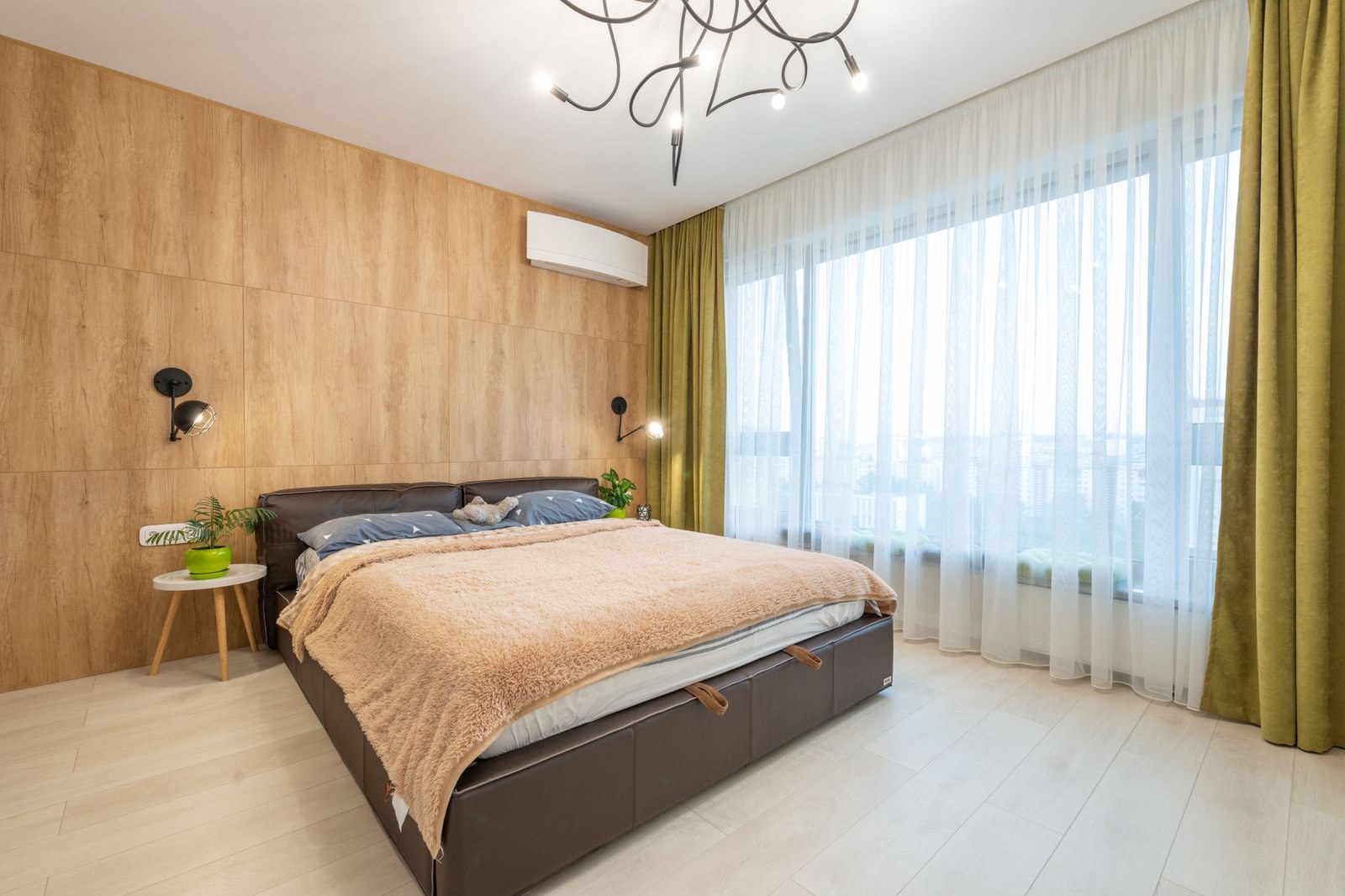
The cozy rooms solve it with three decisions. Floor length panels, so the wall reads soft from top to bottom. Two layers, a sheer for the day and a heavier panel for the night. And a rod hung high and wide, so the window reads bigger than it is. The 11 bedroom curtain ideas for coziness and privacy below work through those decisions in order, fabric first, hanging rules after, renter fixes last.
The short version, before we start:
Length is non negotiable. Panels should just touch the floor or hover a half inch above it. Sill length curtains make a bedroom look unfinished in one move.
Layer two fabrics. A sheer at the glass for daytime privacy, a heavier drape in front for night. One rod system, both problems solved.
Hang high and wide. Rod close to the ceiling, extended about 8 to 12 inches past the frame in total, so open panels rest on the wall, not the glass.
Buy enough fabric. Panels need one and a half to two times the window width in total, or they hang flat and mean instead of soft and full.
1. Start With Floor Length Linen
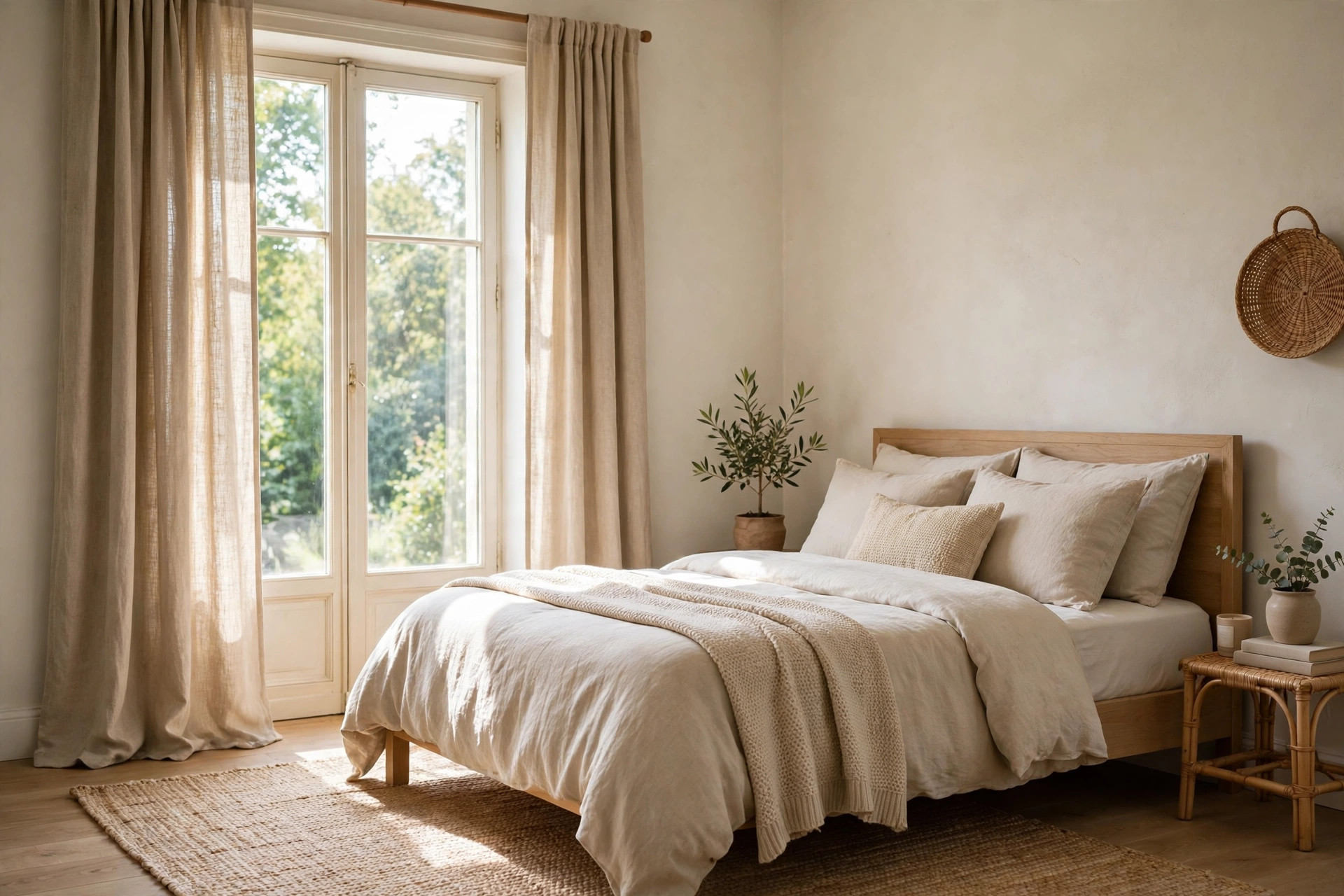
Linen is the fabric bedrooms keep coming back to, and for plain reasons. It softens light instead of blocking it, it wrinkles in a forgiving way, and a room feels calmer the moment it hangs.
Length is where people go wrong. Panels should break just at the floor or hover a finger’s width above it. Short curtains are the fastest way to make a bedroom look half moved in, and no bedding upgrade fixes it. In most aesthetic bedroom decor ideas, the window fabric does as much for the mood as the bedding does, so treat the panels as part of the bed’s color story, not an afterthought bought last.
A natural flax or warm white layers with almost any palette and never dates. I have hung the same pair in three rooms now. They have outlived two beds.
2. Choose Blackout When Sleep Comes First
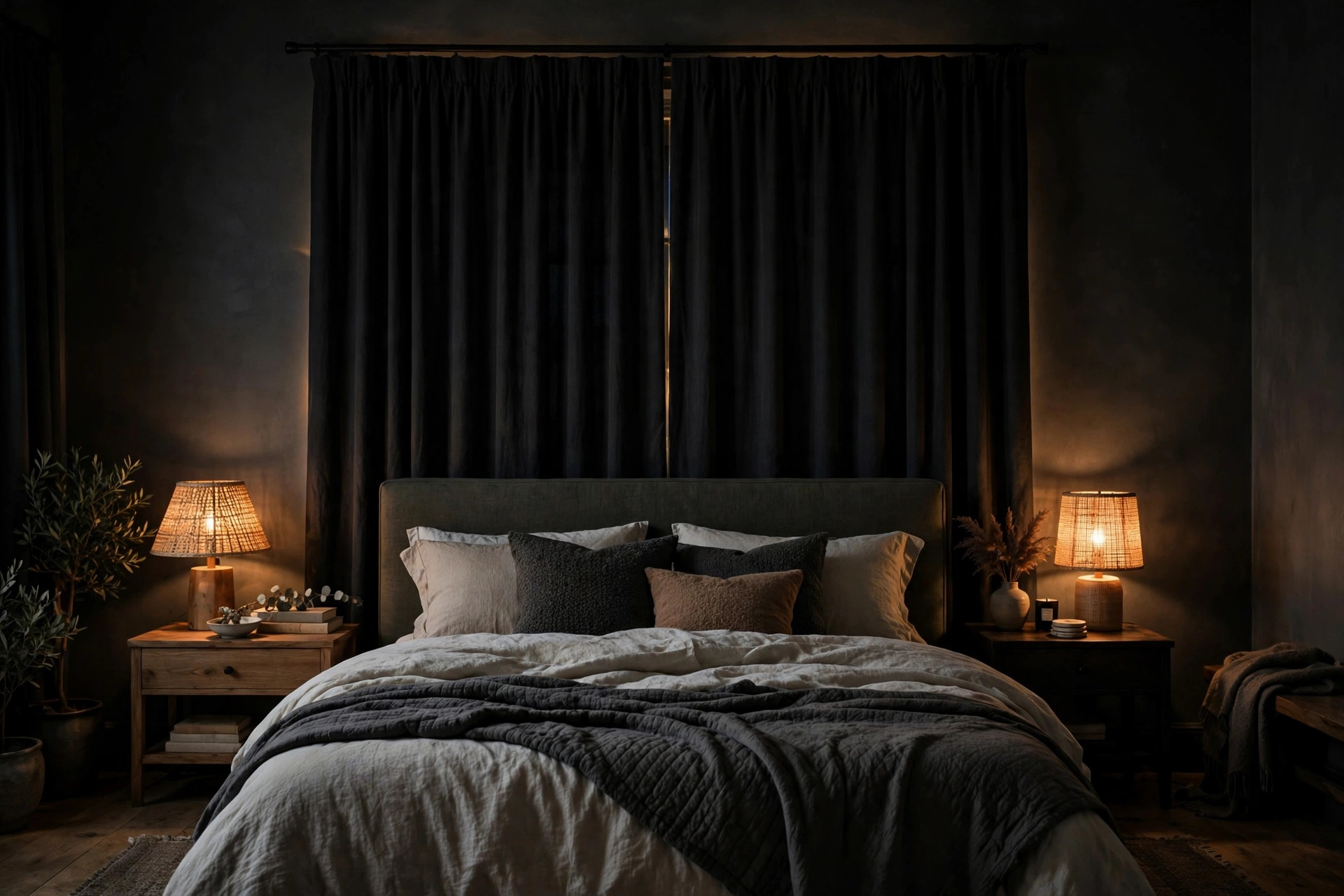
If streetlights, early sunrises or shift work steal your sleep, blackout panels earn their place. No apology needed.
Lined panels block far more light than a single layer of fashion fabric, and they add a bit of insulation and sound softening as a side benefit. The honest trade: blackout fabric hangs stiffer and less floaty than linen. So many bedrooms split the job, blackout panels at the sides for the night, sheers across the middle for the day, which is idea 3 in full.
Two details decide whether blackout actually blacks out. Overlap the panels at the middle by a few inches, and let them run wider than the glass, or light leaks around every edge and the room glows at the seams. Choose a color close to your walls and the closed curtain wall becomes part of the room’s calm instead of a dark interruption.
3. Layer a Sheer Under a Drape

This is the idea that ends the day night fight. One rod system, two layers, each with a job.
The sheer hangs closest to the glass. In daylight it keeps the room private while the light stays soft and bright, so nobody outside can see in and nobody inside feels boxed in. The heavier drape hangs in front and closes at night for darkness, warmth and the closed down feeling that makes a bedroom restful. Layer the window the way you layer a bed, which is the same thinking behind how to layer bedding like a hotel, where every layer earns its place.
Double rods make it effortless. Two plain rods work nearly as well, the sheer rod mounted a touch lower and closer to the wall. Skip the third layer some shops push. Two is the system. Three is laundry.
4. Hang High and Wide. Placement Beats Fabric.
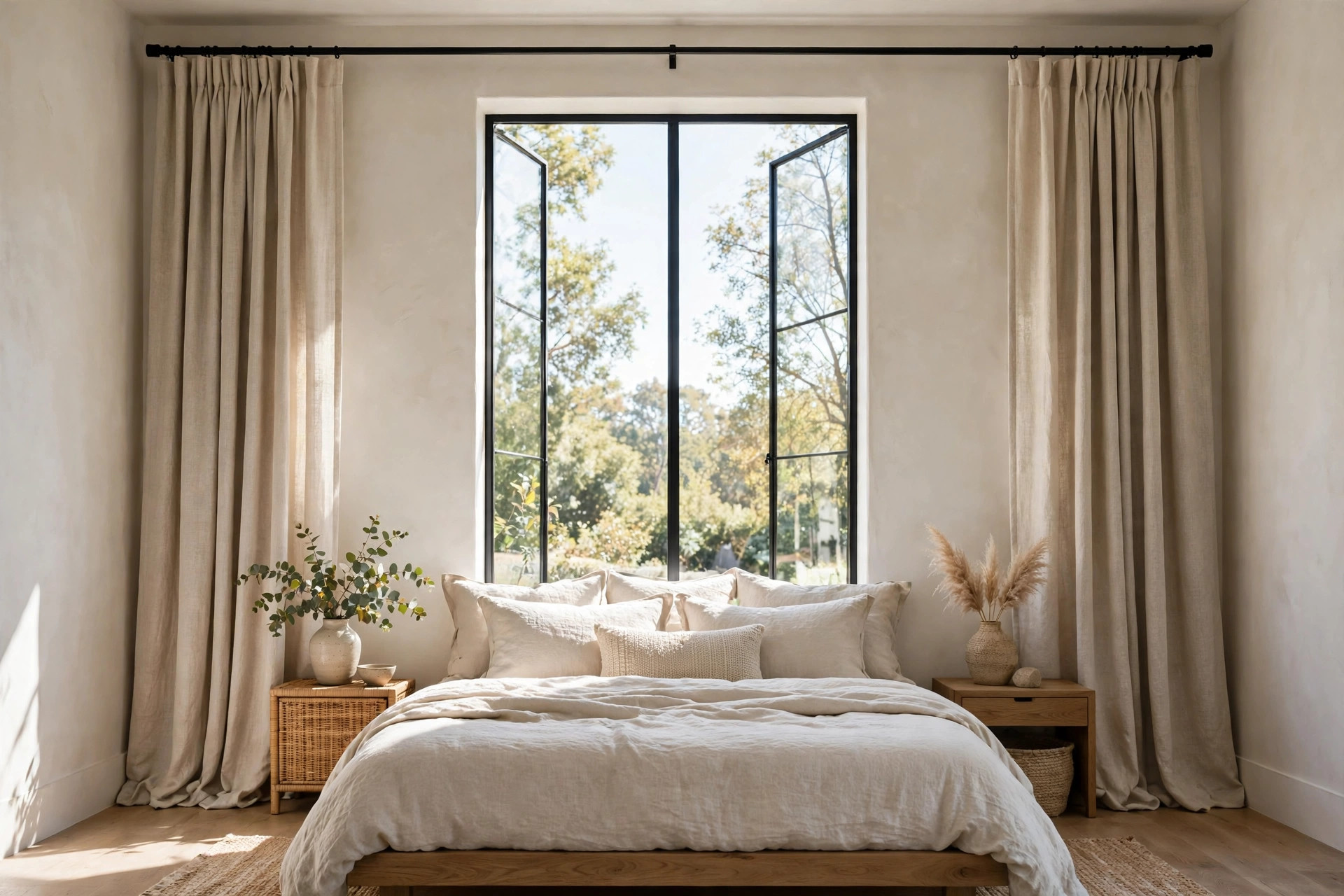
Read this twice, because it is free: where you hang the rod changes the window more than what hangs from it.
Mount the rod close to the ceiling rather than just above the frame. Extend it well past the frame on both sides, about 8 to 12 inches in total, so the open panels rest mostly on the wall. The eye then reads the glass as taller and wider than it is, and more daylight gets in because fabric is not covering the edges.
This is a standard decorator guideline, and it costs nothing beyond a longer rod. It also guarantees your floor length panels get the long drop that makes a bedroom look finished. The common failure is a rod two inches above the frame with panels covering a third of the glass. The window shrinks, the room darkens, and people blame the fabric.
5. Run a Ceiling Track for the Calm Hotel Look
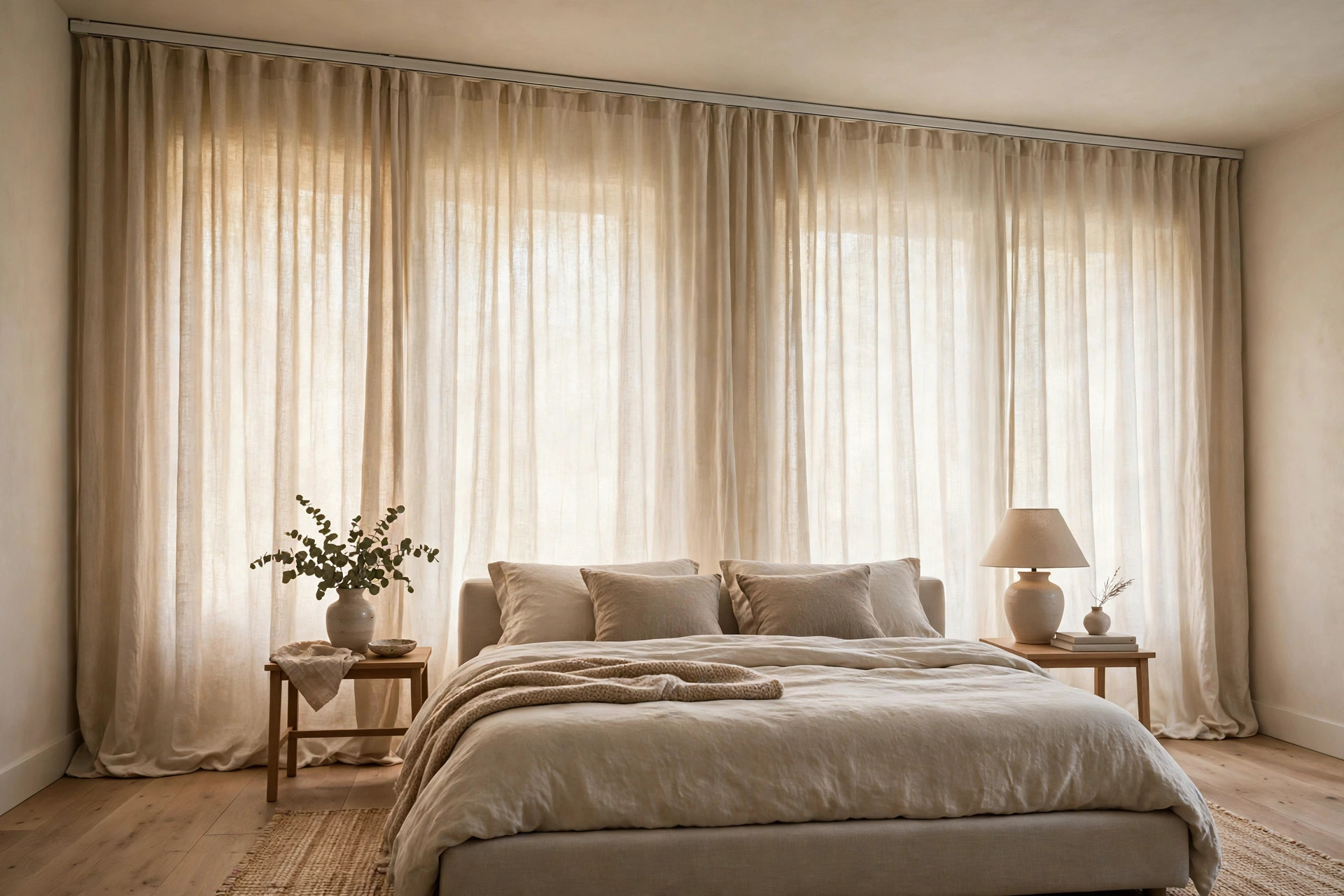
A ceiling track takes the rod out of view completely and lets curtains run wall to wall in one soft sweep. It is the system behind the serene windows in good hotels.
In a bedroom it hides awkward window placement, uneven walls and the radiator under the sill, all in one move. Panels on a track also stack tightly to one side, so the full window clears in the day instead of losing its edges to bunched fabric.
The catch is the fixing. Tracks need secure screws into the ceiling, which makes this a homeowner upgrade, or a permission first project if you rent. Ask before you drill the ceiling. Landlords who shrug at wall holes often feel differently about the ceiling, and finding out at deposit time is the expensive order.
6. Bring In Velvet When the Room Needs Weight
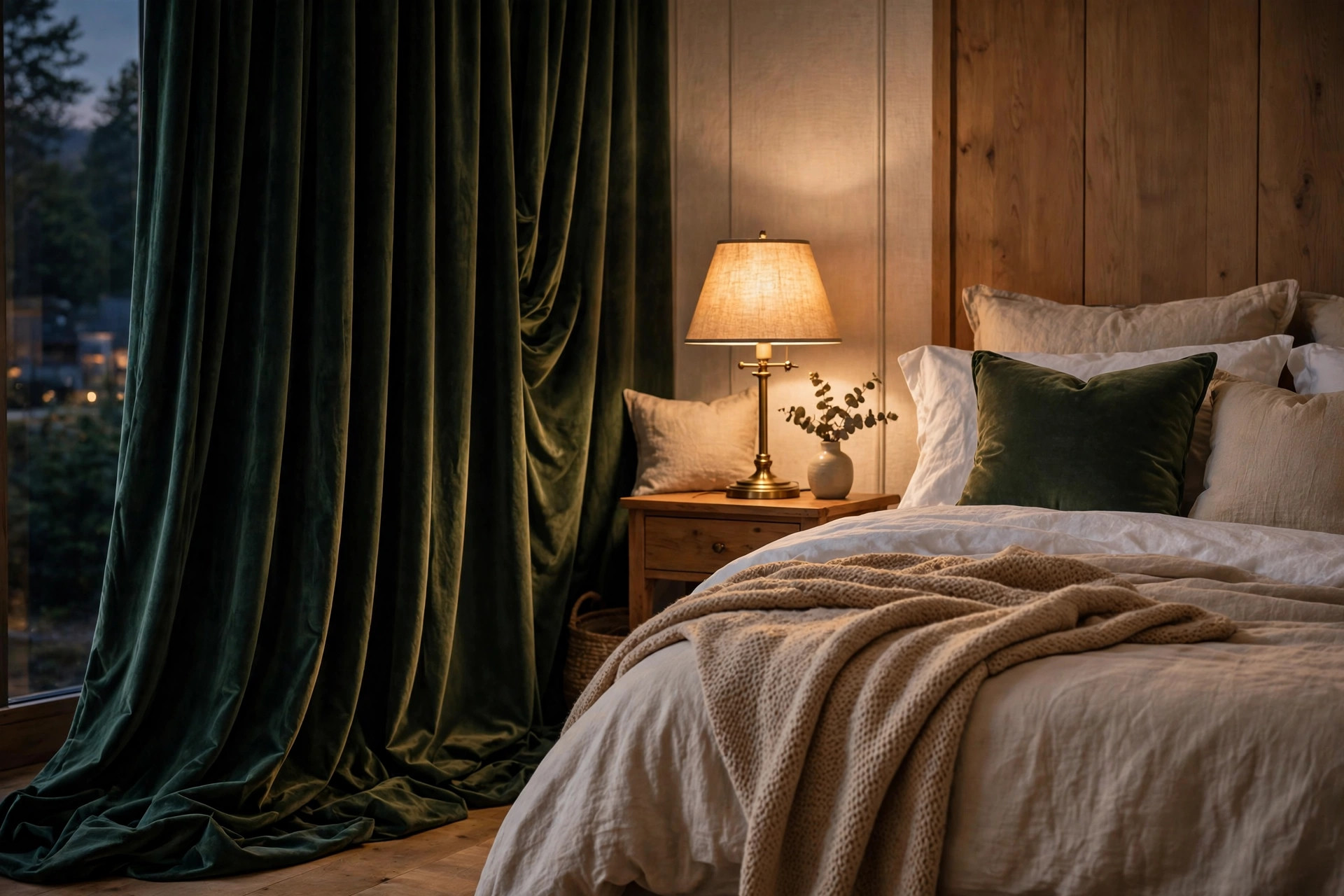
Some bedrooms need curtains with presence. Velvet and other heavy fabrics fall in deep, slow folds, absorb sound, and make a room feel protected, which suits north facing rooms, big windows, and anyone who finds thin curtains flimsy.
Hang them simply, on rings or a plain rod, because the fabric is the decoration. Even minimalist bedroom ideas usually keep one generous textile moment, and a single pair of weighty panels can be that moment in an otherwise quiet room. My rule: matte only. Shiny velvet reads formal, like a theatre, and formal is the opposite of cozy.
One practical warning. Heavy panels need real support: a rod fixed into studs or proper anchors. A tension rod under velvet sags by degrees, then drops at 2 a.m., and it always picks 2 a.m.
7. Keep Colors Warm and Close to the Wall
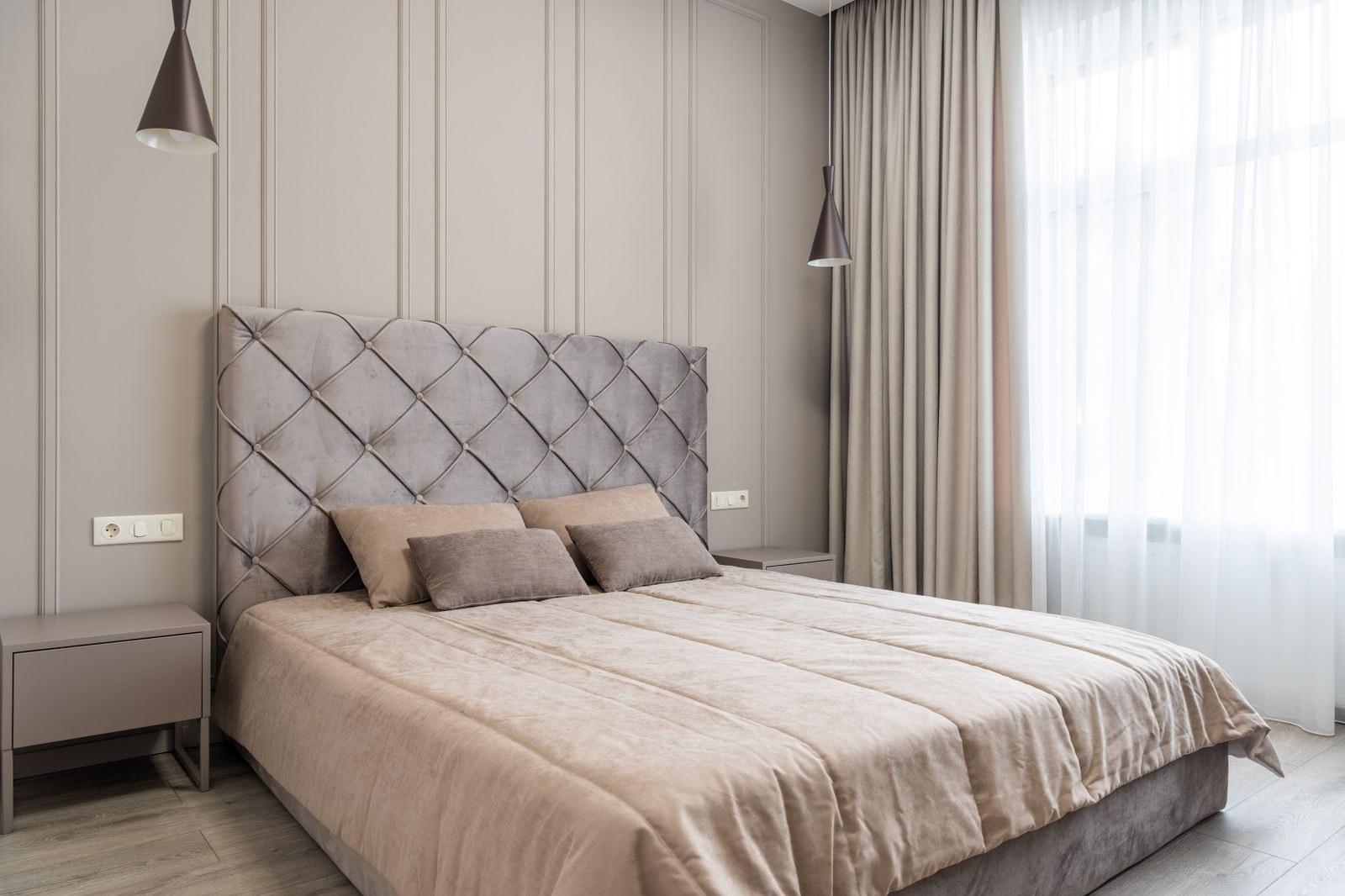
Color decides whether closed curtains feel like a wall closing in or like an embrace. Warm neutrals, oatmeal, clay, soft taupe, muted terracotta, read as warmth even in flat daylight.
Earthy tones also hide the slow fading sunlight causes over the years far better than saturated colors, which bleach in patches and show it. Match the curtain tone to the wall for a seamless cocoon, or to the bedding’s second color for a designed pairing. Both work. What fails in a small bedroom is high contrast, dark panels slamming against pale walls, which chops the wall into pieces and shrinks the room at night.
The softer the step between panel and wall, the larger and calmer the room feels when the curtains close. Restraint is the whole trick here.
8. Let Patterned Panels Be the Room’s Artwork

Walls plain? Budget not stretching to art? Let the curtains be the artwork.
A botanical print, a soft stripe or a subtle woven pattern across two full panels gives the room its focal point, and because curtains move gently, the pattern feels alive instead of fixed. Keep the bedding and rug quieter so the window holds the stage, and pull one color from the print into a cushion or throw so the room ties together.
Patterned panels also forgive what plain fabrics announce: small wrinkles, dust marks, the odd splash near the floor. In a real bedroom, that mercy matters. I would still keep the print’s colors inside the room’s palette. A loud pattern in foreign colors does not become the artwork. It becomes the argument.
9. Use Cafe Panels Where Privacy Actually Happens
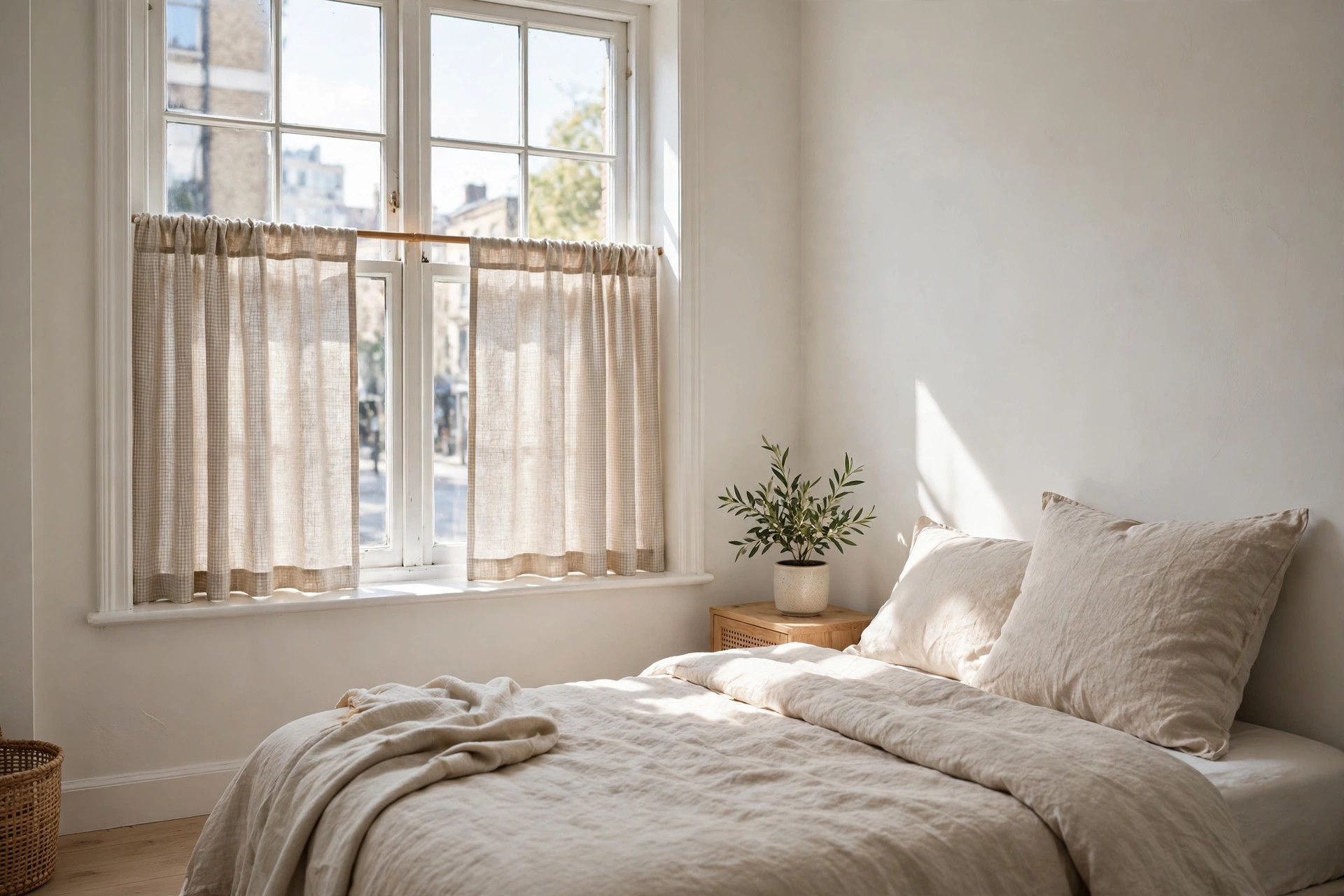
Not every window wants full panels. Street facing and ground floor rooms need privacy in one exact place: the lower half of the glass, where sightlines actually pass.
Cafe panels cover that lower band and leave the top open to sky and light, so a small bedroom stays airy while nobody at pavement level can see in. They suit windows over radiators too, and any spot where long fabric would trap dust or sit against a heat source. Pair them with a plain roller blind above for the night and privacy is complete without a single heavy drape in the room.
Measure the sightline honestly, from the pavement, not from inside. I hung my first cafe panels at the height that looked right from indoors. From the street they covered almost nothing, and the neighbours knew it before I did. Panels that end two inches too low protect nothing but your ankles.
10. Hang a Curtain Wall Behind the Bed
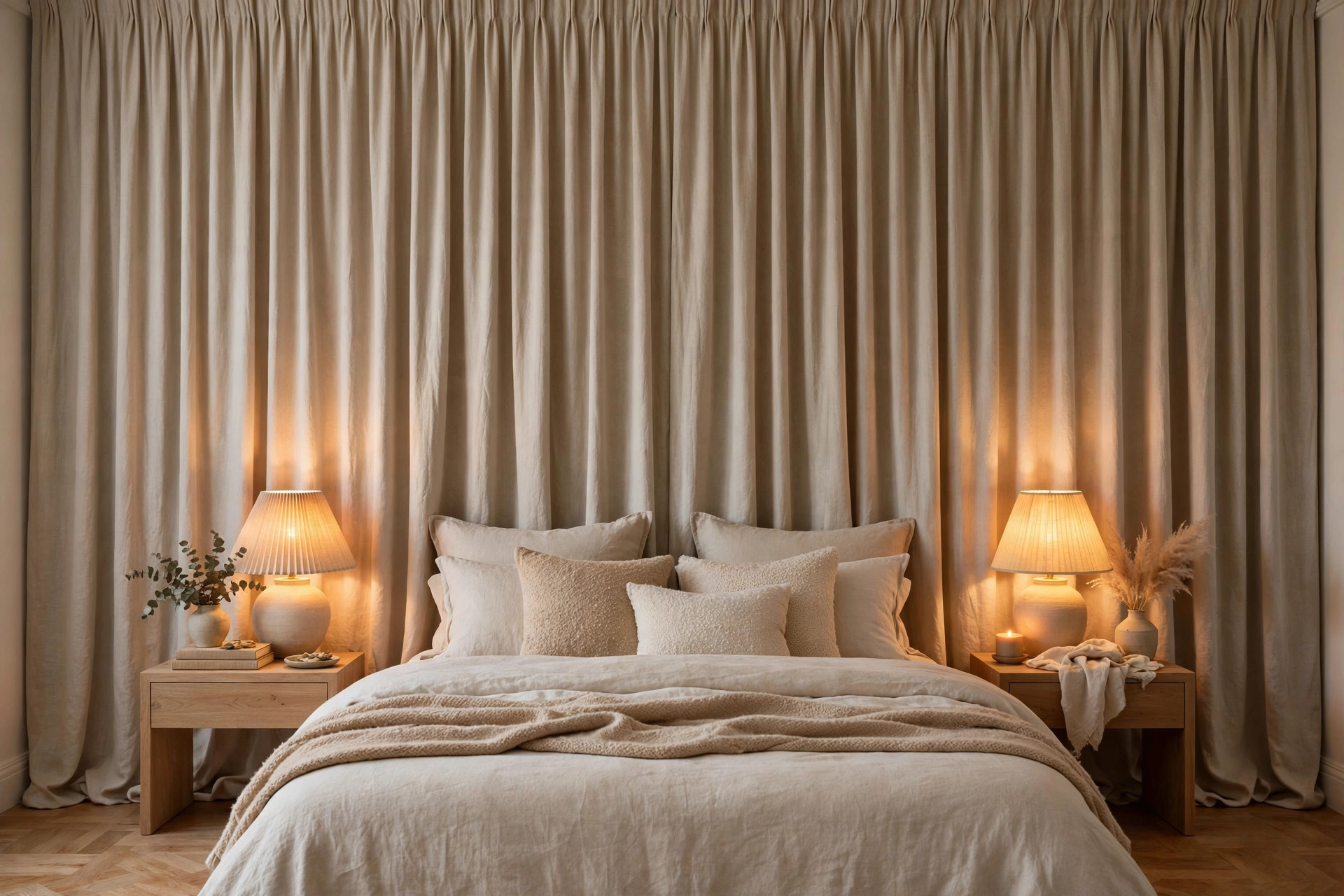
Fabric behind the bed does a headboard’s job, softens the room’s hardest wall, and hides a multitude of sins: uneven plaster, a cold exterior wall, even a badly placed window.
Hang a full width panel or a pair behind the bed, on a ceiling track or a high rod, in the same floor length style as the window curtains. It is one of the softest headboard alternatives there is, and it warms rooms that echo while adding a layer of insulation behind your pillows.
Match the fabric to your window panels for a suite feeling, or drop one tone deeper for contrast. One warning from experience: dust settles on a fabric wall the way it settles on a headboard, only more so. A monthly vacuum with the soft brush keeps it fresh instead of grey.
11. Renters: Tension Rods, Spring Rods, and One Honest Ask
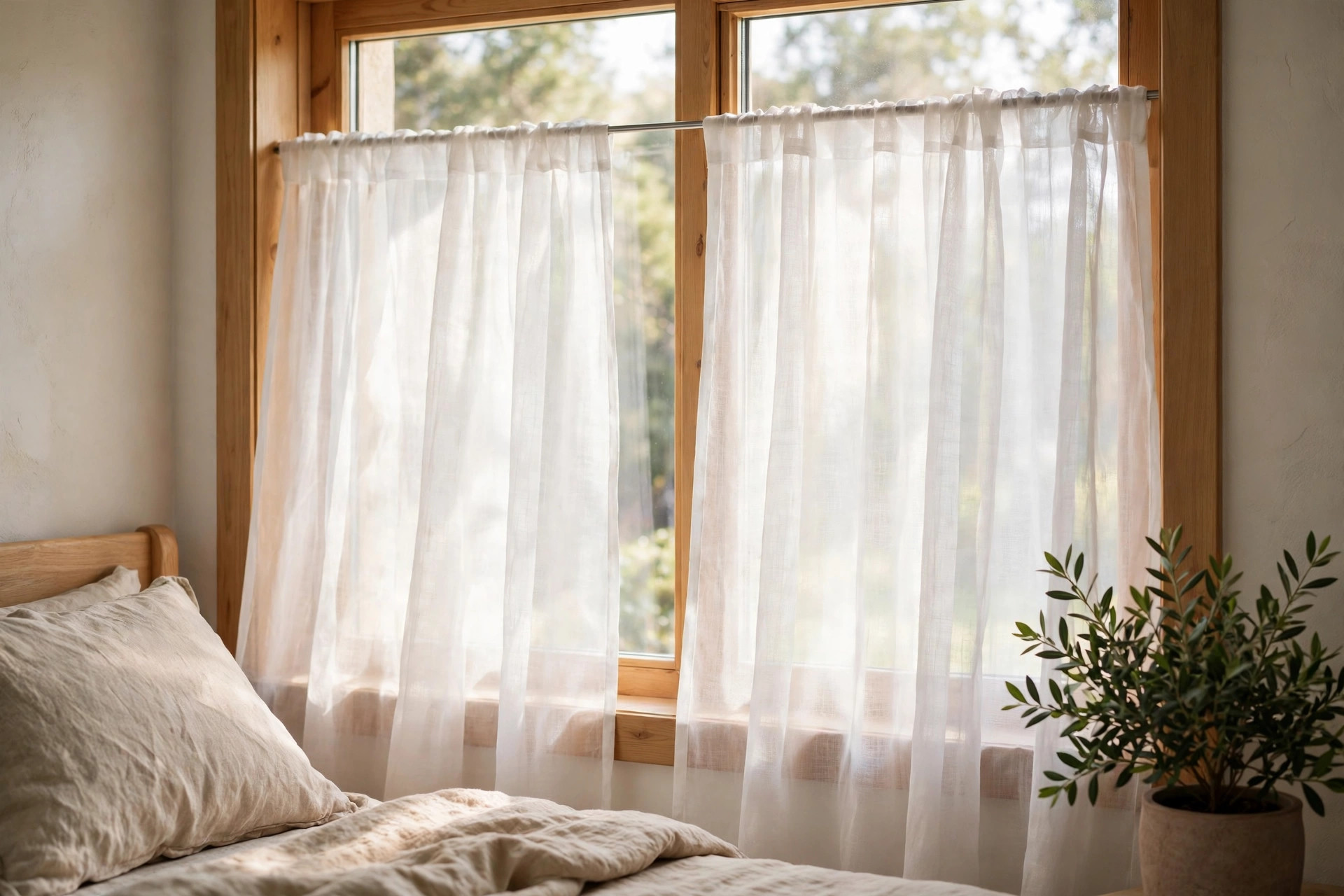
Renters can have nearly all of the above with no holes at all. Tension rods inside the window frame hold sheers and lighter panels, and they are the classic way to layer in a rental. Spring rods and adhesive hook systems suit light fabrics too.
Weight is the limit. Sheers and linen, fine. Blackout and velvet need real support, so for those, ask the landlord about two small screw holes. Many say yes when you agree to fill them at move out, and four minutes of filler is a fair trade for three years of sleep.
Whatever the hardware, keep the receipt, keep the landlord’s original blinds safe in a cupboard, and photograph the walls before you start. The deposit then never enters the conversation, and neither does an argument about a rod.
The Bottom Line
Cozy, private bedrooms are made at the window. Floor length panels, a sheer and a heavier layer sharing one rod system, hung high and wide in warm colors close to the wall: that is the whole formula. Choose fabric by the job your sleep actually needs, hang it by the placement rules, and privacy stops being a problem to solve. It becomes the room’s warmest quality.
Start with the rod. Move it up near the ceiling and out past the frame tonight, and the curtains you already own will look twice the price.
Frequently Asked Questions
Should bedroom curtains touch the floor?
Yes, in almost every case. Panels should just touch the floor or hover a half inch above it, because panels ending at the sill or floating mid wall make a bedroom look unfinished. The honest exception is windows above radiators or furniture, where cafe panels or a blind are the right answer.
Are blackout curtains better than linen for a bedroom?
They solve different problems. Blackout panels are better for sleep, blocking far more light and adding insulation, while linen is better for daytime softness and a relaxed look. Many bedrooms layer both: a sheer or linen layer for the day, blackout in front for the night.
How high should you hang bedroom curtains?
As high as the room allows. The widely used guideline puts the rod close to the ceiling rather than just above the frame, and extended about 8 to 12 inches past the frame in total. The panels then fall the full height of the wall, ceilings feel taller, and the fabric clears the glass when open.
What curtain colors make a bedroom feel cozy?
Warm neutrals and earthy tones: oatmeal, clay, soft taupe, muted terracotta and deep warm greens. They read as warmth even in flat daylight. Matching the panels closely to the wall color gives the most cocooned effect, while a gentle step from the bedding keeps the window defined.