13 Small Bathroom Color Ideas That Make a Tiny Room Feel Bigger
Soft light. Blurred edges. A room that feels like morning, even at night.
That is what the right color does to a tiny bathroom, and it has almost nothing to do with square footage. The color that makes a small bathroom look bigger is a light, reflective one, carried across walls and trim in the same shade so the edges of the room blur instead of stopping the eye. Soft whites, pale warm greys and gentle greens bounce the little light a tiny bathroom gets. One deep color, used in a single controlled place, adds depth without shrinking anything. The 13 ideas below work through the shades that earn their place, plus the finishes and habits that make color work harder.
The short version, before we start:
Light and reflective wins. Soft whites, warm greys, sage, powder blue, blush. They bounce the light the room already has.
One color, everywhere. Walls, trim, skirting and door in the same shade. Every contrasting edge draws a line, and lines chop a small room into smaller pieces.
Keep the palette at three. The wall color, white, and one accent. That is the whole cast.
One bold exception is allowed. A navy wall or a dark vanity, placed with intent and lit well. Depth, not shrinkage.
1. Soft White With a Warm Undertone
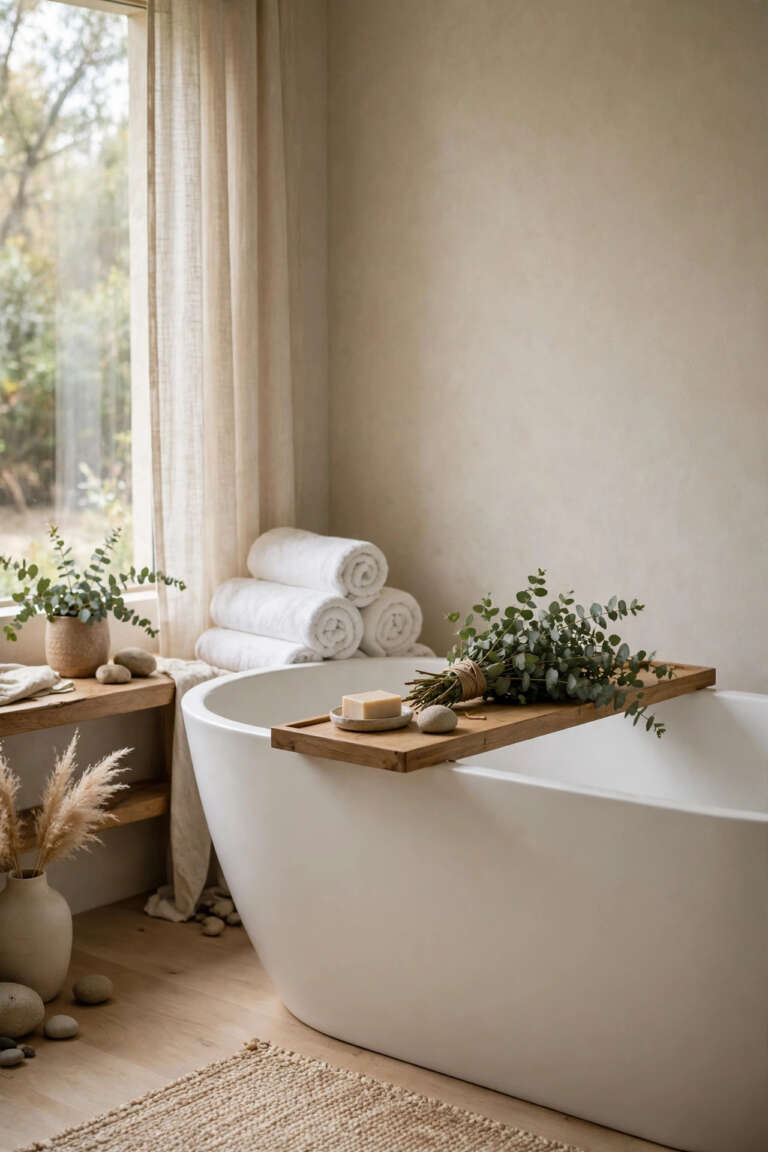
Pure brilliant white can feel cold and flat in a small bathroom, especially under artificial light. A soft white with a warm, creamy undertone reflects light just as well and wraps the room instead of glaring at it.
It pairs with any metal finish and any towel color, which makes it the safest first choice for renters and cautious decorators alike. One test matters before you commit: hold it against your tile. A warm white beside cool grey tile can read slightly yellow, and that is a surprise you want on a swatch, not on four walls. Get the undertone right and the room simply feels like daylight, all day.
2. Pale Warm Grey for a Calm, Modern Base
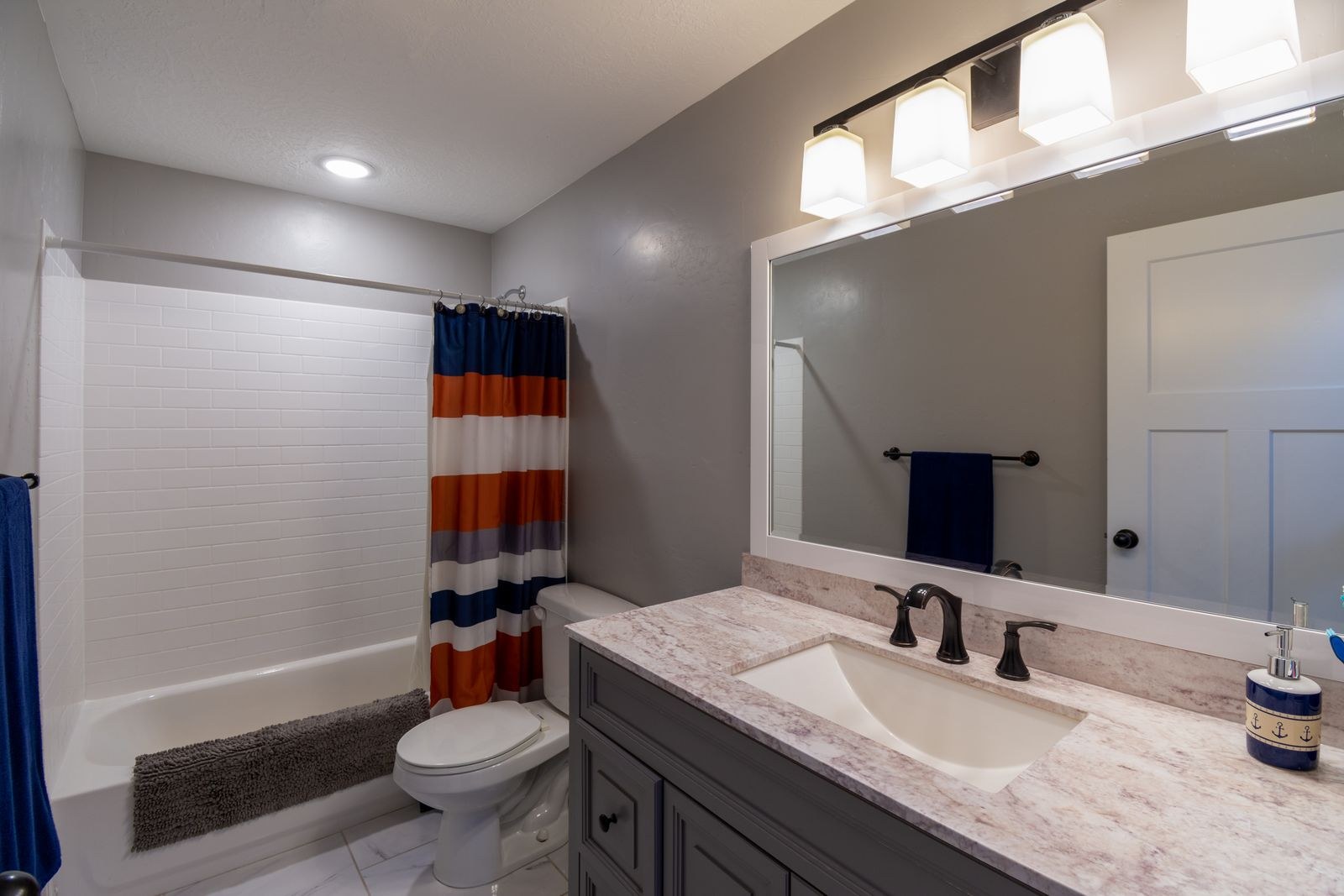
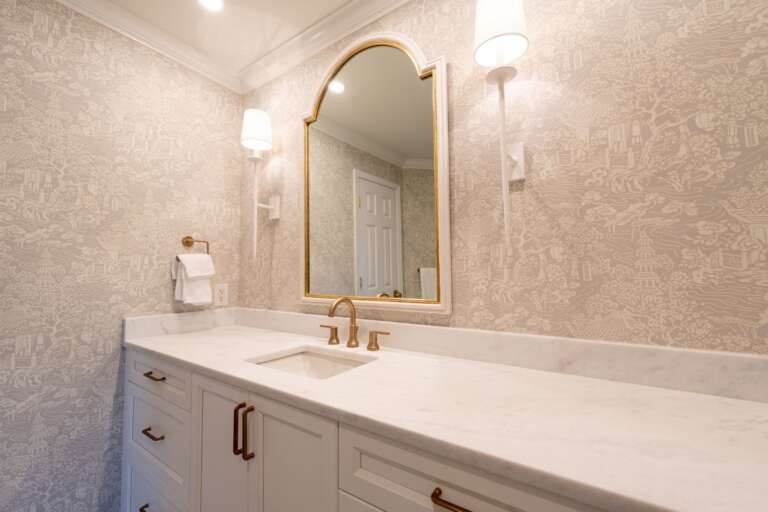
Pale warm grey, often called greige for its hint of beige, gives a small bathroom a tailored calm that white sometimes lacks.
The warm undertone keeps it away from the cold, blue grey feeling that shrinks north facing rooms. It also hides water marks and everyday splashes better than white, which is a practical mercy in a busy family bathroom. Pair it with white sanitaryware and light wood, with one or two woven pieces, so the room stays airy. In the family of small bathroom decor tips, this is the shade I reach for when someone asks for modern but not stark.
3. Soft Sage Green, the Small Bathroom Favorite
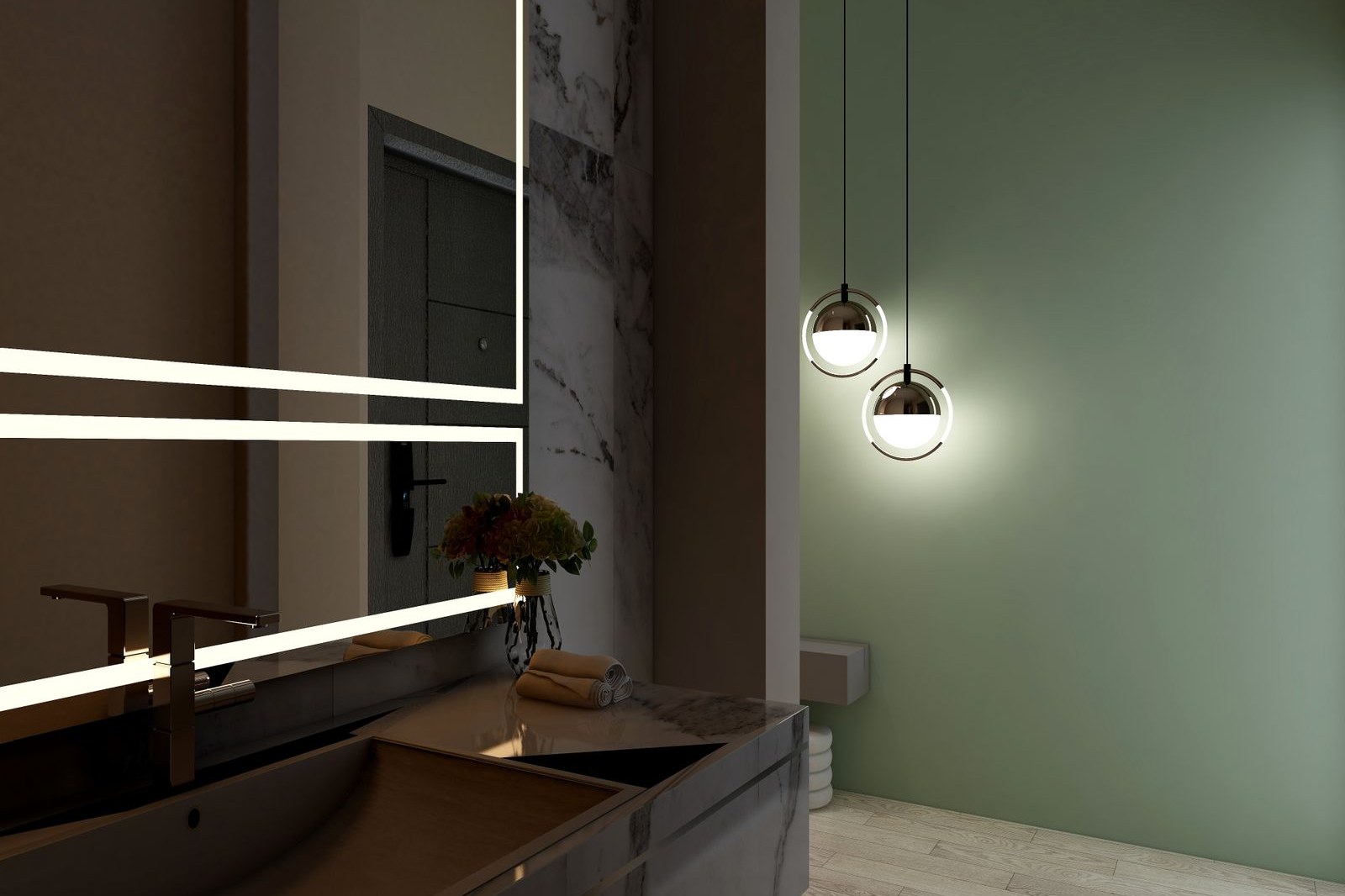
Soft sage green has become the small bathroom color of the moment for good reason.
Green sits in the middle of the spectrum, so it reads restful rather than coming at you or falling away, and sage’s grey undertone keeps it grown up beside white fixtures and chrome. It flatters skin in the mirror, which matters in the room where you get ready, and it pairs naturally with plants, wood and stone. One caution for windowless rooms: pick a sage with enough lightness in it, and test it at night. Under warm bulbs a too deep sage turns murky by evening, and murky is the one thing a tiny room cannot afford.
4. Powder Blue for Borrowed Sky
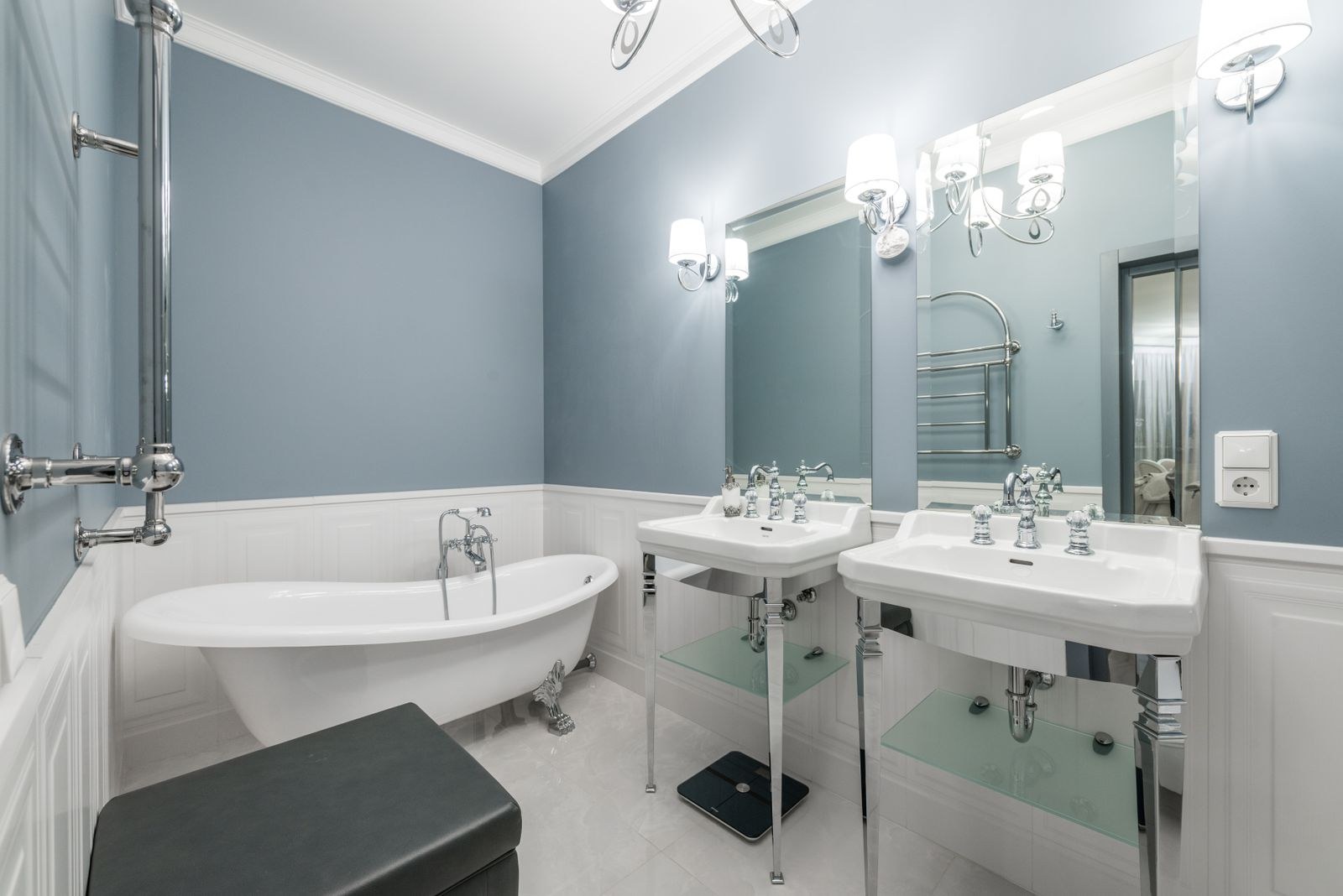
Powder blue borrows the feeling of open sky, and the eye reads it as distance. Distance is exactly what a tiny room needs.
Keep it pale and slightly greyed rather than sweet and saturated, so it feels like morning light instead of a nursery. Powder blue is kind to bathrooms with no window, because it suggests the daylight that is not there. It works beautifully in the soft palette of spa bathroom ideas on a budget, layered with white towels, pale wood and one green plant. Add warmth with brass or wood so the blue never turns chilly on a winter morning.
5. Blush and Warm Neutrals for a Gentle Glow
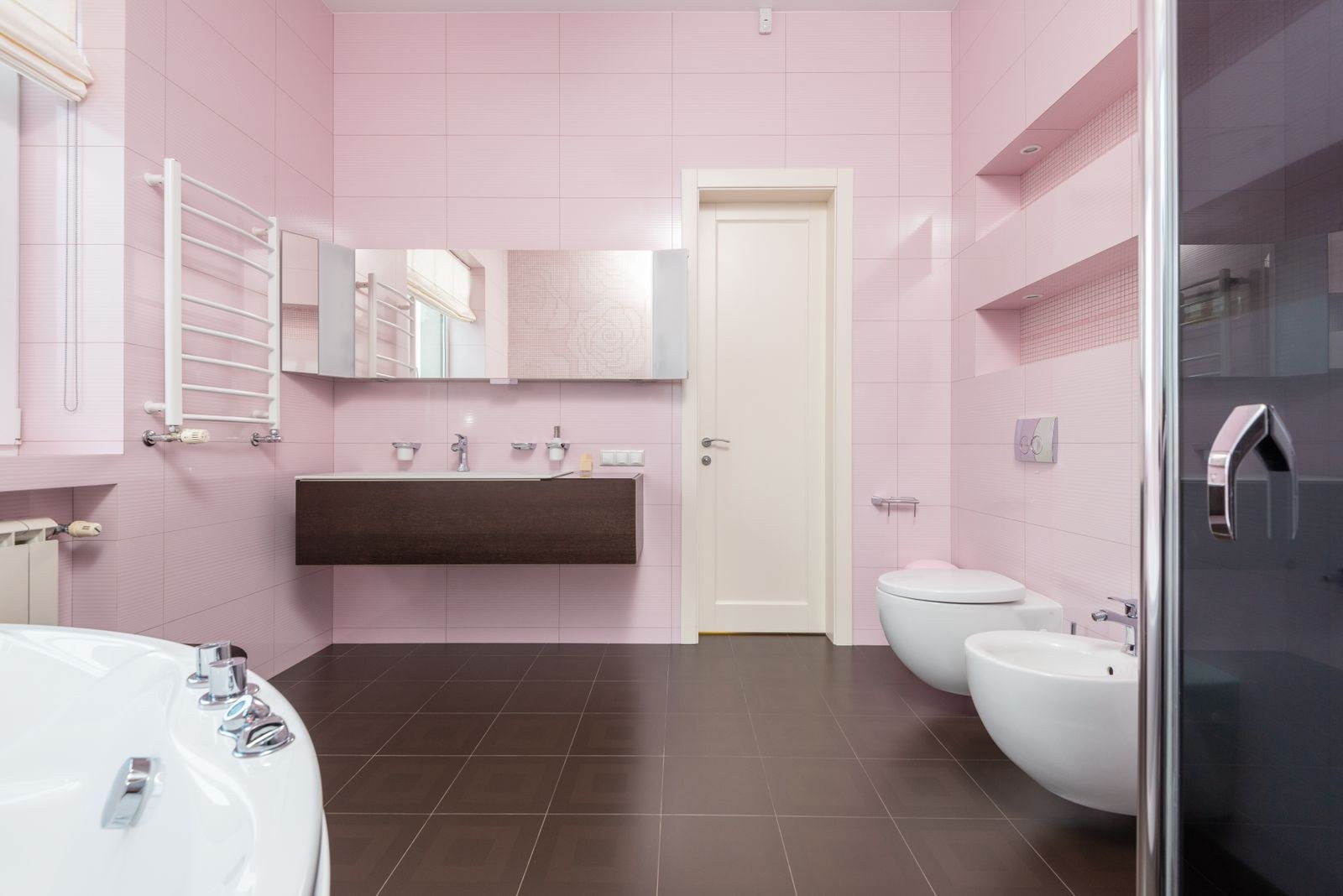
Blush pink and warm neutral shades flatter everyone who looks in the mirror, which makes them quietly brilliant in a bathroom.
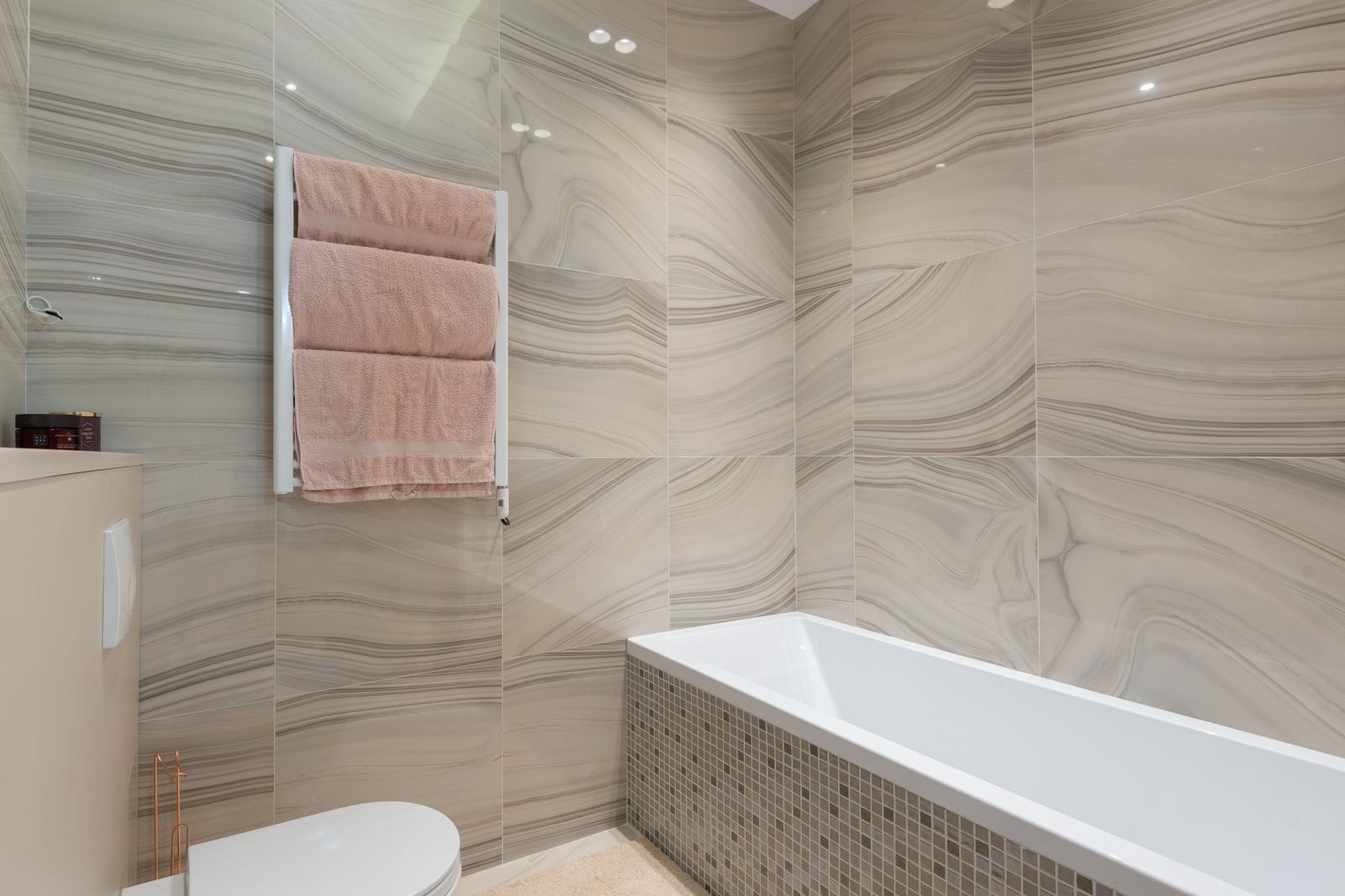
A pale blush wall wraps the room in a glow that softens early mornings, while warm sand and putty tones offer the same kindness in a more neutral register. These shades sit comfortably in older homes, with traditional fixtures and worn wood. Keep the saturation low. The goal is a hint of warmth, not a statement. Then add white and one deeper accent, a dark framed mirror, to keep the softness crisp instead of sleepy.
6. One Color on Walls, Trim and Door
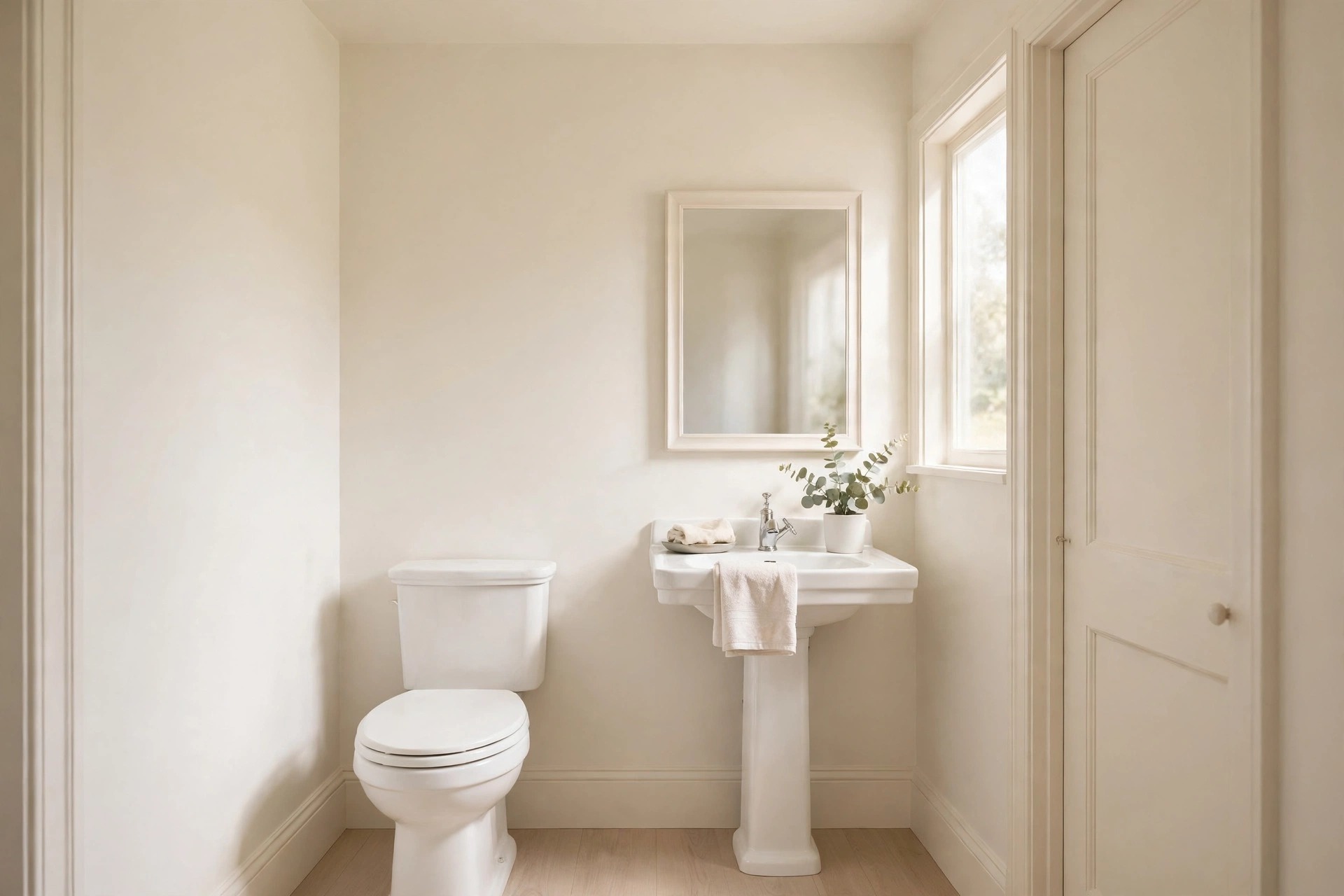
Whatever light shade you choose, it works twice as hard when walls, skirting, trim and the door all wear it.
Every painted edge in a contrasting color draws a line the eye follows, and lines chop a small room into smaller pieces. One continuous color blurs those boundaries, so the room reads as a single calm volume. This trick costs nothing extra, just the discipline to keep painting past the wall. It also simplifies touch ups forever, since one tin serves the whole room. Renting and cannot repaint? Match your biggest accessories to the wall color and you borrow most of the same effect.
7. Navy, the One Bold Exception That Works
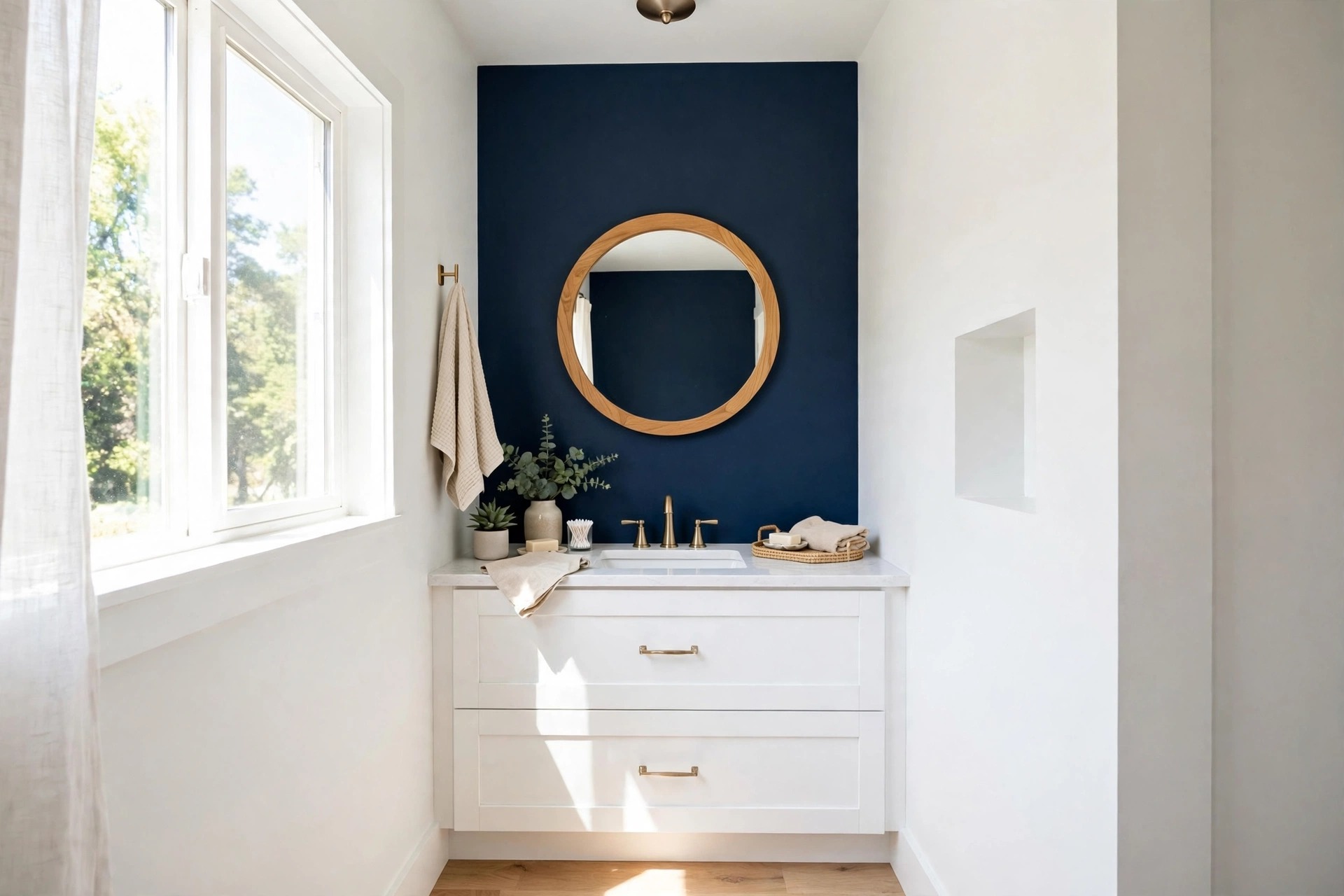
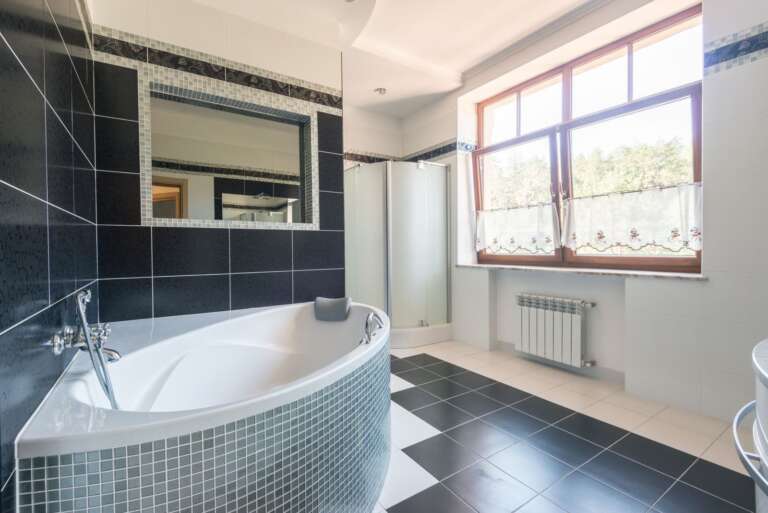
Here is the honest exception: one deep color can make a small bathroom feel bigger, when it is used with intent.
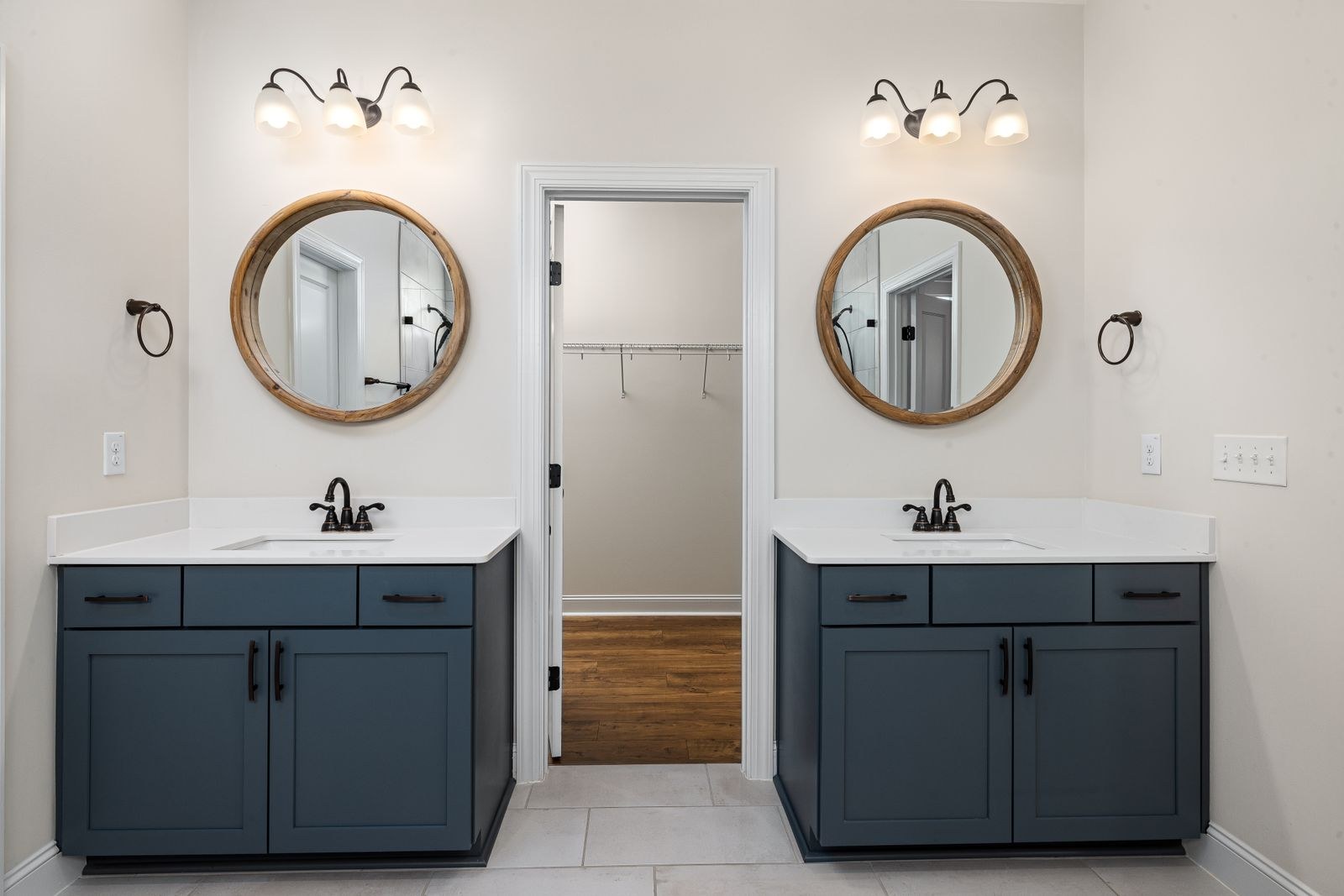
Navy on a single wall behind the vanity, or on the vanity itself, drops that surface back visually and gives the light walls around it something to shine against. The room gains depth instead of losing size. Keep the navy to that one plane, keep everything else light, and light it well, because a deep color under weak light just reads as a dark corner. The full logic of decorating with bold colors applies: a bold color earns its place when it is deliberate, limited and balanced by calm. It is the one exception I reach for again and again.
8. A Dark Vanity Against Light Walls
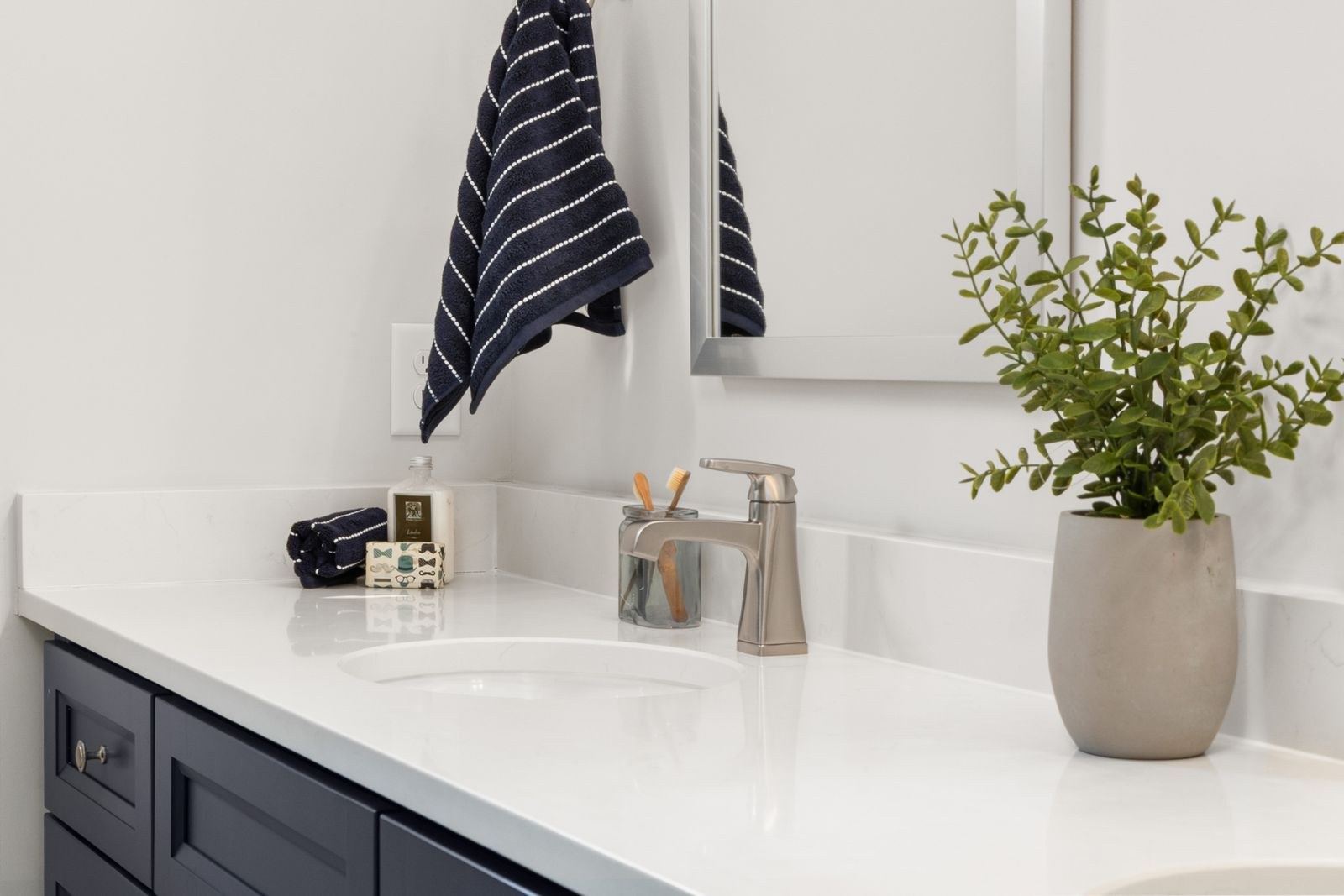
A whole dark wall feel brave? Shrink the bold move to the vanity.
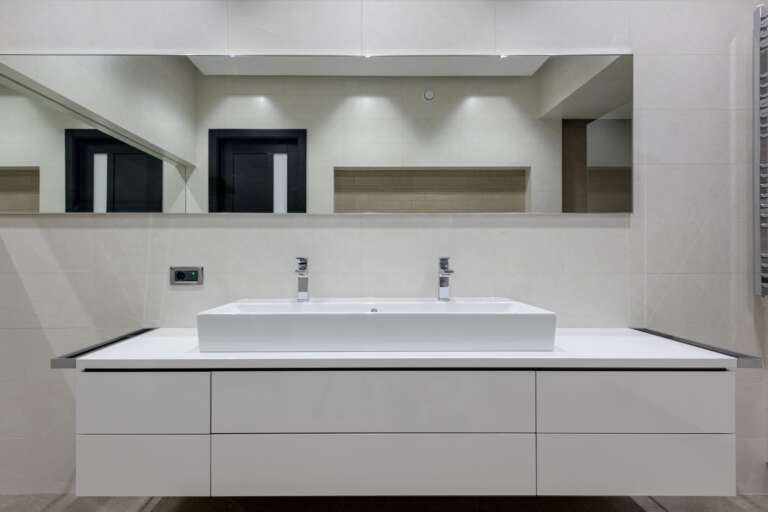
A deep green, navy or charcoal cabinet against pale walls anchors the room and makes the light surfaces around it look lighter by contrast. The eye lands on the vanity as a piece of furniture, and the room’s edges fade politely behind it. This is also the cheapest bold change available. A single quart of paint covers one vanity with coats to spare, so skip the gallon. Pair it with light counters and a mirror that runs wide, so the contrast stays balanced and the reflection keeps working.
9. Pick Satin or Eggshell, Because Finish Is Half the Decision
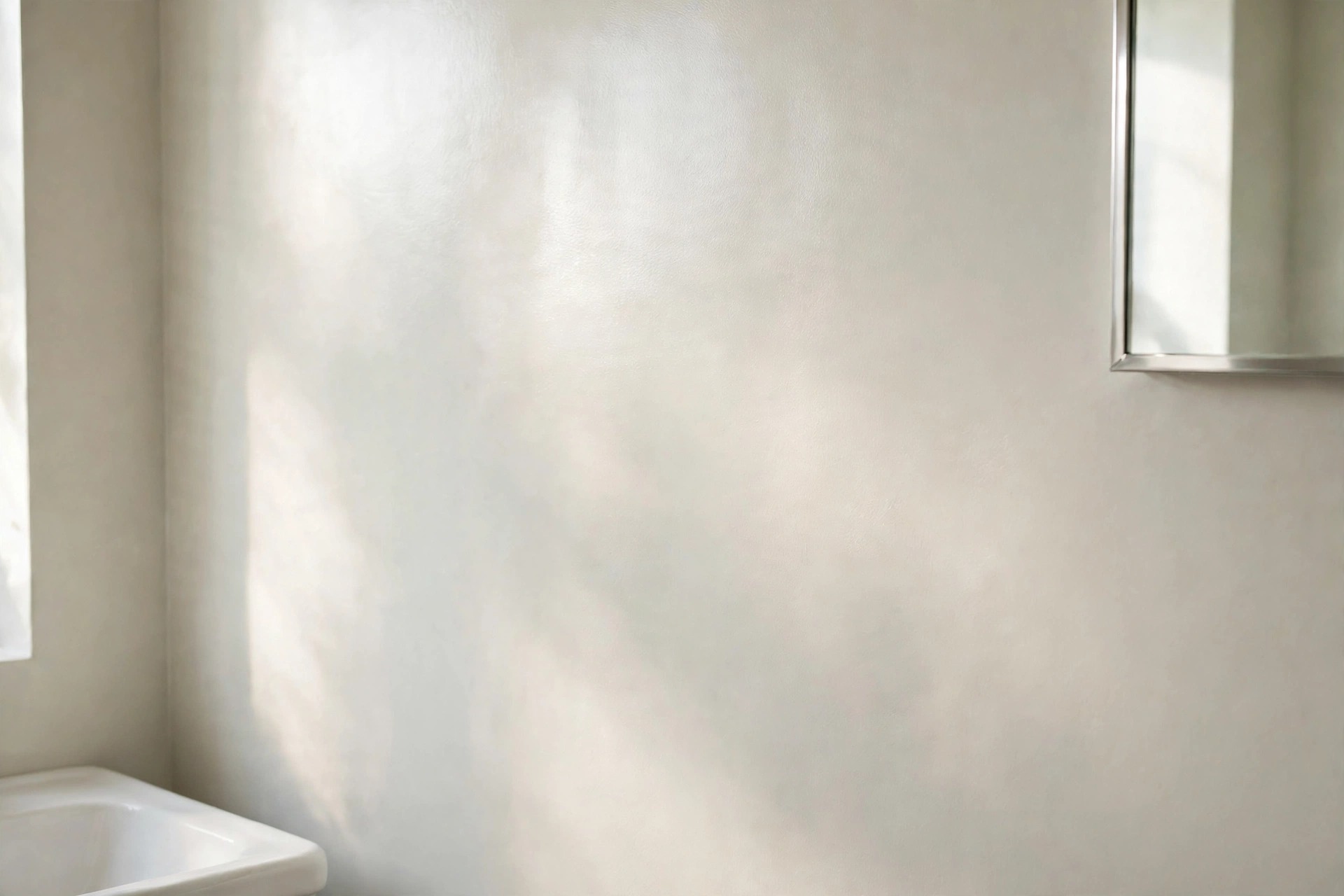
Color is only half the decision. Finish decides how much light the color hands back to the room.
Flat matte paint absorbs light and can make a small bathroom feel closer. Satin and eggshell finishes reflect a soft sheen that spreads light gently across the walls, and bathroom paints in these finishes also resist the moisture and mildew that tiny, steamy rooms breed. Save very high gloss for tiny accents, if you use it at all, because gloss shows every wall flaw under bathroom light. And whatever finish you pick, two thin coats look smoother and last longer than one thick one. More light guidance lives among bathroom mirror ideas, where reflection does the same job from another angle.
10. Match Wall and Floor Tones to Erase the Seam
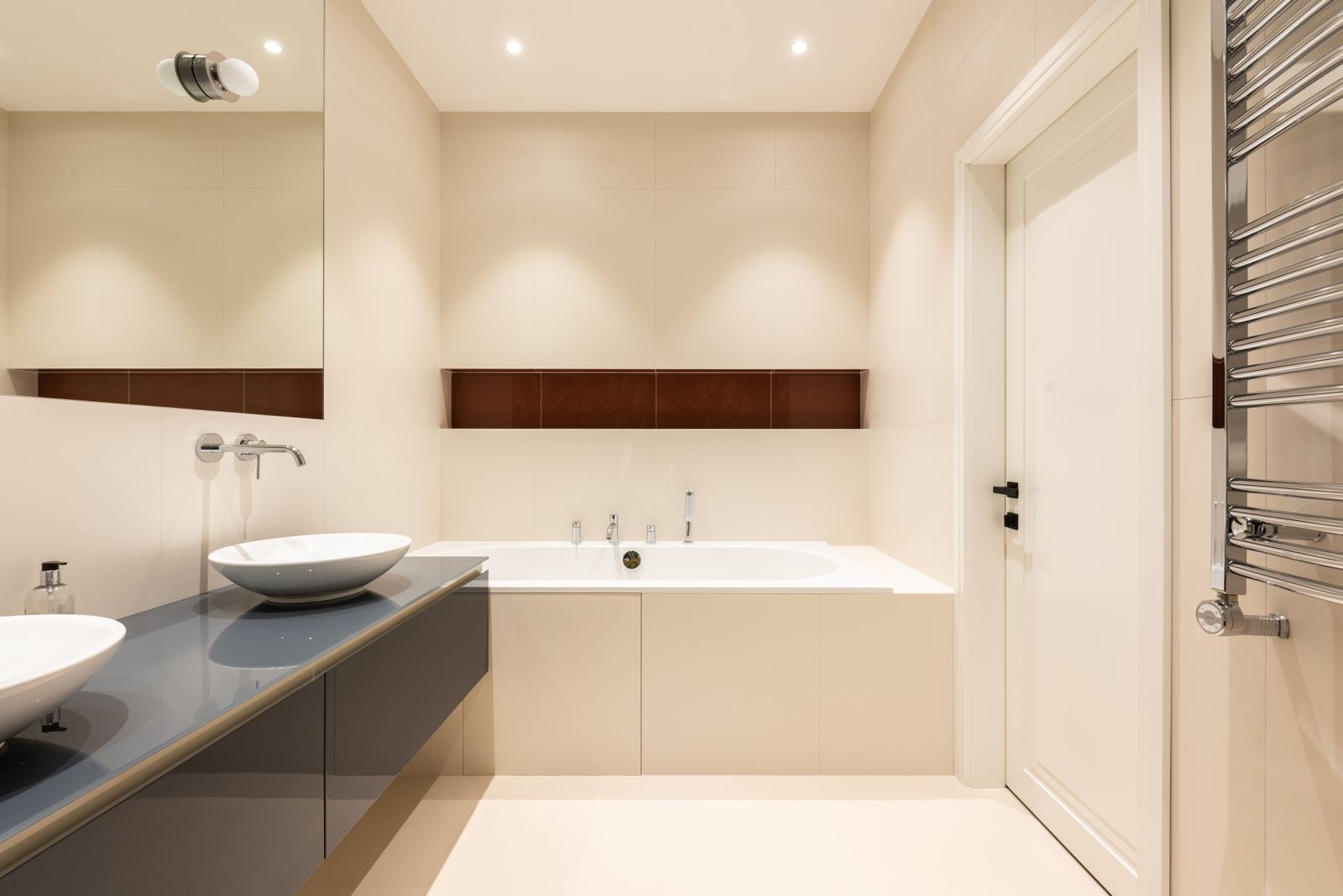
The eye measures a room partly by its seams, and the line where wall meets floor is the loudest one.
When the floor tone and the wall tone sit close together, pale tile with pale walls, warm floor with warm walls, that seam softens and the room reads larger. A hard contrast, a dark floor under white walls, draws a box and measures the room for you. You cannot always change a floor, and renters usually cannot change it at all. A large pale bath mat or runner in the wall’s tone family lays the same trick over a dark floor for very little money. Mine earns its place every single day.
11. Take the Color Up and Over the Ceiling
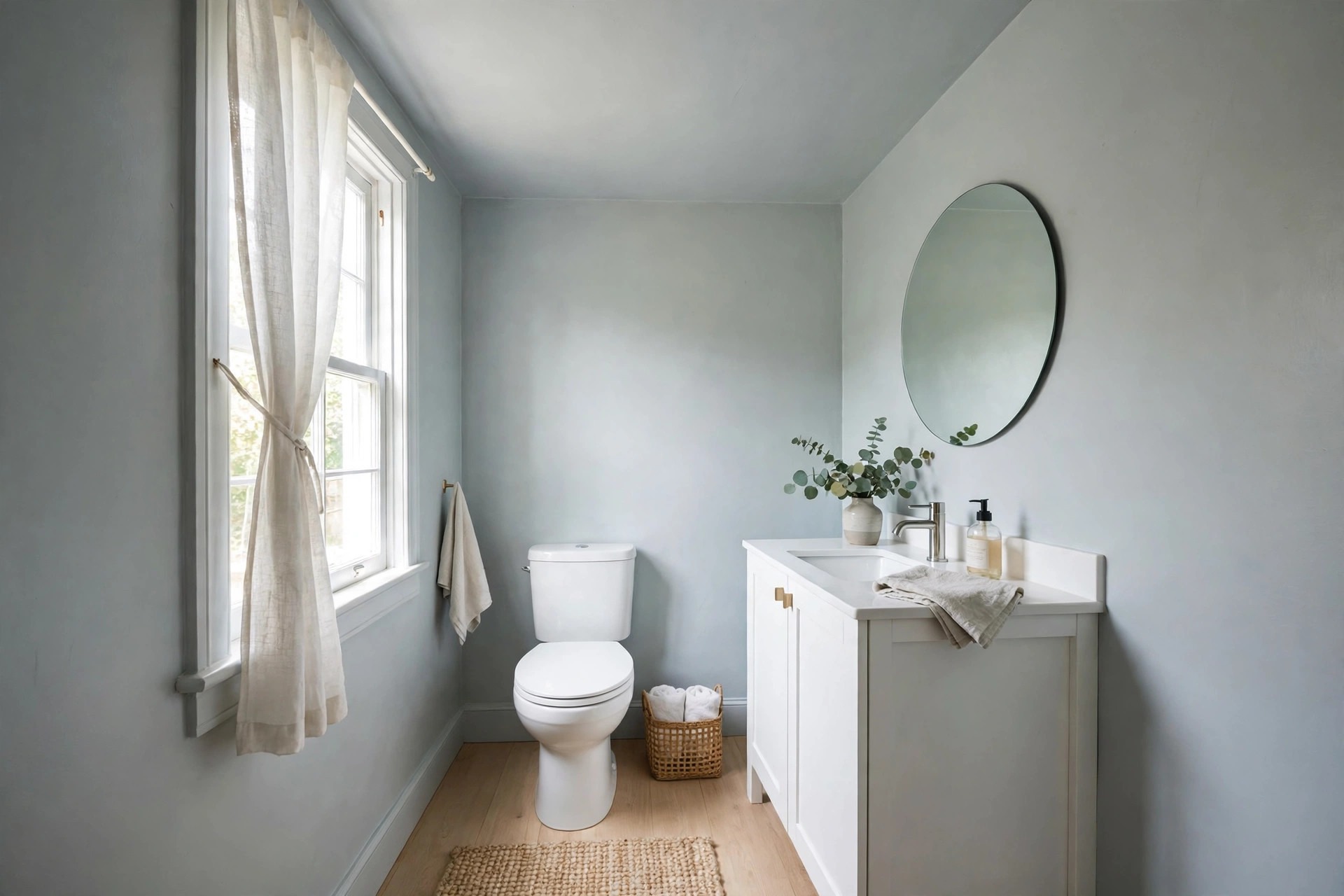
In a small bathroom the ceiling is a fifth wall, and painting it the same light color as the walls removes another hard edge where the eye stops.
The room becomes a soft box with no obvious lid, which reads taller and calmer. A very pale tint of the wall color works if a full match feels like too much, and a whisper of sky blue on the ceiling borrows the powder blue trick overhead. One thing to avoid: a bright white ceiling over colored walls in a tiny room. That contrast band shrinks the very height you are trying to lend it.
12. Repeat the Wall Color in Towels and Accessories
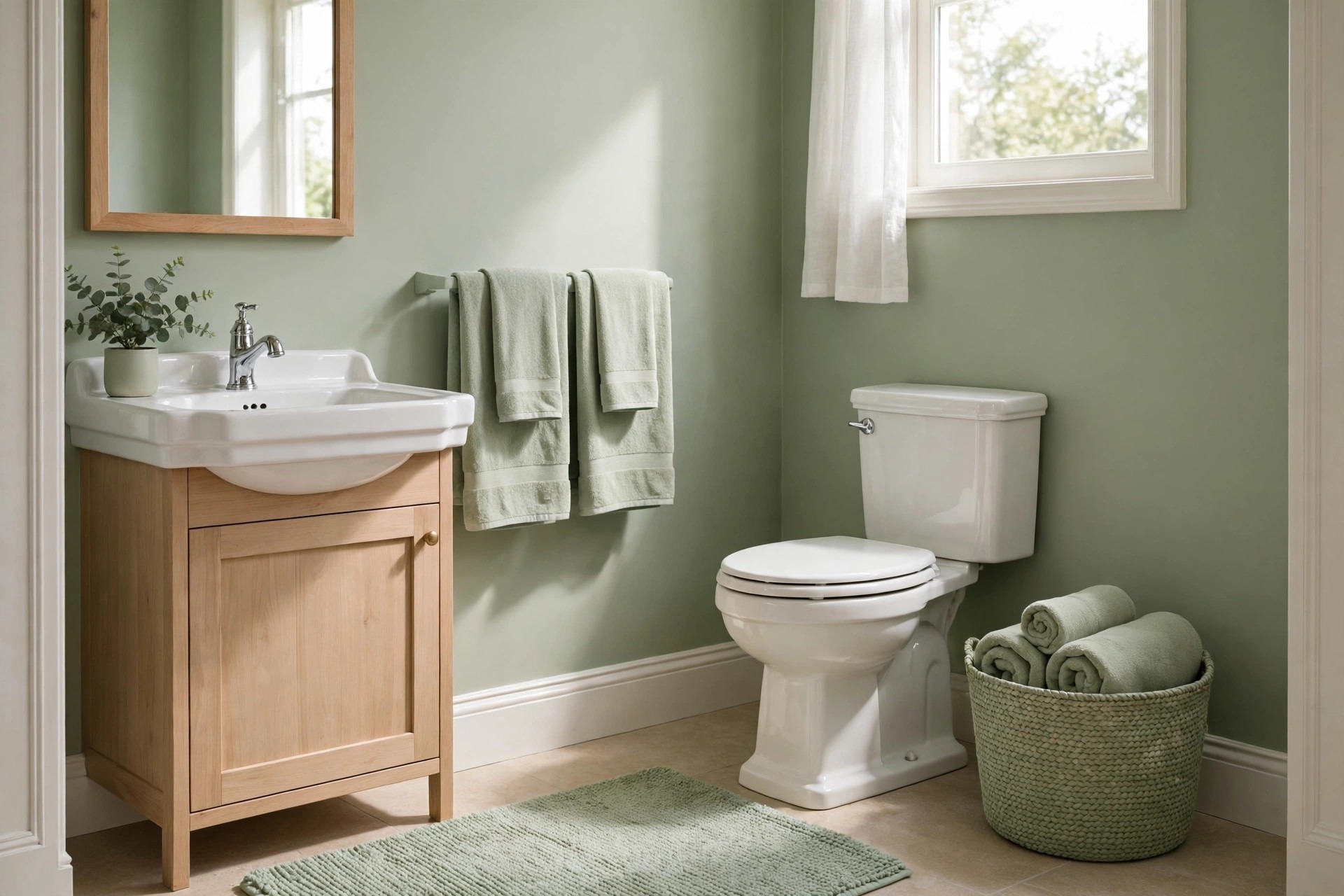
A small bathroom feels bigger when it looks simpler, and color repetition is how simple happens.
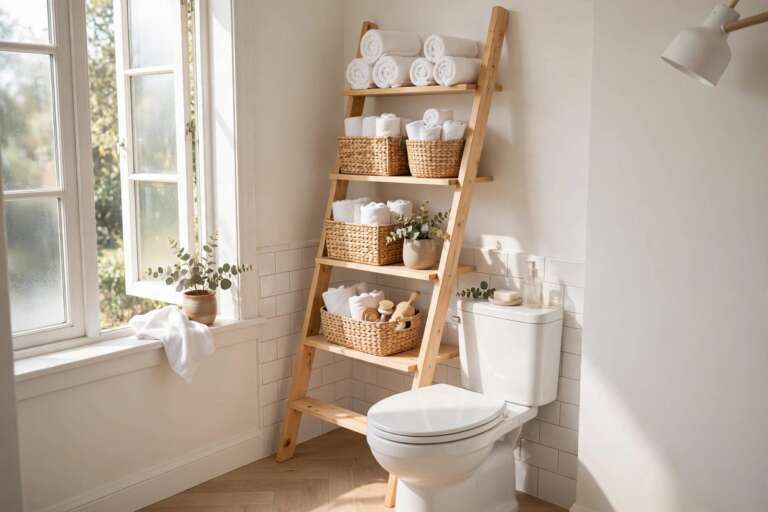
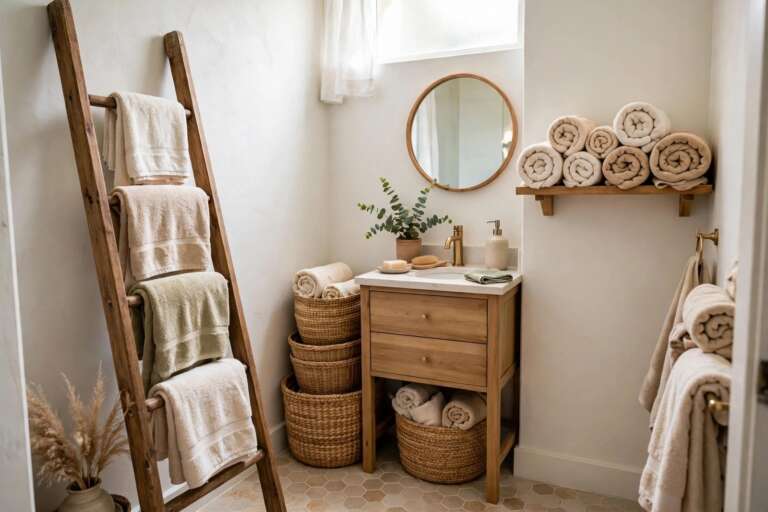
Once the walls are chosen, repeat their color family in the towels, the bath mat, a storage basket and one or two accessories, so the whole room reads as one palette rather than a crowd of competing items. Keep the count of colors low: the wall color, white, one accent. Three, total. Swap the accent with the seasons if you like change. The room will feel pulled together and calm, and calm rooms always feel more spacious than busy ones.
13. Test Big Swatches in Morning and Night Light
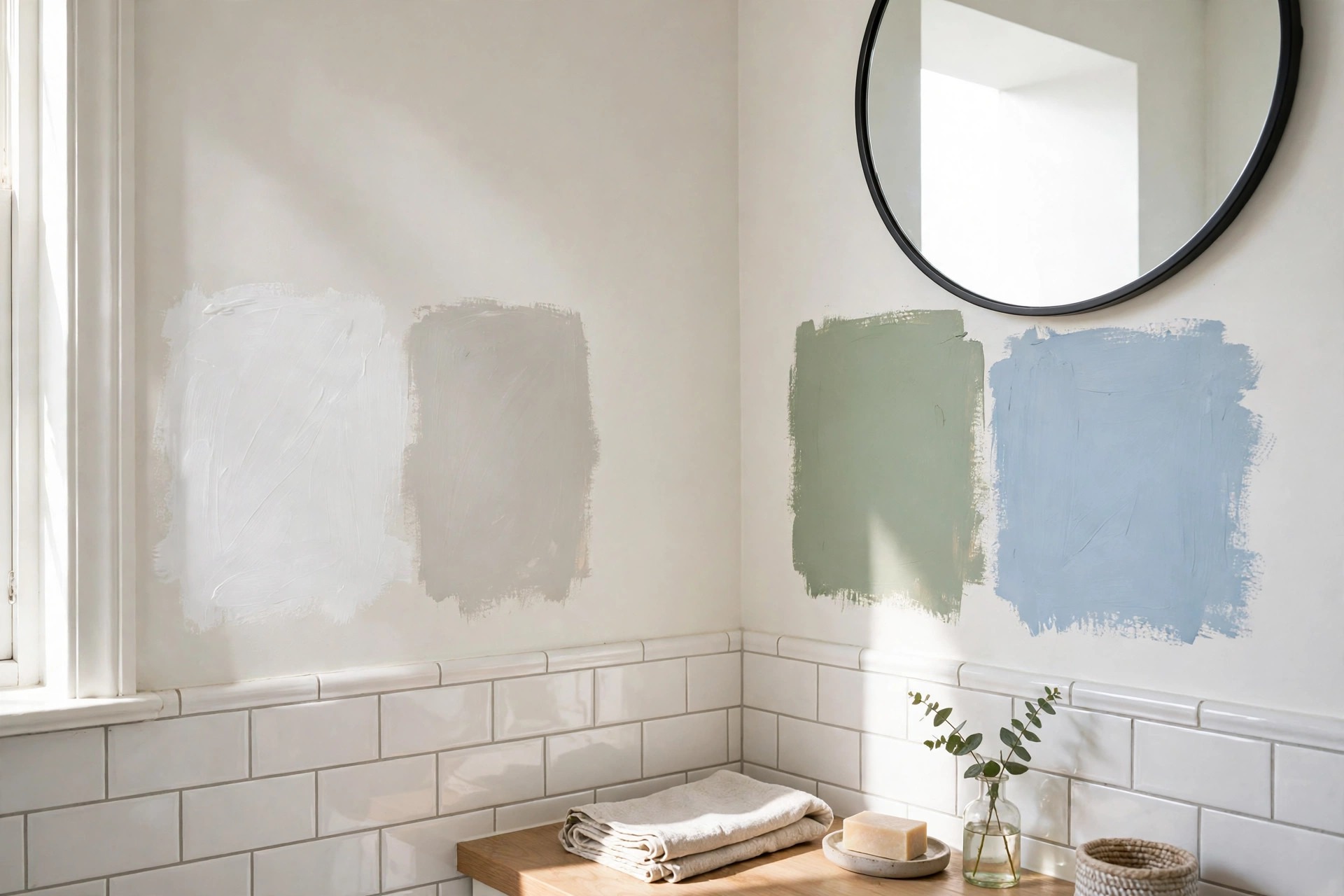
The final idea is a method, and it protects all the others.
Paint large swatches, at least a dinner plate across and ideally 12 inches or more, directly on two walls. Then live with them through a full day. Small bathroom colors shift a lot between morning daylight, evening lamplight and the hard light of a mirror fixture, and the shade that looked perfect in the shop can turn grey, green or gloomy at home. Paint beside the mirror too, because that is where your face judges the result.
Two days of patience beats repainting a whole room, every single time. I have never once regretted the wait. I have regretted skipping it.
The Bottom Line
A tiny bathroom grows through light and blur, not square footage: light reflective colors, edges painted out in one shade, seams softened between floor and wall, and one deep accent placed with intent. Choose the family that suits your light, soft white, warm grey, sage, blue or blush, then let finish and repetition do the quiet work. That is a lot of change for a single tin of paint, if you test before you pour it.
Start with the swatches: two big patches, two walls, one full day of looking. The right color picks itself by the second evening.
Frequently Asked Questions
What is the best color for a very small bathroom?
A soft white with a warm undertone is the most reliable choice, because it reflects the most light and suits any fixture or towel color. If white feels stark, pale warm grey and soft sage give the same spacious effect with more character.
Should a small bathroom be painted all one color?
Yes, in most cases. Painting walls, trim, skirting and the door in one light shade blurs the room’s edges, and blurred edges read as more space. Keep contrast for one deliberate accent, such as a vanity or a single wall, instead of the woodwork.
Do dark colors ever work in a small bathroom?
They do, in one controlled place: a single wall, a vanity cabinet, or the lower half of the walls with light above. A fully dark tiny bathroom can feel elegant but will read smaller and needs excellent lighting, so treat all over dark as a style choice, not a space trick.
What paint finish is best in a small bathroom?
Satin or eggshell in a bathroom specific paint. These finishes reflect enough light to brighten the room softly and resist moisture and mildew better than flat matte, which absorbs light and marks easily in steamy spaces.