A monthly furniture walkthrough can organize observations and follow-up, but it is not a structural certification or a reason to wait when someone reports a fault. Use it to find visible problems, confirm that reports have an owner, and check whether the furniture remains in its approved arrangement.
Set a scope that complements product instructions
List the furniture and locations to review, including shared seating, desks, adjustable tables, storage units, and visitor furniture. Use the manufacturer’s required inspections and the workplace’s procedures alongside the monthly administrative check. Different products may need attention on different schedules.
Collect user reports before the walkthrough and arrange access without moving personal or heavy items unnecessarily. Ask about changes such as unexpected movement, sticking controls, unusual sounds, or a part that no longer stays in position. Keep the report factual rather than asking staff to diagnose the component.
If an area cannot be inspected, mark it as unverified and arrange appropriate access. Do not automatically postpone a reported concern until the next monthly round. Its handling should follow the nature of the concern and the responsible person’s assessment.
Begin with visible condition and the installed arrangement
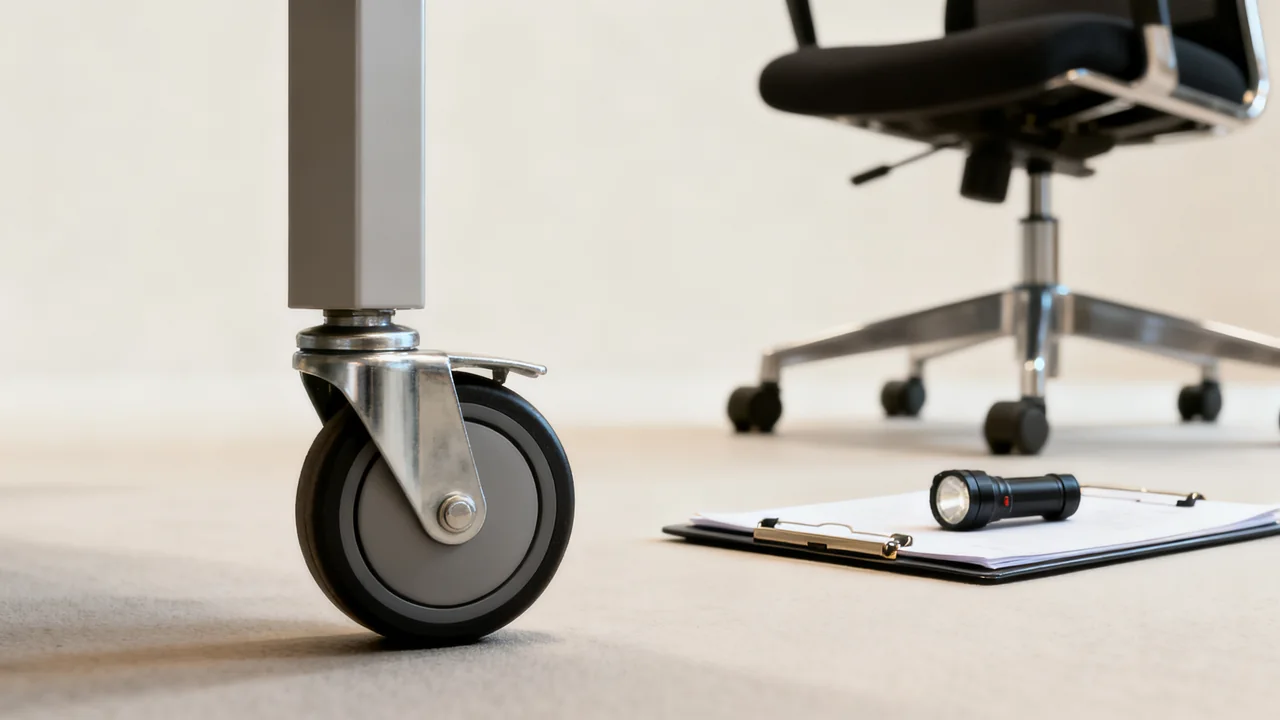
Look at accessible surfaces and connections without dismantling furniture. Note cracks, loose or missing parts, damaged supports, protruding components, and changes from the approved setup. Photograph relevant visible details without capturing private documents or people unnecessarily.
Check that furniture has not been overloaded, modified, or moved into an unsuitable arrangement, using its documented limits and installation requirements. A visual check cannot establish the internal condition of a frame or verify an unknown history.
Do not push, rock, load, or pull furniture to discover the point at which it becomes unstable. A level on a desktop does not certify the floor or identify the cause of wobble. Report instability and have it assessed through the appropriate service process.
| Furniture group | Accessible observations | Do not improvise |
|---|---|---|
| Desks and tables | Visible damage, displaced parts, reported movement, cable interference | Corner-loading or rocking tests |
| Adjustable desks | Condition and permitted ordinary operation if no concern is present | Obstacle-based anti-collision tests or bypassing faults |
| Chairs | Visible base, caster, support-material, and control damage | Sitting on a suspect chair to test its strength |
| Cabinets and shelves | Visible damage, documented installation, reported drawer problems | Pulling a top edge or loading an open drawer to test tipping |
Check ordinary functions only within their instructions
Where the visual check and user reports reveal no concern, review normal user operation as directed by the product instructions. Stop if movement is unexpected, a control fails, or the item appears unstable. Do not force a stuck drawer or adjustment.
For height-adjustable desks, keep the approved movement area and cables clear. Do not place an object in the path to test an anti-collision feature unless the manufacturer’s specific service procedure and authorized personnel require it. A fault in a safety-related function needs assessment; it does not automatically permit continued use at one height.
For storage furniture, verify installation records and accessible anchoring information. If attachment cannot be confirmed, ask the responsible installer or facilities person to assess it. Do not pull on the furniture to substitute for that evidence.
Separate cosmetic observations from unresolved safety concerns
A superficial finish mark may be recorded for ordinary care or later repair. Instability, a damaged support, a failed lock, a detaching caster, or another potentially unsafe condition needs a different response. Do not classify these using invented wobble angles, tear lengths, or a universal number of days until repair.
Keep suspect furniture out of use through the workplace’s approved process and arrange appropriate assessment. A discreet sticker telling users to avoid one corner is not a repair. Do not leave unsafe equipment in a backup pool for occasional use.
Document what was observed, the immediate action, the responsible person, and the next step. If the observer cannot decide whether a condition is cosmetic or structural, keep that uncertainty explicit and seek an appropriate assessment.
Use an illustrative walkthrough record
Assume an imaginary office finds a chair with damaged support mesh, a cabinet drawer reported to stick, and a table with a superficial finish scuff. These are hypothetical observations, not examples establishing a universal risk rating.
The chair is taken out of use and sent for assessment. The cabinet is handled according to the reported fault and service guidance, without pulling the drawer against resistance or testing whether the cabinet tips. The finish mark is recorded and checked against the surface-care instructions.
Each item receives an owner and status. No fixed “repair within thirty days” rule is applied to all three, and no estimate of extended furniture life is claimed. The useful result is a traceable response that matches the actual concern.
Close the loop after service
Keep the vendor’s findings, work performed, and any replacement-part information with the asset record. The appropriate person should complete the required acceptance checks before an item returns to use. Staff should not assume that a delivered part or a tightened fastener closes every reported issue.
Review recurring observations across models and locations. Repeated damage might reflect product fit, handling, loading, installation, or another cause that needs investigation. Avoid turning a small sample of faults into a claim about an entire brand.
- Use monthly review alongside product-specific requirements.
- Collect reports and inspect accessible condition.
- Avoid provocative load, tip, and obstacle tests.
- Keep suspect items out of use pending appropriate assessment.
- Assign ownership and track unresolved access or findings.
- Verify service completion before returning furniture to users.
Have a question or a correction?
Contact the editorial team