14 Small Bedroom Storage Ideas for Rooms With No Closet
Your shirts live on the chair. Your jeans live on the floor. Your shoes live under the bed and in a bag you never unpacked. Your clean laundry lives in the basket.
That is not a tidiness problem. It is a space problem. The room never got the storage piece that does the sorting for you, so these small bedroom storage ideas for rooms with no closet build that job back in. A rail for hanging, flat storage under the bed, one tall piece for the rest. No building work, and the first three ideas fit in one weekend. I run a rail setup myself, and this order stopped the chair pile for good.
The short version, before we start:
Three systems, not one. A rail for hanging, boxes under the bed for folded clothes, and one tall dresser. Together they cover the 3 jobs a closet does.
Measure before you buy. Rail width, under bed clearance, door swing. Ten minutes with a tape saves every return on this list.
One wall for clothes. Keep the big storage on 1 wall and the rest of the room stays calm enough to sleep in.
Edit last, then stop. Once each group has a home, cut what does not fit. One person’s wardrobe fits in about 40 to 50 hangers and 4 to 5 drawers.
1. Start With a Rail That Will Not Tip Over
Buy the heavy rail, not the cheap light one. This is the buy or skip call for the room.
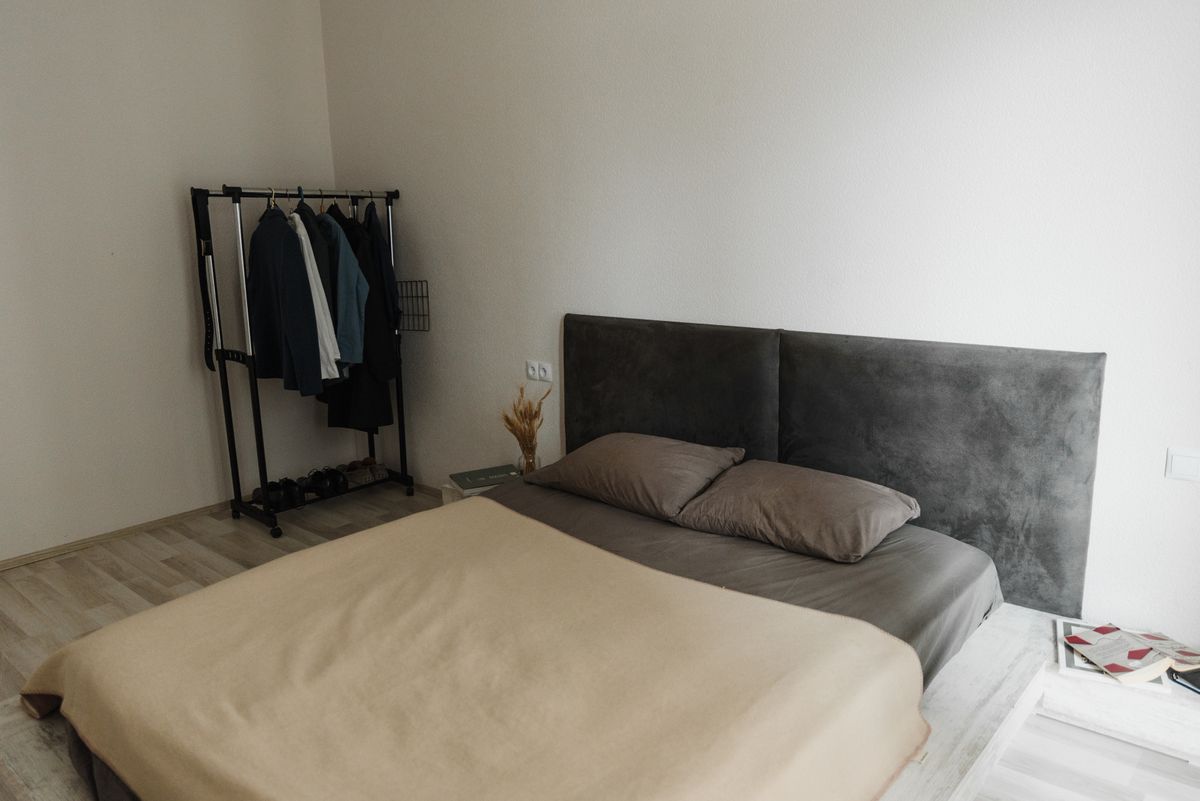
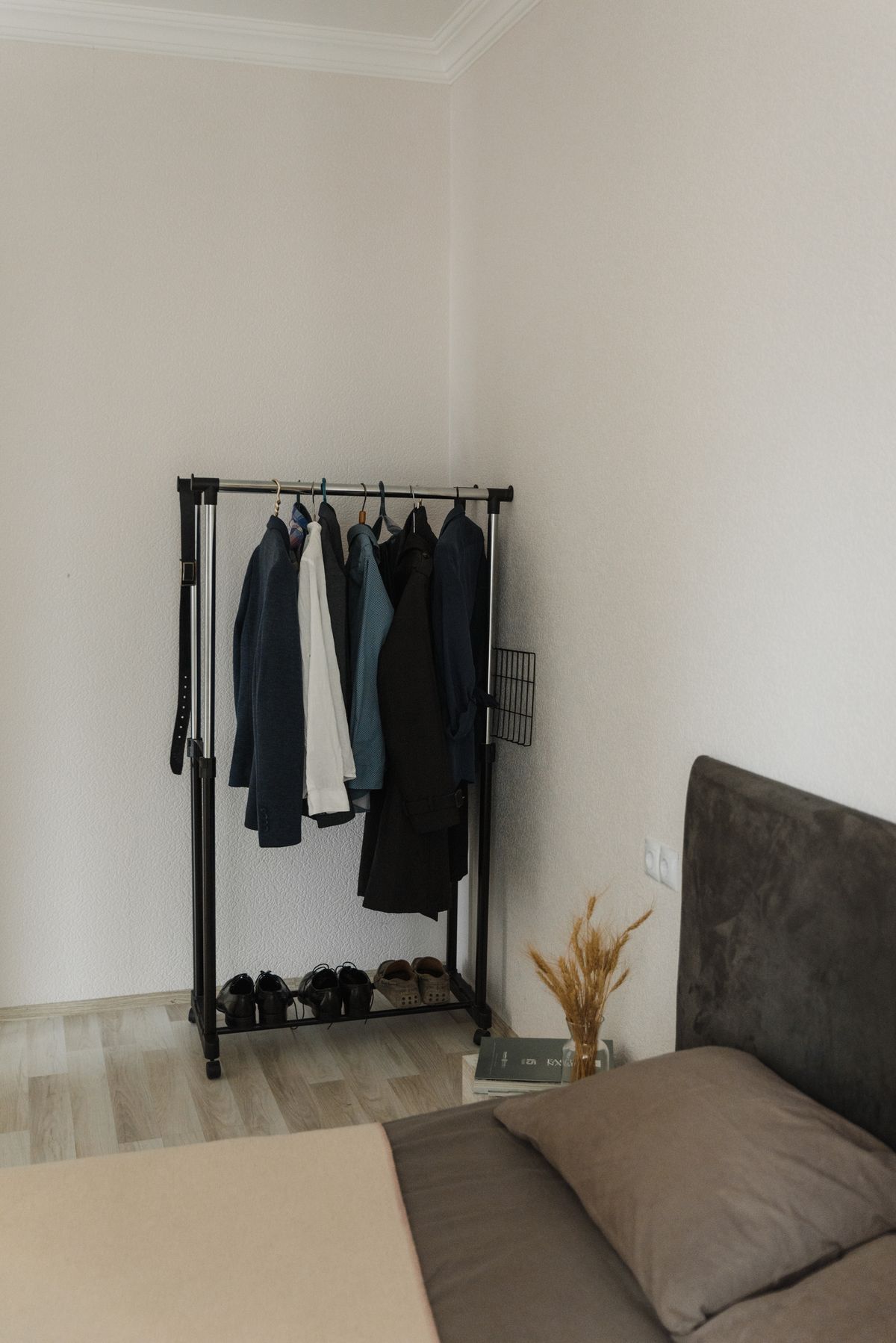
A rail stands in for a closet rod, so the base does the job a wall normally does. Pick a bar 48 to 60 inches wide, high enough that dresses hang about 2 inches clear of the floor. Solid ones usually run $40 to $90.
Skip rails under about $25. The bar sags and the frame leans when you pull a coat off. Fix a sag by moving heavy coats to the 2 ends and light shirts to the middle. Hang everything facing 1 way, grouped by type. Grouped reads neat. Mixed reads like a sale rack.
2. Build the Whole Wardrobe on One Wall Only
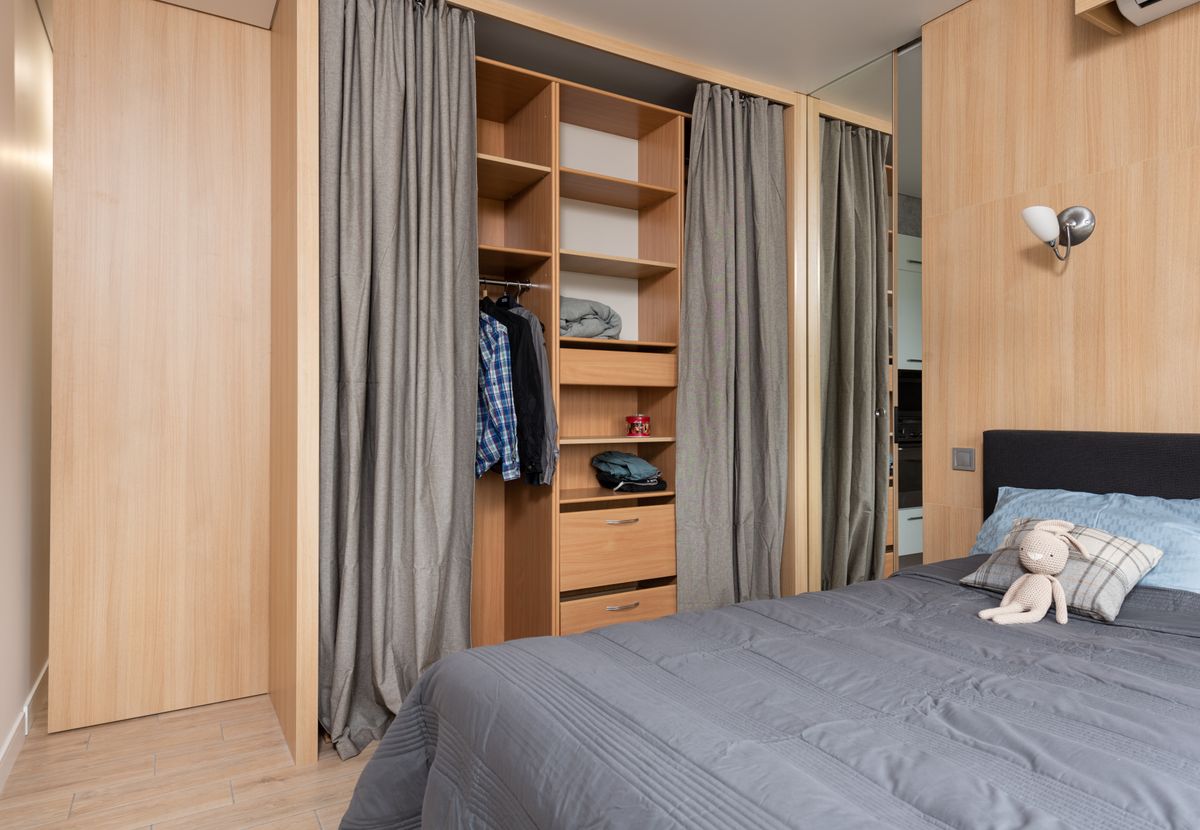
Pick 1 wall and put everything on it. Nothing gets spread around the room.
A rail or 2 wall rods for hanging, a shelf above for boxes, a low unit below for shoes. One wall takes the noise, the other 3 stay quiet. Leave about 12 inches between the top shelf and the ceiling so boxes lift off easily.
A curtain on a ceiling track hides it on bad days and takes about 30 minutes to hang. Most days it stays open. Seeing everything at once makes picking fast.
3. Slide Your Folded Clothes Under the Bed
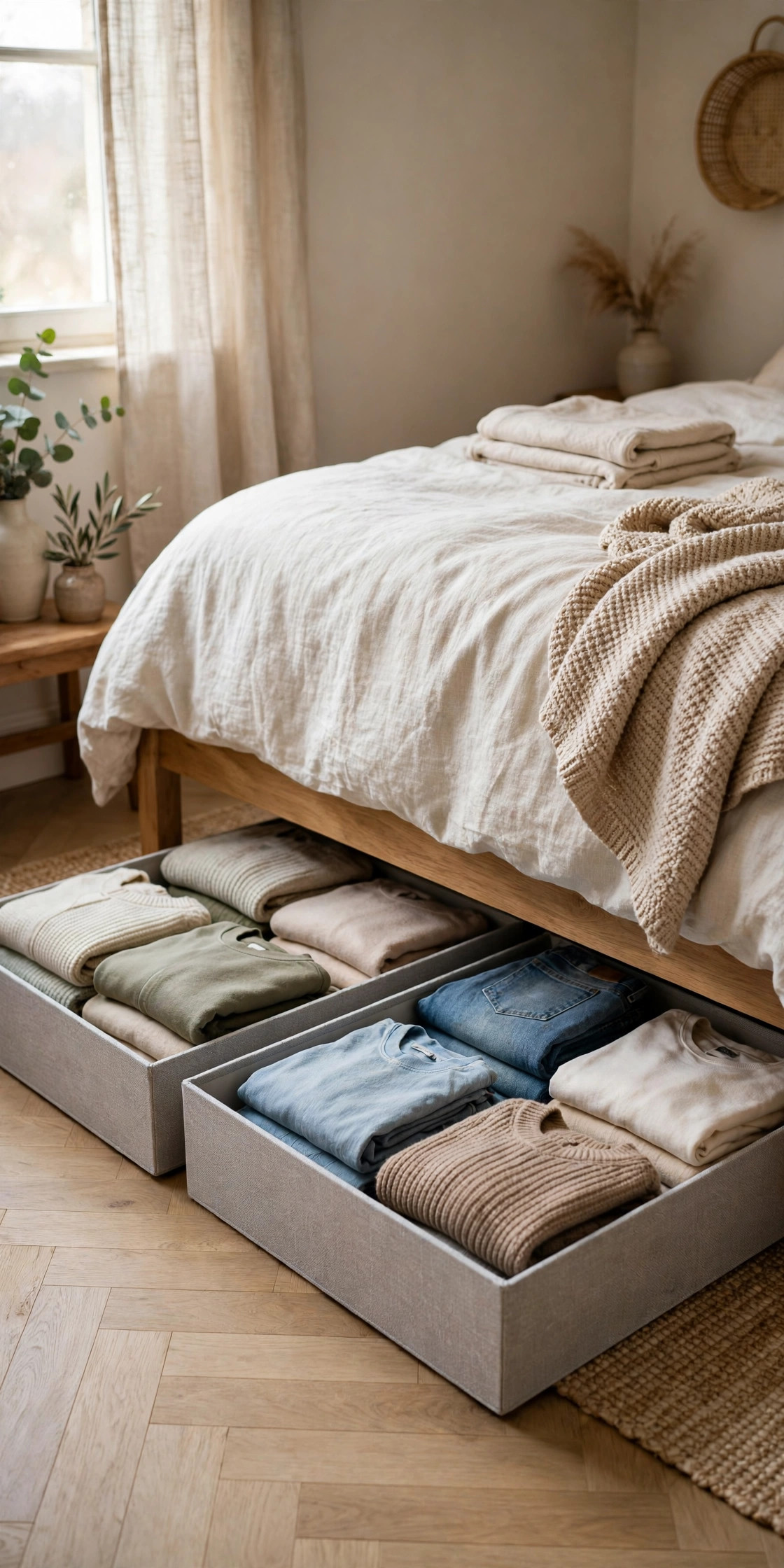
That flat space under the bed is a wardrobe lying down.
Folded clothes need width and a lid, not height. Low, hard boxes on wheels beat soft bags for daily use, since they open with 1 pull. Measure first. Most frames give 6 to 8 inches of clearance, so buy boxes no taller than 5 to 6 inches.
The classic failure: the box will not slide past the middle leg of the frame. Slide it in from the long side, not the foot. Still stuck? Put flat vacuum bags there and keep boxes for the open sides. Vacuum bags shrink winter jumpers to about a third of their size.
4. Go Tall and Narrow With the Dresser
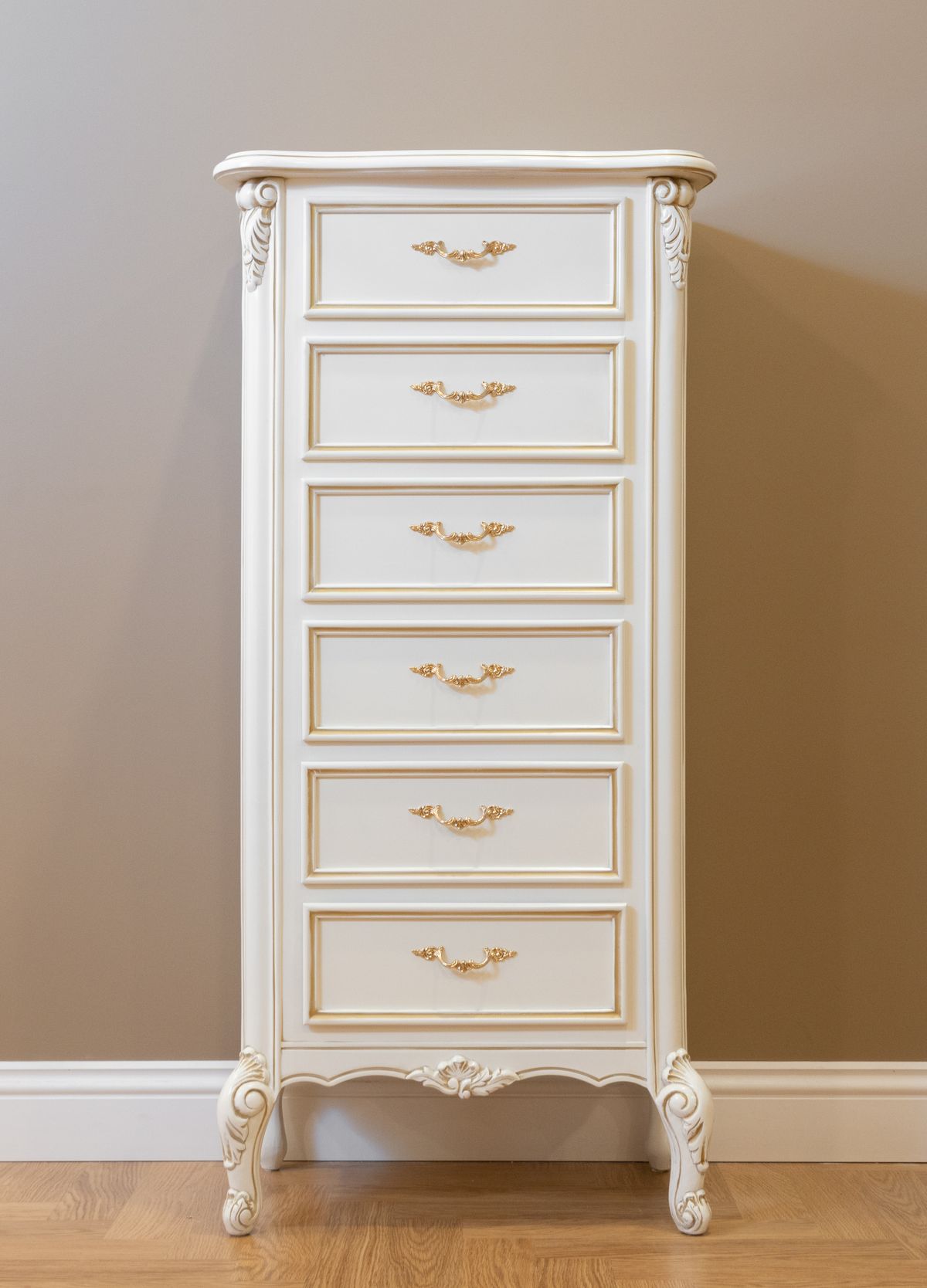
Floor space is the thing you are short on. Height is free.
A tall dresser about 18 inches deep and 48 to 55 inches tall holds close to what a wide one holds, on half the footprint. Daily clothes go in the middle 2 drawers, at easy reach. I keep the top drawer split for socks and underwear, the 2 groups that vanish into a mixed drawer within a week.
5. Hang Shelves Off the Rail and Save the Floor
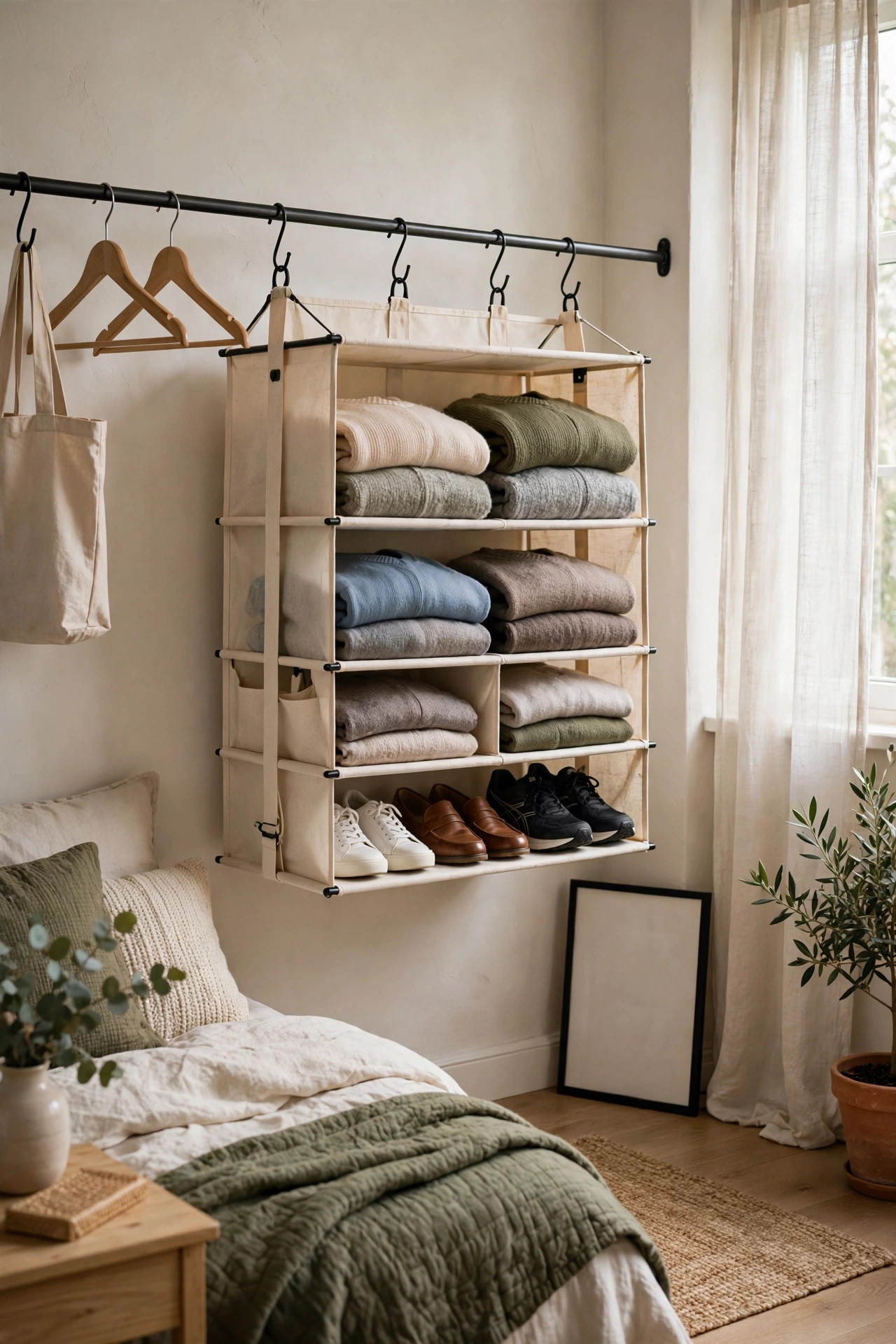
A hanging canvas organizer turns 12 inches of rail into a stack of shelves. No new furniture, no floor space gone.
Pick one with hard boards in each shelf, 5 or 6 shelves tall. Jeans and jumpers in the middle, the heaviest load in the bottom shelf only. Loaded top heavy, it twists and the shelves slope. If one sags, slide stiff cardboard under the board. It buys you months. These usually cost $10 to $20.
6. Claim the Back of the Door, But Keep It Light
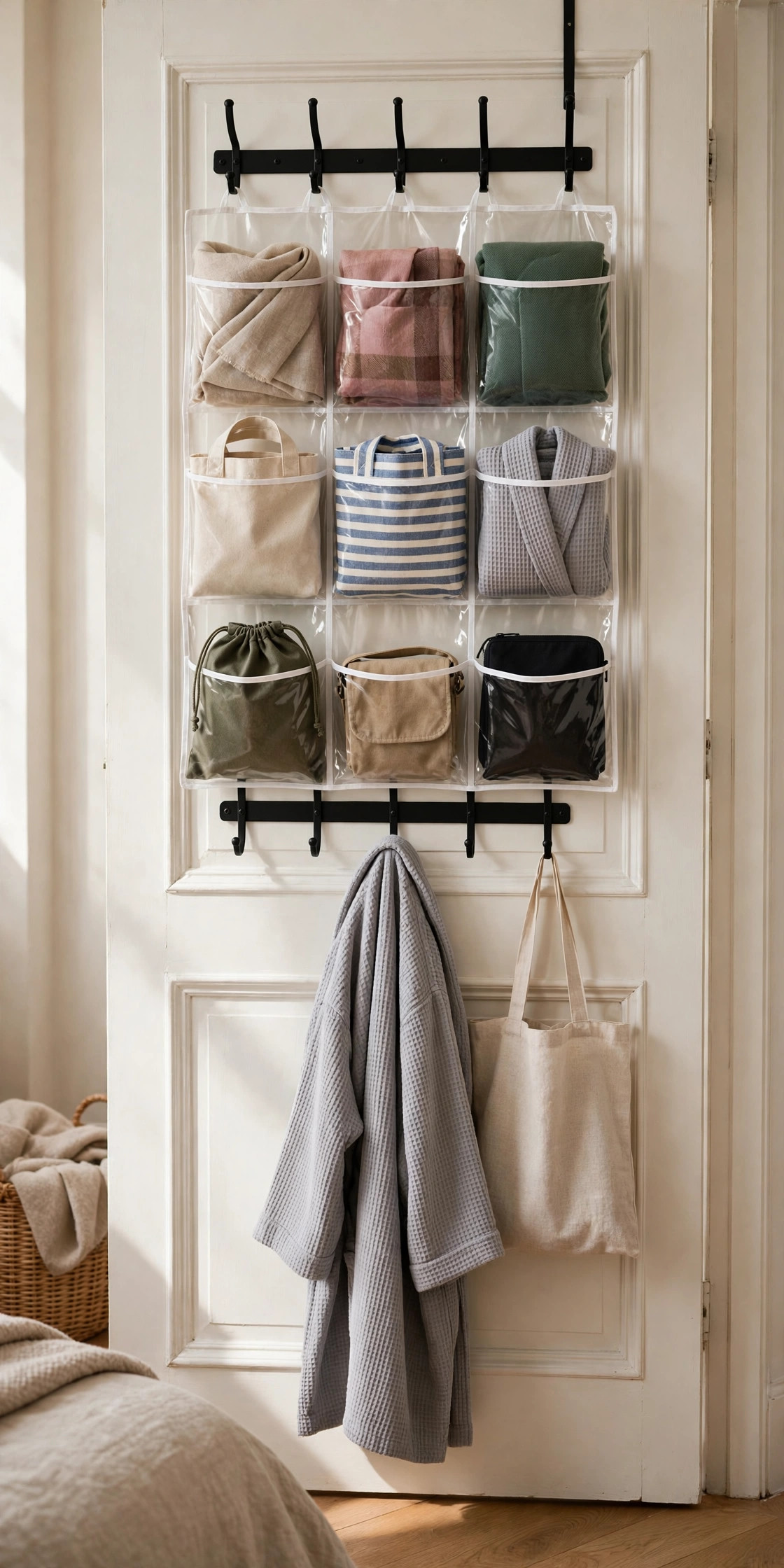
Your door is about 4 feet of upright storage doing nothing. Put it to work, gently.
Over door hooks use the gap above the door, no screws, no holes. Hang the robe, tomorrow’s outfit, bags and hats. A pocket organizer on the same door takes scarves, belts and chargers. Keep the load under about 15 pounds, so the door still opens flat.
Cheap hooks scratch paint, and thick hooks stop the door closing. Test 1 hook with the door shut first, pick padded hooks to match the door thickness, and if it will not latch, stick adhesive hooks on the face instead.
7. Give Daily Clothes Five Hooks, No More
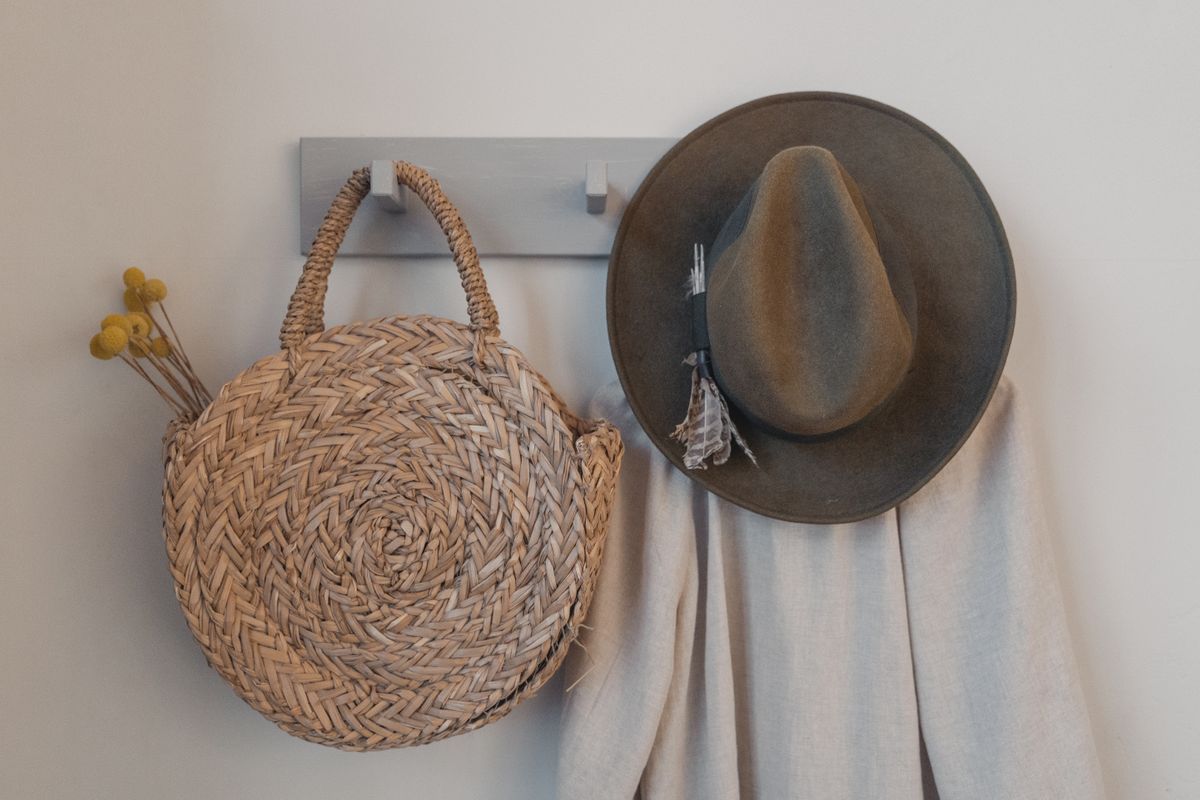
Not every item needs a drawer. The shirt you wear twice a week needs a hook.
A short peg rail by the door catches the daily rotation before it lands on the chair. Space 5 sturdy hooks about 6 inches apart, at roughly 60 inches high. I stop at 5 on purpose. Five hooks hold a rotation. Ten hooks hold a mess that looks planned.
No screws allowed? A standing coat rack in the corner does the same job for about $20 to $35.
8. Park Off Season Clothes Up High, Out of the Way
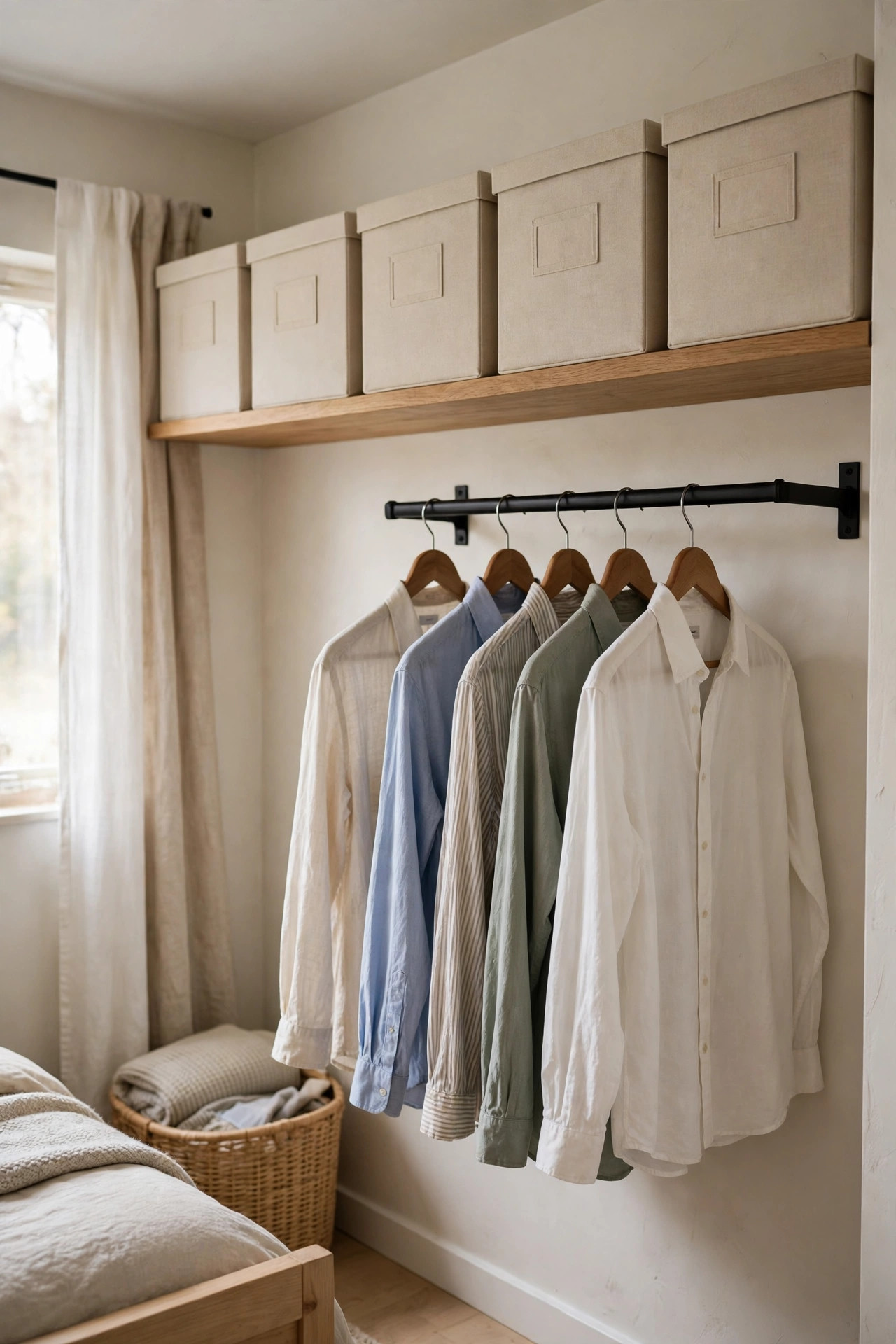
Every no closet room needs 1 shelf for clothes that are out of play. High, labeled, a bit of a reach. That is the point.
A shelf above the rail holds winter coats in July and beach clothes in January, in matching boxes labeled on the end facing the room. You will not recall what is in box 3 by next season. Nobody does.
Keep each box under about 15 pounds. A heavy box at 72 inches high comes down on your arms, not into them. Split it into 2 lighter boxes.
9. Put a Box You Can Sit On at the Foot of the Bed
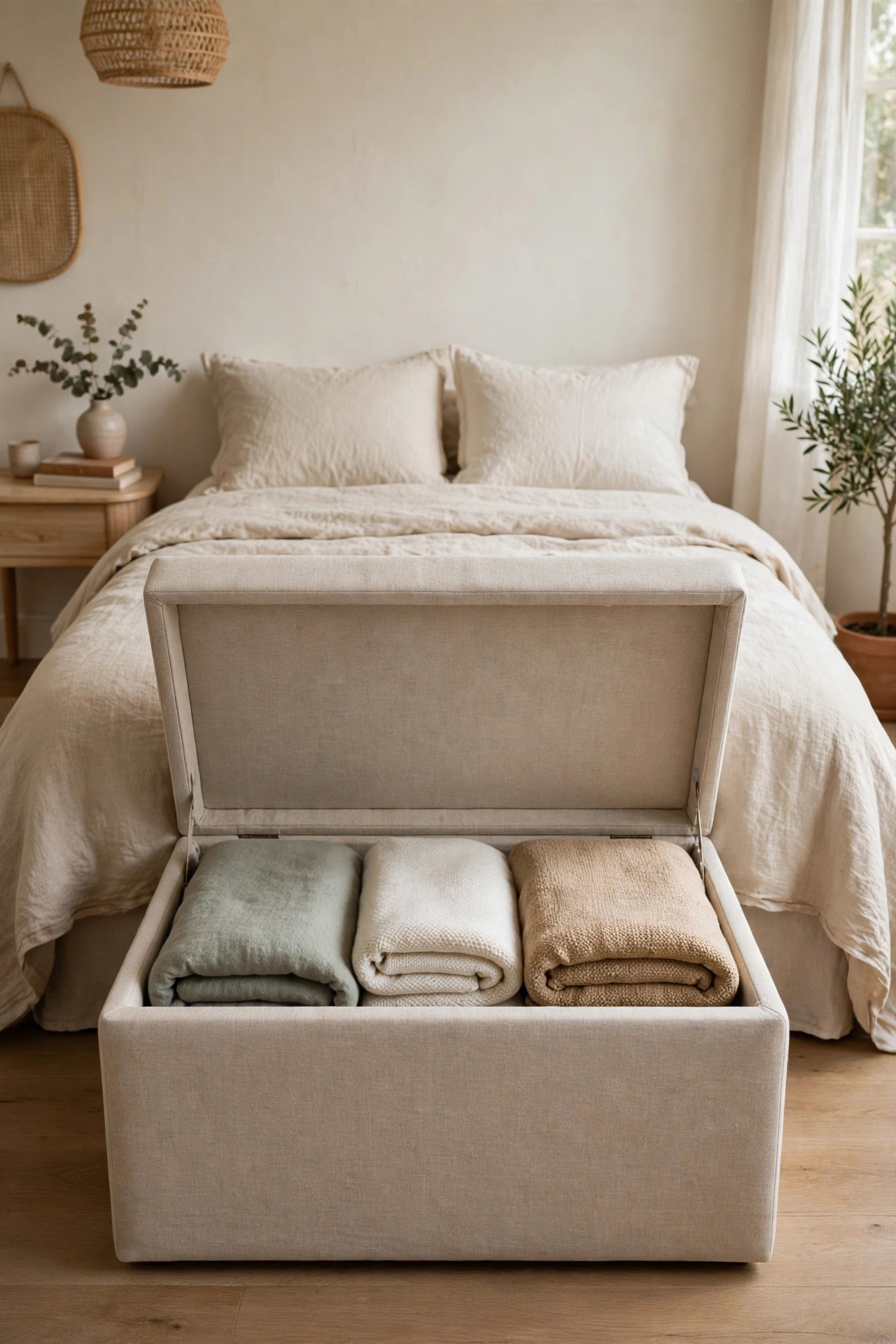
An ottoman or trunk at the foot of the bed earns its space 3 ways. A seat while you dress. A flat spot for tomorrow’s clothes. A big hidden box for blankets or shoe overflow.
A piece that does 1 job is hard to defend in a small room. This one does 3, and it fits the thinking behind budget friendly bedroom decor hacks: each piece pays for the floor it takes. Look for one about 36 to 48 inches wide with a firm, flat lid. A puffy lid fails as seat and surface, so test it in the shop. Most decent ones run $50 to $120.
10. Stack Shoes Up, Not Across the Floor
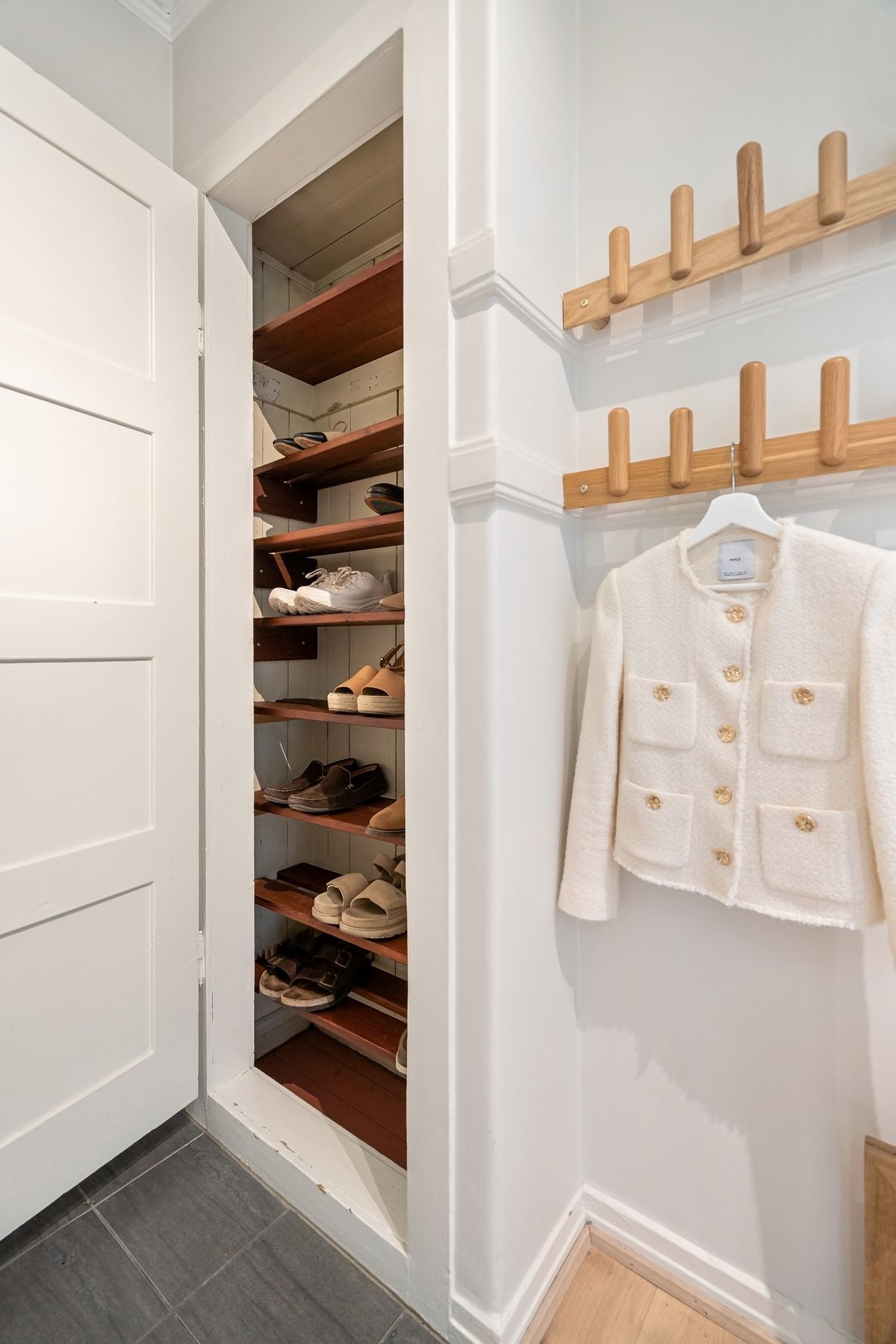
Loose shoes make a small room look messy faster than unmade bedding. One column fixes it.
A slim rack about 12 inches deep, with 3 or 4 tiers, holds 8 to 10 pairs in the floor space of 1 pair. Daily pairs in the middle, dress shoes on top, boots beside it on a tray. In wet weeks the tray keeps the drips in 1 washable spot.
Edit hard. Shoes not worn in a year do not get a tier.
11. Sort By Category First, Then Add Dividers
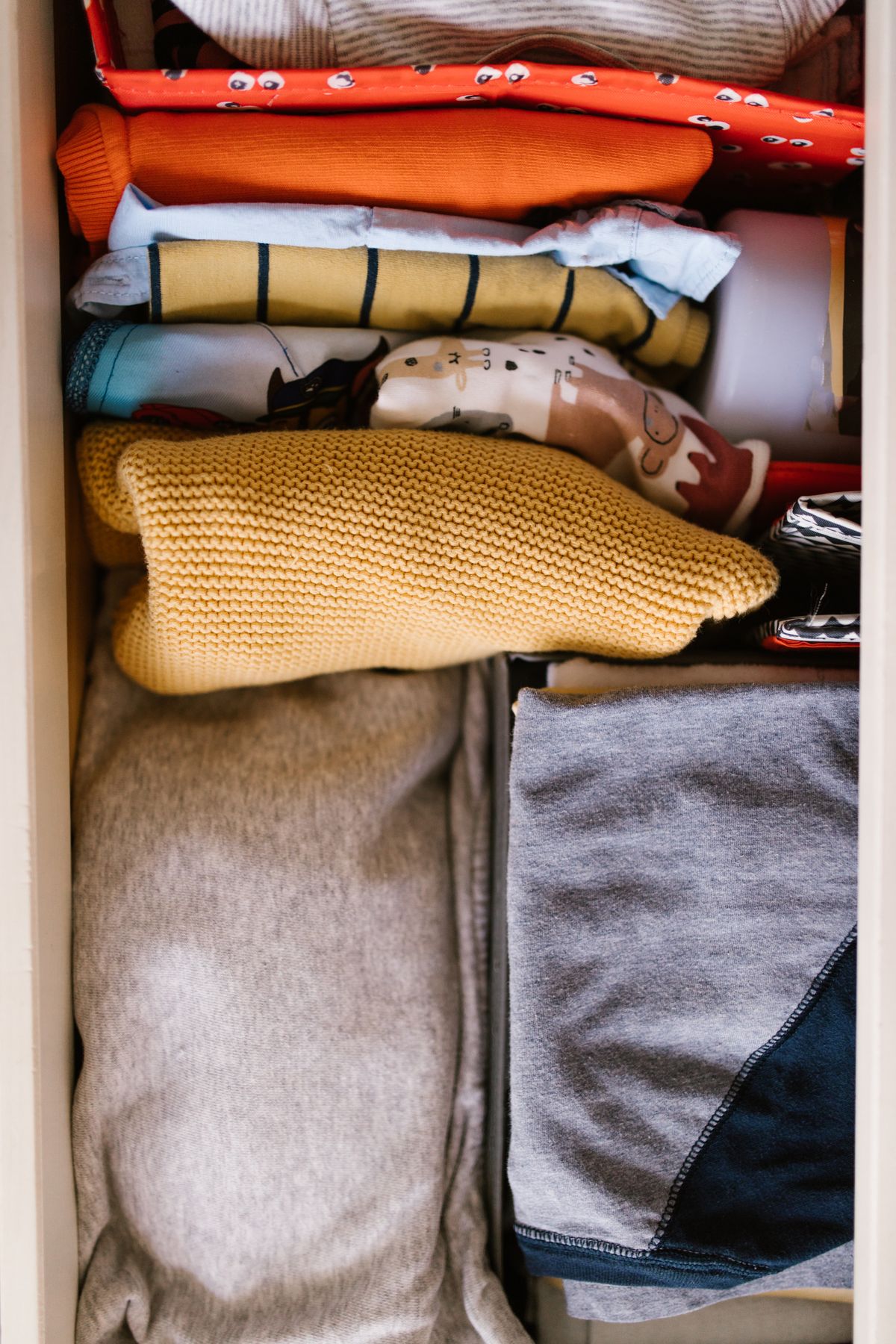
In a closet, walls and a door do the sorting. In this room, categories do it.
Set 1 home per group. Hanging clothes, folded clothes, socks and underwear, shoes, bags, off season. Six groups cover most wardrobes. Hold the lines with cheap dividers and lids on boxes, so a quick tidy cannot blur one group into the next. My rule is simple. If an item has no home, it does not stay until it gets one.
Labels help, but keep them small. A week of putting things back in the right home and it turns automatic.
12. Edit the Clothes Before You Buy More Storage
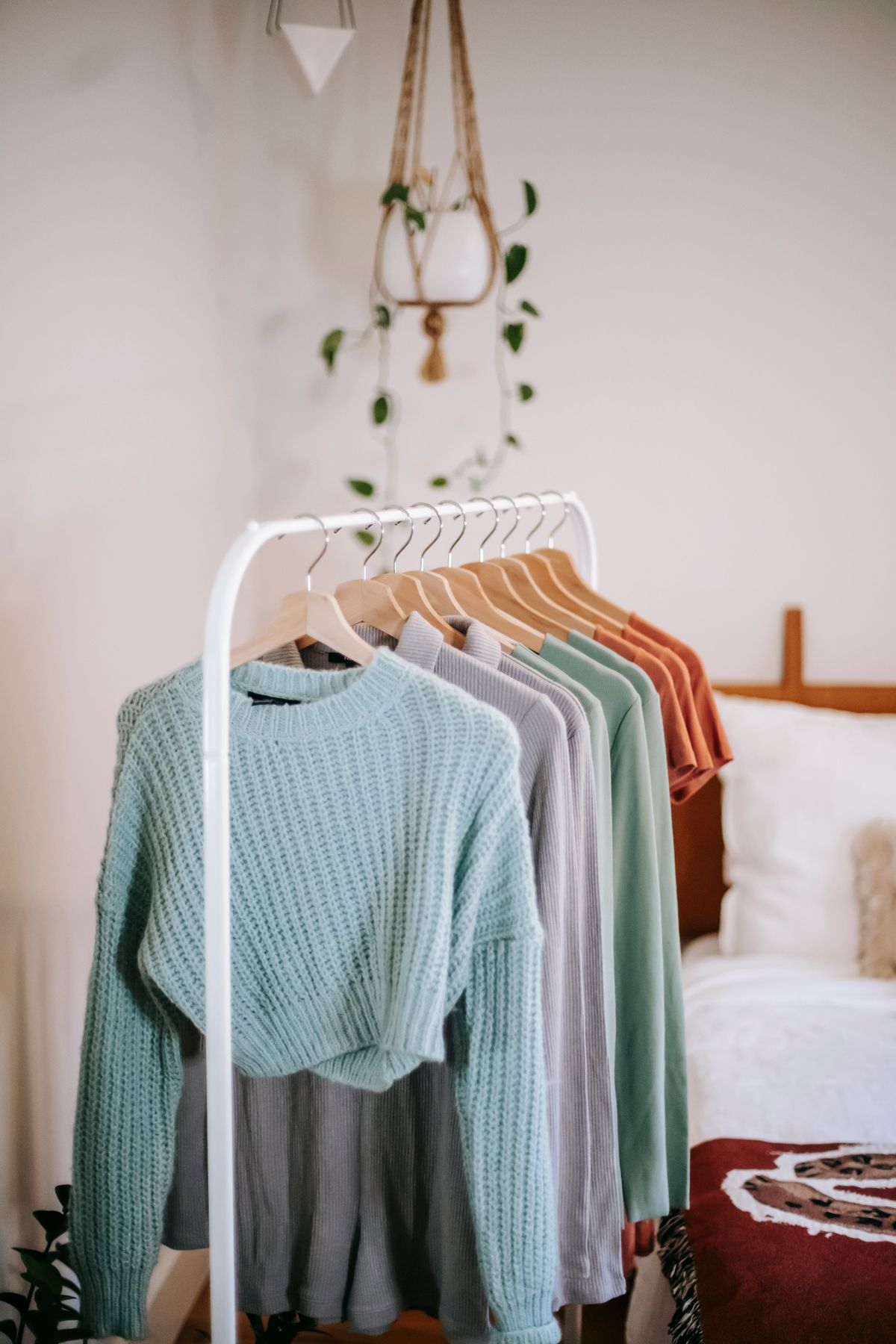
Storage stretches, then it stops. Past that point, the wardrobe is the problem, not the room.
Go through the rail like packing 1 suitcase for a long trip. Keep what you wear in this part of your life. The rest goes the same week, in a donation bag by the door, not a pile that creeps back. Aim for about 1 inch of air between hangers. Hangers touching edge to edge means the edit is not done. The same store less, store better thinking runs through guest bedroom storage ideas.
13. Place Storage Where Your Eyes Rest Least
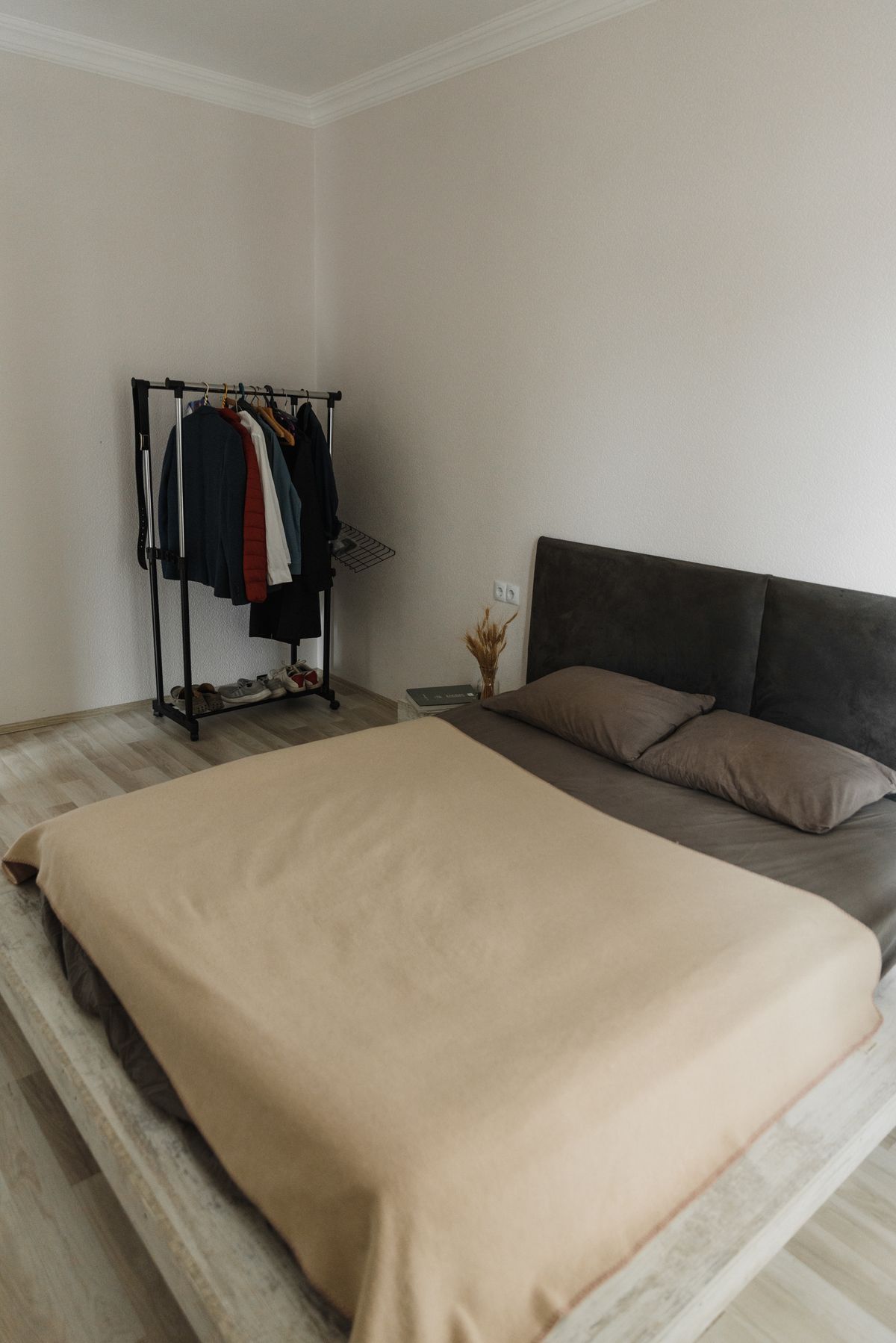
Where the systems stand matters as much as what they are. A good rail in the wrong spot nags at you every night.
Put the rail on the wall you see least from the pillow, so your clothes are not the last thing in view. Keep a clear path of about 30 inches from bed to door, and let the dresser fill a corner instead of cutting a wall in half. The small bedroom layout ideas in the layout guide fit storage, sleep and a small desk into tight rooms. The cloffice ideas for spare closet space in the cloffice guide turn it into a tiny office and free the bedroom from desk clutter.
14. Make the Nightstand Hold More Than a Glass of Water
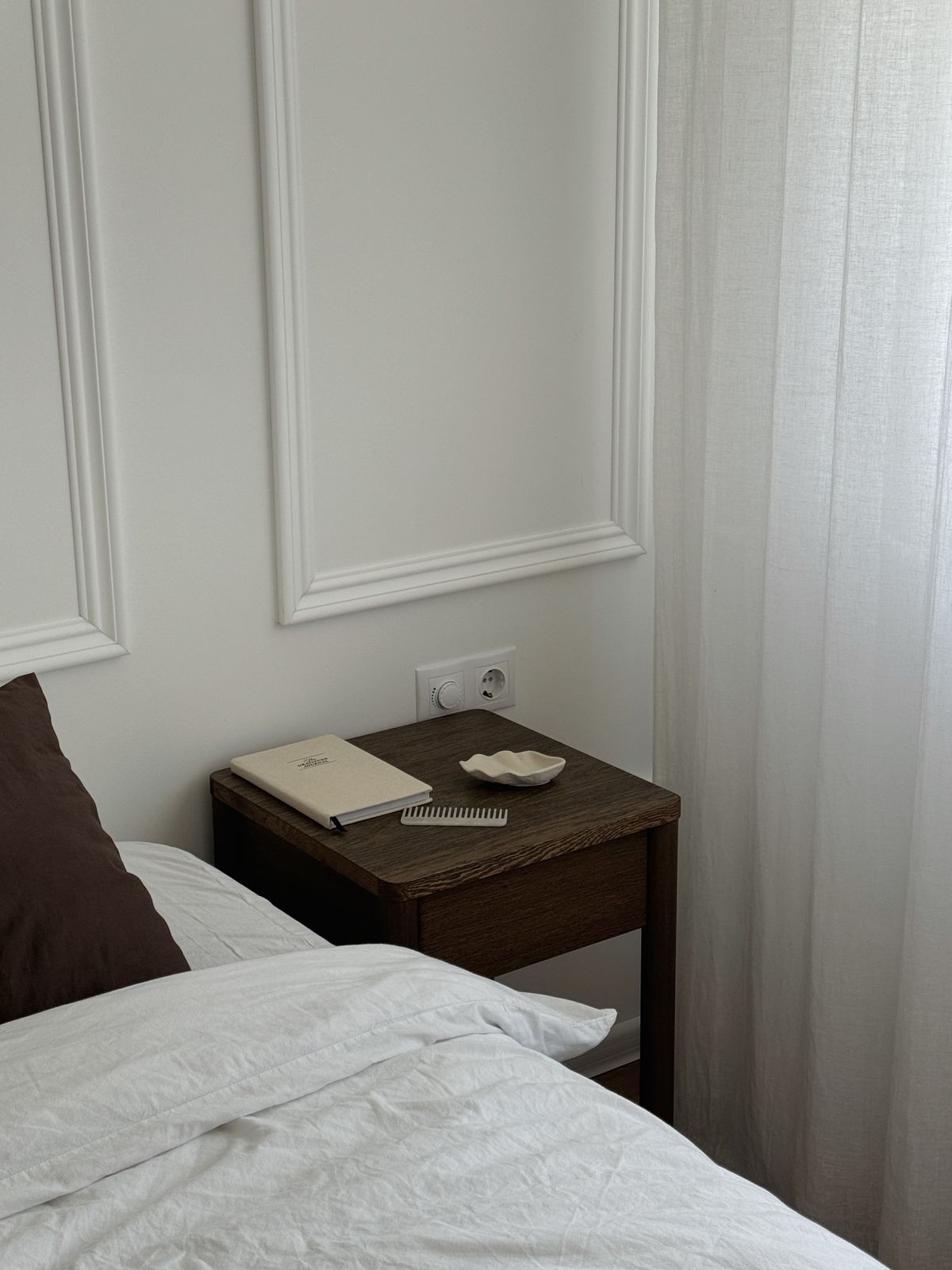
Even the nightstand has to work here. A plain table is a wasted box shape.
Pick one with 1 drawer and 1 shelf for the small daily load. Chargers, glasses, the book, hand cream, tablets. A tray on top keeps about 3 things on show, the drawer hides the rest. Nightstand tiny? A fabric pocket hung from the mattress edge holds phone and remote for about $8.
When every piece stores something, the missing closet stops being a daily sore point.
The Bottom Line
A no closet bedroom works when 3 systems split the job. The rail hangs, the boxes under the bed fold, the tall dresser holds the rest, and the door, hooks and high shelf pick up the small stuff. Build in that order, edit what does not fit, and stop once every group has a home.
Start with the rail. Measure the wall, buy the heavy one, and hang the chair pile tonight.
Frequently Asked Questions
What can I use instead of a closet in a small bedroom?
Use the trio. A rail or open wardrobe for hanging, under bed boxes for folded and off season clothes, and a tall dresser for the rest. Add door hooks, a shoe rack and a storage ottoman for overflow, and a full wardrobe fits with no building work.
How do I keep an open wardrobe from looking messy?
Hang everything facing 1 way, grouped by type, with about 1 inch of air between hangers. Keep untidy groups in closed boxes, and pull a curtain across when the room needs to feel restful. Overfilling reads as mess, so the edit matters more than the furniture.
What under-bed storage works best for everyday clothes?
Low, hard boxes on wheels, no taller than 5 to 6 inches for a frame with 6 to 8 inches of clearance. They open with 1 pull, which soft bags do not. Daily clothes on your side, vacuum bags for bulky off season pieces.
How much can a garment rack realistically hold?
A sturdy rail 48 to 60 inches wide holds 1 season of hanging clothes for 1 person, roughly 3 feet of shirts, trousers and dresses, if the base is heavy and heavy coats sit at the ends. Two people sharing need a rail each, or a rail plus the open wardrobe wall.