Shared workspaces see constant foot traffic and use, from open-area desks and meeting room tables to shared kitchen counters and lounge seating. A well-planned cleaning supply caddy puts safe, appropriate tools within easy reach for both staff quick cleans and regular scheduled maintenance, eliminating the need to search for supplies mid-spill or during a routine wipe-down. This guide focuses exclusively on caddy design, supply selection, and usage protocols specific to shared spaces, without overlapping with equipment-specific cleaning procedures or maintenance scheduling covered in other resources. All supply choices should align with manufacturer instructions for the surfaces and devices in your space, and no supply should be used without verifying compatibility first.
Assess Your Space’s Unique Cleaning Needs First
Before purchasing any supplies, map the shared areas your caddy will serve to avoid stocking unnecessary or inappropriate products. Note the specific surface types present: for example, a space with laminate desks, glass whiteboards, and stainless steel kitchen appliances will require different supplies than one with solid wood tables, fabric seating, and plastic work surfaces. Also document high-touch non-electronic surfaces such as door handles, light switches, and shared cabinet pulls, as these will be the focus of most routine quick cleans.
Next, define the caddy’s primary use case: will it be stored in a central location for staff to access for ad-hoc spills and quick wipes, or will it be used exclusively by designated maintenance staff for scheduled deep cleans? Ad-hoc caddies require simpler, more user-friendly supplies with clear labeling, while maintenance-focused caddies can include more specialized products for less frequent tasks. You may need multiple caddies for different zones: for example, one for open work areas and another for kitchen and breakroom spaces, to avoid cross-contamination between food prep surfaces and general work surfaces.
Choose a Caddy Design That Supports Safe, Efficient Use
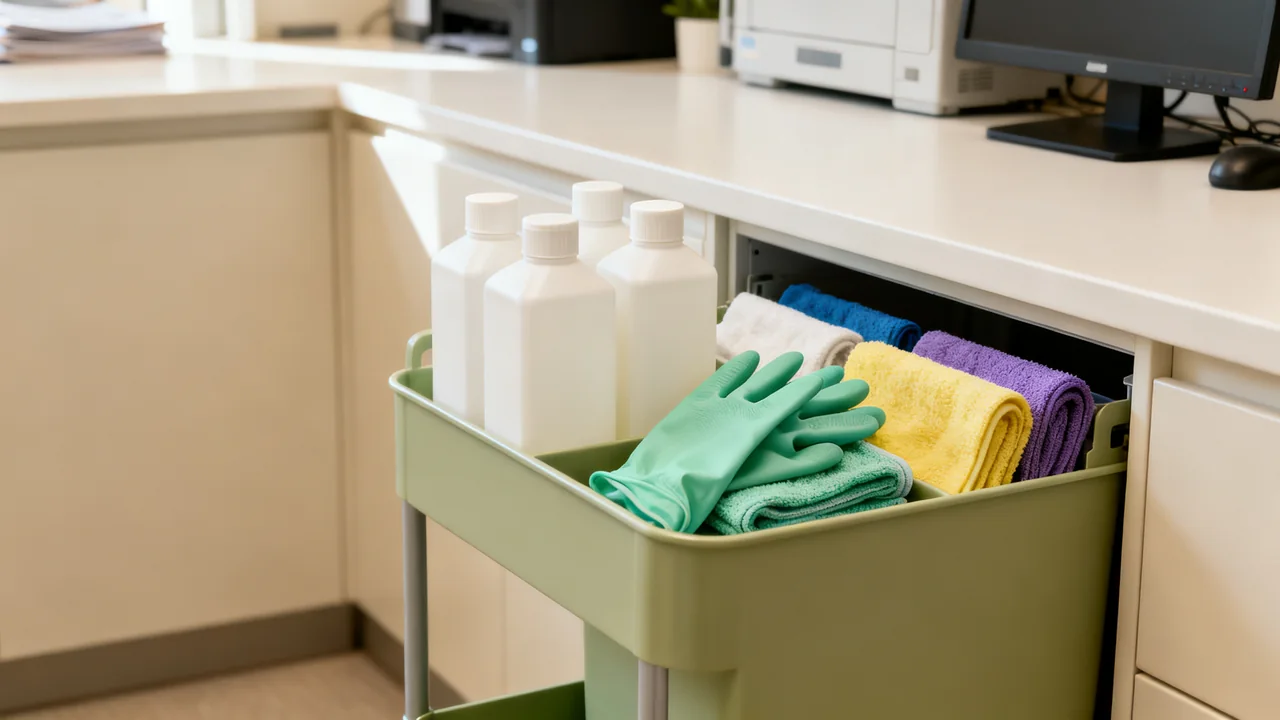
The caddy itself is as important as the supplies it holds. Look for a rigid, water-resistant model with a sturdy handle for easy transport between zones. Choose a material that can be cleaned as required and that is compatible with the stored products. Prioritize caddies with multiple divided compartments to separate cleaning tools by use case: for example, a compartment for surface wipes, another for paper towels and microfiber cloths, and a separate slot for disposal bags to keep used materials separate from clean supplies.
Include a small built-in storage pocket for printed usage guidelines and compatibility notes, so users can quickly confirm which supply is appropriate for a given surface without leaving the area. Store chemicals in accordance with their labels and workplace policy, with access limited where required. A portable caddy lid is not a substitute for suitable chemical storage. Label each caddy’s intended zone so kitchen and general work supplies are not mixed. Check the loaded weight, handle, route and individual users. There is no universal safe carry limit for every person or staircase. Reduce the load, use separate kits or arrange a suitable trolley where necessary.
Curate Supplies to Avoid Cross-Contamination and Equipment Damage
Stock supplies based on your earlier space assessment, and exclude any products that require specialized training or are not approved for use on your space’s surfaces. All supplies should have clear, legible labels listing approved surfaces and usage instructions. For general shared workspaces, core supplies typically include:
- Disposable surface wipes approved for your most common non-electronic work surfaces, with separate products approved for the intended food-contact surfaces and any required rinsing
- Color-coded microfiber cloths, with distinct colors for work surfaces, kitchen areas, and seating, to prevent cross-contamination
- Lint-free, non-abrasive paper towels for spill absorption that will not leave residue on surfaces
- Gloves in suitable sizes and materials where required by the product label and workplace assessment; thin disposable gloves are not protection from sharps
- Sealable disposable waste bags for collecting used cloths, wipes, and spill debris to avoid leaving waste in shared bins
- Printed quick-reference guide listing which supplies are approved for which surfaces, and which surfaces require a separate specialized cleaning kit (such as monitor screens or scanner glass, which have their own dedicated cleaning procedures)
Do not include abrasive scrub pads, bleach, or generic all-purpose cleaners in publicly accessible caddies, as these can strip finishes, damage surfaces, or leave residue that irritates skin. Follow the workplace’s chemical-handling, labeling and safety-data-sheet procedures. Keep products in correctly labeled containers; do not mix cleaners or decant them into food or drink containers. Ask the responsible manager which products staff are authorized to use. For any supply that may come into contact with electronics, explicitly note that they are not approved for use on screens, keyboards, or other electronic devices, to avoid accidental damage.
Illustrative Example: Caddy for a 15-Person Shared Open Office
This example reflects a common small shared workspace with open laminate desks, a small breakroom with stainless steel counters and a microwave, fabric lounge seating, and glass meeting room tables. All supplies are chosen to align with the space’s documented surface manufacturer guidelines:
- Caddy: 12-inch rigid plastic divided caddy with a carry handle and a small lid pocket for reference guides, weighing 1.3 pounds empty
- Work surface supplies: 2 packs of laminate-approved disposable wipes, 4 blue microfiber cloths for desk and table surfaces, 2 rolls of lint-free paper towels
- Breakroom supplies: 2 packs of food-safe surface wipes, 3 green microfiber cloths for counter and appliance exteriors, 1 box of disposable nitrile gloves, 1 roll of paper towels reserved for food spills
- General supplies: 10 sealable disposal bags, printed reference sheet listing approved surfaces for each supply, clear labels noting that no supplies are approved for use on electronics or upholstery
In this hypothetical arrangement, the team weighs the loaded kit and trials the carry route with its intended users; the contents are reduced if handling is awkward. It is stored on a dedicated shelf in the breakroom, accessible to all staff, with a small sign directing users to return all supplies to their designated compartments after use. A separate, locked maintenance caddy holds upholstery cleaner and glass cleaner for scheduled monthly cleans, to avoid improper use by untrained staff.
Compare Caddy Types by Use Case
Use this table to select the right caddy configuration for your space’s specific needs:
| Caddy Type | Best For | Key Features to Prioritize | Tradeoffs to Consider |
|---|---|---|---|
| Public ad-hoc caddy | Spaces where all staff access supplies for quick wipes and small spills | Clear labeling, limited supply set, no harsh chemicals, reference guide included | Restocking depends on use; keep contents within staff authorization |
| Maintenance-only caddy | Use by designated trained staff for scheduled deep cleans | Lockable lid, larger compartments for bulk supplies, compatible product storage following label restrictions | Heavier when full, not accessible for immediate ad-hoc spill response |
| Zone-specific caddy (kitchen only) | Breakrooms and food prep areas separate from workspaces | Food-safe supplies only, color-coded tools, separate waste disposal bags | Requires regular checks for expired products for food-contact surfaces, cannot be used for general work surfaces |
| Portable event caddy | Spaces that host regular client meetings or external events | Lightweight, compact, includes only non-scented, residue-free supplies | Smaller capacity requires more frequent restocks after events |
Establish Clear Usage and Restocking Protocols
Even the best-stocked caddy will be ineffective without clear protocols for use and maintenance. First, post a short set of rules directly on the caddy, including: always use color-coded cloths only for their designated surface type, dispose of used wipes and gloves in sealed bags immediately after use, do not take supplies out of the caddy for use in personal workspaces, and report any empty or missing supplies to the designated maintenance contact immediately.
Assign a single staff member to conduct a weekly caddy check, to restock used supplies, remove any expired products, and wipe down the caddy itself to remove spills or residue. During these checks, verify that all supply labels are still legible, and that the reference guide is still present and undamaged. For publicly accessible caddies, conduct spot checks every other day during high-traffic periods to ensure supplies have not been misplaced or used incorrectly.
When a supply is running low, replace it with the exact same product whenever possible, to avoid confusion about approved surfaces. If you switch to a new product, update the reference guide immediately and post a temporary notice on the caddy for the first two weeks to alert users to the change. Never add a new supply to the caddy without first verifying its compatibility with all surfaces in the caddy’s designated zone, and updating the reference guide to reflect its approved uses.
Actionable Caddy Setup Checklist
Use this short checklist to build or update your shared workspace cleaning caddy:
- Map all surfaces in the caddy’s designated zone and confirm manufacturer-approved cleaning supplies for each
- Select a stable, cleanable caddy with compartments and a loaded weight appropriate for the users and route
- Stock only supplies approved for your specific surfaces, with color-coded tools to avoid cross-contamination
- Include a printed reference guide listing approved uses for each supply, and explicit notes about surfaces that require separate specialized cleaning
- Establish weekly restock and inspection protocols, with a designated point of contact for supply requests
- Post clear usage rules on the caddy to guide staff on proper supply use and disposal
Adjust for Specialized Shared Space Needs
If your shared workspace includes specialized zones, modify your caddy setup to match. For example, a space with a dedicated co-working area for external visitors may benefit from a second smaller caddy near the visitor check-in desk, stocked only with unscented, non-abrasive wipes for quick use on shared desks. For spaces with outdoor seating areas, create a separate weather-resistant caddy stored in a covered area, with supplies approved for use on outdoor furniture and hardscaping.
For workspaces that allow food consumption at individual desks, add a small supply of wipes approved for the intended surface and use to the general work area caddy, with a clear note that they are only for wiping up small food spills on desk surfaces, not for cleaning dishes or food containers. If staff report sensitivities, raise the issue with the responsible workplace manager and review product ingredients, labels and exposure arrangements. “Unscented” or “hypoallergenic” is not a guarantee that a product is suitable for every person. Always avoid overstocking the caddy, as extra supplies can fall out during transport or take up space needed for frequently used items.
Have a question or a correction?
Contact the editorial team