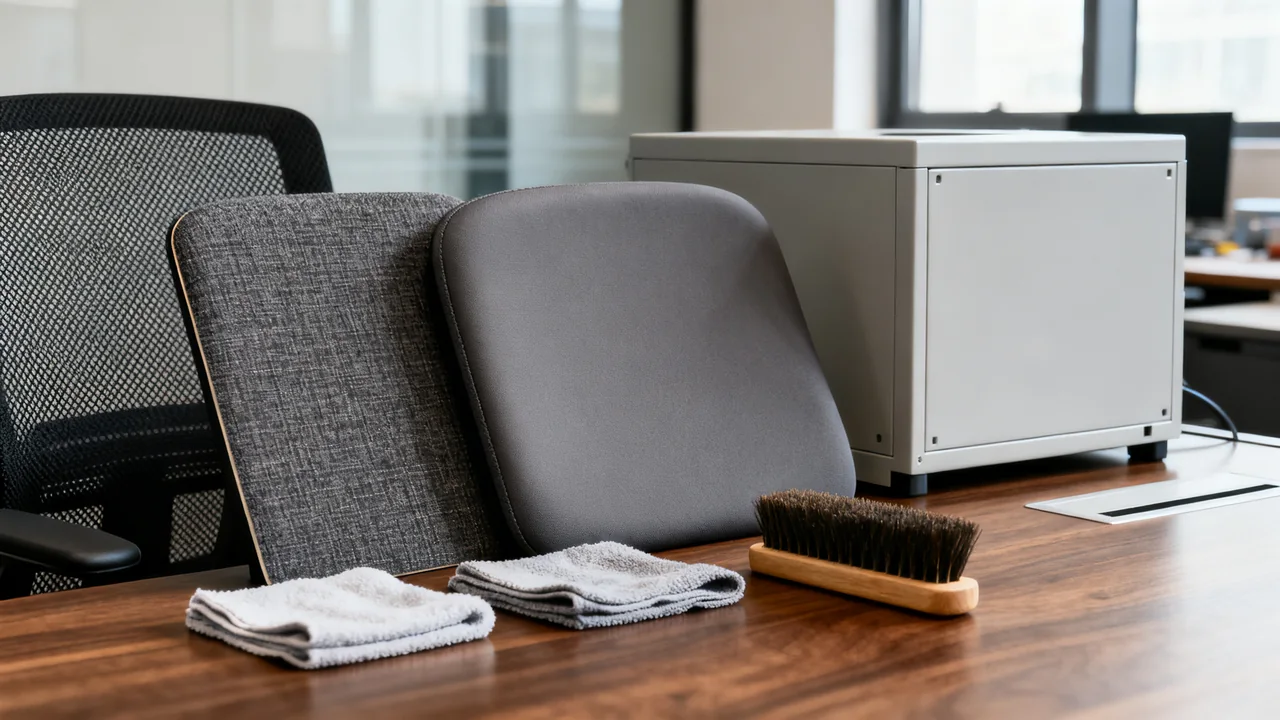
Office chairs are among the most frequently used pieces of equipment in small workplaces, yet their upholstery care often falls through the gaps between general office cleaning tasks and furniture repair protocols. Unlike hard desk surfaces or electronic equipment, chairs may combine woven textiles, mesh, coated materials and padding, each with its own care requirements. This guide focuses exclusively on care for these seating materials, separate from structural chair checks or general office cleaning routines. Before initiating any cleaning process, always cross-reference with the chair manufacturer’s official care manual to confirm approved methods, and never apply cleaning products that are not explicitly listed as safe for the specific material. For shared chairs, establish clear, consistent protocols for all users to avoid inconsistent cleaning that leads to uneven wear or staining.
Identify the Chair and Upholstery Specification
Record the chair model and, where available, the textile or mesh name from the original order. “Upholstery” describes a construction, not a single material: a padded seat can have woven fabric, leather or a coated covering. Appearance alone is not a reliable basis for choosing a cleaner.
Look for the care label and the manufacturer’s material-specific guide. If they are missing, ask the vendor using photographs and the product label. Keep the approved cleaner, method and restrictions with the asset record. Do not assume that two chairs from the same manufacturer use the same fabric.
Manufacturer instructions can differ even within one range. Herman Miller’s material care guides, for example, provide separate references for textiles and particular products. Choose the guide matching the actual chair rather than turning a general mesh or fabric category into a cleaning recipe.
Routine Light Care
Inspect seating according to use and arrange cleaning when needed. Where the material guide permits vacuuming, use its specified attachment and method. Do not pull mesh taut, use a powered brush or scrub fibers unless the manufacturer expressly instructs it. A technique approved for a padded seat may be unsuitable for a tensioned mesh back.
Use separate, compatible instructions for armrests and other hard surfaces. Do not apply a disinfecting wipe to the fabric merely because it is permitted on an armrest. Keep the approved care supplies identified so a substitute product is not introduced without checking.
Encourage users to report spills and damage promptly. Avoid putting sharp or dirty objects on seats, and keep chairs with damaged support material out of use until they have been assessed. Cleaning should not obscure a structural problem.
Spot Cleaning Protocols for Fresh Spills
Even with preventive practices, spills from coffee, soda, food, or office supplies such as ink or glue are common in workplace settings. The key to successful spot cleaning is addressing the spill immediately, before it has time to absorb into the material or dry. For ordinary food or drink spills, lift loose solid debris gently with a method permitted by the material guide; do not scrape or pull at the fibers. For an unknown chemical spill, isolate the chair and follow the workplace spill procedure. Next, blot the spill with a clean, dry, lint-free cloth, using gentle pressure from the outside of the spill inward to avoid spreading the liquid to a larger area. Never rub the spill, as rubbing pushes the liquid deeper into the material and can fray surface fibers.
If blotting alone does not remove the spill, check the care tag to confirm if water-based cleaning is allowed. If approved, dampen a clean cloth with cool, clean water (no soap or detergent unless explicitly allowed) and continue blotting, replacing the cloth as it becomes soiled to avoid re-depositing the spilled material onto the chair. If the guide calls for a solvent process, confirm who is trained and authorized to perform it and follow the product label, ventilation and handling requirements. Refer the work to an appropriate cleaning provider if it exceeds routine staff cleaning. After spot cleaning, blot the area with a dry cloth to remove excess moisture, and allow it to air dry completely before use. Do not apply heat to speed drying. Follow the manufacturer’s ventilation and drying instructions, keeping the chair out of use until it is dry.
Illustrative Example: Spot Cleaning a Shared Meeting Room Chair
Consider a small office with six mesh-back, upholstered-seat meeting room chairs, with a care tag that allows water-based cleaning and prohibits solvents, steam, and bleach. A user spills black coffee on one of the seat cushions during a team check-in. The office manager follows these steps, per pre-established protocols:
- First, they remove the chair from the meeting room to avoid disrupting the rest of the meeting, then start gently blotting the pooled coffee with a clean absorbent cloth.
- They continue gently blotting with a clean absorbent cloth, replacing it as it becomes wet.
- Since the care tag allows water-based cleaning, they dampen a microfiber cloth with cool water, wring it out completely so it is only slightly damp, then blot the stained area, working from the edge of the spill inward to avoid spreading it.
- They repeat the blotting process with a dry microfiber cloth, then leave the chair in a well-ventilated storage area to air dry completely before returning it to the meeting room.
- After drying, a faint brown stain remains, so they check the manufacturer’s approved cleaning product list, purchase a recommended water-based upholstery cleaner, and repeat the spot cleaning process with a small amount of the cleaner applied to the cloth, following the same blotting and drying steps, and assess the result after drying; removal is not guaranteed.
This process avoids common mistakes such as rubbing the spill, using an unapproved disinfectant wipe that could damage the upholstery, or over-saturating the foam padding under the seat which could lead to mold growth.
Decide Whether to Arrange Specialist Cleaning
If light care and the approved spot treatment are insufficient, obtain advice before adding shampoo, steam or extraction equipment. A care label permitting a small water-based spot treatment does not automatically authorize saturating an entire seat. Foam, backing and adhesives also matter.
| What to identify | Question for the vendor or cleaner | Information to record |
|---|---|---|
| Woven textile on a padded seat | Is the proposed cleaning process approved for both cover and padding? | Textile name, process and drying conditions |
| Tensioned mesh | Which attachment, cleaner and contact method are permitted? | Instructions without stretching or disassembly |
| Leather or coated covering | Which product is compatible with the actual finish? | Product name and application restrictions |
Give the cleaning provider the relevant care documentation and ask how chairs will be protected while drying. Where the manufacturer recommends a hidden-area test, allow it to dry and assess the result before wider application. Arrange spare seats if drying will extend beyond the available maintenance window.
Handling Snags, Tears and Worn Upholstery
Do not pull, cut or sew tensioned mesh or unfamiliar fabric as an improvised repair. Photograph the damage and ask the vendor whether it is cosmetic or affects support. Take a chair with a torn support surface, exposed sharp part or uncertain stability out of use pending assessment.
Ask whether an approved replacement seat, back or cover is available for the exact model. Compare the supplied repair quote, fitting arrangements, downtime and remaining condition of the chair with a replacement quote. Avoid promising a fixed saving from repair; parts availability and labour vary.
If washable covers are proposed for future care, check that the manufacturer permits them and that fit does not interfere with adjustment or secure seating. A cover should not hide existing damage or become a substitute for repairing it.
Actionable Pre- and Post-Care Checklist
Use this short checklist before initiating any chair cleaning task to avoid common mistakes:
- Locate and review the chair’s specific care manual to confirm approved cleaning agents and restricted practices
- Test any cleaning product on a small, hidden area of the chair and allow it to dry fully to check for discoloration or damage
- Remove the chair from the work area if cleaning will require extended time to avoid disrupting staff
- Blot, do not rub, all spills and cleaning solutions to avoid pushing material deeper into the fabric or damaging fibers
- Allow the chair to dry completely before returning it to use to avoid mildew growth or user discomfort
- Document any cleaning or repair work for the chair’s service file, especially if the chair is under warranty
Tradeoffs to consider when establishing care protocols: For very small offices with only a few chairs, assigning a single staff member to handle all chair care ensures consistency and reduces the risk of improper cleaning, but may create an extra administrative burden. For larger offices with shared seating, posting simplified care instructions near high-use chair areas reduces the chance that users will attempt unapproved cleaning methods, but requires regular reminders to ensure compliance. If your office uses a mix of chair types, consider labeling each chair with a small, unobtrusive tag indicating its material type and any key care restrictions (e.g., “water-based cleaning only”) to make protocol adherence easier for all staff. Taking the time to align care practices with each chair’s specific requirements avoids preventable damage, reduces long-term furniture costs, and keeps seating clean and comfortable for all users.
Have a question or a correction?
Contact the editorial team