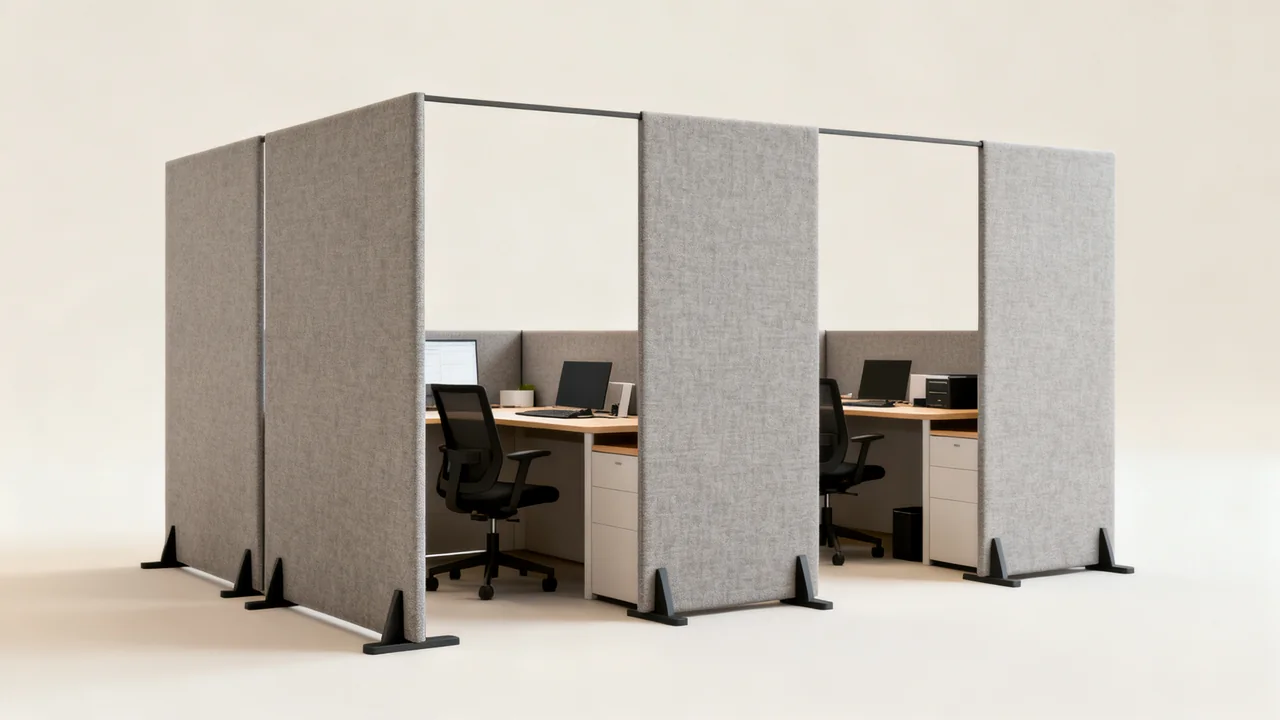
A chair for a shared desk needs to work for different people using the same workstation. Easy adjustment matters, but removing useful adjustments is not automatically the answer. Select chairs through an informed trial that considers users, tasks, desk fit, approved use, and maintenance.
Identify who will use the station and what they do
Record whether desks are shared by a known team, rotating shifts, visitors, or a mixture. Ask how long people use them and which tasks require keyboard work, reading, meetings, or frequent movement. A brief visitor seat and a workstation used through a shift have different requirements.
Invite users to describe fit problems through an appropriate private process. Do not ask them to disclose medical information in a public chair-comparison sheet. Where an individual needs a specific assessment or accommodation, use the workplace’s established support process.
One model may not fit every person. Plan how a different approved chair can be provided when needed rather than declaring a universal seat-height range suitable for everyone. Consistency in purchasing is useful only when it supports the actual users.
Test useful adjustments and provide instructions
Evaluate seat height, seat depth where available, backrest support, tilt controls, and arm adjustments against user needs. The relevant range depends on the chair, desk, and person. Do not assume a feature is unnecessary simply because it takes more than one movement to set.
Check that controls can be identified and operated as the manufacturer directs. Some adjustments may require the user to shift weight or stand; do not insist every control must be operated while seated. Clear diagrams and a short orientation can make a capable chair easier to share.
Ask each participant to set up the chair using the supplied guidance and report what they cannot achieve. A quick adjustment that leaves the person poorly fitted is not a successful result. Avoid choosing solely by the number of seconds needed to move a lever.
Check the chair together with the desk and floor
Test at the actual desk, including drawers, keyboard supports, foot space, and monitor arrangement. Armrests may prevent close access or may interfere with a drawer even when the seat fits. Verify movement and clearance without assuming that a standard desk dimension solves every fit issue.
Ask the chair supplier which casters or glides are approved for the floor and intended use. Confirm compatibility with any floor covering or mat as well. Do not assume every caster with the same stem size is suitable or that changing wheel diameter has no effect on the seat height.
Read the manufacturer’s user and use-condition ratings. A higher load rating is not by itself evidence of better adjustment mechanisms, and the chair must meet all applicable product limits. Keep any usage restrictions visible in the purchase record.
| Trial area | What users should try | What to record |
|---|---|---|
| Adjustment | Set the chair using its instructions | Controls or ranges that do not meet the user’s needs |
| Desk access | Perform ordinary keyboard and document tasks | Arm, drawer, or leg-space interference |
| Movement | Use the approved chair/floor arrangement | Unwanted rolling or difficult movement |
| Shared use | Reset for a different participant | Instructions or features that need clarification |
| Care | Review the exact upholstery care requirements | Materials or procedures incompatible with the cleaning plan |
Evaluate upholstery as a specified material
Fabric, mesh, leather, and coated materials each include many constructions and finishes. Do not treat one material family as universally washable, stain resistant, breathable, or more durable. Ask for the specific material’s care instructions and relevant supplier information.
Compare those instructions with the office’s cleaning process. If products differ, resolve the conflict before ordering. A patch test does not make an unapproved chemical suitable, and wiping a surface is not automatically disinfection.
Inspect seams, edges, replaceable pads, and areas likely to contact desks or bags. Ask about replacement covers or components and the service process. Avoid predicting years of life from appearance, price tier, or a material name without evidence.
Run an illustrative shared-desk trial
Assume an imaginary office has eight shared desks used by twelve colleagues on varying schedules. These are scenario counts, not a rule for how many chairs to test. The office arranges samples of two suitable models and gives participants the adjustment guides.
The trial records fit at the actual desks, ease of using the controls after instruction, floor behavior, and any unmet need. Suppose one model has simpler controls but insufficient seat-depth adjustment for some participants. The office should not dismiss those findings to preserve uniformity; it can consider another model or a mixed allocation.
Cleaning staff review both material specifications, and purchasing checks the approved caster options and parts support. The decision uses these observations and quotes. It does not invent a user-satisfaction percentage or claim that a short trial proves long-term durability.
Plan support after delivery
Check delivered models and options against the approved samples. Provide a concise guide showing the actual controls and where to report a fault. Keep model and serial information available for service without attaching sensitive user information to the chair.
Follow the manufacturer’s inspection and maintenance instructions. If a chair is unstable, damaged, or has a malfunctioning adjustment, take it out of use and arrange appropriate service. Do not make routine staff tightening, gas-cylinder work, or part substitution a generic maintenance instruction.
Review feedback after representative use, particularly when the shared-desk population changes. Keep an alternative route for a user whose needs remain unmet rather than assuming the initial group trial settles every future case.
- Identify users and tasks without assuming one universal fit.
- Test meaningful adjustments with clear instructions.
- Check the desk, floor, and approved use ratings together.
- Verify exact upholstery care and replacement support.
- Allow suitable exceptions to a standard model.
- Provide a fault-reporting and authorized-service process.
Have a question or a correction?
Contact the editorial team