12 Bathroom Vanity Organization Ideas for Stress-Free Mornings
The toothpaste is behind the hair dryer. The hair dryer cord is around the moisturizer. Somebody’s tweezers have gone missing for the third day running, and it is 7 a.m.
That scramble is not a storage problem, exactly. It is a zoning problem. A vanity works when you stop treating it as one cupboard and start treating it as four small zones, each with one strict job: the counter, the drawers, the under sink cabinet, and the wall or door. The 12 ideas below build that system step by step, sized for the small, shared, short on storage vanities most of us actually have. Do them in order. The first one is the one everyone tries to skip.
The short version, before we start:
Empty it first. Nothing organizes well while it is still full. Sort, toss the expired stuff, then zone.
One tray on the counter. Soap, toothbrushes, and the two or three products you touch daily. Everything else goes behind a door or in a drawer.
Drawers get dividers and one job each. Teeth, skin, hair, tools. In a shared bathroom, divide by person instead.
Back stock and medicines leave the room. The vanity holds this week, not the next three months, and steam is unkind to medicines anyway.
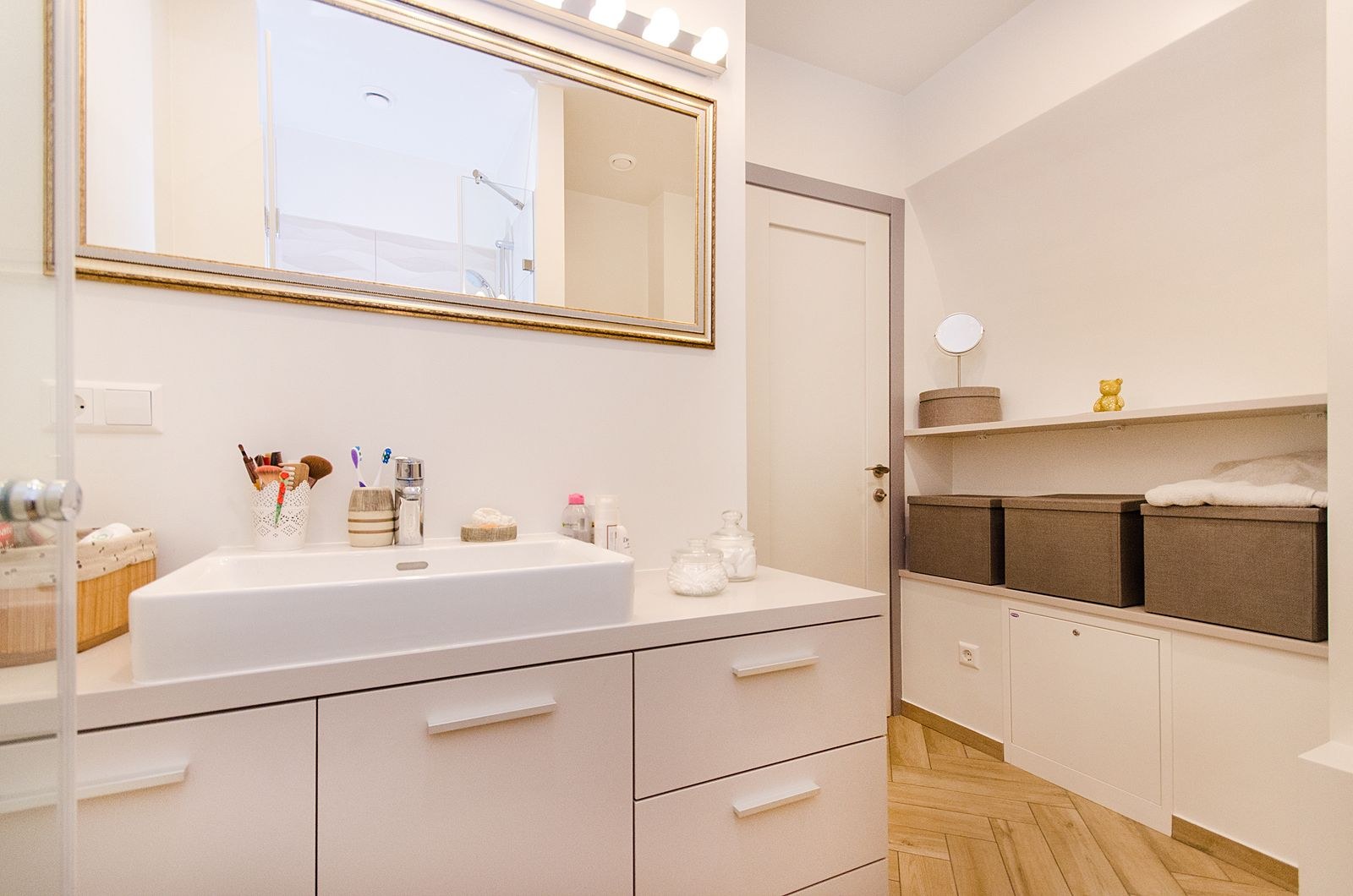
1. Empty Everything and Zone What You Own
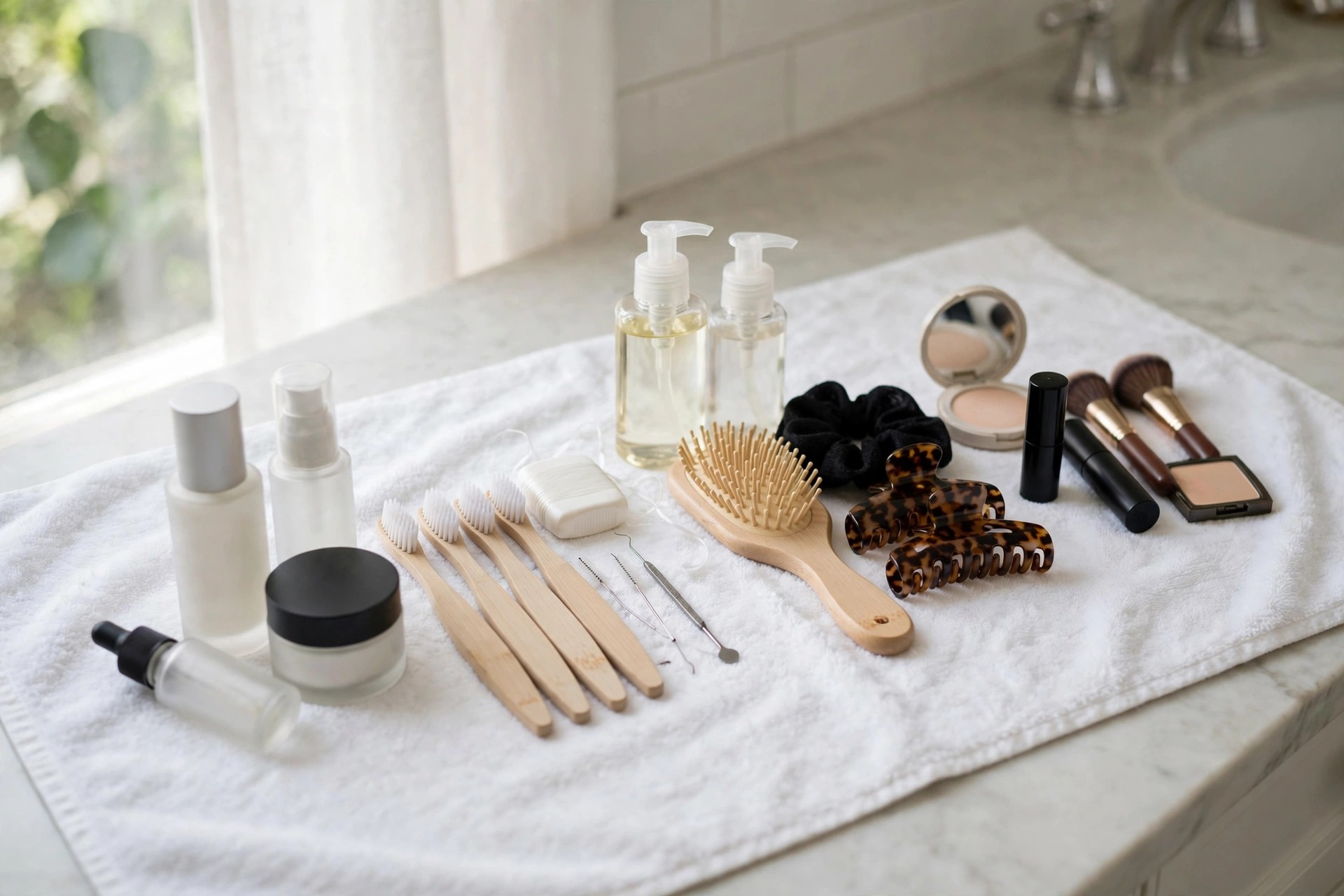
No vanity organizes well while it is still full. Take every item out, wipe the surfaces, and sort the pile into honest groups: daily face and teeth, hair tools, occasional products, medicines and first aid, cleaning and back stock.
Throw away what is expired, dried out or duplicated three times over. In most vanities that is a shocking share of the total. Now give each group one zone only, using the bathroom storage hacks as your map for the wider room.
And here is the buy or skip rule for this whole article: do not buy a single organizer before this sort is done. Half of what people store organizers for turns out to be trash.
2. Keep the Counter Down to One Tray
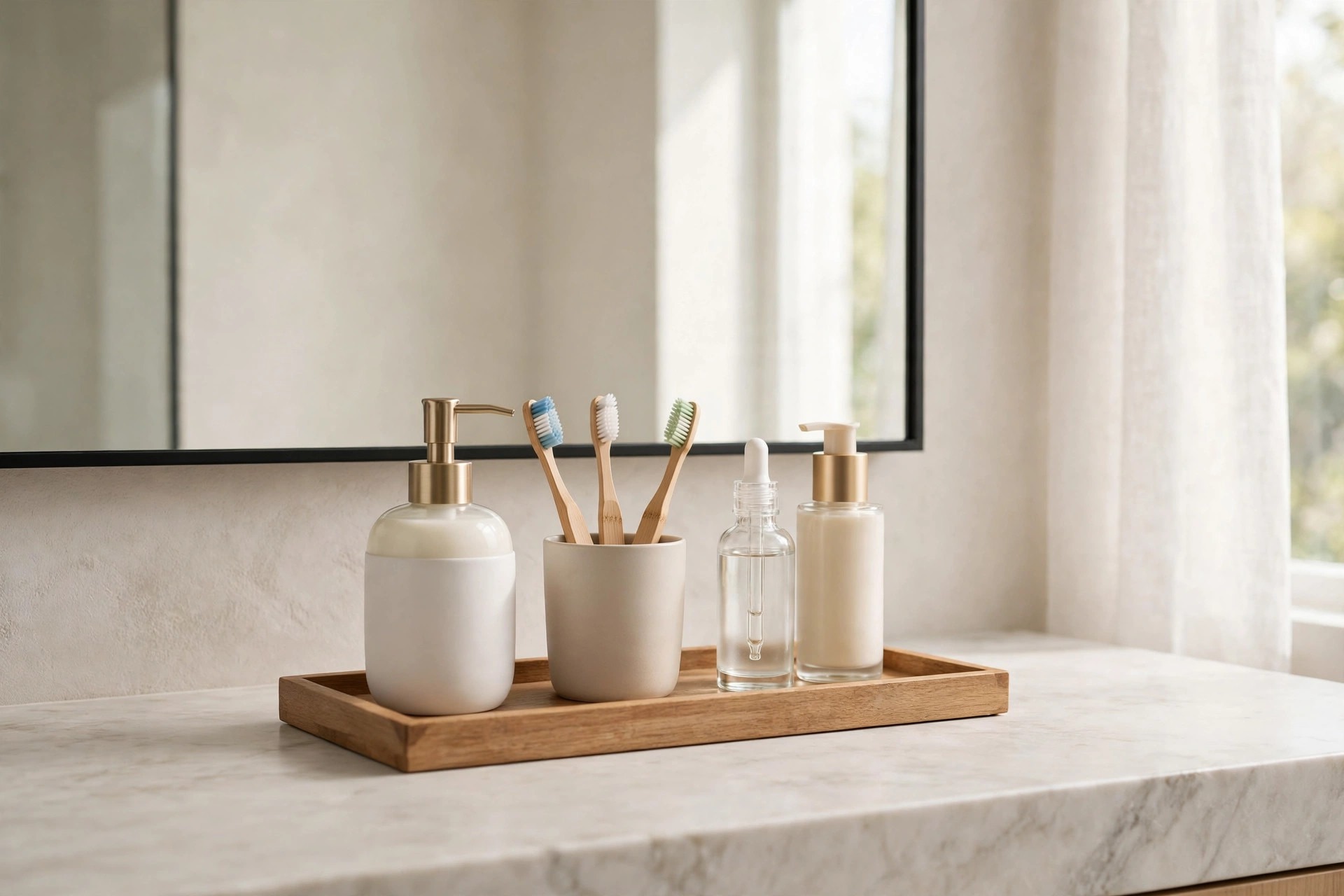
The counter is the face of the whole system, and it should show almost nothing.
Choose one tray, ceramic, stone, wood or metal, and let it hold only what every morning truly touches: hand soap, toothbrushes, and the two or three products you use daily. Everything else lives in a drawer or cabinet. No exceptions for bottles that are nearly empty or too pretty to hide.
A contained tray wipes around in seconds and gives the eye one calm rectangle instead of a skyline of bottles. If an item does not fit the tray, it has told you where it belongs. I hold this line hard in my own bathroom, because the tray is the first thing guests see and the first thing that slips.
3. Divide Drawers by Task, Then by Person
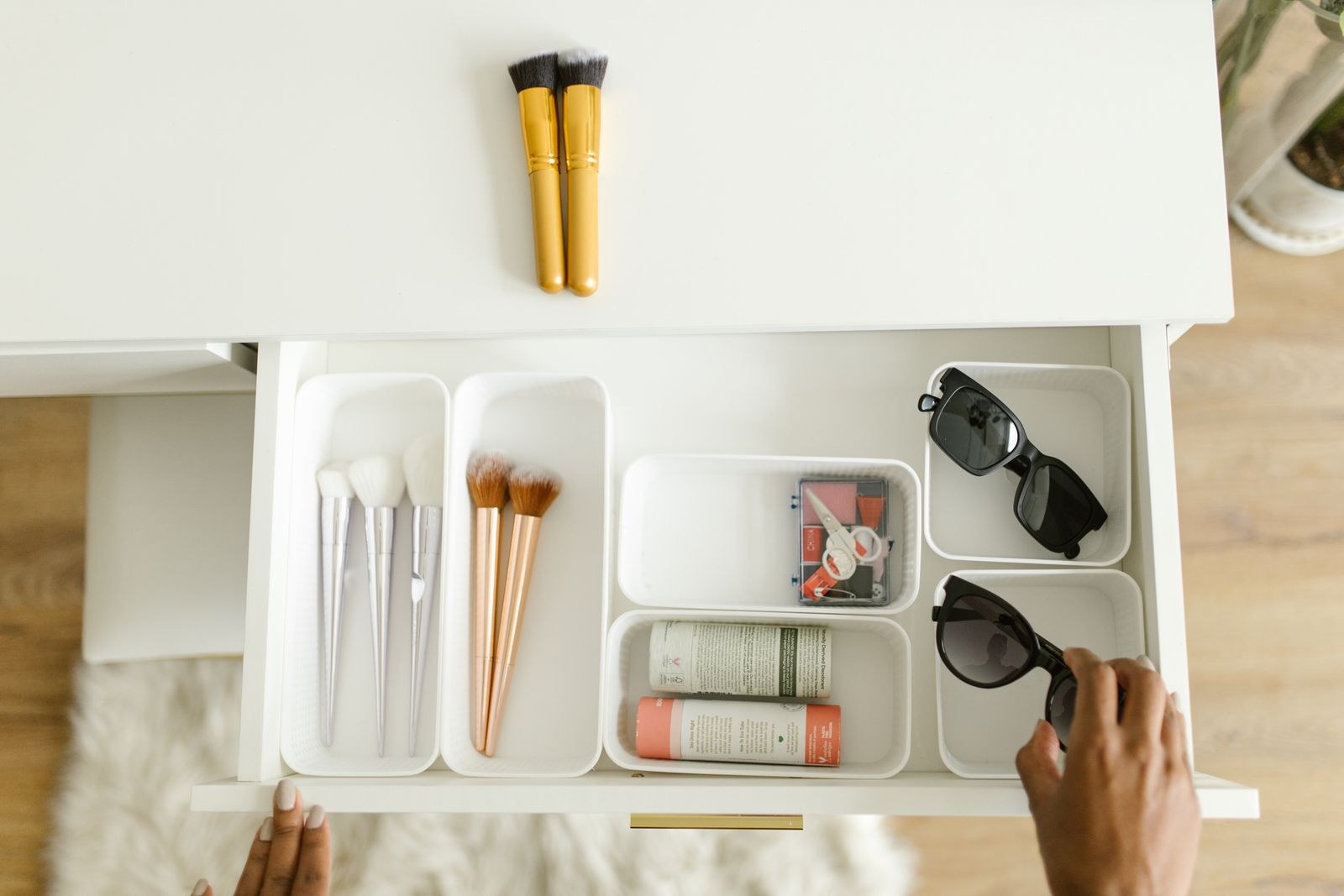
A vanity drawer without dividers becomes a junk drawer with better lighting.
Fit simple dividers or a set of small trays and give each section one job: teeth, skin, hair, or the small tools like tweezers and nail clippers. In a shared bathroom, divide by person instead, one side or one drawer each. The fastest way to end morning friction is to end the shared rummage.
Shallow drawers are precious, so reserve them for flat items in a single layer. The test is simple: if you can see everything the moment the drawer opens, the drawer is organized. If you have to dig, it is storage, not organization.
4. Give Hair Tools a Home That Can Handle Heat
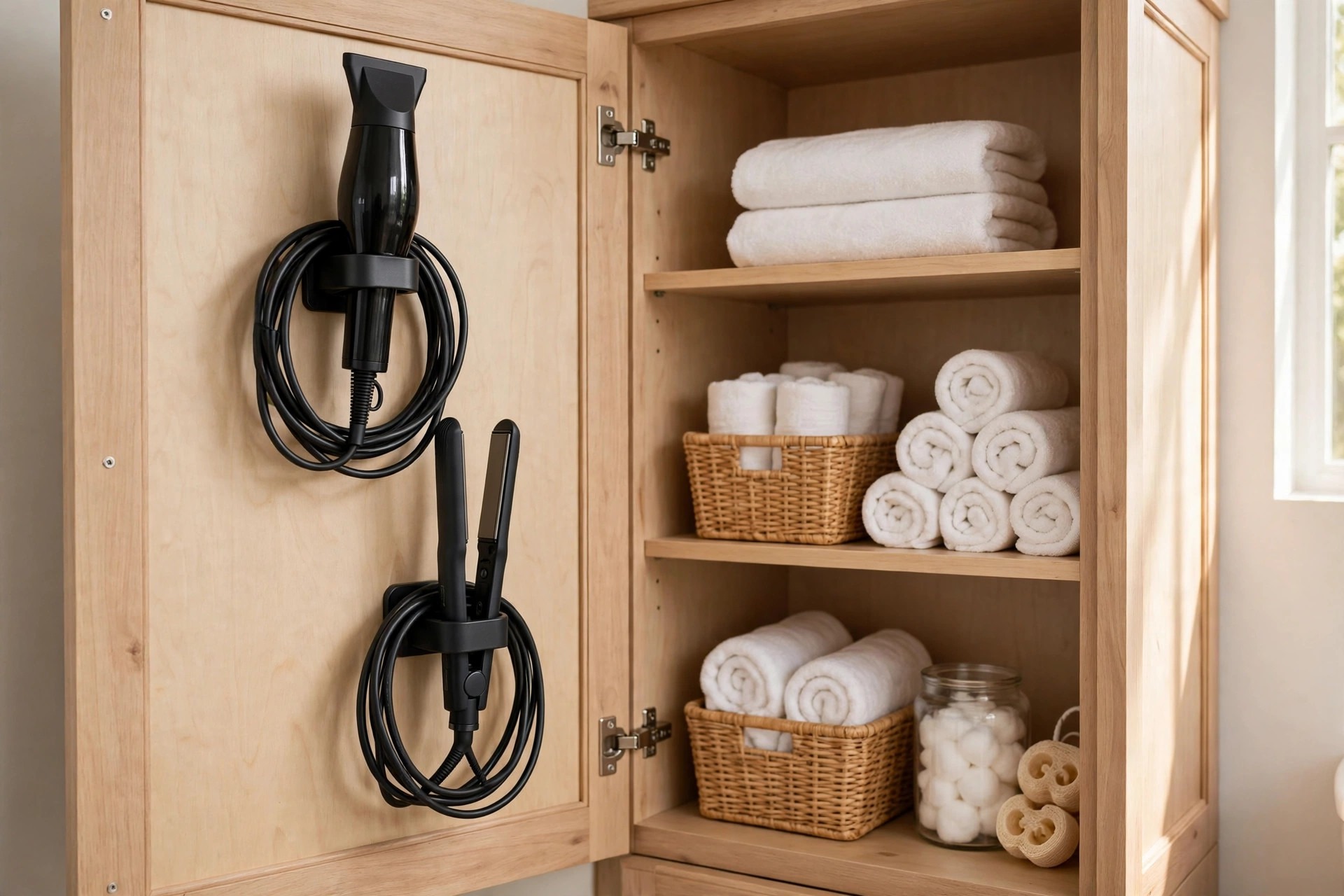
Dryers, straighteners and curling tools are the bulkiest things a vanity holds, and their cords tangle around everything else they meet.
Dedicate one deep drawer, one door mounted holder, or one heat resistant caddy to tools alone, and coil each cord loosely with a simple tie before it goes in. A holder fixed inside the cabinet door keeps hot tools off the counter while they cool and frees the drawer entirely.
Two rules that matter. Never put a tool away while it is still warm. And keep the whole tool zone away from water bottles and sprays. When tools have one obvious home, they stop colonizing the counter by Friday.
5. Tier the Under Sink Cabinet Around the Pipes
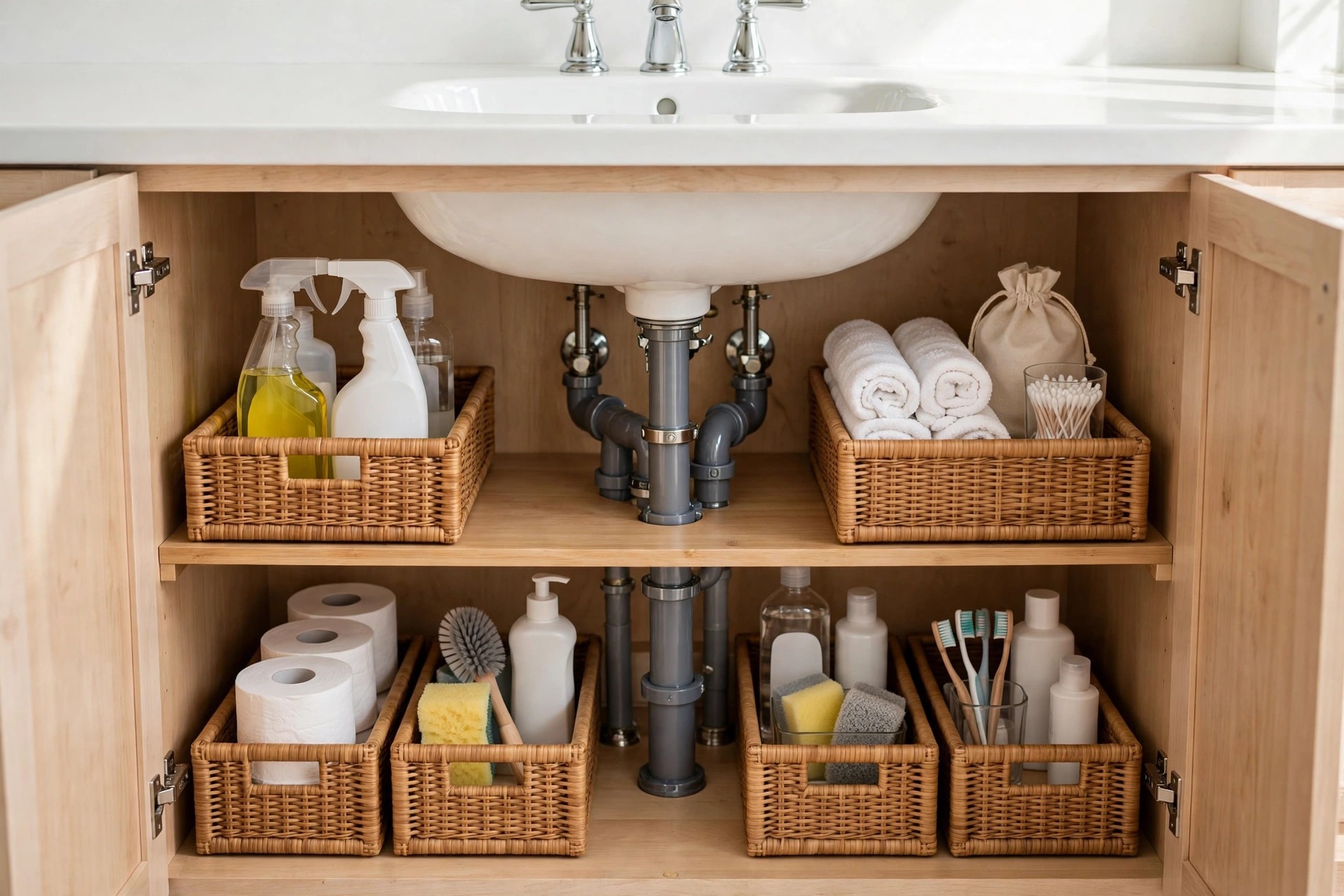
The under sink cabinet defeats most people because the pipes break up the space. So stop fighting the pipes and build height around them.
A two tier organizer or stacking shelves on each side of the plumbing turns one awkward cave into three or four usable levels. Put daily refills and cleaning supplies in open bins you can slide out whole, and stand tall bottles on the cabinet floor where the height allows. Measure before buying anything, including where the trap sits, because under sink dimensions vary more than any other cabinet in the house.
Renters can do all of this freestanding, which is why it turns up in guides to renter friendly bathroom storage so often.
6. Spin the Deep Back Corner Back to Life
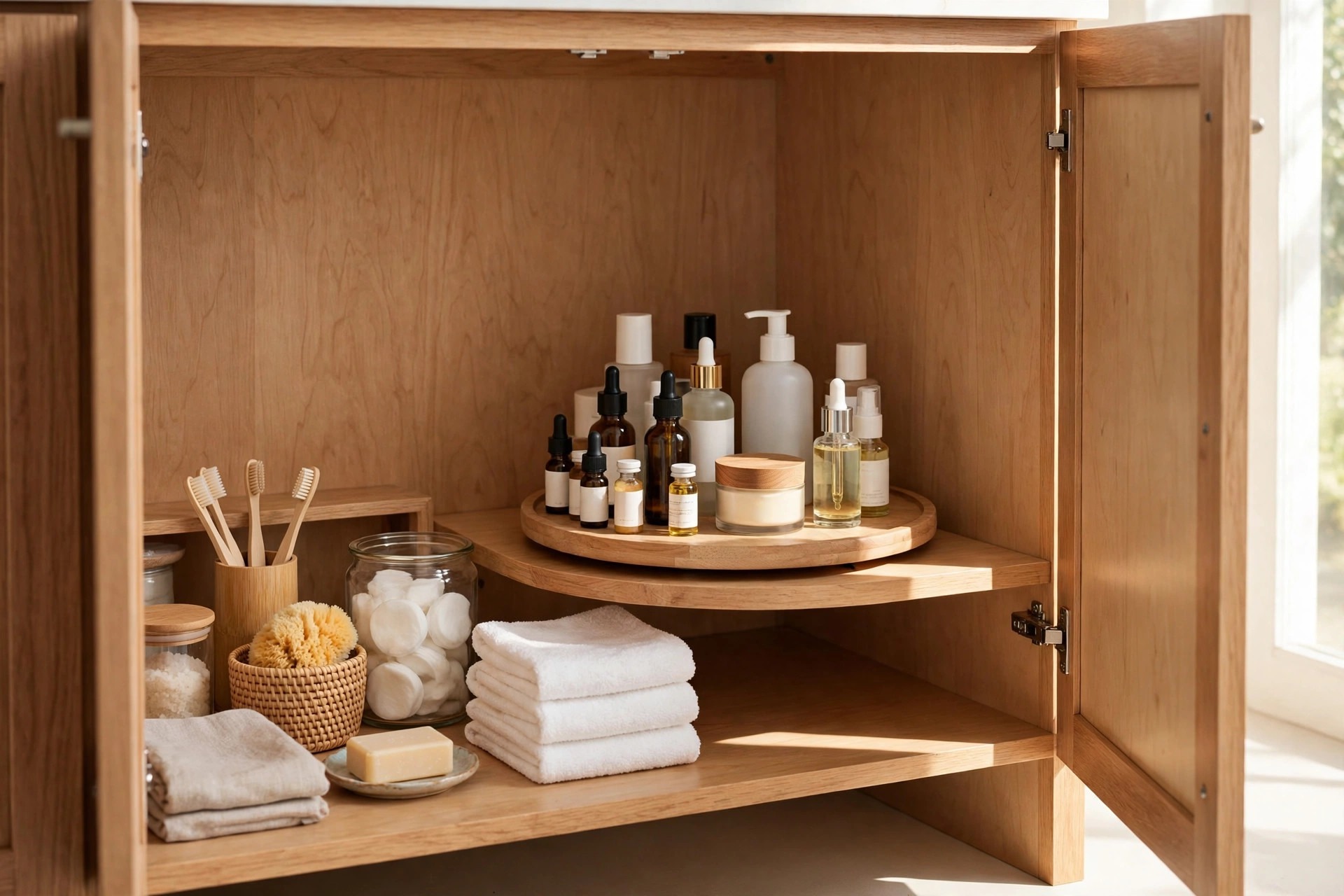
Every vanity has a dead zone where bottles go to be forgotten: the deep back corner of the cabinet, or the far end beside the pipes.
A simple turntable brings it back. Group oils, treatments and occasional products on it, and one spin puts everything at the front in turn. Choose a size that spins without grazing the plumbing, and keep the tallest items toward the center so nothing topples over the edge mid turn. It is the same trick that rescues deep kitchen cabinets, shrunk to bathroom scale.
This one quietly ends the buy it again because I cannot find it cycle. I have saved real money with a ten dollar turntable. So will you.
7. Decant the Daily Products Into Matching Bottles

Half the visual noise on a vanity comes from packaging: six brands shouting in six colors.
Decant the keep out products, hand soap, lotion, mouthwash, into simple matching dispensers and the counter calms down instantly. The tray rule gets easier to keep too, because matching bottles look like they belong where they sit. It is a stylist’s trick with an organizational payoff: when everything looks like it belongs together, putting it back feels natural.
Label anything that leaves its original container, especially where children or guests use the bathroom. And keep the original bottles under the sink until the decanted supply proves itself, just in case.
8. Move Medicines Out of the Steam
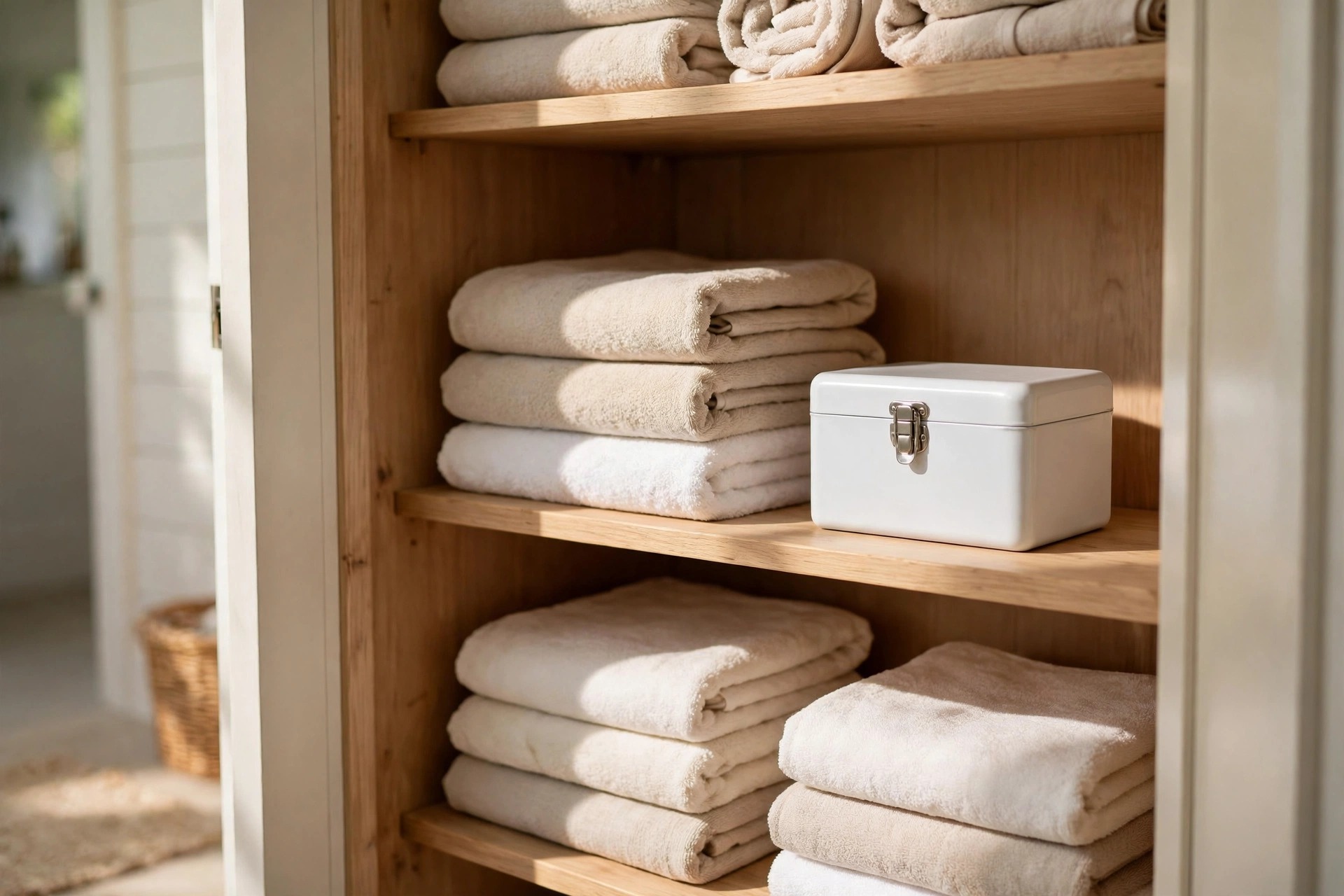
The vanity feels like the natural home for medicines. It is not. Bathroom steam and heat are genuinely unkind to many of them, and makers commonly advise storing medicines in a cool, dry place instead.
Give first aid and medicines one small closed box in a linen cupboard, a hallway drawer, or high in a kitchen cabinet. Keep only true daily items in the bathroom. The move frees surprising space in the vanity, and the medicine box becomes a single grab and go kit for cuts, headaches and fevers, instead of an archaeological dig behind the cotton balls.
Check expiry dates while you move them. Half used, out of date tubes are the most common thing I find hiding in vanities.
9. Stick Small Metal Tools to a Magnetic Strip
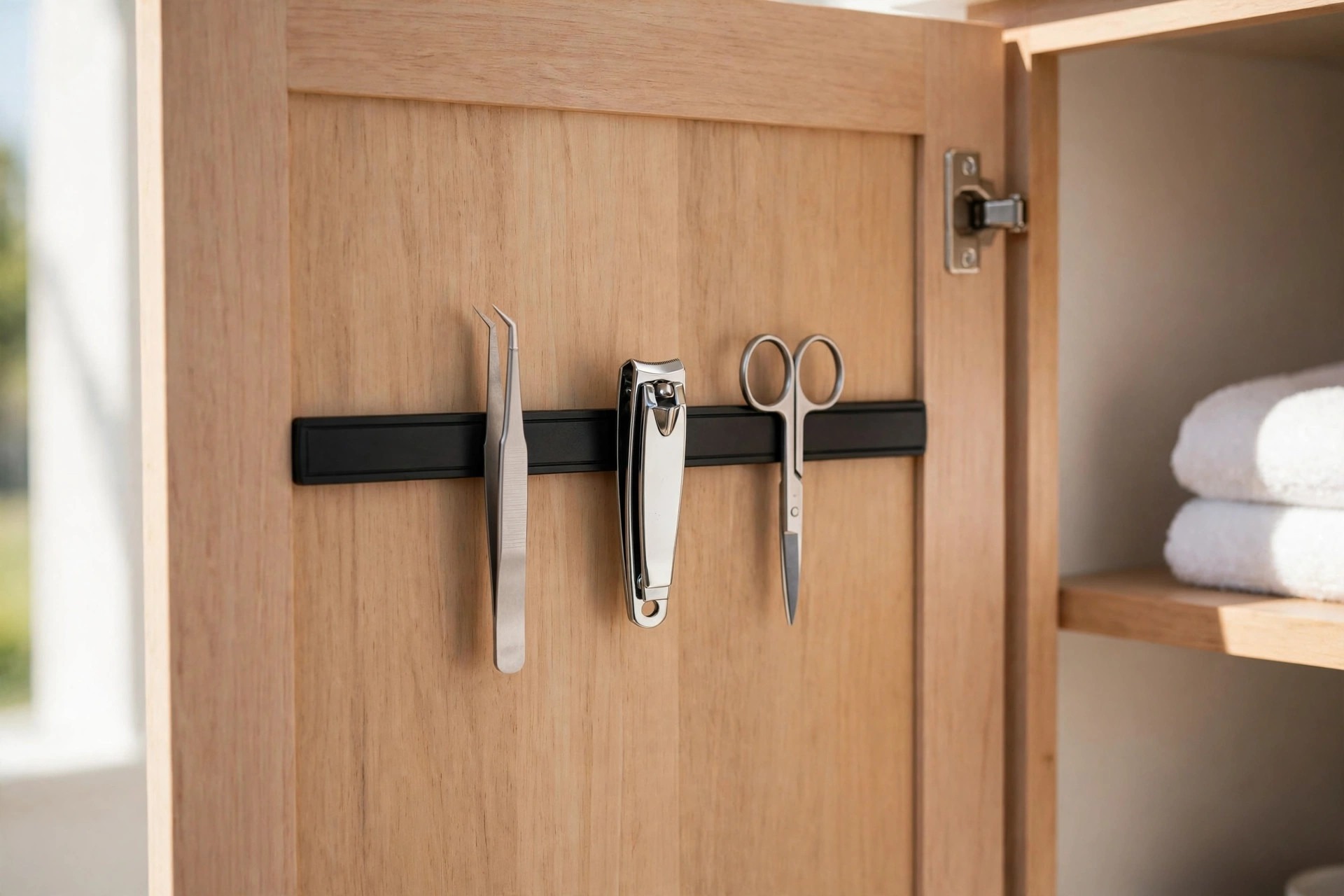
Tweezers, nail clippers, bobby pins and scissors share two traits: they are small, and they vanish.
A magnetic strip fixed inside a cabinet door, or along the inside of a drawer, gives them a visible home where they line up instead of burrowing. It takes about five minutes to fit, costs very little, and pays you back every single morning. Keep sharp items on the door strip rather than loose in a drawer shared with fingers. Like the shower storage ideas no drill elsewhere in this bathroom cluster, it is a small fix that makes a daily routine feel considered.
10. Store Back Stock Somewhere Else Entirely
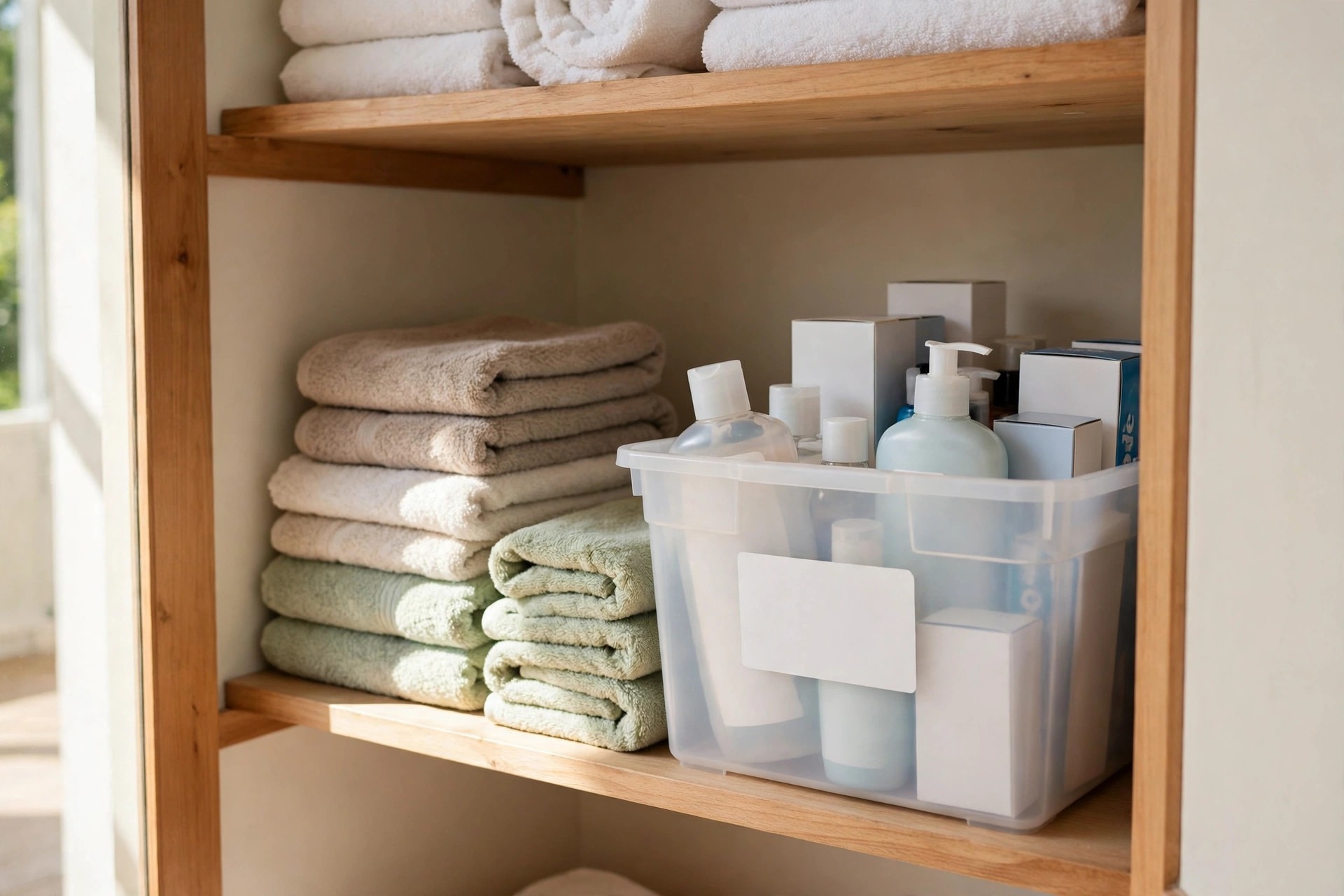
The vanity should hold what this week needs, not what the next three months might.
Bulk buys, spare toothbrushes, extra shampoo and the second pack of everything belong in a hallway cupboard, a closet shelf, or one labeled bin on top of a wardrobe. This one boundary does more for vanity calm than any organizer you can buy, because it caps the volume the small space must hold. When the vanity runs low, you shop from your own back stock bin first.
Stock the vanity like a shop shelf of one, not a warehouse. That sentence is the whole idea, honestly.
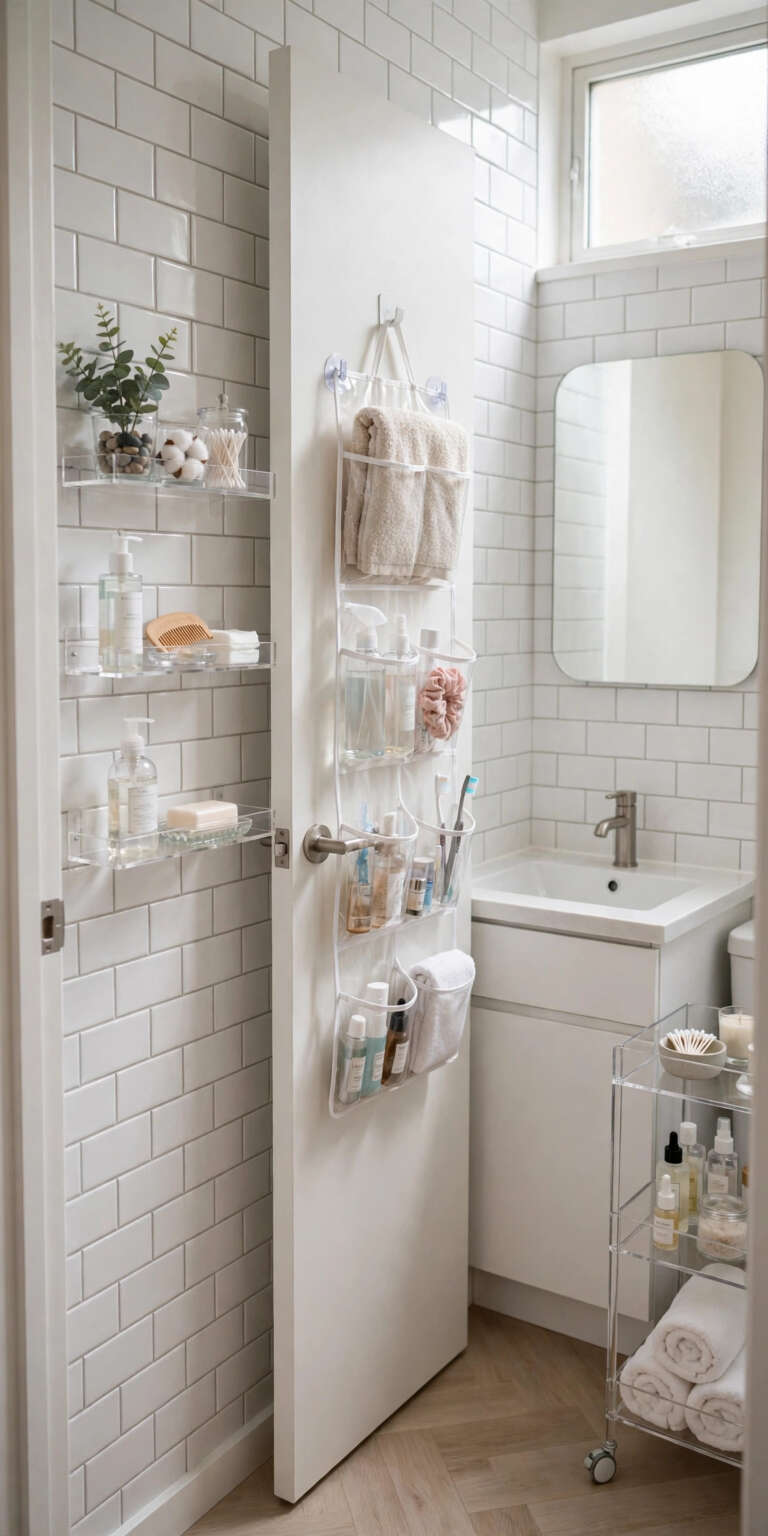
11. Use the Back of the Door and the Wall Beside It
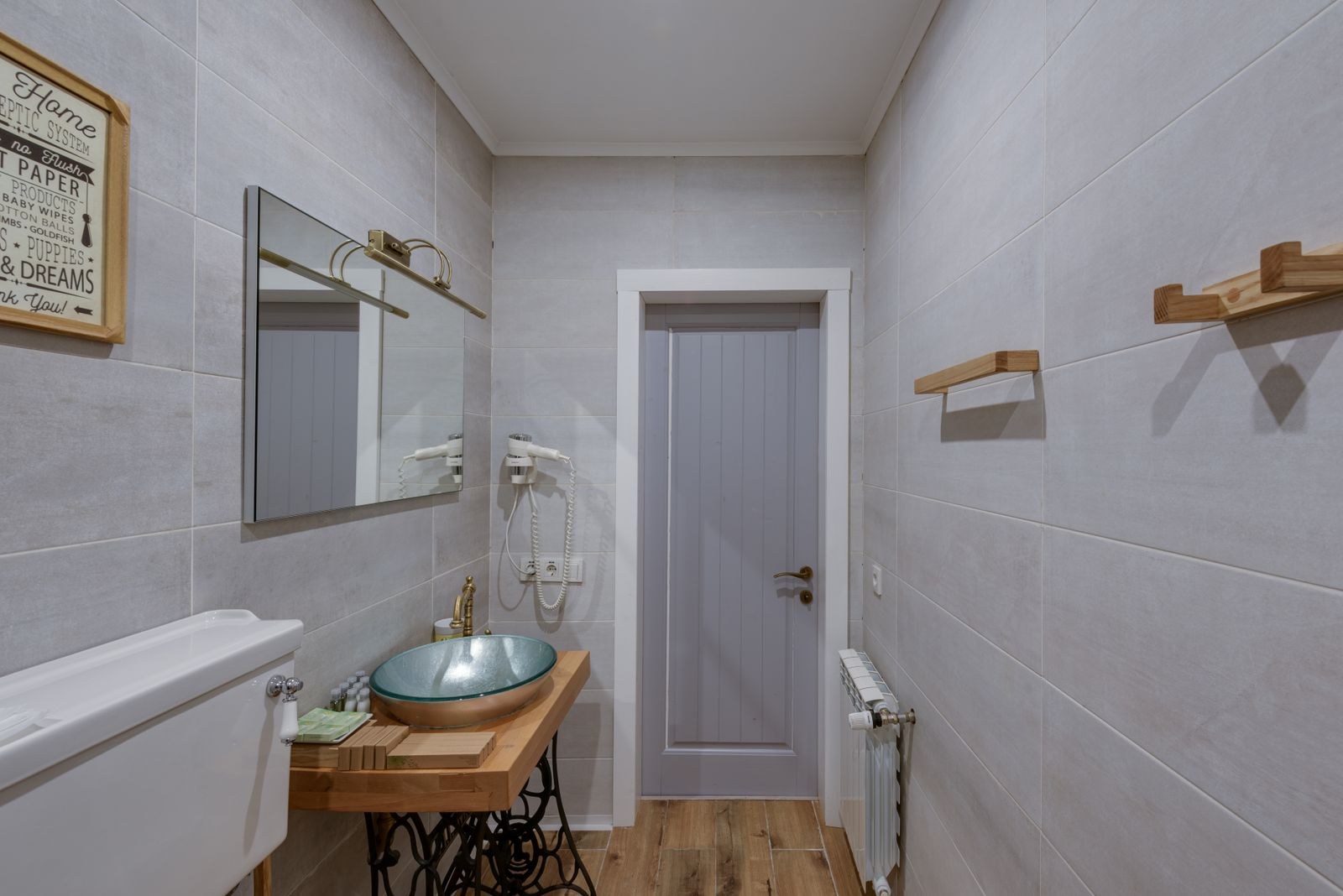
Drawers and cabinets full? The vanity’s neighborhood still has room.
An over door rack, or a row of three or four hooks on the back of the bathroom door, takes towels, robes and a hanging organizer of occasional items. A narrow shelf or small rail on the wall beside the vanity holds the perfume, the watch dish, or the plant that makes the room feel finished. These spots work because they sit inside the routine’s path without sitting on the counter.
In bathrooms where towels have nowhere obvious to live, the dedicated towel storage ideas in this series will finish the job this article starts.
12. Run a Two Minute Reset Every Night
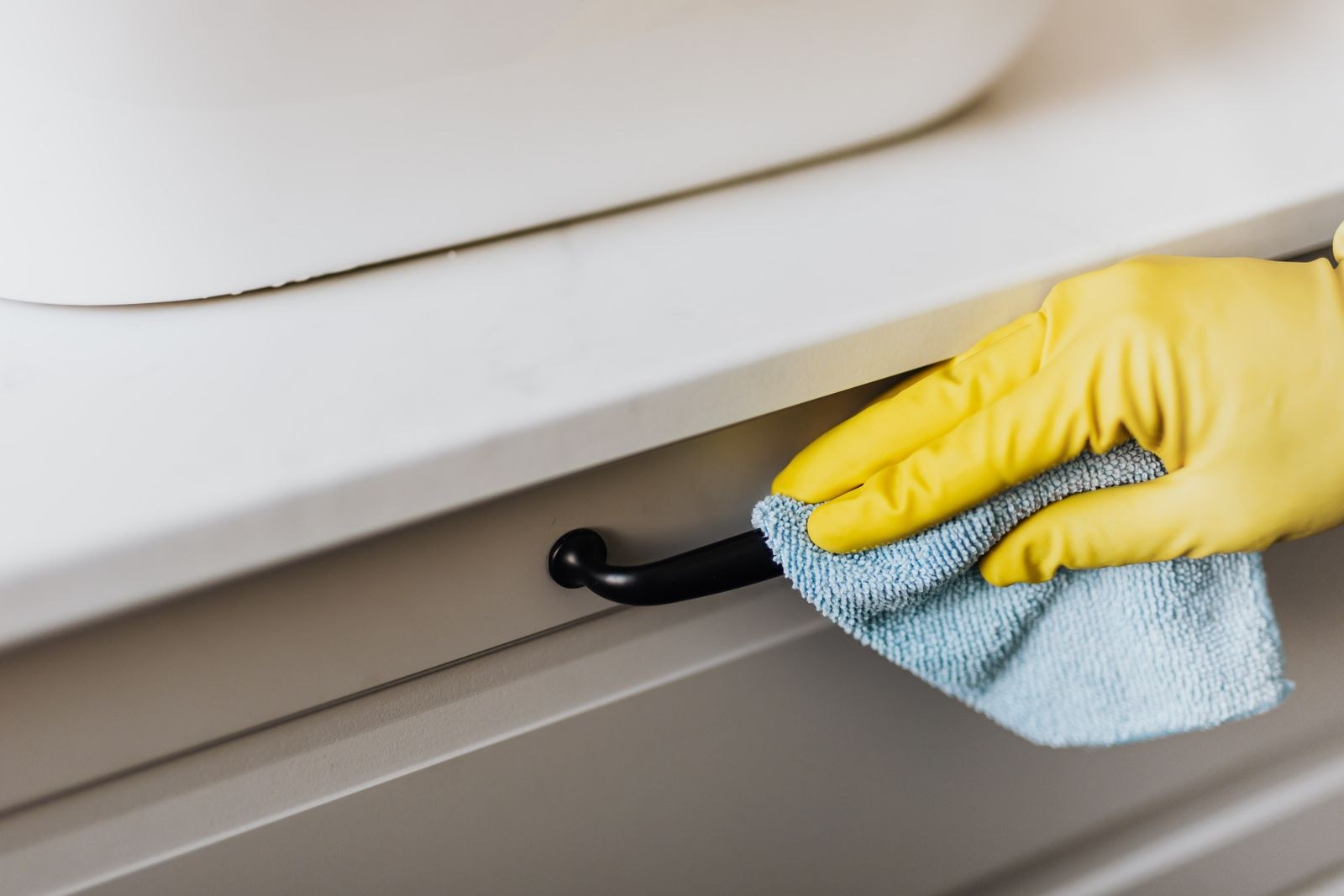
Vanity organization does not fail in the organizing. It fails in the following two weeks.
So protect the system with a reset so small it cannot be skipped. While the last person brushes their teeth at night, everything returns to its zone, the tray gets wiped, and anything that migrated to the counter goes home. Two minutes. It keeps the drawers honest, shows you what is running low, and means the morning starts with the calm counter you organized on purpose.
Systems in small bathrooms are not about the perfect Saturday. They are about the ordinary Tuesday staying easy.
The Bottom Line
A calm morning is built the night before. Zone the vanity, cap the counter at one tray, divide the drawers, tier around the plumbing, and push back stock and medicines out of the small room entirely. None of it needs a new vanity or a remodel. It needs boundaries the whole household can see, and two minutes a night to hold them.
Start with the full empty out this weekend. Tray, drawers and zones all get easier once you can see what you actually own.
Frequently Asked Questions
How do I organize under my bathroom sink?
Work around the plumbing with height instead of fighting it. Use a two tier organizer or stacking shelves on either side of the pipes, group items in open bins that slide out whole, and measure the trap position before buying anything. Keep cleaning supplies and refills there, not the daily items you need at speed.
What should stay out on the bathroom counter?
Only what every morning genuinely touches: hand soap, toothbrushes, and the two or three products you use daily, all contained on one tray. If it is used weekly, it belongs in a drawer. If it is a spare, it belongs outside the bathroom.
How do you organize deep vanity drawers?
Divide them, then give each section one job. Deep drawers suit hair tools, product back ups for the drawer above, or rolled washcloths and hand towels. Avoid loose small items in deep drawers, where they sink and vanish; corral them in small trays or move them to a shallow drawer instead.
What organizers work best in a small vanity?
The ones matched to each zone: dividers or small trays in drawers, a tiered shelf or slide out bins under the sink, a turntable for deep corners, and a single tray on top. Buy after you have zoned and measured, not before, because the right sizes depend entirely on your cabinet’s quirks.